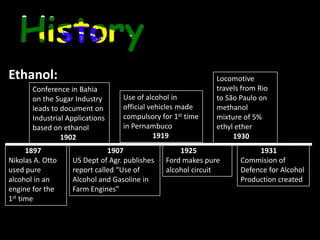
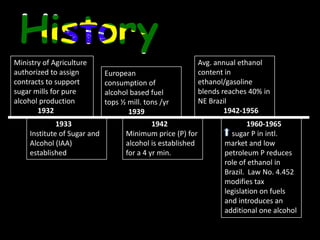
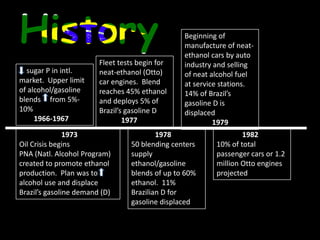
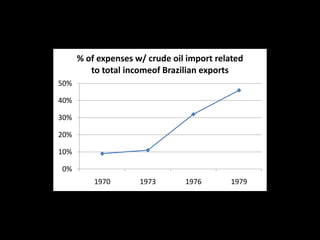
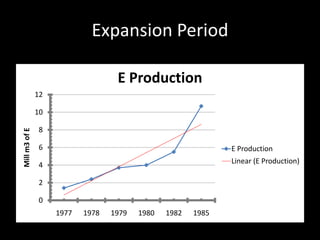
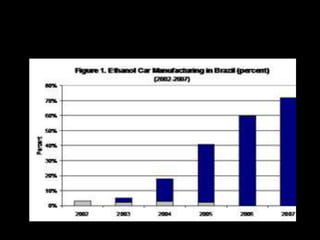
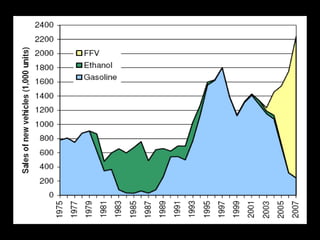
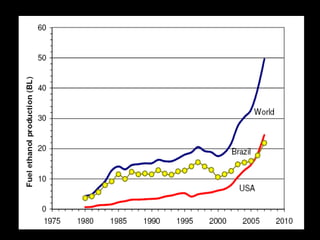
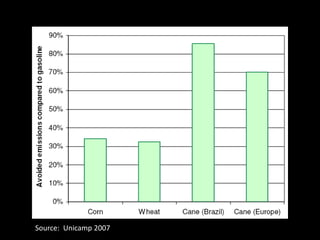
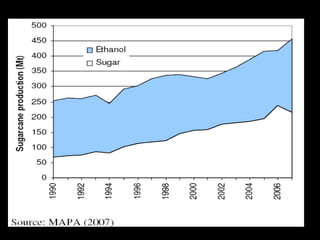
Northeast Brazil has a long history of sugarcane production and ethanol fuel dating back to the 16th century. Sugarcane was introduced by the Portuguese and Brazil became a major sugar exporter using slave labor. In the late 19th century, ethanol began being used as a fuel in engines. The Brazilian ethanol program expanded in the 1970s during the oil crisis to promote domestic ethanol production and reduce gasoline dependence. By the late 1980s, ethanol comprised 25% of vehicle fuel in Brazil. Debate continues around the environmental and food impacts of expanding sugarcane ethanol production. Large companies are investing hundreds of millions in ethanol projects in Brazil, and production and exports are projected to significantly increase in the coming decades to meet growing global demand.