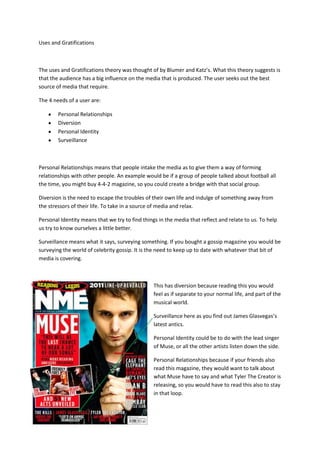
The uses and gratifications theory suggests that audiences actively seek out media to fulfill certain needs, including personal relationships, diversion, personal identity, and surveillance. It proposes that media are produced to satisfy these audience needs. Specifically, personal relationships refer to using media as a way to connect with others, diversion is using media for escapism and relaxation, personal identity is finding media that reflects oneself, and surveillance is keeping up with topics of interest. An example given is that people may read music magazines both to learn about their favorite bands (identity) and to have conversations with friends who also read it (relationships).