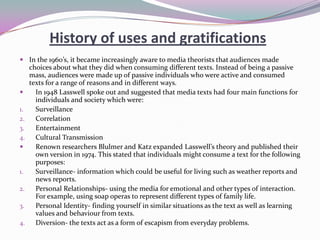
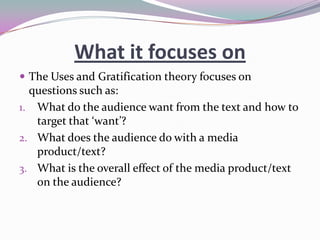
The document summarizes the history and key aspects of uses and gratifications theory. It explains that in the 1960s, media theorists recognized that audiences were active rather than passive in their media consumption. In 1948, Lasswell proposed four main functions of media texts: surveillance, correlation, entertainment, and cultural transmission. Katz and Blumler later expanded on this in 1974 to include personal relationships, personal identity, and diversion as reasons individuals consume media. Finally, the document notes that uses and gratifications theory focuses on understanding what audiences want from media texts and how they use and are affected by them.