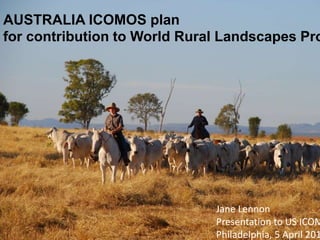
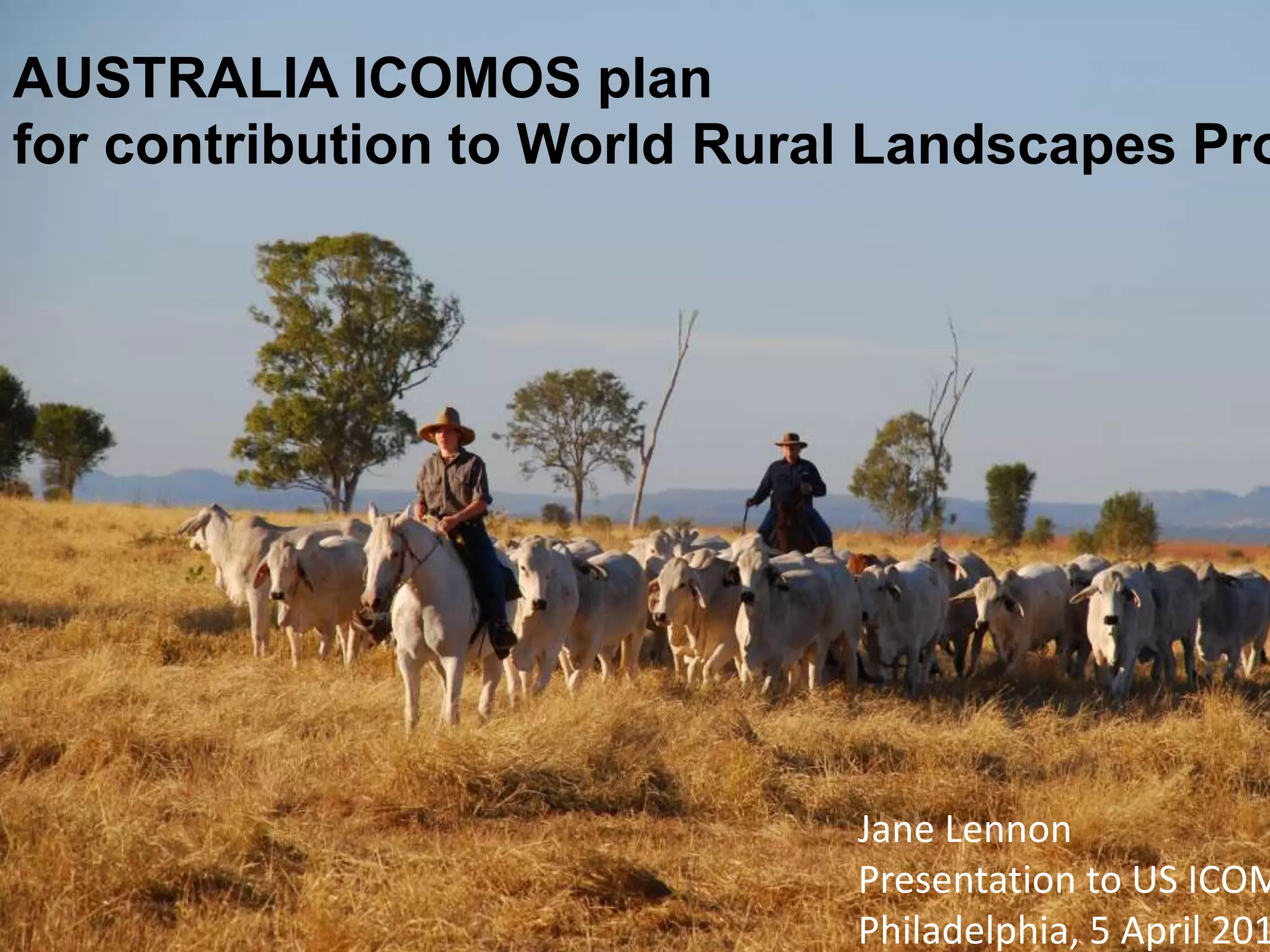
Jane Lennon
Presentation to US ICOM
Philadelphia, 5 April 201
AUSTRALIA ICOMOS plan
for contribution to World Rural Landscapes Pro
The World Rural Landscapes (WRL) initiative
launched by the International Scientific Committee on Cultural Landscapes ICOMOS-
IFLA to foster the worldwide cooperation in the study, management and protection of
rural landscapes.
http://www.worldrurallandscapes.org
Proposed Initial Project Actions:
•Define the geographic scope: our continent – Includes all rural areas that produce food
on and underground, water, woodlands, pastures as well as agriculture –fish farming,
forestry, hunting.
•Note: Although Rodney Harrison estimated in ‘Shared Landscapes’ (2004) that some
98% of NSW after 1788 used for pastoral purposes (i.e., to produce wool as well as
meat and dairy), the WRL, as explained by Dr Lionella Scazzosi at our AI Canberra
meeting last October, intended to apply to the present and the extent of food-producing
landscapes
ACTION TO DATE
•Form an Australian Committee of interested
ISC/CL members, experts on cultural landscape
programs and experts on different geographic
regions.
•Share information on the WRL project through
the NSC email site and Dropbox.
•Prepared a task list, an implementation schedule
and identify proposed leads for each of the WRL
Outputs (Australian Bibliography, Glossary,
Landscape Classification Types or Categories,
and Case Studies)
• Finalized an agenda item for the NSC meeting
proposed for 8 March, 2014 in Canberra to review
drafts Outputs.
•Request an extension for the Outputs until the
end of April to incorporate NSC members input.
Issues to date
• Categories outlined in the
WRL doc relate poorly to
Australian agriculture.
• Continental scale –yet
productive lands
concentrated in wetter
areas
• Little application of
landscape analysis to
majority of rural landscapes
–few contributors
• Not many case studies by
our members –planners on
city edges; archaeologists
on mining sites, corridors;
architects on rural buildings
• Government reports tend to
be about rural produce,
biodiversity and water
conservation
• Not enough interest or
debate about rural heritage
applied to landscapes
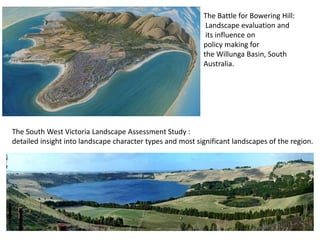
The South West Victoria Landscape Assessment Study :
detailed insight into landscape character types and most significant landscapes of the region.
The Battle for Bowering Hill:
Landscape evaluation and
its influence on
policy making for
the Willunga Basin, South
Australia.
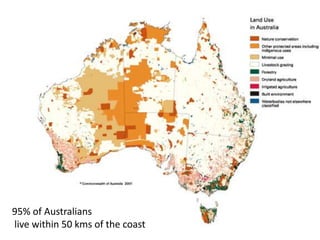
95% of Australians
live within 50 kms of the coast
ISSUES
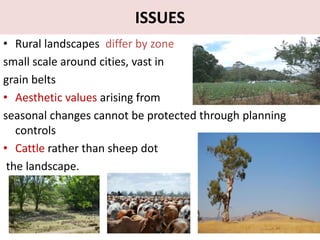
• Rural landscapes differ by zone
small scale around cities, vast in
grain belts
• Aesthetic values arising from
seasonal changes cannot be protected through planning
controls
• Cattle rather than sheep dot
the landscape.
ISSUES
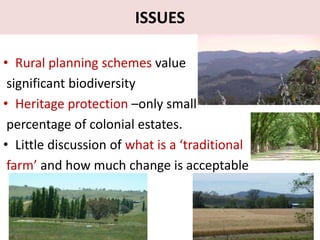
• Rural planning schemes value
significant biodiversity
• Heritage protection –only small
percentage of colonial estates.
• Little discussion of what is a ‘traditional
farm’ and how much change is acceptable
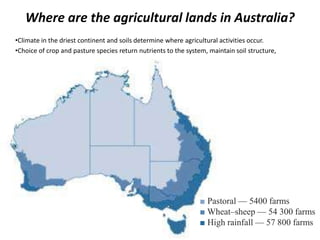
Where are the agricultural lands in Australia?
•Climate in the driest continent and soils determine where agricultural activities occur.
•Choice of crop and pasture species return nutrients to the system, maintain soil structure,
■ Pastoral — 5400 farms
■ Wheat–sheep — 54 300 farms
■ High rainfall — 57 800 farms
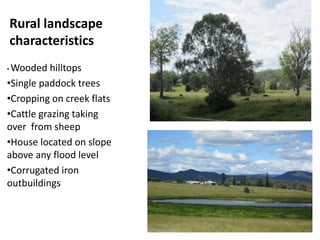
Rural landscape
characteristics
• Wooded hilltops
•Single paddock trees
•Cropping on creek flats
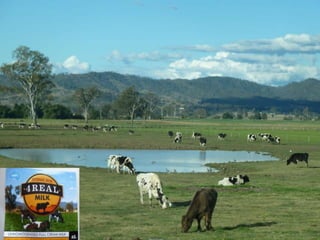
•Cattle grazing taking
over from sheep
•House located on slope
above any flood level
•Corrugated iron
outbuildings
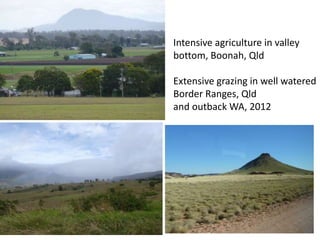
Intensive agriculture in valley
bottom, Boonah, Qld
Extensive grazing in well watered
Border Ranges, Qld
and outback WA, 2012
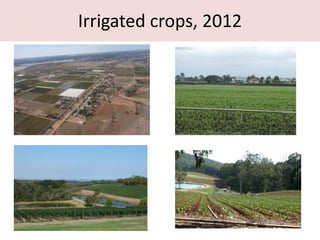
Irrigated crops, 2012
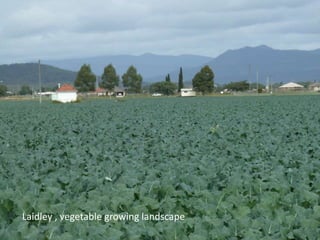
Laidley , vegetable growing landscape
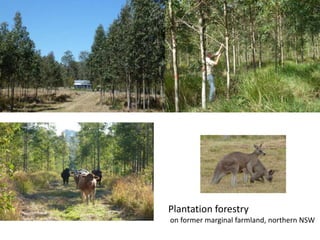
Plantation forestry
on former marginal farmland, northern NSW
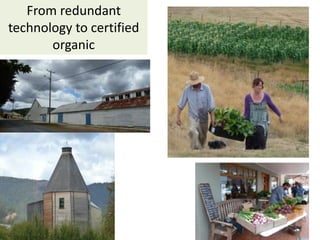
From redundant
technology to certified
organic
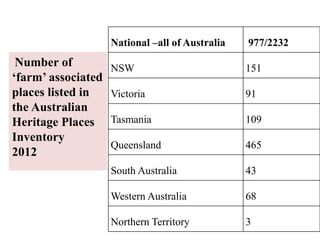
National –all of Australia 977/2232
NSW 151
Victoria 91
Tasmania 109
Queensland 465
South Australia 43
Western Australia 68
Northern Territory 3
Number of
‘farm’ associated
places listed in
the Australian
Heritage Places
Inventory
2012
Heritage Listing and protection
• Built components identified
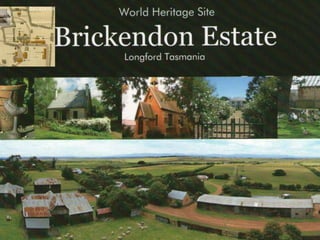
• Designed colonial farms and estates, many convict built, protected;
many now relict landscape features.
• Associated agricultural landscapes - not protected under heritage
controls, but Rural Use zone in planning schemes.
• Local Environment Plans [LEPs] identify heritage items, mostly
buildings, and aim to protect the visual character of distinctive
farming areas with controls on windfarms, power lines etc
• Rural landscapes are key images in Australian Impressionism art and
much admired.
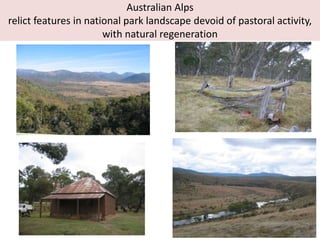
Australian Alps
relict features in national park landscape devoid of pastoral activity,
with natural regeneration
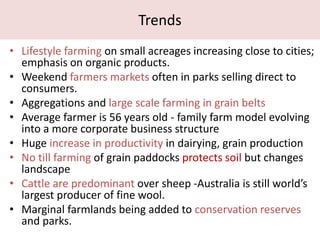
Trends
• Lifestyle farming on small acreages increasing close to cities;
emphasis on organic products.
• Weekend farmers markets often in parks selling direct to
consumers.
• Aggregations and large scale farming in grain belts
• Average farmer is 56 years old - family farm model evolving
into a more corporate business structure
• Huge increase in productivity in dairying, grain production
• No till farming of grain paddocks protects soil but changes
landscape
• Cattle are predominant over sheep -Australia is still world’s
largest producer of fine wool.
• Marginal farmlands being added to conservation reserves
and parks.
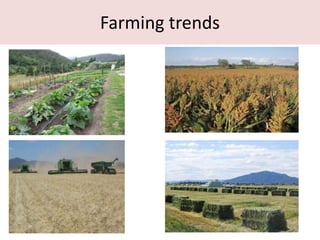
Farming trends
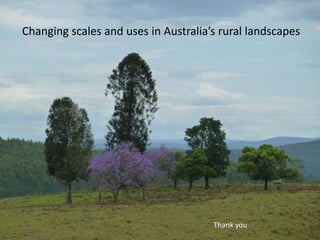
Changing scales and uses in Australia’s rural landscapes
Thank you

Australia ICOMOS Plan for Contribution to World Rural Landscapes

  • 1.
    Jane Lennon Presentation toUS ICOM Philadelphia, 5 April 201 AUSTRALIA ICOMOS plan for contribution to World Rural Landscapes Pro
  • 2.
    The World RuralLandscapes (WRL) initiative launched by the International Scientific Committee on Cultural Landscapes ICOMOS- IFLA to foster the worldwide cooperation in the study, management and protection of rural landscapes. http://www.worldrurallandscapes.org Proposed Initial Project Actions: •Define the geographic scope: our continent – Includes all rural areas that produce food on and underground, water, woodlands, pastures as well as agriculture –fish farming, forestry, hunting. •Note: Although Rodney Harrison estimated in ‘Shared Landscapes’ (2004) that some 98% of NSW after 1788 used for pastoral purposes (i.e., to produce wool as well as meat and dairy), the WRL, as explained by Dr Lionella Scazzosi at our AI Canberra meeting last October, intended to apply to the present and the extent of food-producing landscapes
  • 3.
    ACTION TO DATE •Forman Australian Committee of interested ISC/CL members, experts on cultural landscape programs and experts on different geographic regions. •Share information on the WRL project through the NSC email site and Dropbox. •Prepared a task list, an implementation schedule and identify proposed leads for each of the WRL Outputs (Australian Bibliography, Glossary, Landscape Classification Types or Categories, and Case Studies) • Finalized an agenda item for the NSC meeting proposed for 8 March, 2014 in Canberra to review drafts Outputs. •Request an extension for the Outputs until the end of April to incorporate NSC members input.
  • 4.
    Issues to date •Categories outlined in the WRL doc relate poorly to Australian agriculture. • Continental scale –yet productive lands concentrated in wetter areas • Little application of landscape analysis to majority of rural landscapes –few contributors • Not many case studies by our members –planners on city edges; archaeologists on mining sites, corridors; architects on rural buildings • Government reports tend to be about rural produce, biodiversity and water conservation • Not enough interest or debate about rural heritage applied to landscapes
  • 5.
    The South WestVictoria Landscape Assessment Study : detailed insight into landscape character types and most significant landscapes of the region. The Battle for Bowering Hill: Landscape evaluation and its influence on policy making for the Willunga Basin, South Australia.
  • 6.
    95% of Australians livewithin 50 kms of the coast
  • 7.
    ISSUES • Rural landscapesdiffer by zone small scale around cities, vast in grain belts • Aesthetic values arising from seasonal changes cannot be protected through planning controls • Cattle rather than sheep dot the landscape.
  • 8.
    ISSUES • Rural planningschemes value significant biodiversity • Heritage protection –only small percentage of colonial estates. • Little discussion of what is a ‘traditional farm’ and how much change is acceptable
  • 9.
    Where are theagricultural lands in Australia? •Climate in the driest continent and soils determine where agricultural activities occur. •Choice of crop and pasture species return nutrients to the system, maintain soil structure, ■ Pastoral — 5400 farms ■ Wheat–sheep — 54 300 farms ■ High rainfall — 57 800 farms
  • 10.
    Rural landscape characteristics • Woodedhilltops •Single paddock trees •Cropping on creek flats •Cattle grazing taking over from sheep •House located on slope above any flood level •Corrugated iron outbuildings
  • 11.
    Intensive agriculture invalley bottom, Boonah, Qld Extensive grazing in well watered Border Ranges, Qld and outback WA, 2012
  • 13.
  • 15.
    Laidley , vegetablegrowing landscape
  • 16.
    Plantation forestry on formermarginal farmland, northern NSW
  • 17.
  • 18.
    National –all ofAustralia 977/2232 NSW 151 Victoria 91 Tasmania 109 Queensland 465 South Australia 43 Western Australia 68 Northern Territory 3 Number of ‘farm’ associated places listed in the Australian Heritage Places Inventory 2012
  • 19.
    Heritage Listing andprotection • Built components identified • Designed colonial farms and estates, many convict built, protected; many now relict landscape features. • Associated agricultural landscapes - not protected under heritage controls, but Rural Use zone in planning schemes. • Local Environment Plans [LEPs] identify heritage items, mostly buildings, and aim to protect the visual character of distinctive farming areas with controls on windfarms, power lines etc • Rural landscapes are key images in Australian Impressionism art and much admired.
  • 21.
    Australian Alps relict featuresin national park landscape devoid of pastoral activity, with natural regeneration
  • 22.
    Trends • Lifestyle farmingon small acreages increasing close to cities; emphasis on organic products. • Weekend farmers markets often in parks selling direct to consumers. • Aggregations and large scale farming in grain belts • Average farmer is 56 years old - family farm model evolving into a more corporate business structure • Huge increase in productivity in dairying, grain production • No till farming of grain paddocks protects soil but changes landscape • Cattle are predominant over sheep -Australia is still world’s largest producer of fine wool. • Marginal farmlands being added to conservation reserves and parks.
  • 23.
  • 24.
    Changing scales anduses in Australia’s rural landscapes Thank you