Presented by: Raheel Noorani
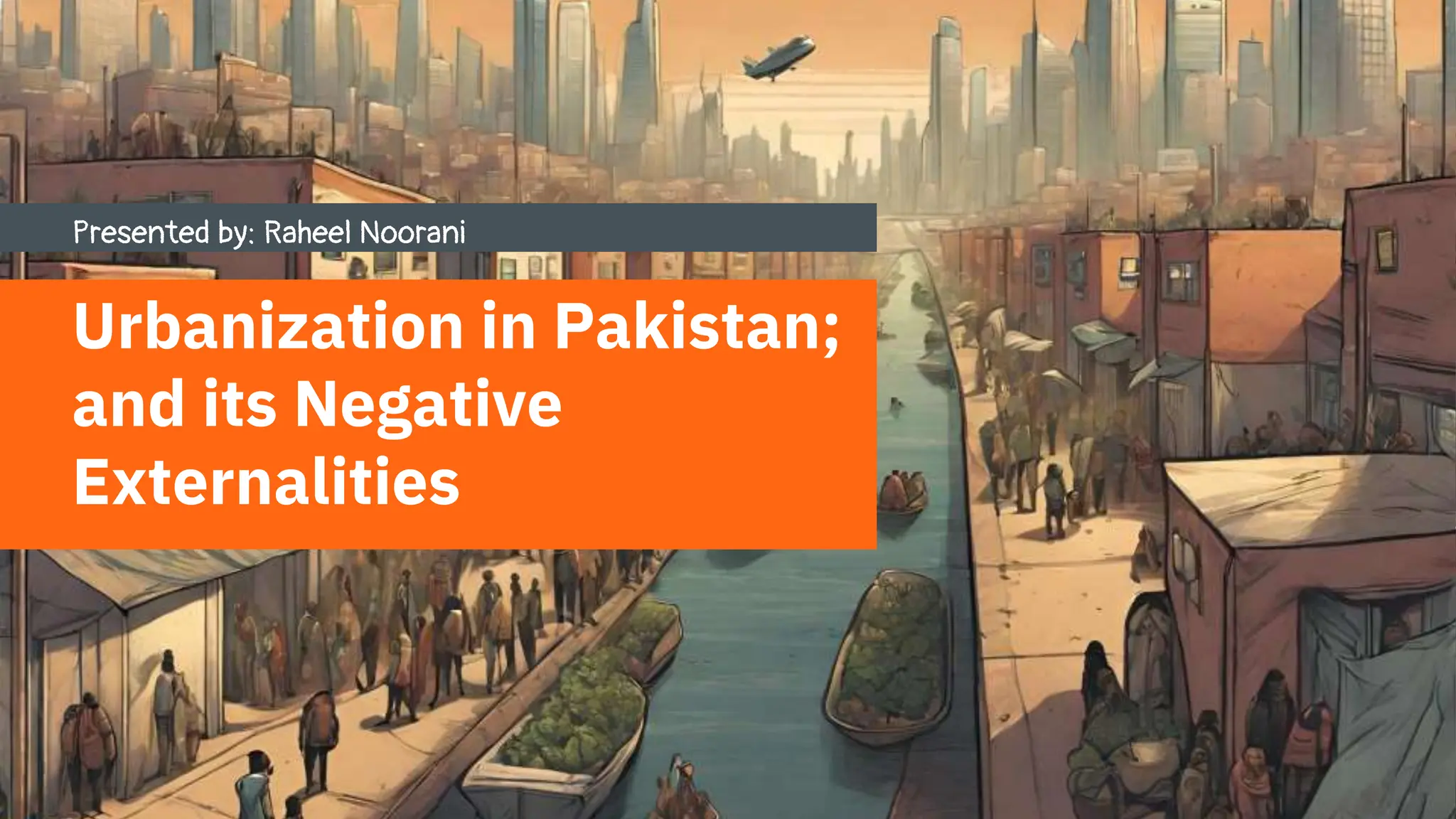
Urbanization in Pakistan;
and its Negative
Externalities
Urbanization
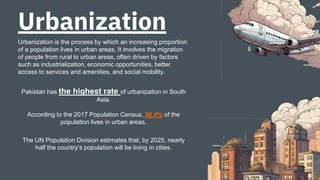
Urbanization is the process by which an increasing proportion
of a population lives in urban areas, It involves the migration
of people from rural to urban areas, often driven by factors
such as industrialization, economic opportunities, better
access to services and amenities, and social mobility.
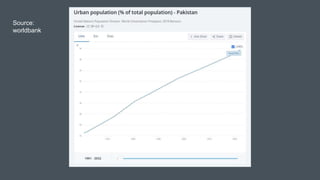
Pakistan has the highest rate of urbanization in South
Asia.
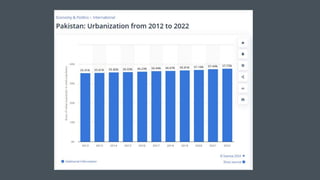
According to the 2017 Population Census, 36.4% of the
population lives in urban areas.
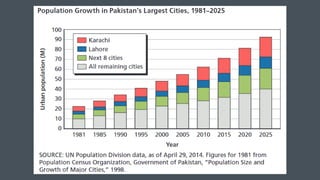
The UN Population Division estimates that, by 2025, nearly
half the country’s population will be living in cities.
Globally, it is estimated that cities generate more than 80% of the global GDP. The more
urbanized areas indicate higher per capita income and more employment opportunities.
Cities in Pakistan generate 55% of the GDP.
Moreover, Pakistan generates 95% of its federal tax revenue from 10 major cities.
Karachi alone generates 12-15% of Pakistan’s GDP and contributes 55% of the federal tax
revenue of the country.
Seven out of 10 major cities in Pakistan have larger per capita incomes than the average.
Poverty in cities is generally lower
Source:
worldbank
Negative Externalities
Recent research suggests that the relationship between urbanization and growth is not automatic.
Urbanization in many developing countries has occurred without growth, jobs and productivity.
Unplanned and unmanaged urbanization has rather resulted into:
• URBAN SLUMS
• ENVIRONMENTAL DEGRADATION
• POVERTY
• INEQUALITY.
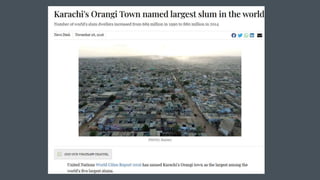
Pakistan has a huge housing deficit of nearly 10 million units and growing. Urban population growth in the
country has not been matched by growth in housing units or equitable access to land, resulting in housing
shortages and the growth of slums.
Cities are the hub of economic activities, but they are also the biggest
sources of carbon emissions. Estimates suggest that cities generate
2.1 billion tonnes of solid waste annually.
Pakistan is fast becoming a water scarce country. It needs water
recycling which is another potential area for public-private partnership.
Pollution is a major urban challenge.
Solutions
Urban Planning: Effective urban planning is crucial for managing the externalities of urbanization, including
land use zoning, transportation planning, and infrastructure development.
Investment in Infrastructure: Adequate investment in infrastructure is essential to support growing urban
populations and address the challenges of congestion, pollution, and service delivery.
In a study conducted in Islamabad, we found that the city government could generate a revenue of Rs15.3
billion from car parking fees alone. UNDP June 5th, 2019.
Affordable Housing
Policies:
Governments can
implement policies to
promote affordable
housing, such as
subsidies, rent
controls, to ensure
that urbanization
benefits all segments
of society.
Investment in Public Transportation:
Prioritizing investment in public
transportation systems, including buses,
trains, and metro systems, can alleviate
congestion, reduce greenhouse gas
emissions, and improve access to
employment, education, and services for
urban residents.
THANK YOU!

Urbanization in Pakistan with reference economic model .pptx

  • 1.
    Presented by: RaheelNoorani Urbanization in Pakistan; and its Negative Externalities
  • 2.
    Urbanization Urbanization is theprocess by which an increasing proportion of a population lives in urban areas, It involves the migration of people from rural to urban areas, often driven by factors such as industrialization, economic opportunities, better access to services and amenities, and social mobility. Pakistan has the highest rate of urbanization in South Asia. According to the 2017 Population Census, 36.4% of the population lives in urban areas. The UN Population Division estimates that, by 2025, nearly half the country’s population will be living in cities.
  • 3.
    Globally, it isestimated that cities generate more than 80% of the global GDP. The more urbanized areas indicate higher per capita income and more employment opportunities. Cities in Pakistan generate 55% of the GDP. Moreover, Pakistan generates 95% of its federal tax revenue from 10 major cities. Karachi alone generates 12-15% of Pakistan’s GDP and contributes 55% of the federal tax revenue of the country. Seven out of 10 major cities in Pakistan have larger per capita incomes than the average. Poverty in cities is generally lower
  • 4.
  • 7.
    Negative Externalities Recent researchsuggests that the relationship between urbanization and growth is not automatic. Urbanization in many developing countries has occurred without growth, jobs and productivity. Unplanned and unmanaged urbanization has rather resulted into: • URBAN SLUMS • ENVIRONMENTAL DEGRADATION • POVERTY • INEQUALITY. Pakistan has a huge housing deficit of nearly 10 million units and growing. Urban population growth in the country has not been matched by growth in housing units or equitable access to land, resulting in housing shortages and the growth of slums.
  • 9.
    Cities are thehub of economic activities, but they are also the biggest sources of carbon emissions. Estimates suggest that cities generate 2.1 billion tonnes of solid waste annually. Pakistan is fast becoming a water scarce country. It needs water recycling which is another potential area for public-private partnership. Pollution is a major urban challenge.
  • 10.
    Solutions Urban Planning: Effectiveurban planning is crucial for managing the externalities of urbanization, including land use zoning, transportation planning, and infrastructure development. Investment in Infrastructure: Adequate investment in infrastructure is essential to support growing urban populations and address the challenges of congestion, pollution, and service delivery. In a study conducted in Islamabad, we found that the city government could generate a revenue of Rs15.3 billion from car parking fees alone. UNDP June 5th, 2019.
  • 11.
    Affordable Housing Policies: Governments can implementpolicies to promote affordable housing, such as subsidies, rent controls, to ensure that urbanization benefits all segments of society. Investment in Public Transportation: Prioritizing investment in public transportation systems, including buses, trains, and metro systems, can alleviate congestion, reduce greenhouse gas emissions, and improve access to employment, education, and services for urban residents.
  • 12.