Internet of Things (IoT) and Its
Applications
UNIT II – M2M and IoT Architecture
Why IoT Matters? (Motivation)
• Connecting devices, people, and processes
• Applications: Smart homes, wearables,
healthcare, industry
• IoT = M2M + Cloud + Data + Applications
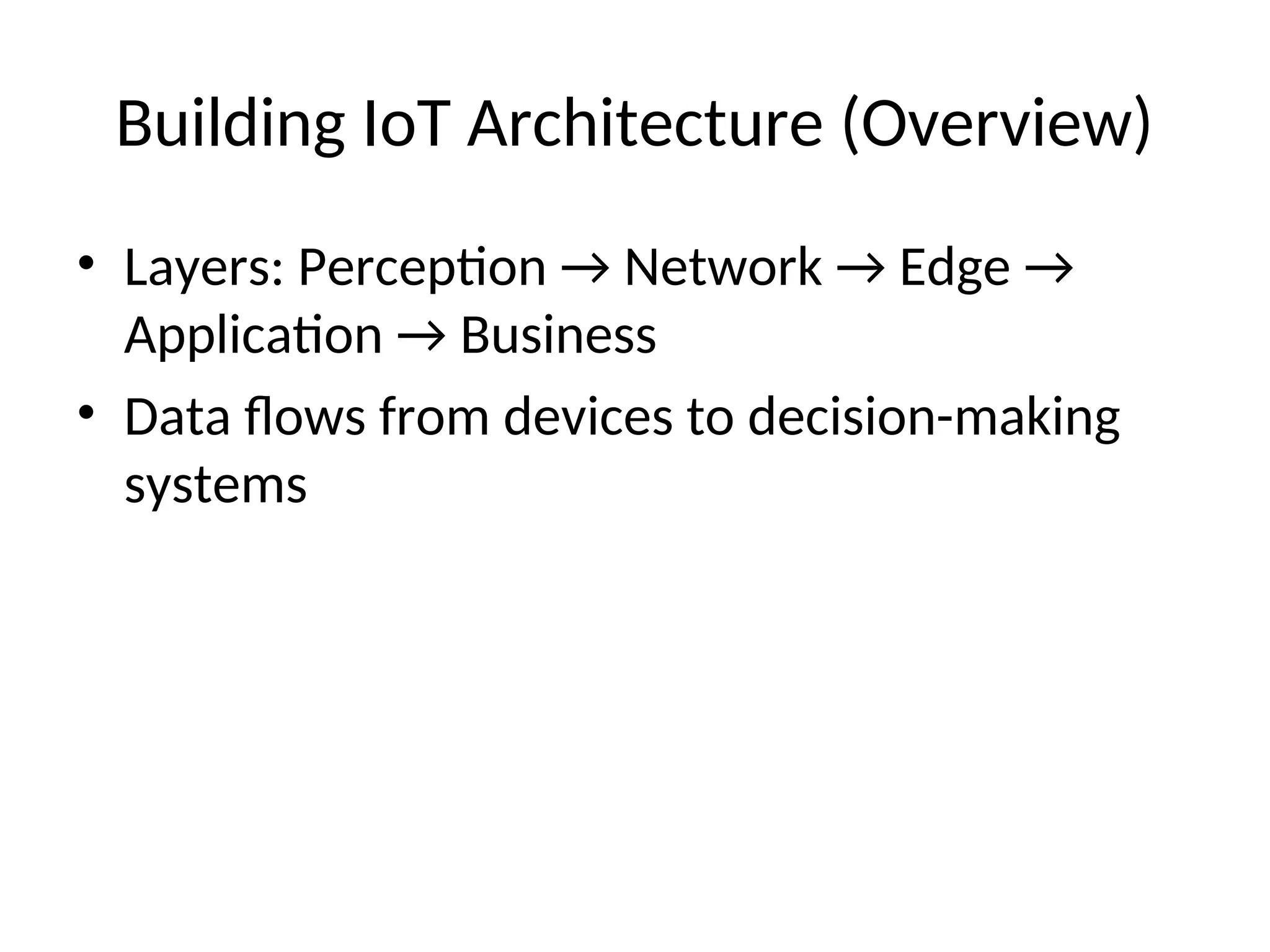
Building IoT Architecture (Overview)
• Layers: Perception → Network → Edge →
Application → Business
• Data flows from devices to decision-making
systems
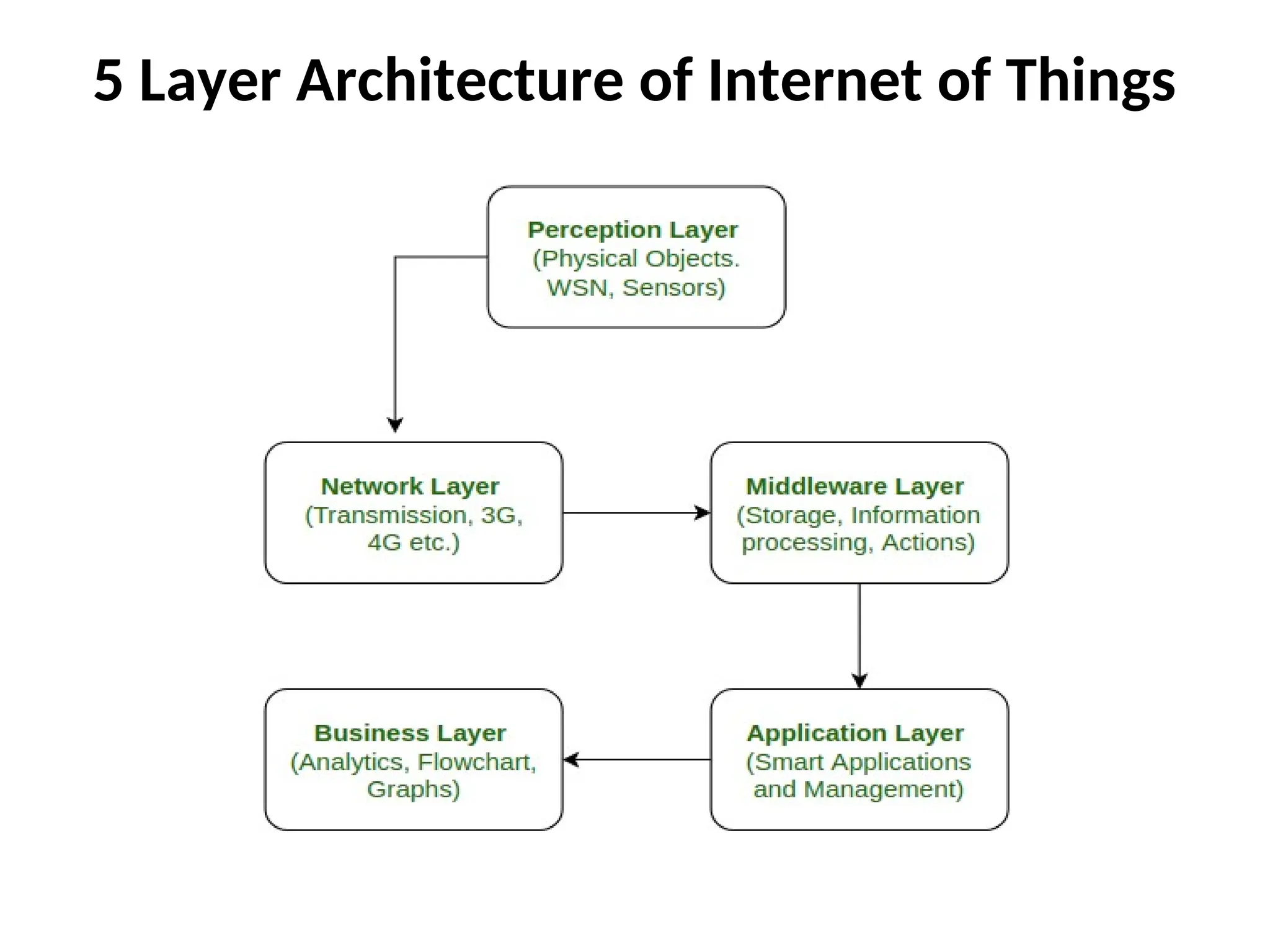
5 Layer Architecture of Internet of Things
IoT Architecture: Perception Layer
• Devices, sensors, actuators
• Data collection begins here
IoT Architecture: Network Layer
• Role: Transmission of sensor data
• Technologies: Wi-Fi, Zigbee, LoRa, 4G/5G
• Choice depends on range, speed, power
consumption
IoT Architecture: Edge Layer
• Pre-processing & filtering near devices
• Reduces cloud load & latency
IoT Architecture: Application &
Business Layer
• Application Layer: User interfaces and apps
• Business Layer: Insights and decision-making
Devices in IoT
• Sensors, actuators, RFID, cameras, smart
meters
• Embedded systems enable device intelligence
Gateways in IoT
• Connect devices to cloud
• Protocol translation, security, local processing
Local Networking in IoT
• Wi-Fi: High speed, high power
• Bluetooth: Short range, low power
• Zigbee: Mesh networking
Wide Area Networking in IoT
• Cellular (4G/5G) – Long range, high speed
• LPWAN (LoRa, NB-IoT) – Long range, low
power
• Used in smart city & industrial applications
Data Management in IoT
• Collection → Storage → Processing → Security
• Real-time vs batch data processing
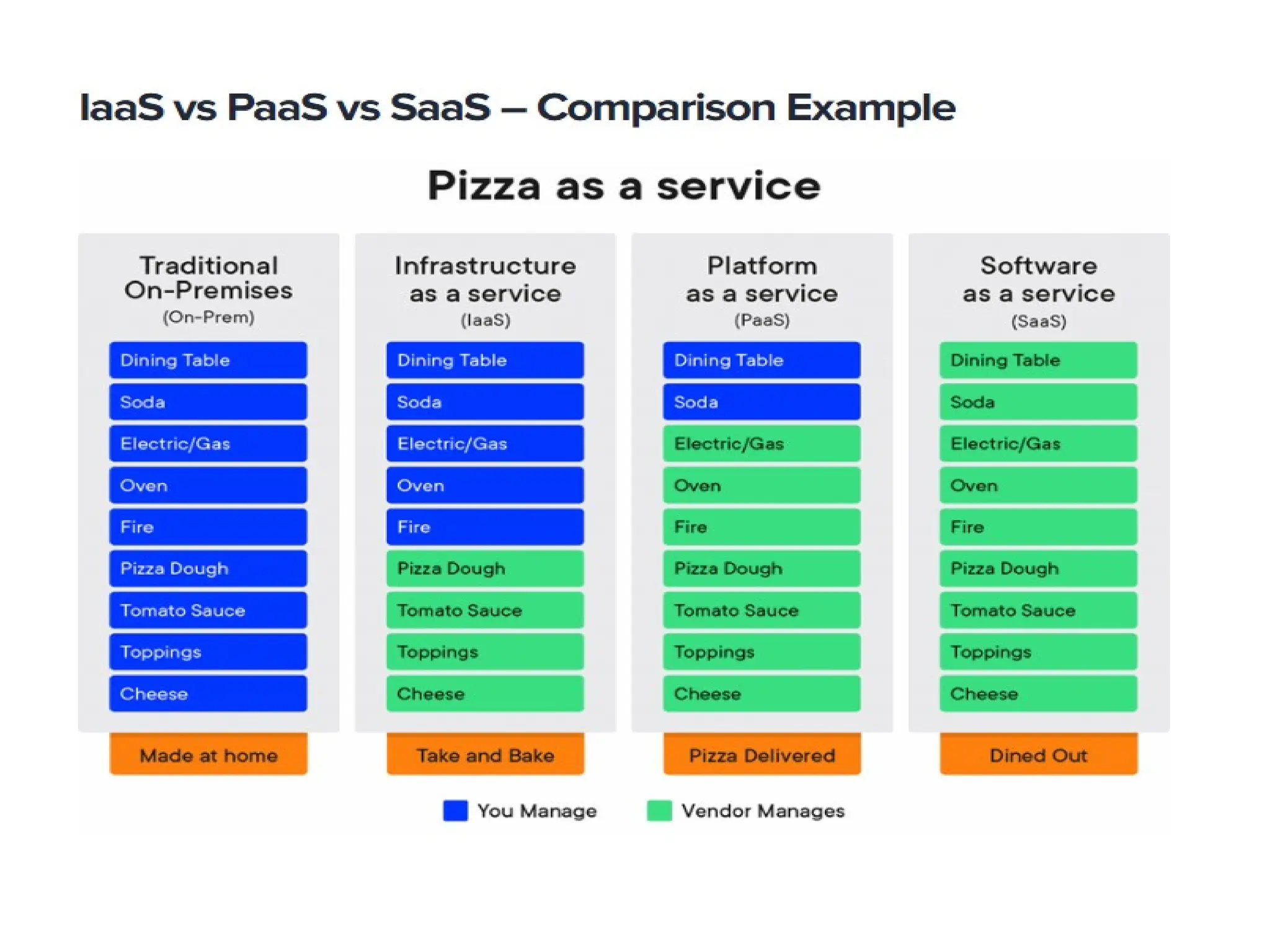
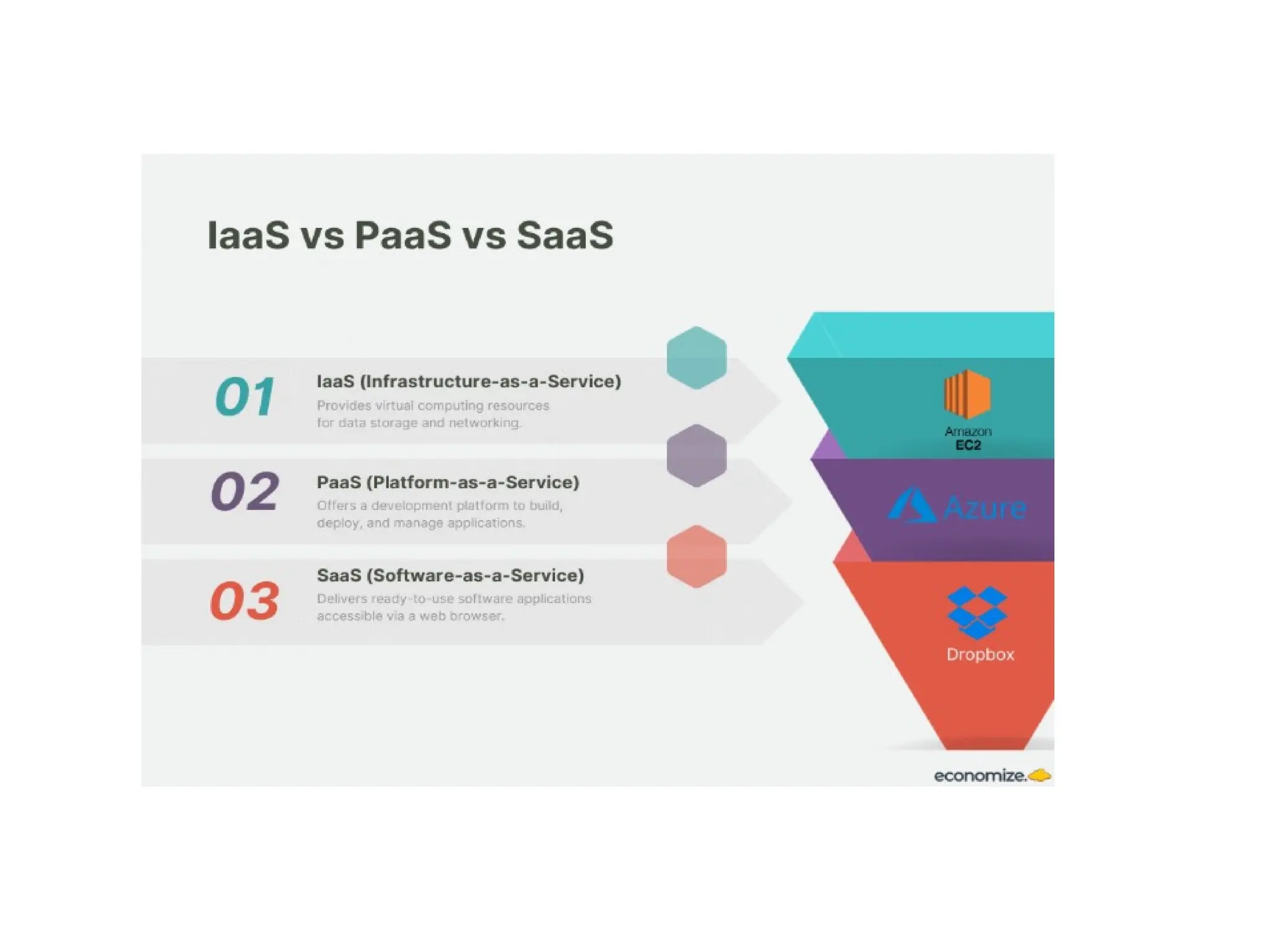
Everything as a Service (XaaS)
• SaaS – Software applications
• PaaS – Developer tools
• IaaS – Cloud infrastructure
• IoT services built on cloud models
IoT Analytics & Knowledge
Management
• Analytics types: Descriptive, Predictive,
Prescriptive
• Knowledge management = Actionable insights
• AI & ML enhance IoT decision-making
IoT Reference Model (Cisco IoTWF)
• 7 Layers:
• 1. Perception 2. Network 3. Edge
• 4. Processing 5. Application
• 6. Business 7. Security

UNIT_II_IoT_Architecture iot application.ppt

  • 1.
    Internet of Things(IoT) and Its Applications UNIT II – M2M and IoT Architecture
  • 2.
    Why IoT Matters?(Motivation) • Connecting devices, people, and processes • Applications: Smart homes, wearables, healthcare, industry • IoT = M2M + Cloud + Data + Applications
  • 3.
    Building IoT Architecture(Overview) • Layers: Perception → Network → Edge → Application → Business • Data flows from devices to decision-making systems
  • 4.
    5 Layer Architectureof Internet of Things
  • 5.
    IoT Architecture: PerceptionLayer • Devices, sensors, actuators • Data collection begins here
  • 6.
    IoT Architecture: NetworkLayer • Role: Transmission of sensor data • Technologies: Wi-Fi, Zigbee, LoRa, 4G/5G • Choice depends on range, speed, power consumption
  • 7.
    IoT Architecture: EdgeLayer • Pre-processing & filtering near devices • Reduces cloud load & latency
  • 8.
    IoT Architecture: Application& Business Layer • Application Layer: User interfaces and apps • Business Layer: Insights and decision-making
  • 9.
    Devices in IoT •Sensors, actuators, RFID, cameras, smart meters • Embedded systems enable device intelligence
  • 10.
    Gateways in IoT •Connect devices to cloud • Protocol translation, security, local processing
  • 11.
    Local Networking inIoT • Wi-Fi: High speed, high power • Bluetooth: Short range, low power • Zigbee: Mesh networking
  • 12.
    Wide Area Networkingin IoT • Cellular (4G/5G) – Long range, high speed • LPWAN (LoRa, NB-IoT) – Long range, low power • Used in smart city & industrial applications
  • 13.
    Data Management inIoT • Collection → Storage → Processing → Security • Real-time vs batch data processing
  • 14.
    Everything as aService (XaaS) • SaaS – Software applications • PaaS – Developer tools • IaaS – Cloud infrastructure • IoT services built on cloud models
  • 17.
    IoT Analytics &Knowledge Management • Analytics types: Descriptive, Predictive, Prescriptive • Knowledge management = Actionable insights • AI & ML enhance IoT decision-making
  • 18.
    IoT Reference Model(Cisco IoTWF) • 7 Layers: • 1. Perception 2. Network 3. Edge • 4. Processing 5. Application • 6. Business 7. Security