Report Preparation
Unit-5
Research Methodology-PGDM-
304
“Research reports are detailed and accurate accounts of
the conduct of disciplined studies accomplished to solve
problems or to reveal new knowledge.” (Busha and
Harter, 1988).
Meaning of Theses :
 Oral or written presentation of the evidence
 Findings form as to be readily understood and accessed by
the reader
 Enable to verify the validity of the conclusions..
 Thesis Writing is not a marketable Skill
 Writing a thesis is hard, Painful work
 You’ve already done the fun part (the research)
 In the process, you will learn
 How to research, How to write
 You get to add “Dr” to your name
 It will make you famous; It will be read by others
 It will radically change science ; It will advance knowledge
 Read some good theses
Structure of Research Report
 Generally, a research report, whether it is called
dissertation or thesis
 1) The Priliminary i.e. preface pages
 2) The text of the report / Main body of the report
 3) The Reference material.
PRELIMINARY SECTION
 Title page
 Executive Summary
 Certification
 Candidate Declaration
 Preface including Acknowledgements
 Table of Content
 List of Tables
 List of figures
 List of Abbreviation
CHAPTER 1-INTRODUCTION
1.0 Introduction
1.1 Background of the study
1.2 Problem Statement
1.3 Purpose and objective of the study
1.4 Research Questions / Hypotheses
1.5 Definition of Terms
1.6 Significant of the study
1.7 Conspectus / chapterization
Cont
Within each chapter, repeat 3 times
 Intro. Well will show..
 Body. Show them..
 Conl. We have show
Within thesis, repeat contributions 3 times
 Intro chapter
 Main chapters
 Conclusion chapter
CHAPTER 2-LITERATURE REVIEW
2.0 Introduction
2.1 Body of the literature – Classified, Chronological /
Alphabetical
2.1.1 General area of research
2.1.2 Underlying theory
2.1.3 Variables used from previous literature
2.2 Theoretical Framework
2.3 Reviews on
2.4 Hypotheses
2.5 Inferences
Cont
Examiner looking:
 Is the literature relevant
 Is the review critical or just descriptive
 Is it comprehensive
 Does it link to the methodology in the thesis
 Does it summarize the essential aspects
CHAPTER 3 – RESEARCH METHODOLOGY
3.0 Introduction
3.1 Research Design / Plan on work
3.2 Variable and Measurement
3.3 Graphs / figures
3.4 Questionnaire design / Data sheet
3.5 Population and Sample
3.6 Scope of the study
3.7 Data analysis method
3.7.1 Goodness of data
3.7.2 Inferential analysis
3.7 Style of rendering
3.8 Concluding remarks
Cont
Examiner looking for :
 Clear hypothesis
 Precautions taken against bias
 Limitations identified
 Data collected appropriately
 Methodology justified
CHAPTER 4- DATA COLLECTION, DATA
ANALYSIS
4.1 Introduction
4.2 Goodness of Measure
4.2.1 Representativeness of data
4.2.2 Validity test,
4.2.3 What to the data mean,
4.2.4 What impact do the data have
4.2.5 Reliability test
4.3 Inferential analysis
4.3.1 Descriptive analysis
4.3.2 Test of difference
4.3.3 Test of relationship
 Correlation analysis
 Hypothesis testing
4.4 Concluding remarks
Cont
Examiner looking for :
 Have the hypotheses in fact been tested
 Are the results shown to support the hypothesis
 Is the data properly analyzed
 Are the results presented clearly
 Are patterns identified and summarized
CHAPTER 5- DISCUSSION AND CONCLUSION
5.1 Recapitulation of major findings
5.2 Discussion
5.3 Implication
5.3.1 Theoretical Implication
5.3.2 Practical Implication
5.4 Limitations
5.5 Recommendation for future research
5.6 Conclusion
Cont
Examiner looking for :
 Are the limits of the research identified
 Are the main points to emerge identified
 Are links made to the literature
 Is there theoretical development
 Are the speculations well grounded
REFERENCE MATERIAL
The reference material is generally divided as fallows
 1. Bibliography Style manual
 2. Appendices
 3. Glossary of terms (if any)
 4. Index (if any)
Difficulties or Problems in Writing a Report
1) The Problems of Communications
 a. Technical terms should be properly
explained.
 b. Neither too simple nor too difficult expression
 c. Level of Knowledge and subject-matter
 d. Language and drafting
2) The problem of objectivity .
3) The Problems of expression of bitter truths
and unpleasant facts
Preparation of reports
 For preparations or drafting of reports three steps
are involved.
 1) First Draft:
 Comprehensiveness or fullness of facts.
 Precision or Accuracy of Facts
 Coherence or logic of facts, and
 Movement or transition of facts and ideas.
Second Drafts & Third Drafts
 2nd make the writing precise, Concise and brief.
 critical evaluation on written-facts,
 findings, conclusions and recommendations.
 3rd The final stage in drafting is the preparations of final
report.
 finish and final touches,
 documentation and polish
 Documentation indicated the references to the
sources,
 additional data and discussion
 further reading
 thoroughness of the investigation
 guide to further work.
Characteristics of good Thesis report
 1) Attractive
 2) Clear Topic
 3) Balanced Language
 4) No repetition of facts
 5) Statement of scientific facts
 6) Practicability
 7)Description of the difficulties and the
shortcomings
Good the Report
 Review of literature
 Treatment of quotations
 Size and Physical Design
 Footnotes
 Use of Abbreviations
 Use of Statistics, Charts and Graphs
 Bibliography, Index & Appendices
 Thesis –writing is an art learn by practice and
experience.
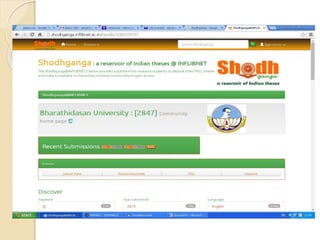
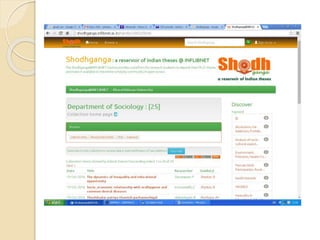
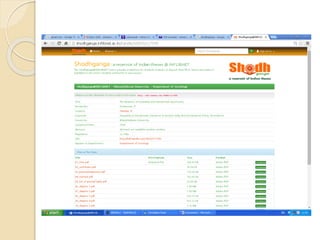
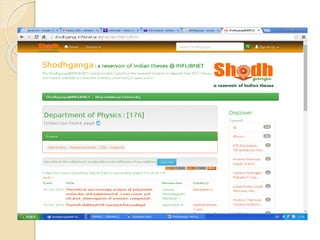
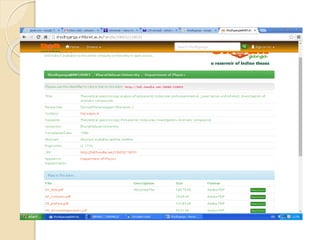
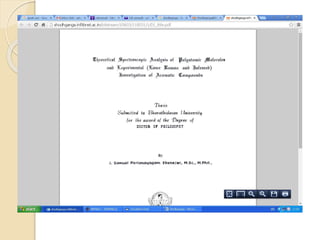
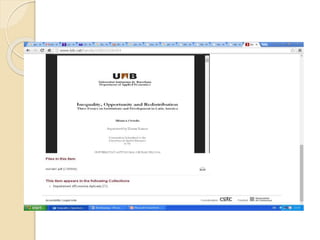
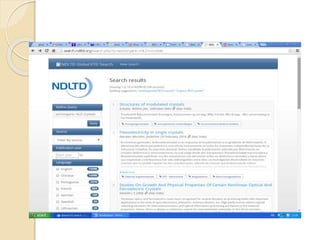
Shodhganga
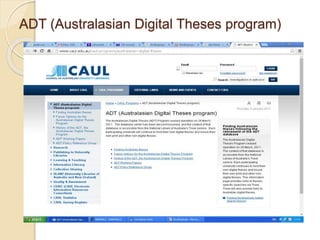
ADT (Australasian Digital Theses program)
Social progress and ethical
values
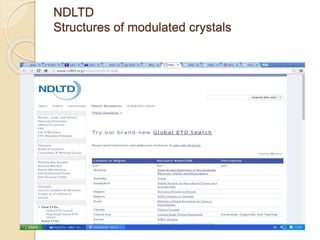
NDLTD
Structures of modulated crystals
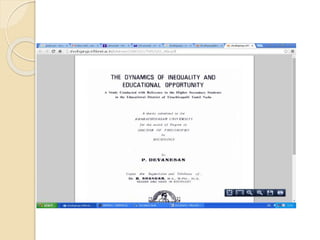
The dynamics of inequality and educational
opportunity
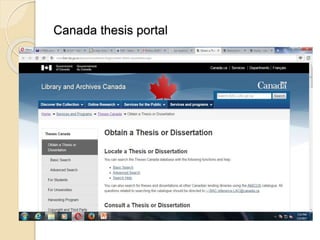
Canada thesis portal
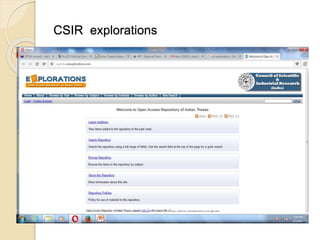
CSIR explorations
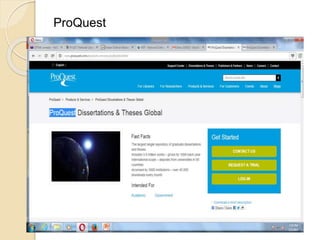
ProQuest
E-mail:bdulib@gmail.com

Unit-5-Report Writing.pptx

  • 1.
  • 2.
    “Research reports aredetailed and accurate accounts of the conduct of disciplined studies accomplished to solve problems or to reveal new knowledge.” (Busha and Harter, 1988).
  • 3.
    Meaning of Theses:  Oral or written presentation of the evidence  Findings form as to be readily understood and accessed by the reader  Enable to verify the validity of the conclusions..  Thesis Writing is not a marketable Skill  Writing a thesis is hard, Painful work  You’ve already done the fun part (the research)  In the process, you will learn  How to research, How to write  You get to add “Dr” to your name  It will make you famous; It will be read by others  It will radically change science ; It will advance knowledge  Read some good theses
  • 4.
    Structure of ResearchReport  Generally, a research report, whether it is called dissertation or thesis  1) The Priliminary i.e. preface pages  2) The text of the report / Main body of the report  3) The Reference material.
  • 5.
    PRELIMINARY SECTION  Titlepage  Executive Summary  Certification  Candidate Declaration  Preface including Acknowledgements  Table of Content  List of Tables  List of figures  List of Abbreviation
  • 6.
    CHAPTER 1-INTRODUCTION 1.0 Introduction 1.1Background of the study 1.2 Problem Statement 1.3 Purpose and objective of the study 1.4 Research Questions / Hypotheses 1.5 Definition of Terms 1.6 Significant of the study 1.7 Conspectus / chapterization
  • 7.
    Cont Within each chapter,repeat 3 times  Intro. Well will show..  Body. Show them..  Conl. We have show Within thesis, repeat contributions 3 times  Intro chapter  Main chapters  Conclusion chapter
  • 8.
    CHAPTER 2-LITERATURE REVIEW 2.0Introduction 2.1 Body of the literature – Classified, Chronological / Alphabetical 2.1.1 General area of research 2.1.2 Underlying theory 2.1.3 Variables used from previous literature 2.2 Theoretical Framework 2.3 Reviews on 2.4 Hypotheses 2.5 Inferences
  • 9.
    Cont Examiner looking:  Isthe literature relevant  Is the review critical or just descriptive  Is it comprehensive  Does it link to the methodology in the thesis  Does it summarize the essential aspects
  • 10.
    CHAPTER 3 –RESEARCH METHODOLOGY 3.0 Introduction 3.1 Research Design / Plan on work 3.2 Variable and Measurement 3.3 Graphs / figures 3.4 Questionnaire design / Data sheet 3.5 Population and Sample 3.6 Scope of the study 3.7 Data analysis method 3.7.1 Goodness of data 3.7.2 Inferential analysis 3.7 Style of rendering 3.8 Concluding remarks
  • 11.
    Cont Examiner looking for:  Clear hypothesis  Precautions taken against bias  Limitations identified  Data collected appropriately  Methodology justified
  • 12.
    CHAPTER 4- DATACOLLECTION, DATA ANALYSIS 4.1 Introduction 4.2 Goodness of Measure 4.2.1 Representativeness of data 4.2.2 Validity test, 4.2.3 What to the data mean, 4.2.4 What impact do the data have 4.2.5 Reliability test 4.3 Inferential analysis 4.3.1 Descriptive analysis 4.3.2 Test of difference 4.3.3 Test of relationship  Correlation analysis  Hypothesis testing 4.4 Concluding remarks
  • 13.
    Cont Examiner looking for:  Have the hypotheses in fact been tested  Are the results shown to support the hypothesis  Is the data properly analyzed  Are the results presented clearly  Are patterns identified and summarized
  • 14.
    CHAPTER 5- DISCUSSIONAND CONCLUSION 5.1 Recapitulation of major findings 5.2 Discussion 5.3 Implication 5.3.1 Theoretical Implication 5.3.2 Practical Implication 5.4 Limitations 5.5 Recommendation for future research 5.6 Conclusion
  • 15.
    Cont Examiner looking for:  Are the limits of the research identified  Are the main points to emerge identified  Are links made to the literature  Is there theoretical development  Are the speculations well grounded
  • 16.
    REFERENCE MATERIAL The referencematerial is generally divided as fallows  1. Bibliography Style manual  2. Appendices  3. Glossary of terms (if any)  4. Index (if any)
  • 17.
    Difficulties or Problemsin Writing a Report 1) The Problems of Communications  a. Technical terms should be properly explained.  b. Neither too simple nor too difficult expression  c. Level of Knowledge and subject-matter  d. Language and drafting 2) The problem of objectivity . 3) The Problems of expression of bitter truths and unpleasant facts
  • 18.
    Preparation of reports For preparations or drafting of reports three steps are involved.  1) First Draft:  Comprehensiveness or fullness of facts.  Precision or Accuracy of Facts  Coherence or logic of facts, and  Movement or transition of facts and ideas.
  • 19.
    Second Drafts &Third Drafts  2nd make the writing precise, Concise and brief.  critical evaluation on written-facts,  findings, conclusions and recommendations.  3rd The final stage in drafting is the preparations of final report.  finish and final touches,  documentation and polish  Documentation indicated the references to the sources,  additional data and discussion  further reading  thoroughness of the investigation  guide to further work.
  • 20.
    Characteristics of goodThesis report  1) Attractive  2) Clear Topic  3) Balanced Language  4) No repetition of facts  5) Statement of scientific facts  6) Practicability  7)Description of the difficulties and the shortcomings
  • 21.
    Good the Report Review of literature  Treatment of quotations  Size and Physical Design  Footnotes  Use of Abbreviations  Use of Statistics, Charts and Graphs  Bibliography, Index & Appendices  Thesis –writing is an art learn by practice and experience.
  • 22.
  • 30.
  • 34.
    Social progress andethical values
  • 37.
  • 42.
    The dynamics ofinequality and educational opportunity
  • 44.
  • 45.
  • 46.
  • 47.