What Systems Developed in the Colonies? Unit 4, Lesson 5
AGENDA Vocabulary Lesson 5
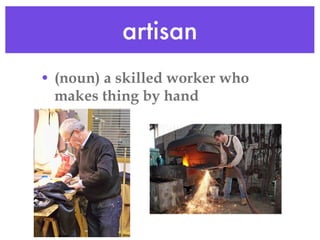
artisan (noun) a skilled worker who makes thing by hand
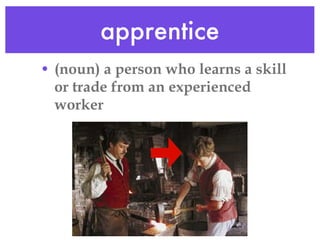
apprentice (noun) a person who learns a skill or trade from an experienced worker
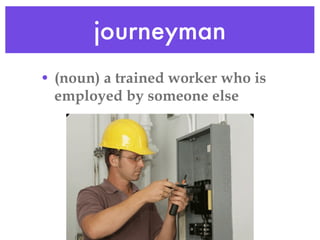
journeyman (noun) a trained worker who is employed by someone else
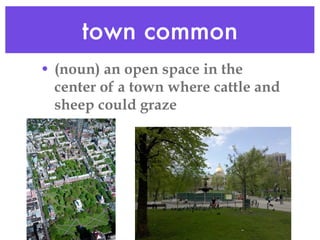
town common (noun) an open space in the center of a town where cattle and sheep could graze
free-market economy (noun) a system in which prices are not controlled by the government
Free-Market Economy The colonies are a free-market system. This means that the king had little to no control over the economy in the colonies. *Each colony has its own government and they make everyday decisions *Conflicts between the English and colonists don’t begin until later when the English begin trying to control the finances of the colonists (taxes, fees, etc.)
Apprentices Children would go to school until the age of 9 or 10. Then they become an apprentice, learning a trade and working for free.   *Room, clothing, and food paid for *At 21 you could work as a journeyman or try to start your own business
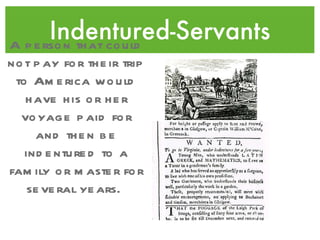
Indentured-Servants A person that could not pay for their trip to America would have his or her voyage paid for and then be indentured to a family or master for several years.
Slaves Slavery Begins: The growth of the tobacco industry creates the need for slave labor *Plantations system begins (crops such as rice, indigo, and cotton required cheap labor also) *Were often taught a trade, but never had the opportunity to run their own business
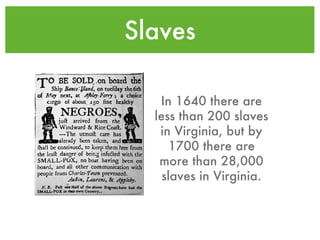
Slaves In 1640 there are less than 200 slaves in Virginia, but by 1700 there are more than 28,000 slaves in Virginia.

Unit4,lesson5

  • 1.
    What Systems Developedin the Colonies? Unit 4, Lesson 5
  • 2.
  • 3.
    artisan (noun) askilled worker who makes thing by hand
  • 4.
    apprentice (noun) aperson who learns a skill or trade from an experienced worker
  • 5.
    journeyman (noun) atrained worker who is employed by someone else
  • 6.
    town common (noun)an open space in the center of a town where cattle and sheep could graze
  • 7.
    free-market economy (noun)a system in which prices are not controlled by the government
  • 8.
    Free-Market Economy Thecolonies are a free-market system. This means that the king had little to no control over the economy in the colonies. *Each colony has its own government and they make everyday decisions *Conflicts between the English and colonists don’t begin until later when the English begin trying to control the finances of the colonists (taxes, fees, etc.)
  • 9.
    Apprentices Children wouldgo to school until the age of 9 or 10. Then they become an apprentice, learning a trade and working for free. *Room, clothing, and food paid for *At 21 you could work as a journeyman or try to start your own business
  • 10.
    Indentured-Servants A personthat could not pay for their trip to America would have his or her voyage paid for and then be indentured to a family or master for several years.
  • 11.
    Slaves Slavery Begins:The growth of the tobacco industry creates the need for slave labor *Plantations system begins (crops such as rice, indigo, and cotton required cheap labor also) *Were often taught a trade, but never had the opportunity to run their own business
  • 12.
    Slaves In 1640there are less than 200 slaves in Virginia, but by 1700 there are more than 28,000 slaves in Virginia.