
Tourism Industry
UNIT II MCOM SEM II
INDEX
• Definitions and Historical Development of Tourism,
• Types and Forms of Tourism,
• Planning and Execution of Tour Plans
• Coordination during Tour Management
• Networking for tour management
• Career Opportunities in Tourism Industry
2
DR VIJAY VISHWAKARMA
Definitions and Historical Development of
Tourism
• Tourism is a social, cultural and economic phenomenon which entails the
movement of people to countries or places outside their usual environment
for personal or business/professional purposes.
• Building on the definition of tourism, a commonly accepted description of
a tourist is “someone who travels at least 80 km from his or her home for at least
24 hours, for business or leisure or other reasons” (LinkBC, 2008, p.8). The
United Nations World Tourism Organization (1995) helps us break down this
definition further by stating tourists can be:
1.Domestic (residents of a given country travelling only within that country)
2.Inbound (non-residents travelling in a given country)
3.Outbound (residents of one country travelling in another country)
3
DR VIJAY VISHWAKARMA
• According to WTO (1993), ” Tourism encompasses the activities
of persons traveling and staying in places outside their usual
environment for not more than one consecutive year for leisure,
business, and other purposes.”
• 27 September is celebrated as world tourism every year.
This date was chosen as on that day in 1970, the Statutes of
UNWTO were adopted. The purpose of this day is to raise
awareness of the role of tourism within the international
community.
4
DR VIJAY VISHWAKARMA
Historical Development
of Tourism
• The historical development of tourism can be traced back to
ancient times when people traveled for trade, religious pilgrimage,
exploration, and military conquests. However, modern tourism as
we know it today began to take shape in the 19th century with the
advent of industrialization, improved transportation, and increased
leisure time for the middle class.
• Here's a brief overview of the historical development of tourism:
Early Tourism: In ancient times, people traveled for various reasons,
including trade along established routes like the Silk Road, religious
pilgrimages to sites such as Mecca or Jerusalem, and exploration by
adventurers like Marco Polo.
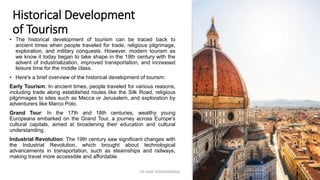
Grand Tour: In the 17th and 18th centuries, wealthy young
Europeans embarked on the Grand Tour, a journey across Europe's
cultural capitals, aimed at broadening their education and cultural
understanding.
Industrial Revolution: The 19th century saw significant changes with
the Industrial Revolution, which brought about technological
advancements in transportation, such as steamships and railways,
making travel more accessible and affordable.
5
DR VIJAY VISHWAKARMA
Thomas Cook and Mass Tourism: Thomas Cook, a British entrepreneur, is often
credited with organizing the first package tour in 1841, which marked the beginning
of mass tourism. His affordable excursions by train aimed at the working class laid
the groundwork for organized tourism.
20th Century: The 20th century witnessed further advancements in transportation,
including automobiles and airplanes, making long-distance travel easier and faster.
World War II also played a role in the development of tourism, as soldiers returning
from war sought leisure activities and travel opportunities.
Globalization and Technological Advances: In the latter half of the 20th century
and into the 21st century, globalization and technological advances, such as the
internet and social media, have revolutionized the tourism industry. Travel has
become more accessible, and people can easily research destinations, book
accommodations, and share their experiences online.
Sustainable Tourism: With concerns about environmental sustainability and the
impact of tourism on local communities, there's been a growing emphasis on
sustainable tourism practices that aim to minimize negative impacts and promote
responsible travel.
• Overall, tourism has evolved from a privilege of the wealthy elite to a widespread
and diverse industry that plays a significant role in economies worldwide,
generating income, employment, and cultural exchange.
6
DR VIJAY VISHWAKARMA
TYPES OF TOURISM
Tourism has two types and many forms on the bases of the
purpose of visit and alternative forms of tourism. Tourism
can be categorized as international and domestic tourism.
Tourism has two types and various forms. On the basis of
the movement of people tourism categorized into two
types.
7
DR VIJAY VISHWAKARMA
• International Tourism
• When people visit a foreign country, it is referred
to as International Tourism. To travel to a foreign
country, one needs a valid passport, visa, health
documents, foreign exchange, etc.
• International tourism further divides into two
types;
• Inbound Tourism
• Outbound Tourism.
8
DR VIJAY VISHWAKARMA
• Inbound Tourism
• This refers to tourists of outside origin entering a particular country. When people
travel outside their host/native country to another country, then it is called inbound
tourism for that country where he/she is traveling. For example when a tourist
from Indian origin travels to Japan then it is Inbound tourism for Japan because
foreign tourist comes to Japan.
• Outbound Tourism
• This refers to tourists traveling from the country of their origin to another country.
When tourists travel a foreign region than it is outbound tourism for his own
country because he/she is going outside their country. For example when a tourist
from India travel to Japan then it is outbound tourism for India and Inbound
tourism for Japan.
• Domestic Tourism
• The tourism activity of the people within their own country is known as domestic
tourism. Traveling within the same country is easier because it does not require
formal travel documents and tedious formalities like compulsory health checks
and foreign exchange. In domestic tourism, a traveler generally does not face
many language problems or currency exchange issues.
9
DR VIJAY VISHWAKARMA
FORMS OF TOURISM
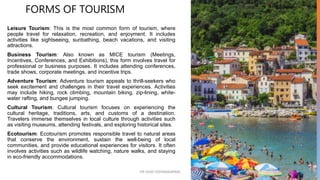
Leisure Tourism: This is the most common form of tourism, where
people travel for relaxation, recreation, and enjoyment. It includes
activities like sightseeing, sunbathing, beach vacations, and visiting
attractions.
Business Tourism: Also known as MICE tourism (Meetings,
Incentives, Conferences, and Exhibitions), this form involves travel for
professional or business purposes. It includes attending conferences,
trade shows, corporate meetings, and incentive trips.
Adventure Tourism: Adventure tourism appeals to thrill-seekers who
seek excitement and challenges in their travel experiences. Activities
may include hiking, rock climbing, mountain biking, zip-lining, white-
water rafting, and bungee jumping.
Cultural Tourism: Cultural tourism focuses on experiencing the
cultural heritage, traditions, arts, and customs of a destination.
Travelers immerse themselves in local culture through activities such
as visiting museums, attending festivals, and exploring historical sites.
Ecotourism: Ecotourism promotes responsible travel to natural areas
that conserve the environment, sustain the well-being of local
communities, and provide educational experiences for visitors. It often
involves activities such as wildlife watching, nature walks, and staying
in eco-friendly accommodations.
10
DR VIJAY VISHWAKARMA
Health and Wellness Tourism: Health and wellness tourism involves travel
aimed at improving physical, mental, and emotional well-being. It includes
activities such as spa retreats, yoga and meditation retreats, wellness
workshops, and medical tourism for treatments and procedures.
Religious Tourism: Religious tourism involves visiting sites of religious
significance, pilgrimage destinations, shrines, temples, churches, mosques,
and other places of worship. It offers spiritual experiences, opportunities for
prayer and reflection, and cultural insights into different faiths.
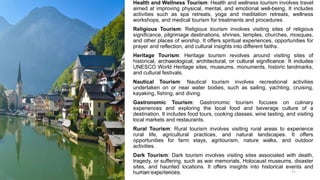
Heritage Tourism: Heritage tourism revolves around visiting sites of
historical, archaeological, architectural, or cultural significance. It includes
UNESCO World Heritage sites, museums, monuments, historic landmarks,
and cultural festivals.
Nautical Tourism: Nautical tourism involves recreational activities
undertaken on or near water bodies, such as sailing, yachting, cruising,
kayaking, fishing, and diving.
Gastronomic Tourism: Gastronomic tourism focuses on culinary
experiences and exploring the local food and beverage culture of a
destination. It includes food tours, cooking classes, wine tasting, and visiting
local markets and restaurants.
Rural Tourism: Rural tourism involves visiting rural areas to experience
rural life, agricultural practices, and natural landscapes. It offers
opportunities for farm stays, agritourism, nature walks, and outdoor
activities.
Dark Tourism: Dark tourism involves visiting sites associated with death,
tragedy, or suffering, such as war memorials, Holocaust museums, disaster
sites, and haunted locations. It offers insights into historical events and
human experiences. 11
DR VIJAY VISHWAKARMA
Planning and Execution of Tour Plans
Research and Destination Selection:
1. Identify the interests, preferences, and budget
constraints of the travelers.
2. Research potential destinations based on factors
such as climate, culture, attractions, activities, and
safety.
3. Consider logistics such as travel time, transportation
options, visa requirements, and accommodation
availability.
Itinerary Development:
1. Create a detailed itinerary outlining the activities,
attractions, and landmarks to visit each day.
2. Allocate sufficient time for each activity, including
travel time between locations.
3. Ensure a balance between scheduled activities and
free time for relaxation and exploration.
12
DR VIJAY VISHWAKARMA
Transportation and Accommodation:
1. Book transportation tickets (flights, trains, buses)
well in advance to secure the best deals and
availability.
2. Reserve accommodation (hotels, hostels, vacation
rentals) based on location, budget, and amenities.
3. Consider factors such as proximity to attractions,
safety, and accessibility.
Travel Logistics:
1. Arrange for airport transfers or transportation from
the arrival point to the accommodation.
2. Familiarize travelers with local transportation
options, including public transit, taxis, and rental
vehicles.
3. Provide travelers with essential information such as
emergency contacts, local currency, language tips,
and cultural norms.
13
DR VIJAY VISHWAKARMA
Activities and Attractions:
1.Pre-book tickets or reservations for popular attractions, tours, and
activities to avoid long queues and disappointment.
2.Research guided tours, cultural experiences, adventure activities,
and dining options that align with travelers' interests.
3.Keep flexibility in the itinerary to accommodate unexpected changes
or spontaneous activities.
Safety and Health Considerations:
1.Educate travelers about safety precautions, local laws, customs,
and health risks specific to the destination.
2.Provide travelers with necessary vaccinations, medications, travel
insurance, and emergency contact information.
3.Encourage travelers to stay hydrated, practice sun protection, and
follow hygiene practices to prevent illness.
14
DR VIJAY VISHWAKARMA
Communication and Support:
1.Stay in communication with travelers before, during, and after the
trip to address any concerns or questions.
2.Provide travelers with contact information for local tour operators,
emergency services, and embassy/consulate.
3.Offer support and assistance in case of emergencies, flight delays,
cancellations, or unforeseen circumstances.
Feedback and Evaluation:
1.Gather feedback from travelers about their experiences, including
what they enjoyed and areas for improvement.
2.Evaluate the effectiveness of the tour plan, logistics,
accommodations, and activities to inform future planning.
3.Use feedback to refine tour packages, improve customer
satisfaction, and build a positive reputation.
15
DR VIJAY VISHWAKARMA
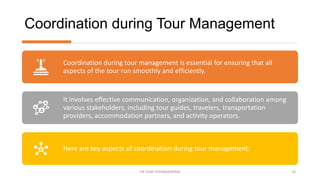
Coordination during Tour Management
Coordination during tour management is essential for ensuring that all
aspects of the tour run smoothly and efficiently.
It involves effective communication, organization, and collaboration among
various stakeholders, including tour guides, travelers, transportation
providers, accommodation partners, and activity operators.
Here are key aspects of coordination during tour management:
16
DR VIJAY VISHWAKARMA
Pre-Tour Briefing:
• Conduct a thorough briefing with tour guides and staff to ensure they understand the itinerary,
expectations, safety protocols, and any special requirements.
• Provide guides with detailed information about attractions, activities, historical background, and
cultural insights to enhance the tour experience.
Communication Channels:
• Establish clear communication channels among tour staff, travelers, and suppliers, such as phone
numbers, email addresses, messaging apps, and emergency contacts.
• Ensure that communication tools are readily accessible and functional throughout the tour,
especially in remote or international destinations.
Logistics Management:
• Coordinate transportation arrangements, including airport transfers, sightseeing tours, and inter-
city travel, to minimize delays and ensure timely arrivals.
• Monitor transportation schedules, traffic conditions, and weather forecasts to anticipate and
mitigate potential disruptions.
17
DR VIJAY VISHWAKARMA
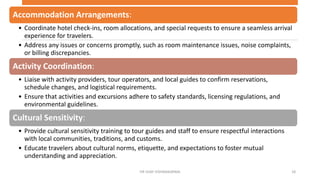
Accommodation Arrangements:
• Coordinate hotel check-ins, room allocations, and special requests to ensure a seamless arrival
experience for travelers.
• Address any issues or concerns promptly, such as room maintenance issues, noise complaints,
or billing discrepancies.
Activity Coordination:
• Liaise with activity providers, tour operators, and local guides to confirm reservations,
schedule changes, and logistical requirements.
• Ensure that activities and excursions adhere to safety standards, licensing regulations, and
environmental guidelines.
Cultural Sensitivity:
• Provide cultural sensitivity training to tour guides and staff to ensure respectful interactions
with local communities, traditions, and customs.
• Educate travelers about cultural norms, etiquette, and expectations to foster mutual
understanding and appreciation.
18
DR VIJAY VISHWAKARMA
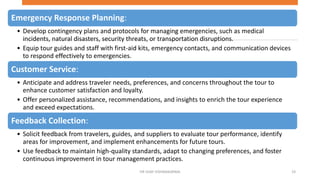
Emergency Response Planning:
• Develop contingency plans and protocols for managing emergencies, such as medical
incidents, natural disasters, security threats, or transportation disruptions.
• Equip tour guides and staff with first-aid kits, emergency contacts, and communication devices
to respond effectively to emergencies.
Customer Service:
• Anticipate and address traveler needs, preferences, and concerns throughout the tour to
enhance customer satisfaction and loyalty.
• Offer personalized assistance, recommendations, and insights to enrich the tour experience
and exceed expectations.
Feedback Collection:
• Solicit feedback from travelers, guides, and suppliers to evaluate tour performance, identify
areas for improvement, and implement enhancements for future tours.
• Use feedback to maintain high-quality standards, adapt to changing preferences, and foster
continuous improvement in tour management practices.
19
DR VIJAY VISHWAKARMA
Career Opportunities in Tourism Industry
The tourism industry offers a wide range of career opportunities
across various sectors, including hospitality, travel, transportation,
attractions, events, and destination management.
Here are some common career paths and job roles in the tourism
industry:
20
DR VIJAY VISHWAKARMA
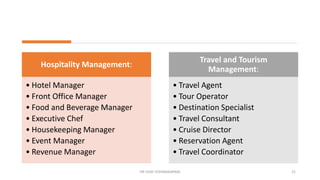
Hospitality Management:
• Hotel Manager
• Front Office Manager
• Food and Beverage Manager
• Executive Chef
• Housekeeping Manager
• Event Manager
• Revenue Manager
Travel and Tourism
Management:
• Travel Agent
• Tour Operator
• Destination Specialist
• Travel Consultant
• Cruise Director
• Reservation Agent
• Travel Coordinator
21
DR VIJAY VISHWAKARMA
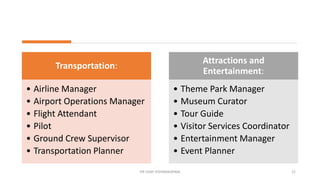
Transportation:
• Airline Manager
• Airport Operations Manager
• Flight Attendant
• Pilot
• Ground Crew Supervisor
• Transportation Planner
Attractions and
Entertainment:
• Theme Park Manager
• Museum Curator
• Tour Guide
• Visitor Services Coordinator
• Entertainment Manager
• Event Planner
22
DR VIJAY VISHWAKARMA
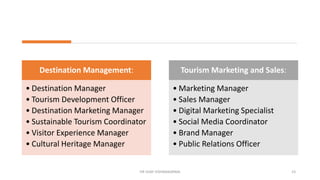
Destination Management:
• Destination Manager
• Tourism Development Officer
• Destination Marketing Manager
• Sustainable Tourism Coordinator
• Visitor Experience Manager
• Cultural Heritage Manager
Tourism Marketing and Sales:
• Marketing Manager
• Sales Manager
• Digital Marketing Specialist
• Social Media Coordinator
• Brand Manager
• Public Relations Officer
23
DR VIJAY VISHWAKARMA
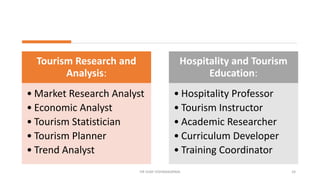
Tourism Research and
Analysis:
• Market Research Analyst
• Economic Analyst
• Tourism Statistician
• Tourism Planner
• Trend Analyst
Hospitality and Tourism
Education:
• Hospitality Professor
• Tourism Instructor
• Academic Researcher
• Curriculum Developer
• Training Coordinator
24
DR VIJAY VISHWAKARMA
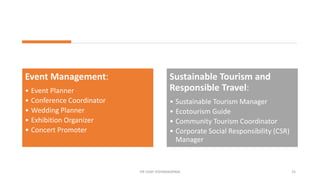
Event Management:
• Event Planner
• Conference Coordinator
• Wedding Planner
• Exhibition Organizer
• Concert Promoter
Sustainable Tourism and
Responsible Travel:
• Sustainable Tourism Manager
• Ecotourism Guide
• Community Tourism Coordinator
• Corporate Social Responsibility (CSR)
Manager
DR VIJAY VISHWAKARMA 25

UNIT II TOURISM MANAGEMENT MCOM I SEM II

  • 1.
  • 2.
    INDEX • Definitions andHistorical Development of Tourism, • Types and Forms of Tourism, • Planning and Execution of Tour Plans • Coordination during Tour Management • Networking for tour management • Career Opportunities in Tourism Industry 2 DR VIJAY VISHWAKARMA
  • 3.
    Definitions and HistoricalDevelopment of Tourism • Tourism is a social, cultural and economic phenomenon which entails the movement of people to countries or places outside their usual environment for personal or business/professional purposes. • Building on the definition of tourism, a commonly accepted description of a tourist is “someone who travels at least 80 km from his or her home for at least 24 hours, for business or leisure or other reasons” (LinkBC, 2008, p.8). The United Nations World Tourism Organization (1995) helps us break down this definition further by stating tourists can be: 1.Domestic (residents of a given country travelling only within that country) 2.Inbound (non-residents travelling in a given country) 3.Outbound (residents of one country travelling in another country) 3 DR VIJAY VISHWAKARMA
  • 4.
    • According toWTO (1993), ” Tourism encompasses the activities of persons traveling and staying in places outside their usual environment for not more than one consecutive year for leisure, business, and other purposes.” • 27 September is celebrated as world tourism every year. This date was chosen as on that day in 1970, the Statutes of UNWTO were adopted. The purpose of this day is to raise awareness of the role of tourism within the international community. 4 DR VIJAY VISHWAKARMA
  • 5.
    Historical Development of Tourism •The historical development of tourism can be traced back to ancient times when people traveled for trade, religious pilgrimage, exploration, and military conquests. However, modern tourism as we know it today began to take shape in the 19th century with the advent of industrialization, improved transportation, and increased leisure time for the middle class. • Here's a brief overview of the historical development of tourism: Early Tourism: In ancient times, people traveled for various reasons, including trade along established routes like the Silk Road, religious pilgrimages to sites such as Mecca or Jerusalem, and exploration by adventurers like Marco Polo. Grand Tour: In the 17th and 18th centuries, wealthy young Europeans embarked on the Grand Tour, a journey across Europe's cultural capitals, aimed at broadening their education and cultural understanding. Industrial Revolution: The 19th century saw significant changes with the Industrial Revolution, which brought about technological advancements in transportation, such as steamships and railways, making travel more accessible and affordable. 5 DR VIJAY VISHWAKARMA
  • 6.
    Thomas Cook andMass Tourism: Thomas Cook, a British entrepreneur, is often credited with organizing the first package tour in 1841, which marked the beginning of mass tourism. His affordable excursions by train aimed at the working class laid the groundwork for organized tourism. 20th Century: The 20th century witnessed further advancements in transportation, including automobiles and airplanes, making long-distance travel easier and faster. World War II also played a role in the development of tourism, as soldiers returning from war sought leisure activities and travel opportunities. Globalization and Technological Advances: In the latter half of the 20th century and into the 21st century, globalization and technological advances, such as the internet and social media, have revolutionized the tourism industry. Travel has become more accessible, and people can easily research destinations, book accommodations, and share their experiences online. Sustainable Tourism: With concerns about environmental sustainability and the impact of tourism on local communities, there's been a growing emphasis on sustainable tourism practices that aim to minimize negative impacts and promote responsible travel. • Overall, tourism has evolved from a privilege of the wealthy elite to a widespread and diverse industry that plays a significant role in economies worldwide, generating income, employment, and cultural exchange. 6 DR VIJAY VISHWAKARMA
  • 7.
    TYPES OF TOURISM Tourismhas two types and many forms on the bases of the purpose of visit and alternative forms of tourism. Tourism can be categorized as international and domestic tourism. Tourism has two types and various forms. On the basis of the movement of people tourism categorized into two types. 7 DR VIJAY VISHWAKARMA
  • 8.
    • International Tourism •When people visit a foreign country, it is referred to as International Tourism. To travel to a foreign country, one needs a valid passport, visa, health documents, foreign exchange, etc. • International tourism further divides into two types; • Inbound Tourism • Outbound Tourism. 8 DR VIJAY VISHWAKARMA
  • 9.
    • Inbound Tourism •This refers to tourists of outside origin entering a particular country. When people travel outside their host/native country to another country, then it is called inbound tourism for that country where he/she is traveling. For example when a tourist from Indian origin travels to Japan then it is Inbound tourism for Japan because foreign tourist comes to Japan. • Outbound Tourism • This refers to tourists traveling from the country of their origin to another country. When tourists travel a foreign region than it is outbound tourism for his own country because he/she is going outside their country. For example when a tourist from India travel to Japan then it is outbound tourism for India and Inbound tourism for Japan. • Domestic Tourism • The tourism activity of the people within their own country is known as domestic tourism. Traveling within the same country is easier because it does not require formal travel documents and tedious formalities like compulsory health checks and foreign exchange. In domestic tourism, a traveler generally does not face many language problems or currency exchange issues. 9 DR VIJAY VISHWAKARMA
  • 10.
    FORMS OF TOURISM LeisureTourism: This is the most common form of tourism, where people travel for relaxation, recreation, and enjoyment. It includes activities like sightseeing, sunbathing, beach vacations, and visiting attractions. Business Tourism: Also known as MICE tourism (Meetings, Incentives, Conferences, and Exhibitions), this form involves travel for professional or business purposes. It includes attending conferences, trade shows, corporate meetings, and incentive trips. Adventure Tourism: Adventure tourism appeals to thrill-seekers who seek excitement and challenges in their travel experiences. Activities may include hiking, rock climbing, mountain biking, zip-lining, white- water rafting, and bungee jumping. Cultural Tourism: Cultural tourism focuses on experiencing the cultural heritage, traditions, arts, and customs of a destination. Travelers immerse themselves in local culture through activities such as visiting museums, attending festivals, and exploring historical sites. Ecotourism: Ecotourism promotes responsible travel to natural areas that conserve the environment, sustain the well-being of local communities, and provide educational experiences for visitors. It often involves activities such as wildlife watching, nature walks, and staying in eco-friendly accommodations. 10 DR VIJAY VISHWAKARMA
  • 11.
    Health and WellnessTourism: Health and wellness tourism involves travel aimed at improving physical, mental, and emotional well-being. It includes activities such as spa retreats, yoga and meditation retreats, wellness workshops, and medical tourism for treatments and procedures. Religious Tourism: Religious tourism involves visiting sites of religious significance, pilgrimage destinations, shrines, temples, churches, mosques, and other places of worship. It offers spiritual experiences, opportunities for prayer and reflection, and cultural insights into different faiths. Heritage Tourism: Heritage tourism revolves around visiting sites of historical, archaeological, architectural, or cultural significance. It includes UNESCO World Heritage sites, museums, monuments, historic landmarks, and cultural festivals. Nautical Tourism: Nautical tourism involves recreational activities undertaken on or near water bodies, such as sailing, yachting, cruising, kayaking, fishing, and diving. Gastronomic Tourism: Gastronomic tourism focuses on culinary experiences and exploring the local food and beverage culture of a destination. It includes food tours, cooking classes, wine tasting, and visiting local markets and restaurants. Rural Tourism: Rural tourism involves visiting rural areas to experience rural life, agricultural practices, and natural landscapes. It offers opportunities for farm stays, agritourism, nature walks, and outdoor activities. Dark Tourism: Dark tourism involves visiting sites associated with death, tragedy, or suffering, such as war memorials, Holocaust museums, disaster sites, and haunted locations. It offers insights into historical events and human experiences. 11 DR VIJAY VISHWAKARMA
  • 12.
    Planning and Executionof Tour Plans Research and Destination Selection: 1. Identify the interests, preferences, and budget constraints of the travelers. 2. Research potential destinations based on factors such as climate, culture, attractions, activities, and safety. 3. Consider logistics such as travel time, transportation options, visa requirements, and accommodation availability. Itinerary Development: 1. Create a detailed itinerary outlining the activities, attractions, and landmarks to visit each day. 2. Allocate sufficient time for each activity, including travel time between locations. 3. Ensure a balance between scheduled activities and free time for relaxation and exploration. 12 DR VIJAY VISHWAKARMA
  • 13.
    Transportation and Accommodation: 1.Book transportation tickets (flights, trains, buses) well in advance to secure the best deals and availability. 2. Reserve accommodation (hotels, hostels, vacation rentals) based on location, budget, and amenities. 3. Consider factors such as proximity to attractions, safety, and accessibility. Travel Logistics: 1. Arrange for airport transfers or transportation from the arrival point to the accommodation. 2. Familiarize travelers with local transportation options, including public transit, taxis, and rental vehicles. 3. Provide travelers with essential information such as emergency contacts, local currency, language tips, and cultural norms. 13 DR VIJAY VISHWAKARMA
  • 14.
    Activities and Attractions: 1.Pre-booktickets or reservations for popular attractions, tours, and activities to avoid long queues and disappointment. 2.Research guided tours, cultural experiences, adventure activities, and dining options that align with travelers' interests. 3.Keep flexibility in the itinerary to accommodate unexpected changes or spontaneous activities. Safety and Health Considerations: 1.Educate travelers about safety precautions, local laws, customs, and health risks specific to the destination. 2.Provide travelers with necessary vaccinations, medications, travel insurance, and emergency contact information. 3.Encourage travelers to stay hydrated, practice sun protection, and follow hygiene practices to prevent illness. 14 DR VIJAY VISHWAKARMA
  • 15.
    Communication and Support: 1.Stayin communication with travelers before, during, and after the trip to address any concerns or questions. 2.Provide travelers with contact information for local tour operators, emergency services, and embassy/consulate. 3.Offer support and assistance in case of emergencies, flight delays, cancellations, or unforeseen circumstances. Feedback and Evaluation: 1.Gather feedback from travelers about their experiences, including what they enjoyed and areas for improvement. 2.Evaluate the effectiveness of the tour plan, logistics, accommodations, and activities to inform future planning. 3.Use feedback to refine tour packages, improve customer satisfaction, and build a positive reputation. 15 DR VIJAY VISHWAKARMA
  • 16.
    Coordination during TourManagement Coordination during tour management is essential for ensuring that all aspects of the tour run smoothly and efficiently. It involves effective communication, organization, and collaboration among various stakeholders, including tour guides, travelers, transportation providers, accommodation partners, and activity operators. Here are key aspects of coordination during tour management: 16 DR VIJAY VISHWAKARMA
  • 17.
    Pre-Tour Briefing: • Conducta thorough briefing with tour guides and staff to ensure they understand the itinerary, expectations, safety protocols, and any special requirements. • Provide guides with detailed information about attractions, activities, historical background, and cultural insights to enhance the tour experience. Communication Channels: • Establish clear communication channels among tour staff, travelers, and suppliers, such as phone numbers, email addresses, messaging apps, and emergency contacts. • Ensure that communication tools are readily accessible and functional throughout the tour, especially in remote or international destinations. Logistics Management: • Coordinate transportation arrangements, including airport transfers, sightseeing tours, and inter- city travel, to minimize delays and ensure timely arrivals. • Monitor transportation schedules, traffic conditions, and weather forecasts to anticipate and mitigate potential disruptions. 17 DR VIJAY VISHWAKARMA
  • 18.
    Accommodation Arrangements: • Coordinatehotel check-ins, room allocations, and special requests to ensure a seamless arrival experience for travelers. • Address any issues or concerns promptly, such as room maintenance issues, noise complaints, or billing discrepancies. Activity Coordination: • Liaise with activity providers, tour operators, and local guides to confirm reservations, schedule changes, and logistical requirements. • Ensure that activities and excursions adhere to safety standards, licensing regulations, and environmental guidelines. Cultural Sensitivity: • Provide cultural sensitivity training to tour guides and staff to ensure respectful interactions with local communities, traditions, and customs. • Educate travelers about cultural norms, etiquette, and expectations to foster mutual understanding and appreciation. 18 DR VIJAY VISHWAKARMA
  • 19.
    Emergency Response Planning: •Develop contingency plans and protocols for managing emergencies, such as medical incidents, natural disasters, security threats, or transportation disruptions. • Equip tour guides and staff with first-aid kits, emergency contacts, and communication devices to respond effectively to emergencies. Customer Service: • Anticipate and address traveler needs, preferences, and concerns throughout the tour to enhance customer satisfaction and loyalty. • Offer personalized assistance, recommendations, and insights to enrich the tour experience and exceed expectations. Feedback Collection: • Solicit feedback from travelers, guides, and suppliers to evaluate tour performance, identify areas for improvement, and implement enhancements for future tours. • Use feedback to maintain high-quality standards, adapt to changing preferences, and foster continuous improvement in tour management practices. 19 DR VIJAY VISHWAKARMA
  • 20.
    Career Opportunities inTourism Industry The tourism industry offers a wide range of career opportunities across various sectors, including hospitality, travel, transportation, attractions, events, and destination management. Here are some common career paths and job roles in the tourism industry: 20 DR VIJAY VISHWAKARMA
  • 21.
    Hospitality Management: • HotelManager • Front Office Manager • Food and Beverage Manager • Executive Chef • Housekeeping Manager • Event Manager • Revenue Manager Travel and Tourism Management: • Travel Agent • Tour Operator • Destination Specialist • Travel Consultant • Cruise Director • Reservation Agent • Travel Coordinator 21 DR VIJAY VISHWAKARMA
  • 22.
    Transportation: • Airline Manager •Airport Operations Manager • Flight Attendant • Pilot • Ground Crew Supervisor • Transportation Planner Attractions and Entertainment: • Theme Park Manager • Museum Curator • Tour Guide • Visitor Services Coordinator • Entertainment Manager • Event Planner 22 DR VIJAY VISHWAKARMA
  • 23.
    Destination Management: • DestinationManager • Tourism Development Officer • Destination Marketing Manager • Sustainable Tourism Coordinator • Visitor Experience Manager • Cultural Heritage Manager Tourism Marketing and Sales: • Marketing Manager • Sales Manager • Digital Marketing Specialist • Social Media Coordinator • Brand Manager • Public Relations Officer 23 DR VIJAY VISHWAKARMA
  • 24.
    Tourism Research and Analysis: •Market Research Analyst • Economic Analyst • Tourism Statistician • Tourism Planner • Trend Analyst Hospitality and Tourism Education: • Hospitality Professor • Tourism Instructor • Academic Researcher • Curriculum Developer • Training Coordinator 24 DR VIJAY VISHWAKARMA
  • 25.
    Event Management: • EventPlanner • Conference Coordinator • Wedding Planner • Exhibition Organizer • Concert Promoter Sustainable Tourism and Responsible Travel: • Sustainable Tourism Manager • Ecotourism Guide • Community Tourism Coordinator • Corporate Social Responsibility (CSR) Manager DR VIJAY VISHWAKARMA 25