FRAMING
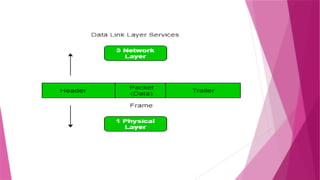
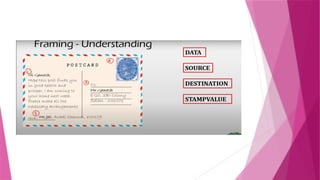
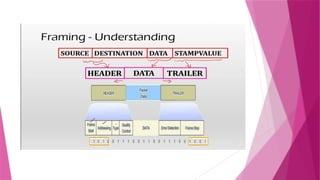
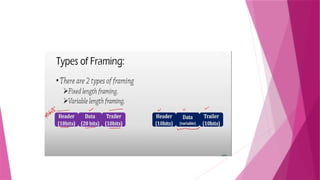
Frames arethe units of digital transmission, particularly in computer
networks and telecommunications.
Framing is a point-to-point connection between two computers or devices
consisting of a wire in which data is transmitted as a stream of bits.
7.
ERROR CONTROL
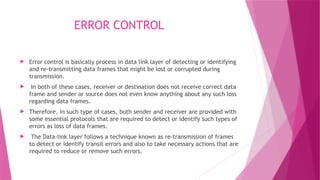
Errorcontrol is basically process in data link layer of detecting or identifying
and re-transmitting data frames that might be lost or corrupted during
transmission.
In both of these cases, receiver or destination does not receive correct data
frame and sender or source does not even know anything about any such loss
regarding data frames.
Therefore, in such type of cases, both sender and receiver are provided with
some essential protocols that are required to detect or identify such types of
errors as loss of data frames.
The Data-link layer follows a technique known as re-transmission of frames
to detect or identify transit errors and also to take necessary actions that are
required to reduce or remove such errors.
9.
TWO WAYS OF
ERRORCONTROL
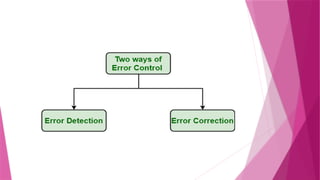
Error Detection : Error detection, as the name suggests, simply means
detection or identification of errors. These errors may occur due to noise or
any other impairments during transmission from transmitter to the receiver,
in communication system. It is a class of techniques for detecting garbled i.e.
unclear and distorted data or messages.
Error Correction : Error correction, as the name suggests, simply means
correction or solving or fixing of errors. It simply means reconstruction and
rehabilitation of original data that is error-free. But error correction method
is very costly and very hard.
10.
Various Techniques forError Control
1. Stop-and-Wait ARQ : Stop-and-Wait ARQ is also known as alternating bit
protocol. It is one of the simplest flow and error control techniques or
mechanisms. This mechanism is generally required in telecommunications to
transmit data or information between two connected devices. Receiver simply
indicates its readiness to receive data for each frame. In these, sender sends
information or data packets to receiver. Sender then stops and waits for ACK
(Acknowledgment) from receiver. Further, if ACK does not arrive within given
time period i.e., time-out, sender then again resends frame and waits for ACK.
But, if sender receives ACK, then it will transmit the next data packet to receiver
and then again wait for ACK from receiver. This process to stop and wait
continues until sender has no data frame or packet to send
11.
Stop-and-wait Advantages:
◦ Simplicity.
◦Each frame is checked and acknowledged before the next frame is sent.
Disadvantages:
◦ Slow.
• Inefficiency Each frame is alone on the line.
12.
2. Sliding WindowARQ : This technique is generally used for continuous
transmission error control. It is further categorized into two categories as
given below :
•Go-Back-N ARQ : Go-Back-N ARQ is form of ARQ protocol in which
transmission process continues to send or transmit total number of frames
that are specified by window size even without receiving an ACK
(Acknowledgement) packet from the receiver. It uses sliding window flow
control protocol. If no errors occur, then operation is identical to sliding
window.
•Selective Repeat ARQ : Selective Repeat ARQ is also form of ARQ protocol
in which only suspected or damaged or lost data frames are only
retransmitted. This technique is similar to Go-Back-N ARQ though much
more efficient than the Go-Back-N ARQ technique due to reason that it
reduces number of retransmission. In this, the sender only retransmits
frames for which NAK is received. But this technique is used less because of
more complexity between sender and receiver and each frame must be
needed to be acknowledged individually.
13.
Sender can sendseveral frames before needing an acknowledgement.
Advantages:
◦ The link can carry several frames at once.
◦ Its capacity can be used efficiently.
14.
Checksum
Data isdivided into fixed sized frames or segments.
The sender adds the segments using 1’s complement arithmetic to get the
sum. It then complements the sum to get the checksum and sends it along
with the data frames.
The receiver adds the incoming segments along with the checksum using 1’s
complement arithmetic to get the sum and then complements it.
If the result is zero, the received frames are accepted; otherwise, they are
discarded.
15.
Error Correction
Oncethe errors are detected in the network, the deviated bits sequence
needs to be replaced with the right bit sequence so that the receiver can a
Forward Error Correction: In this Error Correction Scenario, the receiving end
is responsible for correcting the network error. There is no need for
retransmission of the data from the sender’s side.
Backward Error Correction: The sender is responsible for retransmitting the
data if errors are detected by the receiver. The receiver signals the sender to
resend the corrupted data or the entire message to ensure accurate delivery.
16.
Hamming Code ErrorCorrection
In this method, extra parity bits are appended to the message which are used
by the receiver to correct the single bit error and multiple bit error. Consider
the below example to understand this method in a better way.
Suppose the sender wants to transmit the message whose bit representation
is ‘1011001.’ In this message:
Total number of bits(d) = 7
Total of redundant bits(r) = 4 (This is because the message has four 1’s in it)
Thus, total bits(d+r) = 7 + 4 = 11
17.
Multiple access protocol
When a sender and receiver have a dedicated link to transmit data packets,
the data link control is enough to handle the channel. Suppose there is no
dedicated path to communicate or transfer the data between two devices. In
that case, multiple stations access the channel and simultaneously transmits
the data over the channel. It may create collision and cross talk. Hence, the
multiple access protocol is required to reduce the collision and avoid
crosstalk between the channels.
For example, suppose that there is a classroom full of students. When a
teacher asks a question, all the students (small channels) in the class start
answering the question at the same time (transferring the data
simultaneously). All the students respond at the same time due to which data
is overlap or data lost. Therefore it is the responsibility of a teacher (multiple
access protocol) to manage the students and make them one answer
19.
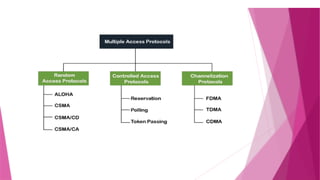
Random Access Protocol
In this protocol, all the station has the equal priority to send the data over a channel.
In random access protocol, one or more stations cannot depend on another station nor
any station control another station. Depending on the channel's state (idle or busy),
each station transmits the data frame. However, if more than one station sends the
data over a channel, there may be a collision or data conflict. Due to the collision, the
data frame packets may be lost or changed. And hence, it does not receive by the
receiver end.
Following are the different methods of random-access protocols for broadcasting
frames on the channel
Aloha
CSMA
CSMA/CD
CSMA/CA
20.
CSMA/ CD
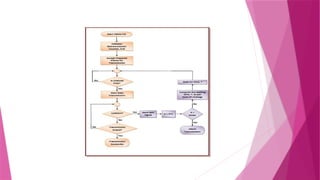
Itis a carrier sense multiple access/ collision detection network protocol to
transmit data frames. The CSMA/CD protocol works with a medium access
control layer. Therefore, it first senses the shared channel before
broadcasting the frames, and if the channel is idle, it transmits a frame to
check whether the transmission was successful.
If the frame is successfully received, the station sends another frame. If any
collision is detected in the CSMA/CD, the station sends a jam/ stop signal to
the shared channel to terminate data transmission.
After that, it waits for a random time before sending a frame to a channel.
22.
CSMA/CA
It isa carrier sense multiple access/collision avoidance network protocol for
carrier transmission of data frames. It is a protocol that works with a medium
access control layer. When a data frame is sent to a channel, it receives an
acknowledgment to check whether the channel is clear.
If the station receives only a single (own) acknowledgments, that means the
data frame has been successfully transmitted to the receiver. But if it gets
two signals (its own and one more in which the collision of frames), a collision
of the frame occurs in the shared channel.
Detects the collision of the frame when a sender receives an acknowledgment
signal.
23.
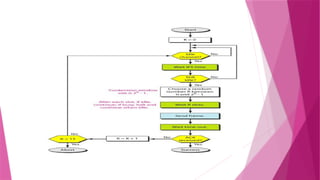
Following are themethods used in the CSMA/ CA to avoid the collision:
Interframe space: In this method, the station waits for the channel to become idle, and if it
gets the channel is idle, it does not immediately send the data. Instead of this, it waits for
some time, and this time period is called the Interframe space or IFS. However, the IFS time is
often used to define the priority of the station.
Contention window: In the Contention window, the total time is divided into different slots.
When the station/ sender is ready to transmit the data frame, it chooses a random slot number
of slots as wait time. If the channel is still busy, it does not restart the entire process, except
that it restarts the timer only to send data packets when the channel is inactive.
Acknowledgment: In the acknowledgment method, the sender station sends the data frame to
the shared channel if the acknowledgment is not received ahead of time.
B. Controlled Access Protocol
25.
Controlled Access Protocol
t is a method of reducing data frame collision on a shared channel. In the
controlled access method, each station interacts and decides to send a data
frame by a particular station approved by all other stations. It means that a
single station cannot send the data frames unless all other stations are not
approved.
It has three types of controlled access: Reservation, Polling, and Token
Passing.



![7.__Developing_a_Research_Proposal[1].pptx](https://cdn.slidesharecdn.com/ss_thumbnails/7-260131073037-df92dd7d-thumbnail.jpg?width=640&height=640&fit=bounds)


![제 23회 보아즈(BOAZ) 빅데이터 컨퍼런스 - [MBOAX] : ABSA를 활용한 소비자 반응 분석 기반 운영 효율화 대시보드 설계](https://cdn.slidesharecdn.com/ss_thumbnails/3-1boaz23rdconferencemboax-260203102709-9d519923-thumbnail.jpg?width=640&height=640&fit=bounds)


