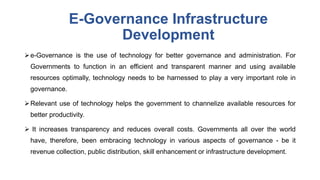
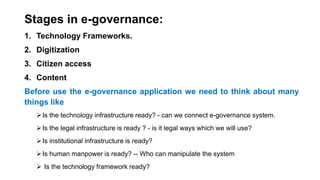
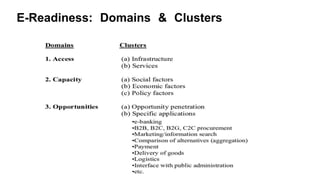
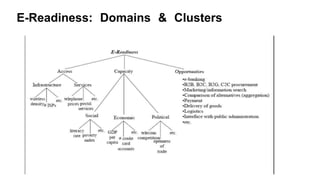
E-governance infrastructure development requires assessing e-readiness across several domains and clusters. These include ensuring the necessary technology, legal, institutional, and human resources infrastructure is in place to support e-governance applications. E-readiness refers to a country's ability to utilize information and communication technologies to participate in electronic services and global digital trade. It considers factors like access to technology, digital skills, and how technology can support economic and social development. Proper assessment of e-readiness across key areas is important for effective digitization and implementation of e-governance initiatives.