COST ACCOUNTING
UNIT II
MATERIALS
(A)MATERIAL CONTROL
• Material control is a system which ensures required
quantity of material of the required quality at the right
time and place with minimum investment of capital.
Organisation of material control:
• Purchasing department
• Receiving & Inspection department
• Store keeping department
• Production department
• Stock control department
(B)PURCHASE CONTROL
• Purchasing includes procuring of raw materials, stationery,
machines,tools,spares,equipment,maintenance,supplies
required for business.,etc.
Centralized Vs. Decentralized Purchasing
• Centralized purchasing refers to purchasing of requirements
of the entire organization by one particular department.
• Decentralised purchasing refers to each of the department in
an organization buying their requirements directly.When the
organization has number of branches or divisions
PURCHASE MANAGER:
• Purchasing manager of a company occupies a very
important position.Since,he has the power to use the
large amount of working capital to be invested on
materials.
PURCHASE PROCEDURE:
• Receiving authorized purchase requisition.
• Studying the market and selecting a supplier.
• Issuing purchase order and following up delivery.
• Arranging for receiving and inspection of materials.
• Verifying and passing suppliers invoice for payment.
(C)STORE KEEPING & STOCK CONTROL OR
INVENTORY CONTROL
• Store keeping is a specialized function involving efficient
management of materials, identifying, classifying and
maintenance of stock records.
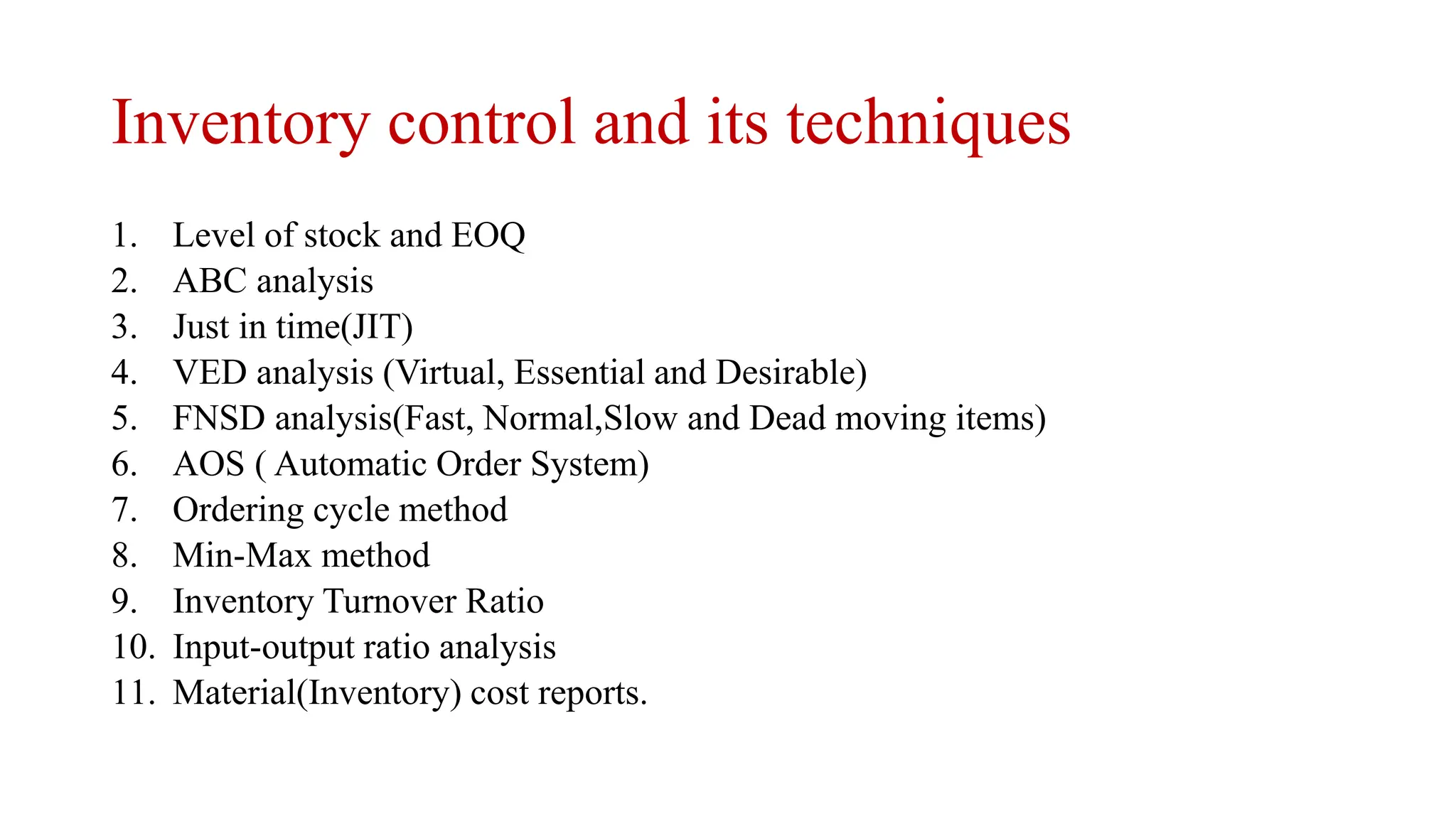
Inventory control and its techniques
1. Level of stock and EOQ
2. ABC analysis
3. Just in time(JIT)
4. VED analysis (Virtual, Essential and Desirable)
5. FNSD analysis(Fast, Normal,Slow and Dead moving items)
6. AOS ( Automatic Order System)
7. Ordering cycle method
8. Min-Max method
9. Inventory Turnover Ratio
10. Input-output ratio analysis
11. Material(Inventory) cost reports.
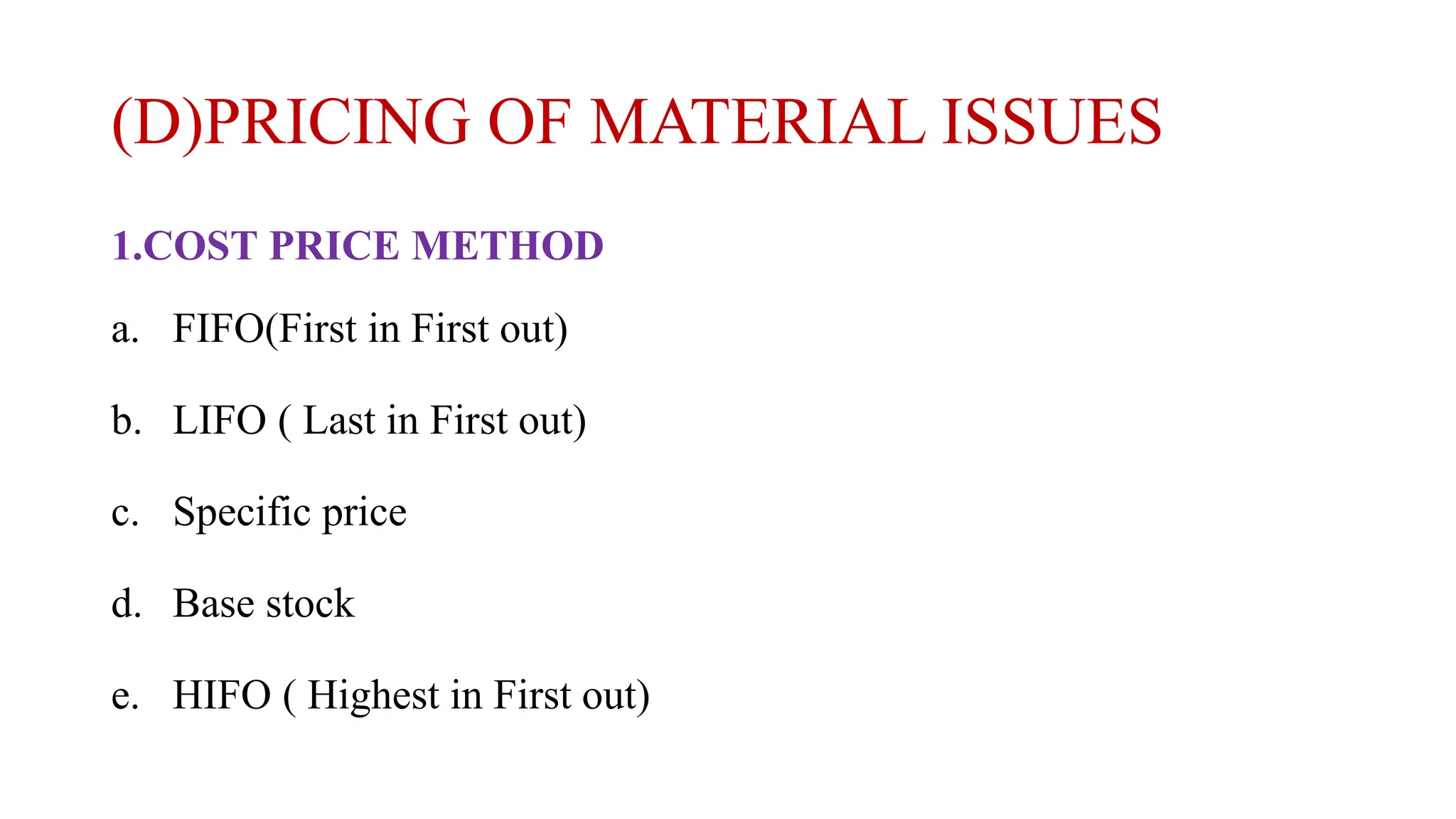
(D)PRICING OF MATERIAL ISSUES
1.COST PRICE METHOD
a. FIFO(First in First out)
b. LIFO ( Last in First out)
c. Specific price
d. Base stock
e. HIFO ( Highest in First out)
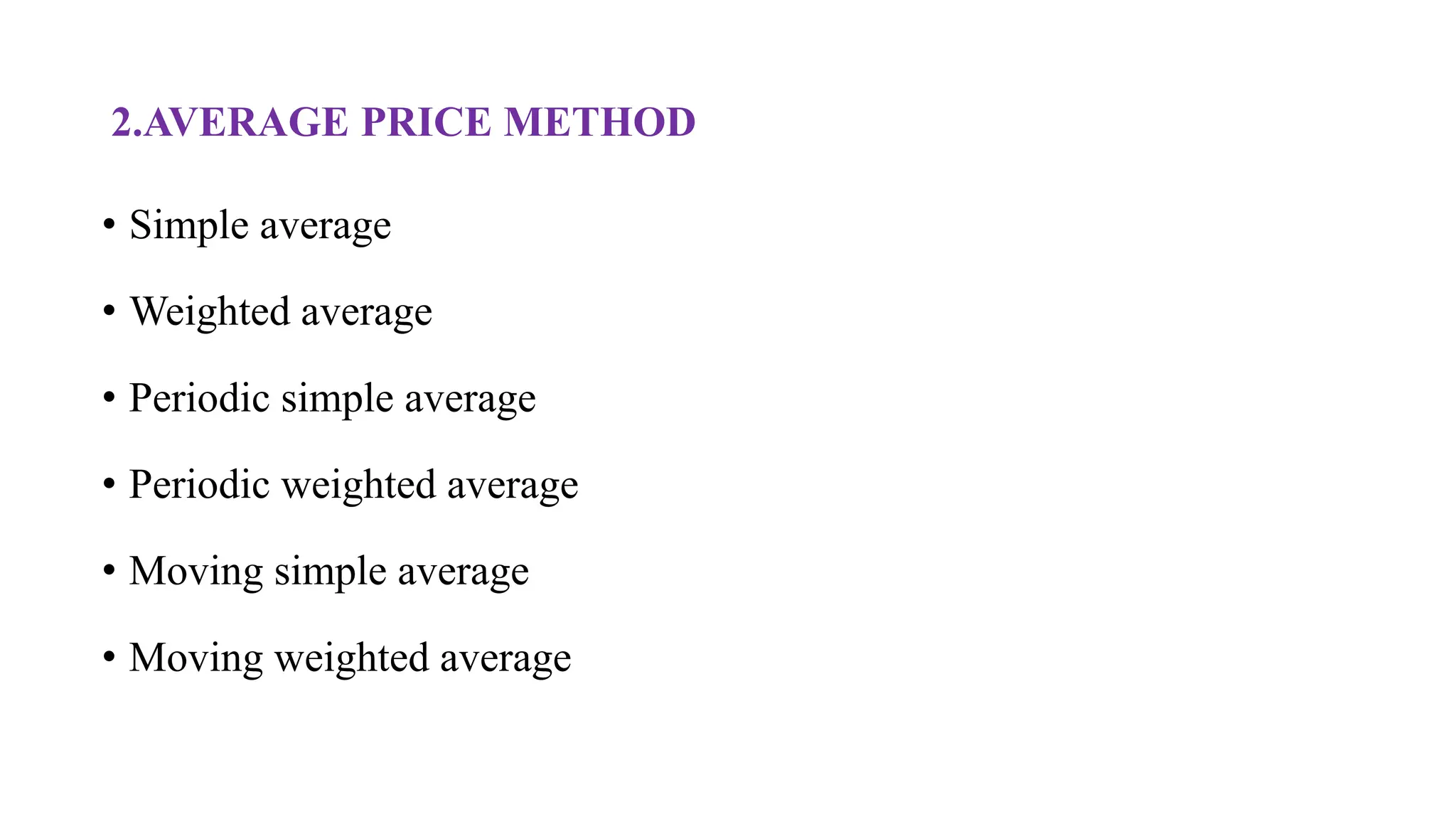
2.AVERAGE PRICE METHOD
• Simple average
• Weighted average
• Periodic simple average
• Periodic weighted average
• Moving simple average
• Moving weighted average
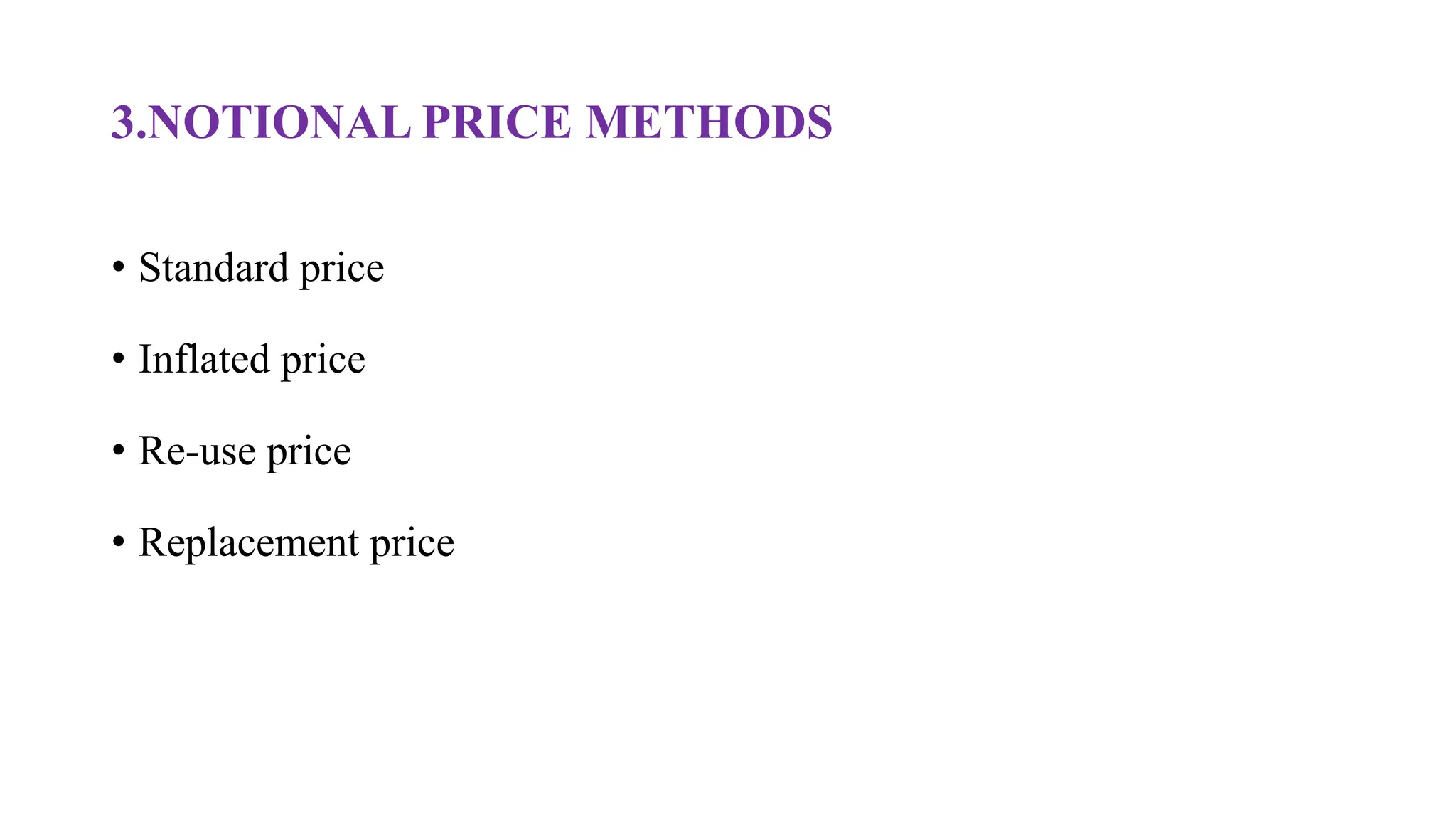
3.NOTIONAL PRICE METHODS
• Standard price
• Inflated price
• Re-use price
• Replacement price
MATERIAL LOSSES
• Waste
• Scrap
• Spoilage
• Defectives
• Slow moving & Dormant stocks

unit-2.power point presentation cost accounting

  • 1.
  • 2.
    (A)MATERIAL CONTROL • Materialcontrol is a system which ensures required quantity of material of the required quality at the right time and place with minimum investment of capital.
  • 3.
    Organisation of materialcontrol: • Purchasing department • Receiving & Inspection department • Store keeping department • Production department • Stock control department
  • 4.
    (B)PURCHASE CONTROL • Purchasingincludes procuring of raw materials, stationery, machines,tools,spares,equipment,maintenance,supplies required for business.,etc.
  • 5.
    Centralized Vs. DecentralizedPurchasing • Centralized purchasing refers to purchasing of requirements of the entire organization by one particular department. • Decentralised purchasing refers to each of the department in an organization buying their requirements directly.When the organization has number of branches or divisions
  • 6.
    PURCHASE MANAGER: • Purchasingmanager of a company occupies a very important position.Since,he has the power to use the large amount of working capital to be invested on materials.
  • 7.
    PURCHASE PROCEDURE: • Receivingauthorized purchase requisition. • Studying the market and selecting a supplier. • Issuing purchase order and following up delivery. • Arranging for receiving and inspection of materials. • Verifying and passing suppliers invoice for payment.
  • 8.
    (C)STORE KEEPING &STOCK CONTROL OR INVENTORY CONTROL • Store keeping is a specialized function involving efficient management of materials, identifying, classifying and maintenance of stock records.
  • 9.
    Inventory control andits techniques 1. Level of stock and EOQ 2. ABC analysis 3. Just in time(JIT) 4. VED analysis (Virtual, Essential and Desirable) 5. FNSD analysis(Fast, Normal,Slow and Dead moving items) 6. AOS ( Automatic Order System) 7. Ordering cycle method 8. Min-Max method 9. Inventory Turnover Ratio 10. Input-output ratio analysis 11. Material(Inventory) cost reports.
  • 10.
    (D)PRICING OF MATERIALISSUES 1.COST PRICE METHOD a. FIFO(First in First out) b. LIFO ( Last in First out) c. Specific price d. Base stock e. HIFO ( Highest in First out)
  • 11.
    2.AVERAGE PRICE METHOD •Simple average • Weighted average • Periodic simple average • Periodic weighted average • Moving simple average • Moving weighted average
  • 12.
    3.NOTIONAL PRICE METHODS •Standard price • Inflated price • Re-use price • Replacement price
  • 13.
    MATERIAL LOSSES • Waste •Scrap • Spoilage • Defectives • Slow moving & Dormant stocks