Entrepreneurship Theory and Practice
Unit 1
Exploring the Fundamentals of Entrepreneurial
Thinking and Opportunity Recognition
Credit 3
Subject Code: 23JUGEHSS18
Outline of the Unit 1 Presentation
INTRODUCTION TO ENTREPRENEURSHIP:
Defining entrepreneurship.
Historical overview and evolution of
entrepreneurship.
Entrepreneurial Mind-set and Opportunity
Recognition.
Characteristics of successful entrepreneurs.
 Identifying and evaluating business opportunities
INTRODUCTION TO
ENTREPRENEURSHIP
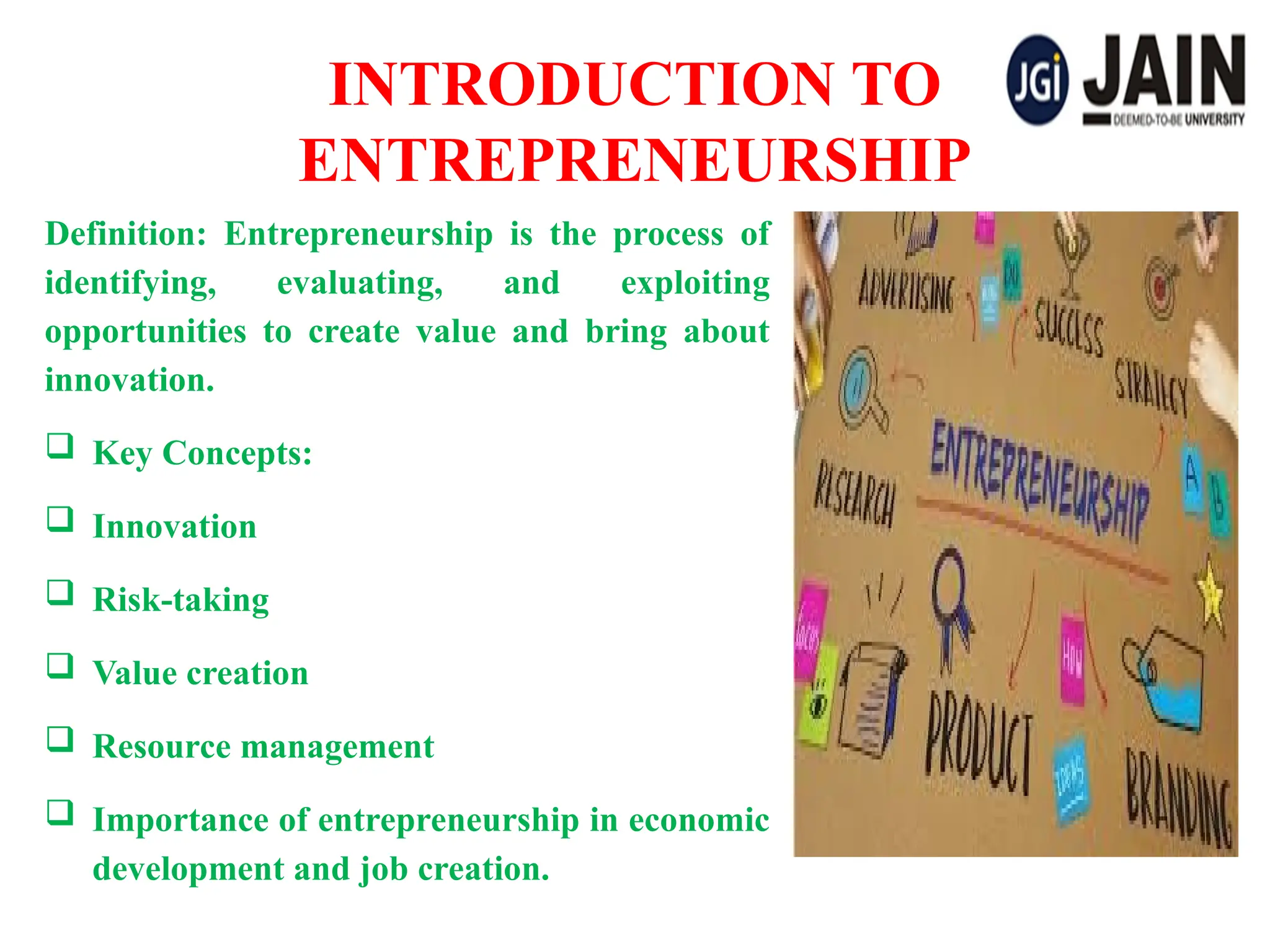
Definition: Entrepreneurship is the process of
identifying, evaluating, and exploiting
opportunities to create value and bring about
innovation.
 Key Concepts:
 Innovation
 Risk-taking
 Value creation
 Resource management
 Importance of entrepreneurship in economic
development and job creation.
Historical Overview of Entrepreneurship
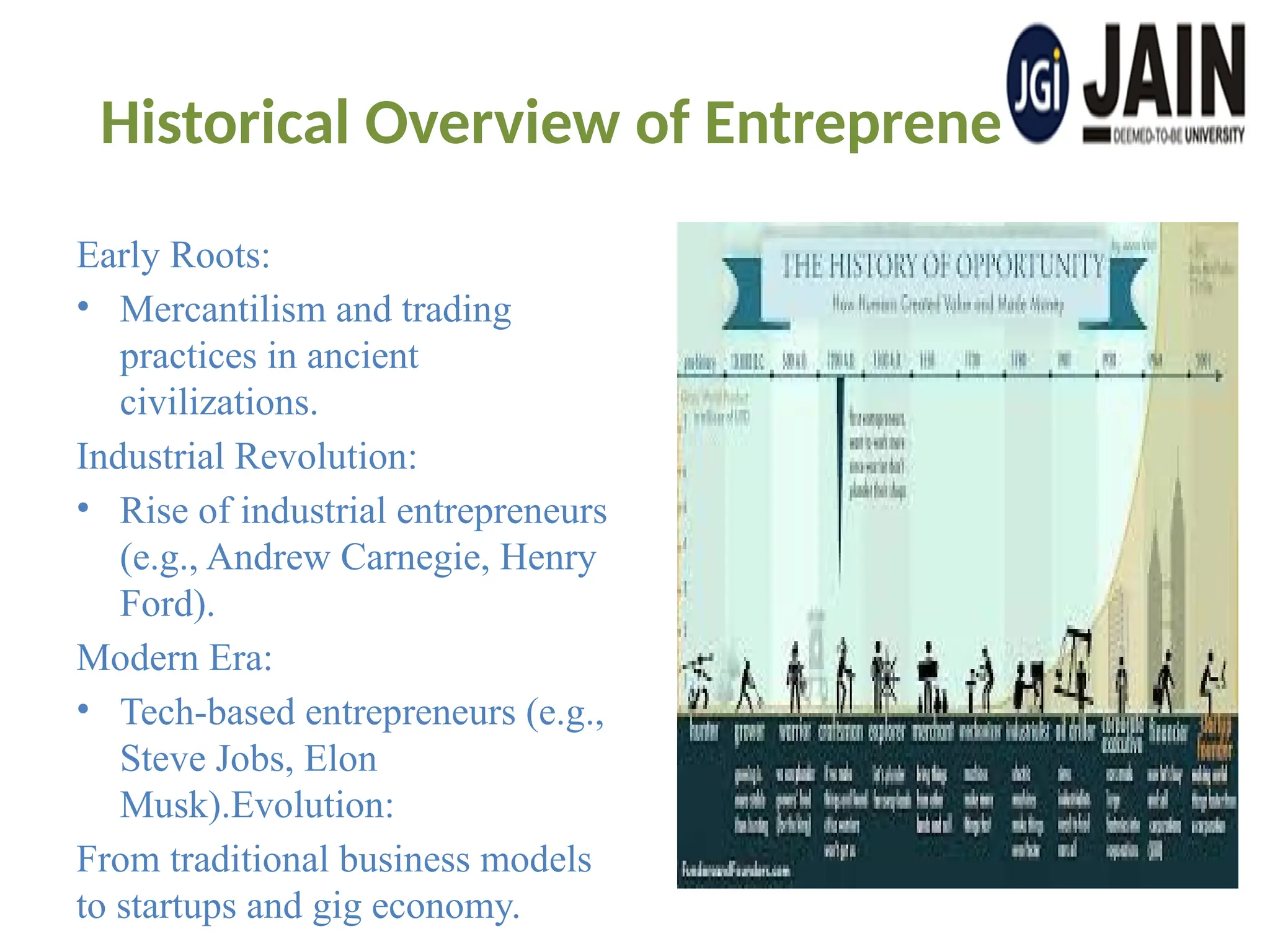
Early Roots:
• Mercantilism and trading
practices in ancient
civilizations.
Industrial Revolution:
• Rise of industrial entrepreneurs
(e.g., Andrew Carnegie, Henry
Ford).
Modern Era:
• Tech-based entrepreneurs (e.g.,
Steve Jobs, Elon
Musk).Evolution:
From traditional business models
to startups and gig economy.
Evolution of an Entrepreneurship
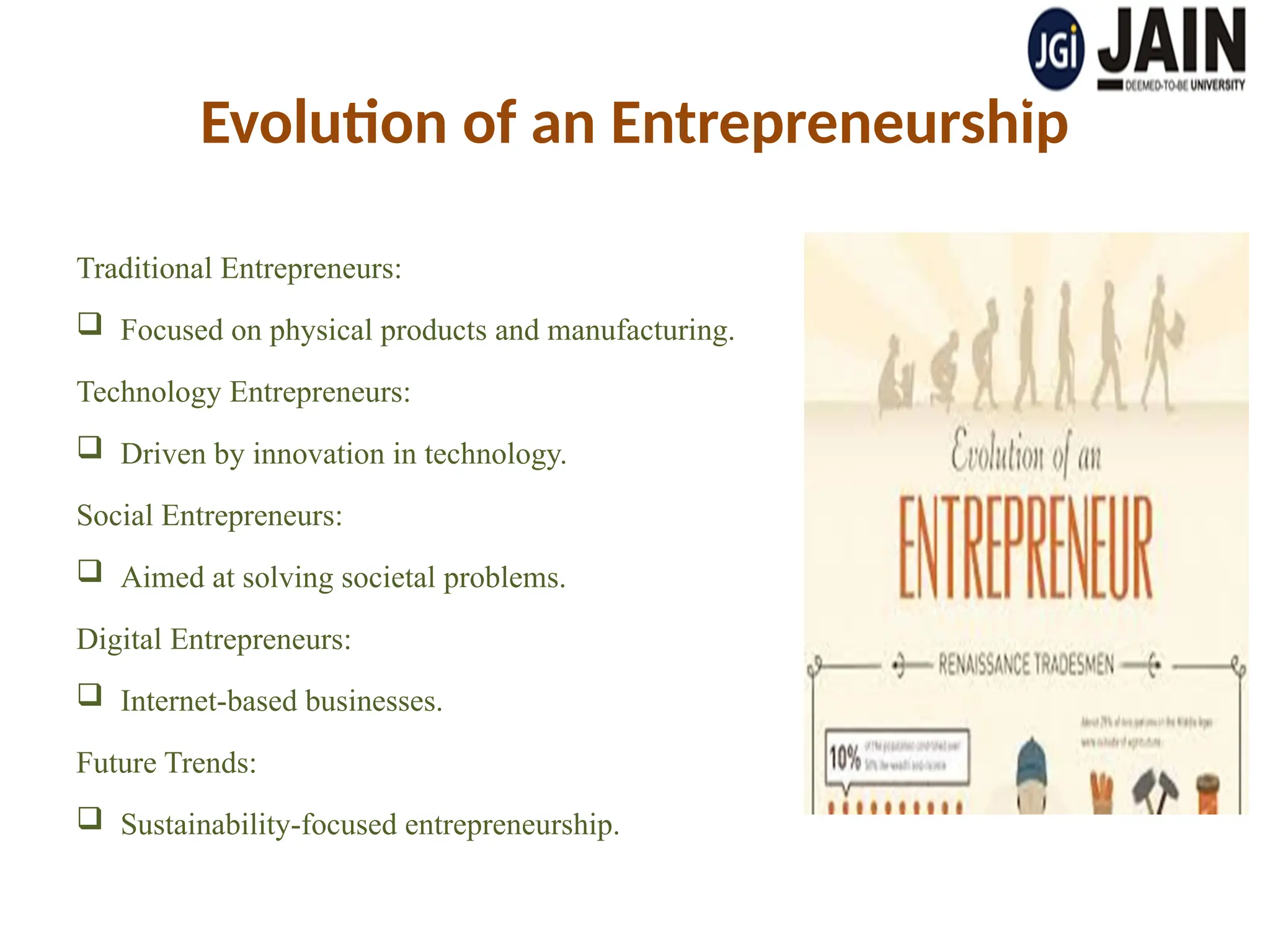
Traditional Entrepreneurs:
 Focused on physical products and manufacturing.
Technology Entrepreneurs:
 Driven by innovation in technology.
Social Entrepreneurs:
 Aimed at solving societal problems.
Digital Entrepreneurs:
 Internet-based businesses.
Future Trends:
 Sustainability-focused entrepreneurship.
The Entrepreneurial Mindset
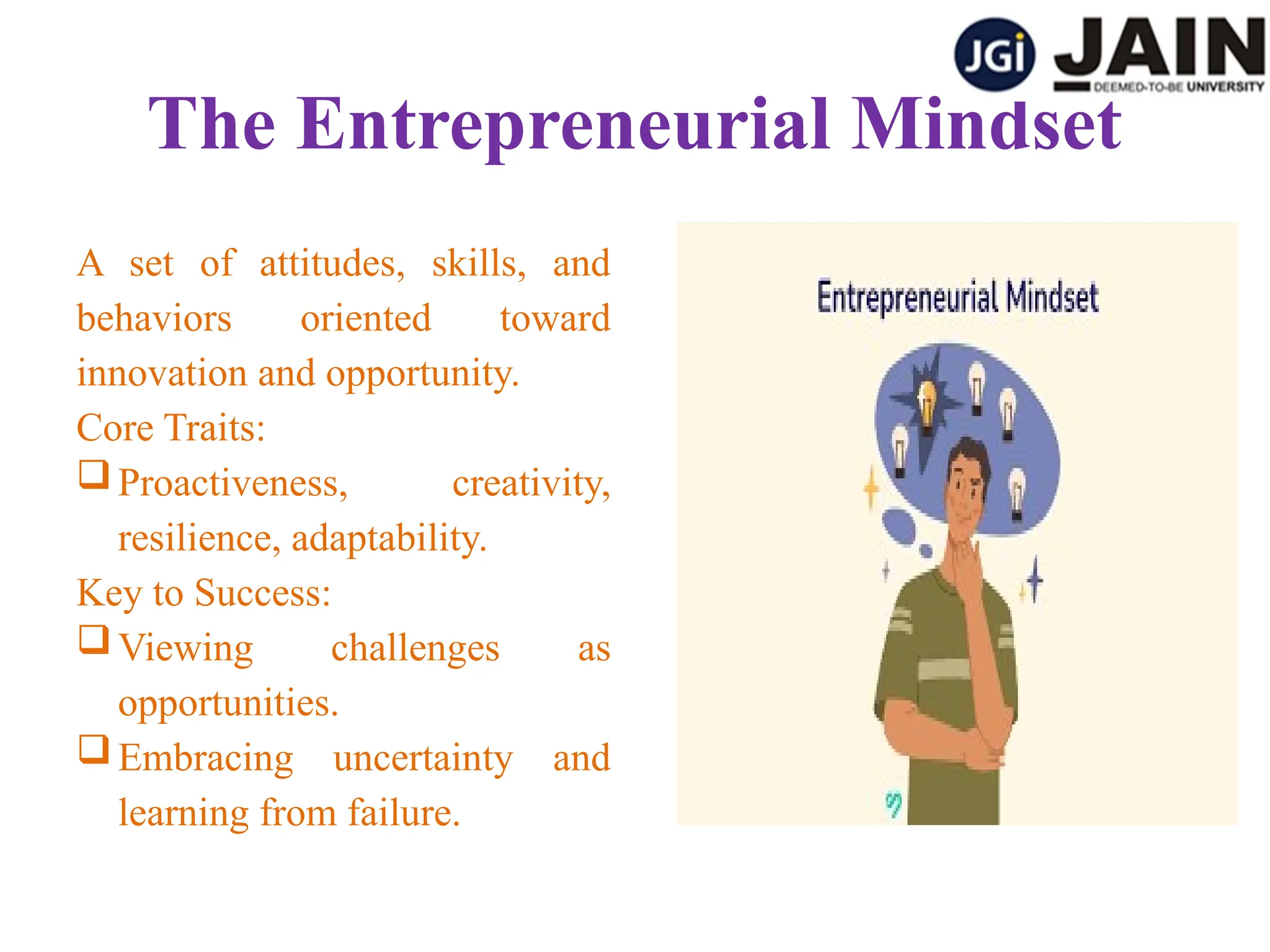
A set of attitudes, skills, and
behaviors oriented toward
innovation and opportunity.
Core Traits:
Proactiveness, creativity,
resilience, adaptability.
Key to Success:
Viewing challenges as
opportunities.
Embracing uncertainty and
learning from failure.
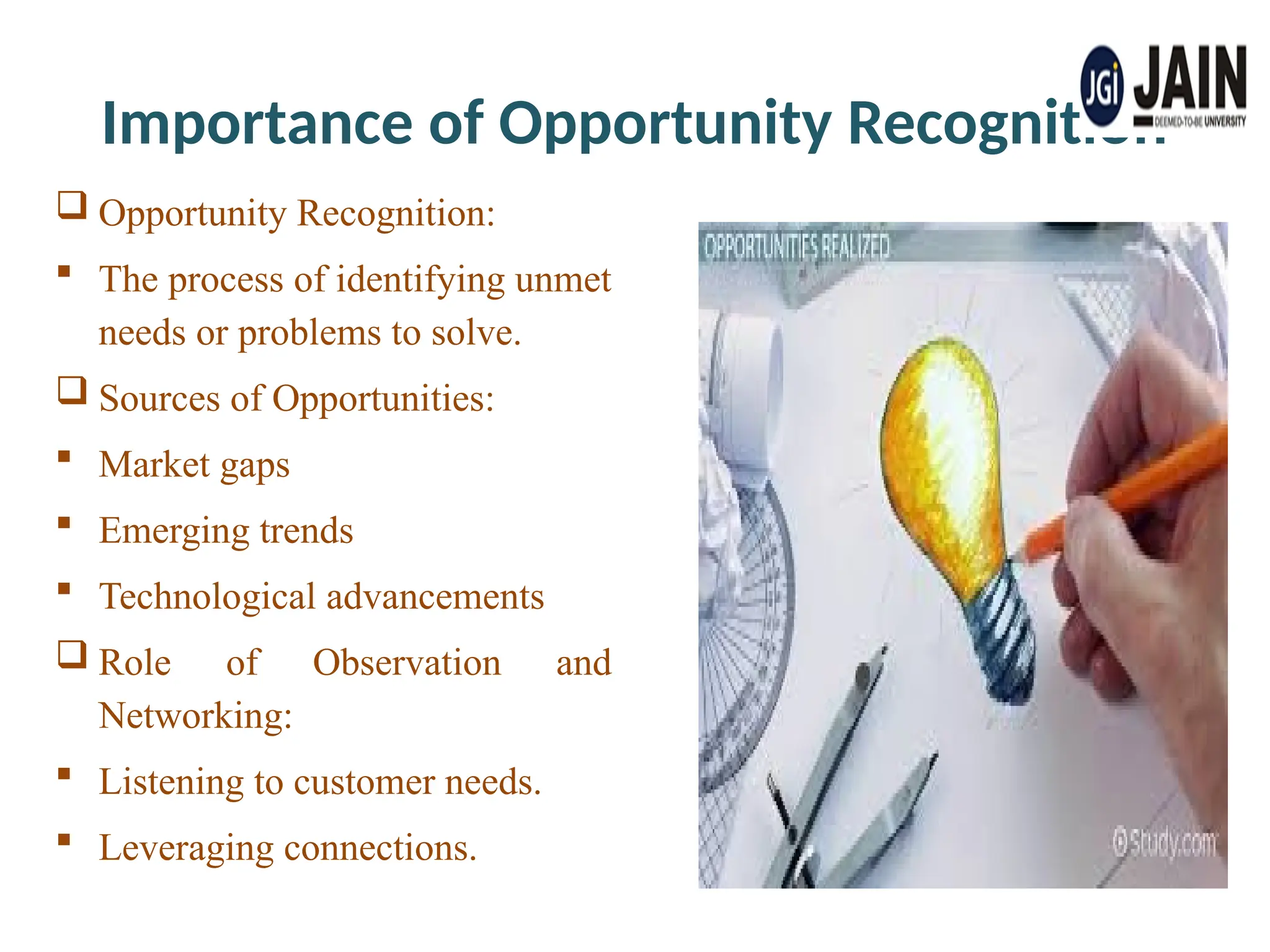
Importance of Opportunity Recognition
 Opportunity Recognition:
 The process of identifying unmet
needs or problems to solve.
 Sources of Opportunities:
 Market gaps
 Emerging trends
 Technological advancements
 Role of Observation and
Networking:
 Listening to customer needs.
 Leveraging connections.
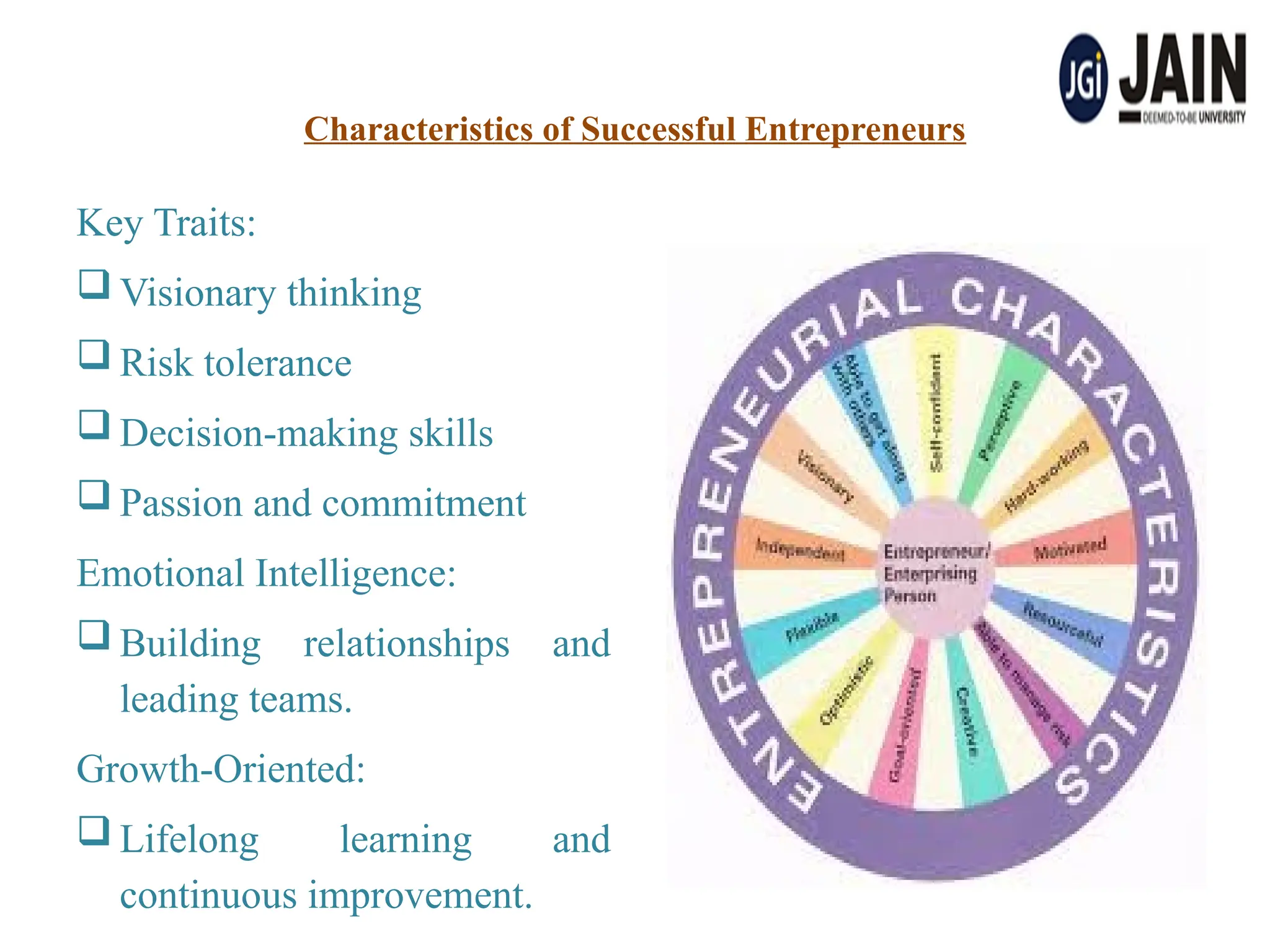
Characteristics of Successful Entrepreneurs
Key Traits:
 Visionary thinking
 Risk tolerance
 Decision-making skills
 Passion and commitment
Emotional Intelligence:
 Building relationships and
leading teams.
Growth-Oriented:
 Lifelong learning and
continuous improvement.
Identifying Business Opportunities
Techniques:
 Market research
 SWOT analysis (Strengths,
Weaknesses,
Opportunities, Threats)
 Trend analysis
Tools:
 Customer feedback
 Competitor analysis
Case Examples:
 Companies like Airbnb,
Uber identifying market
gaps.
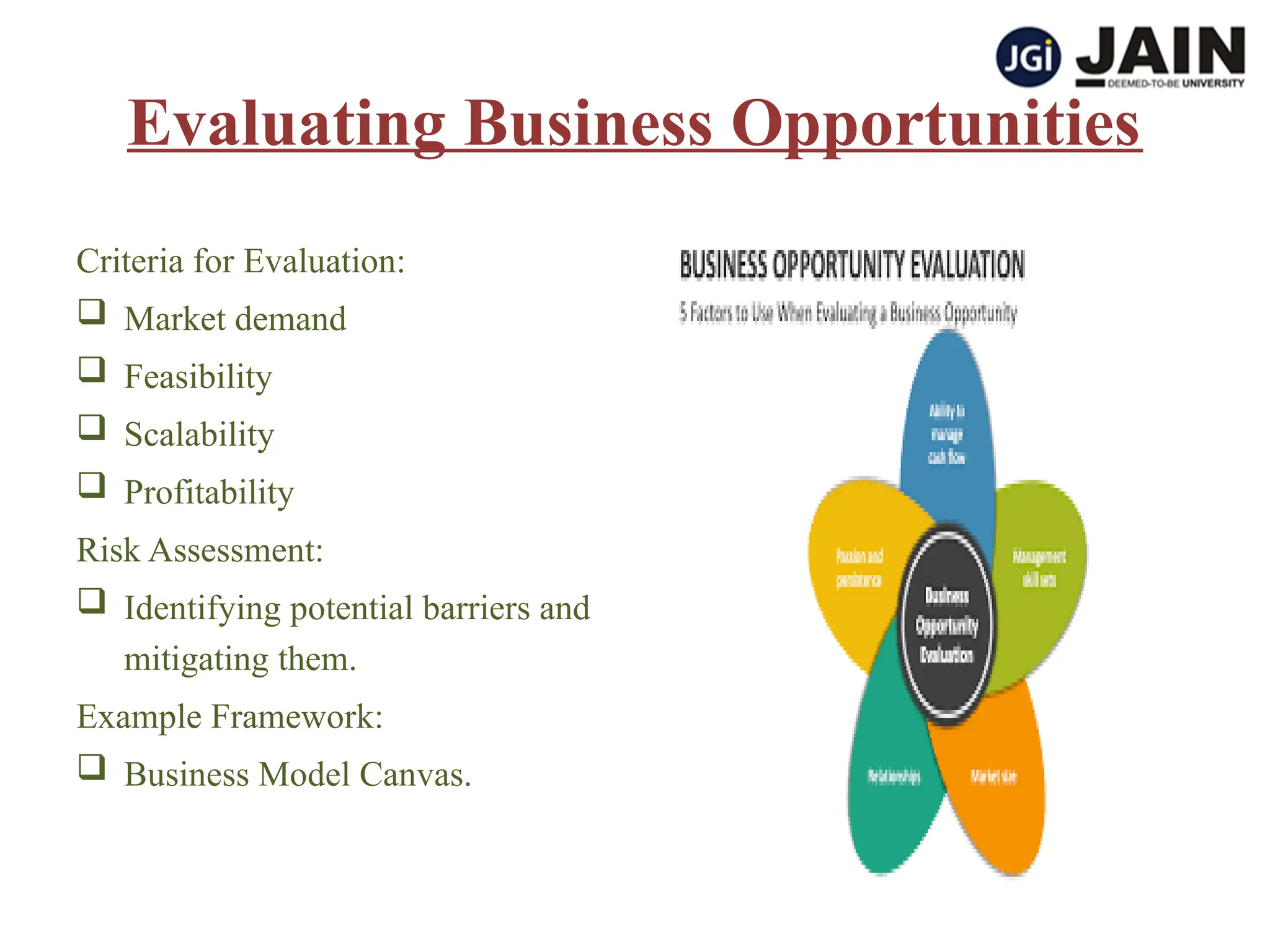
Evaluating Business Opportunities
Criteria for Evaluation:
 Market demand
 Feasibility
 Scalability
 Profitability
Risk Assessment:
 Identifying potential barriers and
mitigating them.
Example Framework:
 Business Model Canvas.
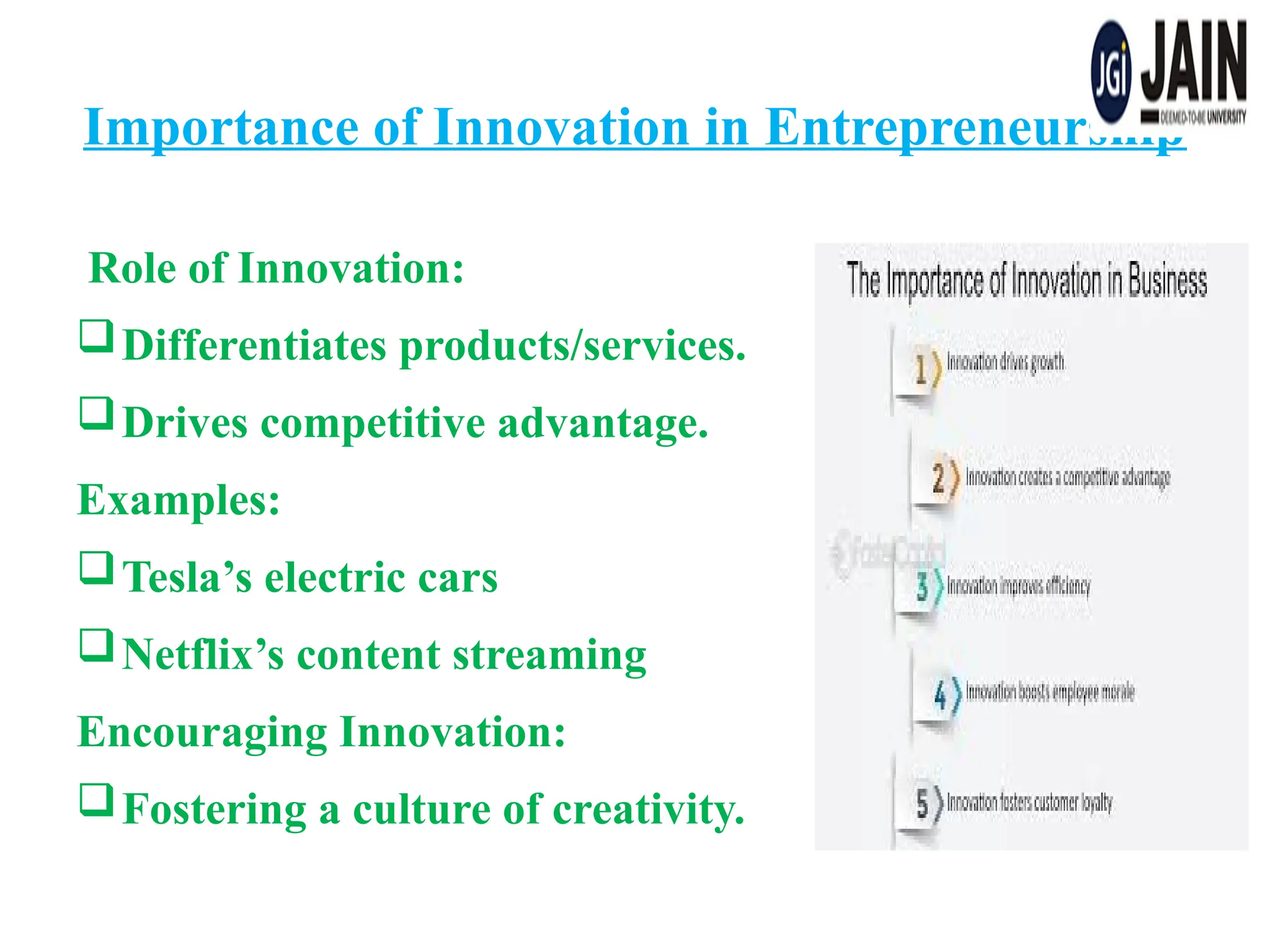
Importance of Innovation in Entrepreneurship
Role of Innovation:
Differentiates products/services.
Drives competitive advantage.
Examples:
Tesla’s electric cars
Netflix’s content streaming
Encouraging Innovation:
Fostering a culture of creativity.
Challenges Faced by Entrepreneurs
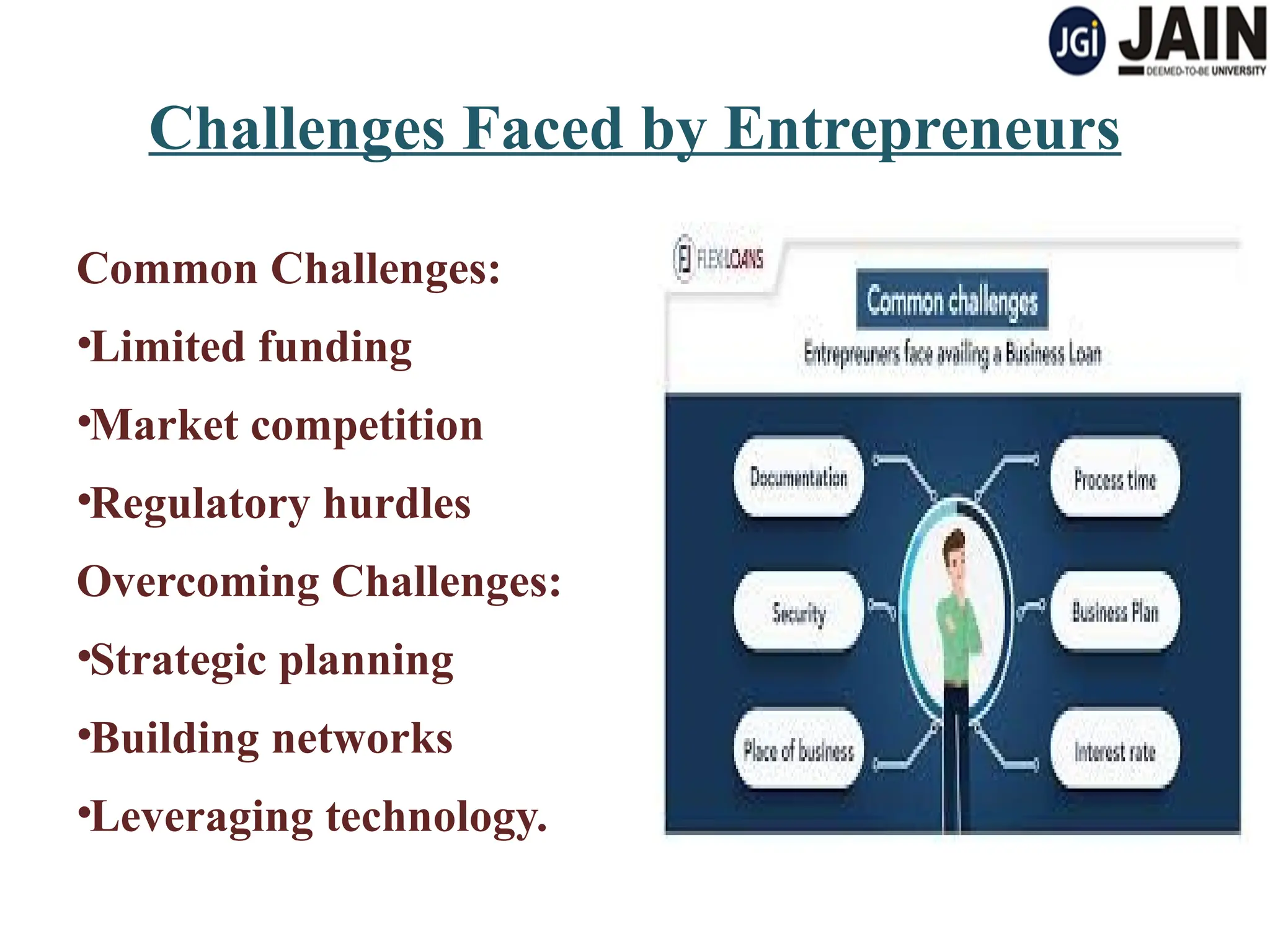
Common Challenges:
•Limited funding
•Market competition
•Regulatory hurdles
Overcoming Challenges:
•Strategic planning
•Building networks
•Leveraging technology.
Importance of Networking in
Entrepreneurship
Role of Networking:
• Access to resources, mentors, and
investors.
Types of Networks:
• Professional organizations
• Online communities (e.g., LinkedIn)
Practical Steps:
• Attending events, building meaningful
connections.
Case Studies of Successful
Entrepreneurs
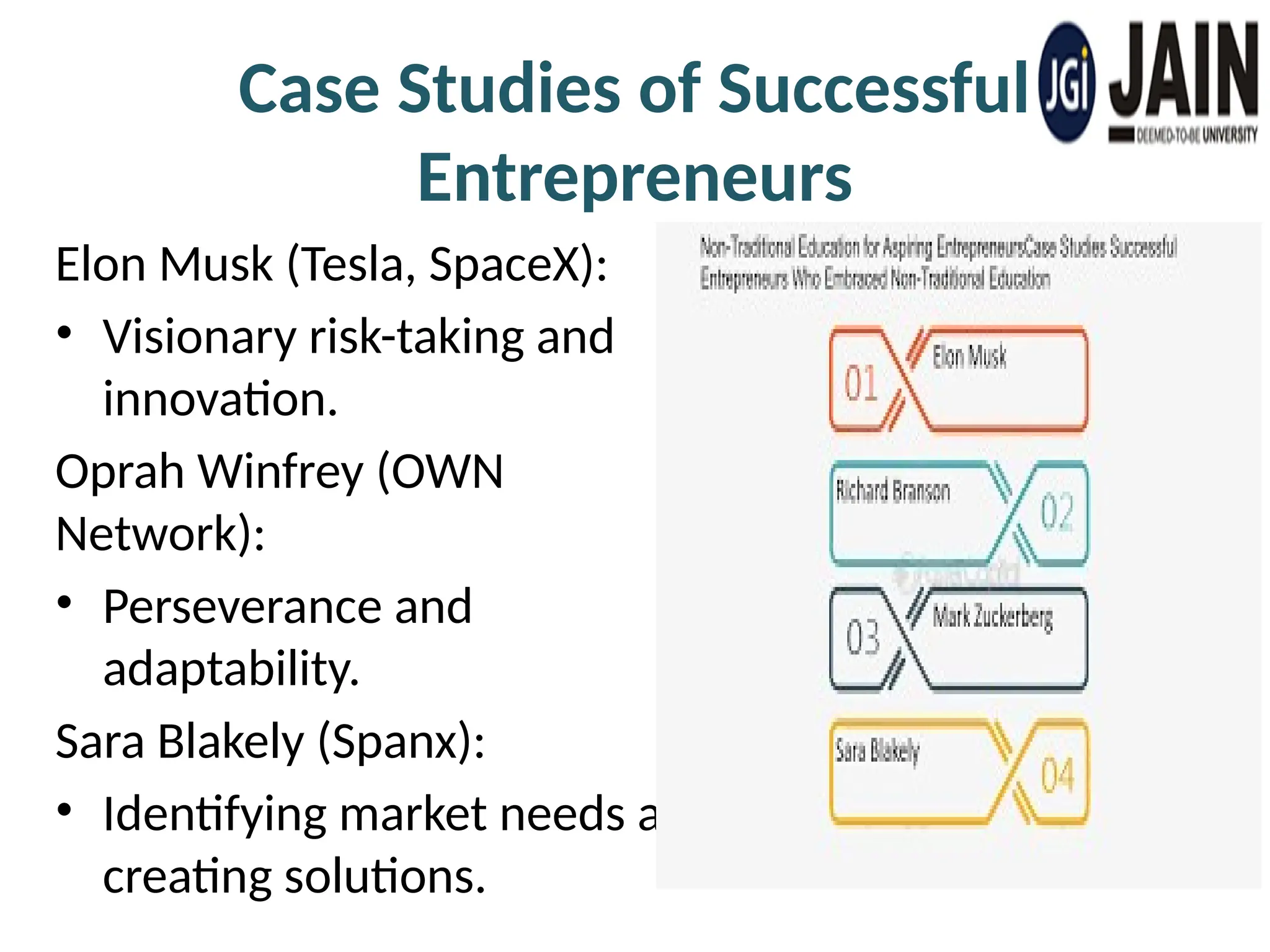
Elon Musk (Tesla, SpaceX):
• Visionary risk-taking and
innovation.
Oprah Winfrey (OWN
Network):
• Perseverance and
adaptability.
Sara Blakely (Spanx):
• Identifying market needs and
creating solutions.
Future of Entrepreneurship
Trends Shaping the Future:
•Sustainability and green
technology.
•AI and automation.
•Globalization and digital
nomadism.
Opportunities Ahead:
•Emphasis on diversity and
inclusivity.
•Technological advancements.
Thank You

Unit 1.pptx, basic of entrepreneurship, entrepreneur

  • 1.
    Entrepreneurship Theory andPractice Unit 1 Exploring the Fundamentals of Entrepreneurial Thinking and Opportunity Recognition Credit 3 Subject Code: 23JUGEHSS18
  • 2.
    Outline of theUnit 1 Presentation INTRODUCTION TO ENTREPRENEURSHIP: Defining entrepreneurship. Historical overview and evolution of entrepreneurship. Entrepreneurial Mind-set and Opportunity Recognition. Characteristics of successful entrepreneurs.  Identifying and evaluating business opportunities
  • 3.
    INTRODUCTION TO ENTREPRENEURSHIP Definition: Entrepreneurshipis the process of identifying, evaluating, and exploiting opportunities to create value and bring about innovation.  Key Concepts:  Innovation  Risk-taking  Value creation  Resource management  Importance of entrepreneurship in economic development and job creation.
  • 4.
    Historical Overview ofEntrepreneurship Early Roots: • Mercantilism and trading practices in ancient civilizations. Industrial Revolution: • Rise of industrial entrepreneurs (e.g., Andrew Carnegie, Henry Ford). Modern Era: • Tech-based entrepreneurs (e.g., Steve Jobs, Elon Musk).Evolution: From traditional business models to startups and gig economy.
  • 5.
    Evolution of anEntrepreneurship Traditional Entrepreneurs:  Focused on physical products and manufacturing. Technology Entrepreneurs:  Driven by innovation in technology. Social Entrepreneurs:  Aimed at solving societal problems. Digital Entrepreneurs:  Internet-based businesses. Future Trends:  Sustainability-focused entrepreneurship.
  • 6.
    The Entrepreneurial Mindset Aset of attitudes, skills, and behaviors oriented toward innovation and opportunity. Core Traits: Proactiveness, creativity, resilience, adaptability. Key to Success: Viewing challenges as opportunities. Embracing uncertainty and learning from failure.
  • 7.
    Importance of OpportunityRecognition  Opportunity Recognition:  The process of identifying unmet needs or problems to solve.  Sources of Opportunities:  Market gaps  Emerging trends  Technological advancements  Role of Observation and Networking:  Listening to customer needs.  Leveraging connections.
  • 8.
    Characteristics of SuccessfulEntrepreneurs Key Traits:  Visionary thinking  Risk tolerance  Decision-making skills  Passion and commitment Emotional Intelligence:  Building relationships and leading teams. Growth-Oriented:  Lifelong learning and continuous improvement.
  • 9.
    Identifying Business Opportunities Techniques: Market research  SWOT analysis (Strengths, Weaknesses, Opportunities, Threats)  Trend analysis Tools:  Customer feedback  Competitor analysis Case Examples:  Companies like Airbnb, Uber identifying market gaps.
  • 10.
    Evaluating Business Opportunities Criteriafor Evaluation:  Market demand  Feasibility  Scalability  Profitability Risk Assessment:  Identifying potential barriers and mitigating them. Example Framework:  Business Model Canvas.
  • 11.
    Importance of Innovationin Entrepreneurship Role of Innovation: Differentiates products/services. Drives competitive advantage. Examples: Tesla’s electric cars Netflix’s content streaming Encouraging Innovation: Fostering a culture of creativity.
  • 12.
    Challenges Faced byEntrepreneurs Common Challenges: •Limited funding •Market competition •Regulatory hurdles Overcoming Challenges: •Strategic planning •Building networks •Leveraging technology.
  • 13.
    Importance of Networkingin Entrepreneurship Role of Networking: • Access to resources, mentors, and investors. Types of Networks: • Professional organizations • Online communities (e.g., LinkedIn) Practical Steps: • Attending events, building meaningful connections.
  • 14.
    Case Studies ofSuccessful Entrepreneurs Elon Musk (Tesla, SpaceX): • Visionary risk-taking and innovation. Oprah Winfrey (OWN Network): • Perseverance and adaptability. Sara Blakely (Spanx): • Identifying market needs and creating solutions.
  • 15.
    Future of Entrepreneurship TrendsShaping the Future: •Sustainability and green technology. •AI and automation. •Globalization and digital nomadism. Opportunities Ahead: •Emphasis on diversity and inclusivity. •Technological advancements.
  • 16.