Universidad Nacional Experimental
Francisco de Miranda
Programa de Educación
Mención: Ingles
Modalidad:ADI
Prof. Mahly J. Martínez
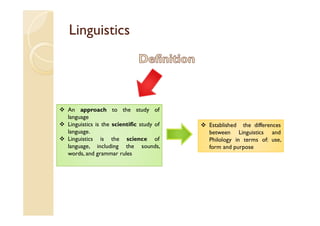
Linguistics
An approach to the study of
language
Linguistics is the scientific study of
language.
Linguistics is the science of
language, including the sounds,
words, and grammar rules
Established the differences
between Linguistics and
Philology in terms of: use,
form and purpose
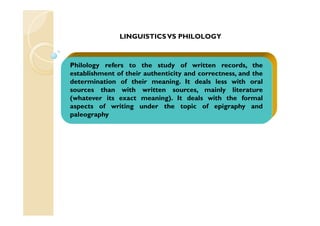
Philology refers to the study of written records, the
establishment of their authenticity and correctness, and the
determination of their meaning. It deals less with oral
sources than with written sources, mainly literature
(whatever its exact meaning). It deals with the formal
aspects of writing under the topic of epigraphy and
paleography
LINGUISTICSVS PHILOLOGY
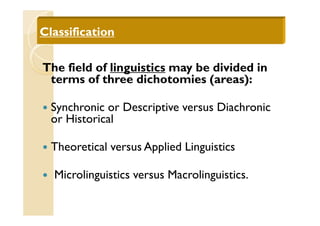
Classification
The field of linguistics may be divided in
terms of three dichotomies (areas):
Synchronic or Descriptive versus Diachronic
or Historical
Theoretical versus Applied Linguistics
Microlinguistics versus Macrolinguistics.
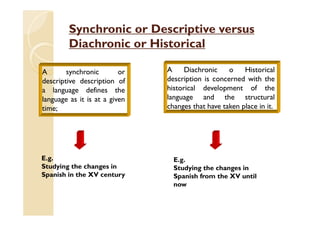
Synchronic or Descriptive versus
Diachronic or Historical
A synchronic or
descriptive description of
a language defines the
language as it is at a given
time;
A Diachronic o Historical
description is concerned with the
historical development of the
language and the structural
changes that have taken place in it.
E.g.
Studying the changes in
Spanish in the XV century
E.g.
Studying the changes in
Spanish from the XV until
now
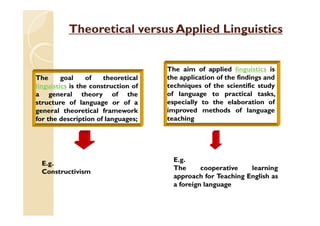
Theoretical versus Applied Linguistics
The goal of theoretical
linguistics is the construction of
a general theory of the
structure of language or of a
general theoretical framework
for the description of languages;
The aim of applied linguistics is
the application of the findings and
techniques of the scientific study
of language to practical tasks,
especially to the elaboration of
improved methods of language
teaching
E.g.
Constructivism
E.g.
The cooperative learning
approach for Teaching English as
a foreign language
Microlinguistics versus Macrolinguistics.
Microlinguistic
Microlinguistic
Microlinguistic
Microlinguistic establishes
establishes
establishes
establishes that
that
that
that
languages
languages
languages
languages should
should
should
should be
be
be
be analyzed
analyzed
analyzed
analyzed for
for
for
for
their
their
their
their own
own
own
own sake
sake
sake
sake and
and
and
and without
without
without
without reference
reference
reference
reference
to
to
to
to their
their
their
their social
social
social
social function,
function,
function,
function, to
to
to
to the
the
the
the
manner
manner
manner
manner in
in
in
in which
which
which
which they
they
they
they are
are
are
are acquired
acquired
acquired
acquired
by
by
by
by children,
children,
children,
children, to
to
to
to the
the
the
the psychological
psychological
psychological
psychological
mechanisms
mechanisms
mechanisms
mechanisms that
that
that
that underlie
underlie
underlie
underlie the
the
the
the
production
production
production
production and
and
and
and reception
reception
reception
reception of
of
of
of speech,
speech,
speech,
speech,
to
to
to
to the
the
the
the literary
literary
literary
literary and
and
and
and the
the
the
the aesthetic
aesthetic
aesthetic
aesthetic or
or
or
or
communicative
communicative
communicative
communicative function
function
function
function of
of
of
of language
language
language
language
Macrolinguistics
Macrolinguistics
Macrolinguistics
Macrolinguistics embraces
embraces
embraces
embraces all
all
all
all of
of
of
of
these
these
these
these aspects
aspects
aspects
aspects of
of
of
of language
language
language
language.
.
.
. Various
Various
Various
Various
areas
areas
areas
areas within
within
within
within macrolinguistics
macrolinguistics
macrolinguistics
macrolinguistics have
have
have
have
been
been
been
been given
given
given
given terminological
terminological
terminological
terminological
recognition
recognition
recognition
recognition:
:
:
: psycholinguistics
psycholinguistics
psycholinguistics
psycholinguistics,
,
,
,
sociolinguistics
sociolinguistics
sociolinguistics
sociolinguistics,
,
,
, anthropological
anthropological
anthropological
anthropological
linguistics
linguistics
linguistics
linguistics,
,
,
, dialectology
dialectology
dialectology
dialectology,
,
,
,
mathematical
mathematical
mathematical
mathematical and
and
and
and computational
computational
computational
computational
linguistics
linguistics
linguistics
linguistics,
,
,
, and
and
and
and stylistics
stylistics
stylistics
stylistics.
.
.
.
LINGUISTICS AND THE LANGUAGE
Linguistics
Linguistics
Linguistics
Linguistics is
is
is
is concerned
concerned
concerned
concerned with
with
with
with the
the
the
the nature
nature
nature
nature of
of
of
of language
language
language
language and
and
and
and
communication
communication
communication
communication.
.
.
. It
It
It
It is
is
is
is apparent
apparent
apparent
apparent that
that
that
that people
people
people
people have
have
have
have been
been
been
been fascinated
fascinated
fascinated
fascinated with
with
with
with
language
language
language
language and
and
and
and communication
communication
communication
communication for
for
for
for thousands
thousands
thousands
thousands of
of
of
of years,
years,
years,
years, yet
yet
yet
yet in
in
in
in many
many
many
many
ways
ways
ways
ways we
we
we
we are
are
are
are only
only
only
only beginning
beginning
beginning
beginning to
to
to
to understand
understand
understand
understand the
the
the
the complex
complex
complex
complex nature
nature
nature
nature of
of
of
of
this
this
this
this aspect
aspect
aspect
aspect of
of
of
of human
human
human
human life
life
life
life.
.
.
.
It
It
It
It answers
answers
answers
answers the
the
the
the following
following
following
following questions
questions
questions
questions:
:
:
:
What
What
What
What is
is
is
is the
the
the
the nature
nature
nature
nature of
of
of
of language?
language?
language?
language?
How
How
How
How does
does
does
does communication
communication
communication
communication work?
work?
work?
work?
Linguistics
Linguistics
Linguistics
Linguistics is
is
is
is not
not
not
not simply
simply
simply
simply to
to
to
to understand
understand
understand
understand how
how
how
how language
language
language
language itself
itself
itself
itself is
is
is
is structured
structured
structured
structured
and
and
and
and how
how
how
how it
it
it
it functions
functions
functions
functions.
.
.
. We
We
We
We hope
hope
hope
hope that
that
that
that as
as
as
as we
we
we
we come
come
come
come to
to
to
to understand
understand
understand
understand more
more
more
more
about
about
about
about human
human
human
human language,
language,
language,
language, we
we
we
we will
will
will
will correspondingly
correspondingly
correspondingly
correspondingly understand
understand
understand
understand more
more
more
more
about
about
about
about the
the
the
the processes
processes
processes
processes of
of
of
of human
human
human
human thought
thought
thought
thought.
.
.
.
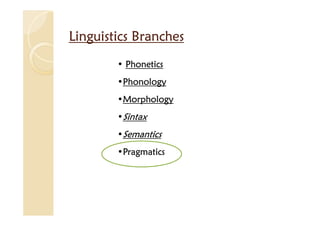
Linguistics Branches
• Phonetics
Phonetics
Phonetics
Phonetics
•Phonology
Phonology
Phonology
Phonology
•Morphology
Morphology
Morphology
Morphology
•Sintax
Sintax
Sintax
Sintax
•Semantics
Semantics
Semantics
Semantics
•Pragmatics
Pragmatics
Pragmatics
Pragmatics

unit 1. lingusitics and its branches.pdf

  • 1.
    Universidad Nacional Experimental Franciscode Miranda Programa de Educación Mención: Ingles Modalidad:ADI Prof. Mahly J. Martínez
  • 2.
    Linguistics An approach tothe study of language Linguistics is the scientific study of language. Linguistics is the science of language, including the sounds, words, and grammar rules Established the differences between Linguistics and Philology in terms of: use, form and purpose
  • 3.
    Philology refers tothe study of written records, the establishment of their authenticity and correctness, and the determination of their meaning. It deals less with oral sources than with written sources, mainly literature (whatever its exact meaning). It deals with the formal aspects of writing under the topic of epigraphy and paleography LINGUISTICSVS PHILOLOGY
  • 4.
    Classification The field oflinguistics may be divided in terms of three dichotomies (areas): Synchronic or Descriptive versus Diachronic or Historical Theoretical versus Applied Linguistics Microlinguistics versus Macrolinguistics.
  • 5.
    Synchronic or Descriptiveversus Diachronic or Historical A synchronic or descriptive description of a language defines the language as it is at a given time; A Diachronic o Historical description is concerned with the historical development of the language and the structural changes that have taken place in it. E.g. Studying the changes in Spanish in the XV century E.g. Studying the changes in Spanish from the XV until now
  • 6.
    Theoretical versus AppliedLinguistics The goal of theoretical linguistics is the construction of a general theory of the structure of language or of a general theoretical framework for the description of languages; The aim of applied linguistics is the application of the findings and techniques of the scientific study of language to practical tasks, especially to the elaboration of improved methods of language teaching E.g. Constructivism E.g. The cooperative learning approach for Teaching English as a foreign language
  • 7.
    Microlinguistics versus Macrolinguistics. Microlinguisticsversus Macrolinguistics. Microlinguistics versus Macrolinguistics. Microlinguistics versus Macrolinguistics. Microlinguistic Microlinguistic Microlinguistic Microlinguistic establishes establishes establishes establishes that that that that languages languages languages languages should should should should be be be be analyzed analyzed analyzed analyzed for for for for their their their their own own own own sake sake sake sake and and and and without without without without reference reference reference reference to to to to their their their their social social social social function, function, function, function, to to to to the the the the manner manner manner manner in in in in which which which which they they they they are are are are acquired acquired acquired acquired by by by by children, children, children, children, to to to to the the the the psychological psychological psychological psychological mechanisms mechanisms mechanisms mechanisms that that that that underlie underlie underlie underlie the the the the production production production production and and and and reception reception reception reception of of of of speech, speech, speech, speech, to to to to the the the the literary literary literary literary and and and and the the the the aesthetic aesthetic aesthetic aesthetic or or or or communicative communicative communicative communicative function function function function of of of of language language language language Macrolinguistics Macrolinguistics Macrolinguistics Macrolinguistics embraces embraces embraces embraces all all all all of of of of these these these these aspects aspects aspects aspects of of of of language language language language. . . . Various Various Various Various areas areas areas areas within within within within macrolinguistics macrolinguistics macrolinguistics macrolinguistics have have have have been been been been given given given given terminological terminological terminological terminological recognition recognition recognition recognition: : : : psycholinguistics psycholinguistics psycholinguistics psycholinguistics, , , , sociolinguistics sociolinguistics sociolinguistics sociolinguistics, , , , anthropological anthropological anthropological anthropological linguistics linguistics linguistics linguistics, , , , dialectology dialectology dialectology dialectology, , , , mathematical mathematical mathematical mathematical and and and and computational computational computational computational linguistics linguistics linguistics linguistics, , , , and and and and stylistics stylistics stylistics stylistics. . . .
  • 8.
    LINGUISTICS AND THELANGUAGE LINGUISTICS AND THE LANGUAGE LINGUISTICS AND THE LANGUAGE LINGUISTICS AND THE LANGUAGE Linguistics Linguistics Linguistics Linguistics is is is is concerned concerned concerned concerned with with with with the the the the nature nature nature nature of of of of language language language language and and and and communication communication communication communication. . . . It It It It is is is is apparent apparent apparent apparent that that that that people people people people have have have have been been been been fascinated fascinated fascinated fascinated with with with with language language language language and and and and communication communication communication communication for for for for thousands thousands thousands thousands of of of of years, years, years, years, yet yet yet yet in in in in many many many many ways ways ways ways we we we we are are are are only only only only beginning beginning beginning beginning to to to to understand understand understand understand the the the the complex complex complex complex nature nature nature nature of of of of this this this this aspect aspect aspect aspect of of of of human human human human life life life life. . . . It It It It answers answers answers answers the the the the following following following following questions questions questions questions: : : : What What What What is is is is the the the the nature nature nature nature of of of of language? language? language? language? How How How How does does does does communication communication communication communication work? work? work? work? Linguistics Linguistics Linguistics Linguistics is is is is not not not not simply simply simply simply to to to to understand understand understand understand how how how how language language language language itself itself itself itself is is is is structured structured structured structured and and and and how how how how it it it it functions functions functions functions. . . . We We We We hope hope hope hope that that that that as as as as we we we we come come come come to to to to understand understand understand understand more more more more about about about about human human human human language, language, language, language, we we we we will will will will correspondingly correspondingly correspondingly correspondingly understand understand understand understand more more more more about about about about the the the the processes processes processes processes of of of of human human human human thought thought thought thought. . . .
  • 9.
    Linguistics Branches Linguistics Branches LinguisticsBranches Linguistics Branches • Phonetics Phonetics Phonetics Phonetics •Phonology Phonology Phonology Phonology •Morphology Morphology Morphology Morphology •Sintax Sintax Sintax Sintax •Semantics Semantics Semantics Semantics •Pragmatics Pragmatics Pragmatics Pragmatics