UNIT 1 INTRODUCTION TO ECOSYSTEM(1).EVSDDUCDU.pptx.pdf
1.
UNIT 1: INTRODUCTIONTO ENVIRONMENTAL
STUDIES
SHILPI PANDEY, DDUC, UNIVERSITY OF DELHI
2.
INTRODUCTION
• The termEnvironment is derived from the French word ‘Environ’ which literally
means ‘surrounding’. Anything and everything which surrounds us i.e. all living
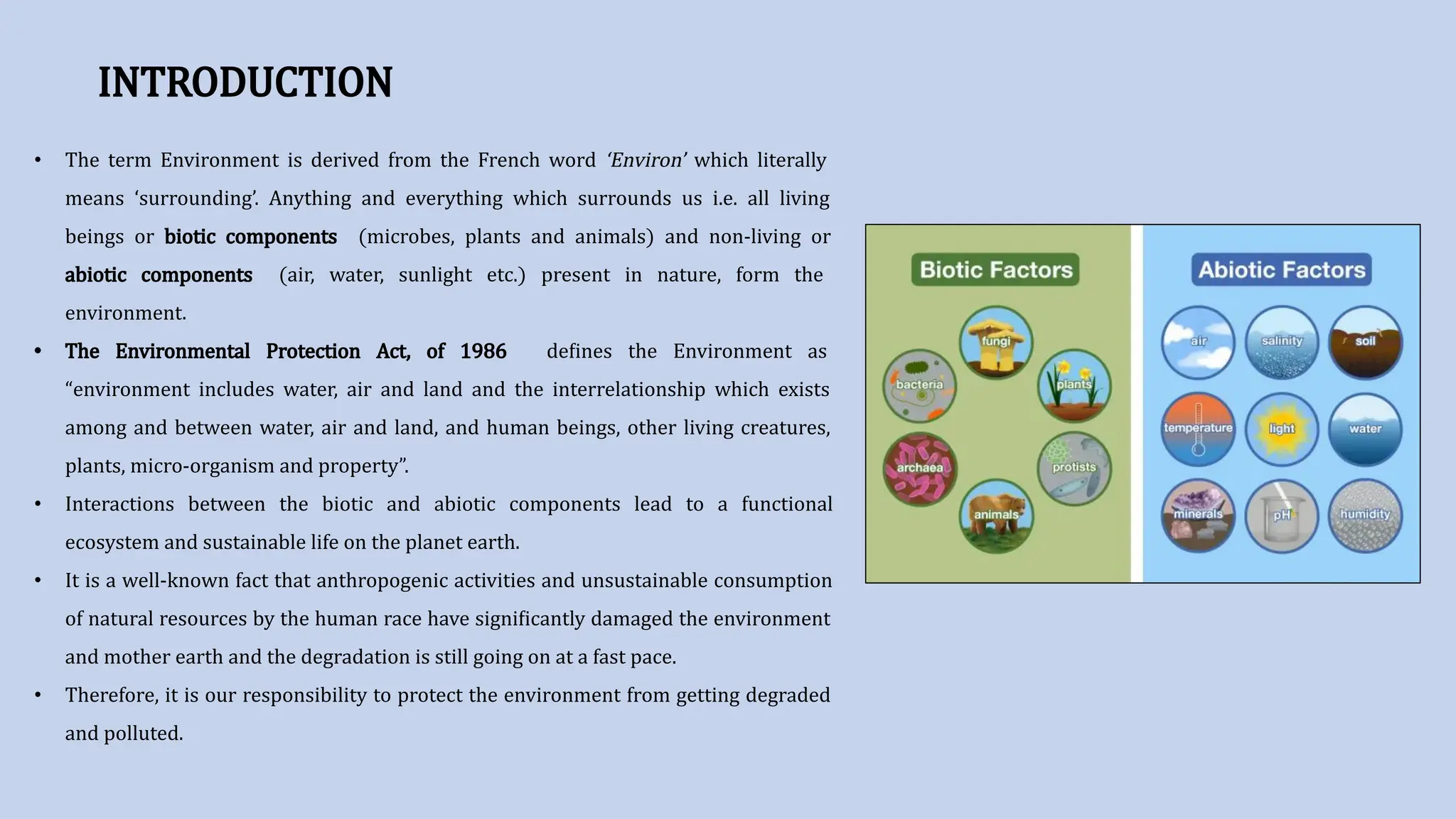
beings or biotic components (microbes, plants and animals) and non-living or
abiotic components (air, water, sunlight etc.) present in nature, form the
environment.
• The Environmental Protection Act, of 1986 defines the Environment as
“environment includes water, air and land and the interrelationship which exists
among and between water, air and land, and human beings, other living creatures,
plants, micro-organism and property”.
• Interactions between the biotic and abiotic components lead to a functional
ecosystem and sustainable life on the planet earth.
• It is a well-known fact that anthropogenic activities and unsustainable consumption
of natural resources by the human race have significantly damaged the environment
and mother earth and the degradation is still going on at a fast pace.
• Therefore, it is our responsibility to protect the environment from getting degraded
and polluted.
3.
COMPONENTS OF ENVIRONMENT
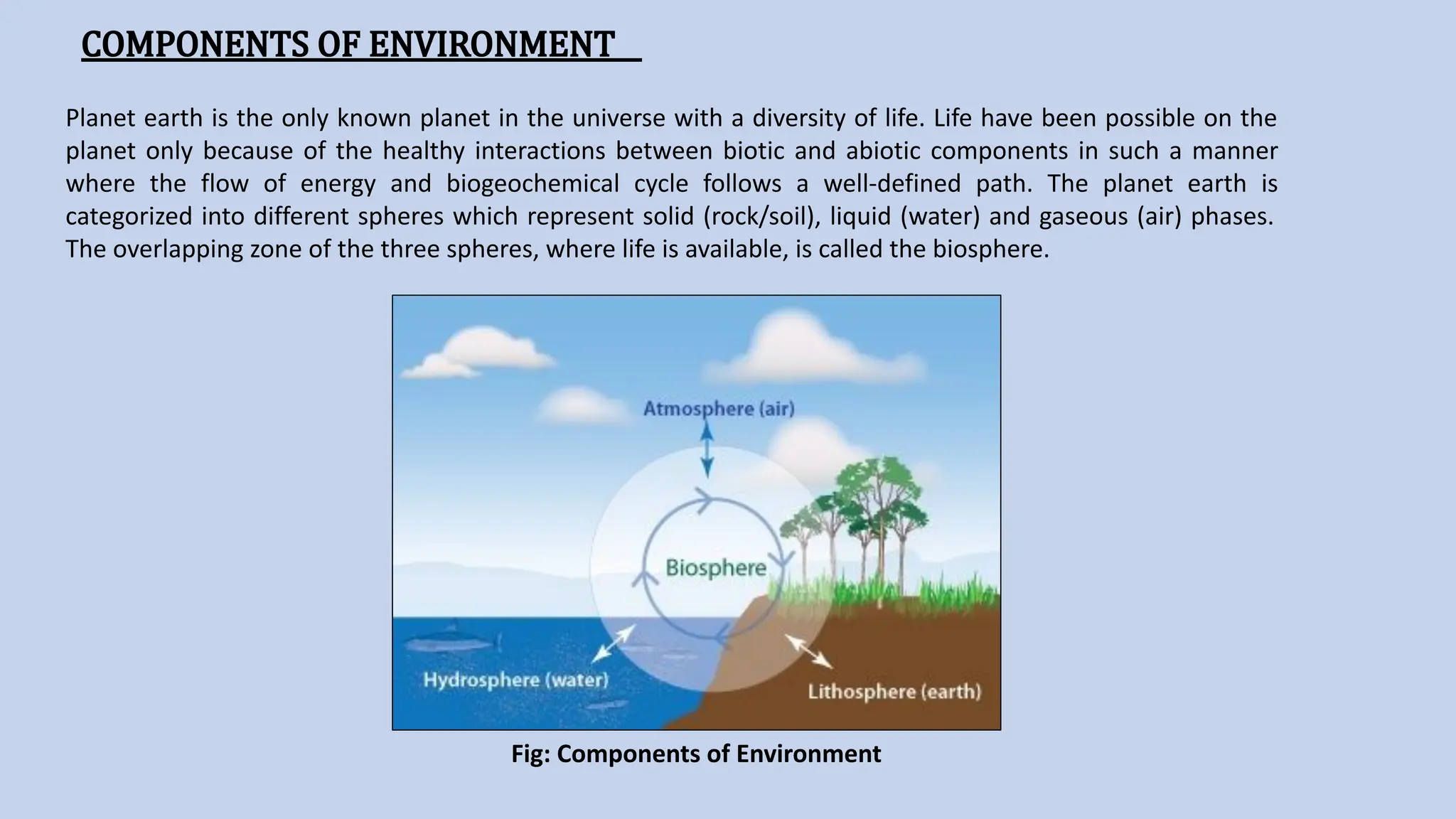
Planetearth is the only known planet in the universe with a diversity of life. Life have been possible on the
planet only because of the healthy interactions between biotic and abiotic components in such a manner
where the flow of energy and biogeochemical cycle follows a well-defined path. The planet earth is
categorized into different spheres which represent solid (rock/soil), liquid (water) and gaseous (air) phases.
The overlapping zone of the three spheres, where life is available, is called the biosphere.
Fig: Components of Environment
4.
LITHOSPHERE
(Greek: ‘Lithos’ meansrock)
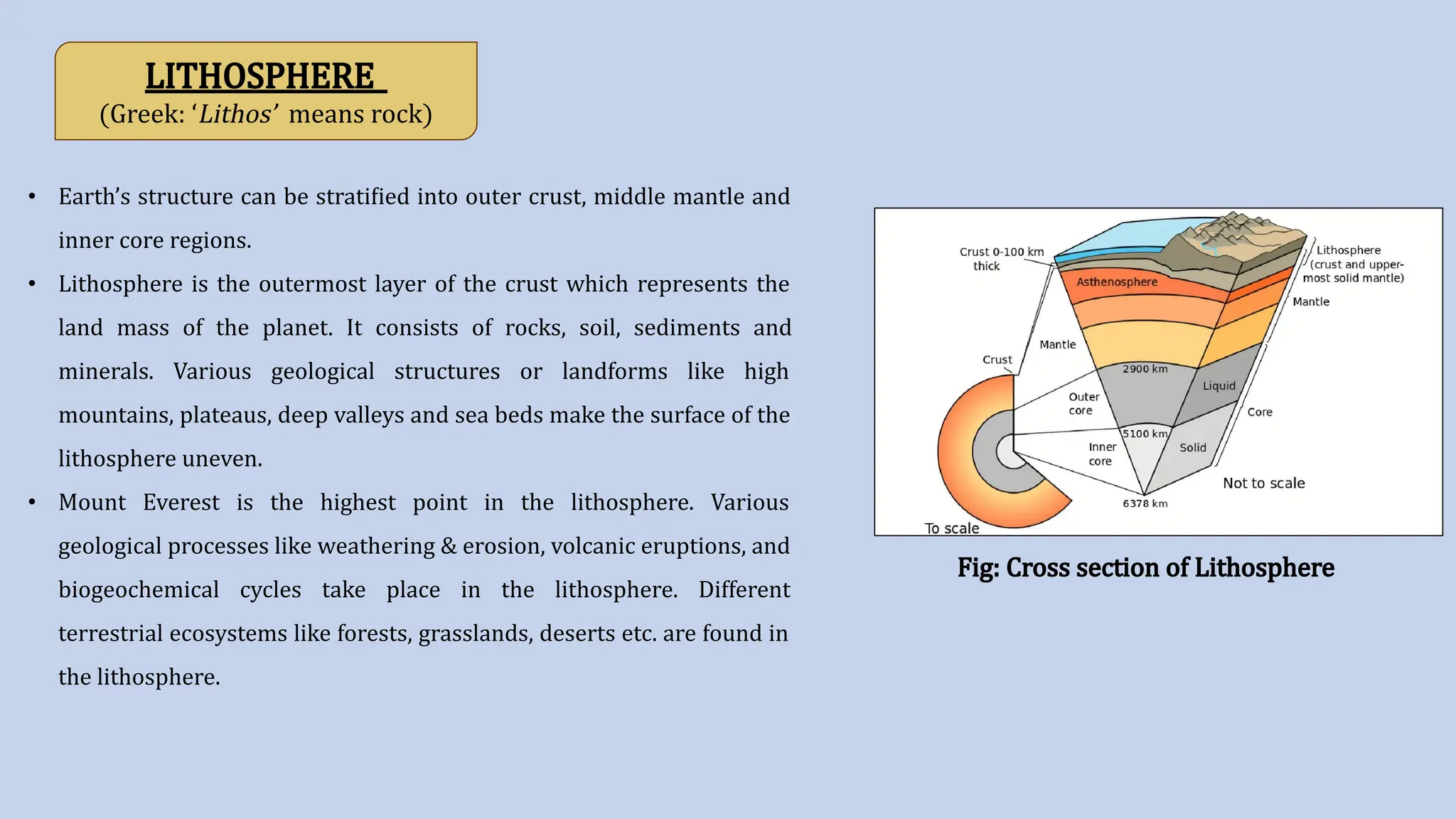
• Earth’s structure can be stratified into outer crust, middle mantle and
inner core regions.
• Lithosphere is the outermost layer of the crust which represents the
land mass of the planet. It consists of rocks, soil, sediments and
minerals. Various geological structures or landforms like high
mountains, plateaus, deep valleys and sea beds make the surface of the
lithosphere uneven.
• Mount Everest is the highest point in the lithosphere. Various
geological processes like weathering & erosion, volcanic eruptions, and
biogeochemical cycles take place in the lithosphere. Different
terrestrial ecosystems like forests, grasslands, deserts etc. are found in
the lithosphere.
Fig: Cross section of Lithosphere
5.
HYDROSPHERE
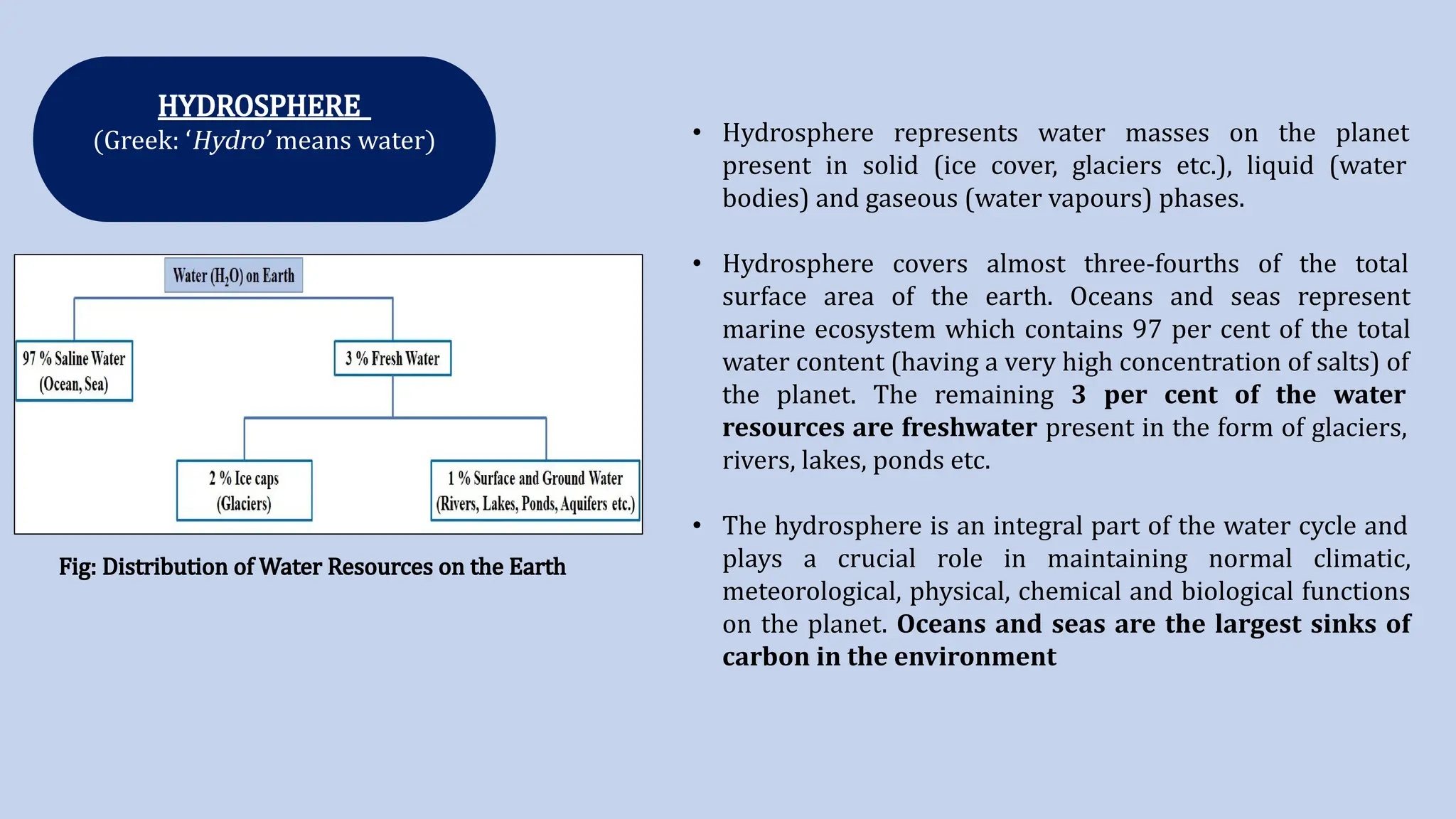
(Greek: ‘Hydro’ meanswater) • Hydrosphere represents water masses on the planet
present in solid (ice cover, glaciers etc.), liquid (water
bodies) and gaseous (water vapours) phases.
• Hydrosphere covers almost three-fourths of the total
surface area of the earth. Oceans and seas represent
marine ecosystem which contains 97 per cent of the total
water content (having a very high concentration of salts) of
the planet. The remaining 3 per cent of the water
resources are freshwater present in the form of glaciers,
rivers, lakes, ponds etc.
• The hydrosphere is an integral part of the water cycle and
plays a crucial role in maintaining normal climatic,
meteorological, physical, chemical and biological functions
on the planet. Oceans and seas are the largest sinks of
carbon in the environment
Fig: Distribution of Water Resources on the Earth
6.
ATMOSPHERE
(Greek: ‘Atmos’ meansvapour)
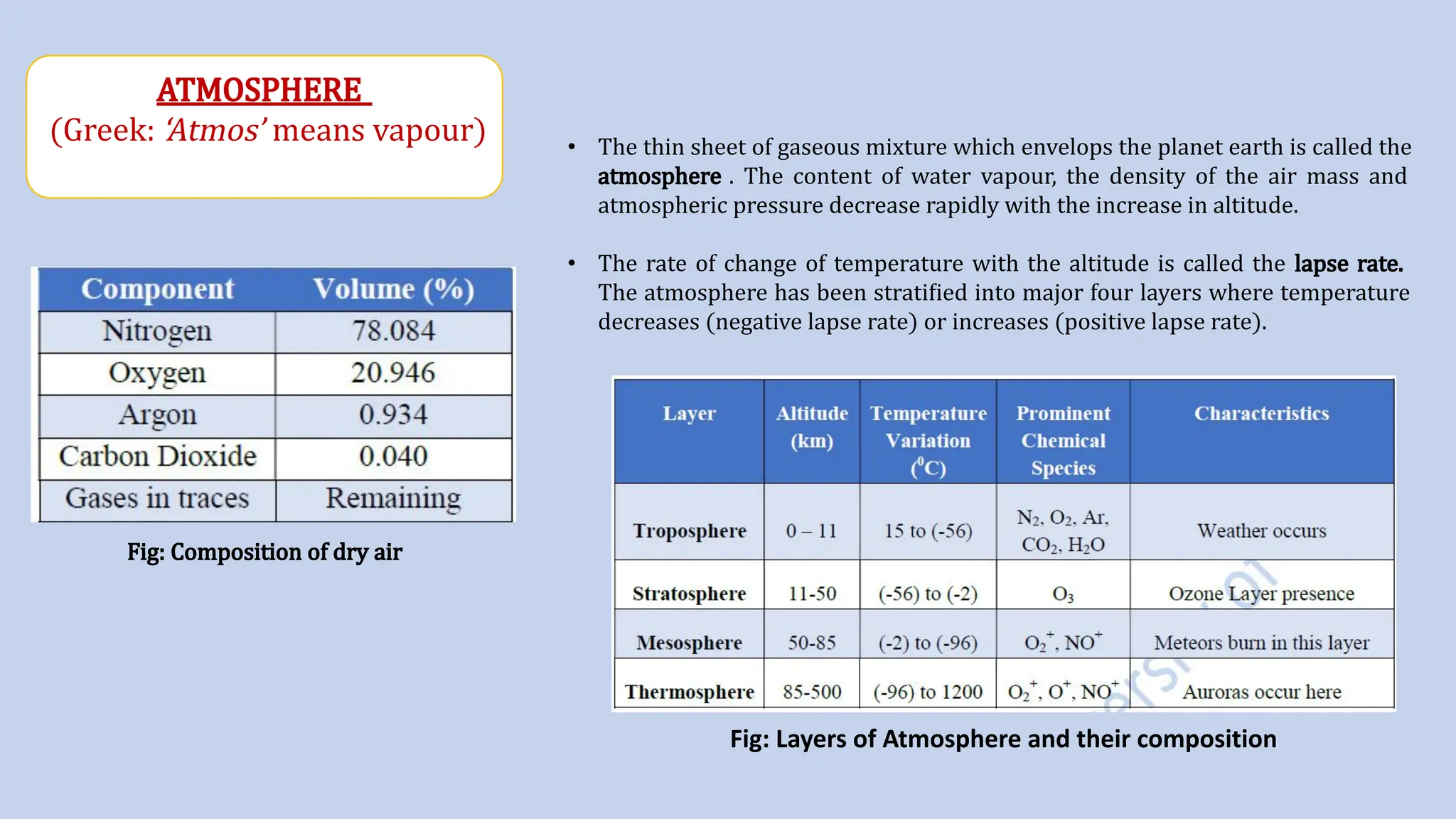
Fig: Composition of dry air
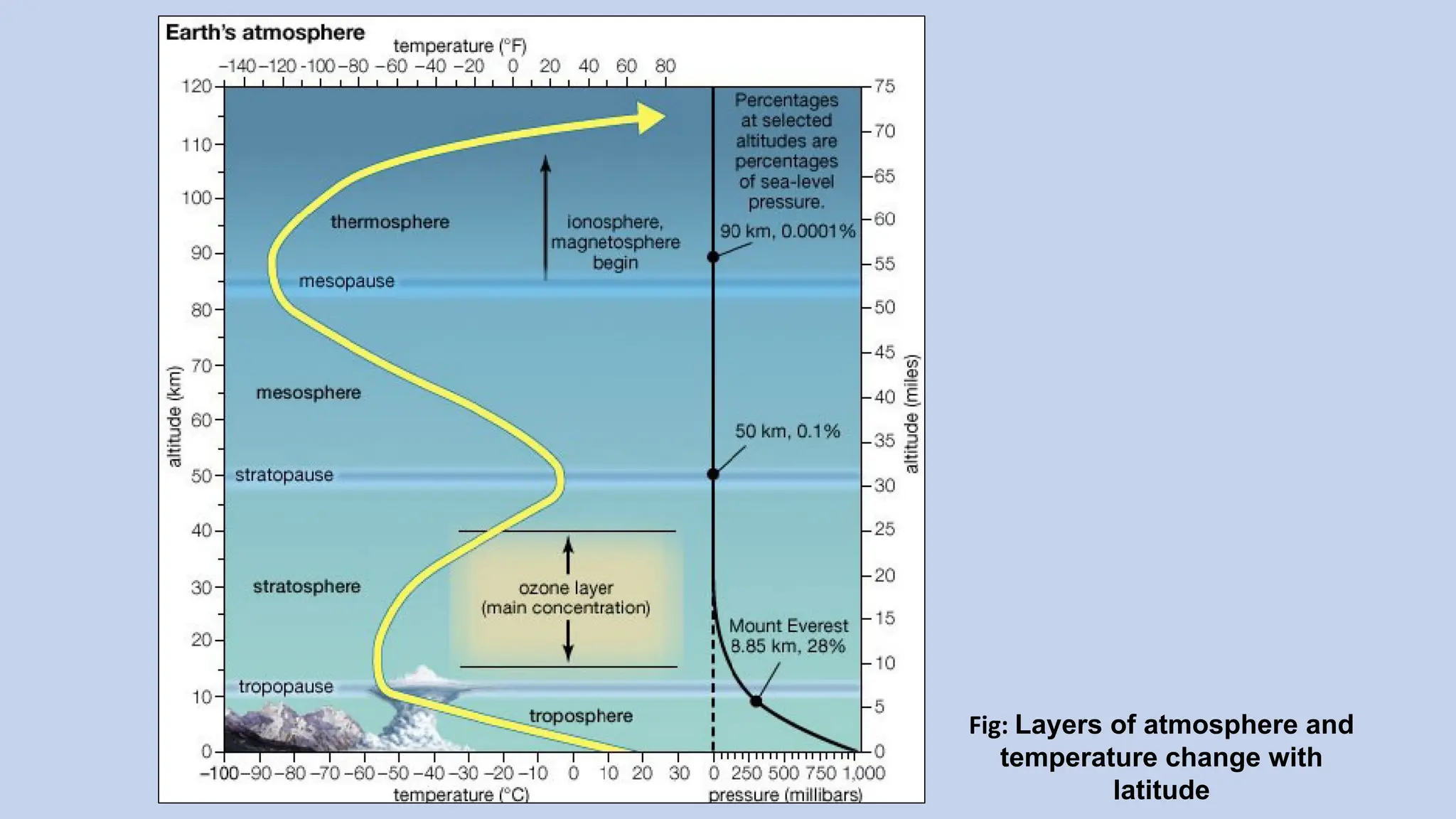
• The thin sheet of gaseous mixture which envelops the planet earth is called the
atmosphere . The content of water vapour, the density of the air mass and
atmospheric pressure decrease rapidly with the increase in altitude.
• The rate of change of temperature with the altitude is called the lapse rate.
The atmosphere has been stratified into major four layers where temperature
decreases (negative lapse rate) or increases (positive lapse rate).
Fig: Layers of Atmosphere and their composition
Fig: Layers ofatmosphere and
temperature change with
latitude
9.
BIOSPHERE
(Greek: ‘Bios’ meanslife)
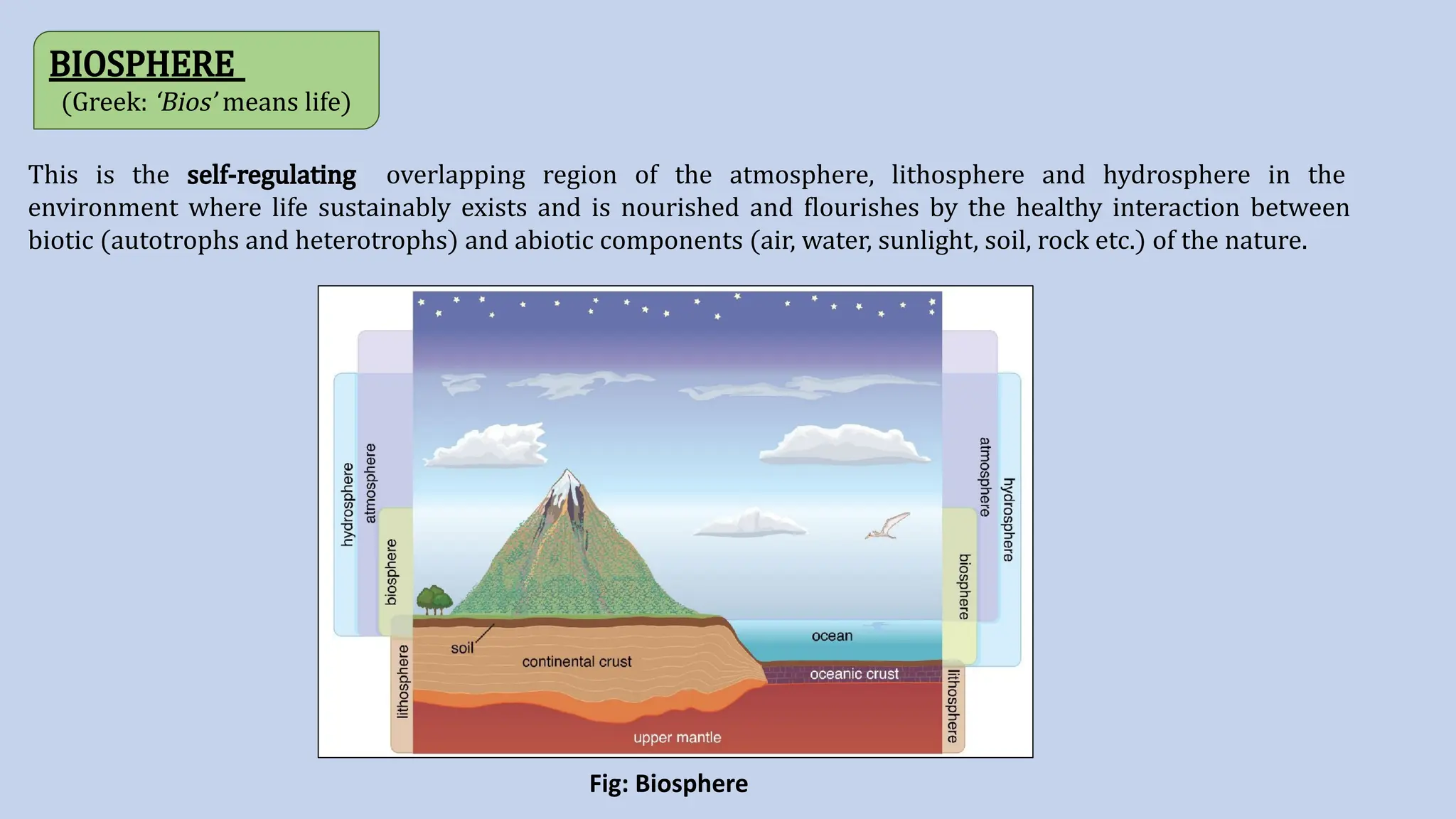
This is the self-regulating overlapping region of the atmosphere, lithosphere and hydrosphere in the
environment where life sustainably exists and is nourished and flourishes by the healthy interaction between
biotic (autotrophs and heterotrophs) and abiotic components (air, water, sunlight, soil, rock etc.) of the nature.
Fig: Biosphere
10.
ENVIRONMENTAL
EDUCATION
In the secondhalf of the twentieth century, global concerns were raised to make people environmentally aware. This was the time
when it was recommended to design separate courses for environmental education and establish an independent and
multidisciplinary discipline, commonly called Environmental Science or Studies.
According to UNESCO (1971), the objectives of environmental studies are:
• Creating awareness about environmental problems among people.
• Imparting basic knowledge about the environment and its allied problems.
• Developing an attitude of concern for the environment.
• Motivating the public to participate in environmental protection and environmental improvement.
• Acquiring skills to help the concerned individuals in identifying and solving environmental problems.
• Striving to attain harmony with nature.
UNESCO and UNEP jointly organized the first intergovernmental conference on environmental education in 1977 in Tbilisi,
Georgia. The goals of the conference were:
• To foster clear awareness of and concern about, economic, social, political, and ecological interdependence in urban and rural
areas;
• To provide every person with opportunities to acquire the knowledge, values, attitudes, commitment, and skills needed to
protect and improve the environment;
• To create new patterns of behaviour of individuals, groups, and society as a whole towards the environment.
11.
The categories ofenvironmental education objectives are:
Awareness: to help social groups and individuals acquire an awareness and sensitivity to the total
environment and its allied problems.
Knowledge: to help social groups and individuals gain a variety of experiences, and acquire a basic
understanding of, the environment and its associated problems.
Attitudes: to help social groups and individuals acquire a set of values and feelings of concern for the
environment and the motivation for actively participating in environmental improvement and protection.
Skills: to help social groups and individuals acquire the skills for identifying and solving environmental
problems.
Participation: to provide social groups and individuals with an opportunity to be actively involved at all
levels in working toward the resolution of environmental problems.
12.
Difference Between EnvironmentalScience And Environmental Studies
Environmental Studies: Environmental study is a multidisciplinary subject which studies
various dimensions (scientific, social, cultural, economic, political etc.) of the environment,
its issues and challenges and tangible solutions in a holistic way. It studies the human
environment interaction and its results at the micro and macro level.
Environmental Science strictly deals with the scientific aspects of the environment, its complex
problems and the tangible solutions whereas Environmental Studies, in addition to the scientific
aspects, also deals with the socio-economic, cultural, traditional, legislative and historical dimensions
of the environmental issues. Environmental science is specifically anthropocentric .
For example, suppose a river is getting polluted due to the discharge of untreated wastewater into the
river. The student of Environmental Science will observe the causes, physicochemical and biological
changes within the river water, its effect on the aquatic and adjoining ecosystem and scientific
mitigation measures for the river pollution. In addition to the above dimensions, Environmental
Studies will also observe the impact of the pollution on the nearby population, their livelihood and
culture etc.
13.
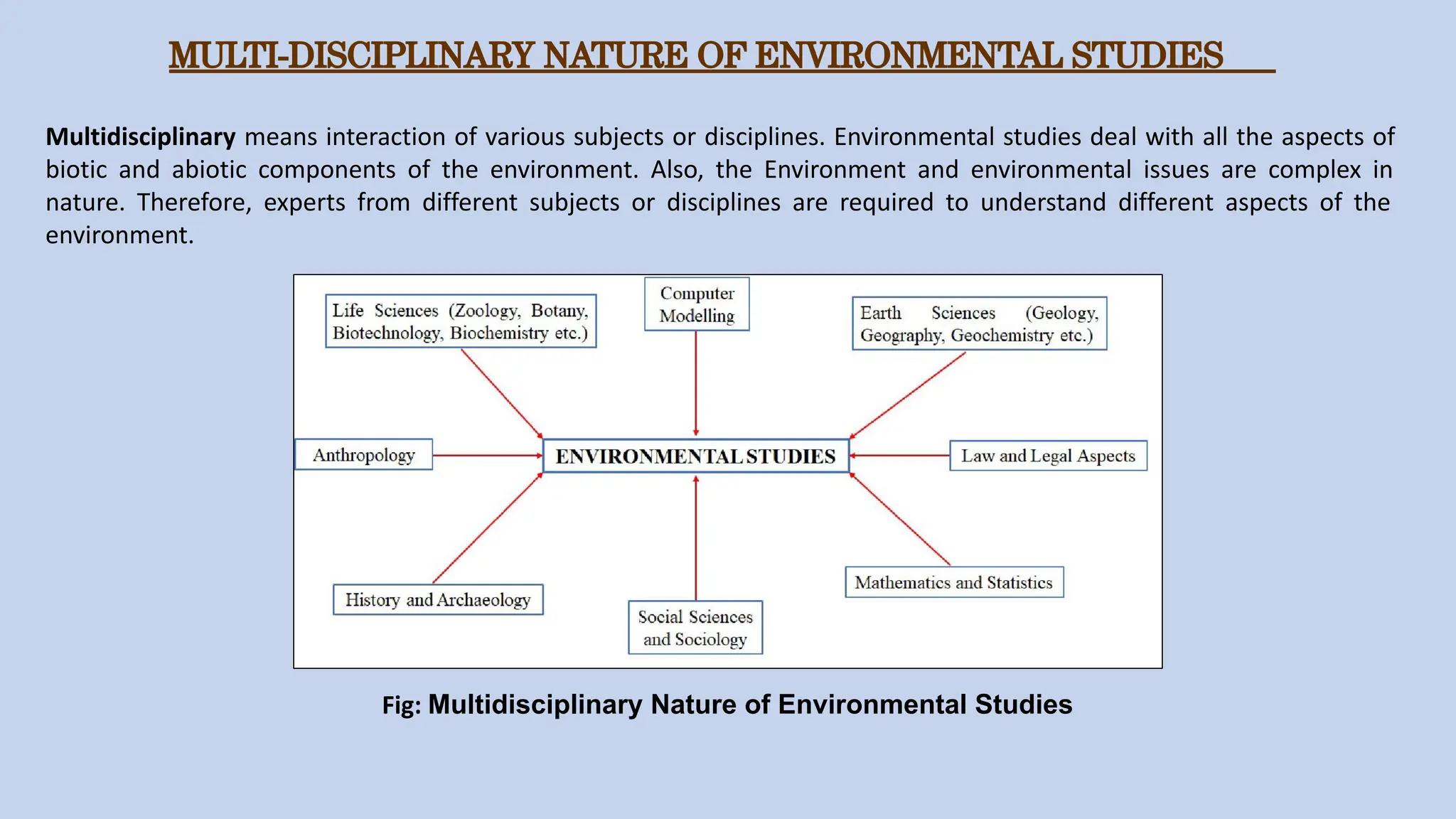
MULTI-DISCIPLINARY NATURE OFENVIRONMENTAL STUDIES
Multidisciplinary means interaction of various subjects or disciplines. Environmental studies deal with all the aspects of
biotic and abiotic components of the environment. Also, the Environment and environmental issues are complex in
nature. Therefore, experts from different subjects or disciplines are required to understand different aspects of the
environment.
Fig: Multidisciplinary Nature of Environmental Studies
14.
The Multidisciplinary Natureof Environmental Studies may be understood by a small case study. Suppose a developmental activity
(Dam, Mining, Highway etc.) is proposed within a given region. Before starting such projects, an Environmental Impact Assessment
(EIA) is conducted to assess and mitigate the possible degradation of the environment and population living within the region. To
effectively conduct the EIA, expertise from the following disciplines will be required:
❑ Life Sciences (Zoology and Botany): to assess the biodiversity richness and endemism of the given region and possible reversible or irreversible
changes in the biological diversity of the region by anthropogenic activities. An expert from life sciences will also assess the ecosystem goods and
services being provided by the nature in the specific region.
❑ Earth Sciences (Geology, Geography, Geochemistry etc.): Earth Sciences will study the details of geological and geographical terrain, soil/rock
profile, tectonic and seismic activity in the region etc.
❑ Chemical Sciences: it will be helpful in understanding various chemical processes and reactions taking place in different matrices of the
environment. It is also important to understand the fate and effect of pollutants on air, water, and soil.
❑ Anthropology, History and Archaeology: to assess the historical or archaeological importance of the monuments, tribal population, traditions or
practices in a region or at the site of the construction.
❑ Social Sciences, Sociology and Economics: to assess the socio-economic stature of the population and possible changes the same with ongoing
developmental projects.
❑ Law and Legal Aspects: expertise from a legal background is also required to satisfy different legal aspects during a developmental project activity
(like land acquisition, relocation and rehabilitation etc.).
❑ Mathematics, Computer Modelling and Statistics: we need different statistical tools and models to statistically validate the obtained data from the
study. Also, we are using numerous mathematical and computational models in day-to-day activities like meteorological predictions.
15.
SCOPE AND IMPORTANCEOF ENVIRONMENTAL STUDIES
The multidisciplinary approach to the subject can be implemented in a wide range of applications and fields related to
environmental awareness, education and conservation. Hence, the subject has a vast scope and the expert on the
subject can serve in numerous ways in different spheres of society. The experts and professionals of the subject are
required and recruited in various sectors like:
✔ Academics: the subject has been introduced in numerous schools, colleges and universities in India and abroad, at school,
under-graduation and postgraduation levels. The student may pursue the subject. Worldwide, a large number of dedicated
departments, centres, universities and institutions have been established for the subject. Many dedicated institutes, like WII
Dehradun, FRI Dehradun, IIFM Bhopal etc., have been established to propagate education in specialized fields of the environment.
✔ Research & Development: research and post-doctoral works have been going on worldwide to understand the ecological
mechanisms and to get cost-effective cuttingedge technologies to mitigate environmental issues and challenges.
✔ Industries: In order to effectively implement the environmental guidelines and technologies and to mitigate the environmental
degradation directly or indirectly caused by the industries, a large number of industries have been recruiting environmental
engineers/scientists/experts.
✔ Ministries and Agencies: ministry of environment and various environmental agencies & conventions of national and international
repute frequently create vacancies for environmental experts. A few examples of such agencies are UNEP, IPCC, CITES, RAMSAR,
USEPA etc.
16.
✔ Non-governmental Organizations(NGOs) and Consultancy: a large number of national and international NGOs and consultancies are
working as an extended hand to conserve the environment and its various components. Most of the NGOs and consultancies are old
and have an experienced workforce. Some of the examples are the Bombay Natural History Society, IUCN, Conservation International,
World Wide Fund for Nature, Wildlife Trust of India, Centre for Environmental Education, Centre for Science and Environment,
Kalpavriksha, Madras Crocodile Bank Trust etc.
✔ Green Journalism: environmental awareness is indispensable for environmental conservation and media (print, electronic and social
media) is the strongest medium to propagate the awareness. Green journalism is the term given when the media raises
environmental issues and practical solutions suggested by experts on the subject.
✔ Environmental legislation and Green Advocacy: for effective environmental conservation, it is indispensable to have stringent
legislative provisions and effective implementation of the same. Legal experts specialized in environmental law may act significantly
in environmental conservation.
In the last five decades, Environmental Studies or Environmental Science has emerged as an important multidisciplinary subject dealing
with all the aspects of issues and challenges of the environment and it also suggests practical solutions to environmental problems. The
subject is still evolving as environmental problems are also growing in intensity and magnitude at a fast pace. Anthropogenic activities
have created the issues like pollution caused by conventional and emerging pollutants, biodiversity loss, global warming-climate change,
growing global energy demands, utmost pressure on natural resources etc., which are causing serious threats to life on the planet.
Environmental Studies have given tangible solutions to the environmental problems. Some of the prominent fields, that the subject
addresses may be summarized as Environmental Education and Ethics, Ecosystem and ecology, Natural Resources Management, Energy
Efficiency and Audit, Renewable sources of energy, Global warming-climate change, Biodiversity Conservation, Pollution monitoring and
mitigation, Population and Environment, Waste management etc. Hence, it is necessary to make the newer generations aware of the
basics and details of the subject.
17.
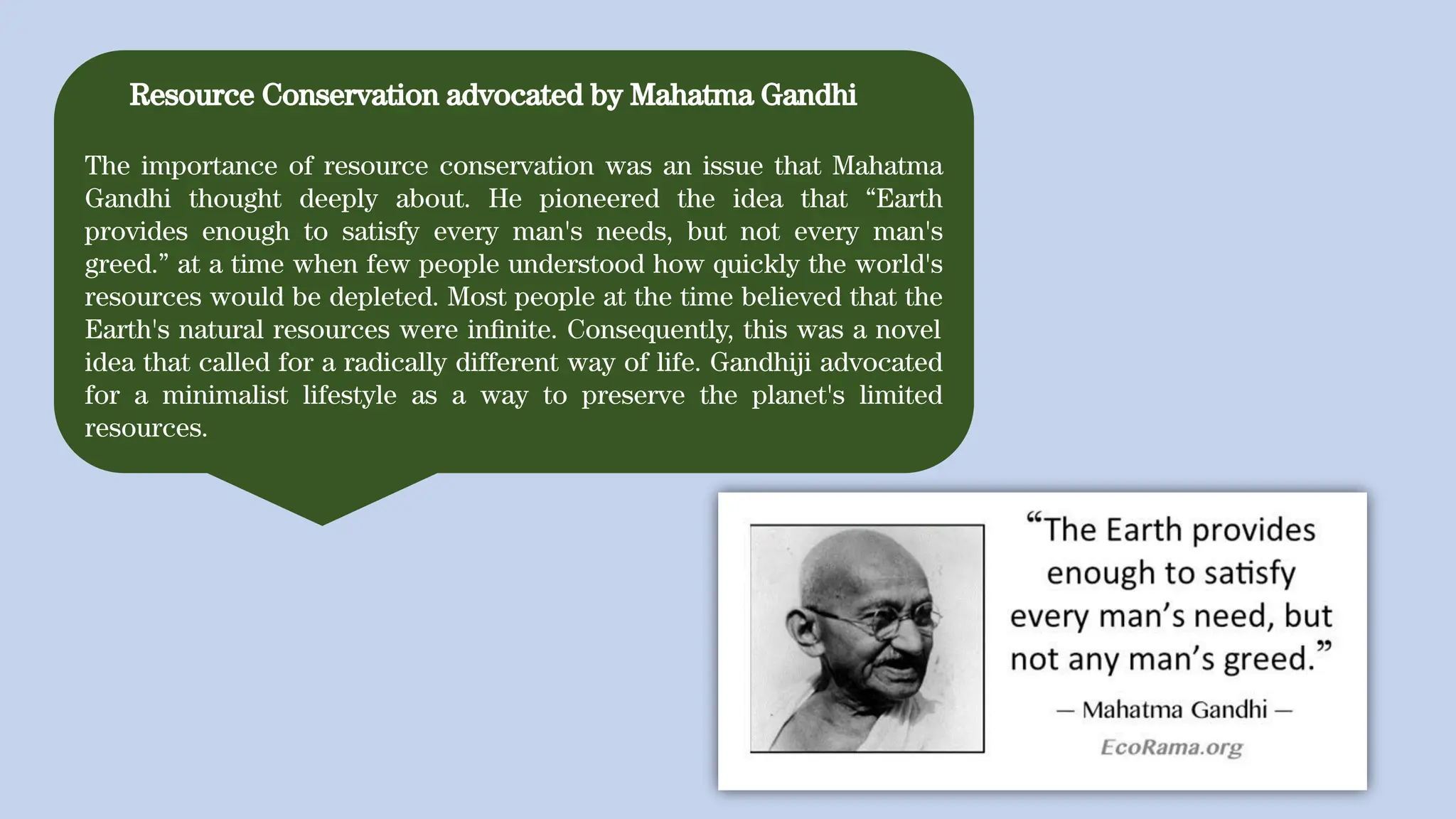
Resource Conservation advocatedby Mahatma Gandhi
The importance of resource conservation was an issue that Mahatma
Gandhi thought deeply about. He pioneered the idea that “Earth
provides enough to satisfy every man's needs, but not every man's
greed.” at a time when few people understood how quickly the world's
resources would be depleted. Most people at the time believed that the
Earth's natural resources were infinite. Consequently, this was a novel
idea that called for a radically different way of life. Gandhiji advocated
for a minimalist lifestyle as a way to preserve the planet's limited
resources.
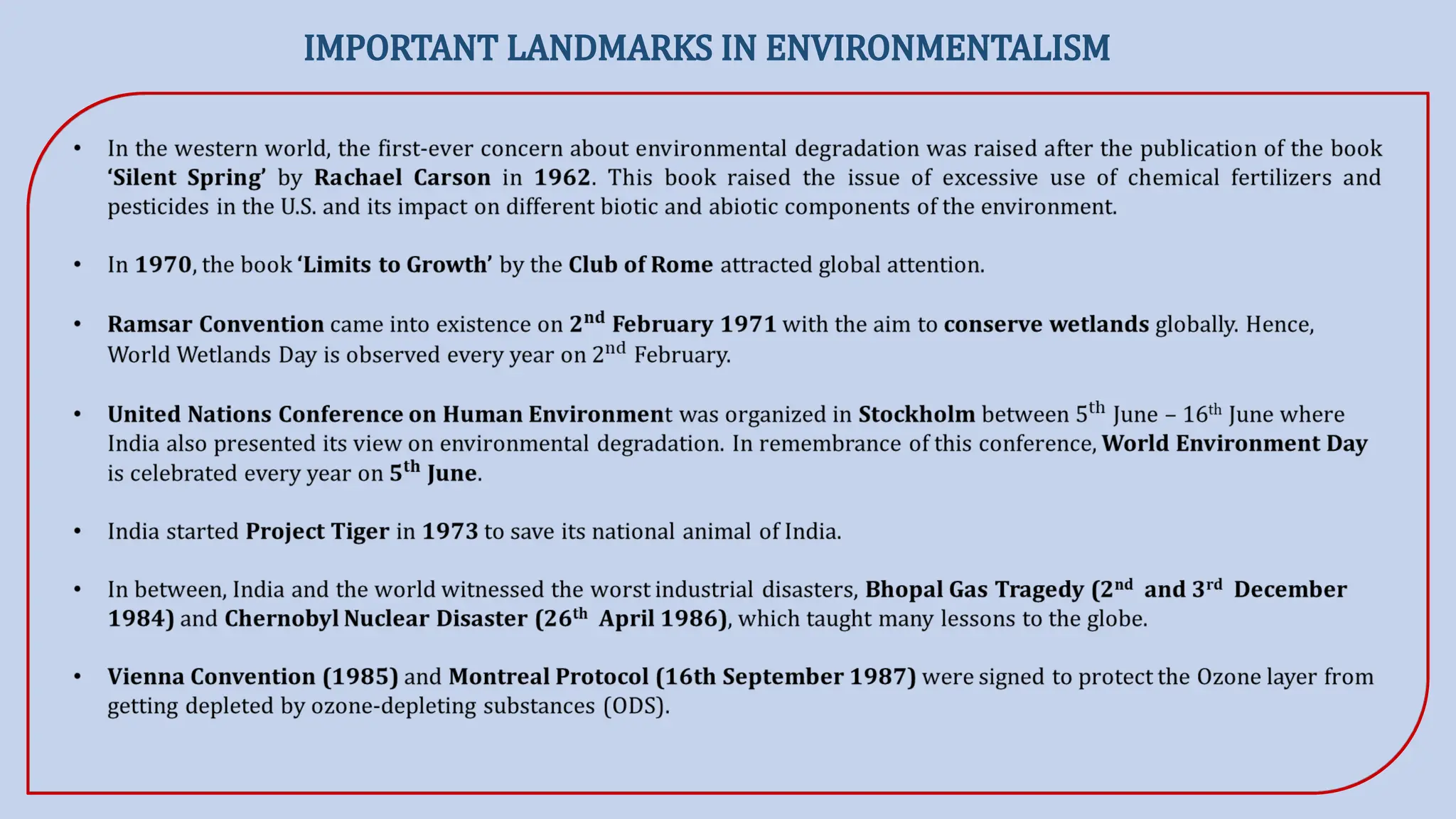
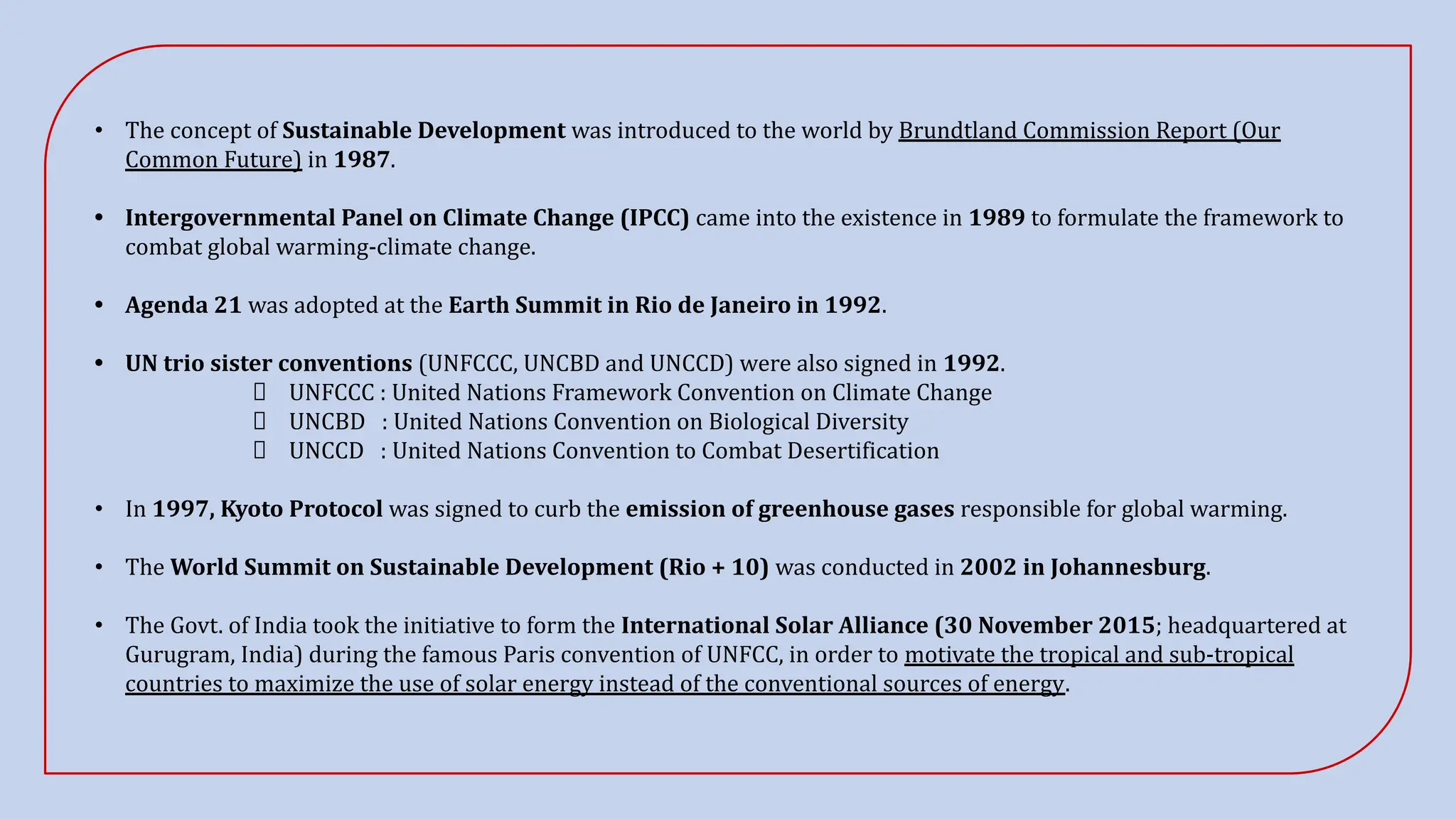
• The conceptof Sustainable Development was introduced to the world by Brundtland Commission Report (Our
Common Future) in 1987.
• Intergovernmental Panel on Climate Change (IPCC) came into the existence in 1989 to formulate the framework to
combat global warming-climate change.
• Agenda 21 was adopted at the Earth Summit in Rio de Janeiro in 1992.
• UN trio sister conventions (UNFCCC, UNCBD and UNCCD) were also signed in 1992.
UNFCCC : United Nations Framework Convention on Climate Change
UNCBD : United Nations Convention on Biological Diversity
UNCCD : United Nations Convention to Combat Desertification
• In 1997, Kyoto Protocol was signed to curb the emission of greenhouse gases responsible for global warming.
• The World Summit on Sustainable Development (Rio + 10) was conducted in 2002 in Johannesburg.
• The Govt. of India took the initiative to form the International Solar Alliance (30 November 2015; headquartered at
Gurugram, India) during the famous Paris convention of UNFCC, in order to motivate the tropical and sub-tropical
countries to maximize the use of solar energy instead of the conventional sources of energy.
20.
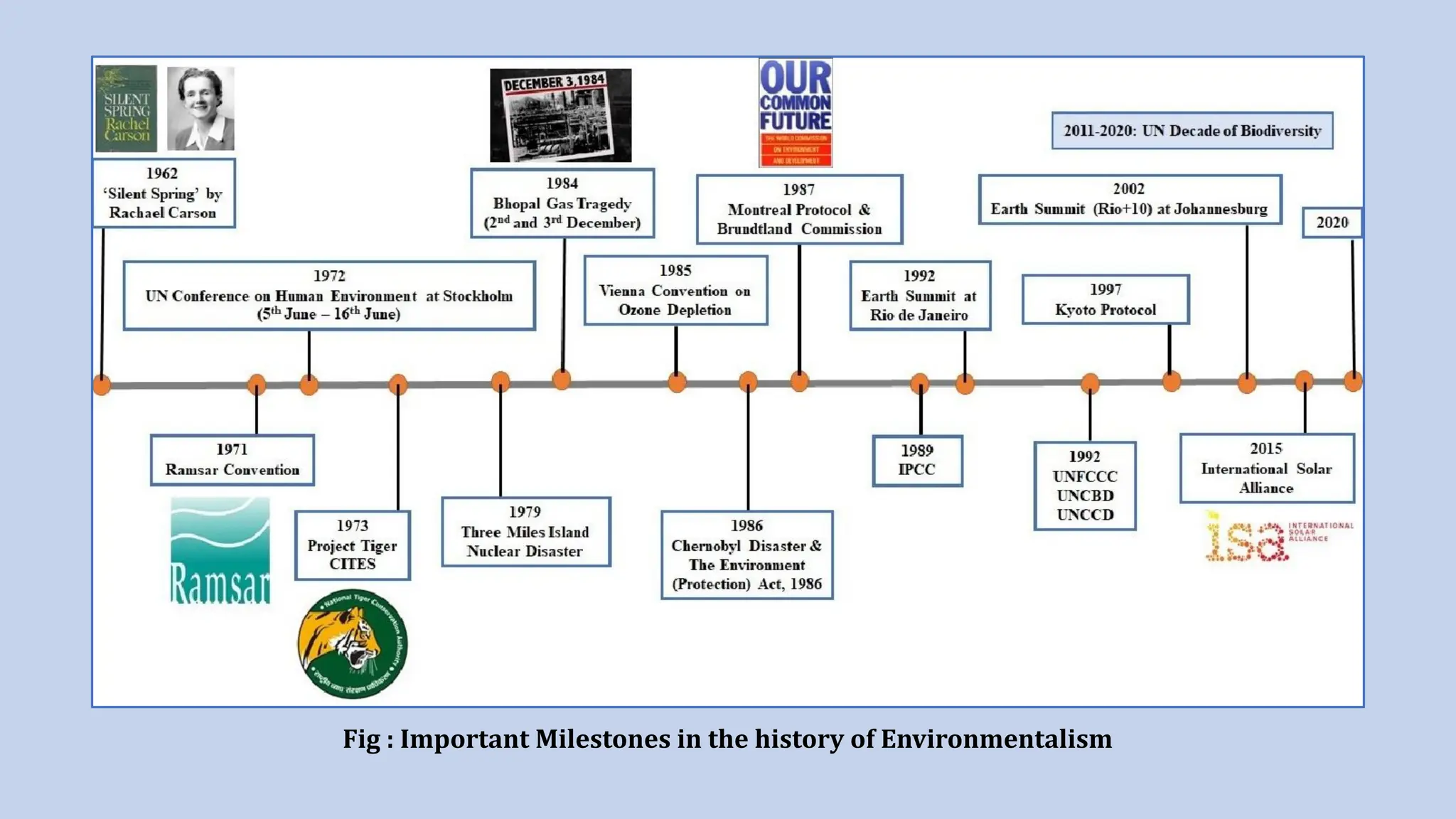
Fig : ImportantMilestones in the history of Environmentalism
21.
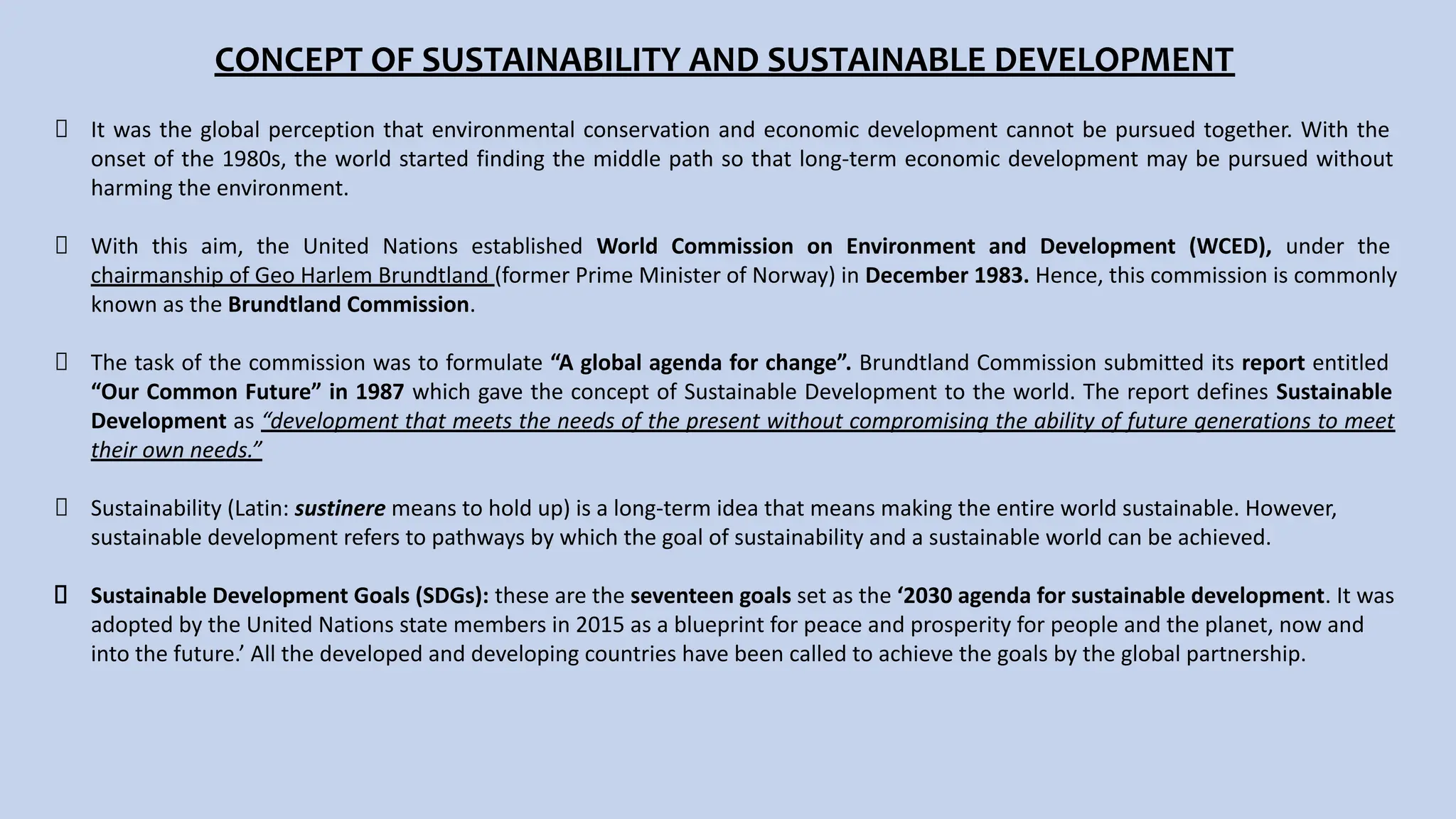
CONCEPT OF SUSTAINABILITYAND SUSTAINABLE DEVELOPMENT
It was the global perception that environmental conservation and economic development cannot be pursued together. With the
onset of the 1980s, the world started finding the middle path so that long-term economic development may be pursued without
harming the environment.
With this aim, the United Nations established World Commission on Environment and Development (WCED), under the
chairmanship of Geo Harlem Brundtland (former Prime Minister of Norway) in December 1983. Hence, this commission is commonly
known as the Brundtland Commission.
The task of the commission was to formulate “A global agenda for change”. Brundtland Commission submitted its report entitled
“Our Common Future” in 1987 which gave the concept of Sustainable Development to the world. The report defines Sustainable
Development as “development that meets the needs of the present without compromising the ability of future generations to meet
their own needs.”
Sustainability (Latin: sustinere means to hold up) is a long-term idea that means making the entire world sustainable. However,
sustainable development refers to pathways by which the goal of sustainability and a sustainable world can be achieved.
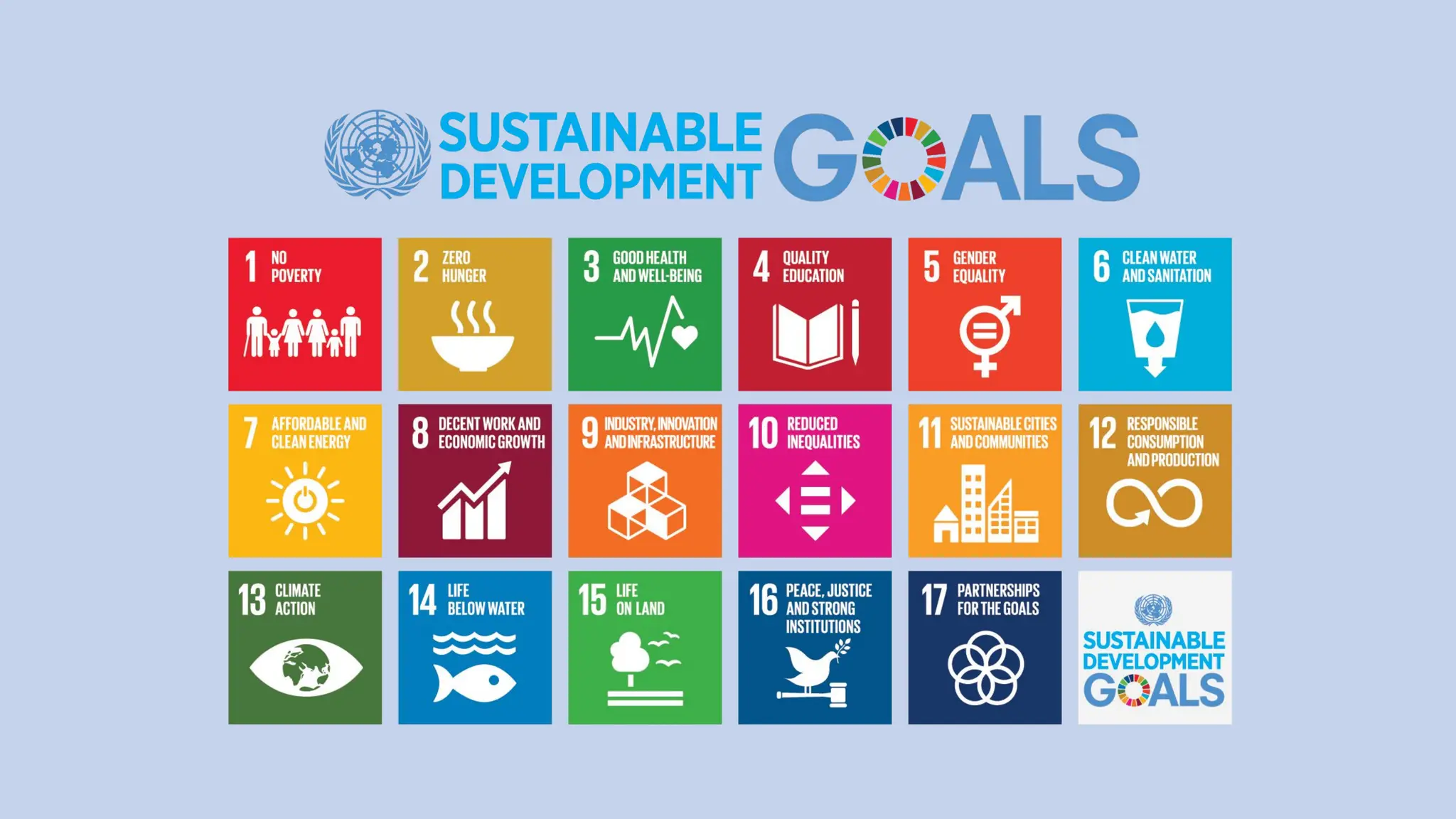
Sustainable Development Goals (SDGs): these are the seventeen goals set as the ‘2030 agenda for sustainable development. It was
adopted by the United Nations state members in 2015 as a blueprint for peace and prosperity for people and the planet, now and
into the future.’ All the developed and developing countries have been called to achieve the goals by the global partnership.
22.
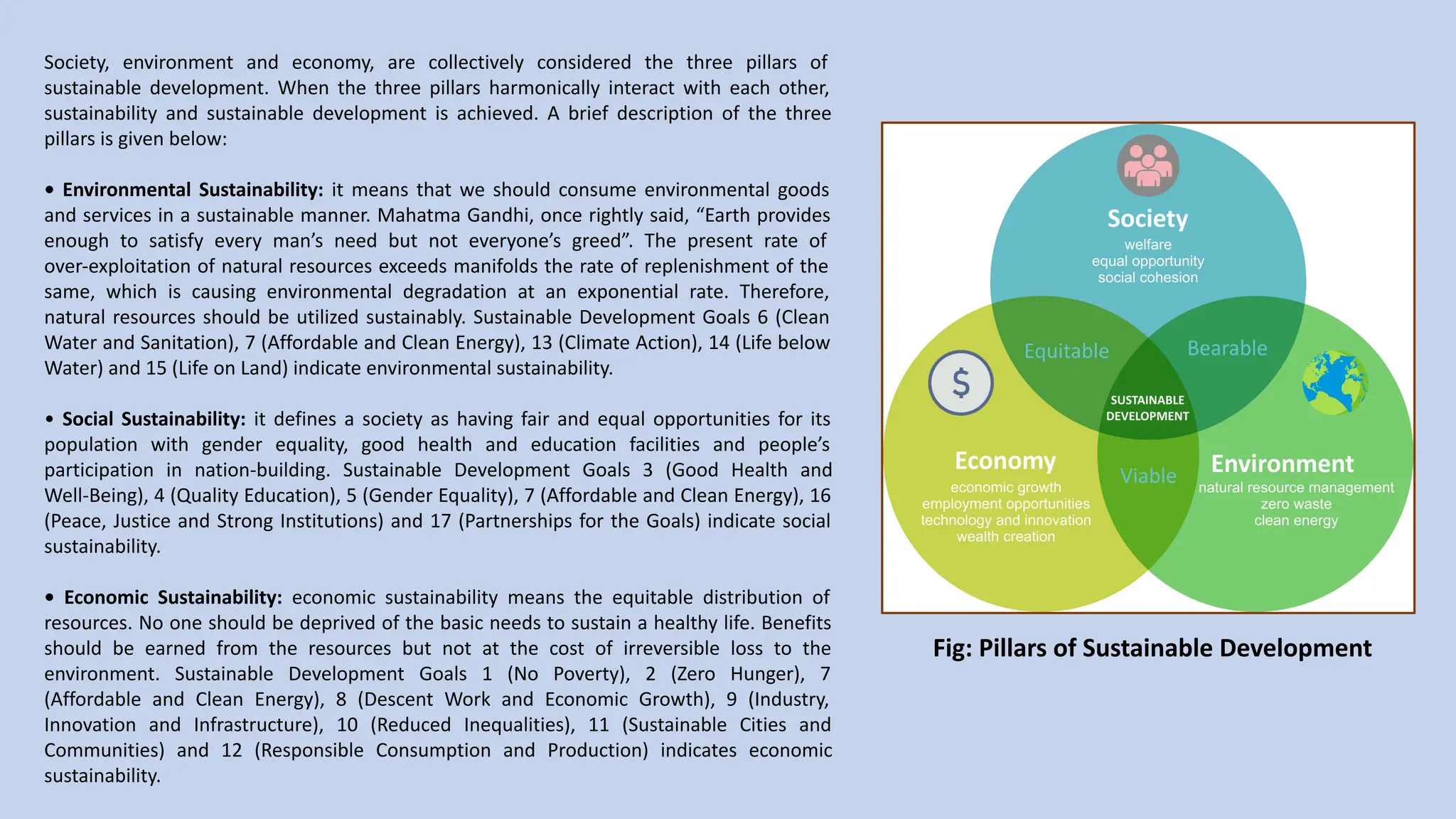
Society, environment andeconomy, are collectively considered the three pillars of
sustainable development. When the three pillars harmonically interact with each other,
sustainability and sustainable development is achieved. A brief description of the three
pillars is given below:
• Environmental Sustainability: it means that we should consume environmental goods
and services in a sustainable manner. Mahatma Gandhi, once rightly said, “Earth provides
enough to satisfy every man’s need but not everyone’s greed”. The present rate of
over-exploitation of natural resources exceeds manifolds the rate of replenishment of the
same, which is causing environmental degradation at an exponential rate. Therefore,
natural resources should be utilized sustainably. Sustainable Development Goals 6 (Clean
Water and Sanitation), 7 (Affordable and Clean Energy), 13 (Climate Action), 14 (Life below
Water) and 15 (Life on Land) indicate environmental sustainability.
• Social Sustainability: it defines a society as having fair and equal opportunities for its
population with gender equality, good health and education facilities and people’s
participation in nation-building. Sustainable Development Goals 3 (Good Health and
Well-Being), 4 (Quality Education), 5 (Gender Equality), 7 (Affordable and Clean Energy), 16
(Peace, Justice and Strong Institutions) and 17 (Partnerships for the Goals) indicate social
sustainability.
• Economic Sustainability: economic sustainability means the equitable distribution of
resources. No one should be deprived of the basic needs to sustain a healthy life. Benefits
should be earned from the resources but not at the cost of irreversible loss to the
environment. Sustainable Development Goals 1 (No Poverty), 2 (Zero Hunger), 7
(Affordable and Clean Energy), 8 (Descent Work and Economic Growth), 9 (Industry,
Innovation and Infrastructure), 10 (Reduced Inequalities), 11 (Sustainable Cities and
Communities) and 12 (Responsible Consumption and Production) indicates economic
sustainability.
Fig: Pillars of Sustainable Development
24.
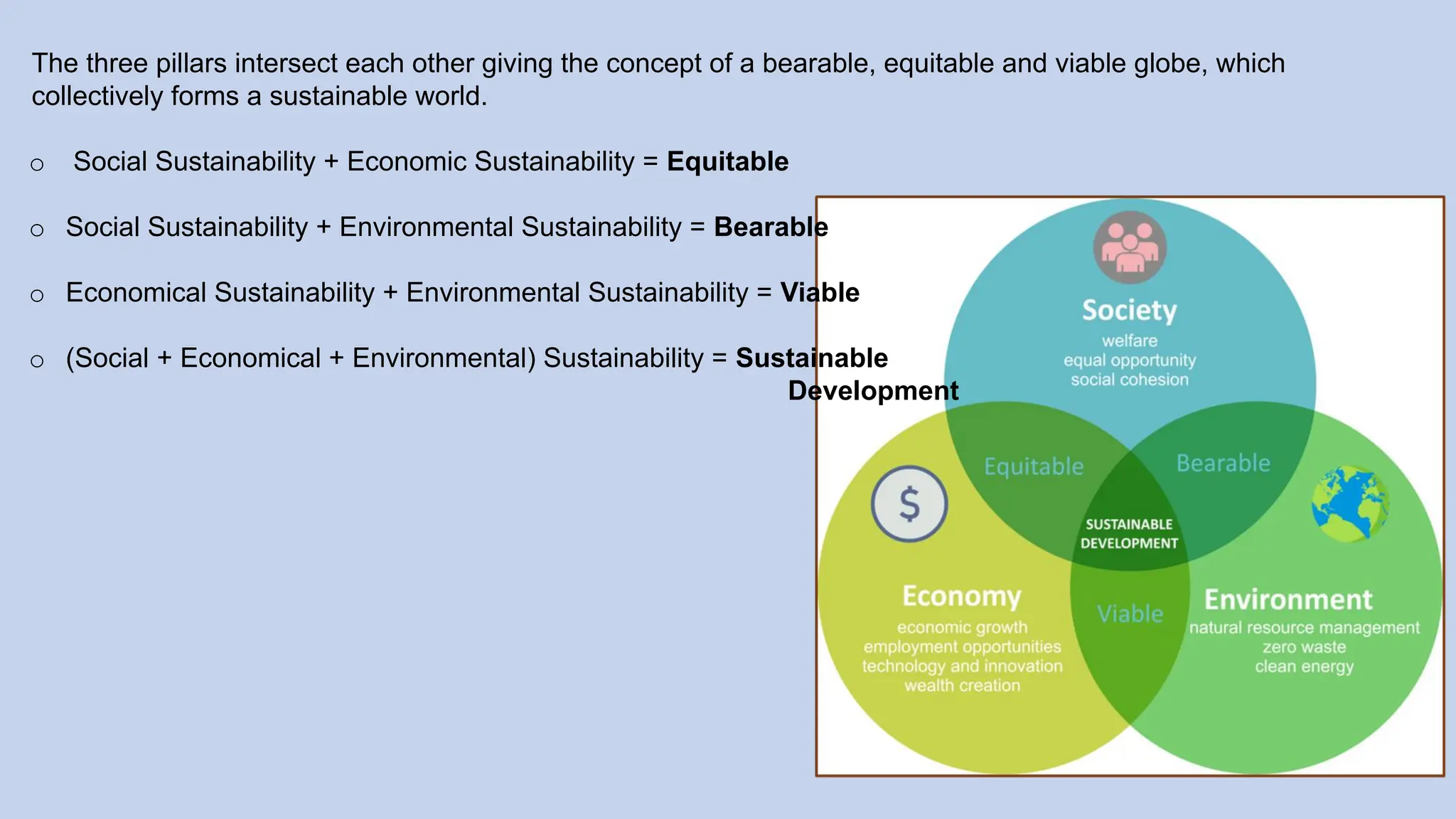
The three pillarsintersect each other giving the concept of a bearable, equitable and viable globe, which
collectively forms a sustainable world.
o Social Sustainability + Economic Sustainability = Equitable
o Social Sustainability + Environmental Sustainability = Bearable
o Economical Sustainability + Environmental Sustainability = Viable
o (Social + Economical + Environmental) Sustainability = Sustainable
Development
25.
SUMMARY
Nature supports life.Man must realise the value of the environment and help to maintain it healthy
and productive. The environment gave him this wonderful world. Before industrialization,
urbanisation, and population increase, mankind's natural environment was healthy and robust.
Nature refilled its scarce supplies. After modern civilization began, the health and efficiency of the
natural environment began to deteriorate, to the point that nature has lost its potential to restore
man-made resource losses. Environmentalists, geographers, and biologists worldwide work to
restore a sustainable ecosystem. Environmental management, pollution regulations, recycling of
non-biodegradable material, etc., require more attention. Present-day sustainability in nature
requires careful utilisation of natural resources. Modern environmental concepts like biodiversity
conservation and ecological balance require more discussion. Environmental studies educate us to
utilise natural resources more effectively and live sustainably. It reveals the natural behaviour of
organisms and their population and community interactions.


![Environmental science[3]](https://cdn.slidesharecdn.com/ss_thumbnails/environmentalscience3-140929233918-phpapp02-thumbnail.jpg?width=640&height=640&fit=bounds)


