Understanding
Speech
An overview of speech types and their grammatical implications.
This presentation explores the definition and types of
speech, including the difference between direct and
indirect speech.
Introduction
Speech Overview
01
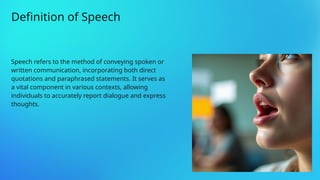
Speech refers to the method of conveying spoken or
written communication, incorporating both direct
quotations and paraphrased statements. It serves as
a vital component in various contexts, allowing
individuals to accurately report dialogue and express
thoughts.
Definition of Speech
Types of Speech
There are two primary types of speech: Direct Speech, where the exact words of
the speaker are quoted, and Indirect Speech, where the speaker's words are
paraphrased. Understanding the distinction between these types is essential for
effective communication and proper grammar usage.
Examples of Direct and Indirect Speech
Direct Speech: "She said, ‘I am going to the store.’" This quotes the speaker's exact
words.
Indirect Speech: "She said that she was going to the store." This paraphrases the
original statement, changing the structure and tense.
Changing Speech
Types
02
Rules for Tense Change
When converting direct speech to indirect speech, the verb tense often shifts back.
For example, simple present becomes simple past (e.g., 'He says' to 'He said'). This
shift is crucial for maintaining proper grammatical structure in reported speech.
Pronouns are modified based on the perspective of
the speaker. For example, in direct speech, one might
say, 'I love my dog.' In indirect speech, this becomes,
'He said that he loved his dog.' Adjustments ensure
clarity in the reporting of speech.
Pronoun Adjustments
Modifications in Time/Place Adverbs
Certain adverbs change meaning when moving from direct to indirect speech. For
instance, 'now' converts to 'then', and 'yesterday' changes to 'the day before'.
These changes help convey the appropriate time context in the reported dialogue.
Conclusions
Understanding the dynamics of direct and indirect speech is vital for accurate
communication. Mastering the rules for tense shifts, pronoun changes, and
modifications in time/place adverbs enhances clarity and effectiveness in both
spoken and written language.
CREDITS: This presentation template was created by Slidesgo,
and includes icons, infographics & images by Freepik
Thank you!
Do you have any questions?

Understanding Speech and its types including rules.pptx

  • 1.
    Understanding Speech An overview ofspeech types and their grammatical implications.
  • 2.
    This presentation exploresthe definition and types of speech, including the difference between direct and indirect speech. Introduction
  • 3.
  • 4.
    Speech refers tothe method of conveying spoken or written communication, incorporating both direct quotations and paraphrased statements. It serves as a vital component in various contexts, allowing individuals to accurately report dialogue and express thoughts. Definition of Speech
  • 5.
    Types of Speech Thereare two primary types of speech: Direct Speech, where the exact words of the speaker are quoted, and Indirect Speech, where the speaker's words are paraphrased. Understanding the distinction between these types is essential for effective communication and proper grammar usage.
  • 6.
    Examples of Directand Indirect Speech Direct Speech: "She said, ‘I am going to the store.’" This quotes the speaker's exact words. Indirect Speech: "She said that she was going to the store." This paraphrases the original statement, changing the structure and tense.
  • 7.
  • 8.
    Rules for TenseChange When converting direct speech to indirect speech, the verb tense often shifts back. For example, simple present becomes simple past (e.g., 'He says' to 'He said'). This shift is crucial for maintaining proper grammatical structure in reported speech.
  • 9.
    Pronouns are modifiedbased on the perspective of the speaker. For example, in direct speech, one might say, 'I love my dog.' In indirect speech, this becomes, 'He said that he loved his dog.' Adjustments ensure clarity in the reporting of speech. Pronoun Adjustments
  • 10.
    Modifications in Time/PlaceAdverbs Certain adverbs change meaning when moving from direct to indirect speech. For instance, 'now' converts to 'then', and 'yesterday' changes to 'the day before'. These changes help convey the appropriate time context in the reported dialogue.
  • 11.
    Conclusions Understanding the dynamicsof direct and indirect speech is vital for accurate communication. Mastering the rules for tense shifts, pronoun changes, and modifications in time/place adverbs enhances clarity and effectiveness in both spoken and written language.
  • 12.
    CREDITS: This presentationtemplate was created by Slidesgo, and includes icons, infographics & images by Freepik Thank you! Do you have any questions?