Subject: English Language, (Grammar)
Class:
Topic: Direct And Indirect Speech
SYNCHRONISED LEARNING
1. COLLECTION OF INFORMATION, MAIN IDEAS
2. KEY WORDS AND SUB KEY WORDS
3. MIND MAP
4. SIX HATS THINKING
5. APPLICATION OF THINKING TOOLS
6. QUESTIONS AND ANSWERS
7. SUMMARY
8. ACTIVITY
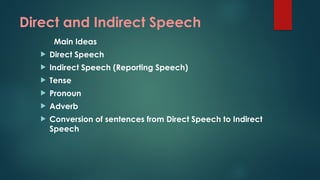
Direct and Indirect Speech
Main Ideas
 Direct Speech
 Indirect Speech (Reporting Speech)
 Tense
 Pronoun
 Adverb
 Conversion of sentences from Direct Speech to Indirect
Speech
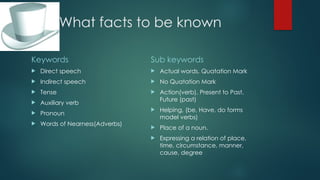
What facts to be known
Keywords
 Direct speech
 Indirect speech
 Tense
 Auxiliary verb
 Pronoun
 Words of Nearness(Adverbs)
Sub keywords
 Actual words, Quatation Mark
 No Quatation Mark
 Action(verb), Present to Past,
Future (past)
 Helping, (be, Have, do forms
model verbs)
 Place of a noun.
 Expressing a relation of place,
time, circumstance, manner,
cause, degree
Direct and indirect narration
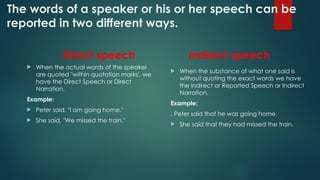
The words of a speaker or his or her speech can be
reported in two different ways.
Direct speech
 When the actual words of the speaker
are quoted "within quotation marks', we
have the Direct Speech or Direct
Narration.
Example:
 Peter said, "I am going home."
 She said, "We missed the train."
Indirect speech
 When the substance of what one said is
without quoting the exact words we have
the Indirect or Reported Speech or Indirect
Narration.
Example:
. Peter said that he was going home.
 She said that they had missed the train.
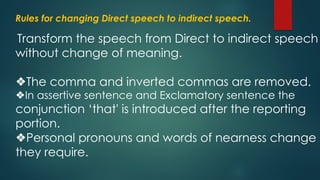
Rules for changing Direct speech to indirect speech.
Transform the speech from Direct to indirect speech
without change of meaning.
❖The comma and inverted commas are removed.
❖In assertive sentence and Exclamatory sentence the
conjunction ‘that' is introduced after the reporting
portion.
❖Personal pronouns and words of nearness change a
they require.
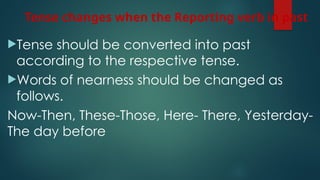
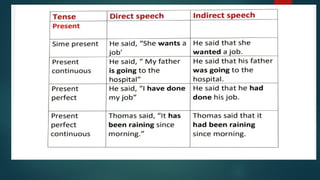
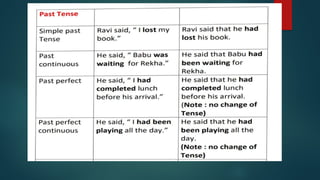
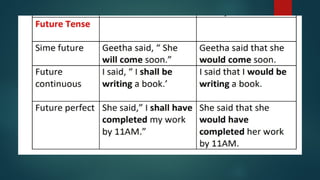
Tense changes when the Reporting verb in past
Tense should be converted into past
according to the respective tense.
Words of nearness should be changed as
follows.
Now-Then, These-Those, Here- There, Yesterday-
The day before
Questions and answers
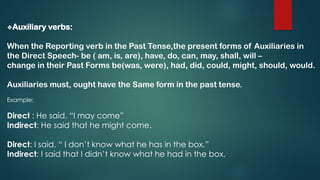
❖Auxiliary verbs:
When the Reporting verb in the Past Tense,the present forms of Auxiliaries in
the Direct Speech- be ( am, is, are), have, do, can, may, shall, will –
change in their Past Forms be(was, were), had, did, could, might, should, would.
Auxiliaries must, ought have the Same form in the past tense.
Example:
Direct : He said, “I may come”
Indirect: He said that he might come.
Direct: I said, “ I don’t know what he has in the box.”
Indirect: I said that I didn’t know what he had in the box.
When the reporting verb is in present or future tense, the
tense of the Direct Speech don’t change in the Indirect
Speech.
Example:
Direct: The boy says, “ I am happy now.”
Indirect: The boy says that he is happy then.
Activity
 Write in a reporting speech of the interesting conversation that you have
listened recently.
 A very helpful advice you receive from your mother or father. ( Write as
Indirect speech)
Thank you

Reporting Speech, Changing sentence from direct speech to indirect speech

  • 1.
    Subject: English Language,(Grammar) Class: Topic: Direct And Indirect Speech
  • 2.
    SYNCHRONISED LEARNING 1. COLLECTIONOF INFORMATION, MAIN IDEAS 2. KEY WORDS AND SUB KEY WORDS 3. MIND MAP 4. SIX HATS THINKING 5. APPLICATION OF THINKING TOOLS 6. QUESTIONS AND ANSWERS 7. SUMMARY 8. ACTIVITY
  • 3.
    Direct and IndirectSpeech Main Ideas  Direct Speech  Indirect Speech (Reporting Speech)  Tense  Pronoun  Adverb  Conversion of sentences from Direct Speech to Indirect Speech
  • 4.
    What facts tobe known Keywords  Direct speech  Indirect speech  Tense  Auxiliary verb  Pronoun  Words of Nearness(Adverbs) Sub keywords  Actual words, Quatation Mark  No Quatation Mark  Action(verb), Present to Past, Future (past)  Helping, (be, Have, do forms model verbs)  Place of a noun.  Expressing a relation of place, time, circumstance, manner, cause, degree
  • 5.
  • 6.
    The words ofa speaker or his or her speech can be reported in two different ways. Direct speech  When the actual words of the speaker are quoted "within quotation marks', we have the Direct Speech or Direct Narration. Example:  Peter said, "I am going home."  She said, "We missed the train." Indirect speech  When the substance of what one said is without quoting the exact words we have the Indirect or Reported Speech or Indirect Narration. Example: . Peter said that he was going home.  She said that they had missed the train.
  • 7.
    Rules for changingDirect speech to indirect speech. Transform the speech from Direct to indirect speech without change of meaning. ❖The comma and inverted commas are removed. ❖In assertive sentence and Exclamatory sentence the conjunction ‘that' is introduced after the reporting portion. ❖Personal pronouns and words of nearness change a they require.
  • 8.
    Tense changes whenthe Reporting verb in past Tense should be converted into past according to the respective tense. Words of nearness should be changed as follows. Now-Then, These-Those, Here- There, Yesterday- The day before
  • 9.
  • 13.
    ❖Auxiliary verbs: When theReporting verb in the Past Tense,the present forms of Auxiliaries in the Direct Speech- be ( am, is, are), have, do, can, may, shall, will – change in their Past Forms be(was, were), had, did, could, might, should, would. Auxiliaries must, ought have the Same form in the past tense. Example: Direct : He said, “I may come” Indirect: He said that he might come. Direct: I said, “ I don’t know what he has in the box.” Indirect: I said that I didn’t know what he had in the box.
  • 14.
    When the reportingverb is in present or future tense, the tense of the Direct Speech don’t change in the Indirect Speech. Example: Direct: The boy says, “ I am happy now.” Indirect: The boy says that he is happy then.
  • 15.
    Activity  Write ina reporting speech of the interesting conversation that you have listened recently.  A very helpful advice you receive from your mother or father. ( Write as Indirect speech)
  • 16.