Definition of History
derived from the Greek noun ἱστορία
ἱστορία (historia) = learning; inquiry
“the past of mankind”
Geschichte = the German word for history
Geschehen = to happen
- Louis Gottschalk, Understanding History
3.
History - chronologicalrecord of significant
events, the study of past events.
-Webster’s Vest Pocket Dictionary(Springfield:
Merriam Webster, Inc., Publishers), p. 149
4.
KASAYSAYAN IN THE
LANGUAGEAND PERSPECTIVE
OF FILIPINO
KASAYSAYAN
• saysay (narrative or salaysay)
• saysay (relevance, importance)
• If relevant, for whom?
• Zeus Salazar definition: Salaysay na may
saysay para sa sinasalaysayang grupo ng tao
(Relevant stories/narrative of the people).
5.
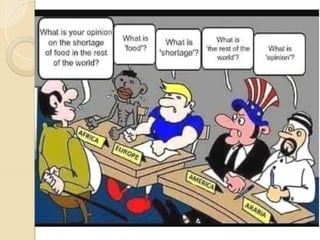
“If you talkto a man in a language
he understands, that goes to his
head. If you talk to him in his
language, that goes to his heart.”
-Nelson Mandela
7.
History as Reconstruction
the historian is many times removed from
the events under investigation
historians rely on surviving records
8.
History Defined byE.H. Carr
the inquiry conducted by the historian
and the series of past events into which
he inquires
is the continuous process of interaction
between the historian and his facts, an
unending dialogue between the present
and the past
History means interpretation
History is what the historian makes
9.
History isthe re-enactment in the
historian's mind of the thought whose
history he is studying. -Collingwood
History is the historian's experience.
-Oakeshott
History is “a selective system” not only of
cognitive, but of causal, orientations to
reality. -Parsons
11.
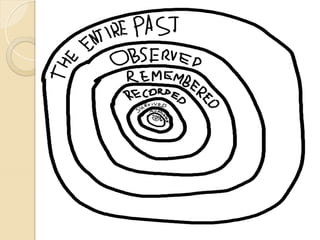
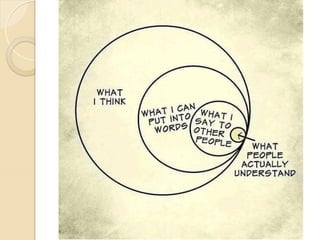
“Only apart of what was observed in the
past was remembered by those who
observed it; only a part of what was
remembered was recorded; only a part of
what was recorded has survived; only a
part of what has survived has come to the
historian’s attention; only a part of what
has come to their attention is credible;
only a part of what is credible has been
grasped, and only a part of what has been
grasped can be expounded or narrated by
the historian.”
- Louis Gottschalk, Understanding History
13.
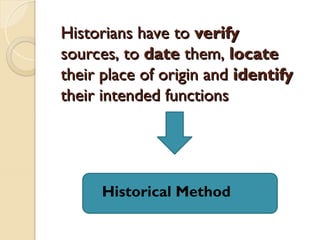
Historians have to
Historianshave to verify
verify
sources, to
sources, to date
date them,
them, locate
locate
their place of origin and
their place of origin and identify
identify
their intended functions
their intended functions
Historical Method
14.
The processof critically
examining and analyzing
the records and survivals
of the past
Louis Gottschalk, Understanding History
15.
“Each generation ofhistorians
develops its own perspectives, and
that our understanding of the past
is constantly reshaped by the
historian and the world he or she
inhabits”
-Howell & Prevenier
16.
Historical Sources
Historical Sources
These are objects from the past or
testimonies concerning the past on
which historians depend in order to
create their own depiction of that past.
- Howell and Prevenier, From Reliable Sources
an Introduction to Historical Method
Tangible remains of the past
- Anthony Brundage, Going to Sources
17.
Historical Sources
materialsused for the writing of
history.
They are classified into two:
1. Primary Sources
2. Secondary Sources
Another type of classification are:
1. written and non-written,
2. published or unpublished,
3. textual, oral or visual sources
18.
Written Sources
1. Publishedmaterials
Books, magazines, journals,
Travelogue
transcription of speech
2. Manuscript [any handwritten or
typed record that has not been
printed]
Archival materials
Memoirs, diary
19.
Non- written Sources
Oralhistory
Artifact
Ruins
Fossils
Art works
Videorecordings
Audiorecordings
20.
What are PrimarySources?
Testimony of an eyewitness
A primary source must have
been produced by a
contemporary of the event it
narrates
-Louis Gottschalk, Understanding History
21.
materials producedby people or
groups directly involved in the event
or topic being studied.
they are either participants or
witnesses.
these sources range from
eyewitness accounts, diaries, letters,
legal documents, and official
documents (government or private)
and even photographs
22.
Four Main Categoriesof Primary
Sources
1. Written sources
2. Images
3. Artifacts
4. Oral testimony
23.
What are SecondarySources?
A secondary source interprets
and analyzes primary sources.
These sources are one or more
steps removed from the event.
Secondary sources may have
pictures, quotes or graphics of
primary sources in them.
- http://www.princeton.edu/~refdesk/primary2.html
24.
Examples of secondarysources:
History textbook
Printed materials (serials,
periodicals which interprets
previous research)
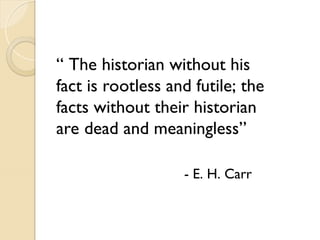
“ The historianwithout his
fact is rootless and futile; the
facts without their historian
are dead and meaningless”
- E. H. Carr
30.
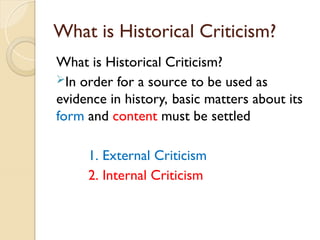
What is HistoricalCriticism?
What is Historical Criticism?
In order for a source to be used as
evidence in history, basic matters about its
form and content must be settled
1. External Criticism
2. Internal Criticism
31.
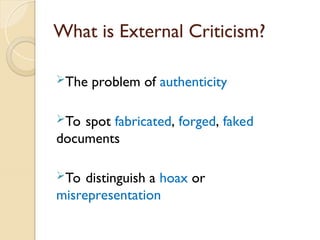
What is ExternalCriticism?
The problem of authenticity
To spot fabricated, forged, faked
documents
To distinguish a hoax or
misrepresentation
32.
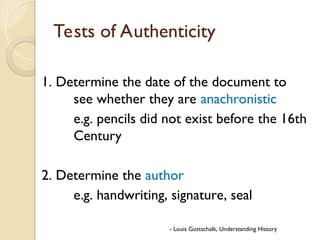
Tests of Authenticity
1.Determine the date of the document to
see whether they are anachronistic
e.g. pencils did not exist before the 16th
Century
2. Determine the author
e.g. handwriting, signature, seal
- Louis Gottschalk, Understanding History
33.
Tests of Authenticity
3.Anachronistic style
e.g. idiom, orthography, punctuation
orthography-the way in which the words are
spelled
4. Anachronistic reference to events
e.g. too early, too late, too remote
5. Provenance or custody
- determines its genuineness
- the origin or source of something
- Louis Gottschalk, Understanding History
34.
6. Semantics –determining the meaning of
a text or word
7. Hermeneutics – determining ambiguities
- interpretations
-Louis Gottschalk, Understanding History
35.
What is InternalCriticism
The Problem of Credibility
Relevant particulars in the document – is
it credible?
Verisimilar – as close as what really
happened from a critical examination of
best available sources
- Louis Gottschalk,
Understanding History
36.
Tests of Credibility
1.Identification of the author
e.g. to determine his reliability;
mental processes, personal
attitudes
2. Determination of the approximate date
37.
3. Ability totell the truth
- nearness to the event, competence
of witness, degree of attention
4. Willingness to tell the truth
- to determine if the author
consciously or unconsciously tells
falsehoods
38.
5. Corroboration
i.e. historicalfacts – particulars which rest
upon the independent testimony of two or
more reliable witnesses
- Louis Gottschalk, Understanding History
39.
Three Major Componentsto
Effective Historical Thinking
1. Sensitivity to Multiple Causation
2. Sensitivity to Context
3. Awareness of the interplay of
continuity and change in human affairs
40.
“All historians, whatevertheir professional
status, have ethical obligations to be
humane, accurate, selfaware and judicious.”
- Ludmilla Jordanova
41.
Acknowledgment/References:
Ma. FlorinaOrillos-Juan, Ph.D. Department of History, De la Salle
University Manila
Gottschalk, L.(1969). Understanding History: A Primer of Historical
Method. New York: A.A. Knopf.
Howell, M. & Walter, P.(2001).From Reliable Sources:An Introduction
to Historical Methods.Ithaca, New York:Cornell University Press.

![Written Sources
1. Published materials
Books, magazines, journals,
Travelogue
transcription of speech
2. Manuscript [any handwritten or
typed record that has not been
printed]
Archival materials
Memoirs, diary](https://image.slidesharecdn.com/understanding-history-250829125327-5795b80e/85/Understanding-History-ppthkdfufkyddyouudud-18-320.jpg)