Understanding
General Anti-Avoidance Rules
          (GAAR)
There was discussion by the Shome
Committee during the Union Budget in
   March, to put into practice GAAR
provisions during this fiscal year. Now,
   GAAR implementation has been
postponed until April 2013 and could be
     postponed until 2016-2017.
This has been done to shore up international
investor sentiments. In this lesson we will re-
 visit GAAR (General Anti Avoidance Rules)
that has become the center of discussion for
   many investors. We will also look at the
proposed changes that hopefully would ward
off investor‟s mistrust that had set in after the
    announcement in the Union Budget.
So let us understand the reason
 why the government came out
with GAAR in the first place. And
this we will do with an example.
Let‟s say a company has a policy to help
employees reach home on time for a better
            work/life balance.
It states, “Employees who stay beyond 20
  kilometers from the office can leave 30
              minutes early.”
Every office has people that bend the rules
in their favor. Some clever employees who
 had a second home more than 20 kms.
away, decided to change their address so
     they could leave early every day.
A system implemented with a good intent
          was quickly abused.


These acts are also witnessed on public
buses where seats are reserved for the
 elderly but are taken by those who can
       very well stand and travel.
In this case, we have seen that even a law
 designed for a specific purpose can get
    undermined by elements that seek
loopholes to create an unfair advantage for
               themselves.
GAAR is a simple rule which allows the
 Indian tax authorities to levy tax if the
 arrangement or transactions done are
„impermissible avoidance arrangements.‟
This simply means, a tax levied because
 the company had in the past avoided
paying tax, citing a tax exempt provision
      which was not due to them.
Here are some tax avoidance policies that
the government has formulated, subjected
          to certain conditions:-
1. Companies should not be formed in a
  specific manner just for the sake of
  tax avoidance
2. Companies should not collude with
  subsidiaries with the sole objective of
  avoiding taxes
The intent of GAAR is to ensure that
companies do business in letter as well as
in spirit of the law.


However, this law leaves a lot to be
desired and can be misused.
The provisions made under GAAR still do
  not have much clarity. And this may
       impact many companies.
GAAR has led to negative sentiments in
the environment. Foreign Institutional
Investors, for example, who were net
buyers in the initial months in 2012, turned
into sellers as there is still uncertainty
about their investments.
Also, there has been recent news that
investments through the Mauritius route will
come under the watchful eye of GAAR.
Many foreign institutional investors route
funds through Mauritius in order to avoid
paying capital gains tax in India.
.
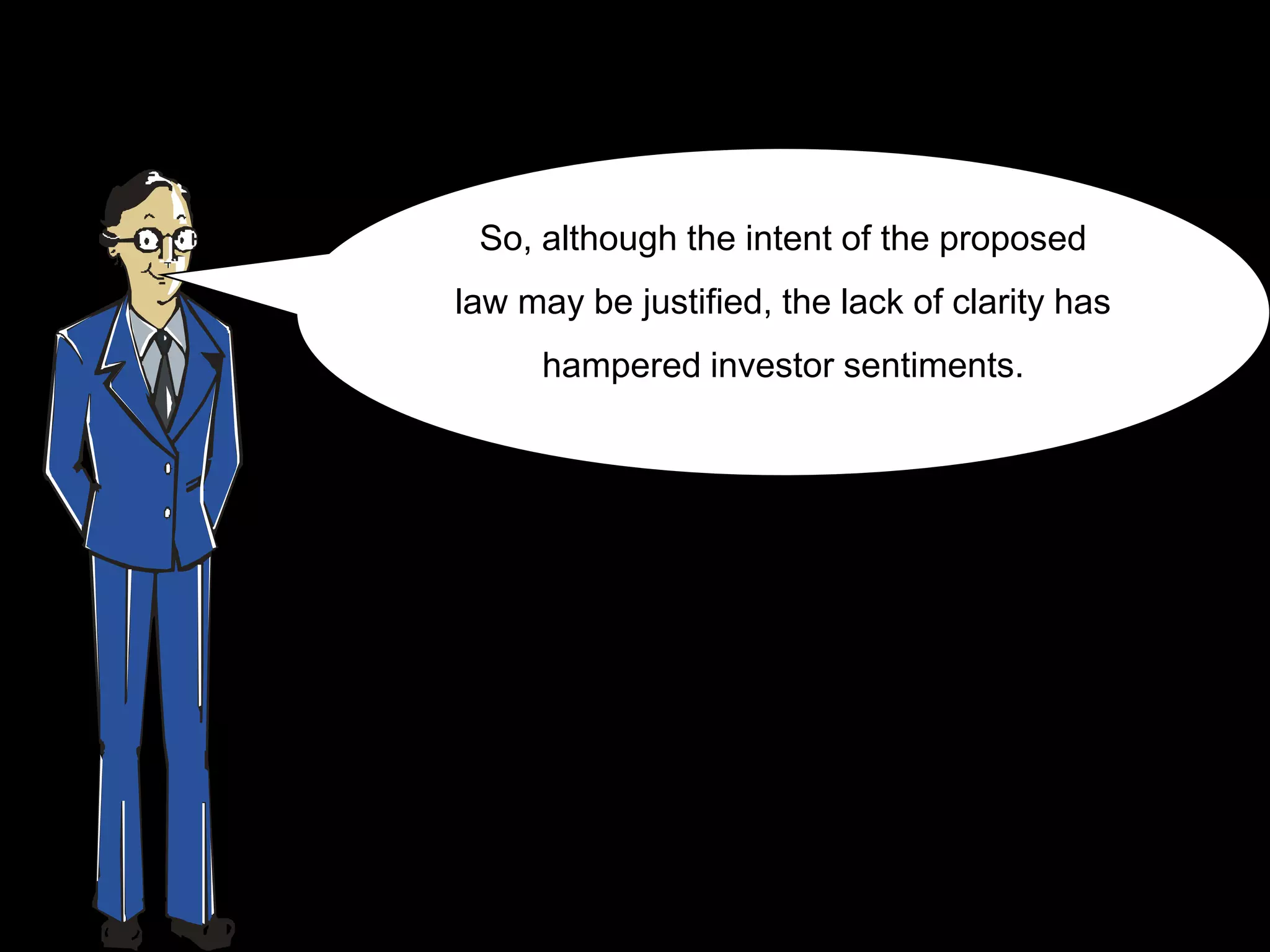
So, although the intent of the proposed
law may be justified, the lack of clarity has
     hampered investor sentiments.
The fear that law enforcers can
misinterpret the law and penalize
companies has impacted the economy by
weakening investor sentiments.


The government is aware of the situation
and has acted with swiftness to allay the
fears of the investors.
The Shome Committee, set up by Prime
Minister Manmohan Singh to address the
concerns of foreign investors on GAAR,
has recommended the postponement of
the controversial tax provision by three
years to 2016-17. In effect, GAAR would
apply from assessment year 2017-18.
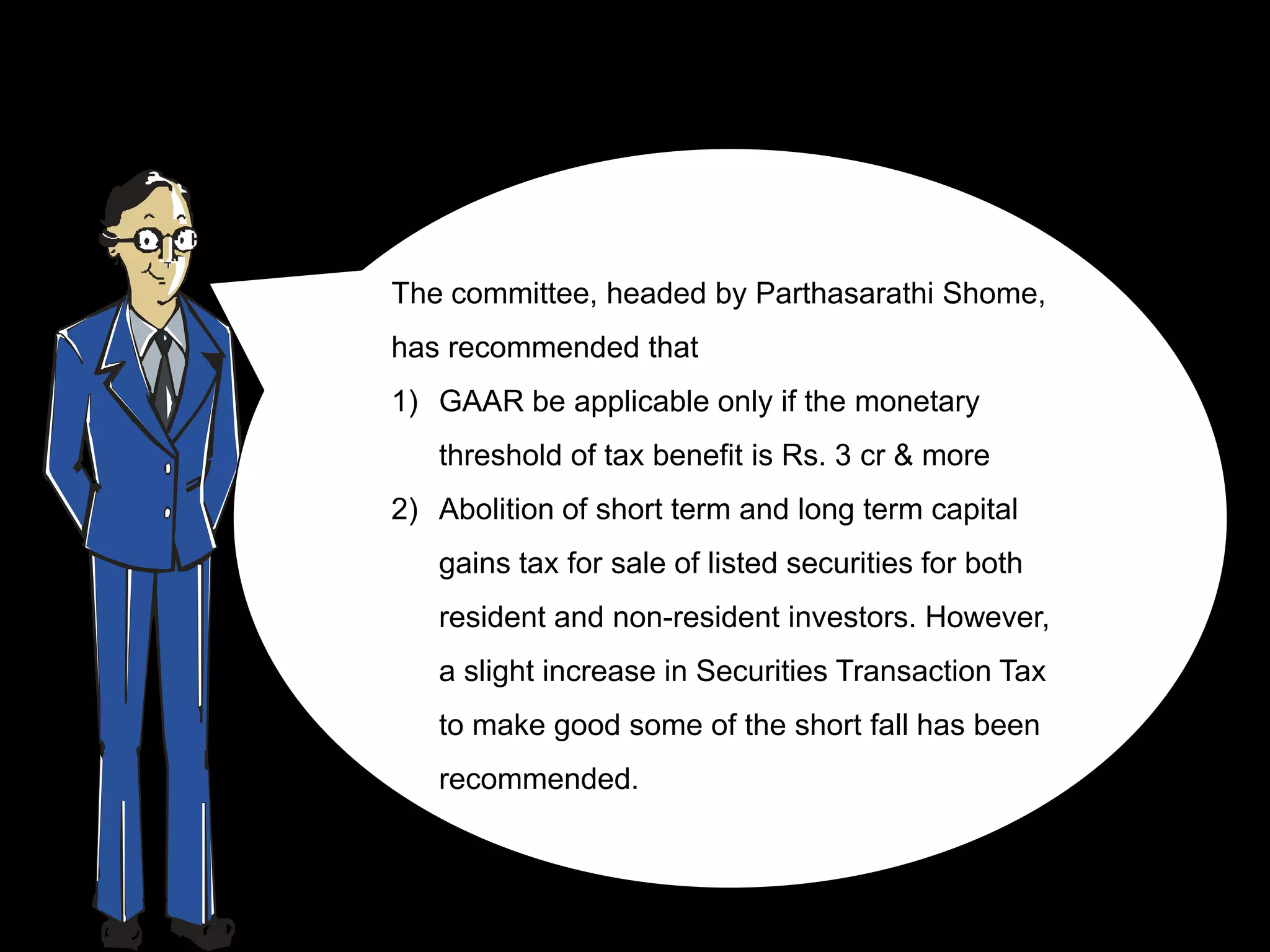
The committee, headed by Parthasarathi Shome,
has recommended that
1) GAAR be applicable only if the monetary
   threshold of tax benefit is Rs. 3 cr & more
2) Abolition of short term and long term capital
   gains tax for sale of listed securities for both
   resident and non-resident investors. However,
   a slight increase in Securities Transaction Tax
   to make good some of the short fall has been
   recommended.
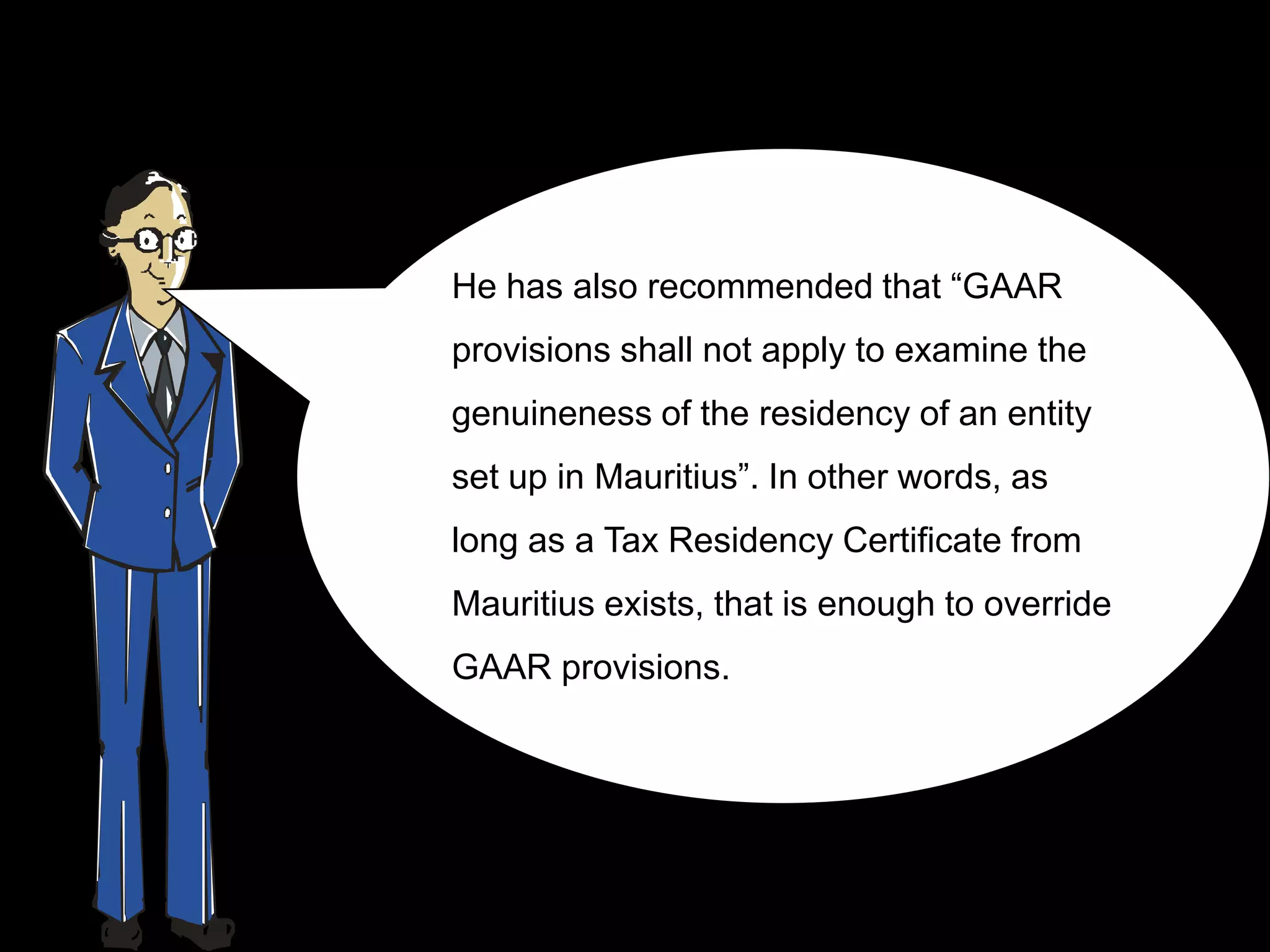
He has also recommended that “GAAR
provisions shall not apply to examine the
genuineness of the residency of an entity
set up in Mauritius”. In other words, as
long as a Tax Residency Certificate from
Mauritius exists, that is enough to override
GAAR provisions.
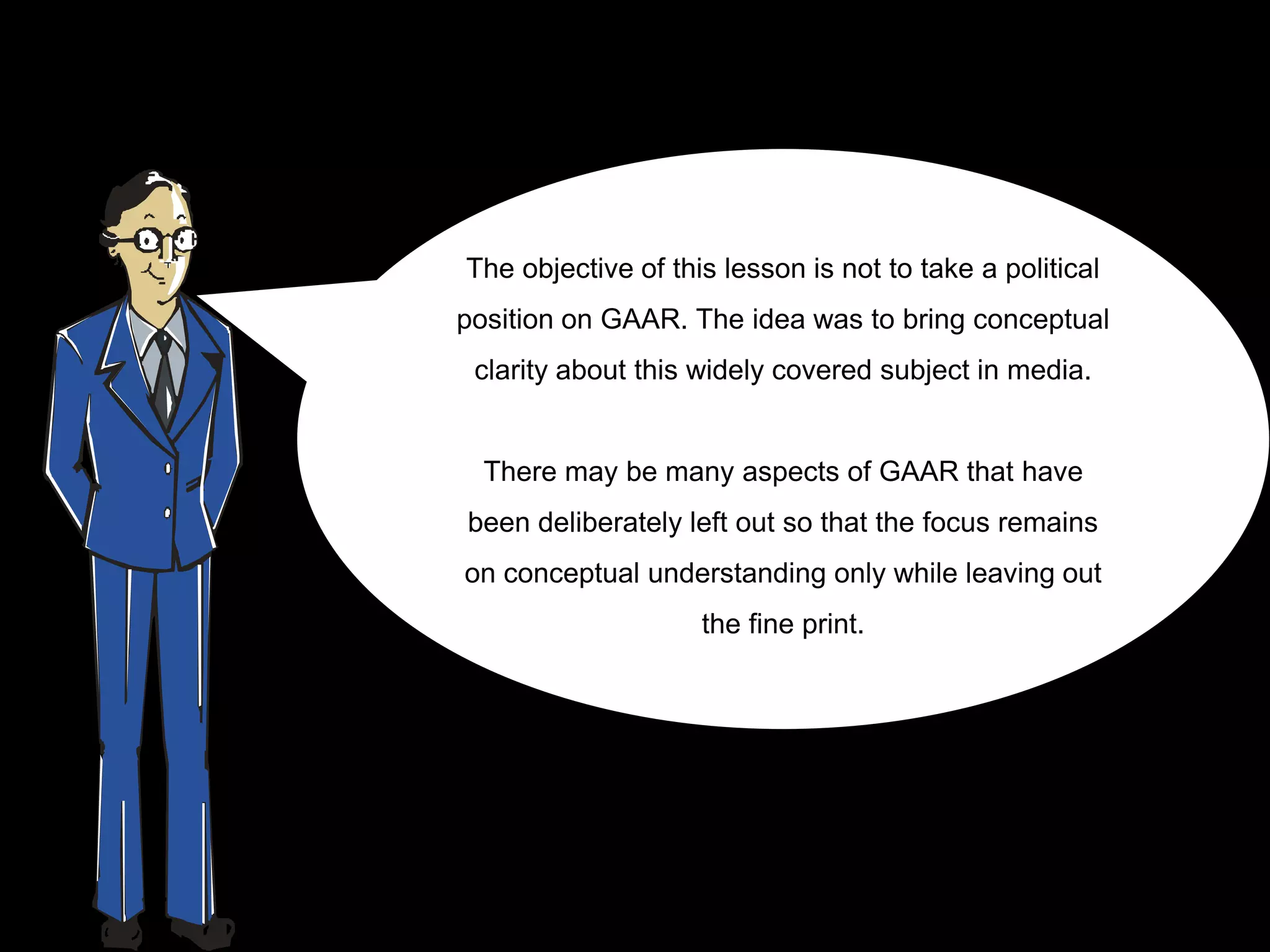
The objective of this lesson is not to take a political
position on GAAR. The idea was to bring conceptual
 clarity about this widely covered subject in media.


  There may be many aspects of GAAR that have
been deliberately left out so that the focus remains
on conceptual understanding only while leaving out
                    the fine print.
Hope this story has clarified GAAR


  Please give us your feedback at
     professor@tataamc.com
Disclaimer
   The views expressed in these lessons are for information
   purposes only and do not construe to be of any investment,
     legal or taxation advice. They are not indicative of future
  market trends, nor is Tata Asset Management Ltd. attempting
   to predict the same. Reprinting any part of this presentation
  will be at your own risk and Tata Asset Management Ltd. will
       not be liable for the consequences of any such action.


Mutual Fund investments are subject to market risks, read all scheme
related documents carefully.

Understanding GAAR

  • 1.
  • 2.
    There was discussionby the Shome Committee during the Union Budget in March, to put into practice GAAR provisions during this fiscal year. Now, GAAR implementation has been postponed until April 2013 and could be postponed until 2016-2017.
  • 3.
    This has beendone to shore up international investor sentiments. In this lesson we will re- visit GAAR (General Anti Avoidance Rules) that has become the center of discussion for many investors. We will also look at the proposed changes that hopefully would ward off investor‟s mistrust that had set in after the announcement in the Union Budget.
  • 4.
    So let usunderstand the reason why the government came out with GAAR in the first place. And this we will do with an example.
  • 5.
    Let‟s say acompany has a policy to help employees reach home on time for a better work/life balance. It states, “Employees who stay beyond 20 kilometers from the office can leave 30 minutes early.”
  • 6.
    Every office haspeople that bend the rules in their favor. Some clever employees who had a second home more than 20 kms. away, decided to change their address so they could leave early every day.
  • 7.
    A system implementedwith a good intent was quickly abused. These acts are also witnessed on public buses where seats are reserved for the elderly but are taken by those who can very well stand and travel.
  • 8.
    In this case,we have seen that even a law designed for a specific purpose can get undermined by elements that seek loopholes to create an unfair advantage for themselves.
  • 9.
    GAAR is asimple rule which allows the Indian tax authorities to levy tax if the arrangement or transactions done are „impermissible avoidance arrangements.‟ This simply means, a tax levied because the company had in the past avoided paying tax, citing a tax exempt provision which was not due to them.
  • 10.
    Here are sometax avoidance policies that the government has formulated, subjected to certain conditions:-
  • 11.
    1. Companies shouldnot be formed in a specific manner just for the sake of tax avoidance
  • 12.
    2. Companies shouldnot collude with subsidiaries with the sole objective of avoiding taxes
  • 13.
    The intent ofGAAR is to ensure that companies do business in letter as well as in spirit of the law. However, this law leaves a lot to be desired and can be misused.
  • 14.
    The provisions madeunder GAAR still do not have much clarity. And this may impact many companies.
  • 15.
    GAAR has ledto negative sentiments in the environment. Foreign Institutional Investors, for example, who were net buyers in the initial months in 2012, turned into sellers as there is still uncertainty about their investments.
  • 16.
    Also, there hasbeen recent news that investments through the Mauritius route will come under the watchful eye of GAAR. Many foreign institutional investors route funds through Mauritius in order to avoid paying capital gains tax in India. .
  • 17.
    So, although theintent of the proposed law may be justified, the lack of clarity has hampered investor sentiments.
  • 18.
    The fear thatlaw enforcers can misinterpret the law and penalize companies has impacted the economy by weakening investor sentiments. The government is aware of the situation and has acted with swiftness to allay the fears of the investors.
  • 19.
    The Shome Committee,set up by Prime Minister Manmohan Singh to address the concerns of foreign investors on GAAR, has recommended the postponement of the controversial tax provision by three years to 2016-17. In effect, GAAR would apply from assessment year 2017-18.
  • 20.
    The committee, headedby Parthasarathi Shome, has recommended that 1) GAAR be applicable only if the monetary threshold of tax benefit is Rs. 3 cr & more 2) Abolition of short term and long term capital gains tax for sale of listed securities for both resident and non-resident investors. However, a slight increase in Securities Transaction Tax to make good some of the short fall has been recommended.
  • 21.
    He has alsorecommended that “GAAR provisions shall not apply to examine the genuineness of the residency of an entity set up in Mauritius”. In other words, as long as a Tax Residency Certificate from Mauritius exists, that is enough to override GAAR provisions.
  • 22.
    The objective ofthis lesson is not to take a political position on GAAR. The idea was to bring conceptual clarity about this widely covered subject in media. There may be many aspects of GAAR that have been deliberately left out so that the focus remains on conceptual understanding only while leaving out the fine print.
  • 23.
    Hope this storyhas clarified GAAR Please give us your feedback at professor@tataamc.com
  • 24.
    Disclaimer The views expressed in these lessons are for information purposes only and do not construe to be of any investment, legal or taxation advice. They are not indicative of future market trends, nor is Tata Asset Management Ltd. attempting to predict the same. Reprinting any part of this presentation will be at your own risk and Tata Asset Management Ltd. will not be liable for the consequences of any such action. Mutual Fund investments are subject to market risks, read all scheme related documents carefully.