
CELL-MATRIX MECHANICS
VISIT: www.biologyassignmenthelp.com
EMAIL: info@biologyassignmenthelp.com
What’sApp: +1 (315) 557-6473
This sample assignment solution delves into the complex interactions
between cell adhesion molecules, integrins, and extracellular matrix
components, specifically focusing on the significance of these interactions
in tissue repair and cell culture techniques. Through a series of questions
and answers, the solution examines the effectiveness of fibronectin-coated
culture dishes, the behavior of fibroblasts on different substrates, and the
implications of missing cell adhesion molecules in a transgenic mouse
model. This comprehensive analysis is aimed at providing students with a
deeper understanding of how cell adhesion impacts tissue function and
healing, especially in the context of in vitro studies.
Exploring Cell Adhesion Molecules and
Their Role in Tissue Healing
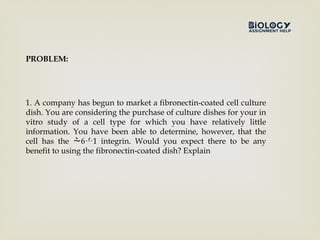
1. A company has begun to market a fibronectin-coated cell culture
dish. You are considering the purchase of culture dishes for your in
vitro study of a cell type for which you have relatively little
information. You have been able to determine, however, that the
cell has the 6 1 integrin. Would you expect there to be any
 
benefit to using the fibronectin-coated dish? Explain
PROBLEM:
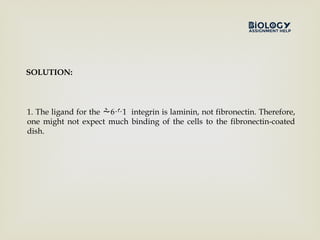
1. The ligand for the 6 1
  integrin is laminin, not fibronectin. Therefore,
one might not expect much binding of the cells to the fibronectin-coated
dish.
SOLUTION:
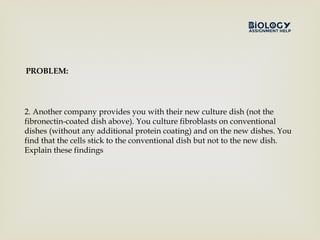
2. Another company provides you with their new culture dish (not the
fibronectin-coated dish above). You culture fibroblasts on conventional
dishes (without any additional protein coating) and on the new dishes. You
find that the cells stick to the conventional dish but not to the new dish.
Explain these findings
PROBLEM:
SOLUTION:
2. The cells are attaching to the conventional dishes, even though the
dishes are not pre-coated with an adhesion protein, because the cells are
synthesizing their own adhesion proteins, which are becoming adsorbed
to the dish and subsequently serve as binding sites for the cells; the cells
have integrins to the adhesion proteins that they make. The new dishes
may not have a chemical composition that allows for adsorption of the
adhesion proteins produced by the cells.
3. A transgenic strain of mice is missing a particular type of cell adhesion
molecule. The pups survive only a few days after birth, but you are able to
make the following observations. The dermis is abnormal and does not
heal by contraction as it does normally. The epidermis is normal and
regenerates normally when injured.
PROBLEM:
a) What is the likely missing cell adhesion molecule? Explain.
PROBLEM:
SOLUTION:
a) One explanation for the inability of the dermis to heal by contraction
like it normally does is that the fibroblasts are not able to bind to the
matrix molecules (viz., collagen). The likely missing cell adhesion
molecule is an integrin for fibronectin (or collagen).
b) Name 2 other tissues that you would expect to be abnormal and 2 other
tissues that you would anticipate would be normal? Explain.
PROBLEM:
SOLUTION:
Tissues that you would expect to be abnormal would be connective tissues
requiring cell adhesion to fibronectin and collagen, and 2) tissues that
would likely heal normally would be tissues in which cells bind to
basement membrane (i.e., in which laminin is the ligand).
Thanks For Watching!

Understanding Cell-Matrix Mechanics: A Sample Biology Assignment Solution

  • 1.
     CELL-MATRIX MECHANICS VISIT: www.biologyassignmenthelp.com EMAIL:info@biologyassignmenthelp.com What’sApp: +1 (315) 557-6473
  • 2.
    This sample assignmentsolution delves into the complex interactions between cell adhesion molecules, integrins, and extracellular matrix components, specifically focusing on the significance of these interactions in tissue repair and cell culture techniques. Through a series of questions and answers, the solution examines the effectiveness of fibronectin-coated culture dishes, the behavior of fibroblasts on different substrates, and the implications of missing cell adhesion molecules in a transgenic mouse model. This comprehensive analysis is aimed at providing students with a deeper understanding of how cell adhesion impacts tissue function and healing, especially in the context of in vitro studies. Exploring Cell Adhesion Molecules and Their Role in Tissue Healing
  • 3.
    1. A companyhas begun to market a fibronectin-coated cell culture dish. You are considering the purchase of culture dishes for your in vitro study of a cell type for which you have relatively little information. You have been able to determine, however, that the cell has the 6 1 integrin. Would you expect there to be any   benefit to using the fibronectin-coated dish? Explain PROBLEM:
  • 4.
    1. The ligandfor the 6 1   integrin is laminin, not fibronectin. Therefore, one might not expect much binding of the cells to the fibronectin-coated dish. SOLUTION:
  • 5.
    2. Another companyprovides you with their new culture dish (not the fibronectin-coated dish above). You culture fibroblasts on conventional dishes (without any additional protein coating) and on the new dishes. You find that the cells stick to the conventional dish but not to the new dish. Explain these findings PROBLEM:
  • 6.
    SOLUTION: 2. The cellsare attaching to the conventional dishes, even though the dishes are not pre-coated with an adhesion protein, because the cells are synthesizing their own adhesion proteins, which are becoming adsorbed to the dish and subsequently serve as binding sites for the cells; the cells have integrins to the adhesion proteins that they make. The new dishes may not have a chemical composition that allows for adsorption of the adhesion proteins produced by the cells.
  • 7.
    3. A transgenicstrain of mice is missing a particular type of cell adhesion molecule. The pups survive only a few days after birth, but you are able to make the following observations. The dermis is abnormal and does not heal by contraction as it does normally. The epidermis is normal and regenerates normally when injured. PROBLEM:
  • 8.
    a) What isthe likely missing cell adhesion molecule? Explain. PROBLEM:
  • 9.
    SOLUTION: a) One explanationfor the inability of the dermis to heal by contraction like it normally does is that the fibroblasts are not able to bind to the matrix molecules (viz., collagen). The likely missing cell adhesion molecule is an integrin for fibronectin (or collagen).
  • 10.
    b) Name 2other tissues that you would expect to be abnormal and 2 other tissues that you would anticipate would be normal? Explain. PROBLEM:
  • 11.
    SOLUTION: Tissues that youwould expect to be abnormal would be connective tissues requiring cell adhesion to fibronectin and collagen, and 2) tissues that would likely heal normally would be tissues in which cells bind to basement membrane (i.e., in which laminin is the ligand).
  • 12.