Understanding ‘Arbitrage’
   – By Prof. Simply Simple        TM


            Let me tell you a story about a “Chaalu
                          Chaiwala”!

               He was truly chaalu or shall we
                   say, “Extra Smart”!!
He would provide tea at Rs 5 per cup
and his cost of preparing the same was
                  Rs 4.

    Thus he made a profit of Rs 1.
But he was not happy with
making a profit of just Rs 1.
So he thought about he
could increase his profit.


     It was then that he had a
        brainwave out of the
               blue!
He identified a Government
canteen which offered tea at Rs 2.

      BIG IDEA! Wasn‟t it?


         He could now simply buy
         tea for Rs 2 and sell it for
          Rs 5 and make a much
            better gain of Rs 3!
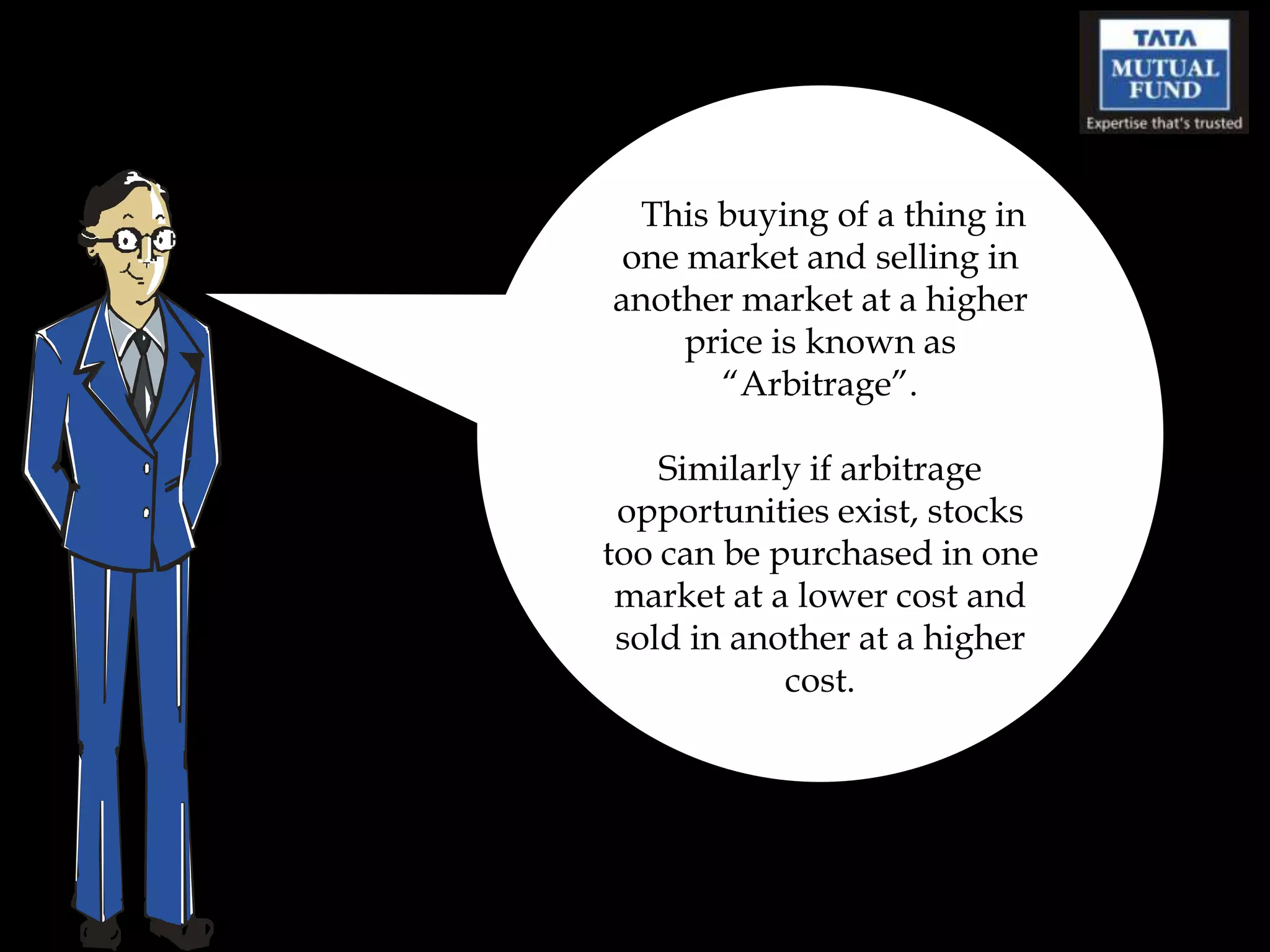
This buying of a thing in
 one market and selling in
another market at a higher
     price is known as
       “Arbitrage”.

    Similarly if arbitrage
 opportunities exist, stocks
too can be purchased in one
 market at a lower cost and
 sold in another at a higher
            cost.
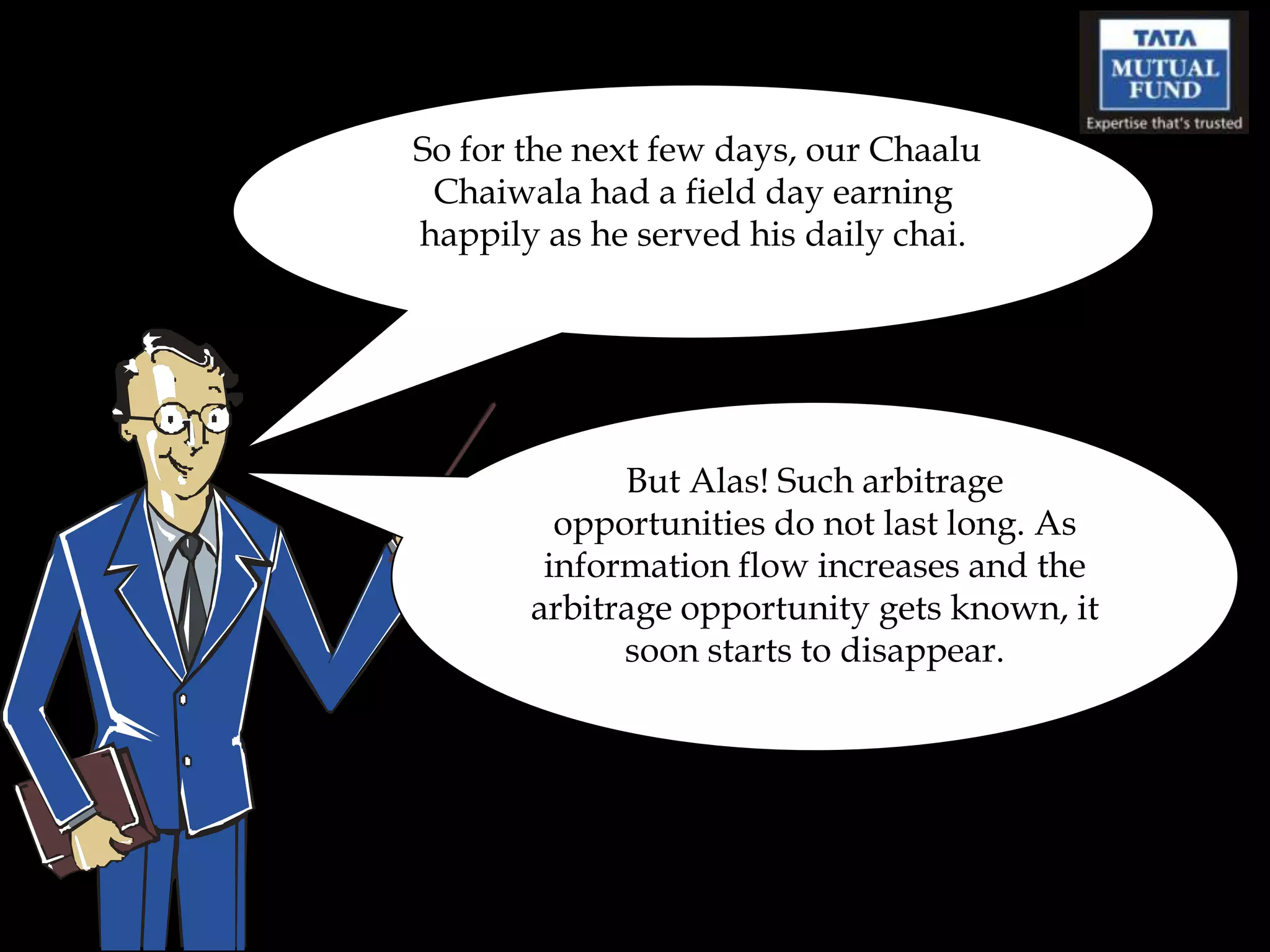
So for the next few days, our Chaalu
 Chaiwala had a field day earning
happily as he served his daily chai.


             But Alas! Such arbitrage
         opportunities do not last long. As
        information flow increases and the
       arbitrage opportunity gets known, it
             soon starts to disappear.
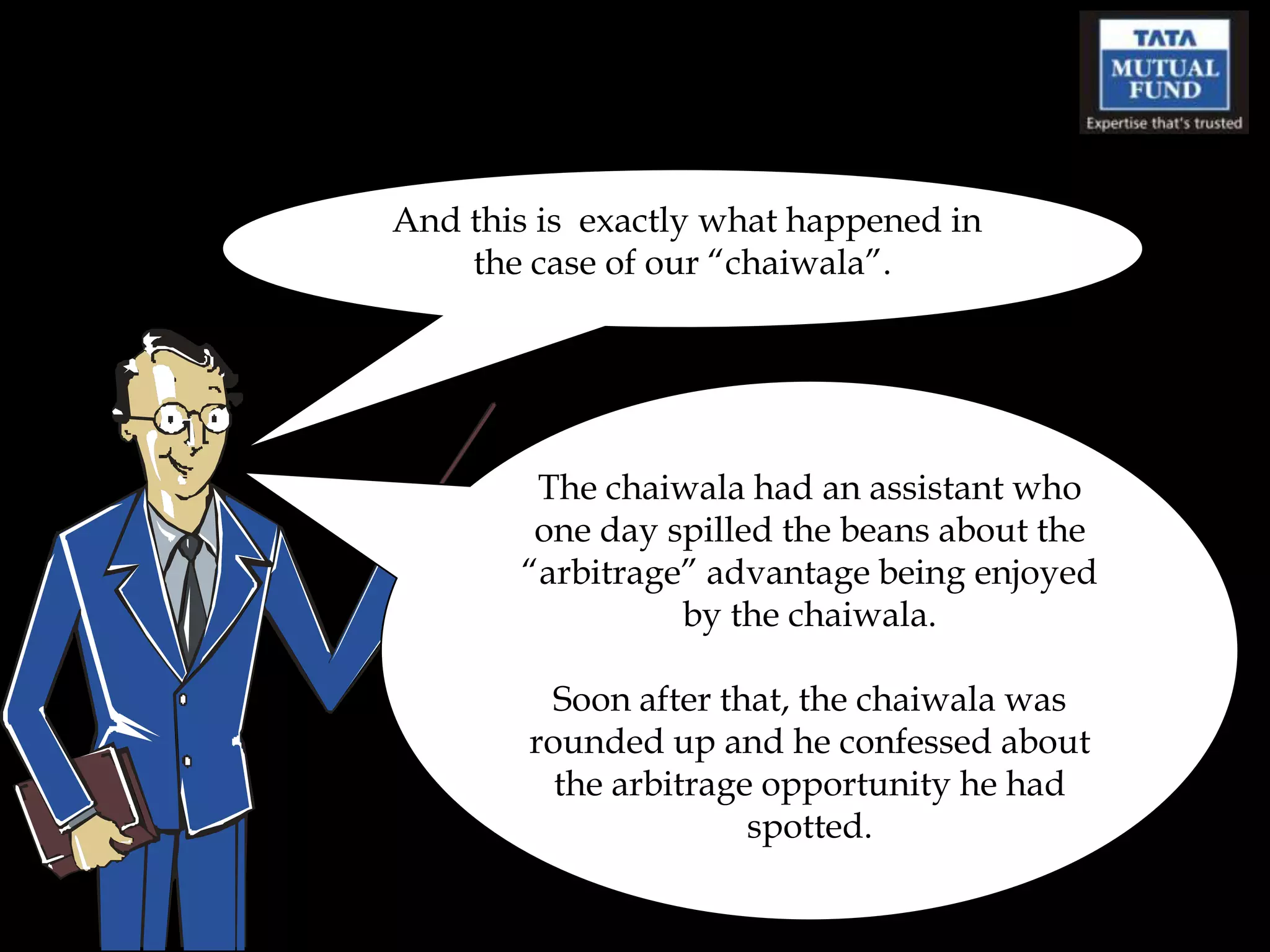
And this is exactly what happened in
    the case of our “chaiwala”.


        The chaiwala had an assistant who
        one day spilled the beans about the
       “arbitrage” advantage being enjoyed
                 by the chaiwala.

          Soon after that, the chaiwala was
        rounded up and he confessed about
          the arbitrage opportunity he had
                       spotted.
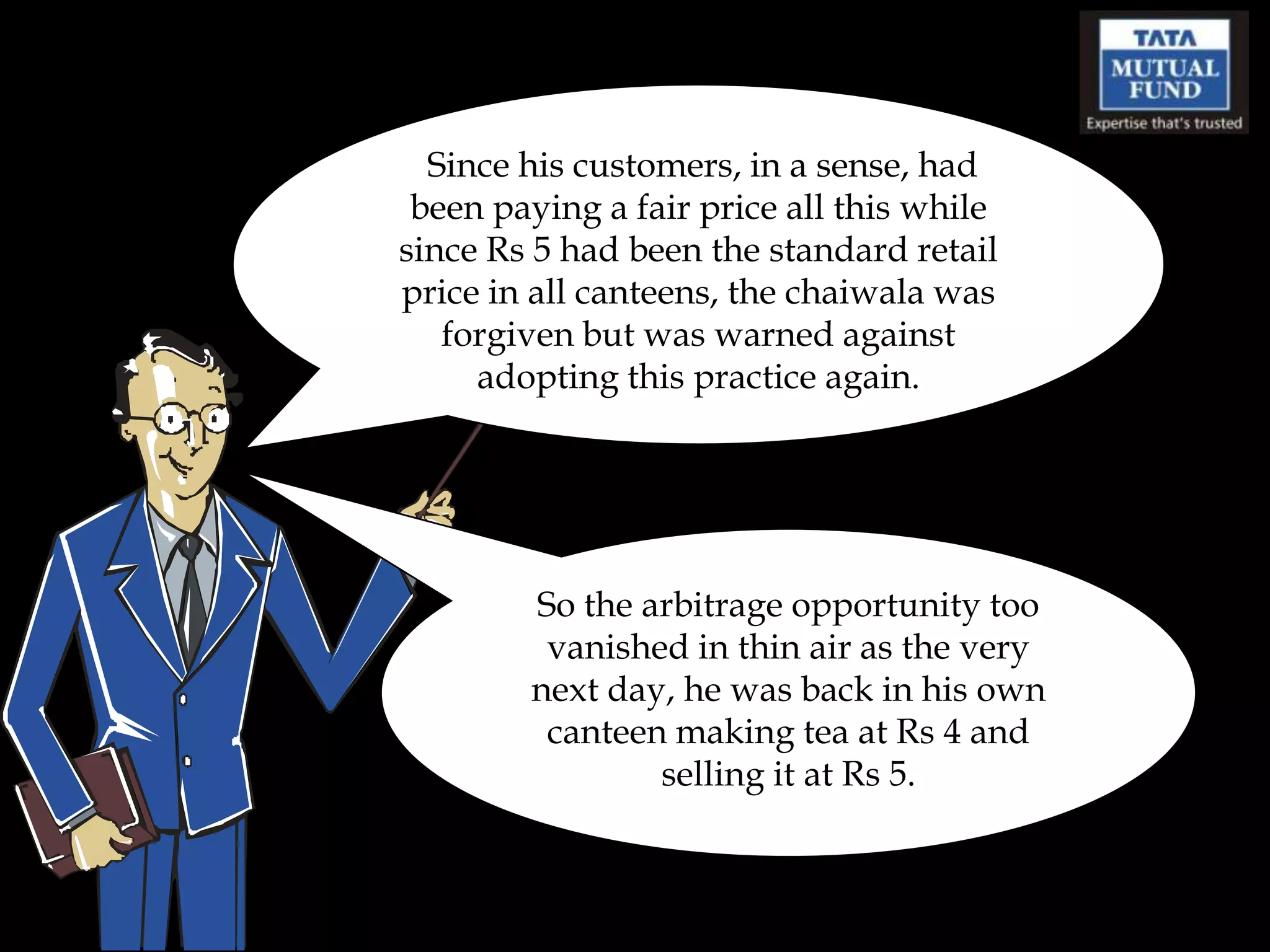
Since his customers, in a sense, had
 been paying a fair price all this while
since Rs 5 had been the standard retail
price in all canteens, the chaiwala was
   forgiven but was warned against
     adopting this practice again.


        So the arbitrage opportunity too
         vanished in thin air as the very
        next day, he was back in his own
         canteen making tea at Rs 4 and
                selling it at Rs 5.
• Thus it‟s important to
  understand that “arbitrage”
  opportunities are short-lived.

• It is essentially a short window
  of opportunity that can be
  exploited by taking action at the
  right time.

• As information flow gets
  efficient, this opportunity
  vanishes as we saw in the case
  of the chaiwala.
Hope this story succeeded in clarifying the concept
                    of „Arbitrage‟


          Please give me your feedback at
              professor@tataamc.com
Disclaimer
 The views expressed in these lessons are for information purposes only
       and do not construe to be of any investment, legal or taxation
    advice. The contents are topical in nature & held true at the time of
       creation of the lesson. They are not indicative of future market
   trends, nor is Tata Asset Management Ltd. attempting to predict the
     same. Reprinting any part of this presentation will be at your own
       risk and Tata Asset Management Ltd. will not be liable for the
                       consequences of any such action.


Mutual Fund investments are subject to market risks, read all scheme
related documents carefully.

Understanding Arbitrage

  • 1.
    Understanding ‘Arbitrage’ – By Prof. Simply Simple TM Let me tell you a story about a “Chaalu Chaiwala”! He was truly chaalu or shall we say, “Extra Smart”!!
  • 2.
    He would providetea at Rs 5 per cup and his cost of preparing the same was Rs 4. Thus he made a profit of Rs 1.
  • 3.
    But he wasnot happy with making a profit of just Rs 1.
  • 4.
    So he thoughtabout he could increase his profit. It was then that he had a brainwave out of the blue!
  • 5.
    He identified aGovernment canteen which offered tea at Rs 2. BIG IDEA! Wasn‟t it? He could now simply buy tea for Rs 2 and sell it for Rs 5 and make a much better gain of Rs 3!
  • 6.
    This buying ofa thing in one market and selling in another market at a higher price is known as “Arbitrage”. Similarly if arbitrage opportunities exist, stocks too can be purchased in one market at a lower cost and sold in another at a higher cost.
  • 7.
    So for thenext few days, our Chaalu Chaiwala had a field day earning happily as he served his daily chai. But Alas! Such arbitrage opportunities do not last long. As information flow increases and the arbitrage opportunity gets known, it soon starts to disappear.
  • 8.
    And this isexactly what happened in the case of our “chaiwala”. The chaiwala had an assistant who one day spilled the beans about the “arbitrage” advantage being enjoyed by the chaiwala. Soon after that, the chaiwala was rounded up and he confessed about the arbitrage opportunity he had spotted.
  • 9.
    Since his customers,in a sense, had been paying a fair price all this while since Rs 5 had been the standard retail price in all canteens, the chaiwala was forgiven but was warned against adopting this practice again. So the arbitrage opportunity too vanished in thin air as the very next day, he was back in his own canteen making tea at Rs 4 and selling it at Rs 5.
  • 10.
    • Thus it‟simportant to understand that “arbitrage” opportunities are short-lived. • It is essentially a short window of opportunity that can be exploited by taking action at the right time. • As information flow gets efficient, this opportunity vanishes as we saw in the case of the chaiwala.
  • 11.
    Hope this storysucceeded in clarifying the concept of „Arbitrage‟ Please give me your feedback at professor@tataamc.com
  • 12.
    Disclaimer The viewsexpressed in these lessons are for information purposes only and do not construe to be of any investment, legal or taxation advice. The contents are topical in nature & held true at the time of creation of the lesson. They are not indicative of future market trends, nor is Tata Asset Management Ltd. attempting to predict the same. Reprinting any part of this presentation will be at your own risk and Tata Asset Management Ltd. will not be liable for the consequences of any such action. Mutual Fund investments are subject to market risks, read all scheme related documents carefully.