ACCOUNTABILITY
Prepared by Assaf Rassin Kamara
WHAT IS ACCOUNTABILITY
• Accountability is taking ownership of the result.
It involves admitting mistakes rather than
blaming others and evaluating the outcomes of
ones own action.
• Accountability comes after a person’s
responsibilities are complete.
WHAT IS RESPONSIBILITY
• An individual's obligation to complete tasks to
achieve an outcome.
• Managers outline responsibilities in the job
descriptions and delegate tasks to individuals
based on their competencies
• Can be individual or shared between a team.
ACCOUNTABILITY
• Can’t be delegated
• Comes in at the end
• Accountability comes from Responsibility
• It’s measured
• Not about blame
HOLDING EMPLOYEES ACCOUNTABLE
• An accountable employee makes a promise and
follows it through, takes responsibility for their
actions (good or bad!), owns their mistakes, and
takes initiative without being told. They’re
someone every leader wants to have on their
team.
• In reality, though, 25% of managers report an
absence of accountability as the biggest hurdle
for leading their team. Which begs the question:
how can you change this?
• How do you hold people accountable?
• Not in a way that feels forced or like a
punishment, but in a way that feels authentic
and truly motivating for the employee
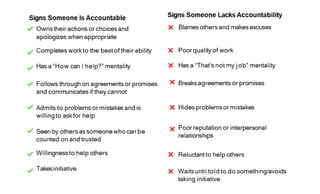
HOW DO YOU SPOT
INDIVIDUALS ON YOUR TEAM
WHO ARE ACCOUNTABLE, AS
WELL AS THOSE WHO MAY
BE LACKING
ACCOUNTABILITY?
DEMONSTRATE ACCOUNTABILITY
IN LEADERSHIP
• An accountable team starts with you - the leader.
Accountability will not thrive if there is no
accountability in leadership.
• Employees look to their leader to understand how
they should behave, what is acceptable, and for
cues on the team’s norms.
• If you’re not demonstrating accountability, they will
not either.
• No amount of coaching, training, or discussions
will help.
TO DEMONSTRATE ACCOUNTABILITY TO
YOUR EMPLOYEES, YOU’LL NEED TO:
• Ensure your commitments are put into action
• Follow through on promises
• Give rationale and answer to your decisions and actions
• Have clear goals and targets that can measure your success
• Communicate a team vision of what you’re trying to achieve
• Answer questions and provide clarity on your plan for the
team to achieve their goals
• Be honest and demonstrate humility by asking for help and
input from others
CONCLUSION
• Being an accountable leader isn’t always easy.
However, demonstrating accountability in
leadership fosters trust, collaboration, and the
feeling that your actions are in the best interest
of your employees and the organization. It
makes those around you want to follow your
lead and be accountable as well.

UNDERSTANDING ACCOUNTABILITY FOR ALL.pptx

  • 1.
  • 2.
    WHAT IS ACCOUNTABILITY •Accountability is taking ownership of the result. It involves admitting mistakes rather than blaming others and evaluating the outcomes of ones own action. • Accountability comes after a person’s responsibilities are complete.
  • 3.
    WHAT IS RESPONSIBILITY •An individual's obligation to complete tasks to achieve an outcome. • Managers outline responsibilities in the job descriptions and delegate tasks to individuals based on their competencies • Can be individual or shared between a team.
  • 4.
    ACCOUNTABILITY • Can’t bedelegated • Comes in at the end • Accountability comes from Responsibility • It’s measured • Not about blame
  • 6.
    HOLDING EMPLOYEES ACCOUNTABLE •An accountable employee makes a promise and follows it through, takes responsibility for their actions (good or bad!), owns their mistakes, and takes initiative without being told. They’re someone every leader wants to have on their team.
  • 7.
    • In reality,though, 25% of managers report an absence of accountability as the biggest hurdle for leading their team. Which begs the question: how can you change this? • How do you hold people accountable? • Not in a way that feels forced or like a punishment, but in a way that feels authentic and truly motivating for the employee
  • 8.
    HOW DO YOUSPOT INDIVIDUALS ON YOUR TEAM WHO ARE ACCOUNTABLE, AS WELL AS THOSE WHO MAY BE LACKING ACCOUNTABILITY?
  • 10.
    DEMONSTRATE ACCOUNTABILITY IN LEADERSHIP •An accountable team starts with you - the leader. Accountability will not thrive if there is no accountability in leadership. • Employees look to their leader to understand how they should behave, what is acceptable, and for cues on the team’s norms. • If you’re not demonstrating accountability, they will not either. • No amount of coaching, training, or discussions will help.
  • 11.
    TO DEMONSTRATE ACCOUNTABILITYTO YOUR EMPLOYEES, YOU’LL NEED TO: • Ensure your commitments are put into action • Follow through on promises • Give rationale and answer to your decisions and actions • Have clear goals and targets that can measure your success • Communicate a team vision of what you’re trying to achieve • Answer questions and provide clarity on your plan for the team to achieve their goals • Be honest and demonstrate humility by asking for help and input from others
  • 12.
    CONCLUSION • Being anaccountable leader isn’t always easy. However, demonstrating accountability in leadership fosters trust, collaboration, and the feeling that your actions are in the best interest of your employees and the organization. It makes those around you want to follow your lead and be accountable as well.