Downloaded 70 times

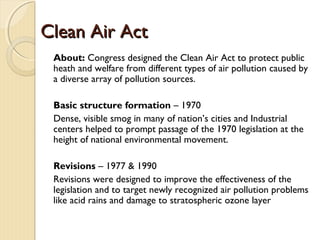
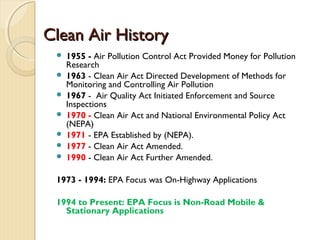
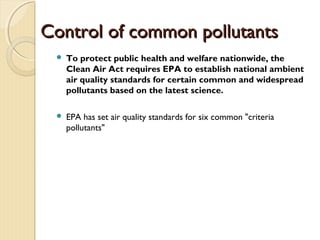
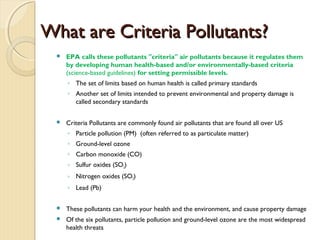
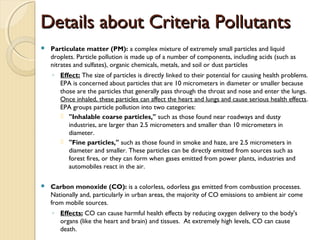
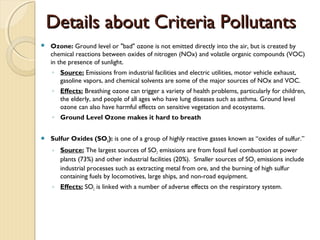
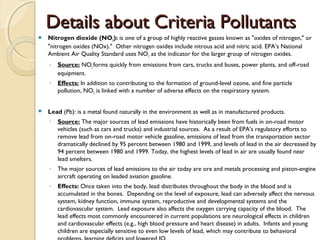

The Clean Air Act aims to protect public health and welfare from air pollution, established largely due to growing environmental concerns in the 1970s. It regulates six common pollutants, known as criteria pollutants, which include particulate matter, ground-level ozone, carbon monoxide, sulfur oxides, nitrogen oxides, and lead, all of which can have serious health and environmental impacts. The EPA monitors these pollutants through air quality standards and tracking methods, although many areas still experience unhealthy air conditions.


