
UK Export Controls: 
A Strategic Approach 
1
Why a ‘Strategic Approach’? 
2 
 Adopting a strategic approach to export 
licensing can: 
 boost your exports 
 save you money 
 protect your reputation
Finding New Markets 
 If you are exporting a new defence or security product, or 
looking for new markets, the obvious places to start are 
the developed countries of the EU and NATO 
 large, stable, transparent procurement 
 but crowded markets, shrinking defence budgets 
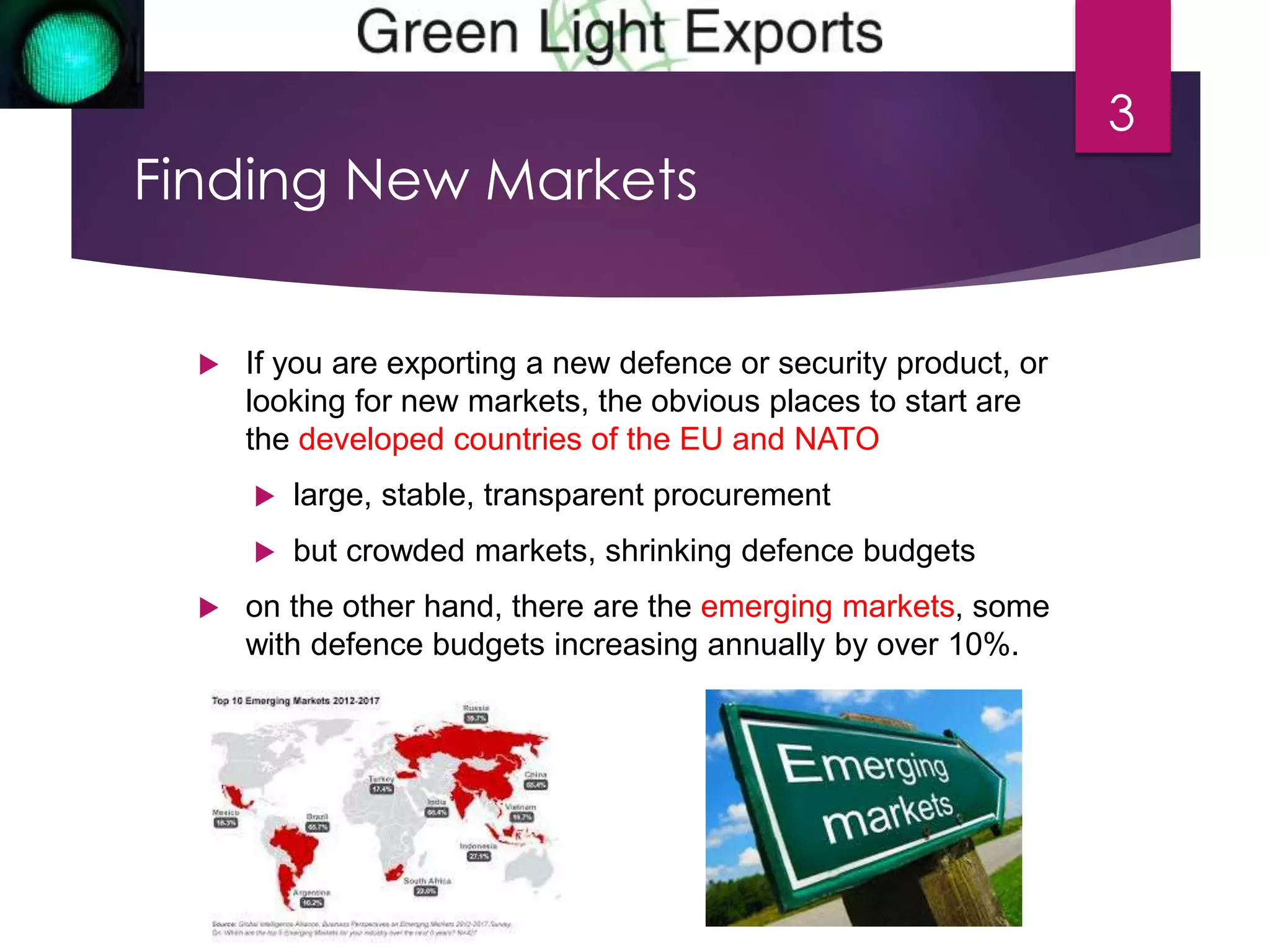
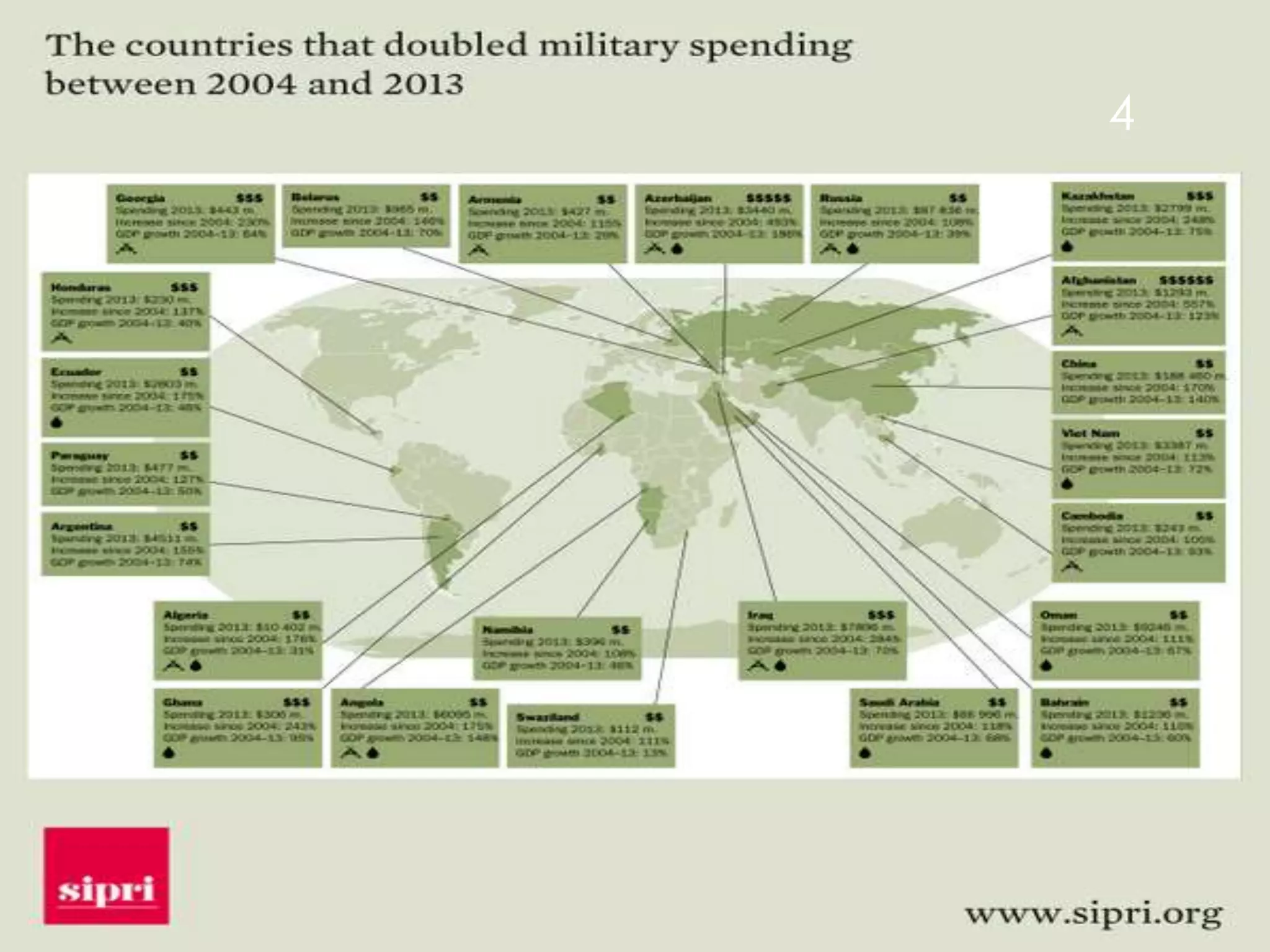
 on the other hand, there are the emerging markets, some 
with defence budgets increasing annually by over 10%. 
3
Finding New Markets 
4
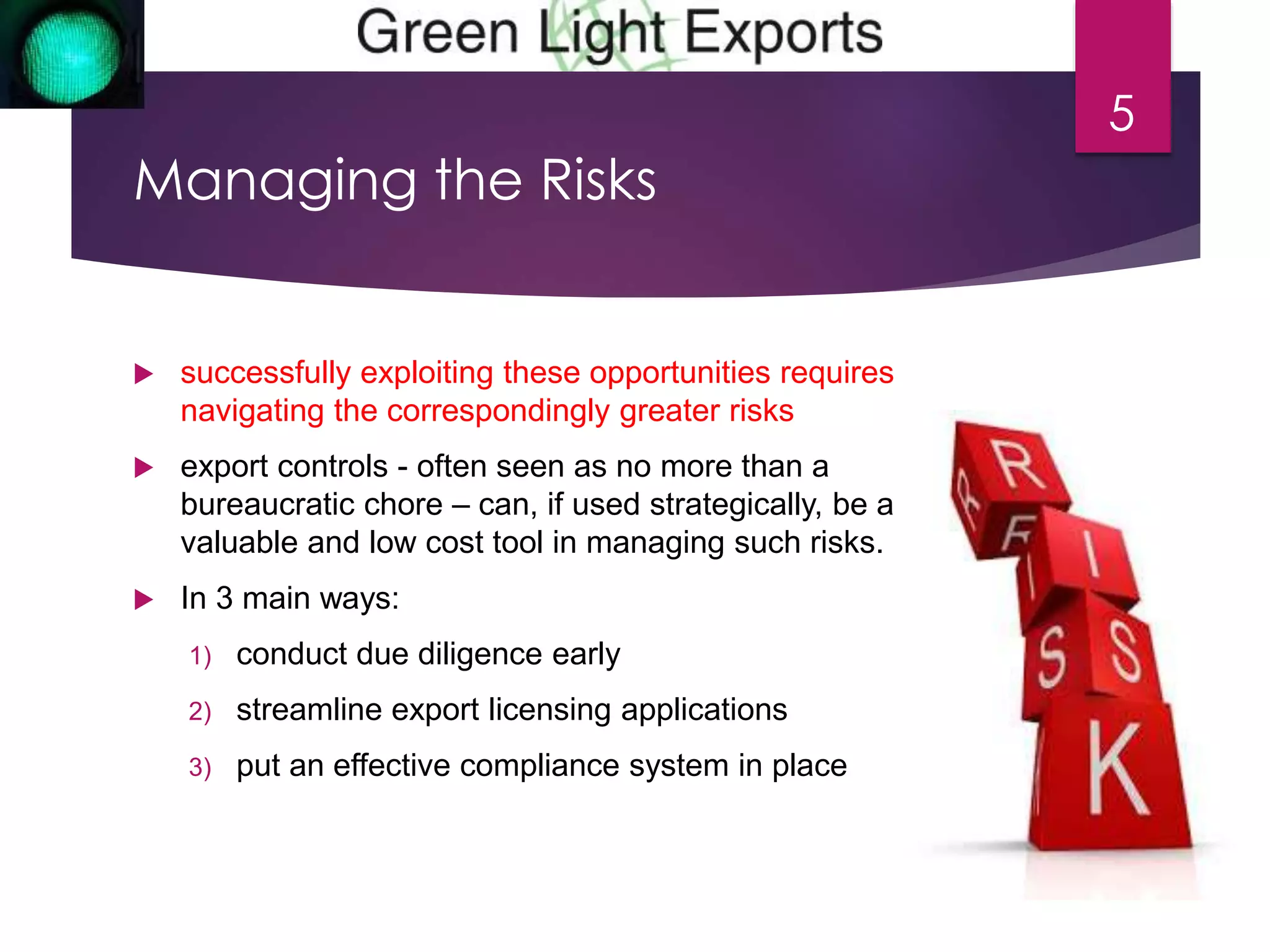
Managing the Risks 
 successfully exploiting these opportunities requires 
navigating the correspondingly greater risks 
 export controls - often seen as no more than a 
bureaucratic chore – can, if used strategically, be a 
valuable and low cost tool in managing such risks. 
 In 3 main ways: 
1) conduct due diligence early 
2) streamline export licensing applications 
3) put an effective compliance system in place 
5
1) Conduct 
Due Diligence 
Early 
6
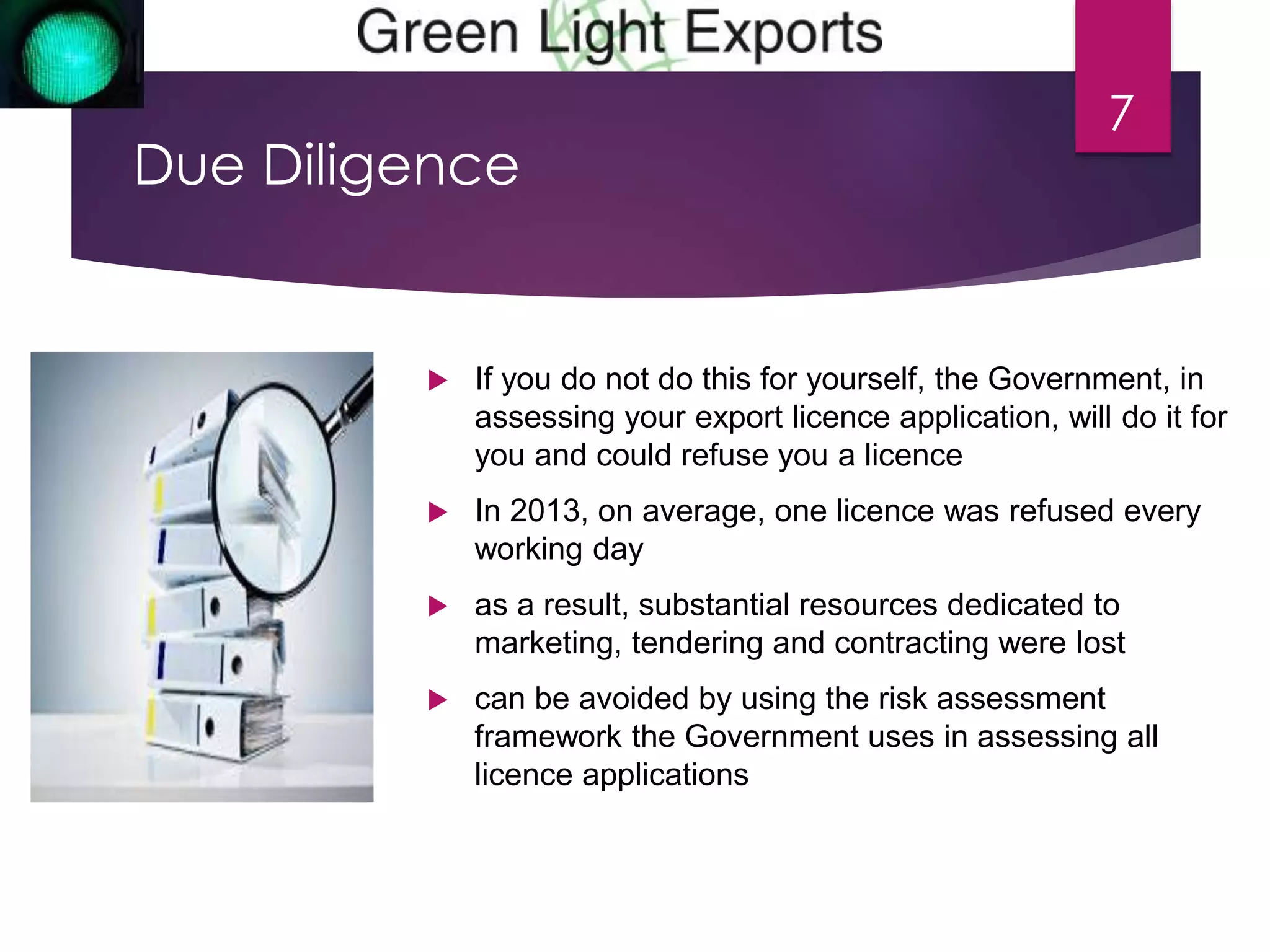
Due Diligence 
7 
 If you do not do this for yourself, the Government, in 
assessing your export licence application, will do it for 
you and could refuse you a licence 
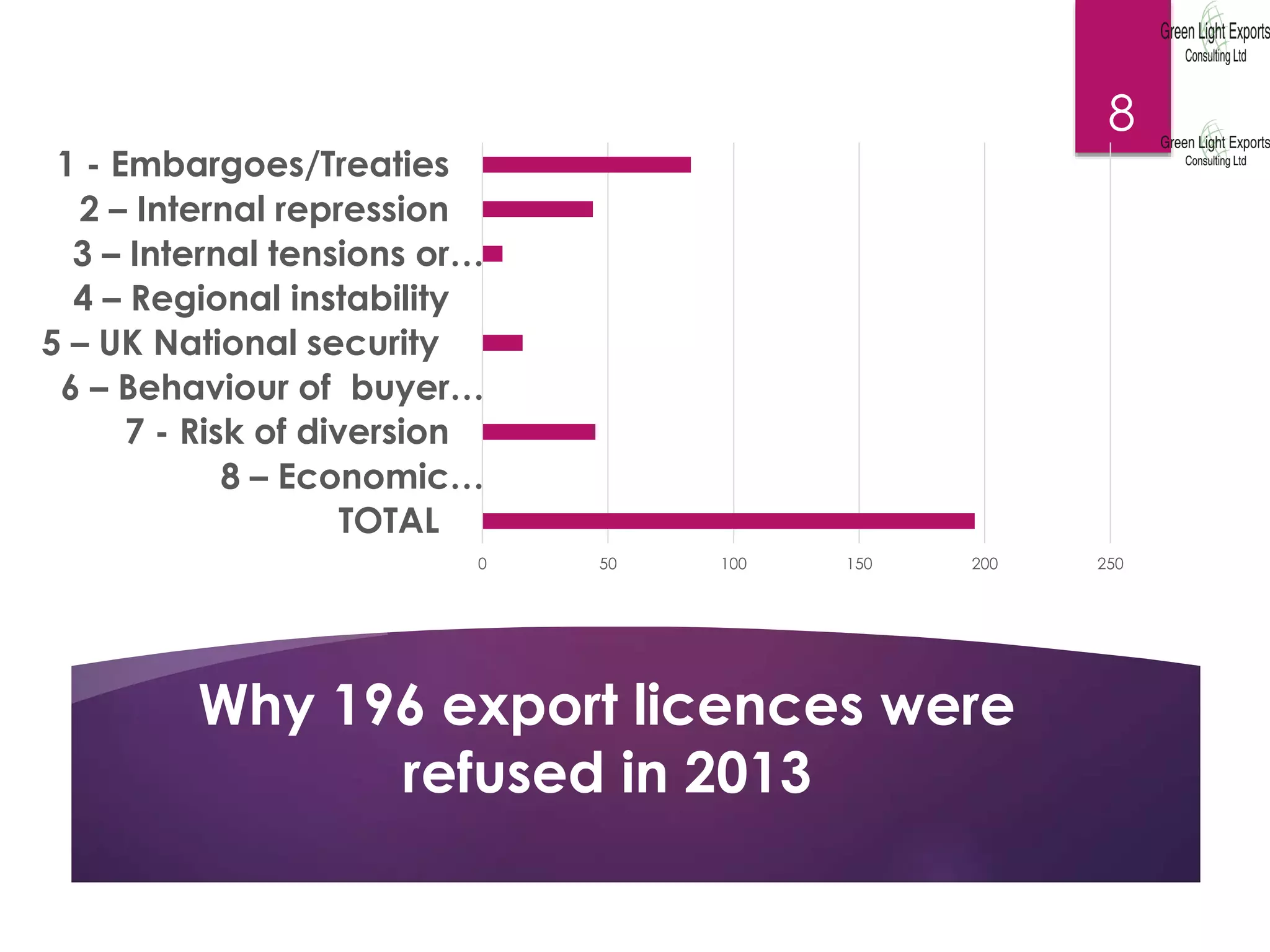
 In 2013, on average, one licence was refused every 
working day 
 as a result, substantial resources dedicated to 
marketing, tendering and contracting were lost 
 can be avoided by using the risk assessment 
framework the Government uses in assessing all 
licence applications
1 - Embargoes/Treaties 
2 – Internal repression 
3 – Internal tensions or … 
4 – Regional instability 
5 – UK National security 
6 – Behaviour of buyer … 
7 - Risk of diversion 
8 – Economic … 
0 50 100 150 200 250 
TOTAL 
Why 196 export licences were 
refused in 2013 
8
Due Diligence: Sanctions 
9 
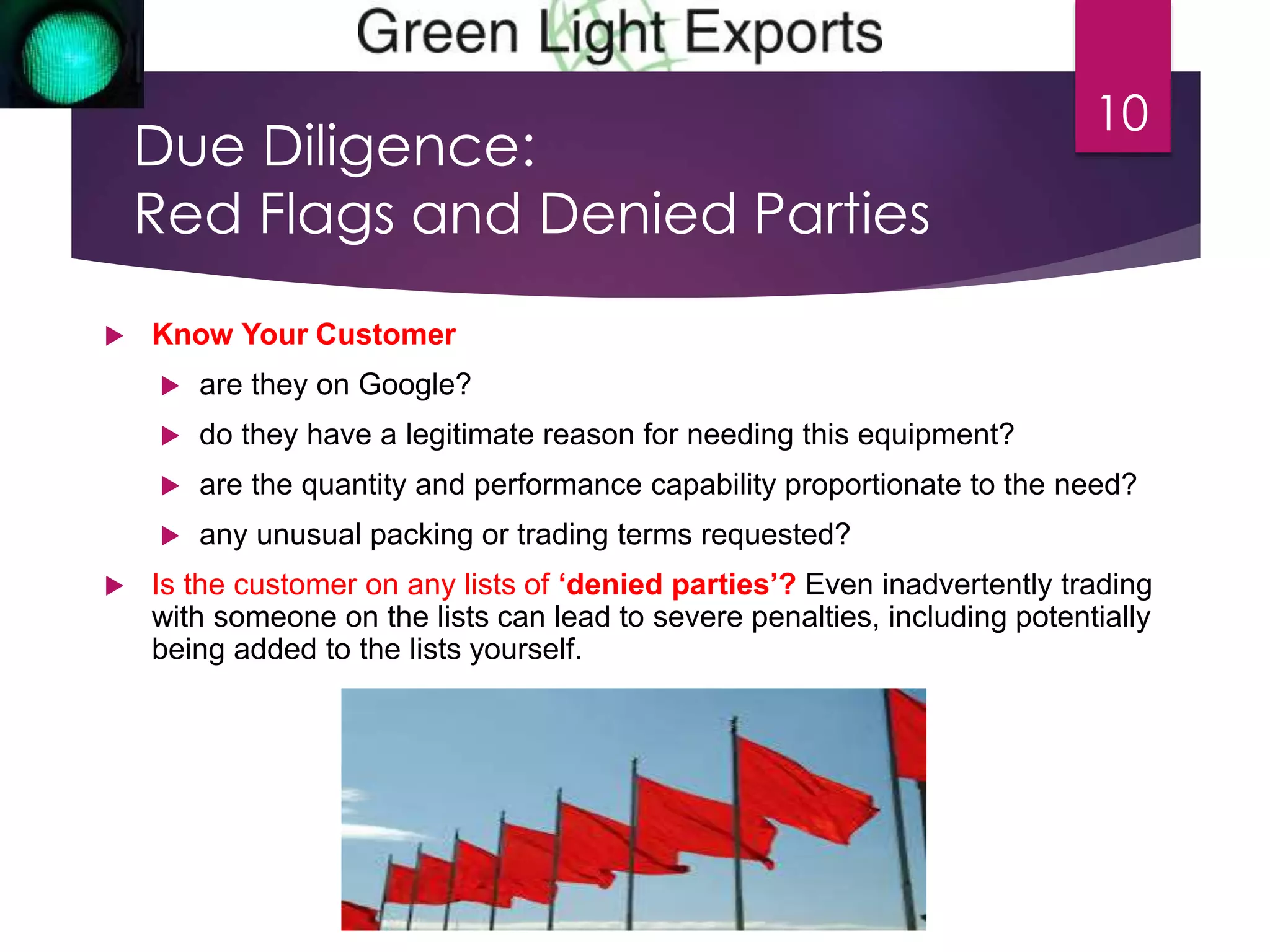
 Is the destination country subject to any sanctions? 
 do not automatically assume these rule out all 
defence exports. In many cases, embargoes apply 
only to non-government actors while permitting 
defence supplies to the government and officially-approved 
bodies 
 beware too of the rapidly-evolving nature of sanctions: 
the rules can change overnight and it is the exporter’s 
responsibility to keep up-to-date. Check carefully what 
is and is not permitted and subscribe to update alerts
Due Diligence: 
Red Flags and Denied Parties 
 Know Your Customer 
 are they on Google? 
 do they have a legitimate reason for needing this equipment? 
10 
 are the quantity and performance capability proportionate to the need? 
 any unusual packing or trading terms requested? 
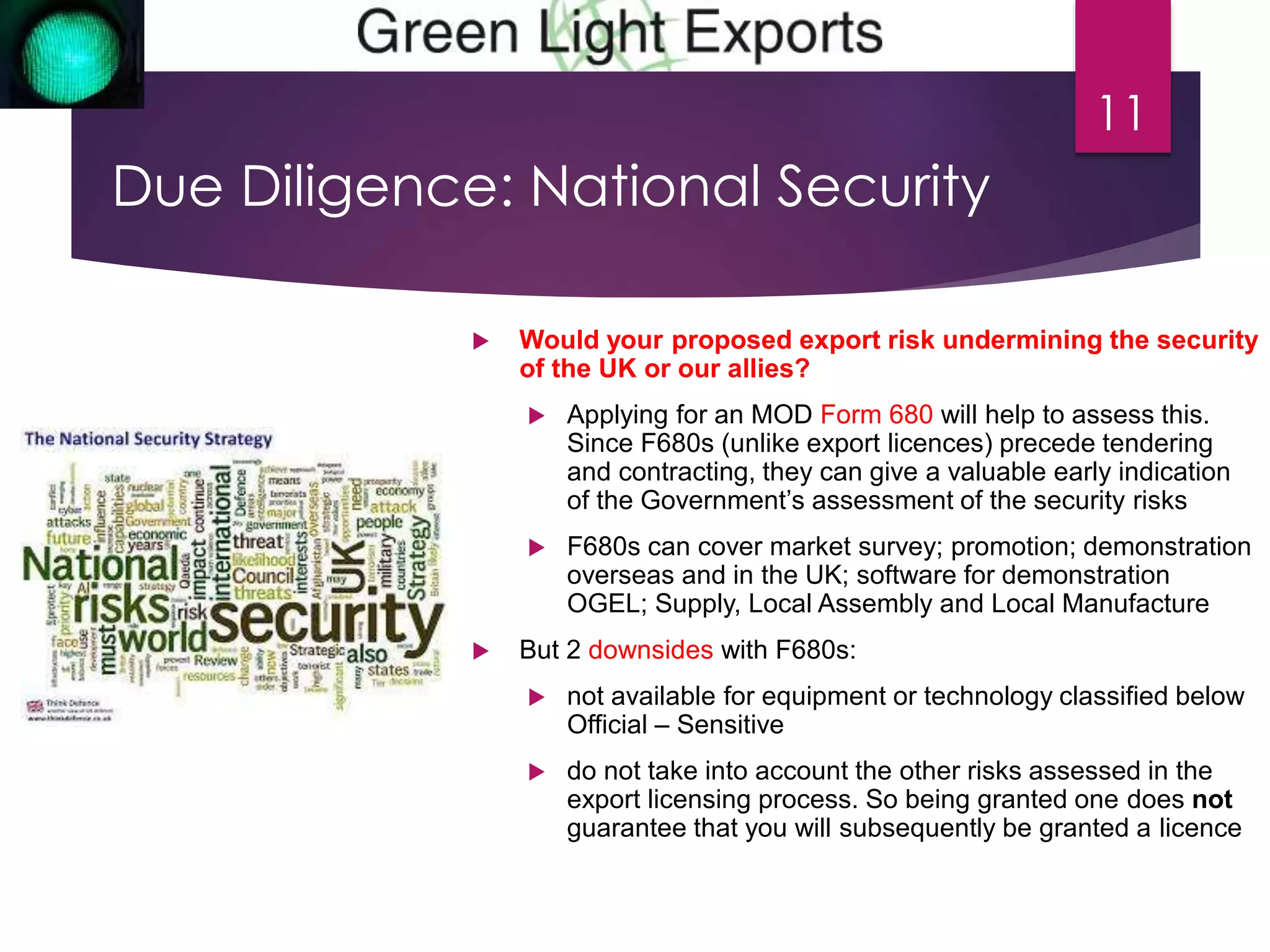
 Is the customer on any lists of ‘denied parties’? Even inadvertently trading 
with someone on the lists can lead to severe penalties, including potentially 
being added to the lists yourself.
Due Diligence: National Security 
11 
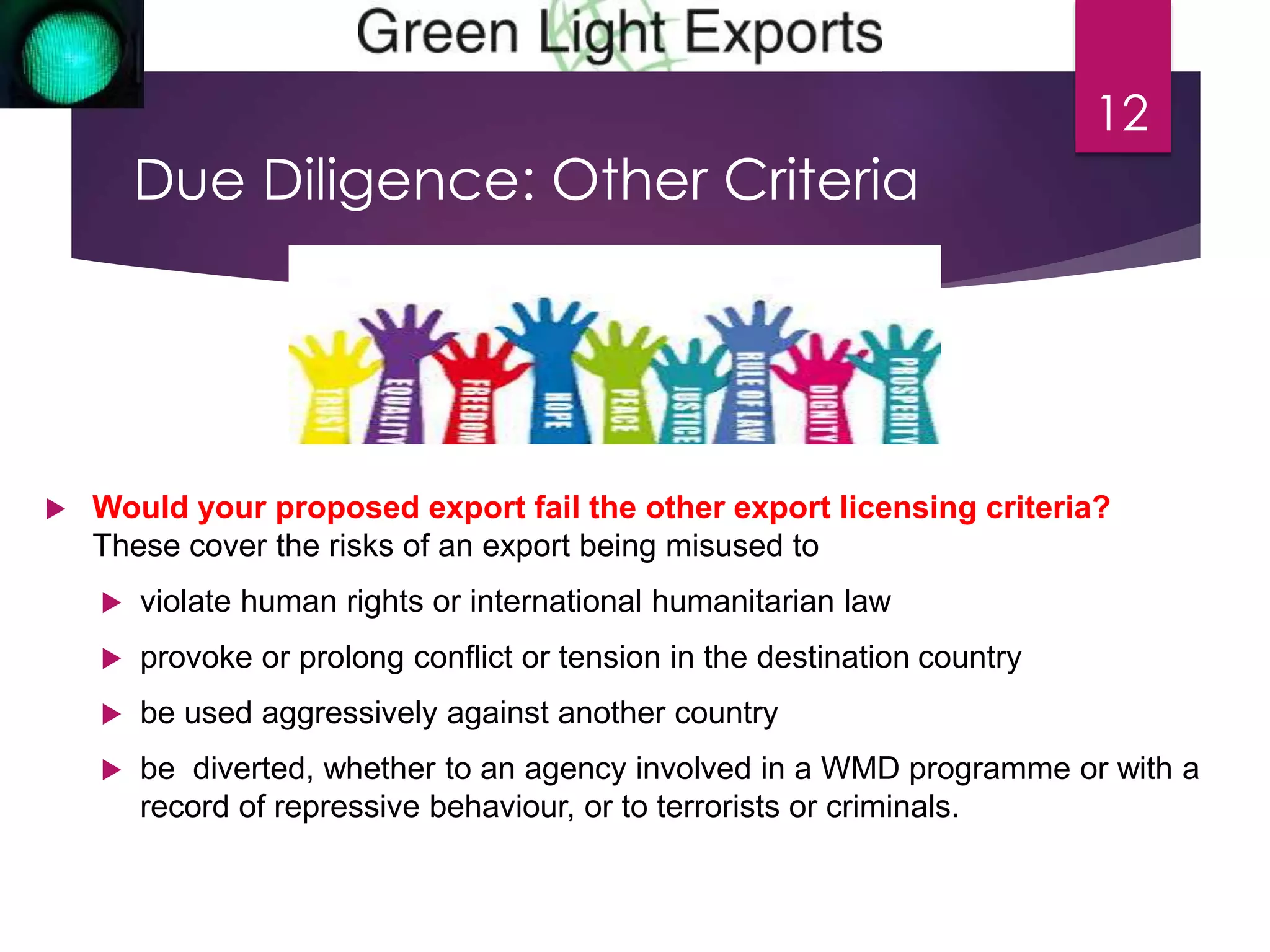
 Would your proposed export risk undermining the security 
of the UK or our allies? 
 Applying for an MOD Form 680 will help to assess this. 
Since F680s (unlike export licences) precede tendering 
and contracting, they can give a valuable early indication 
of the Government’s assessment of the security risks 
 F680s can cover market survey; promotion; demonstration 
overseas and in the UK; software for demonstration 
OGEL; Supply, Local Assembly and Local Manufacture 
 But 2 downsides with F680s: 
 not available for equipment or technology classified below 
Official – Sensitive 
 do not take into account the other risks assessed in the 
export licensing process. So being granted one does not 
guarantee that you will subsequently be granted a licence
Due Diligence: Other Criteria 
 Would your proposed export fail the other export licensing criteria? 
These cover the risks of an export being misused to 
 violate human rights or international humanitarian law 
 provoke or prolong conflict or tension in the destination country 
 be used aggressively against another country 
 be diverted, whether to an agency involved in a WMD programme or with a 
record of repressive behaviour, or to terrorists or criminals. 
12
2) Streamline 
Export Licence 
Applications 
13
Streamlining Applications 
 In most cases, securing export licences does not need to 
be burdensome nor cause delays 
 There are 2 relatively simple areas where a surprising 
number of exporters go wrong 
14
Streamlining: Open Licences 
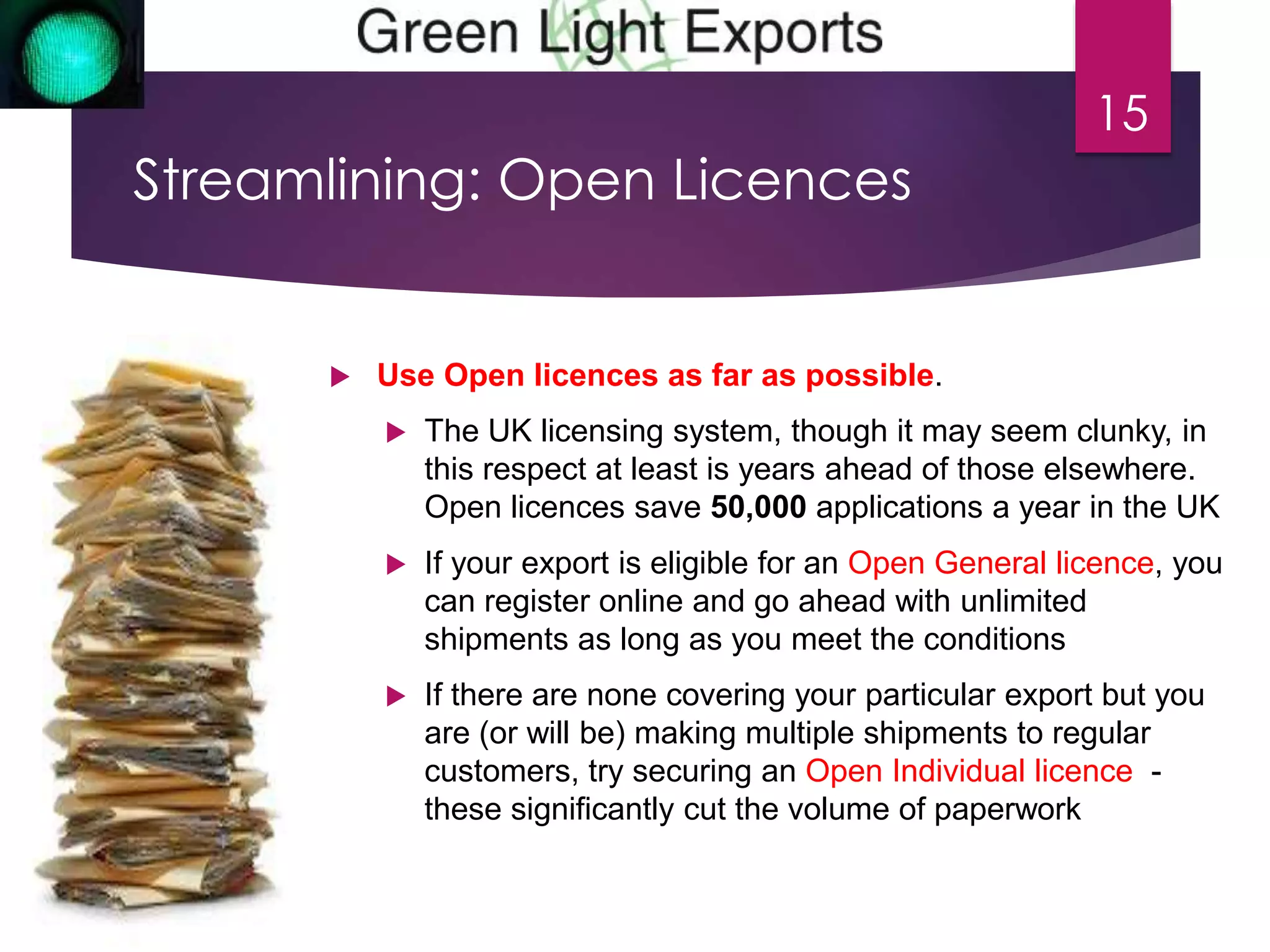
 Use Open licences as far as possible. 
15 
 The UK licensing system, though it may seem clunky, in 
this respect at least is years ahead of those elsewhere. 
Open licences save 50,000 applications a year in the UK 
 If your export is eligible for an Open General licence, you 
can register online and go ahead with unlimited 
shipments as long as you meet the conditions 
 If there are none covering your particular export but you 
are (or will be) making multiple shipments to regular 
customers, try securing an Open Individual licence - 
these significantly cut the volume of paperwork
Streamlining: SIELs 
 If you have to apply for Standard Individual Export 
Licences, do it early and fill in the form fully 
 by far the greatest cause of delays is when 
officials need to request further information from 
the exporter 
 this increases the turn-around time for an 
application from around 13 working days to, on 
average, 23 days. 
 The two main pitfalls are 
 incorrect End User Undertakings 
 incomplete descriptions of the goods 
 Since you already have all this information, it should 
not involve much extra effort to get it right first time. 
16
3) An Effective 
Compliance 
System 
17
Compliance Systems 
 The law does not specify how exporters should ensure they meet the 
18 
requirements: there is no ‘one size fits all’ approach, every situation is unique 
 So you can choose to design a system which works best for you 
 But where possible use existing systems, do not reinvent the wheel 
 Keep it simple and fit for purpose, integrated into your standard processes 
rather than as an ‘add on’ which risks ‘dropping off’ 
 ECO Compliance Code of Practice provides a framework of practical steps to 
keep licensing procedures simple but effective, drawn up by the Government in 
close consultation with industry.
Ten Key Points of Compliance 
Programmes 
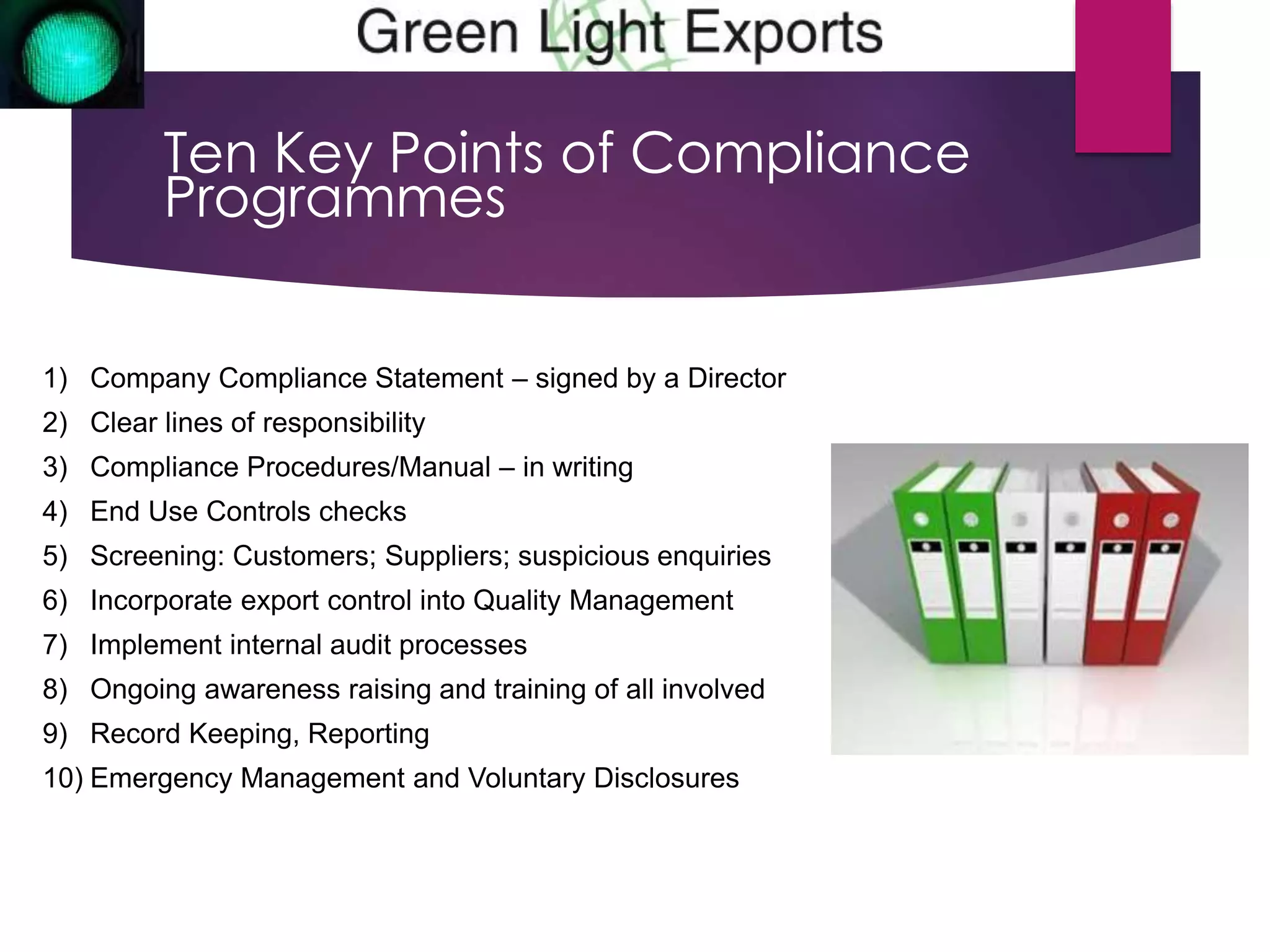
1) Company Compliance Statement – signed by a Director 
2) Clear lines of responsibility 
3) Compliance Procedures/Manual – in writing 
4) End Use Controls checks 
5) Screening: Customers; Suppliers; suspicious enquiries 
6) Incorporate export control into Quality Management 
7) Implement internal audit processes 
8) Ongoing awareness raising and training of all involved 
9) Record Keeping, Reporting 
10) Emergency Management and Voluntary Disclosures
Conclusion 
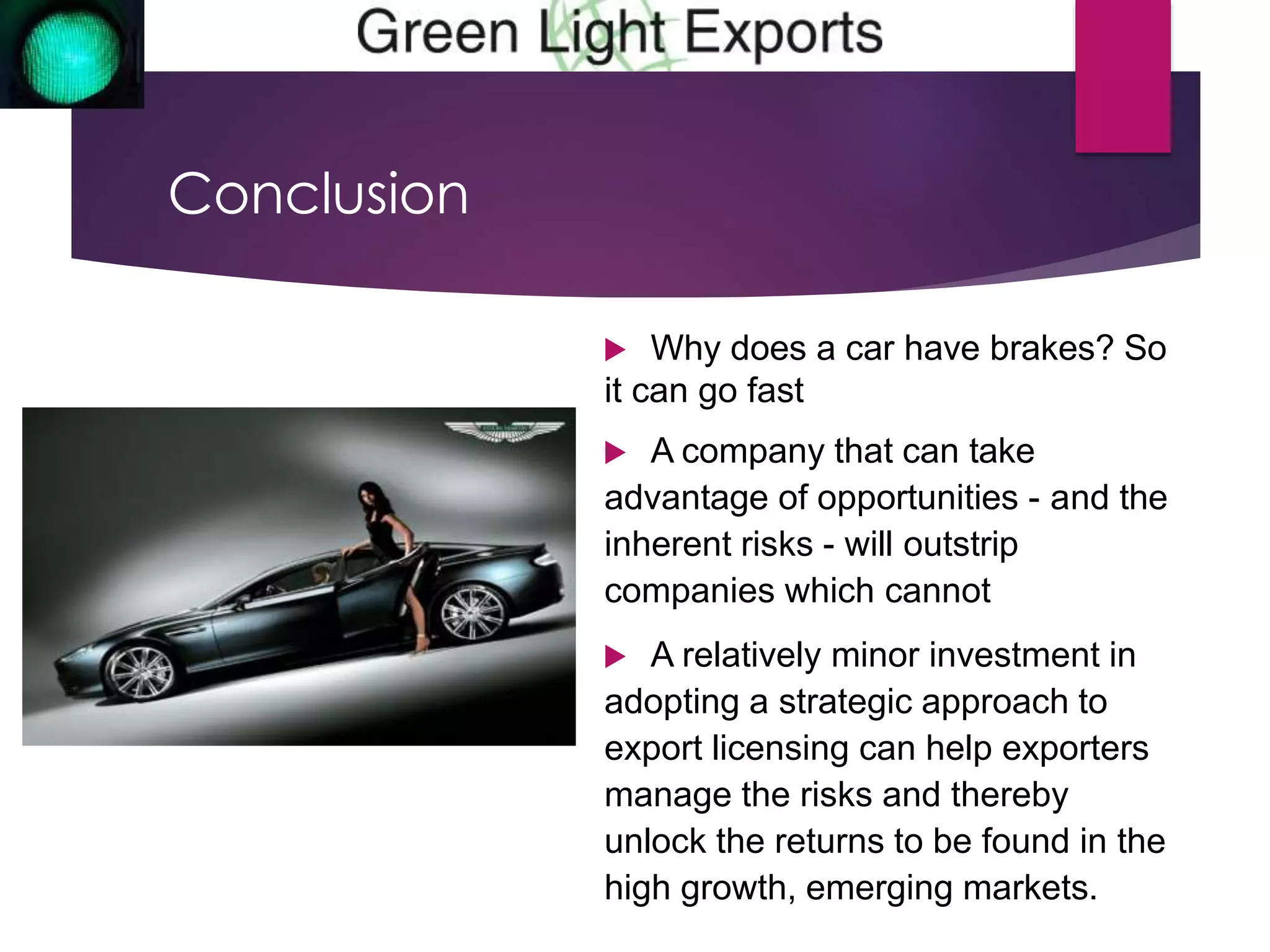
 Why does a car have brakes? So 
it can go fast 
 A company that can take 
advantage of opportunities - and the 
inherent risks - will outstrip 
companies which cannot 
 A relatively minor investment in 
adopting a strategic approach to 
export licensing can help exporters 
manage the risks and thereby 
unlock the returns to be found in the 
high growth, emerging markets.
Thank You 
Any questions? 
21 
Richard Tauwhare 
Green Light Exports Consulting 
Email: richard@greenlightexports.co.uk 
Web: www.greenlightexports.co.uk 
Phone: +44(0)770 311 0880

UK Export Controls: Taking a Strategic Approach

  • 1.
    UK Export Controls: A Strategic Approach 1
  • 2.
    Why a ‘StrategicApproach’? 2  Adopting a strategic approach to export licensing can:  boost your exports  save you money  protect your reputation
  • 3.
    Finding New Markets  If you are exporting a new defence or security product, or looking for new markets, the obvious places to start are the developed countries of the EU and NATO  large, stable, transparent procurement  but crowded markets, shrinking defence budgets  on the other hand, there are the emerging markets, some with defence budgets increasing annually by over 10%. 3
  • 4.
  • 5.
    Managing the Risks  successfully exploiting these opportunities requires navigating the correspondingly greater risks  export controls - often seen as no more than a bureaucratic chore – can, if used strategically, be a valuable and low cost tool in managing such risks.  In 3 main ways: 1) conduct due diligence early 2) streamline export licensing applications 3) put an effective compliance system in place 5
  • 6.
    1) Conduct DueDiligence Early 6
  • 7.
    Due Diligence 7  If you do not do this for yourself, the Government, in assessing your export licence application, will do it for you and could refuse you a licence  In 2013, on average, one licence was refused every working day  as a result, substantial resources dedicated to marketing, tendering and contracting were lost  can be avoided by using the risk assessment framework the Government uses in assessing all licence applications
  • 8.
    1 - Embargoes/Treaties 2 – Internal repression 3 – Internal tensions or … 4 – Regional instability 5 – UK National security 6 – Behaviour of buyer … 7 - Risk of diversion 8 – Economic … 0 50 100 150 200 250 TOTAL Why 196 export licences were refused in 2013 8
  • 9.
    Due Diligence: Sanctions 9  Is the destination country subject to any sanctions?  do not automatically assume these rule out all defence exports. In many cases, embargoes apply only to non-government actors while permitting defence supplies to the government and officially-approved bodies  beware too of the rapidly-evolving nature of sanctions: the rules can change overnight and it is the exporter’s responsibility to keep up-to-date. Check carefully what is and is not permitted and subscribe to update alerts
  • 10.
    Due Diligence: RedFlags and Denied Parties  Know Your Customer  are they on Google?  do they have a legitimate reason for needing this equipment? 10  are the quantity and performance capability proportionate to the need?  any unusual packing or trading terms requested?  Is the customer on any lists of ‘denied parties’? Even inadvertently trading with someone on the lists can lead to severe penalties, including potentially being added to the lists yourself.
  • 11.
    Due Diligence: NationalSecurity 11  Would your proposed export risk undermining the security of the UK or our allies?  Applying for an MOD Form 680 will help to assess this. Since F680s (unlike export licences) precede tendering and contracting, they can give a valuable early indication of the Government’s assessment of the security risks  F680s can cover market survey; promotion; demonstration overseas and in the UK; software for demonstration OGEL; Supply, Local Assembly and Local Manufacture  But 2 downsides with F680s:  not available for equipment or technology classified below Official – Sensitive  do not take into account the other risks assessed in the export licensing process. So being granted one does not guarantee that you will subsequently be granted a licence
  • 12.
    Due Diligence: OtherCriteria  Would your proposed export fail the other export licensing criteria? These cover the risks of an export being misused to  violate human rights or international humanitarian law  provoke or prolong conflict or tension in the destination country  be used aggressively against another country  be diverted, whether to an agency involved in a WMD programme or with a record of repressive behaviour, or to terrorists or criminals. 12
  • 13.
    2) Streamline ExportLicence Applications 13
  • 14.
    Streamlining Applications In most cases, securing export licences does not need to be burdensome nor cause delays  There are 2 relatively simple areas where a surprising number of exporters go wrong 14
  • 15.
    Streamlining: Open Licences  Use Open licences as far as possible. 15  The UK licensing system, though it may seem clunky, in this respect at least is years ahead of those elsewhere. Open licences save 50,000 applications a year in the UK  If your export is eligible for an Open General licence, you can register online and go ahead with unlimited shipments as long as you meet the conditions  If there are none covering your particular export but you are (or will be) making multiple shipments to regular customers, try securing an Open Individual licence - these significantly cut the volume of paperwork
  • 16.
    Streamlining: SIELs If you have to apply for Standard Individual Export Licences, do it early and fill in the form fully  by far the greatest cause of delays is when officials need to request further information from the exporter  this increases the turn-around time for an application from around 13 working days to, on average, 23 days.  The two main pitfalls are  incorrect End User Undertakings  incomplete descriptions of the goods  Since you already have all this information, it should not involve much extra effort to get it right first time. 16
  • 17.
    3) An Effective Compliance System 17
  • 18.
    Compliance Systems The law does not specify how exporters should ensure they meet the 18 requirements: there is no ‘one size fits all’ approach, every situation is unique  So you can choose to design a system which works best for you  But where possible use existing systems, do not reinvent the wheel  Keep it simple and fit for purpose, integrated into your standard processes rather than as an ‘add on’ which risks ‘dropping off’  ECO Compliance Code of Practice provides a framework of practical steps to keep licensing procedures simple but effective, drawn up by the Government in close consultation with industry.
  • 19.
    Ten Key Pointsof Compliance Programmes 1) Company Compliance Statement – signed by a Director 2) Clear lines of responsibility 3) Compliance Procedures/Manual – in writing 4) End Use Controls checks 5) Screening: Customers; Suppliers; suspicious enquiries 6) Incorporate export control into Quality Management 7) Implement internal audit processes 8) Ongoing awareness raising and training of all involved 9) Record Keeping, Reporting 10) Emergency Management and Voluntary Disclosures
  • 20.
    Conclusion  Whydoes a car have brakes? So it can go fast  A company that can take advantage of opportunities - and the inherent risks - will outstrip companies which cannot  A relatively minor investment in adopting a strategic approach to export licensing can help exporters manage the risks and thereby unlock the returns to be found in the high growth, emerging markets.
  • 21.
    Thank You Anyquestions? 21 Richard Tauwhare Green Light Exports Consulting Email: richard@greenlightexports.co.uk Web: www.greenlightexports.co.uk Phone: +44(0)770 311 0880