By: Izen Fernandus
 Largest organ in the body
 Functions
 First line of defense against microorganisms
 Regulation of body temperature
 Transmits sensations of pain, temperature, touch
and pressure
 Vitamin D production and absorption
 secretes sebum
 Promoting of wound healing
 What are wounds ?
 Break in skin or mucous membranes
 Many medications increase the sensitivity to
sunlight can cause sunburn
 From antibiotics (tetracycline and doxycycline)
 Chemotherapy (methotrexate)
 Psychotic drugs(tricyclic antidepressent)
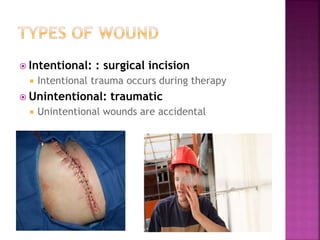
 Intentional: : surgical incision
 Intentional trauma occurs during therapy
 Unintentional: traumatic
 Unintentional wounds are accidental
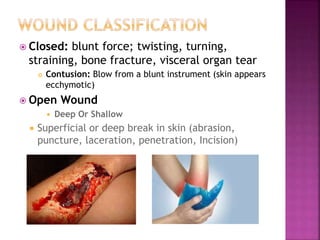
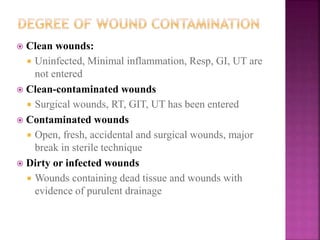
 Closed: blunt force; twisting, turning,
straining, bone fracture, visceral organ tear
 Contusion: Blow from a blunt instrument (skin appears
ecchymotic)
 Open Wound
 Deep Or Shallow
 Superficial or deep break in skin (abrasion,
puncture, laceration, penetration, Incision)
 Clean wounds:
 Uninfected, Minimal inflammation, Resp, GI, UT are
not entered
 Clean-contaminated wounds
 Surgical wounds, RT, GIT, UT has been entered
 Contaminated wounds
 Open, fresh, accidental and surgical wounds, major
break in sterile technique
 Dirty or infected wounds
 Wounds containing dead tissue and wounds with
evidence of purulent drainage
 Partial thickness wound;
Confined to the skin that is the dermis and
epidermis; heal by regeneration
 Full thickness wound;
Involving the dermis, epidermis, subcutaneous
tissue and possibly muscle and bones, require
connective tissue repair.
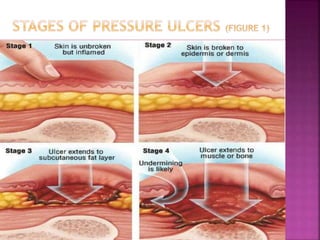
Consist of injury to the skin and/or underlying tissue,
usually over a bony prominence, as result of force alone or
in combination with movement. Previously called
decubitus ulcers, pressure sores or bed sores. This
problem occurs in both acute/long term care setting
include home
Risk Factors
 Immobility
 Elderly
 Malnutrition (protein)
 Shearing Forces
 Friction
 Decreased mental status
 Diminished Sensation
 Chronic medical condition
 Fecal and Urinary Incontinence
 Excessive body heat
Other factors;
 Poor lifting
 Incorrect positioning
 Transfer techniques
 Hard support surface
 Incorrect application of pressure releasing
devices
 Localize ischemia
 Bony skeleton
 Surface of bed
Sites of bed sores in (figure 3)
 Pressure ulcer scale for healing (figure 4)
 When pressure ulcer is present. Nurse note the
followings
1. Location
2. Size in centimeter(length, width, depth) beginning
with length [head to toe] and then width [side to
side]
3. Presence of undermining or sinus tract, location
described by position on the face of a clock, 12 o’
clock as the client head.
4. Stage of sore
5. Color of sore. The RYB color code. (red, yellow or
black)
6. Condition of wound margin
7. Clinical signs of infection
 Providing nutrition
 Maintaining skin hygiene
 Avoiding skin trauma
 Providing supportive devices
 The RYB color code. (red, yellow or black)
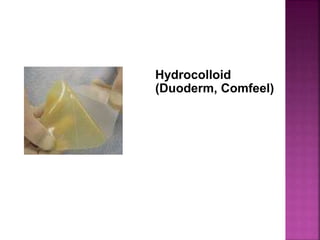
Hydrocolloid
(Duoderm, Comfeel)
There are two types of wound healing
 Primary Intention
 skin edges are approximated (closed) as in a
surgical wound
 Inflammation subsides within 24 hours
(redness, warmth, edema)
 Resurfaces within 4 to 7 days
 Secondary Intention:
Tissue loss, skin edges are not approximated
 Burn, pressure ulcer, severe laceration
 Wound left open
 Scar tissue forms
 Tertiary Intention/Primary delayed
intention:
Wounds that left open for 3 to 5 days to allow
edema or infection to resolve.
Exudates to drain and then closed with
sutures, staples or adhesive ski closures heal
by tertiary intention. This is called delayed
primary intention
 Inflammatory Response
 Serum and RBC’s form fibrin network
 Increases blood flow with scab forming in 3 to
5 days
 Proliferative Phase: 3-24 days
 Granulation tissue fills wound
 Resurfacing by epithelialization
 Remodeling maturation phase: more
than 1 year
 collagen scar reorganizes and increases in
strength
 Fewer melanocytes (pigment), lighter color
Exudate; is a material such as fluid and
cells, that has escaped from blood vessels
during the inflammatory process and is
deposited in tissue or on tissue surface.
 Serous Exudate; consist of serum
 Purulent Exudate; consist of thick serous
pus, liquefied dead tissue debris, leukocytes
and dead and living bacteria. This pus
formation is called suppuration.
 Sanguineous Exudate; consist of large
amount of red blood cells
 Hemorrhage
 Infection
 Dehiscence with possible evisceration
 Age
 Nutrition: protein and Vitamin C intake
 Obesity decreased blood flow and increased risk
for infection
 Tissue contamination: pathogens compete with
cells for oxygen and nutrition
 Hemorrhage
 Infection: purulent discharge
 Dehiscence: skin and tissue rupture
 Evisceration: protrusion of visceral organs
 Fistula: abnormal passage through two organs
or to outside of body
There are four major areas
 Moist wound healing.
 Nutrition and fluids
 Preventing infection
 positioning
Must read
Table 3(Guidelines for preventing infection and
the transmission of blood borne pathogen )
 To protect the wound from mechanical injury and
microbial contamination
 To provide or maintain moist wound healing and
thermal insulation.
 To absorb drainage or debride a wound or both
 To prevent hemorrhage
 To splint the immobilize.
Types of Dressings (table 5)
 Transparent dressing (Tegraderm, Bioclusive)
 Hydrocolloid (Duoderm, Comfeel)
 Securing dressing
 Kozier and Erb’s fundamental of nursing 8th
edition.

uint_no_6_skin_integrety.ppt

  • 1.
  • 2.
     Largest organin the body  Functions  First line of defense against microorganisms  Regulation of body temperature  Transmits sensations of pain, temperature, touch and pressure  Vitamin D production and absorption  secretes sebum  Promoting of wound healing
  • 3.
     What arewounds ?  Break in skin or mucous membranes  Many medications increase the sensitivity to sunlight can cause sunburn  From antibiotics (tetracycline and doxycycline)  Chemotherapy (methotrexate)  Psychotic drugs(tricyclic antidepressent)
  • 4.
     Intentional: :surgical incision  Intentional trauma occurs during therapy  Unintentional: traumatic  Unintentional wounds are accidental
  • 5.
     Closed: bluntforce; twisting, turning, straining, bone fracture, visceral organ tear  Contusion: Blow from a blunt instrument (skin appears ecchymotic)  Open Wound  Deep Or Shallow  Superficial or deep break in skin (abrasion, puncture, laceration, penetration, Incision)
  • 6.
     Clean wounds: Uninfected, Minimal inflammation, Resp, GI, UT are not entered  Clean-contaminated wounds  Surgical wounds, RT, GIT, UT has been entered  Contaminated wounds  Open, fresh, accidental and surgical wounds, major break in sterile technique  Dirty or infected wounds  Wounds containing dead tissue and wounds with evidence of purulent drainage
  • 7.
     Partial thicknesswound; Confined to the skin that is the dermis and epidermis; heal by regeneration  Full thickness wound; Involving the dermis, epidermis, subcutaneous tissue and possibly muscle and bones, require connective tissue repair.
  • 8.
    Consist of injuryto the skin and/or underlying tissue, usually over a bony prominence, as result of force alone or in combination with movement. Previously called decubitus ulcers, pressure sores or bed sores. This problem occurs in both acute/long term care setting include home Risk Factors  Immobility  Elderly  Malnutrition (protein)  Shearing Forces  Friction  Decreased mental status  Diminished Sensation  Chronic medical condition
  • 9.
     Fecal andUrinary Incontinence  Excessive body heat Other factors;  Poor lifting  Incorrect positioning  Transfer techniques  Hard support surface  Incorrect application of pressure releasing devices
  • 10.
     Localize ischemia Bony skeleton  Surface of bed Sites of bed sores in (figure 3)
  • 12.
     Pressure ulcerscale for healing (figure 4)  When pressure ulcer is present. Nurse note the followings 1. Location 2. Size in centimeter(length, width, depth) beginning with length [head to toe] and then width [side to side] 3. Presence of undermining or sinus tract, location described by position on the face of a clock, 12 o’ clock as the client head. 4. Stage of sore 5. Color of sore. The RYB color code. (red, yellow or black) 6. Condition of wound margin 7. Clinical signs of infection
  • 13.
     Providing nutrition Maintaining skin hygiene  Avoiding skin trauma  Providing supportive devices  The RYB color code. (red, yellow or black)
  • 14.
  • 15.
    There are twotypes of wound healing  Primary Intention  skin edges are approximated (closed) as in a surgical wound  Inflammation subsides within 24 hours (redness, warmth, edema)  Resurfaces within 4 to 7 days  Secondary Intention: Tissue loss, skin edges are not approximated  Burn, pressure ulcer, severe laceration  Wound left open  Scar tissue forms
  • 16.
     Tertiary Intention/Primarydelayed intention: Wounds that left open for 3 to 5 days to allow edema or infection to resolve. Exudates to drain and then closed with sutures, staples or adhesive ski closures heal by tertiary intention. This is called delayed primary intention
  • 17.
     Inflammatory Response Serum and RBC’s form fibrin network  Increases blood flow with scab forming in 3 to 5 days  Proliferative Phase: 3-24 days  Granulation tissue fills wound  Resurfacing by epithelialization  Remodeling maturation phase: more than 1 year  collagen scar reorganizes and increases in strength  Fewer melanocytes (pigment), lighter color
  • 18.
    Exudate; is amaterial such as fluid and cells, that has escaped from blood vessels during the inflammatory process and is deposited in tissue or on tissue surface.  Serous Exudate; consist of serum  Purulent Exudate; consist of thick serous pus, liquefied dead tissue debris, leukocytes and dead and living bacteria. This pus formation is called suppuration.  Sanguineous Exudate; consist of large amount of red blood cells
  • 19.
     Hemorrhage  Infection Dehiscence with possible evisceration
  • 20.
     Age  Nutrition:protein and Vitamin C intake  Obesity decreased blood flow and increased risk for infection  Tissue contamination: pathogens compete with cells for oxygen and nutrition  Hemorrhage  Infection: purulent discharge  Dehiscence: skin and tissue rupture  Evisceration: protrusion of visceral organs  Fistula: abnormal passage through two organs or to outside of body
  • 21.
    There are fourmajor areas  Moist wound healing.  Nutrition and fluids  Preventing infection  positioning Must read Table 3(Guidelines for preventing infection and the transmission of blood borne pathogen )
  • 22.
     To protectthe wound from mechanical injury and microbial contamination  To provide or maintain moist wound healing and thermal insulation.  To absorb drainage or debride a wound or both  To prevent hemorrhage  To splint the immobilize. Types of Dressings (table 5)  Transparent dressing (Tegraderm, Bioclusive)  Hydrocolloid (Duoderm, Comfeel)  Securing dressing
  • 23.
     Kozier andErb’s fundamental of nursing 8th edition.