United Healthcare
May 31, 2012
WHICH SCREEN IS YOUR “FIRST SCREEN?”
WHAT DOES “MOBILE” MEAN FOR EXECS AT YOUR COMPANY?
THE SMARTPHONE: MASS ADOPTION IS HERE

 • 89% of online consumers (15+) own
  a cell phone
     – 48% own a smartphone
     – 52% own a feature phone


 • Worldwide smartphone market grew
  61% in 2011 (exceeding a 55%
  estimate) Source: IDC.

 • 19% of US Consumers own tablets
  (Pew, Jan 2012)

 • The smartphone paradox:
  penetration among young people in
  the lowest income bracket exceeds
  older people in wealthiest bracket
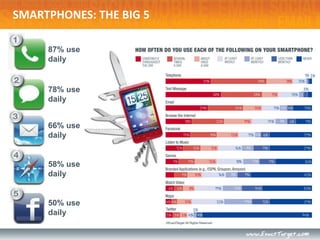
SMARTPHONES: THE BIG 5

     87% use
     daily


     78% use
     daily


     66% use
     daily


     58% use
     daily


     50% use
     daily
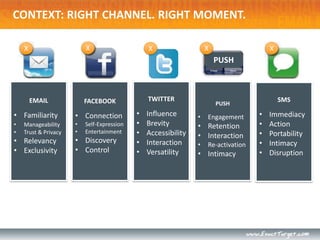
CONTEXT: RIGHT CHANNEL. RIGHT MOMENT.

    X                     X                     X                   X                   X
                                                                        PUSH


        EMAIL             FACEBOOK              TWITTER                                     SMS
                                                                        PUSH
• Familiarity         • Connection          •   Influence       •   Engagement      •   Immediacy
•   Manageability     •   Self-Expression   •   Brevity         • Retention         •   Action
•   Trust & Privacy   •   Entertainment     •   Accessibility                       •   Portability
                                                                • Interaction
• Relevancy           • Discovery           •   Interaction                         •   Intimacy
                                                                •   Re-activation
• Exclusivity         • Control             •   Versatility     • Intimacy          •   Disruption
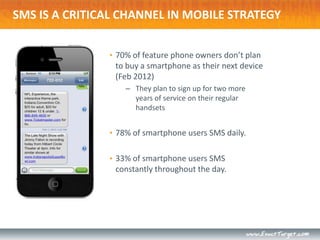
SMS IS A CRITICAL CHANNEL IN MOBILE STRATEGY


               • 70% of feature phone owners don’t plan
                to buy a smartphone as their next device
                (Feb 2012)
                   – They plan to sign up for two more
                     years of service on their regular
                     handsets


               • 78% of smartphone users SMS daily.


               • 33% of smartphone users SMS
                constantly throughout the day.
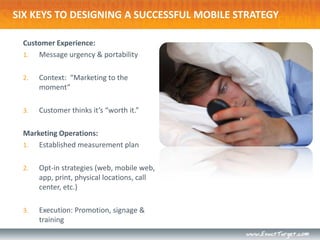
SIX KEYS TO DESIGNING A SUCCESSFUL MOBILE STRATEGY

 Customer Experience:
 1. Message urgency & portability


 2.   Context: “Marketing to the
      moment”

 3.   Customer thinks it’s “worth it.”

 Marketing Operations:
 1. Established measurement plan


 2.   Opt-in strategies (web, mobile web,
      app, print, physical locations, call
      center, etc.)

 3.   Execution: Promotion, signage &
      training

Uhc mobile onsite 5.31.2012

  • 1.
  • 2.
    WHICH SCREEN ISYOUR “FIRST SCREEN?”
  • 3.
    WHAT DOES “MOBILE”MEAN FOR EXECS AT YOUR COMPANY?
  • 4.
    THE SMARTPHONE: MASSADOPTION IS HERE • 89% of online consumers (15+) own a cell phone – 48% own a smartphone – 52% own a feature phone • Worldwide smartphone market grew 61% in 2011 (exceeding a 55% estimate) Source: IDC. • 19% of US Consumers own tablets (Pew, Jan 2012) • The smartphone paradox: penetration among young people in the lowest income bracket exceeds older people in wealthiest bracket
  • 6.
    SMARTPHONES: THE BIG5 87% use daily 78% use daily 66% use daily 58% use daily 50% use daily
  • 11.
    CONTEXT: RIGHT CHANNEL.RIGHT MOMENT. X X X X X PUSH EMAIL FACEBOOK TWITTER SMS PUSH • Familiarity • Connection • Influence • Engagement • Immediacy • Manageability • Self-Expression • Brevity • Retention • Action • Trust & Privacy • Entertainment • Accessibility • Portability • Interaction • Relevancy • Discovery • Interaction • Intimacy • Re-activation • Exclusivity • Control • Versatility • Intimacy • Disruption
  • 12.
    SMS IS ACRITICAL CHANNEL IN MOBILE STRATEGY • 70% of feature phone owners don’t plan to buy a smartphone as their next device (Feb 2012) – They plan to sign up for two more years of service on their regular handsets • 78% of smartphone users SMS daily. • 33% of smartphone users SMS constantly throughout the day.
  • 13.
    SIX KEYS TODESIGNING A SUCCESSFUL MOBILE STRATEGY Customer Experience: 1. Message urgency & portability 2. Context: “Marketing to the moment” 3. Customer thinks it’s “worth it.” Marketing Operations: 1. Established measurement plan 2. Opt-in strategies (web, mobile web, app, print, physical locations, call center, etc.) 3. Execution: Promotion, signage & training

Editor's Notes

  • #3 The first question: “Which screen is your ‘first’ screen?” Marketers often think of the television or the computer as their “first” screen, with the mobile device being called “The Third Screen.”Companies like ESPN are now referring to the mobile device as their new “first” screen, which is groundbreaking for a company with such a large television and website. A provocative question to open any mobile conversation is: “Which screen is your first screen?”
  • #4 - Defining mobile is critical for success—so make sure to ask “What does ‘mobile’ mean for your executives?”- Just like “Design” can mean content areas or templates, or a number of things, mobile can mean mobile email, ads, apps, messaging- Make sure to ask this question as an opener into a broader discussion around mobile goals, and how those tie with executive initiatives.
  • #5 Mobile is growing quickly. Mobile is ubiquitous with 89% of online consumers owning a cell phone. 41% own a smartphoneBUT 48% own a feature phone
  • #7 JEFF Let’s take a look at the activities consumers are doing on their phones: - Talking on the phone, of course78% use text messaging daily66% use email dailyFollowed by internet and Facebook Also to note: 15% are using Twitter daily RESULT: Consumers are using the smartphone as an integrated mobile experience, searching for content, communicating and doing it across channels. Starbucks has now processed more than 26 million mobile payments since January, - 1 in 4 transactions done via mobile.
  • #11 More devices: Forrester forecasts nearly 100 million smartphones by the end of 2011More diverse activities: not just text and web surfing. Apps, etc. More marketing & shopping: Advertisers will spend more than $1 billion in the US in 2011 to reach consumers through mobile display and search ads on mobile devicesGiven smalls creens and limited input options: Immediacy: timelilneess not limited to an exact measure of minutes or hoursSimplicity: must be revisited as new technologies emergeContext: personal and intimate devices (they’re not shared). Past behavior, location, time of day, etc. must minimize steps and manual entry to deliver more targeted marketingSituation: the current location, altitutde, environmental conditions, and the speed the consumer is experiencingPreferences: the history and personal decisions the customer has shared with your of with his social networksAttitudes: the feelings or emotions implied by the customer’s actions or and logisticsNOTE: “Context is Big Mother, Not Big Brother” according to Julie Ask
  • #12 JEFF