Types of shock and management
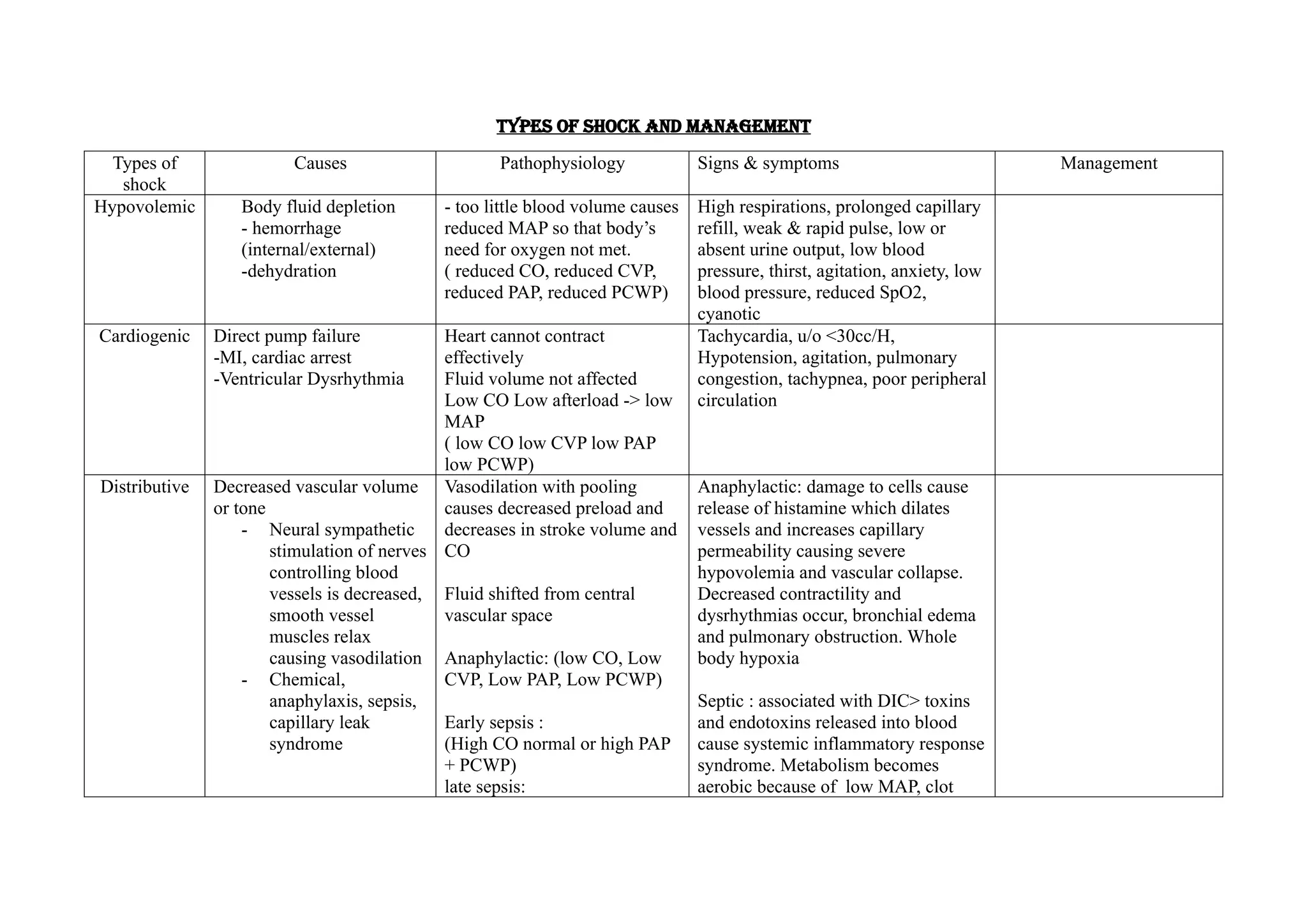
Types of
shock
Causes Pathophysiology Signs & symptoms Management
Hypovolemic Body fluid depletion
- hemorrhage
(internal/external)
-dehydration
- too little blood volume causes
reduced MAP so that body’s
need for oxygen not met.
( reduced CO, reduced CVP,
reduced PAP, reduced PCWP)
High respirations, prolonged capillary
refill, weak & rapid pulse, low or
absent urine output, low blood
pressure, thirst, agitation, anxiety, low
blood pressure, reduced SpO2,
cyanotic
Cardiogenic Direct pump failure
-MI, cardiac arrest
-Ventricular Dysrhythmia
Heart cannot contract
effectively
Fluid volume not affected
Low CO Low afterload -> low
MAP
( low CO low CVP low PAP
low PCWP)
Tachycardia, u/o <30cc/H,
Hypotension, agitation, pulmonary
congestion, tachypnea, poor peripheral
circulation
Distributive Decreased vascular volume
or tone
- Neural sympathetic
stimulation of nerves
controlling blood
vessels is decreased,
smooth vessel
muscles relax
causing vasodilation
- Chemical,
anaphylaxis, sepsis,
capillary leak
syndrome
Vasodilation with pooling
causes decreased preload and
decreases in stroke volume and
CO
Fluid shifted from central
vascular space
Anaphylactic: (low CO, Low
CVP, Low PAP, Low PCWP)
Early sepsis :
(High CO normal or high PAP
+ PCWP)
late sepsis:
Anaphylactic: damage to cells cause
release of histamine which dilates
vessels and increases capillary
permeability causing severe
hypovolemia and vascular collapse.
Decreased contractility and
dysrhythmias occur, bronchial edema
and pulmonary obstruction. Whole
body hypoxia
Septic : associated with DIC> toxins
and endotoxins released into blood
cause systemic inflammatory response
syndrome. Metabolism becomes
aerobic because of low MAP, clot
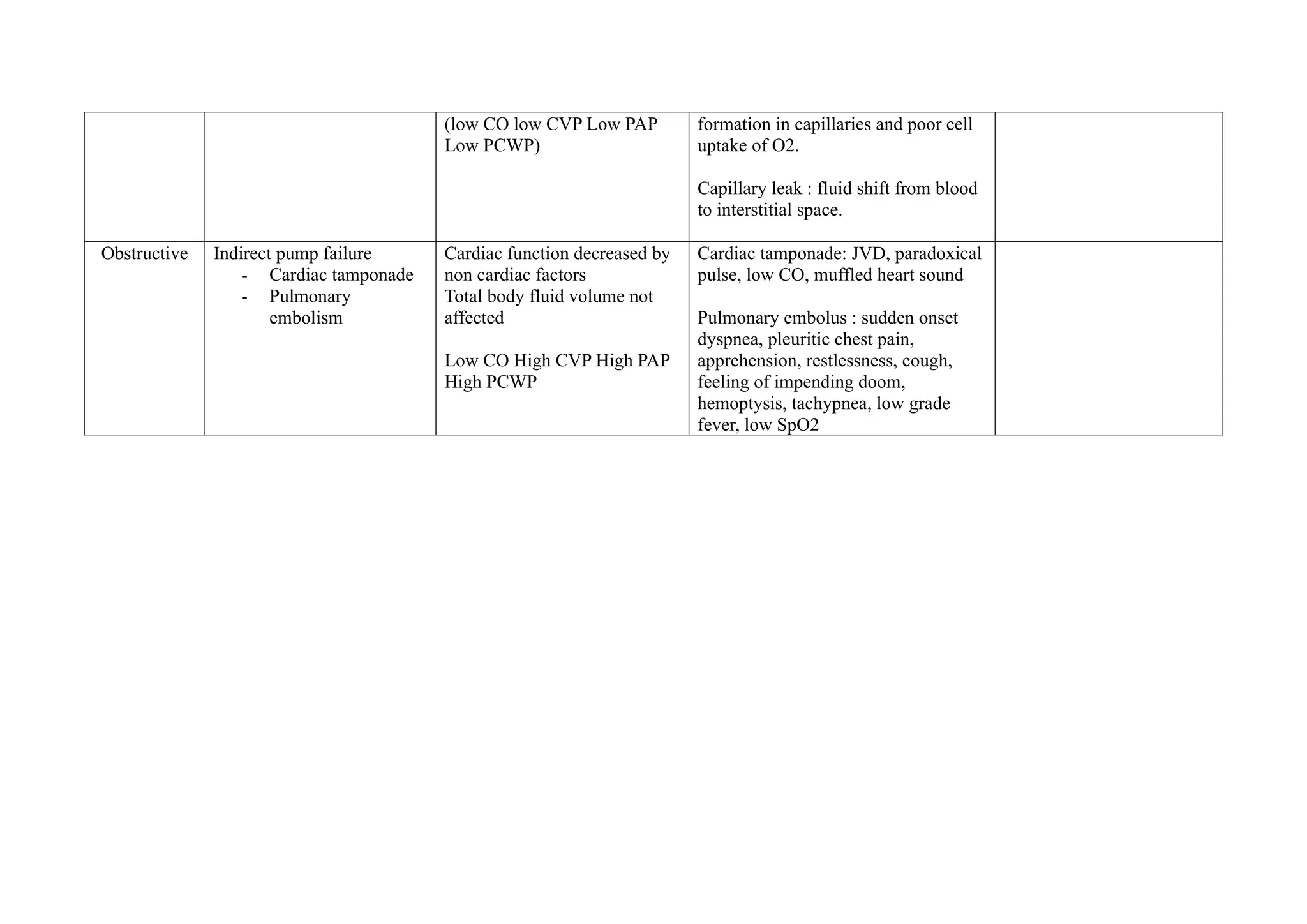
(low CO low CVP Low PAP
Low PCWP)
formation in capillaries and poor cell
uptake of O2.
Capillary leak : fluid shift from blood
to interstitial space.
Obstructive Indirect pump failure
- Cardiac tamponade
- Pulmonary
embolism
Cardiac function decreased by
non cardiac factors
Total body fluid volume not
affected
Low CO High CVP High PAP
High PCWP
Cardiac tamponade: JVD, paradoxical
pulse, low CO, muffled heart sound
Pulmonary embolus : sudden onset
dyspnea, pleuritic chest pain,
apprehension, restlessness, cough,
feeling of impending doom,
hemoptysis, tachypnea, low grade
fever, low SpO2
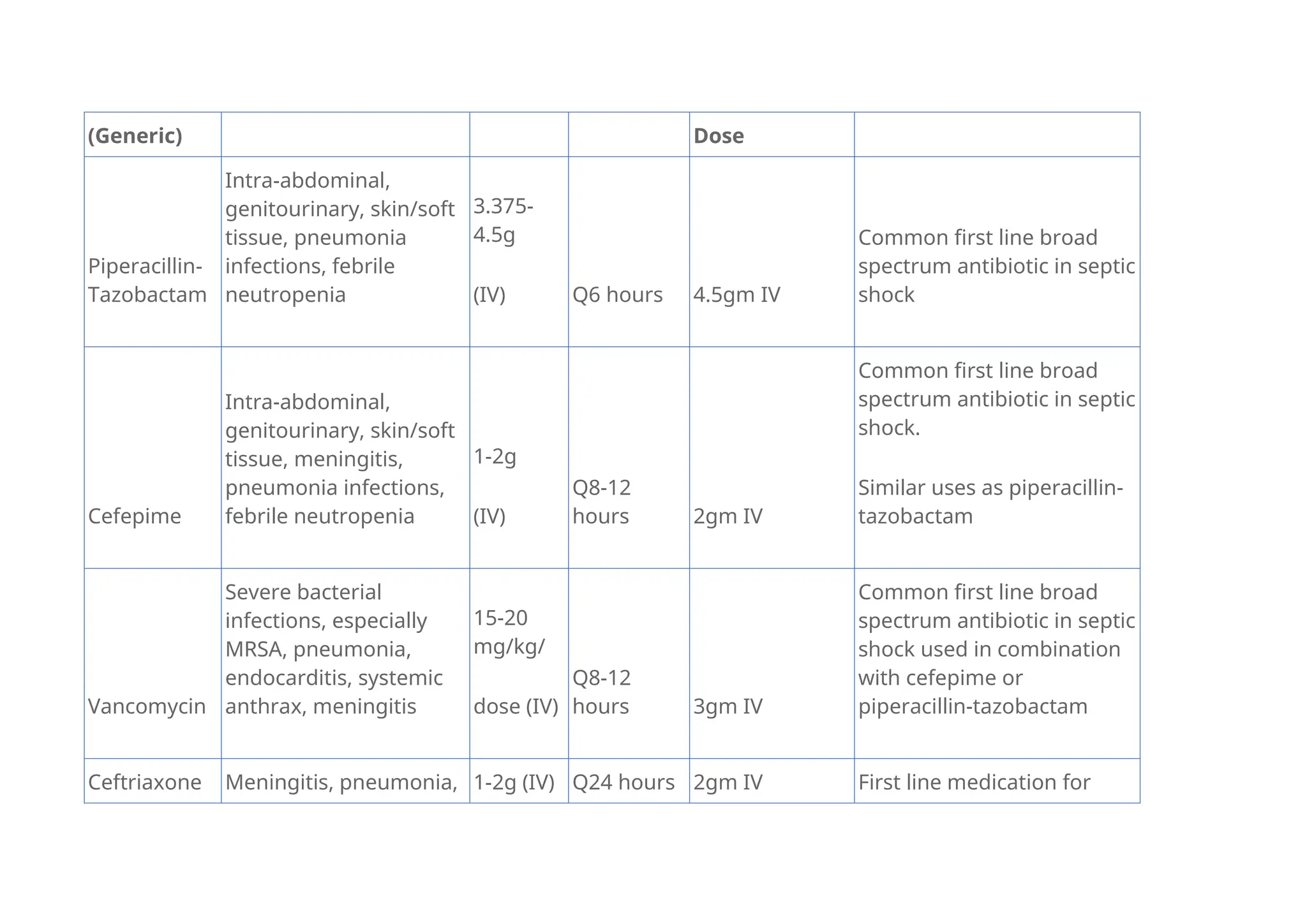
Drug name Potential use Dose Frequency Maximum Cautions / Comments
(Generic) Dose
Piperacillin-
Tazobactam
Intra-abdominal,
genitourinary, skin/soft
tissue, pneumonia
infections, febrile
neutropenia
3.375-
4.5g
(IV) Q6 hours 4.5gm IV
Common first line broad
spectrum antibiotic in septic
shock
Cefepime
Intra-abdominal,
genitourinary, skin/soft
tissue, meningitis,
pneumonia infections,
febrile neutropenia
1-2g
(IV)
Q8-12
hours 2gm IV
Common first line broad
spectrum antibiotic in septic
shock.
Similar uses as piperacillin-
tazobactam
Vancomycin
Severe bacterial
infections, especially
MRSA, pneumonia,
endocarditis, systemic
anthrax, meningitis
15-20
mg/kg/
dose (IV)
Q8-12
hours 3gm IV
Common first line broad
spectrum antibiotic in septic
shock used in combination
with cefepime or
piperacillin-tazobactam
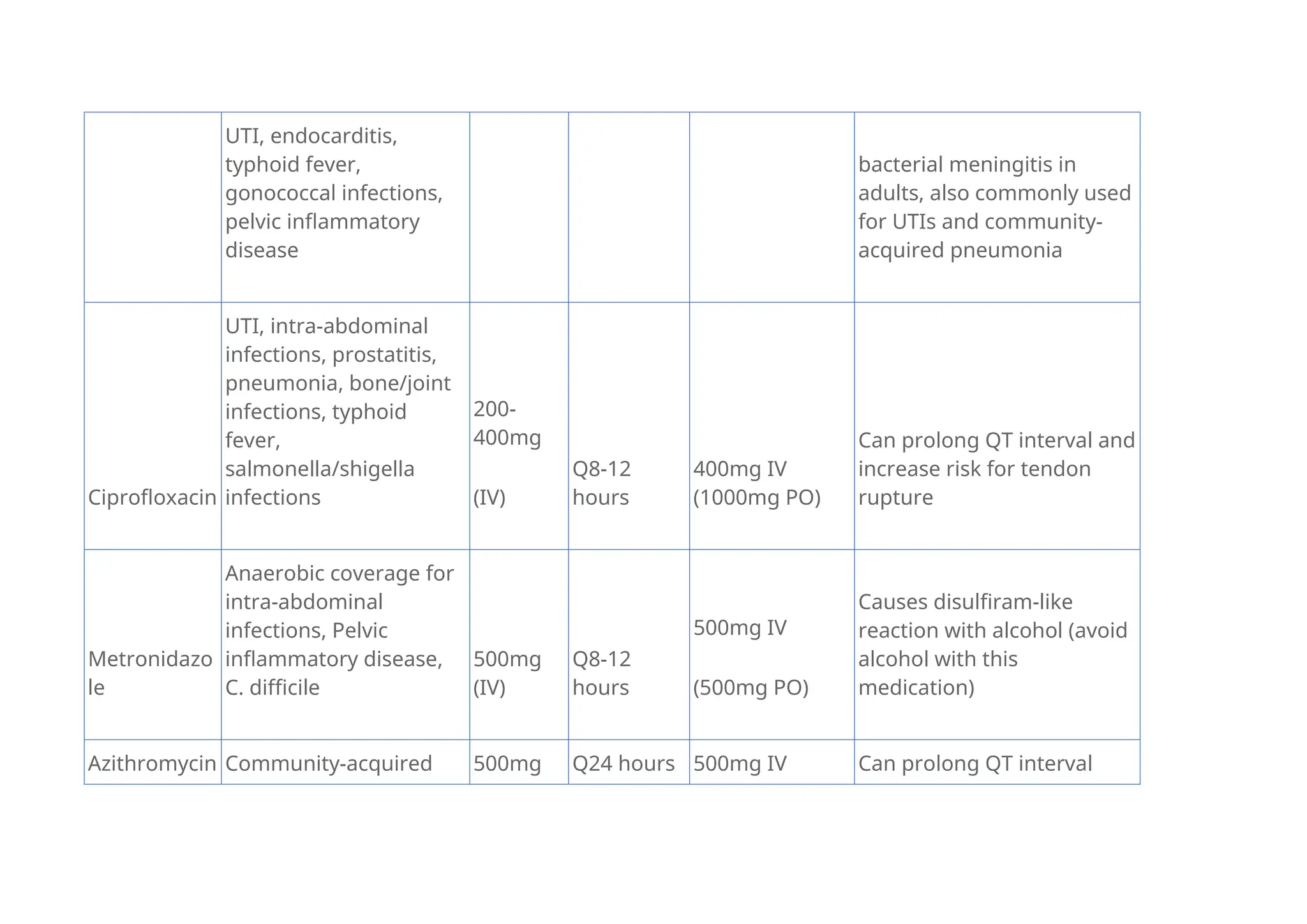
Ceftriaxone Meningitis, pneumonia, 1-2g (IV) Q24 hours 2gm IV First line medication for
UTI, endocarditis,
typhoid fever,
gonococcal infections,
pelvic inflammatory
disease
bacterial meningitis in
adults, also commonly used
for UTIs and community-
acquired pneumonia
Ciprofloxacin
UTI, intra-abdominal
infections, prostatitis,
pneumonia, bone/joint
infections, typhoid
fever,
salmonella/shigella
infections
200-
400mg
(IV)
Q8-12
hours
400mg IV
(1000mg PO)
Can prolong QT interval and
increase risk for tendon
rupture
Metronidazo
le
Anaerobic coverage for
intra-abdominal
infections, Pelvic
inflammatory disease,
C. difficile
500mg
(IV)
Q8-12
hours
500mg IV
(500mg PO)
Causes disulfiram-like
reaction with alcohol (avoid
alcohol with this
medication)
Azithromycin Community-acquired 500mg Q24 hours 500mg IV Can prolong QT interval
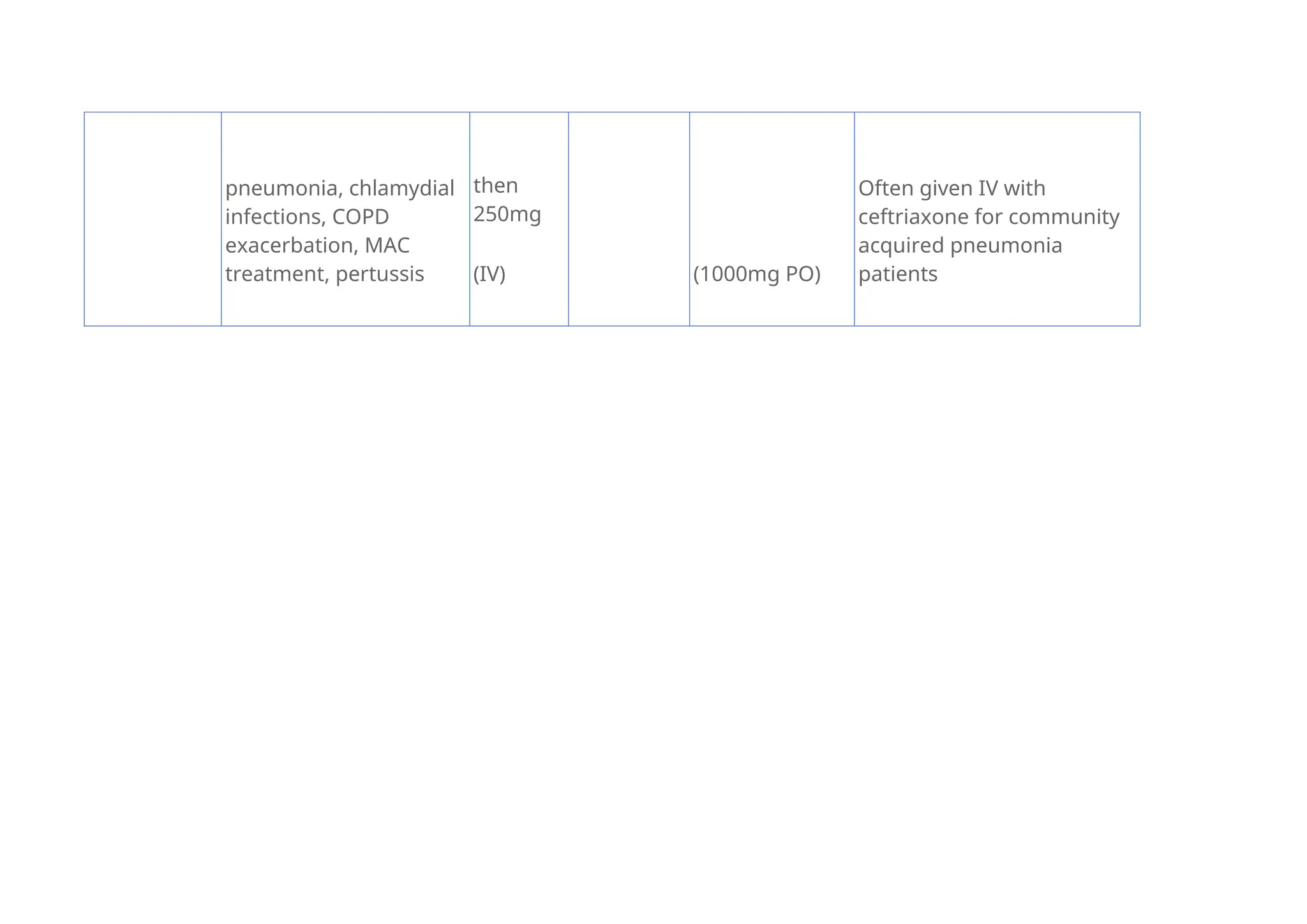
pneumonia, chlamydial
infections, COPD
exacerbation, MAC
treatment, pertussis
then
250mg
(IV) (1000mg PO)
Often given IV with
ceftriaxone for community
acquired pneumonia
patients
Types of shock and management and all about shock.docx

Types of shock and management and all about shock.docx

  • 1.
    Types of shockand management Types of shock Causes Pathophysiology Signs & symptoms Management Hypovolemic Body fluid depletion - hemorrhage (internal/external) -dehydration - too little blood volume causes reduced MAP so that body’s need for oxygen not met. ( reduced CO, reduced CVP, reduced PAP, reduced PCWP) High respirations, prolonged capillary refill, weak & rapid pulse, low or absent urine output, low blood pressure, thirst, agitation, anxiety, low blood pressure, reduced SpO2, cyanotic Cardiogenic Direct pump failure -MI, cardiac arrest -Ventricular Dysrhythmia Heart cannot contract effectively Fluid volume not affected Low CO Low afterload -> low MAP ( low CO low CVP low PAP low PCWP) Tachycardia, u/o <30cc/H, Hypotension, agitation, pulmonary congestion, tachypnea, poor peripheral circulation Distributive Decreased vascular volume or tone - Neural sympathetic stimulation of nerves controlling blood vessels is decreased, smooth vessel muscles relax causing vasodilation - Chemical, anaphylaxis, sepsis, capillary leak syndrome Vasodilation with pooling causes decreased preload and decreases in stroke volume and CO Fluid shifted from central vascular space Anaphylactic: (low CO, Low CVP, Low PAP, Low PCWP) Early sepsis : (High CO normal or high PAP + PCWP) late sepsis: Anaphylactic: damage to cells cause release of histamine which dilates vessels and increases capillary permeability causing severe hypovolemia and vascular collapse. Decreased contractility and dysrhythmias occur, bronchial edema and pulmonary obstruction. Whole body hypoxia Septic : associated with DIC> toxins and endotoxins released into blood cause systemic inflammatory response syndrome. Metabolism becomes aerobic because of low MAP, clot
  • 2.
    (low CO lowCVP Low PAP Low PCWP) formation in capillaries and poor cell uptake of O2. Capillary leak : fluid shift from blood to interstitial space. Obstructive Indirect pump failure - Cardiac tamponade - Pulmonary embolism Cardiac function decreased by non cardiac factors Total body fluid volume not affected Low CO High CVP High PAP High PCWP Cardiac tamponade: JVD, paradoxical pulse, low CO, muffled heart sound Pulmonary embolus : sudden onset dyspnea, pleuritic chest pain, apprehension, restlessness, cough, feeling of impending doom, hemoptysis, tachypnea, low grade fever, low SpO2
  • 3.
    Drug name Potentialuse Dose Frequency Maximum Cautions / Comments
  • 4.
    (Generic) Dose Piperacillin- Tazobactam Intra-abdominal, genitourinary, skin/soft tissue,pneumonia infections, febrile neutropenia 3.375- 4.5g (IV) Q6 hours 4.5gm IV Common first line broad spectrum antibiotic in septic shock Cefepime Intra-abdominal, genitourinary, skin/soft tissue, meningitis, pneumonia infections, febrile neutropenia 1-2g (IV) Q8-12 hours 2gm IV Common first line broad spectrum antibiotic in septic shock. Similar uses as piperacillin- tazobactam Vancomycin Severe bacterial infections, especially MRSA, pneumonia, endocarditis, systemic anthrax, meningitis 15-20 mg/kg/ dose (IV) Q8-12 hours 3gm IV Common first line broad spectrum antibiotic in septic shock used in combination with cefepime or piperacillin-tazobactam Ceftriaxone Meningitis, pneumonia, 1-2g (IV) Q24 hours 2gm IV First line medication for
  • 5.
    UTI, endocarditis, typhoid fever, gonococcalinfections, pelvic inflammatory disease bacterial meningitis in adults, also commonly used for UTIs and community- acquired pneumonia Ciprofloxacin UTI, intra-abdominal infections, prostatitis, pneumonia, bone/joint infections, typhoid fever, salmonella/shigella infections 200- 400mg (IV) Q8-12 hours 400mg IV (1000mg PO) Can prolong QT interval and increase risk for tendon rupture Metronidazo le Anaerobic coverage for intra-abdominal infections, Pelvic inflammatory disease, C. difficile 500mg (IV) Q8-12 hours 500mg IV (500mg PO) Causes disulfiram-like reaction with alcohol (avoid alcohol with this medication) Azithromycin Community-acquired 500mg Q24 hours 500mg IV Can prolong QT interval
  • 6.
    pneumonia, chlamydial infections, COPD exacerbation,MAC treatment, pertussis then 250mg (IV) (1000mg PO) Often given IV with ceftriaxone for community acquired pneumonia patients