24PEE303 – ELECTRICAL MACHINES I
UNIT - II
DC GENERATOR
TYPES OF DC GENERATORS
In practical DC generators, the magnetic field is produced by
electromagnets rather than permanent magnets. The DC generators
are then classified based on the connection of field winding in the
generator circuit. On this basis, DC generators are classified into
the following two types:
•Separately Excited DC Generators
•Self-Excited DC Generators
TYPES OF DC GENERATORS
SEPARATELY EXCITED DC GENERATOR
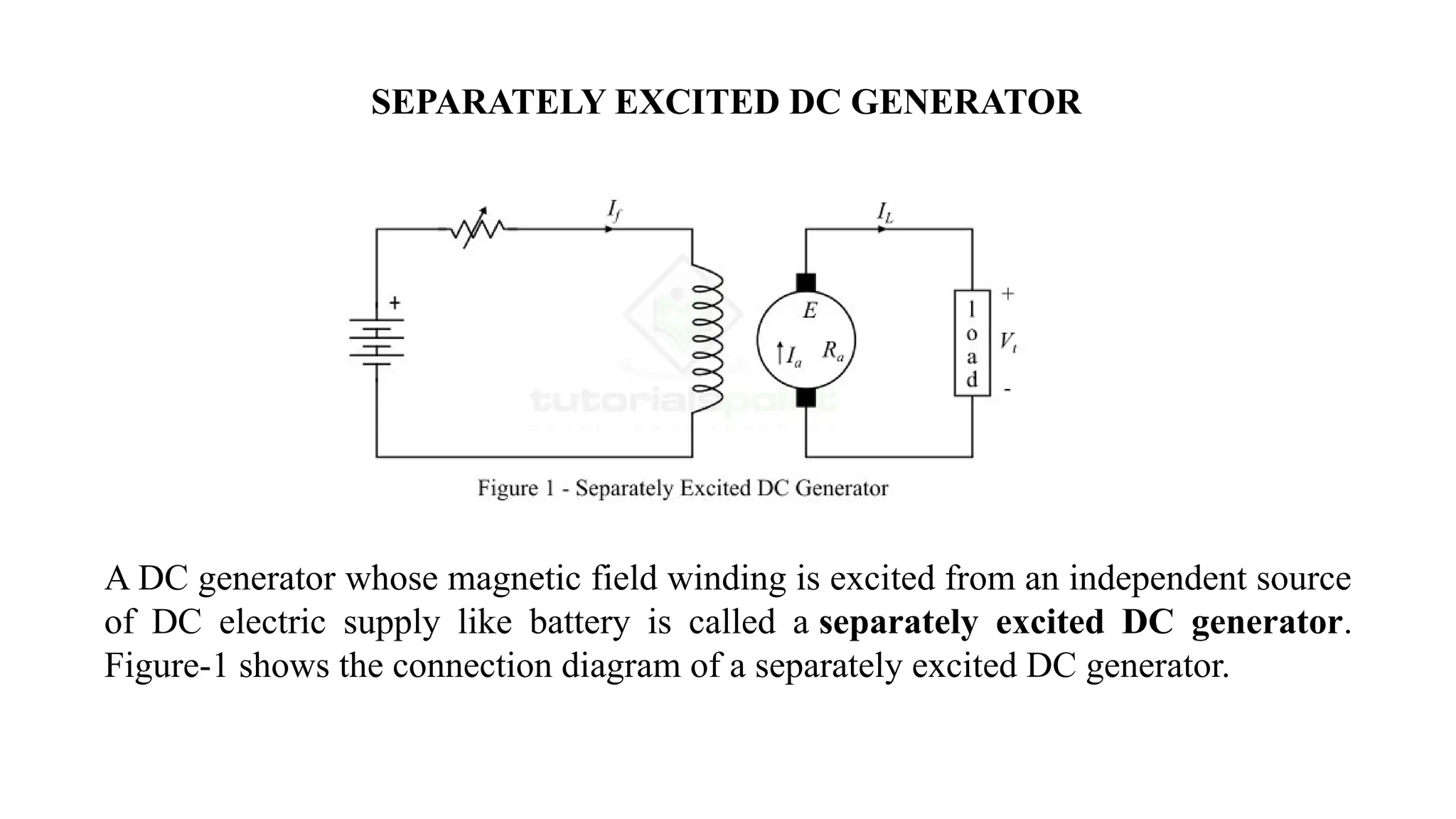
A DC generator whose magnetic field winding is excited from an independent source
of DC electric supply like battery is called a separately excited DC generator.
Figure-1 shows the connection diagram of a separately excited DC generator.
• The type of DC generator whose magnetic field winding is excited
from the output of the generator itself is known as a self-excited DC
generator. Depending upon the manner in which the field winding is
connected to the armature, self-excited DC generators are classified
into the following three types
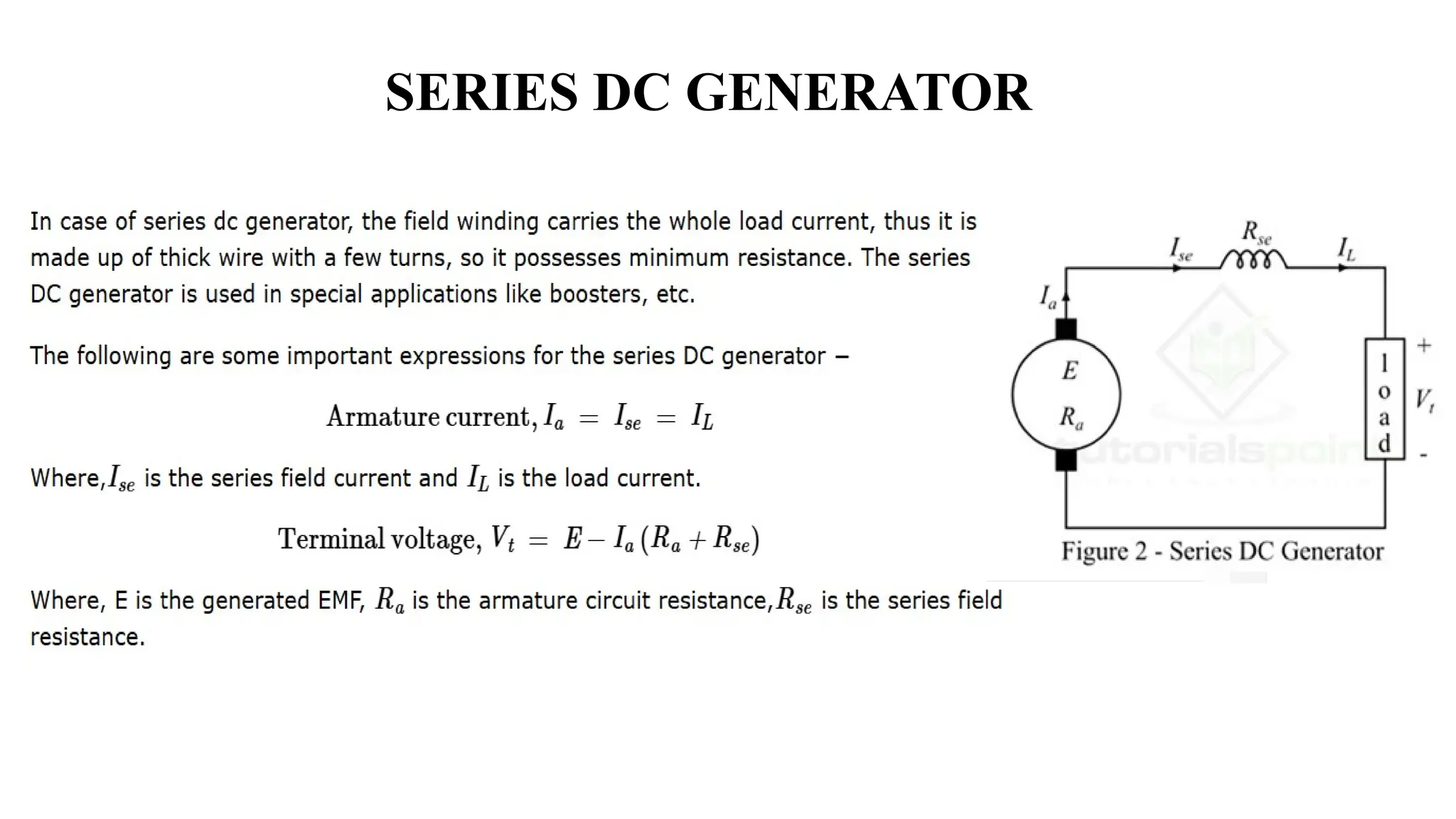
• Series DC generator
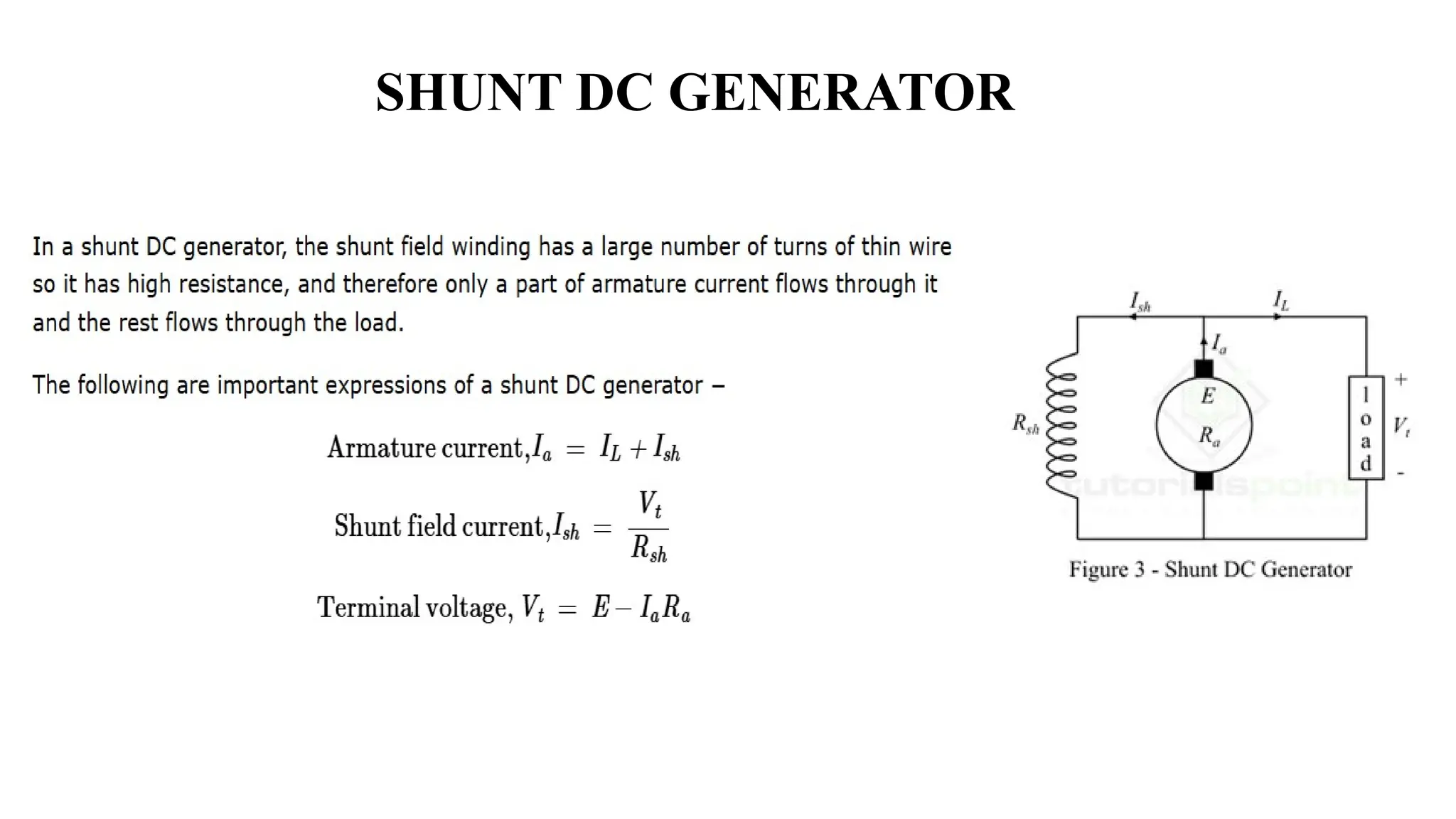
• Shunt DC generator
• Compound DC generator
SELF-EXCITED DC GENERATORS
SERIES DC GENERATOR
SHUNT DC GENERATOR
COMPOUND DC GENERATOR
A compound dc generator is one which has two sets of field windings
on each magnetic pole one is in series and the other is in parallel with the
armature winding. The compound dc generators may further be divided
into the following two types −
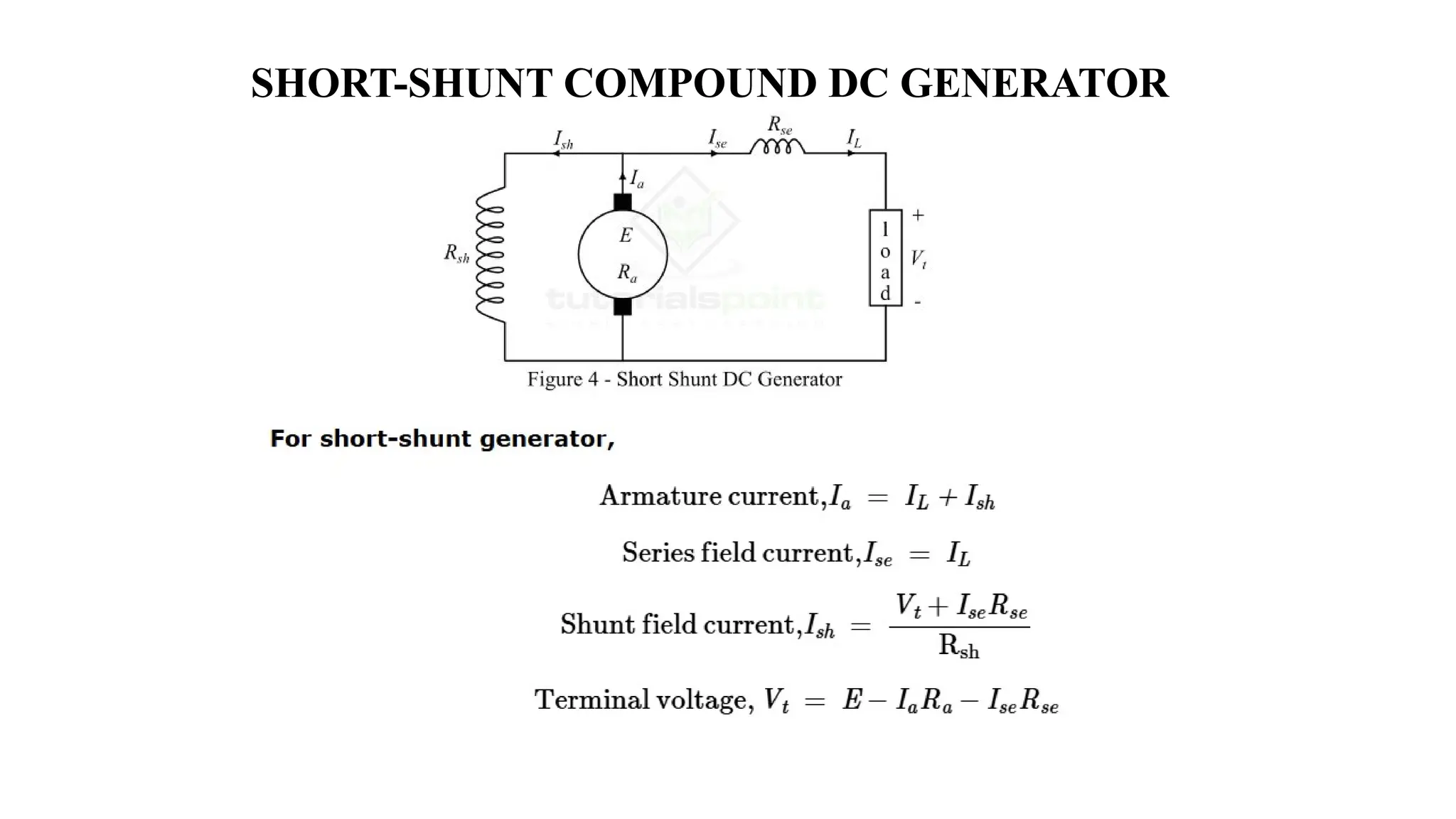
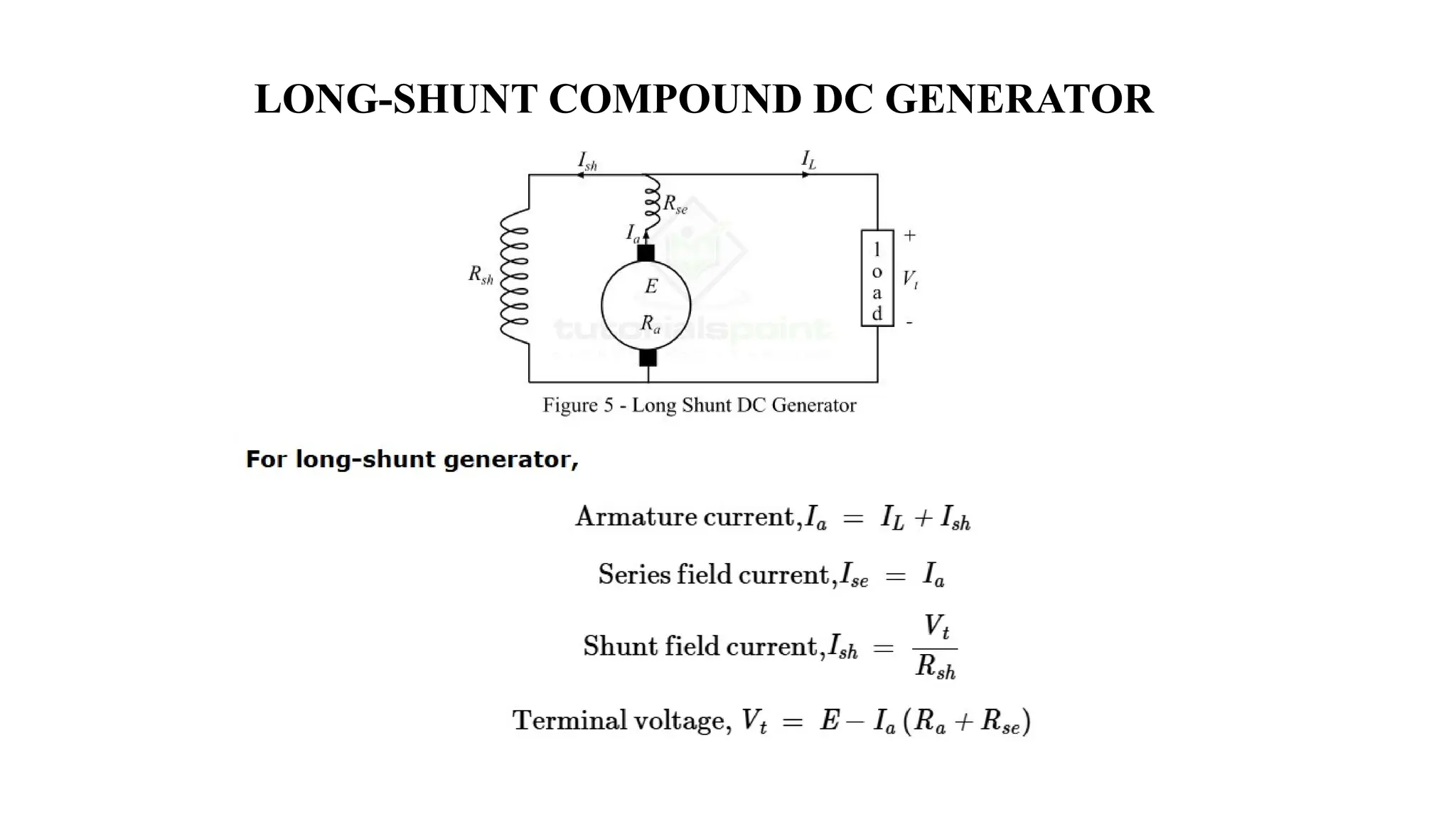
•Short-shunt Compound DC Generator
•Long-shunt Compound DC Generator
SHORT-SHUNT COMPOUND DC GENERATOR
LONG-SHUNT COMPOUND DC GENERATOR
APPLICATIONS OF DC GENERATORS
SEPARATELY EXCITED DC GENERATORS
A separately excited DC generator requires an independent external DC source for the excitation
of field winding. Thus, it is expensive and being rarely used. Following are some application of
separately excited DC generators:
• These are able to produce a wide range of voltage output, they are primarily used in
laboratory and commercial testing.
• These are used in speed regulation tests.
• These generators operate in a stable condition with any change in field excitation. Therefore,
they are also used in supplying power to the DC motors, whose speed being to be
controlled.
SERIES DC GENERATORS
A series DC generator has limited applications. Some of the applications of a series DC generator
are as follows:
• The rising characteristics of a series DC generator makes it suitable for voltage boosting
applications in the feeders in the various types of distribution systems.
• A series DC generator has the tendency to supply constant load current. Hence, several series
generators can be connected in series to provide high voltage DC power transmission at
constant load current.
• The series DC generators are also used in supplying field excitation current in DC locomotives
for regenerative breaking.
• The series generators also find applications in series arc lightening.
SHUNT DC GENERATORS
A shunt DC generator produces constant terminal voltage for small distance operations. Therefore,
these are used in following applications:
• They are used for battery charging applications.
• Shunt DC generators with field regulators are used for lighting and power supply purposes.
• Use for giving excitation to the alternators.
COMPOUND DC GENERATORS
The compound DC generators are used in following applications:
• The over compounded generators have ability to compensate voltage drop in the
transmission lines and tends to maintain constant voltage at the consumer's end. Therefore,
the over compounded generators are used in supplying loads through long transmission
lines.
• Cumulative compound generators are used for supplying power to DC motors.
• Cumulative compound generators are used for lighting, power supply purposes and for
heavy power services, etc.
• The differential compound generators are used for arc welding purposes where a large
voltage drop and constant current is required.

Types of DC Generators: Self and Separately Excited

  • 1.
    24PEE303 – ELECTRICALMACHINES I UNIT - II DC GENERATOR TYPES OF DC GENERATORS
  • 2.
    In practical DCgenerators, the magnetic field is produced by electromagnets rather than permanent magnets. The DC generators are then classified based on the connection of field winding in the generator circuit. On this basis, DC generators are classified into the following two types: •Separately Excited DC Generators •Self-Excited DC Generators TYPES OF DC GENERATORS
  • 3.
    SEPARATELY EXCITED DCGENERATOR A DC generator whose magnetic field winding is excited from an independent source of DC electric supply like battery is called a separately excited DC generator. Figure-1 shows the connection diagram of a separately excited DC generator.
  • 4.
    • The typeof DC generator whose magnetic field winding is excited from the output of the generator itself is known as a self-excited DC generator. Depending upon the manner in which the field winding is connected to the armature, self-excited DC generators are classified into the following three types • Series DC generator • Shunt DC generator • Compound DC generator SELF-EXCITED DC GENERATORS
  • 5.
  • 6.
  • 7.
    COMPOUND DC GENERATOR Acompound dc generator is one which has two sets of field windings on each magnetic pole one is in series and the other is in parallel with the armature winding. The compound dc generators may further be divided into the following two types − •Short-shunt Compound DC Generator •Long-shunt Compound DC Generator
  • 8.
  • 9.
  • 10.
    APPLICATIONS OF DCGENERATORS SEPARATELY EXCITED DC GENERATORS A separately excited DC generator requires an independent external DC source for the excitation of field winding. Thus, it is expensive and being rarely used. Following are some application of separately excited DC generators: • These are able to produce a wide range of voltage output, they are primarily used in laboratory and commercial testing. • These are used in speed regulation tests. • These generators operate in a stable condition with any change in field excitation. Therefore, they are also used in supplying power to the DC motors, whose speed being to be controlled.
  • 11.
    SERIES DC GENERATORS Aseries DC generator has limited applications. Some of the applications of a series DC generator are as follows: • The rising characteristics of a series DC generator makes it suitable for voltage boosting applications in the feeders in the various types of distribution systems. • A series DC generator has the tendency to supply constant load current. Hence, several series generators can be connected in series to provide high voltage DC power transmission at constant load current. • The series DC generators are also used in supplying field excitation current in DC locomotives for regenerative breaking. • The series generators also find applications in series arc lightening.
  • 12.
    SHUNT DC GENERATORS Ashunt DC generator produces constant terminal voltage for small distance operations. Therefore, these are used in following applications: • They are used for battery charging applications. • Shunt DC generators with field regulators are used for lighting and power supply purposes. • Use for giving excitation to the alternators.
  • 13.
    COMPOUND DC GENERATORS Thecompound DC generators are used in following applications: • The over compounded generators have ability to compensate voltage drop in the transmission lines and tends to maintain constant voltage at the consumer's end. Therefore, the over compounded generators are used in supplying loads through long transmission lines. • Cumulative compound generators are used for supplying power to DC motors. • Cumulative compound generators are used for lighting, power supply purposes and for heavy power services, etc. • The differential compound generators are used for arc welding purposes where a large voltage drop and constant current is required.