Types of Activation
Functions
3/7/2024 Department of Biomedical Engineering, SRMIST, KTR 1
Activation Function
• The activation function decides whether a neuron should be activated or not
by calculating the weighted sum and further adding bias to it. The purpose of
the activation function is to introduce non-linearity into the output of a
neuron.
• Types of Non-linear Activation Function 1.Sigmoid 2.tanh 3.ReLU
What’s the “Best”Activation Function?
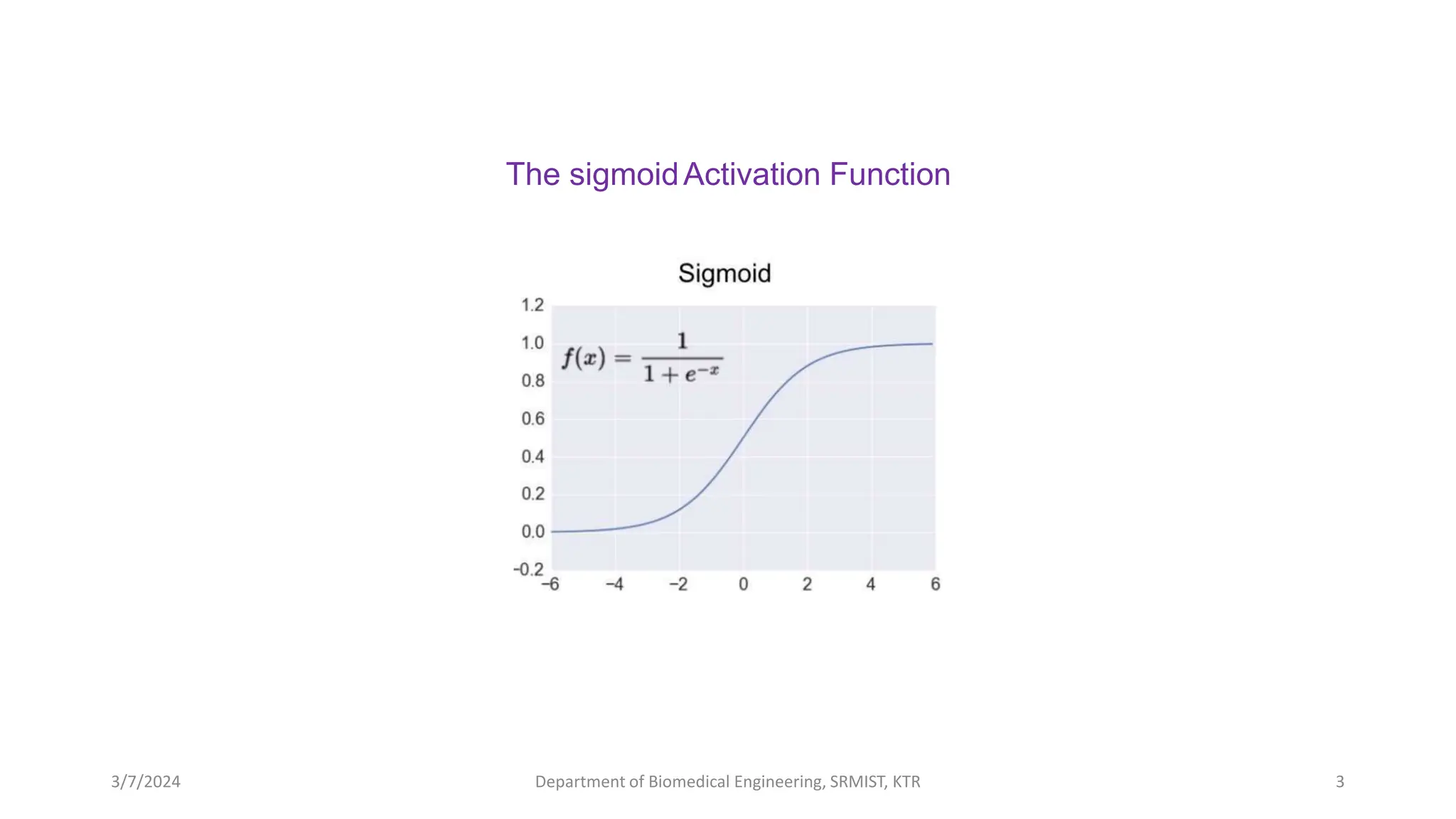
• Initially: sigmoid was popular
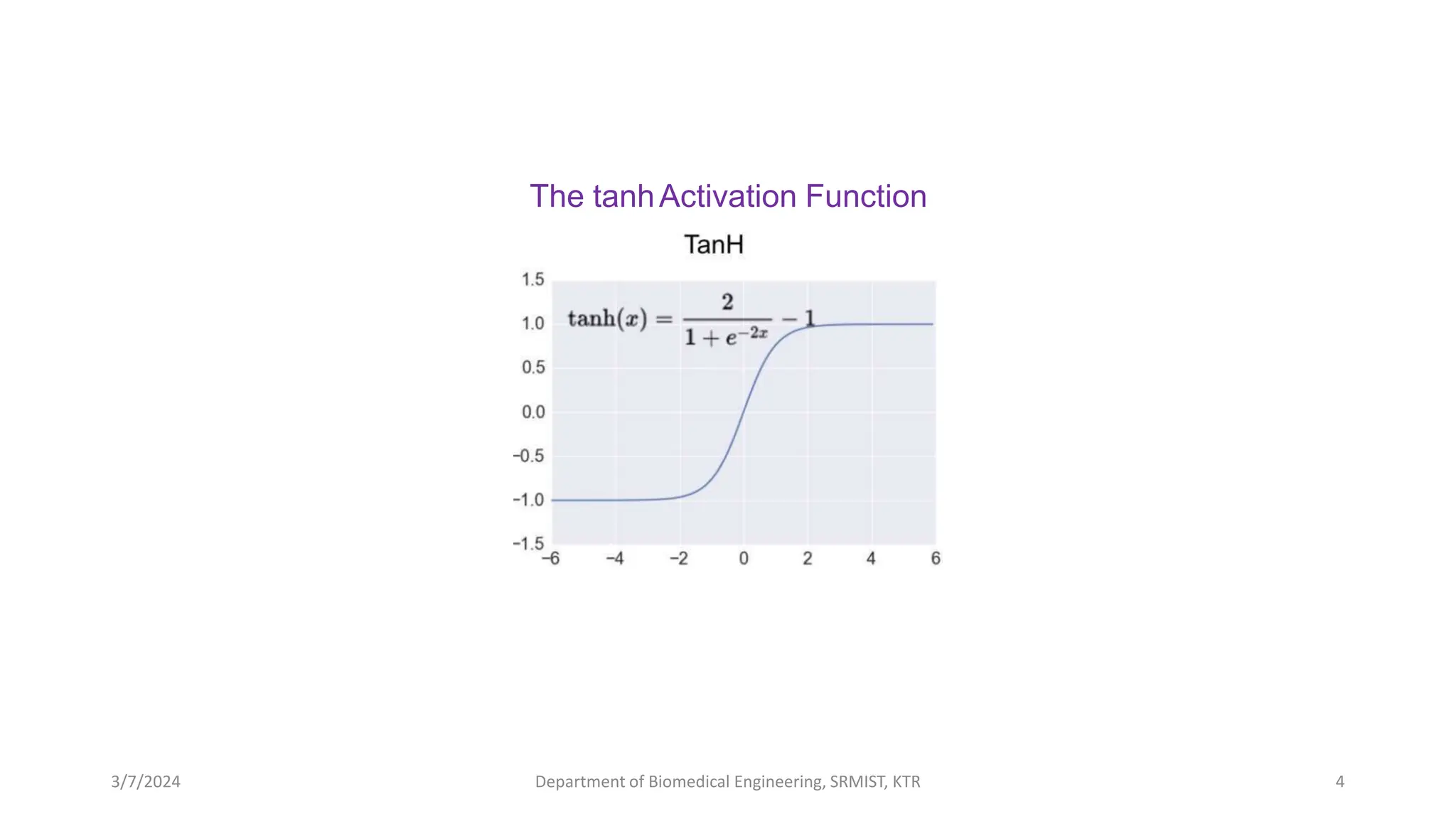
• Then: tanh became popular
• Now: RELU is preferred (better results)
• Softmax: for FC (fully connected) layers
• sigmoid and tanh are used in LSTMs
3/7/2024 Department of Biomedical Engineering, SRMIST, KTR 2
The sigmoidActivation Function
3/7/2024 Department of Biomedical Engineering, SRMIST, KTR 3
The tanhActivation Function
3/7/2024 Department of Biomedical Engineering, SRMIST, KTR 4
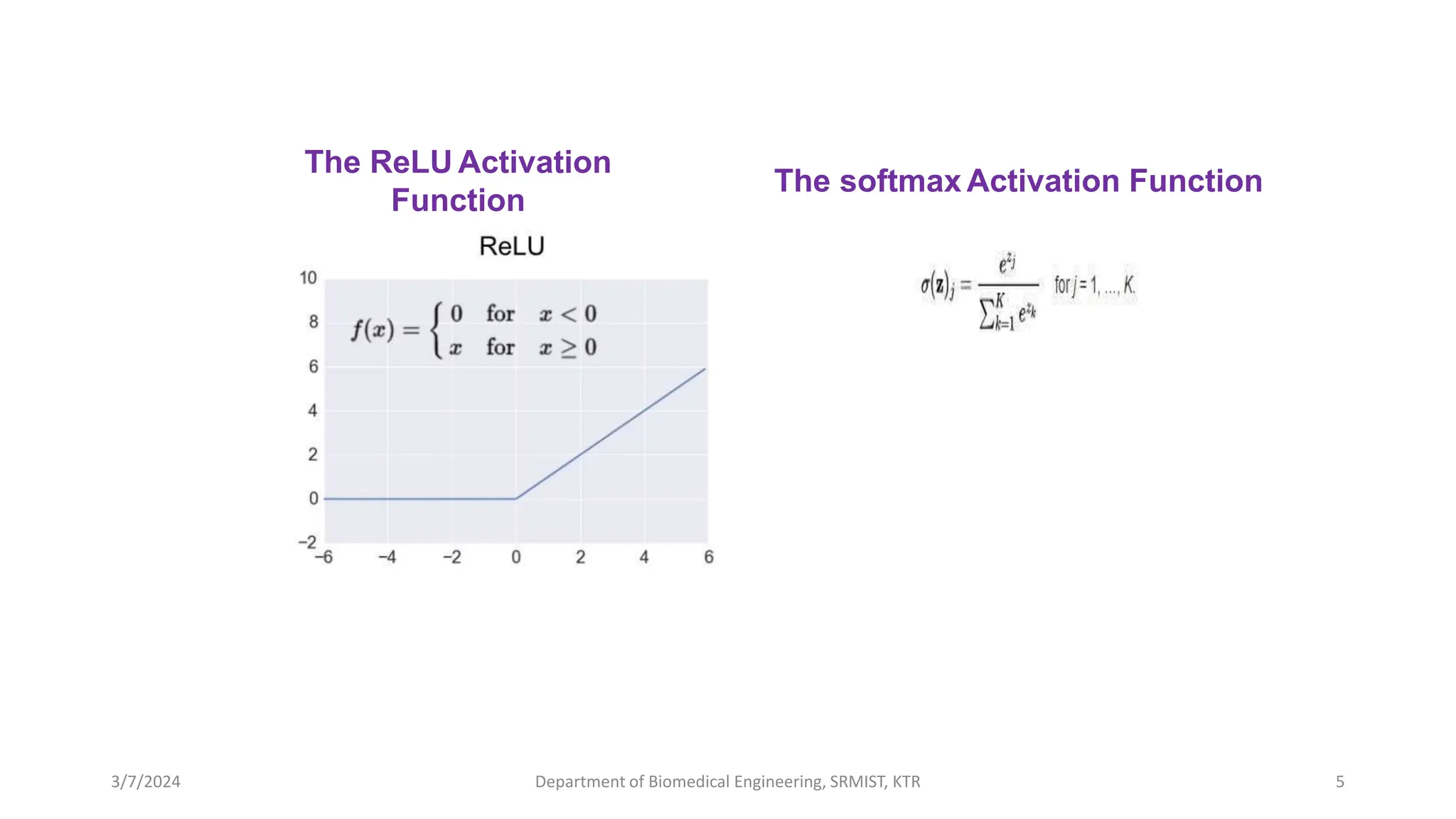
The ReLU Activation
Function
The softmax Activation Function
3/7/2024 Department of Biomedical Engineering, SRMIST, KTR 5

Types of Activation functions in DL.pptx

  • 1.
    Types of Activation Functions 3/7/2024Department of Biomedical Engineering, SRMIST, KTR 1
  • 2.
    Activation Function • Theactivation function decides whether a neuron should be activated or not by calculating the weighted sum and further adding bias to it. The purpose of the activation function is to introduce non-linearity into the output of a neuron. • Types of Non-linear Activation Function 1.Sigmoid 2.tanh 3.ReLU What’s the “Best”Activation Function? • Initially: sigmoid was popular • Then: tanh became popular • Now: RELU is preferred (better results) • Softmax: for FC (fully connected) layers • sigmoid and tanh are used in LSTMs 3/7/2024 Department of Biomedical Engineering, SRMIST, KTR 2
  • 3.
    The sigmoidActivation Function 3/7/2024Department of Biomedical Engineering, SRMIST, KTR 3
  • 4.
    The tanhActivation Function 3/7/2024Department of Biomedical Engineering, SRMIST, KTR 4
  • 5.
    The ReLU Activation Function Thesoftmax Activation Function 3/7/2024 Department of Biomedical Engineering, SRMIST, KTR 5