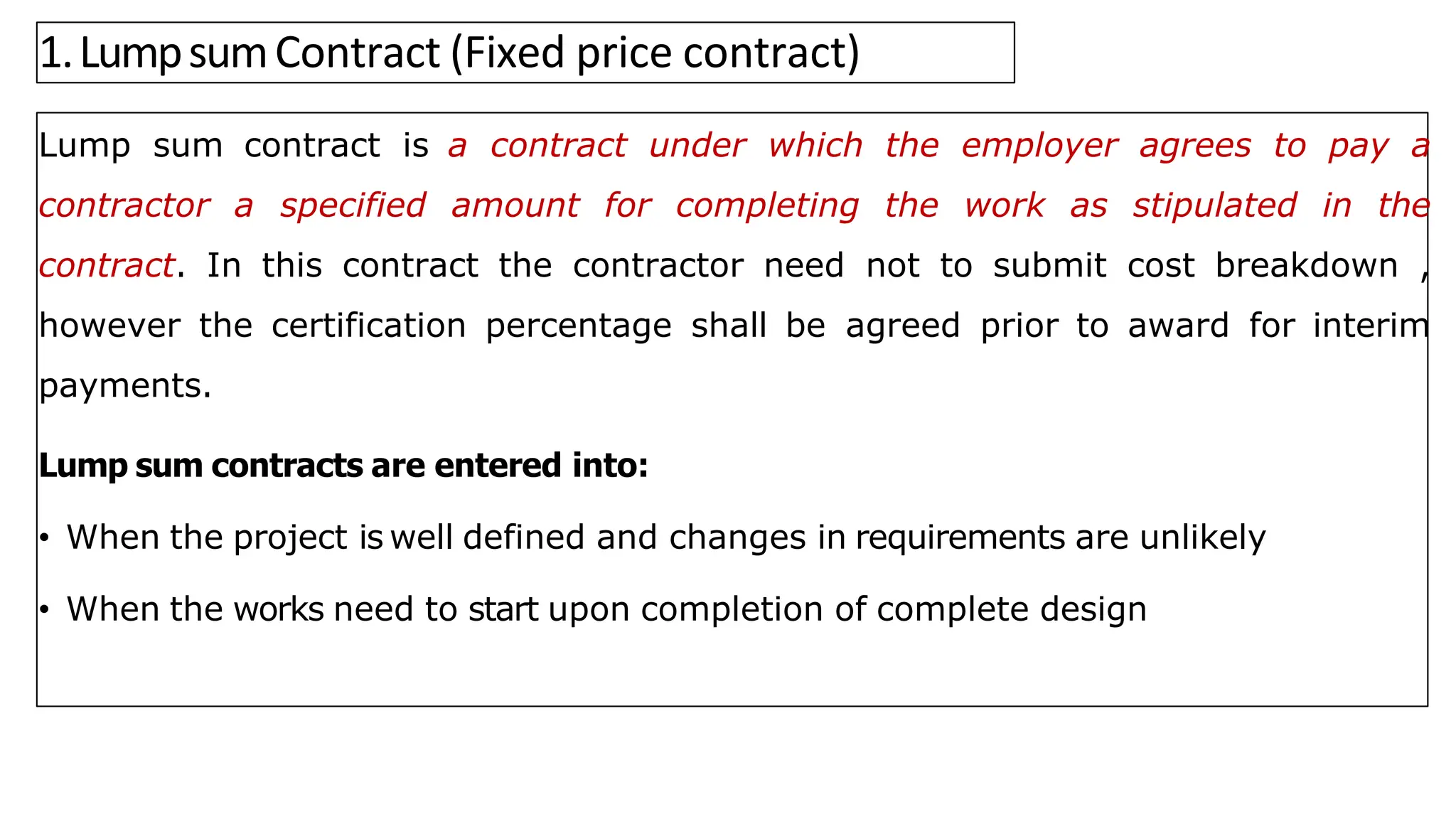
1.LumpsumContract (Fixed pricecontract)
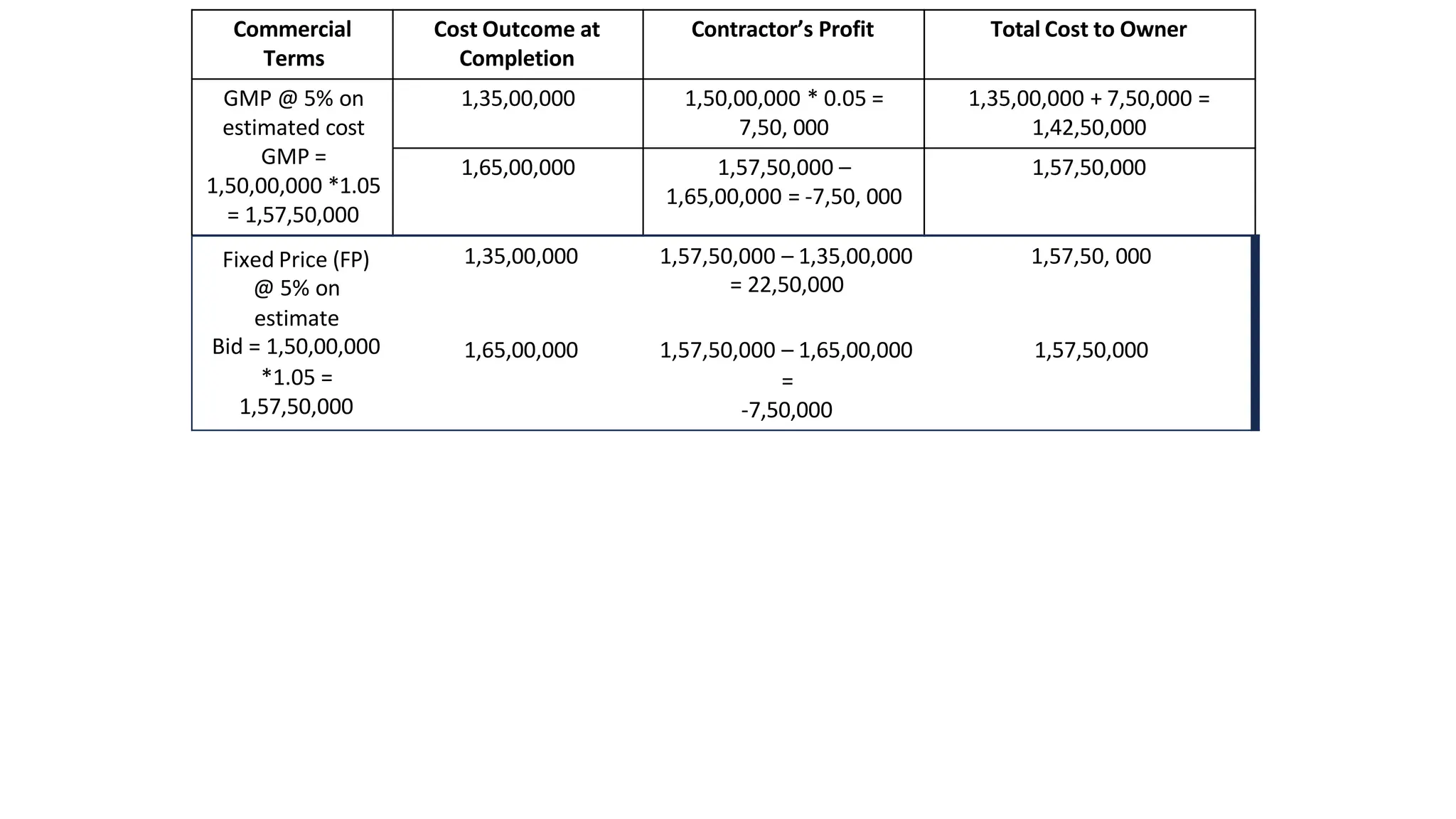
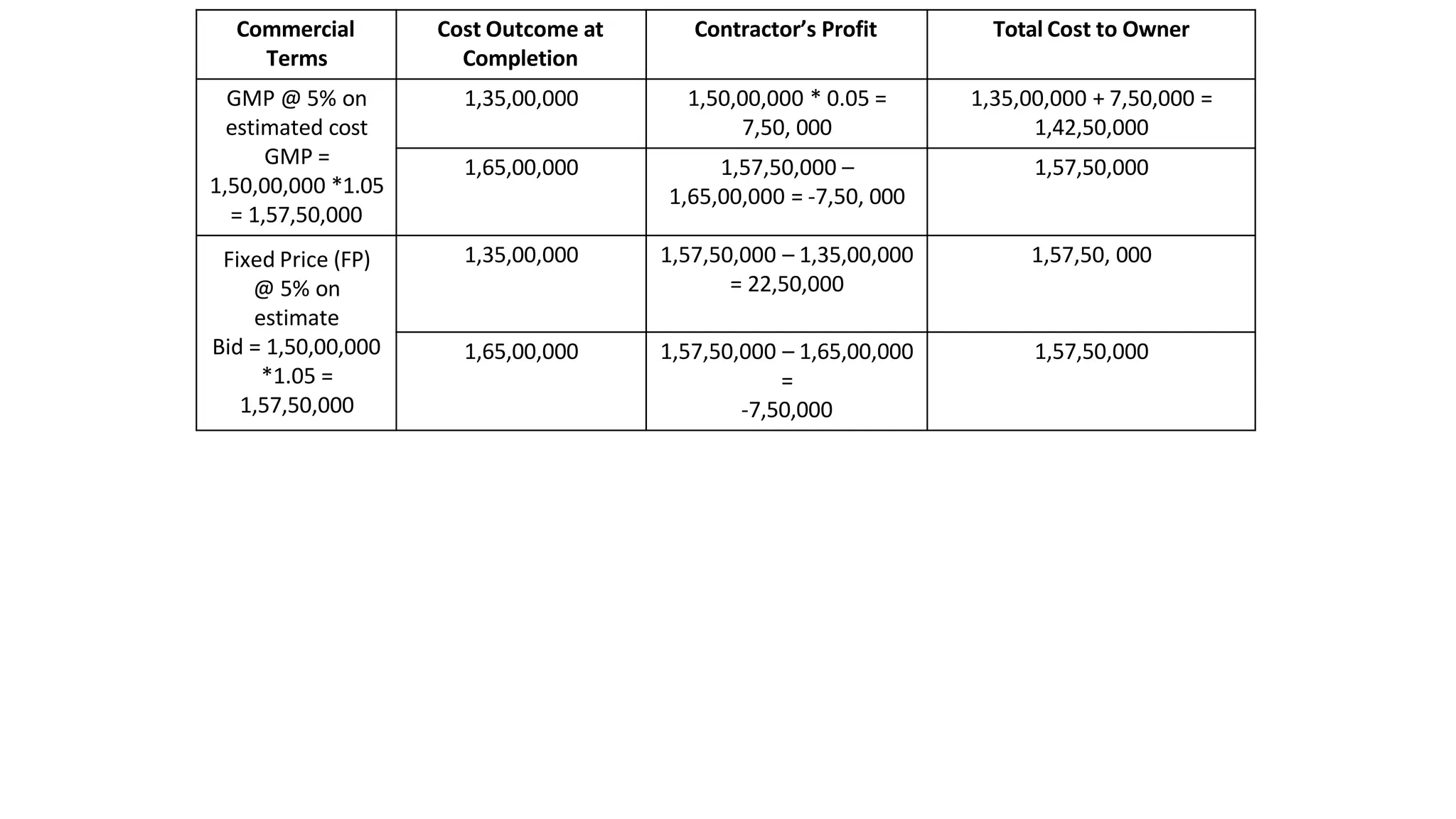
Lump sum contract is a contract under which the employer agrees to pay a
contractor a specified amount for completing the work as stipulated in the
contract. In this contract the contractor need not to submit cost breakdown ,
however the certification percentage shall be agreed prior to award for interim
payments.
Lump sum contracts are entered into:
• When the project is well defined and changes in requirements are unlikely
• When the works need to start upon completion of complete design
4.
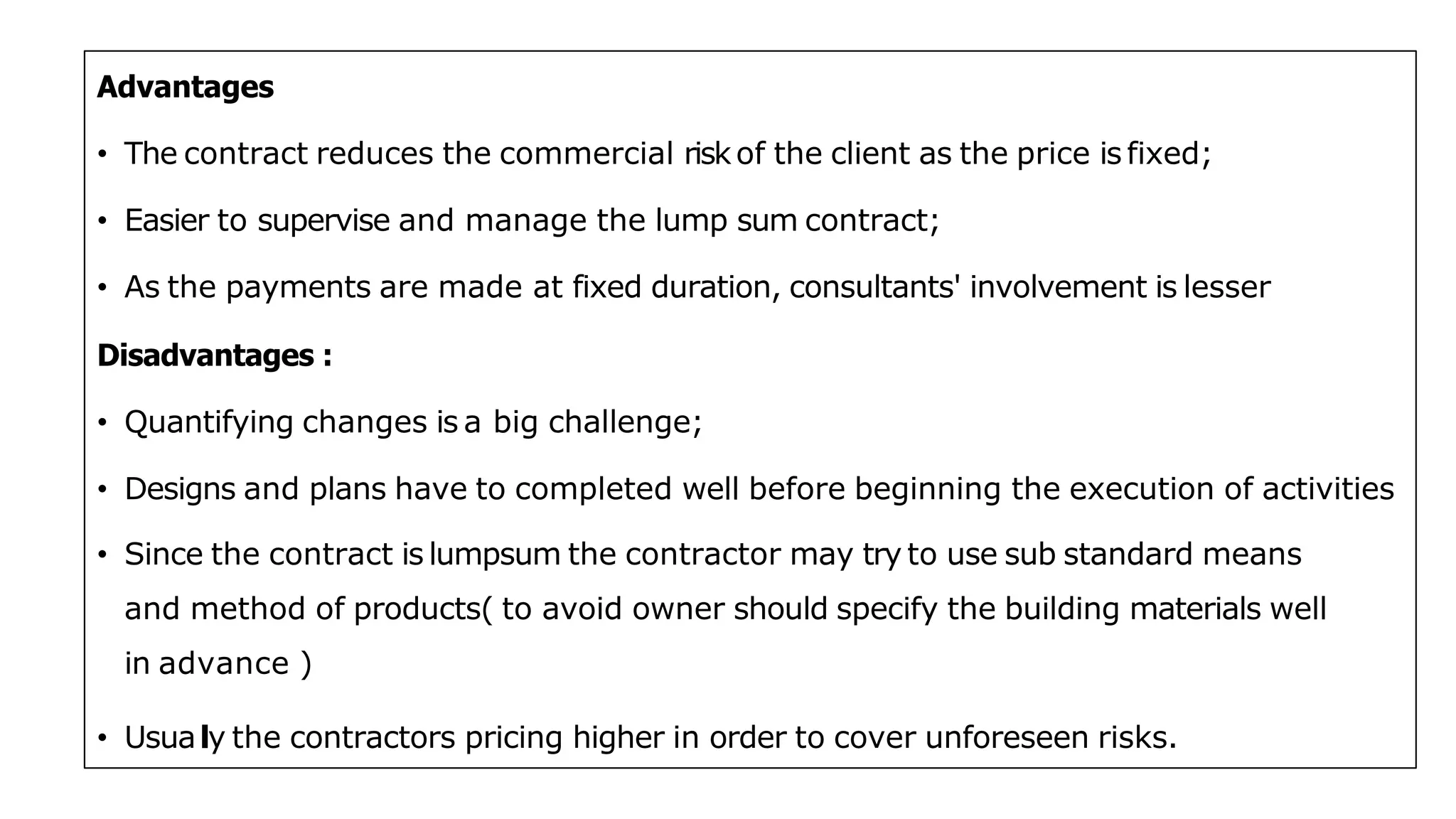
Advantages
• The contractreduces the commercial riskof the client as the price is fixed;
• Easier to supervise and manage the lump sum contract;
• As the payments are made at fixed duration, consultants' involvement is lesser
Disadvantages :
• Quantifying changes is a big challenge;
• Designs and plans have to completed well before beginning the execution of activities
• Since the contract is lumpsum the contractor may try to use sub standard means
and method of products( to avoid owner should specify the building materials well
in advance )
• Usualy the contractors pricing higher in order to cover unforeseen risks.
5.
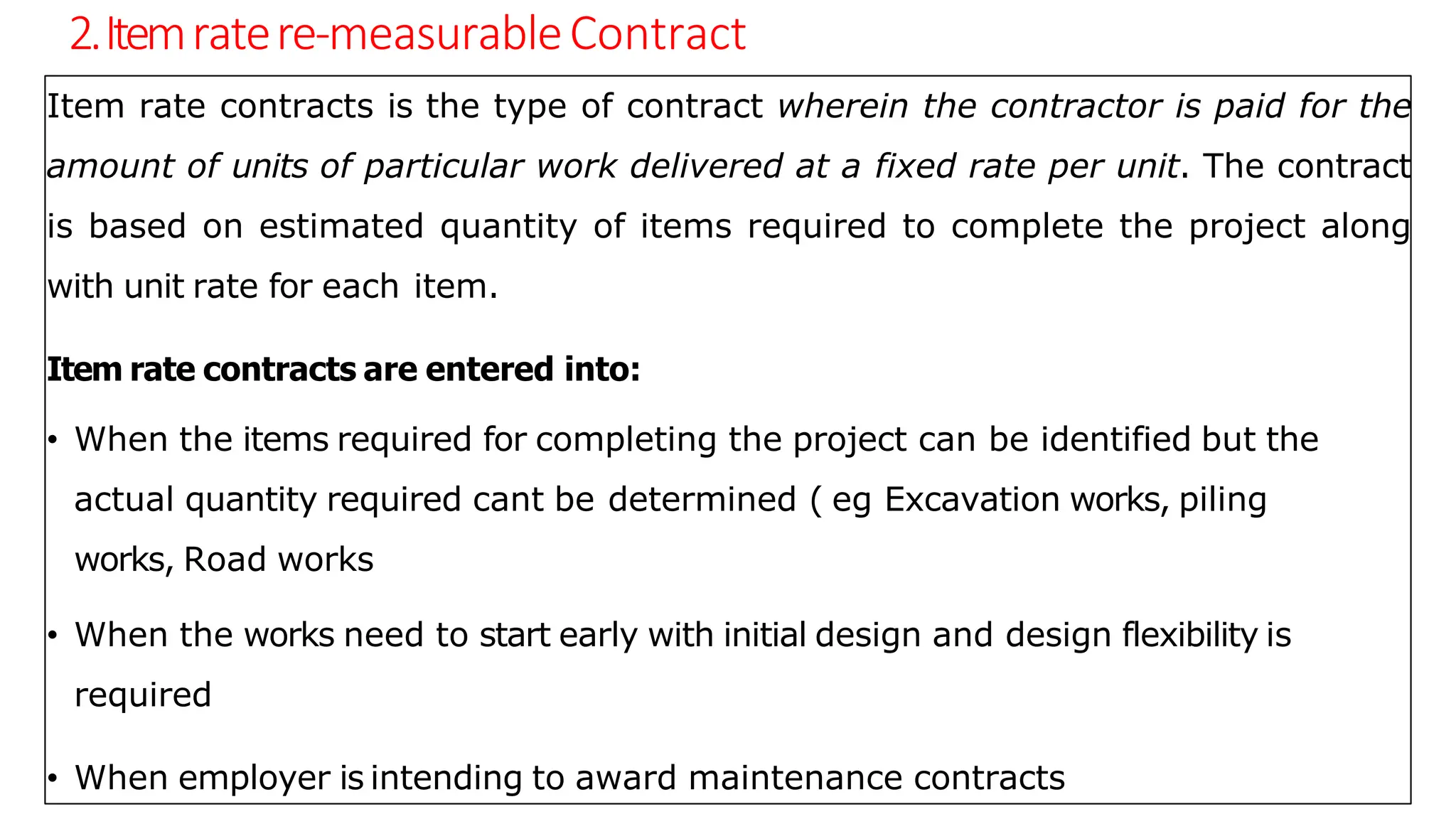
2.Itemratere-measurableContract
Item rate contractsis the type of contract wherein the contractor is paid for the
amount of units of particular work delivered at a fixed rate per unit. The contract
is based on estimated quantity of items required to complete the project along
with unit rate for each item.
Item rate contracts are entered into:
• When the items required for completing the project can be identified but the
actual quantity required cant be determined ( eg Excavation works, piling
works, Road works
• When the works need to start early with initial design and design flexibility is
required
• When employer is intending to award maintenance contracts
6.
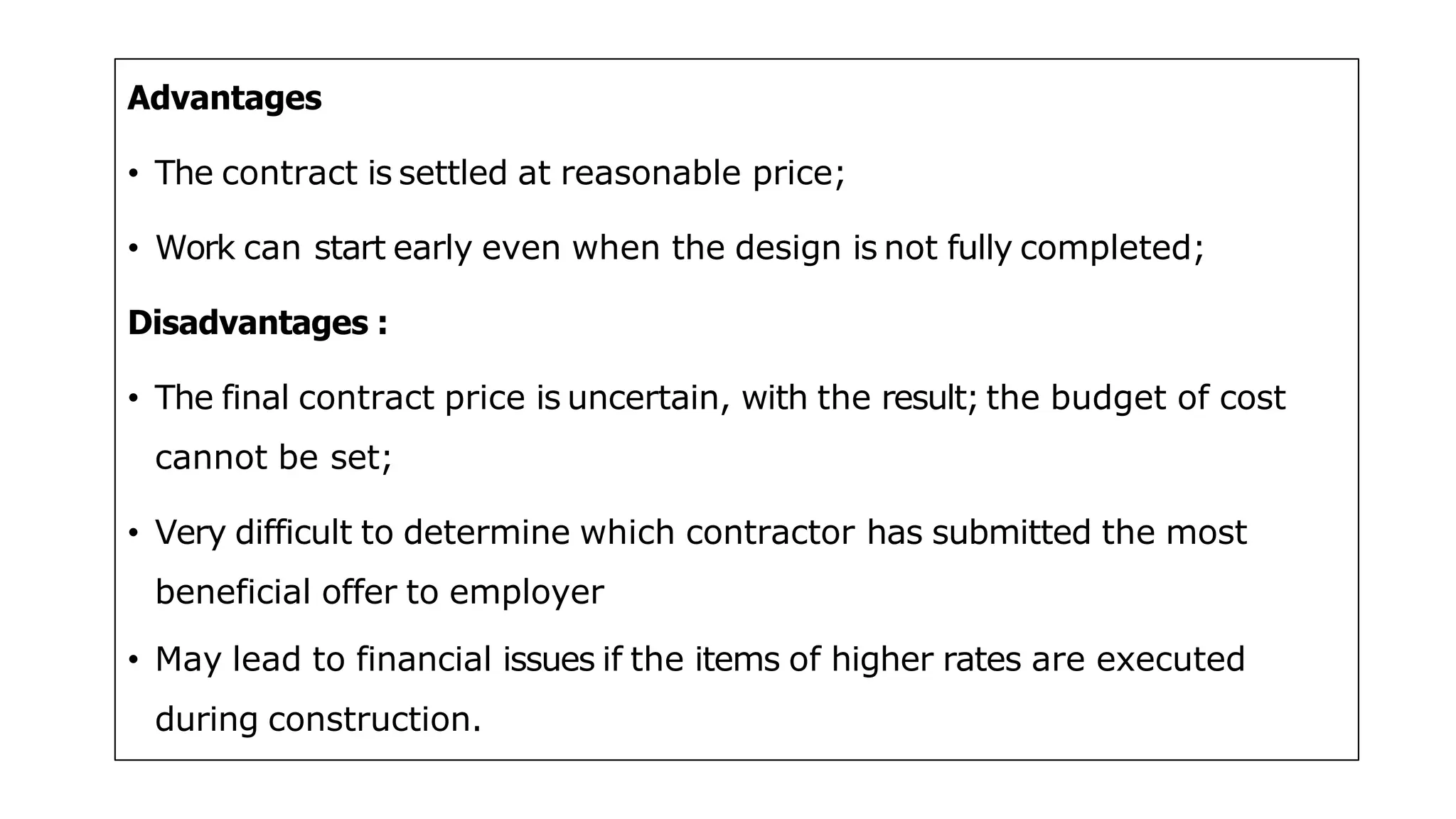
Advantages
• The contractis settled at reasonable price;
• Work can start early even when the design is not fully completed;
Disadvantages :
• The final contract price is uncertain, with the result; the budget of cost
cannot be set;
• Very difficult to determine which contractor has submitted the most
beneficial offer to employer
• May lead to financial issues if the items of higher rates are executed
during construction.
7.
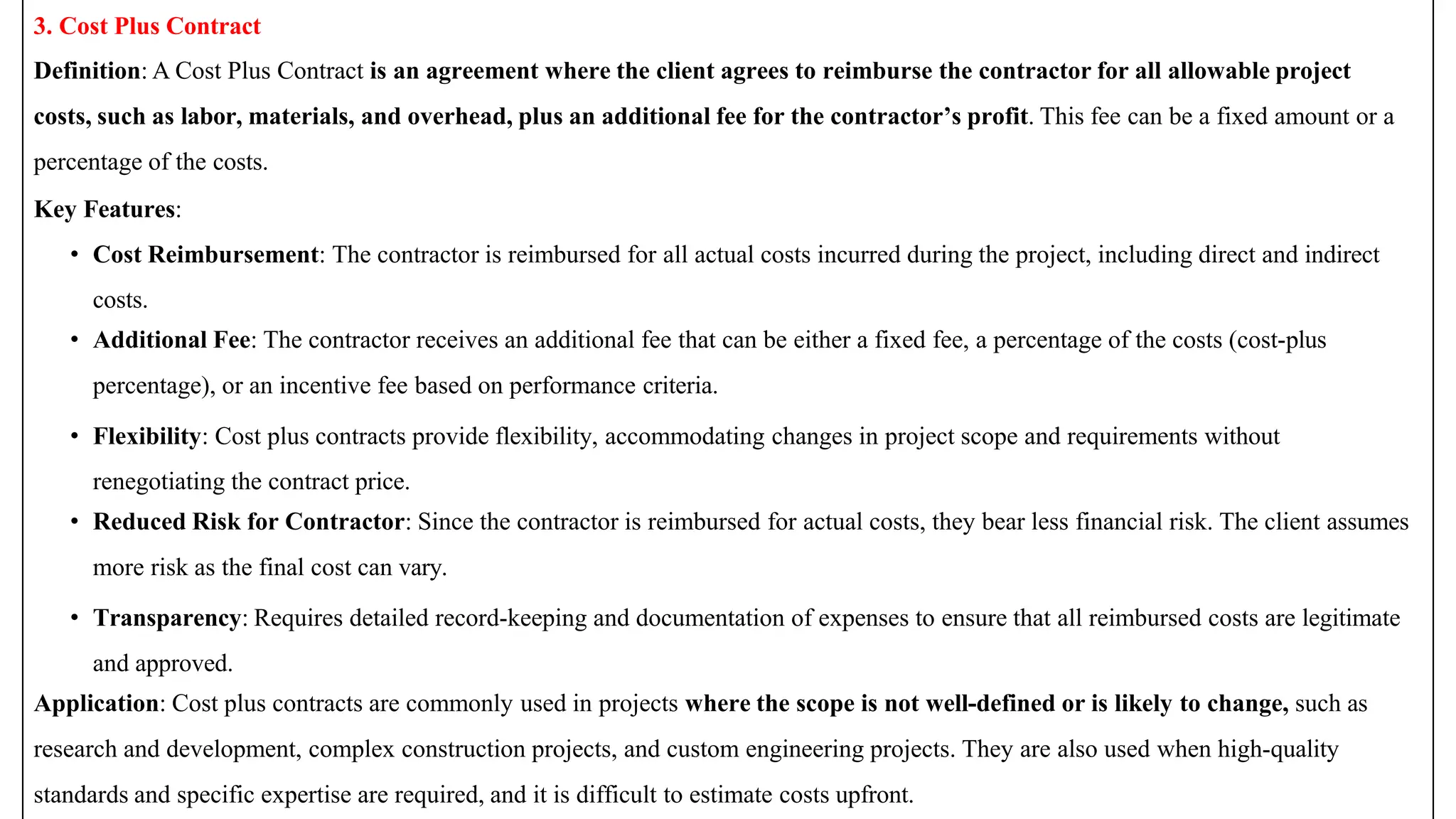
3. Cost PlusContract
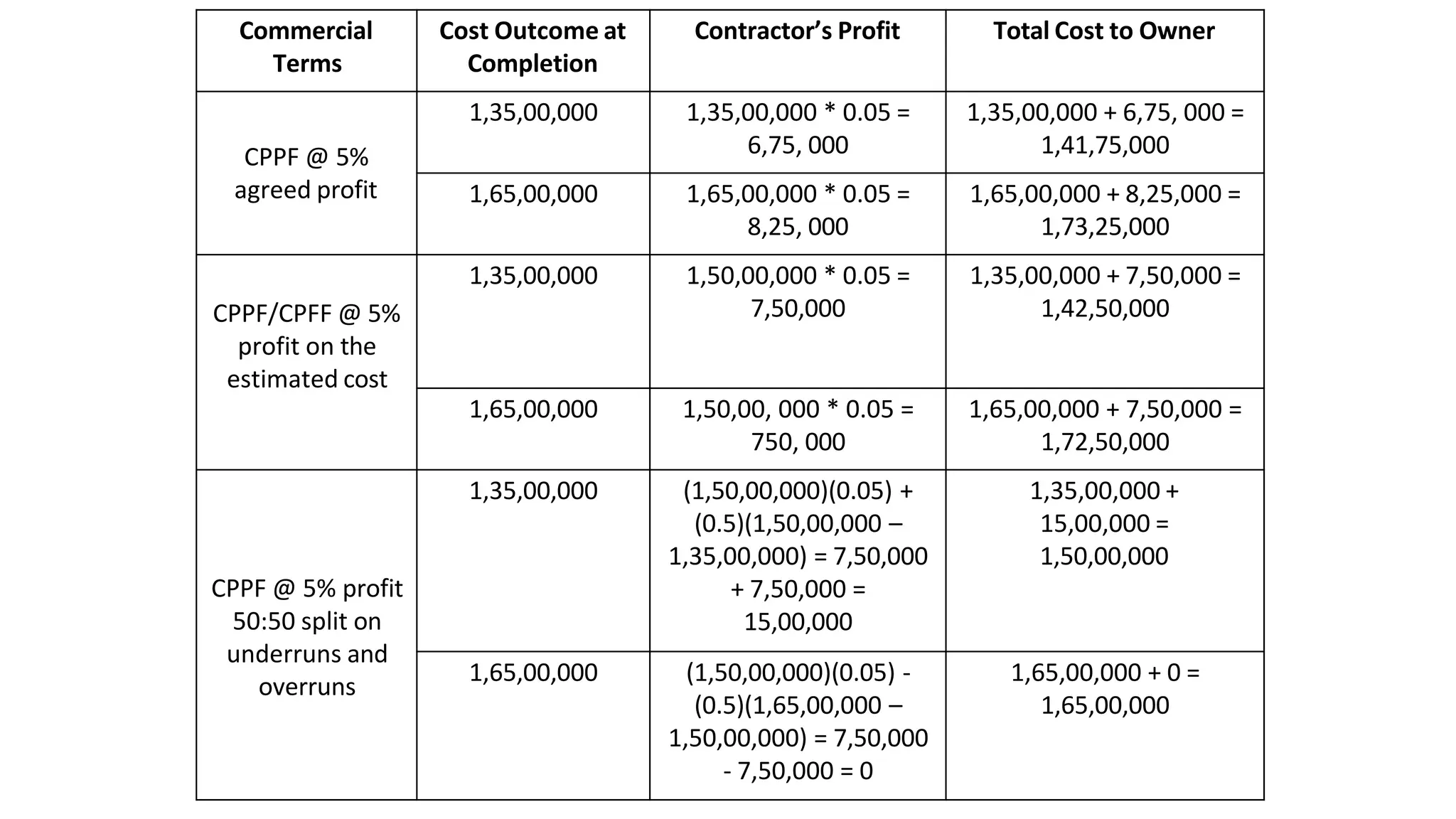
Definition: A Cost Plus Contract is an agreement where the client agrees to reimburse the contractor for all allowable project
costs, such as labor, materials, and overhead, plus an additional fee for the contractor’s profit. This fee can be a fixed amount or a
percentage of the costs.
Key Features:
• Cost Reimbursement: The contractor is reimbursed for all actual costs incurred during the project, including direct and indirect
costs.
• Additional Fee: The contractor receives an additional fee that can be either a fixed fee, a percentage of the costs (cost-plus
percentage), or an incentive fee based on performance criteria.
• Flexibility: Cost plus contracts provide flexibility, accommodating changes in project scope and requirements without
renegotiating the contract price.
• Reduced Risk for Contractor: Since the contractor is reimbursed for actual costs, they bear less financial risk. The client assumes
more risk as the final cost can vary.
• Transparency: Requires detailed record-keeping and documentation of expenses to ensure that all reimbursed costs are legitimate
and approved.
Application: Cost plus contracts are commonly used in projects where the scope is not well-defined or is likely to change, such as
research and development, complex construction projects, and custom engineering projects. They are also used when high-quality
standards and specific expertise are required, and it is difficult to estimate costs upfront.
4. Detaileddesign andbuild Contract
Detailed design and build contract is a contract under which the contractor is engaged to do detailed design of
employers concept / schematic design and build the project as stipulated in the contract. In this contract the contractor takes
responsibility of detailed design and need not to submit detailed cost breakdown , however the certification percentage
shallbe agreed prior to award for interimpayments.
Detailed design and build contracts are entered into:
• When the project isnot that complex and straightforward
• When the worksare well defined and employers requirementsare clear
Advantages
• Thecontract reduces the commercial riskof the client as the price isfixed;
• Easierto superviseand manage the contract;
• Contributionsfromallthe stakeholders and potential cost saving based on contractor’s imputs
• Workcan commence earlieras the procurement process startwith concept design
Disadvantages :
• Ifthe specification istoo wide, the contractor may exploit thisto theiradvantage;
• Tenderevaluation isdifficultifinadequate pricing document isnot included with the tender document
• Employermay pay more ifthe contractor has considered unreasonable higher riskdue to lack of design clarity
14.
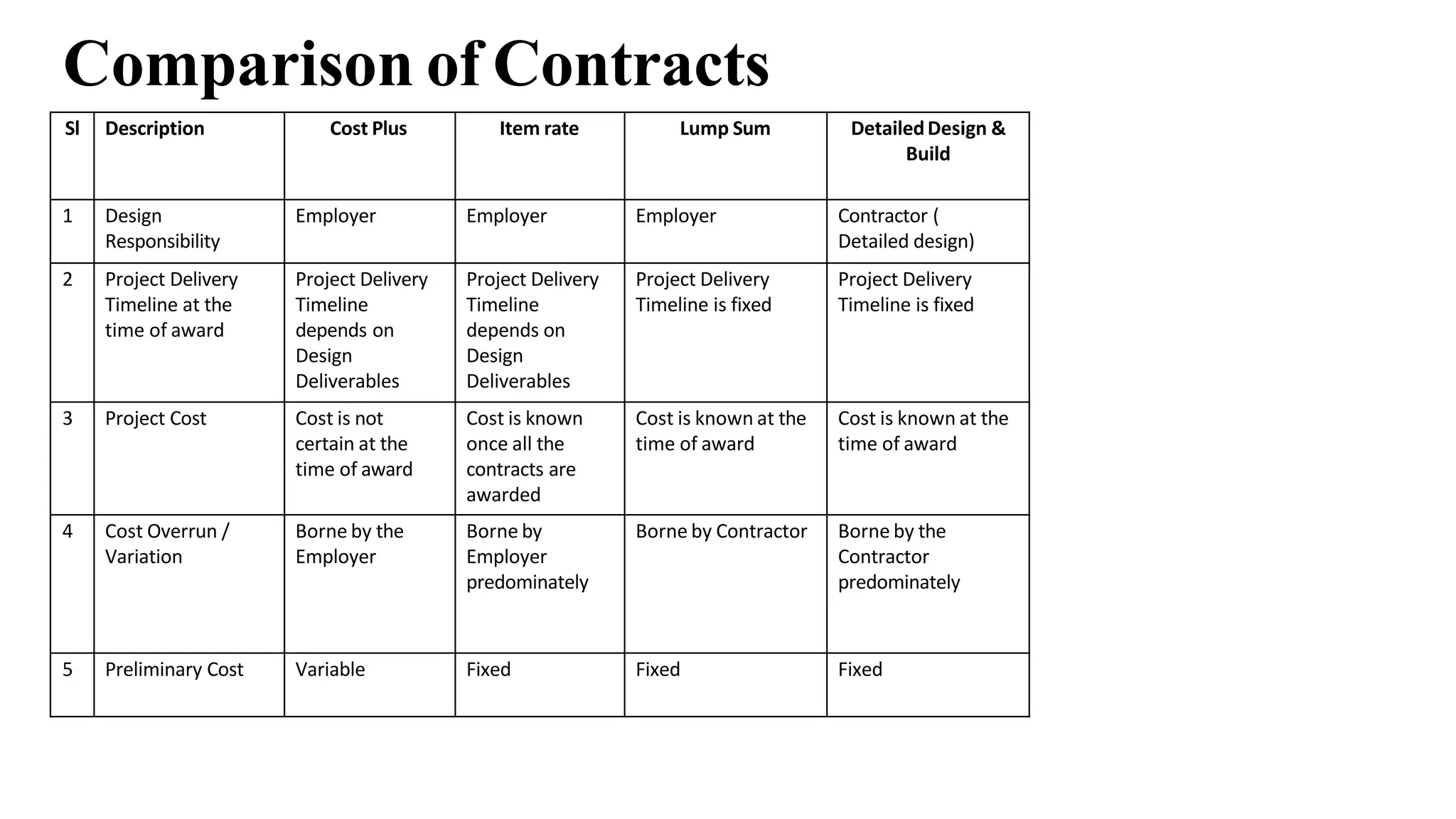
Comparison of Contracts
SlDescription Cost Plus Item rate Lump Sum DetailedDesign &
Build
1 Design
Responsibility
Employer Employer Employer Contractor (
Detailed design)
2 Project Delivery
Timeline at the
time of award
Project Delivery
Timeline
depends on
Design
Deliverables
Project Delivery
Timeline
depends on
Design
Deliverables
Project Delivery
Timeline is fixed
Project Delivery
Timeline is fixed
3 Project Cost Cost is not
certain at the
time of award
Cost is known
once all the
contracts are
awarded
Cost is known at the
time of award
Cost is known at the
time of award
4 Cost Overrun /
Variation
Borne by the
Employer
Borne by
Employer
predominately
Borne by Contractor Borne by the
Contractor
predominately
5 Preliminary Cost Variable Fixed Fixed Fixed
15.
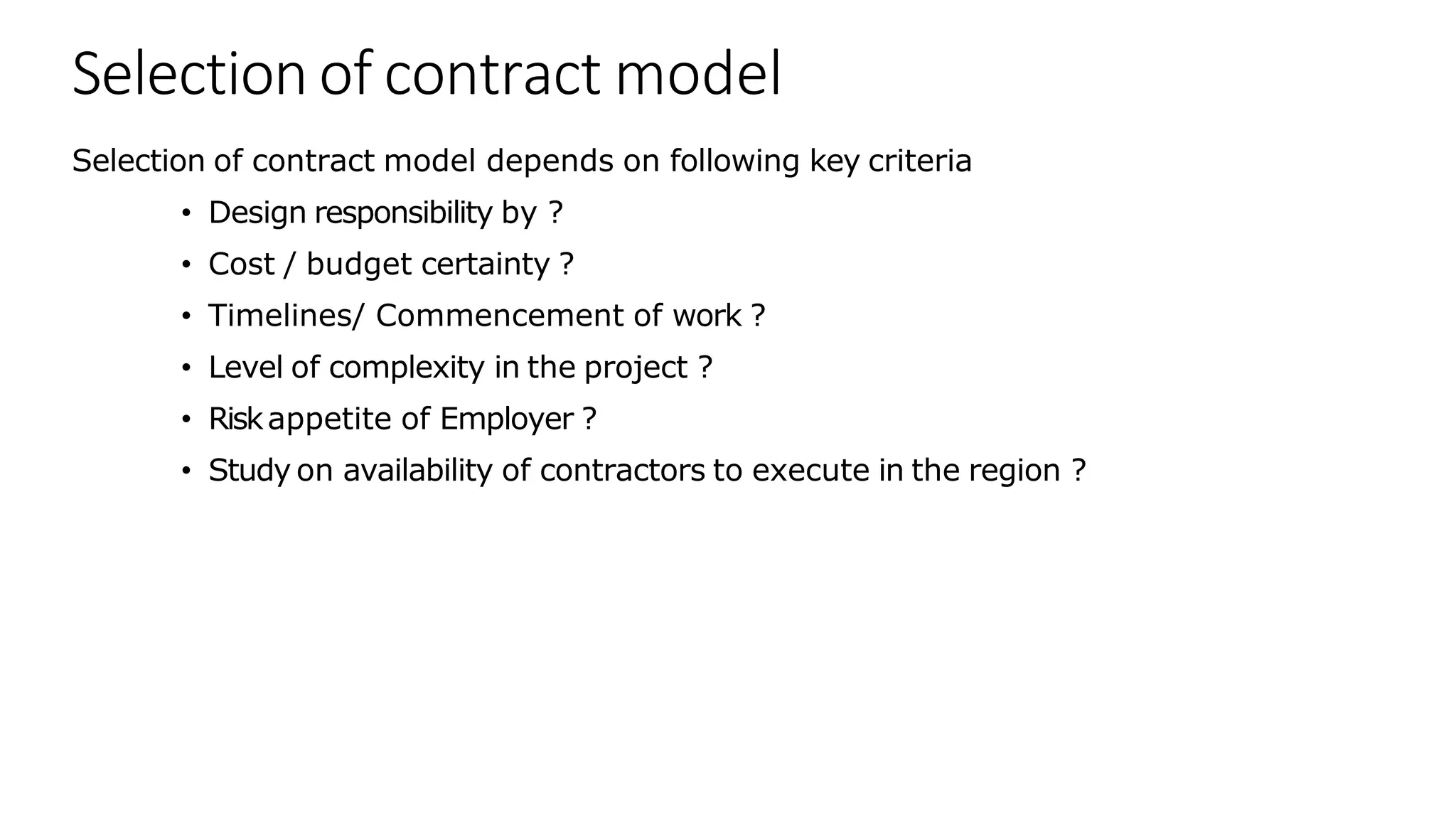
Selection of contractmodel
Selection of contract model depends on following key criteria
• Design responsibility by ?
• Cost / budget certainty ?
• Timelines/ Commencement of work ?
• Level of complexity in the project ?
• Riskappetite of Employer ?
• Study on availability of contractors to execute in the region ?
16.
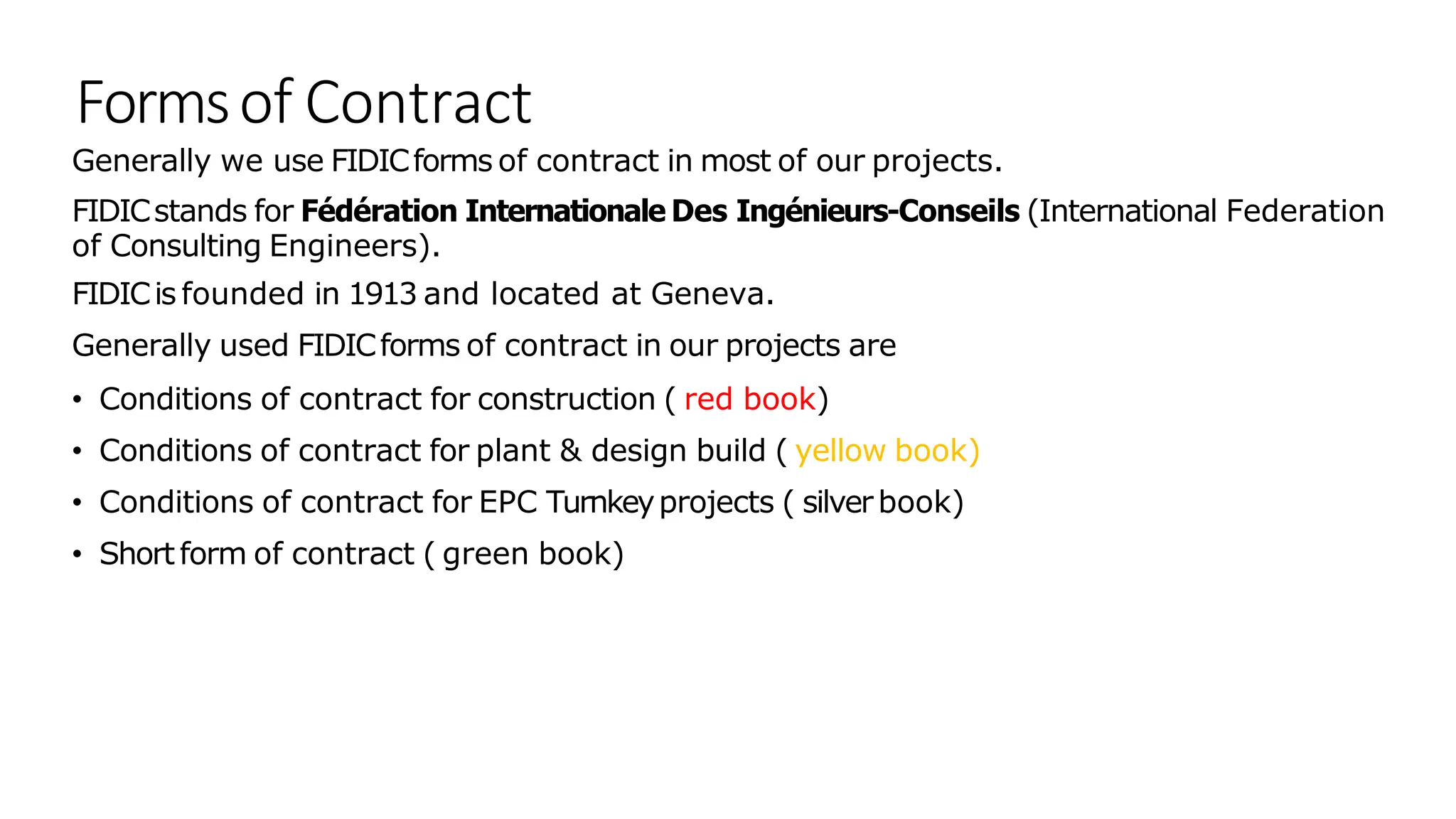
Formsof Contract
Generally weuse FIDICforms of contract in most of our projects.
FIDICstands for Fédération Internationale Des Ingénieurs-Conseils (International Federation
of Consulting Engineers).
FIDICis founded in 1913 and located at Geneva.
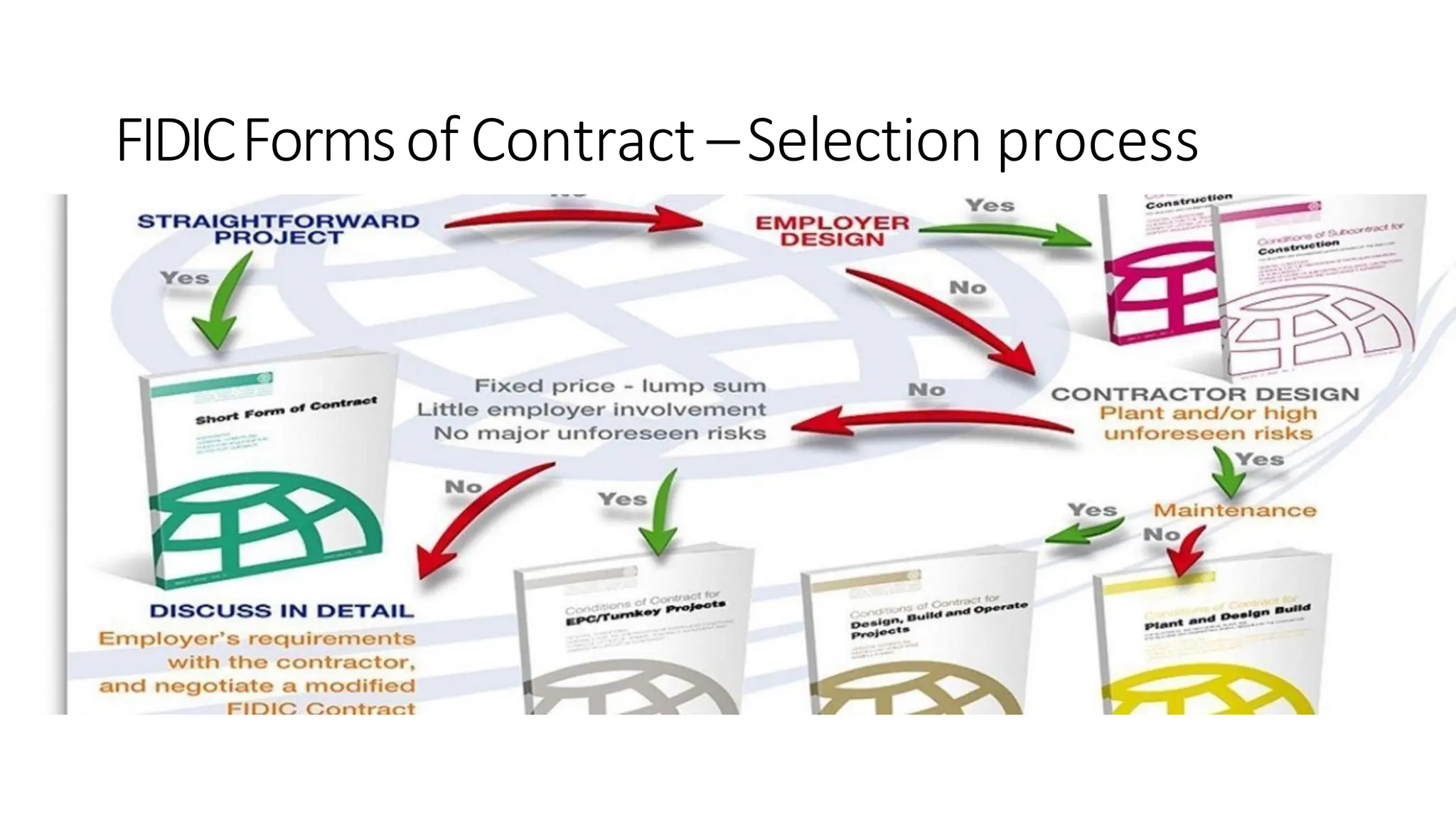
Generally used FIDICforms of contract in our projects are
• Conditions of contract for construction ( red book)
• Conditions of contract for plant & design build ( yellow book)
• Conditions of contract for EPC Turnkeyprojects ( silverbook)
• Shortform of contract ( green book)