Type I and Type II Errors
Types of Errors in Hypothesis Testing
About Neha
❏ Assistant Consultant at Tata Consultancy Services
❏ Microsoft Certified Azure Data Scientist Associate
❏ Alumni Udacity Data Analyst Nanodegree program
❏ 13+ years in IT/Software Industry
Jury Trial
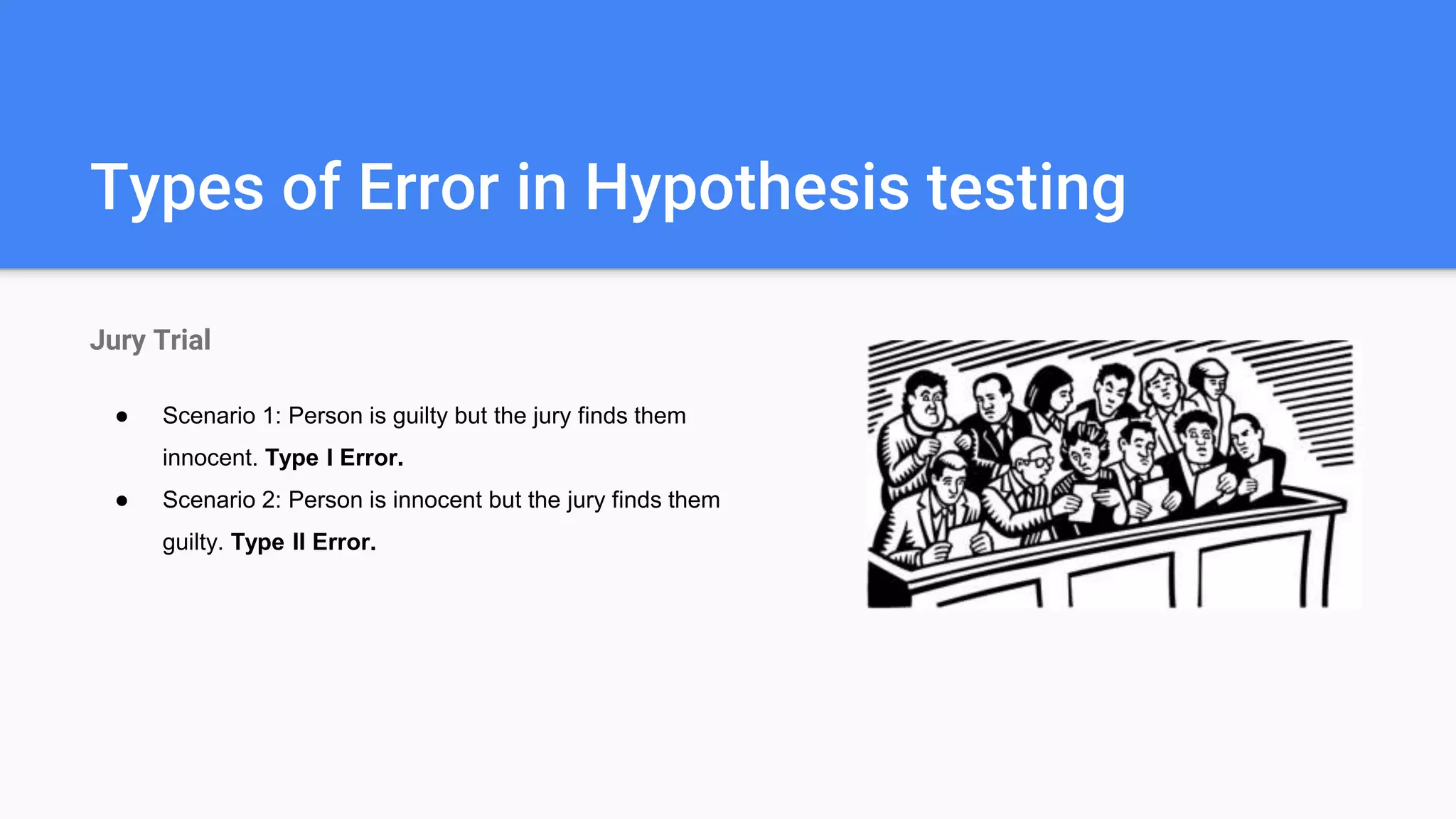
● Scenario 1: Person is guilty but the jury finds them
innocent. Type I Error.
● Scenario 2: Person is innocent but the jury finds them
guilty. Type II Error.
Types of Error in Hypothesis testing
What are Type I and Type II Errors?
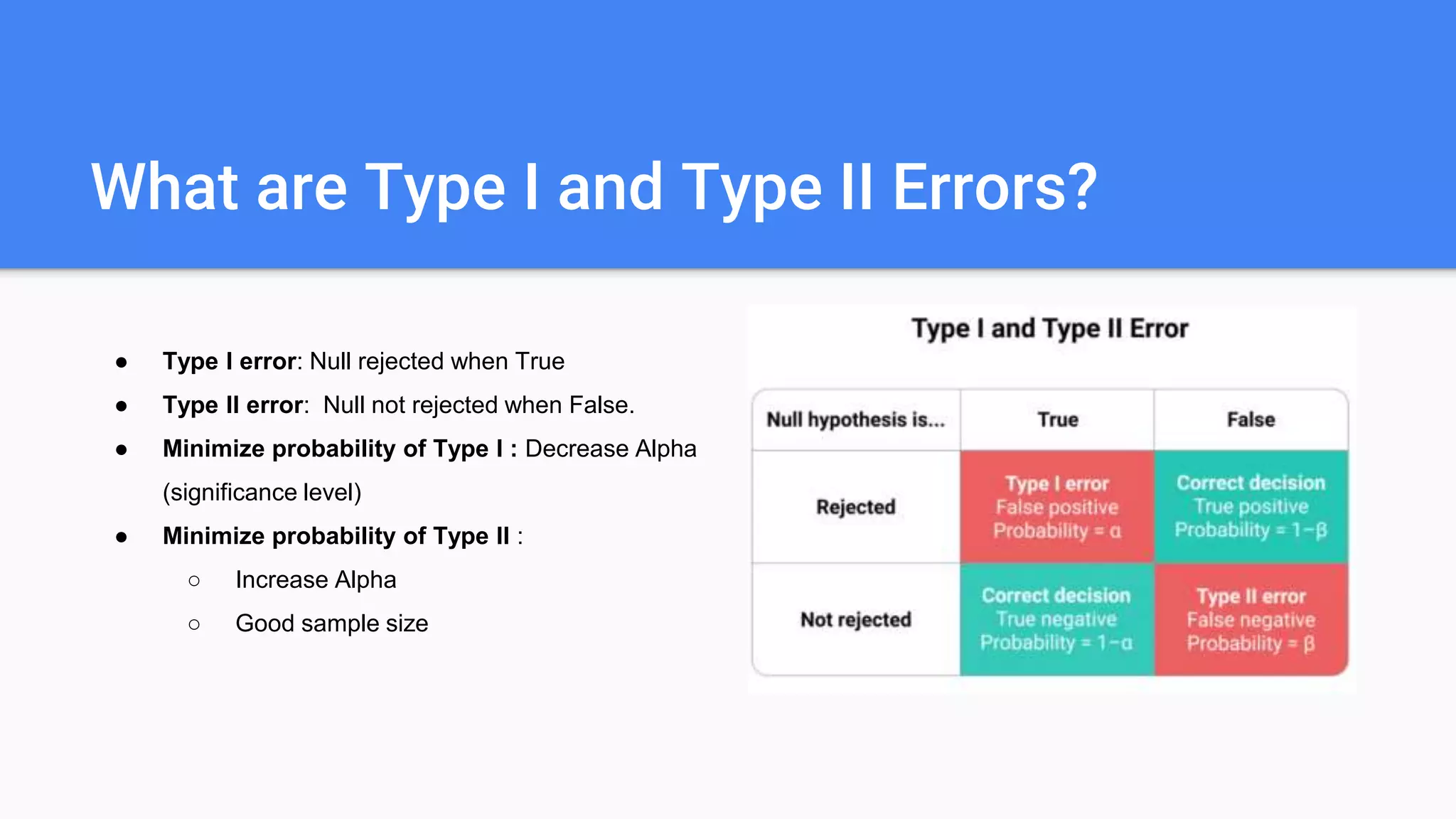
● Type I error: Null rejected when True
● Type II error: Null not rejected when False.
● Minimize probability of Type I : Decrease Alpha
(significance level)
● Minimize probability of Type II :
○ Increase Alpha
○ Good sample size
What is worse?
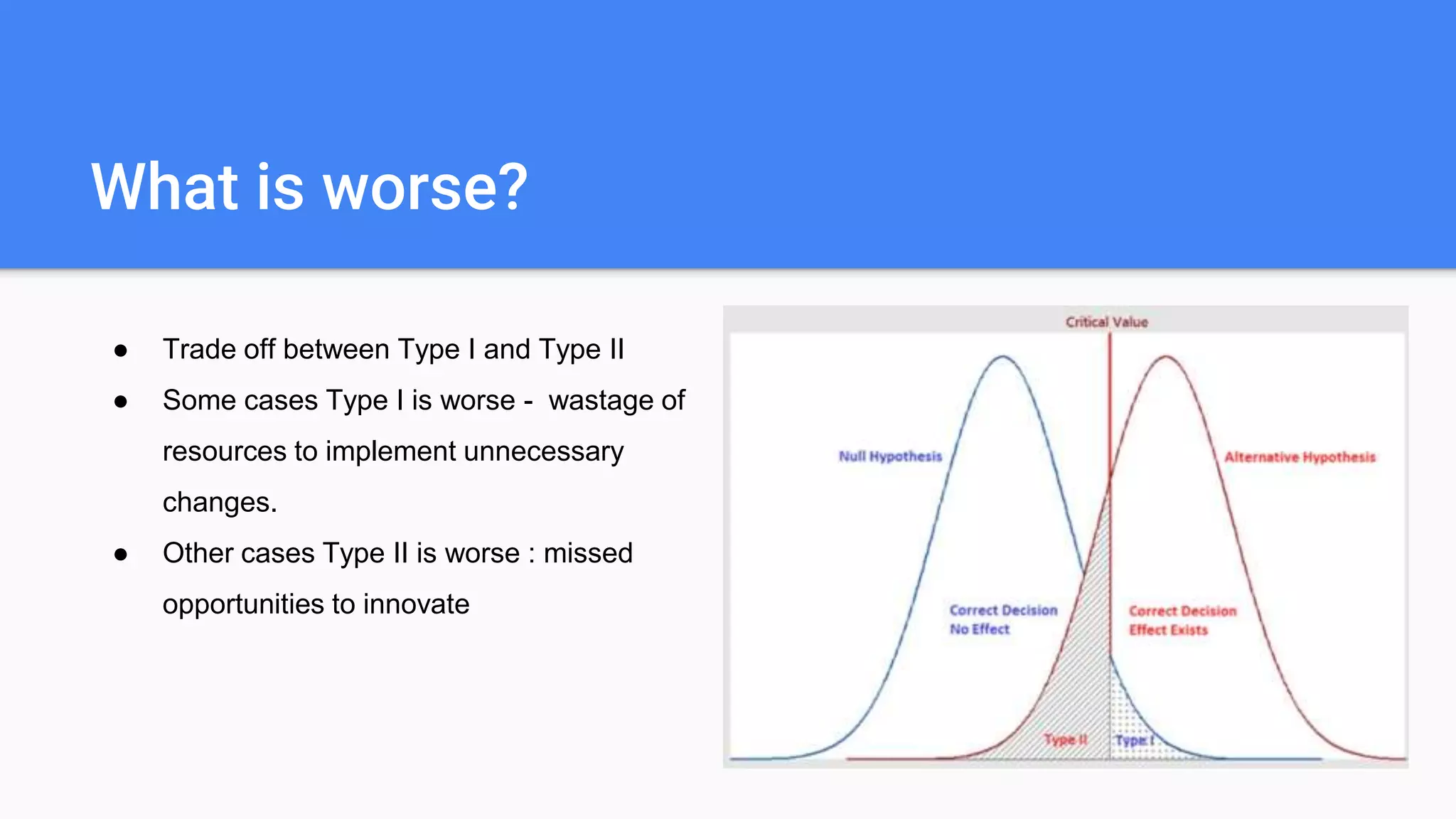
● Trade off between Type I and Type II
● Some cases Type I is worse - wastage of
resources to implement unnecessary
changes.
● Other cases Type II is worse : missed
opportunities to innovate
References:
● Types of Errors.. Statistics by Jim. https://statisticsbyjim.com/hypothesis-testing/types-
errors-hypothesis-testing/
● Hypothesis tests. Statistics by Jim. https://statisticsbyjim.com/glossary/hypothesis-tests/
● Type I and Type II errors. https://www.scribbr.com/statistics/type-i-and-type-ii-
errors/#:~:text=In%20statistics%2C%20a%20Type%20I%20error%20means%20rejecting%2
0the%20null,hypothesis%20when%20it's%20actually%20false.&text=of%20a%20test.-
,Power%20is%20the%20extent%20to%20which%20a%20test%20can%20correctly,effect%2
0when%20there%20is%20one.
● https://www.csus.edu/indiv/j/jgehrman/courses/stat1/misc/hyptests/8hyptest1.htm
● McLeod, S. A. (2019, July 04). What are type I and type II errors? Simply psychology:
https://www.simplypsychology.org/type_I_and_type_II_errors.html

Type i and type ii errors

  • 1.
    Type I andType II Errors Types of Errors in Hypothesis Testing
  • 2.
    About Neha ❏ AssistantConsultant at Tata Consultancy Services ❏ Microsoft Certified Azure Data Scientist Associate ❏ Alumni Udacity Data Analyst Nanodegree program ❏ 13+ years in IT/Software Industry
  • 3.
    Jury Trial ● Scenario1: Person is guilty but the jury finds them innocent. Type I Error. ● Scenario 2: Person is innocent but the jury finds them guilty. Type II Error. Types of Error in Hypothesis testing
  • 4.
    What are TypeI and Type II Errors? ● Type I error: Null rejected when True ● Type II error: Null not rejected when False. ● Minimize probability of Type I : Decrease Alpha (significance level) ● Minimize probability of Type II : ○ Increase Alpha ○ Good sample size
  • 5.
    What is worse? ●Trade off between Type I and Type II ● Some cases Type I is worse - wastage of resources to implement unnecessary changes. ● Other cases Type II is worse : missed opportunities to innovate
  • 6.
    References: ● Types ofErrors.. Statistics by Jim. https://statisticsbyjim.com/hypothesis-testing/types- errors-hypothesis-testing/ ● Hypothesis tests. Statistics by Jim. https://statisticsbyjim.com/glossary/hypothesis-tests/ ● Type I and Type II errors. https://www.scribbr.com/statistics/type-i-and-type-ii- errors/#:~:text=In%20statistics%2C%20a%20Type%20I%20error%20means%20rejecting%2 0the%20null,hypothesis%20when%20it's%20actually%20false.&text=of%20a%20test.- ,Power%20is%20the%20extent%20to%20which%20a%20test%20can%20correctly,effect%2 0when%20there%20is%20one. ● https://www.csus.edu/indiv/j/jgehrman/courses/stat1/misc/hyptests/8hyptest1.htm ● McLeod, S. A. (2019, July 04). What are type I and type II errors? Simply psychology: https://www.simplypsychology.org/type_I_and_type_II_errors.html

Editor's Notes

  • #4 Jury Trial : Null Hypothesis - Person is innocent. Innocent person is proven guilty, type II error is serious.
  • #5 •Type I error: The null hypothesis is rejected when it is true. A statistically significant test result suggests that a population effect exists, in reality it does not exist. •Type II error: The null hypothesis is not rejected when it is false. You obtain an insignificant test result even though a population effect exists. We are talking about population in both the cases because the hypothesis tests are conducted on a random sample out of the population. Alpha is the power of the test, also known as the “significance level”. Alpha = 0.05 means you are willing to accept a 5% chance that you are wrong when you reject the null hypothesis. However, using a lower value for alpha means that you will be less likely to detect a true difference if one really exists (thus risking a type II error). •There is always a chance of making one of these errors. We’ll want to minimize the chance of doing so!
  • #6 Graph indicates: Left region - Null. If Null is true then we only need to worry about Type I error. Rest of the null distribution represents the correct decision of “failing to reject the null”. Right region - Alternative. If Alternative is true, only worry about Type II Error. Rest of the alternative distribution represents the probability of “correctly detecting an effect”. Changing the “Critical Value” line means changing the significance level/ alpha. Move line to left -> Increases alpha -> Increase Type I error & Decrease Type II Move lien to right -> Decreases alpha -> Decrease Type I and Increase Type II Type I is worse : Mistakenly going against main assumption of the null hypothesis. Changes are made when not necessary. May lead to wastage of resources to implement new treatment, policies or practices. Type II is worse: Missed opportunities to innovate, but can also have important practical inconsequences