Downloaded 20 times

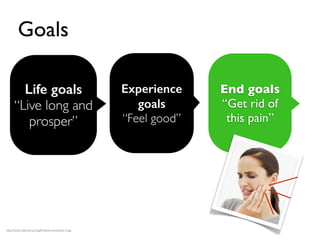

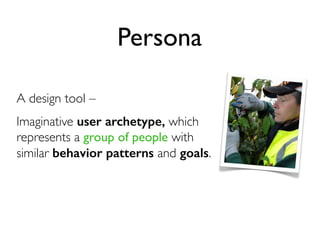
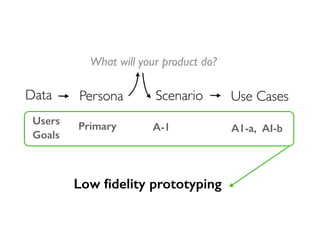
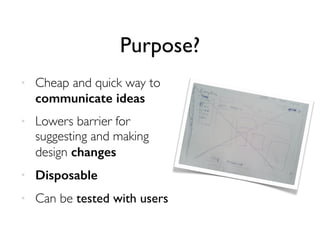
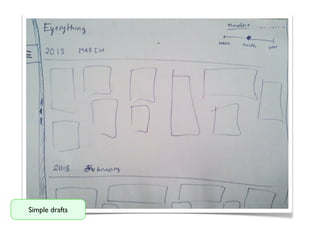
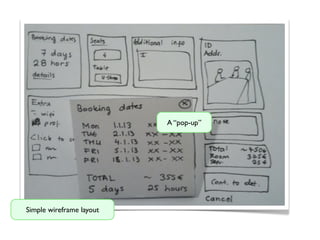
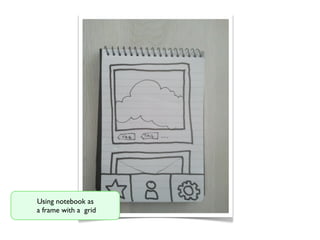
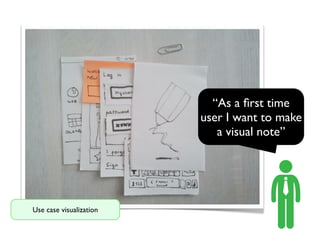
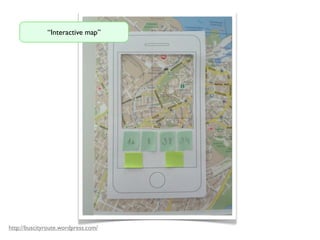
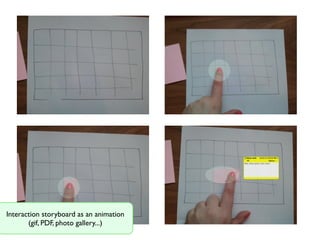
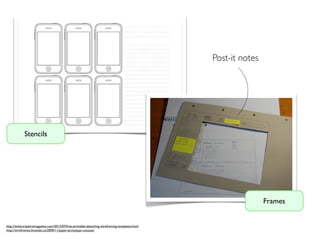
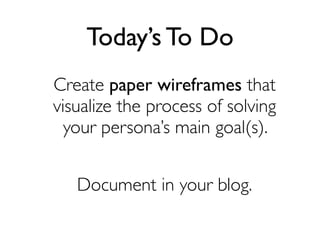

This document discusses paper prototyping as a cheap and quick low-fidelity design approach. It emphasizes using personas, scenarios, user stories, and use cases to understand user goals and develop paper prototypes that visualize the user's process of achieving their goals. Examples of paper prototyping techniques are provided, such as simple sketches, wireframes, storyboards, and using post-it notes. The purpose of paper prototyping is to communicate ideas cheaply and quickly, lower barriers to design changes, and allow designs to be tested with users.


