Prepared by Chathuri Alwis (SRI LANKA 0717004939)
(BA-English- University of Ja’pura)
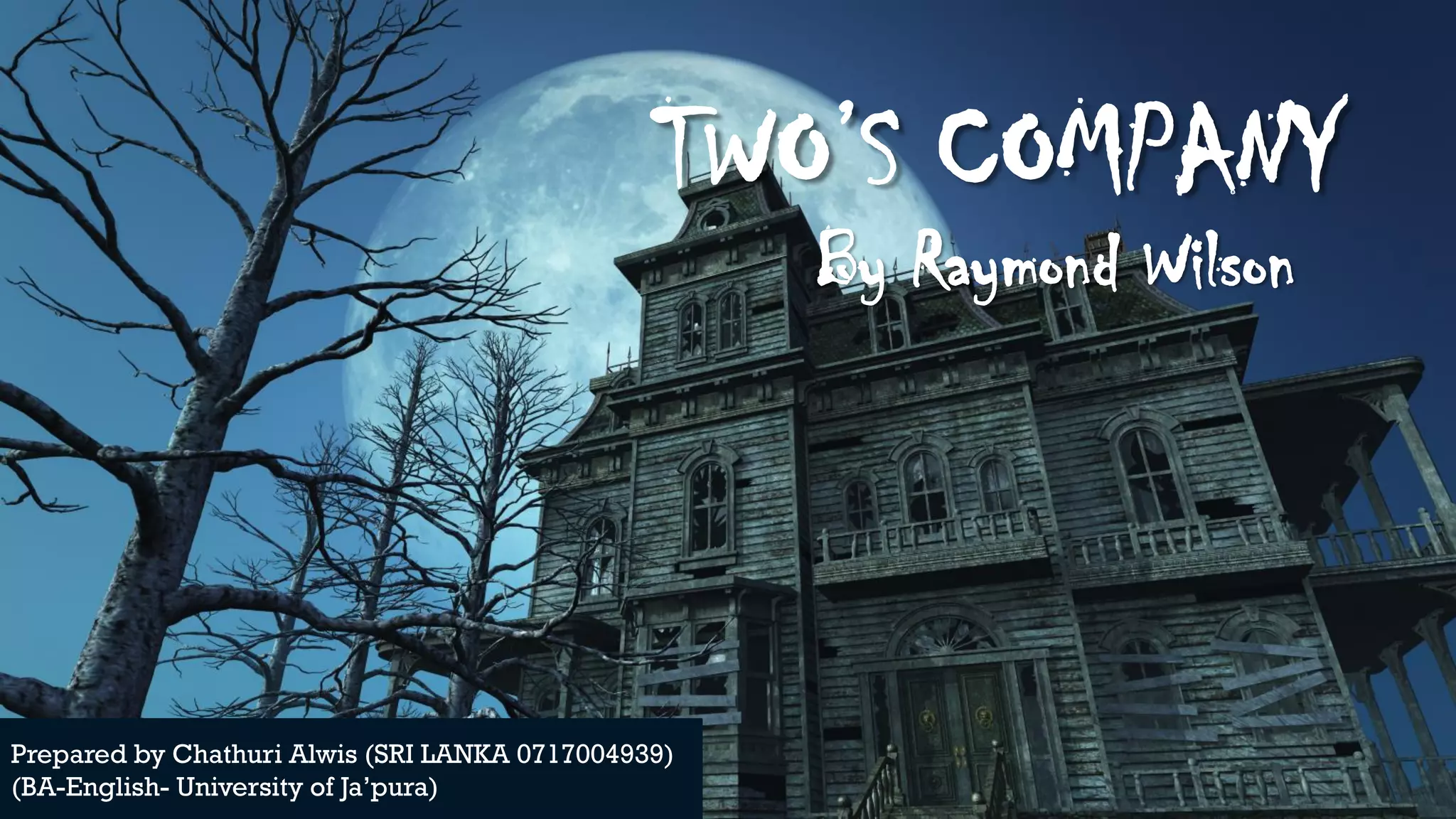
TWO’S COMPANY
By Raymond Wilson
The introductory line is a
warning on what is going to
happen to this man. It is
ironical.
The sad story of a man who didn’t believe in ghosts
They said the house was haunted , but
he laughed at them and said, ‚Tut, tut!
I never heard such tittle-tattle
as ghosts that groan and chains that rattle;
And just to prove I’m in the right,
please leave me here to spend the night.
The
character is
over-
confident
and boastful
in nature
The
character is
over-
confident
and boastful
in nature
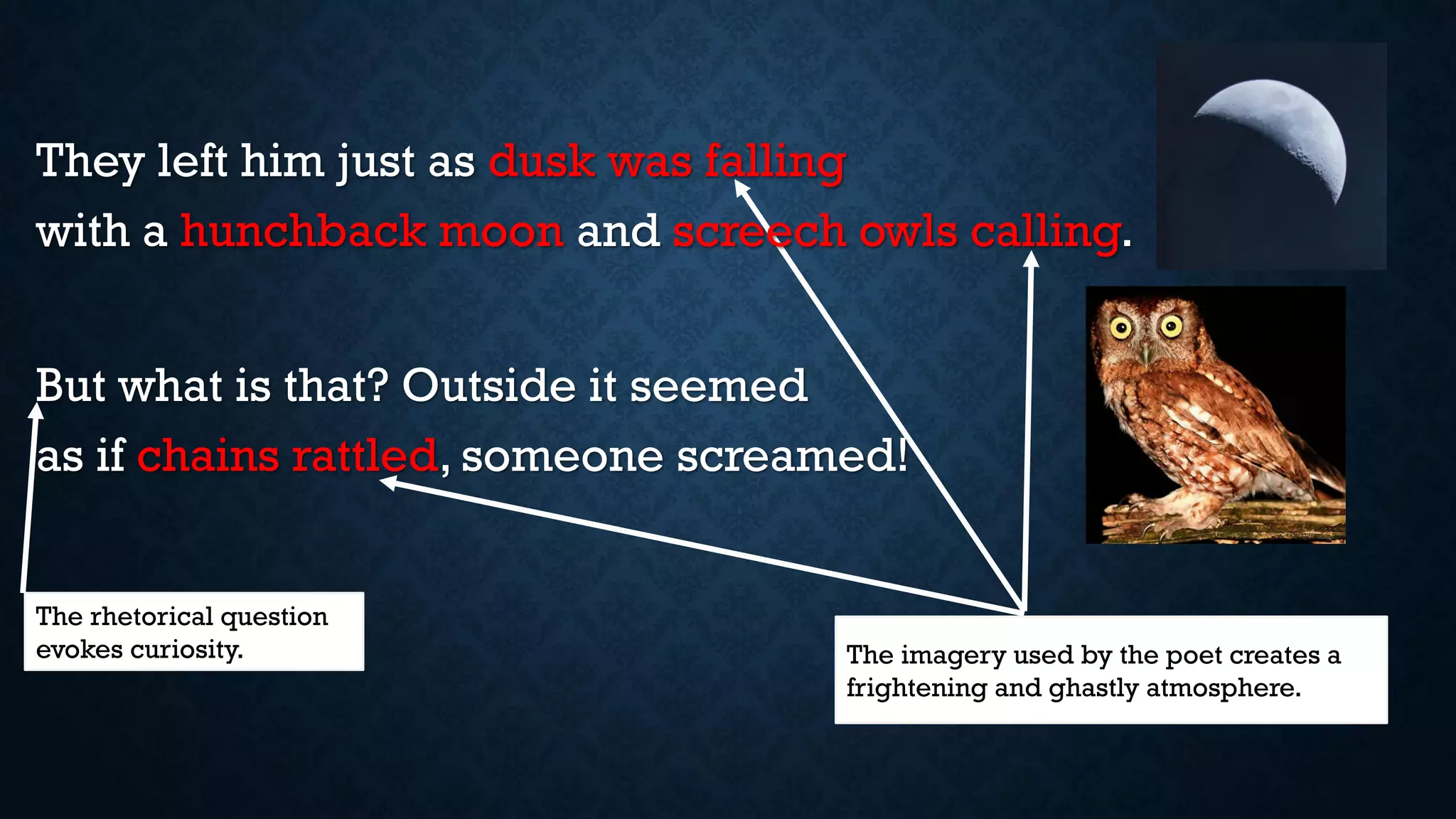
They left him just as dusk was falling
with a hunchback moon and screech owls calling.
But what is that? Outside it seemed
as if chains rattled, someone screamed!
The rhetorical question
evokes curiosity. The imagery used by the poet creates a
frightening and ghastly atmosphere.
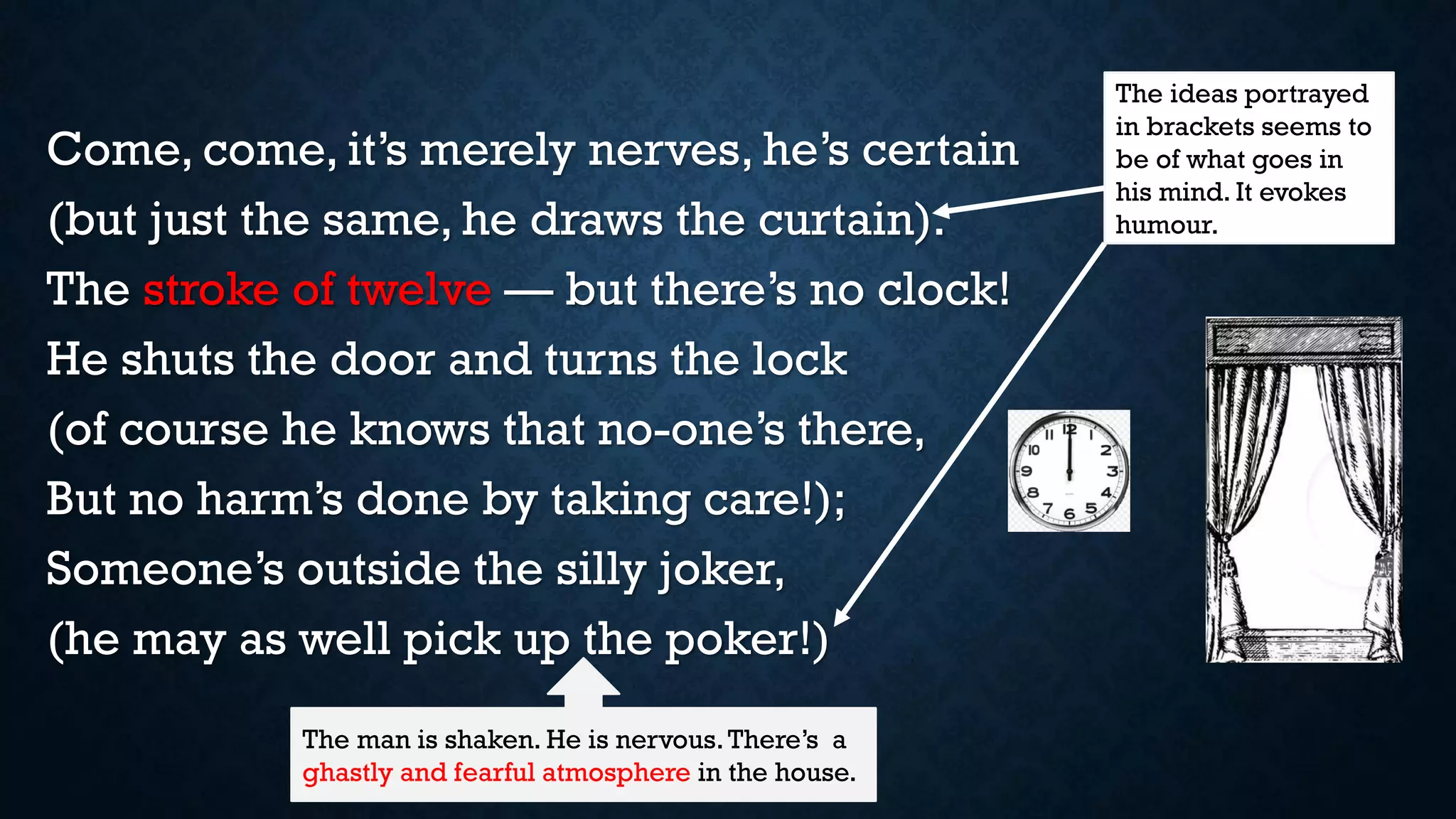
Come, come, it’s merely nerves, he’s certain
(but just the same, he draws the curtain).
The stroke of twelve — but there’s no clock!
He shuts the door and turns the lock
(of course he knows that no-one’s there,
But no harm’s done by taking care!);
Someone’s outside the silly joker,
(he may as well pick up the poker!)
The man is shaken. He is nervous.There’s a
ghastly and fearful atmosphere in the house.
The ideas portrayed
in brackets seems to
be of what goes in
his mind. It evokes
humour.
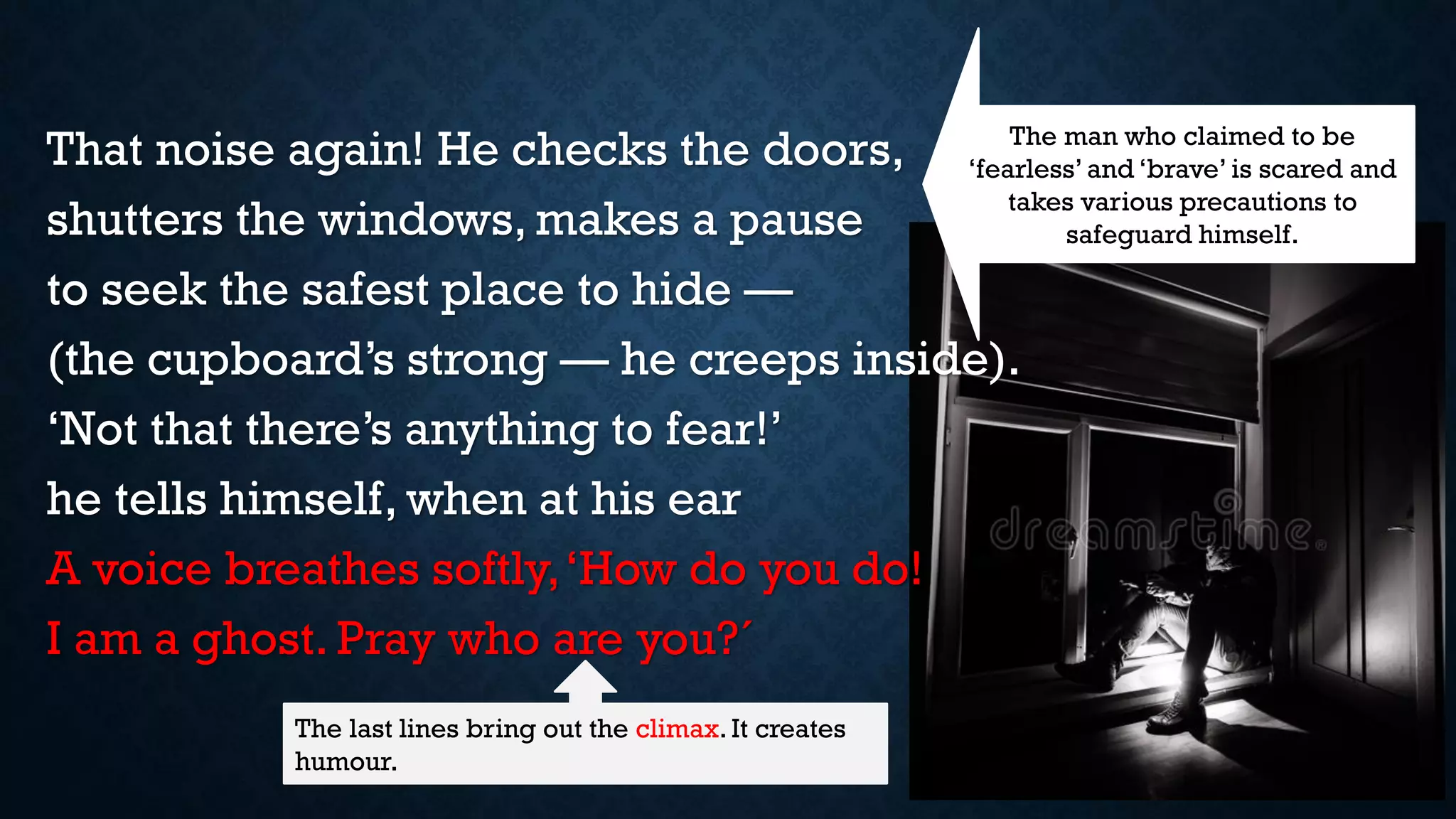
That noise again! He checks the doors,
shutters the windows, makes a pause
to seek the safest place to hide —
(the cupboard’s strong — he creeps inside).
‘Not that there’s anything to fear!’
he tells himself, when at his ear
A voice breathes softly,‘How do you do!
I am a ghost. Pray who are you?´
The last lines bring out the climax. It creates
humour.
The man who claimed to be
‘fearless’ and ‘brave’ is scared and
takes various precautions to
safeguard himself.
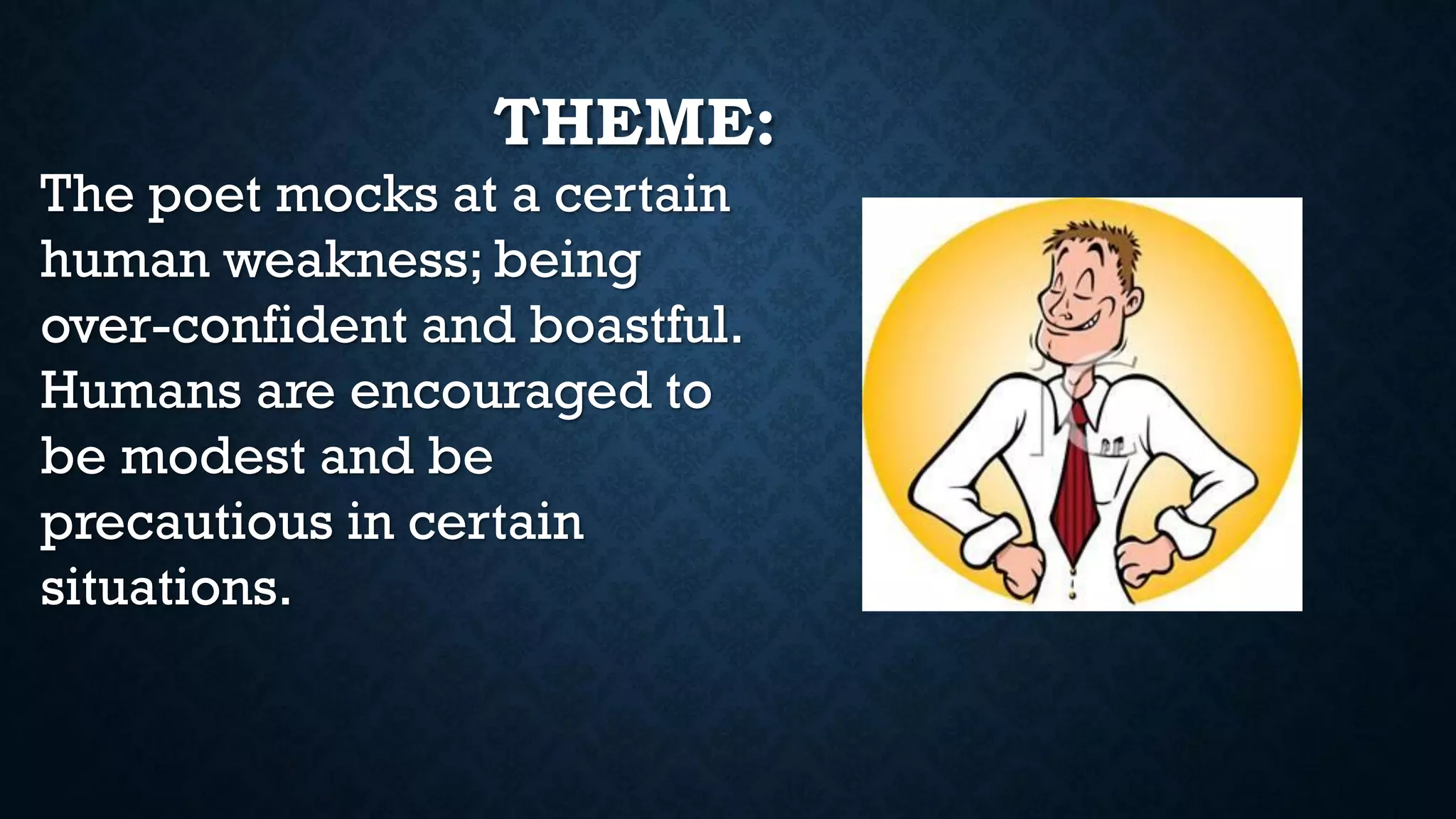
THEME:
The poet mocks at a certain
human weakness; being
over-confident and boastful.
Humans are encouraged to
be modest and be
precautious in certain
situations.
TITLE:
The title is very ironical. The title
suggests interaction of two
persons.Yet the reader finds that
this company to be with a ghost.
The ghost is very cordial
contrary to being violent. It is
strange and unexpected. It
evokes humour.
Two’s Company
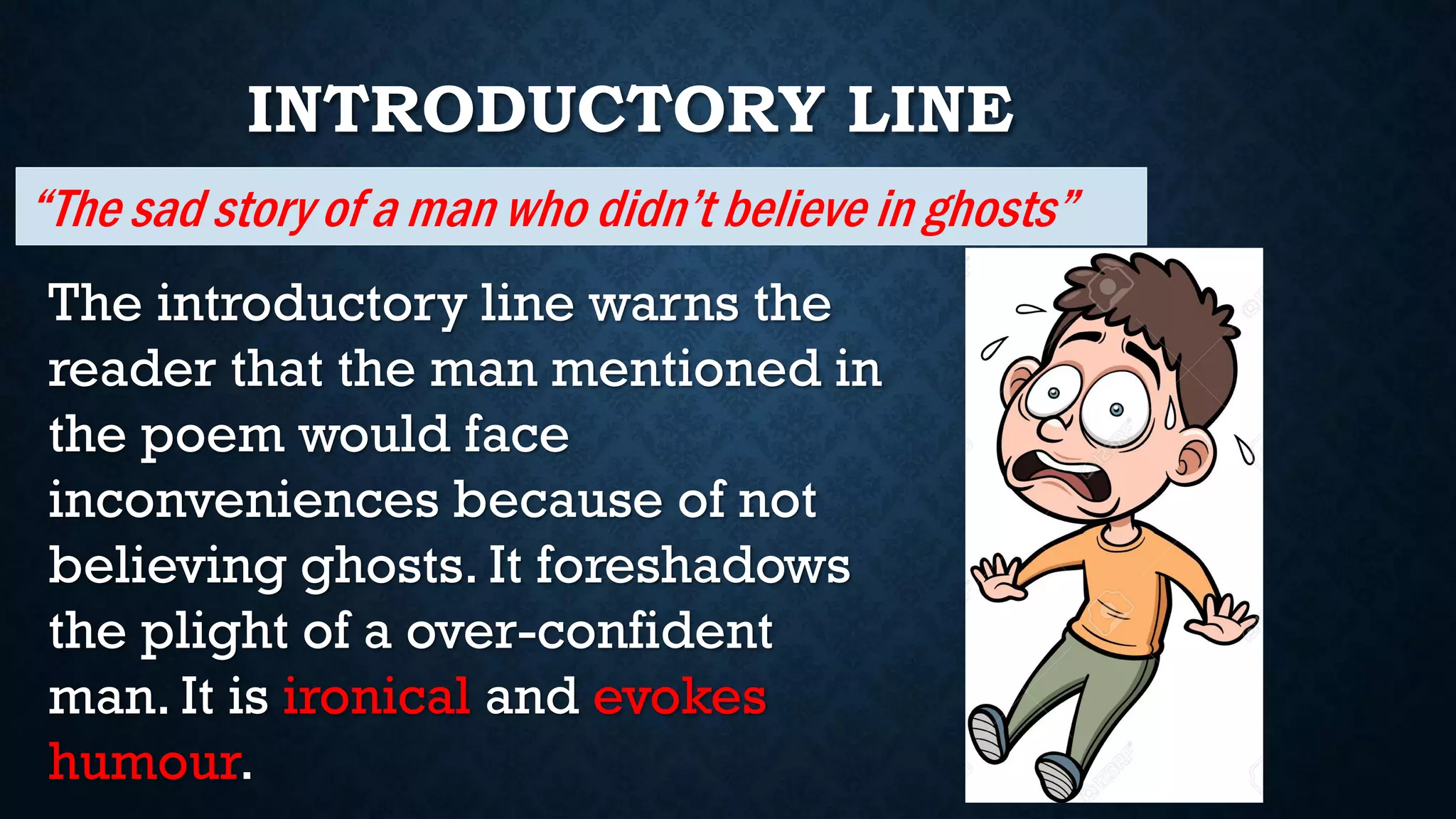
INTRODUCTORY LINE
The introductory line warns the
reader that the man mentioned in
the poem would face
inconveniences because of not
believing ghosts. It foreshadows
the plight of a over-confident
man. It is ironical and evokes
humour.
“The sad story of a man who didn’t believe in ghosts”
THE FINAL COUPLET:
It is the climax of the poem. It is also
very ironical. The final couplet
describes how the over-confident
man meets the ghost in an
unexpected manner.The reader is
engulfed in laughter because of the
polite manner in which the ghost
speaks . It creates humour.
“A voice breathes softly, ‘How do you do!
I am a ghost. Pray who are you?”
HOW HUMOUR IS CREATED IN THE
POEM
1.The structure of the poem contributes to create
humour.
• The introductory line foreshadows that the man
would fall into trouble.
• Dramatic happenings are presented with a fast
rhythm. ( The man takes defensive steps as he was
over-whelmed with fear)
• The final couplet which describes the man’s unusual
encounter with the ghost is used to evoke homour.
2. Humour is produced through irony.
• The title is ironical as the man does not intend to
have company with a ghost.
• Introductory line portrays the impending danger.
The boastful man almost risked his life trying to
prove his stance.
• The actions and precautions taken by the man to
safeguard himself are ironical as he claimed he
doesn’t believe the existence of ghosts. It is
ironical and produces humour.
• Final couplet evokes humour.The man meets
the ghost in an unexpected manner in the
cupboard where he hid. The ghost speaks
very politely which is quite ironical.
3. Simple language used by the poet also helps
to create humour.

Two's Company by Raymond Wilson

  • 1.
    Prepared by ChathuriAlwis (SRI LANKA 0717004939) (BA-English- University of Ja’pura) TWO’S COMPANY By Raymond Wilson
  • 2.
    The introductory lineis a warning on what is going to happen to this man. It is ironical. The sad story of a man who didn’t believe in ghosts They said the house was haunted , but he laughed at them and said, ‚Tut, tut! I never heard such tittle-tattle as ghosts that groan and chains that rattle; And just to prove I’m in the right, please leave me here to spend the night. The character is over- confident and boastful in nature The character is over- confident and boastful in nature
  • 3.
    They left himjust as dusk was falling with a hunchback moon and screech owls calling. But what is that? Outside it seemed as if chains rattled, someone screamed! The rhetorical question evokes curiosity. The imagery used by the poet creates a frightening and ghastly atmosphere.
  • 4.
    Come, come, it’smerely nerves, he’s certain (but just the same, he draws the curtain). The stroke of twelve — but there’s no clock! He shuts the door and turns the lock (of course he knows that no-one’s there, But no harm’s done by taking care!); Someone’s outside the silly joker, (he may as well pick up the poker!) The man is shaken. He is nervous.There’s a ghastly and fearful atmosphere in the house. The ideas portrayed in brackets seems to be of what goes in his mind. It evokes humour.
  • 5.
    That noise again!He checks the doors, shutters the windows, makes a pause to seek the safest place to hide — (the cupboard’s strong — he creeps inside). ‘Not that there’s anything to fear!’ he tells himself, when at his ear A voice breathes softly,‘How do you do! I am a ghost. Pray who are you?´ The last lines bring out the climax. It creates humour. The man who claimed to be ‘fearless’ and ‘brave’ is scared and takes various precautions to safeguard himself.
  • 6.
    THEME: The poet mocksat a certain human weakness; being over-confident and boastful. Humans are encouraged to be modest and be precautious in certain situations.
  • 7.
    TITLE: The title isvery ironical. The title suggests interaction of two persons.Yet the reader finds that this company to be with a ghost. The ghost is very cordial contrary to being violent. It is strange and unexpected. It evokes humour. Two’s Company
  • 8.
    INTRODUCTORY LINE The introductoryline warns the reader that the man mentioned in the poem would face inconveniences because of not believing ghosts. It foreshadows the plight of a over-confident man. It is ironical and evokes humour. “The sad story of a man who didn’t believe in ghosts”
  • 9.
    THE FINAL COUPLET: Itis the climax of the poem. It is also very ironical. The final couplet describes how the over-confident man meets the ghost in an unexpected manner.The reader is engulfed in laughter because of the polite manner in which the ghost speaks . It creates humour. “A voice breathes softly, ‘How do you do! I am a ghost. Pray who are you?”
  • 10.
    HOW HUMOUR ISCREATED IN THE POEM 1.The structure of the poem contributes to create humour. • The introductory line foreshadows that the man would fall into trouble. • Dramatic happenings are presented with a fast rhythm. ( The man takes defensive steps as he was over-whelmed with fear) • The final couplet which describes the man’s unusual encounter with the ghost is used to evoke homour.
  • 11.
    2. Humour isproduced through irony. • The title is ironical as the man does not intend to have company with a ghost. • Introductory line portrays the impending danger. The boastful man almost risked his life trying to prove his stance. • The actions and precautions taken by the man to safeguard himself are ironical as he claimed he doesn’t believe the existence of ghosts. It is ironical and produces humour.
  • 12.
    • Final coupletevokes humour.The man meets the ghost in an unexpected manner in the cupboard where he hid. The ghost speaks very politely which is quite ironical. 3. Simple language used by the poet also helps to create humour.