TSUGI: A Framework for Building PHP-Based 
Learning Tools 
Nikolas Galanis, Marc Alier, Maria José Casañ, 
Enric Mayol, Charles Severance
The Rise of the LMS 
§ Most learning institutions have adopted one 
§ LMSs meet the structural and operational needs 
of institutions 
§ Educators and learners are generally satisfied 
with what is offered
§ Too much offer 
The potential fall of the LMS 
§ Most LMSs seem to be clones of one another 
§ Less flexibility, less innovation
§ Innovation on mobile devices 
§ Social web 
Looming changes 
§ Learning content and its producers (commercial 
vs. open-access)
§ Flexibility 
• Adapt to and embrace new technologies 
• Mobile themes 
• Mobile apps 
§ Interoperability 
• Provide support for external tools 
• Implement web services 
• Implement interoperability protocols 
• Implement secure communication mechanisms 
A solution?
Service Oriented Architectures 
§ Provide an approach to interoperability 
§ Decouple various blocks of the architecture 
§ Update blocks individually 
§ Students have access to a variety of tools 
§ Teachers can incorporate teaching tools form 
within the LMS 
§ No interface changes
Interoperability Specifications 
§ Open Knowledge Initiative (OKI) 
• Standard architecture of common services across systems 
• Open Service Interface Definitions (OSIDs) 
• OSIDs are software contracts of interoperability 
• Compatible with most specifications (SOAP, WSDL, etc.) 
• Authentication, authorization, logging, internationalization, 
configuration 
• Advantages: 
o Ease of development 
o Common service factory 
o Reduced integration cost 
o Reusable software
Interoperability Specifications 
§ IMS Global Learning Consortium 
• Learning Tools for Interoperability (LTI) 
• LTI defines the way to reach an external application from the LMS 
• A protocol for communication between a “tool consumer” and the 
“tool producer” 
• LTI focuses on the launch phase of the interaction, establishing the 
necessary parameters 
o Log in 
o User information 
o Course information 
o Placement information 
o Size information
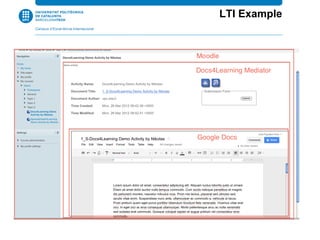
LTI Example
TSUGI 
§ Geared towards tool producers 
§ A framework to facilitate the writing of LTI tools. 
§ Supports LTI 1.x and 2.x 
§ Create a learning ecosystem that is LMS 
agnostic
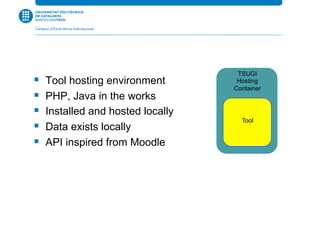
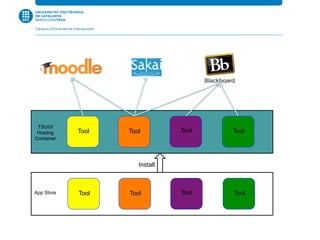
§ Tool hosting environment 
§ PHP, Java in the works 
§ Installed and hosted locally 
§ Data exists locally 
§ API inspired from Moodle 
TSUGI 
Hosting 
Container 
Tool
Tool Tool Tool Tool 
TSUGI 
Hosting 
Container 
Install 
App Store Tool Tool Tool Tool
§ Develop the Java implementation 
§ Support for installing TSUGI on a cloud 
infrastructure 
§ Promote and showcase TSUGI 
Future work
QUESTIONS

TSUGI: A Framework for Building PHP-Based Learning Tools

  • 1.
    TSUGI: A Frameworkfor Building PHP-Based Learning Tools Nikolas Galanis, Marc Alier, Maria José Casañ, Enric Mayol, Charles Severance
  • 2.
    The Rise ofthe LMS § Most learning institutions have adopted one § LMSs meet the structural and operational needs of institutions § Educators and learners are generally satisfied with what is offered
  • 3.
    § Too muchoffer The potential fall of the LMS § Most LMSs seem to be clones of one another § Less flexibility, less innovation
  • 4.
    § Innovation onmobile devices § Social web Looming changes § Learning content and its producers (commercial vs. open-access)
  • 5.
    § Flexibility •Adapt to and embrace new technologies • Mobile themes • Mobile apps § Interoperability • Provide support for external tools • Implement web services • Implement interoperability protocols • Implement secure communication mechanisms A solution?
  • 6.
    Service Oriented Architectures § Provide an approach to interoperability § Decouple various blocks of the architecture § Update blocks individually § Students have access to a variety of tools § Teachers can incorporate teaching tools form within the LMS § No interface changes
  • 7.
    Interoperability Specifications §Open Knowledge Initiative (OKI) • Standard architecture of common services across systems • Open Service Interface Definitions (OSIDs) • OSIDs are software contracts of interoperability • Compatible with most specifications (SOAP, WSDL, etc.) • Authentication, authorization, logging, internationalization, configuration • Advantages: o Ease of development o Common service factory o Reduced integration cost o Reusable software
  • 8.
    Interoperability Specifications §IMS Global Learning Consortium • Learning Tools for Interoperability (LTI) • LTI defines the way to reach an external application from the LMS • A protocol for communication between a “tool consumer” and the “tool producer” • LTI focuses on the launch phase of the interaction, establishing the necessary parameters o Log in o User information o Course information o Placement information o Size information
  • 9.
  • 10.
    TSUGI § Gearedtowards tool producers § A framework to facilitate the writing of LTI tools. § Supports LTI 1.x and 2.x § Create a learning ecosystem that is LMS agnostic
  • 11.
    § Tool hostingenvironment § PHP, Java in the works § Installed and hosted locally § Data exists locally § API inspired from Moodle TSUGI Hosting Container Tool
  • 12.
    Tool Tool ToolTool TSUGI Hosting Container Install App Store Tool Tool Tool Tool
  • 13.
    § Develop theJava implementation § Support for installing TSUGI on a cloud infrastructure § Promote and showcase TSUGI Future work
  • 14.