Triaxial Vs Single Axis
Accelerometers
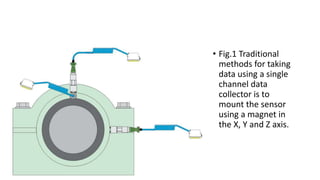
• Fig.1 Traditional
methods for taking
data using a single
channel data
collector is to
mount the sensor
using a magnet in
the X, Y and Z axis.
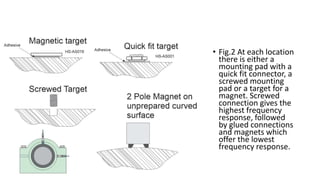
• Fig.2 At each location
there is either a
mounting pad with a
quick fit connector, a
screwed mounting
pad or a target for a
magnet. Screwed
connection gives the
highest frequency
response, followed
by glued connections
and magnets which
offer the lowest
frequency response.
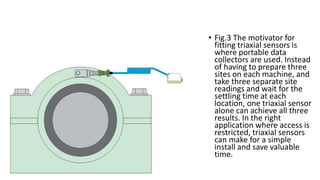
• Fig.3 The motivator for
fitting triaxial sensors is
where portable data
collectors are used. Instead
of having to prepare three
sites on each machine, and
take three separate site
readings and wait for the
settling time at each
location, one triaxial sensor
alone can achieve all three
results. In the right
application where access is
restricted, triaxial sensors
can make for a simple
install and save valuable
time.
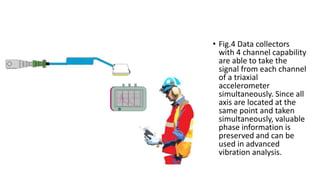
• Fig.4 Data collectors
with 4 channel capability
are able to take the
signal from each channel
of a triaxial
accelerometer
simultaneously. Since all
axis are located at the
same point and taken
simultaneously, valuable
phase information is
preserved and can be
used in advanced
vibration analysis.
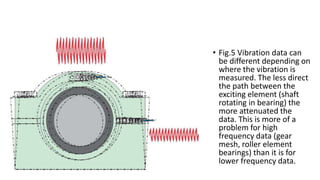
• Fig.5 Vibration data can
be different depending on
where the vibration is
measured. The less direct
the path between the
exciting element (shaft
rotating in bearing) the
more attenuated the
data. This is more of a
problem for high
frequency data (gear
mesh, roller element
bearings) than it is for
lower frequency data.
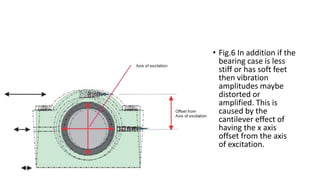
• Fig.6 In addition if the
bearing case is less
stiff or has soft feet
then vibration
amplitudes maybe
distorted or
amplified. This is
caused by the
cantilever effect of
having the x axis
offset from the axis
of excitation.
• Fig.7 For permanently
installed systems, the
triaxial sensor may
provide cost savings
for cabling. Installation
consists of running
only one cable as
opposed to three. This
maybe significant if
the junction box is not
located locally.
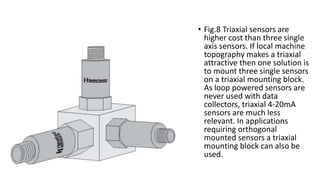
• Fig.8 Triaxial sensors are
higher cost than three single
axis sensors. If local machine
topography makes a triaxial
attractive then one solution is
to mount three single sensors
on a triaxial mounting block.
As loop powered sensors are
never used with data
collectors, triaxial 4-20mA
sensors are much less
relevant. In applications
requiring orthogonal
mounted sensors a triaxial
mounting block can also be
used.

Triaxial vs single axis accelerometers

  • 1.
    Triaxial Vs SingleAxis Accelerometers
  • 2.
    • Fig.1 Traditional methodsfor taking data using a single channel data collector is to mount the sensor using a magnet in the X, Y and Z axis.
  • 3.
    • Fig.2 Ateach location there is either a mounting pad with a quick fit connector, a screwed mounting pad or a target for a magnet. Screwed connection gives the highest frequency response, followed by glued connections and magnets which offer the lowest frequency response.
  • 4.
    • Fig.3 Themotivator for fitting triaxial sensors is where portable data collectors are used. Instead of having to prepare three sites on each machine, and take three separate site readings and wait for the settling time at each location, one triaxial sensor alone can achieve all three results. In the right application where access is restricted, triaxial sensors can make for a simple install and save valuable time.
  • 5.
    • Fig.4 Datacollectors with 4 channel capability are able to take the signal from each channel of a triaxial accelerometer simultaneously. Since all axis are located at the same point and taken simultaneously, valuable phase information is preserved and can be used in advanced vibration analysis.
  • 6.
    • Fig.5 Vibrationdata can be different depending on where the vibration is measured. The less direct the path between the exciting element (shaft rotating in bearing) the more attenuated the data. This is more of a problem for high frequency data (gear mesh, roller element bearings) than it is for lower frequency data.
  • 7.
    • Fig.6 Inaddition if the bearing case is less stiff or has soft feet then vibration amplitudes maybe distorted or amplified. This is caused by the cantilever effect of having the x axis offset from the axis of excitation.
  • 8.
    • Fig.7 Forpermanently installed systems, the triaxial sensor may provide cost savings for cabling. Installation consists of running only one cable as opposed to three. This maybe significant if the junction box is not located locally.
  • 9.
    • Fig.8 Triaxialsensors are higher cost than three single axis sensors. If local machine topography makes a triaxial attractive then one solution is to mount three single sensors on a triaxial mounting block. As loop powered sensors are never used with data collectors, triaxial 4-20mA sensors are much less relevant. In applications requiring orthogonal mounted sensors a triaxial mounting block can also be used.