Title Layout
• Subtitle
Course: CSE131 (Discrete Mathematics)
Course Teacher:
Section: P Group: A
Group Members:
Going to Tell About…….
Definition of Tree
Basic Terminology of Tree
Classification of Tree
M-ary Tree
Full M-ary Tree
Binary Tree
Strictly Binary Tree (SBT)
Complete Binary Tree (CBT)
Almost Binary Tree (ALT)
 Application of trees
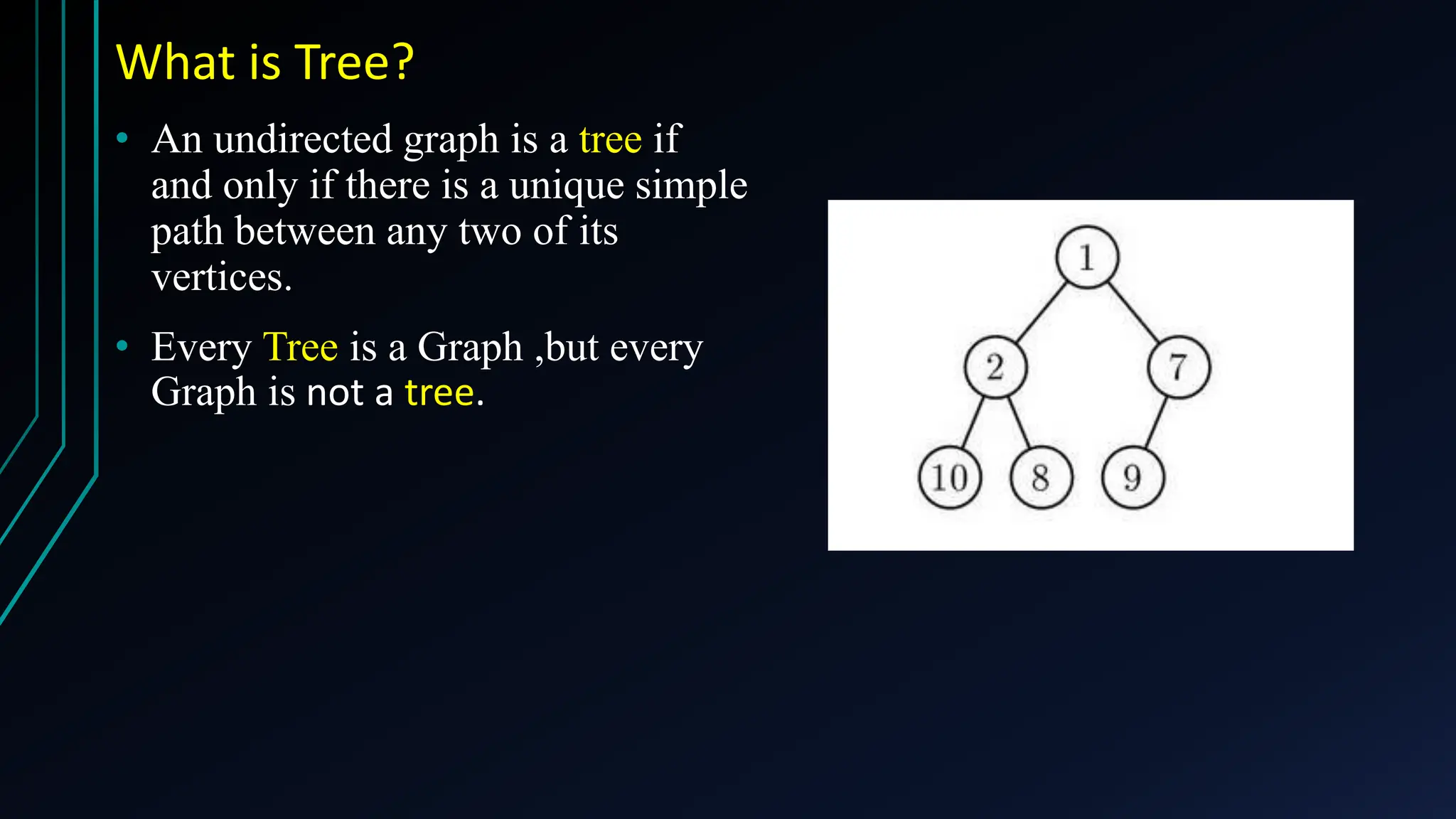
What is Tree?
• An undirected graph is a tree if
and only if there is a unique simple
path between any two of its
vertices.
• Every Tree is a Graph ,but every
Graph is not a tree.
Basic Terminology of Tree
 Node
 Edge
 Root
 Leaf Node
 Depth
 Height
 Parent
 Children
 Siblings
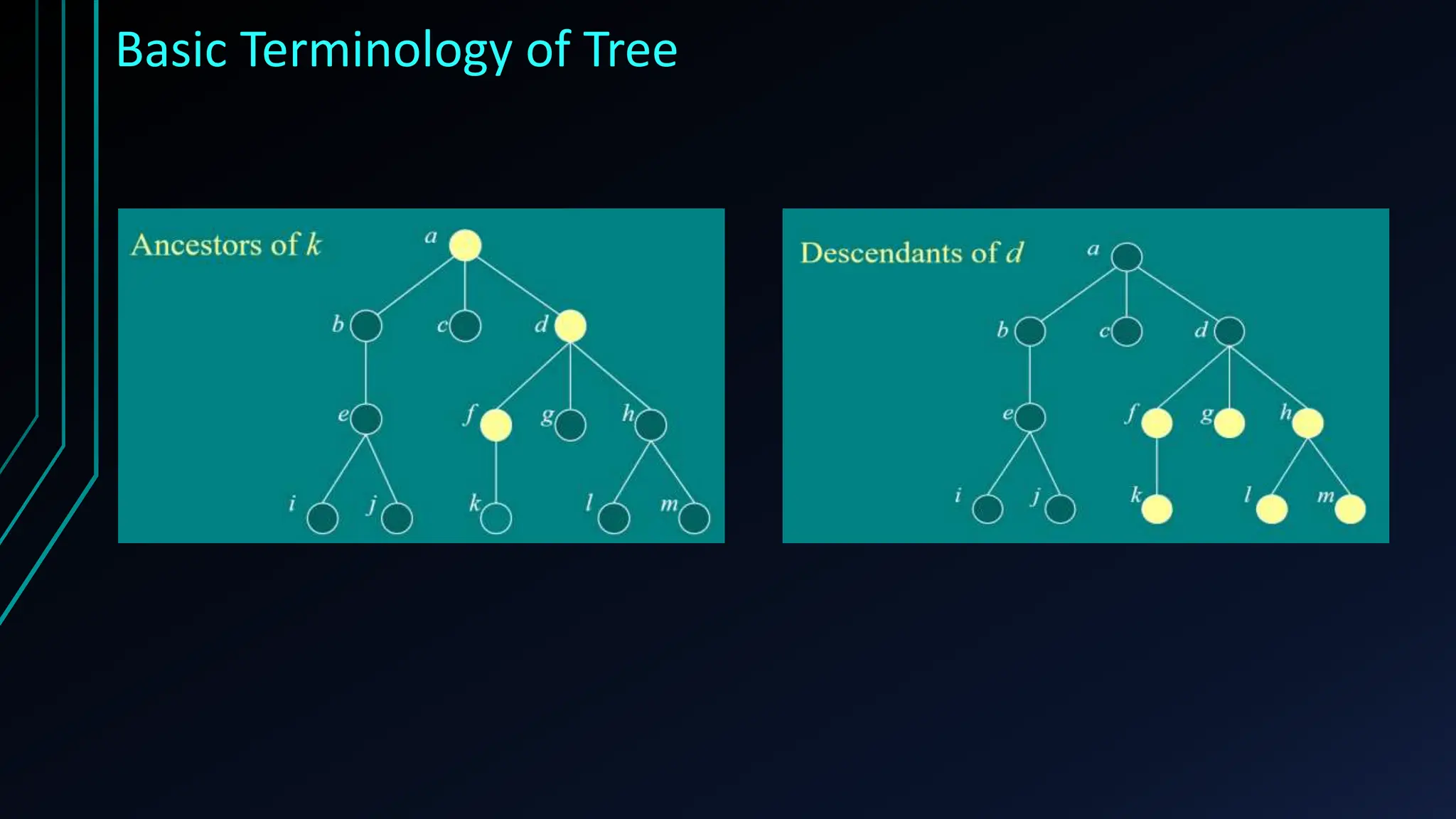
 Ancestors
 Descendants
 Sub-Tree
Basic Terminology of Tree
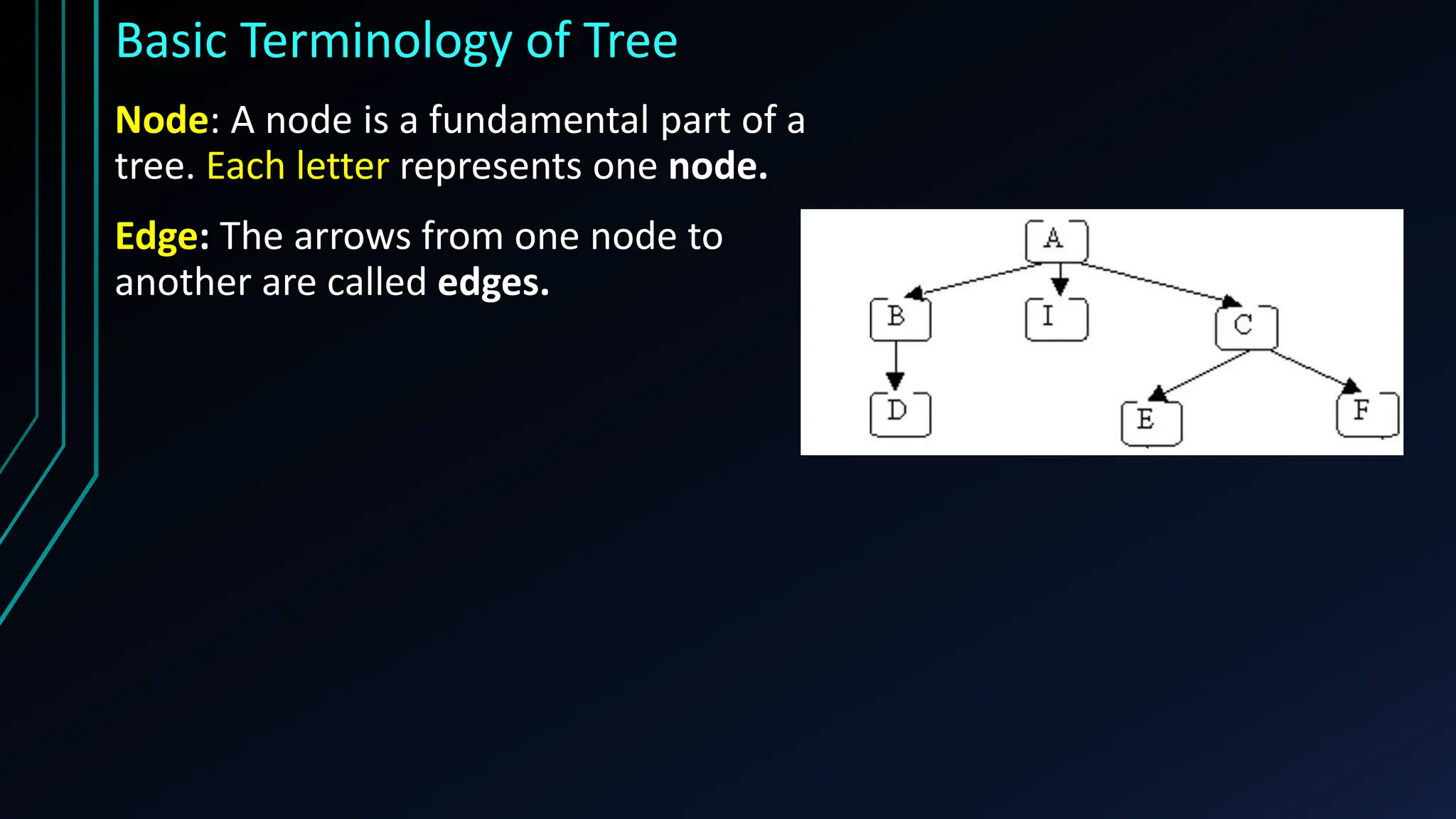
Node: A node is a fundamental part of a
tree. Each letter represents one node.
Edge: The arrows from one node to
another are called edges.
Basic Terminology of Tree
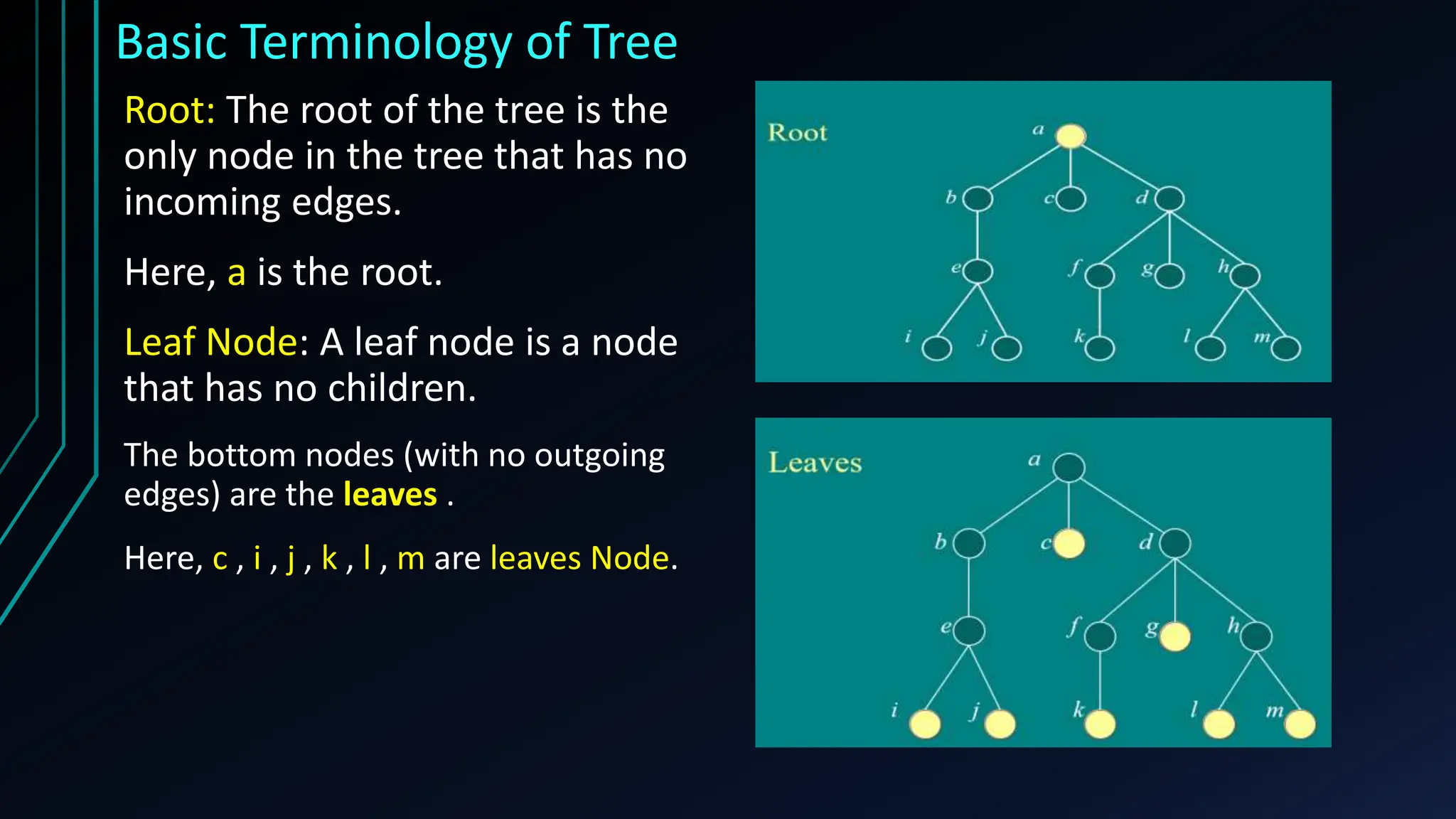
Root: The root of the tree is the
only node in the tree that has no
incoming edges.
Here, a is the root.
Leaf Node: A leaf node is a node
that has no children.
The bottom nodes (with no outgoing
edges) are the leaves .
Here, c , i , j , k , l , m are leaves Node.
Basic Terminology of Tree
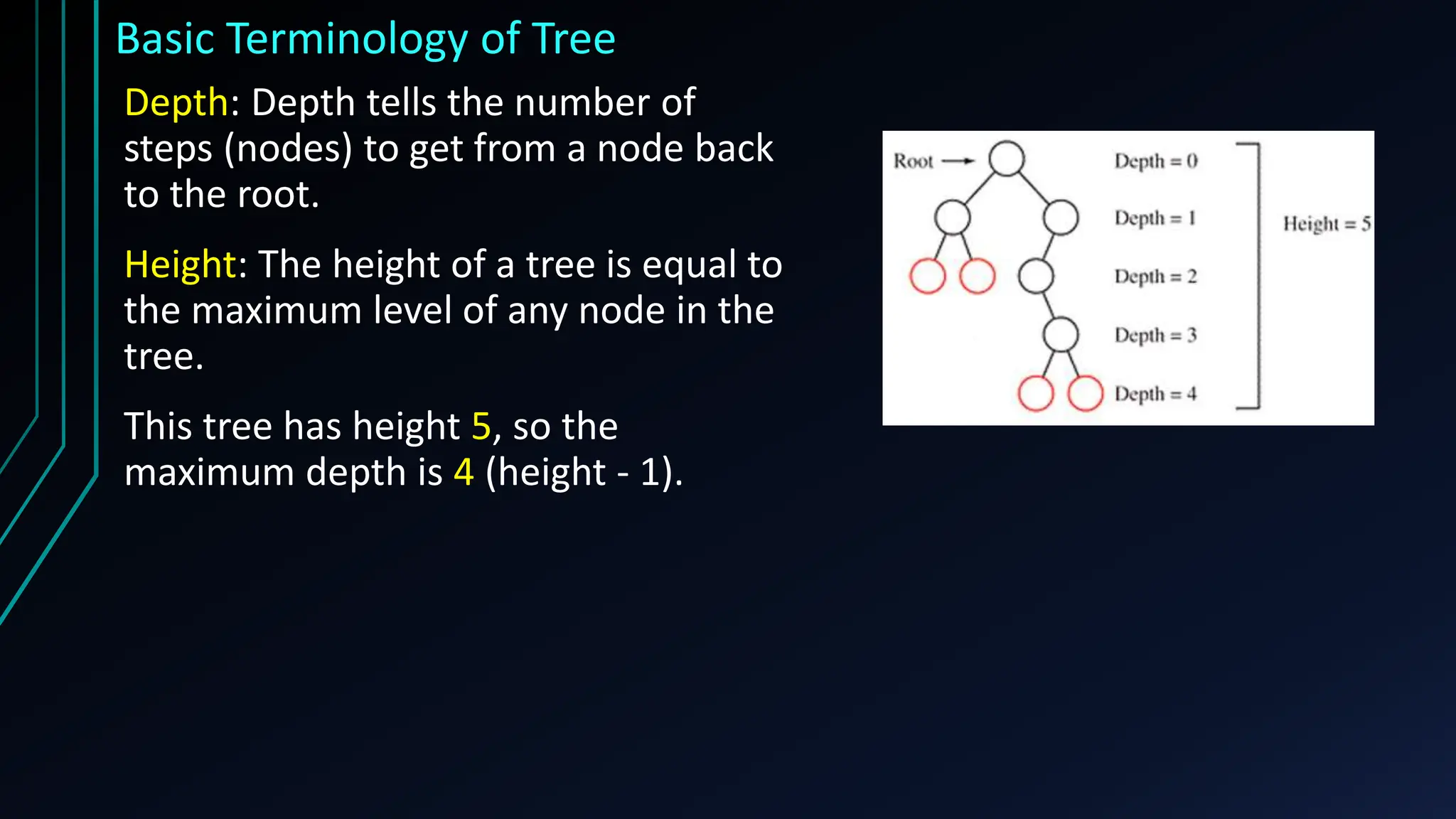
Depth: Depth tells the number of
steps (nodes) to get from a node back
to the root.
Height: The height of a tree is equal to
the maximum level of any node in the
tree.
This tree has height 5, so the
maximum depth is 4 (height - 1).
Basic Terminology of Tree
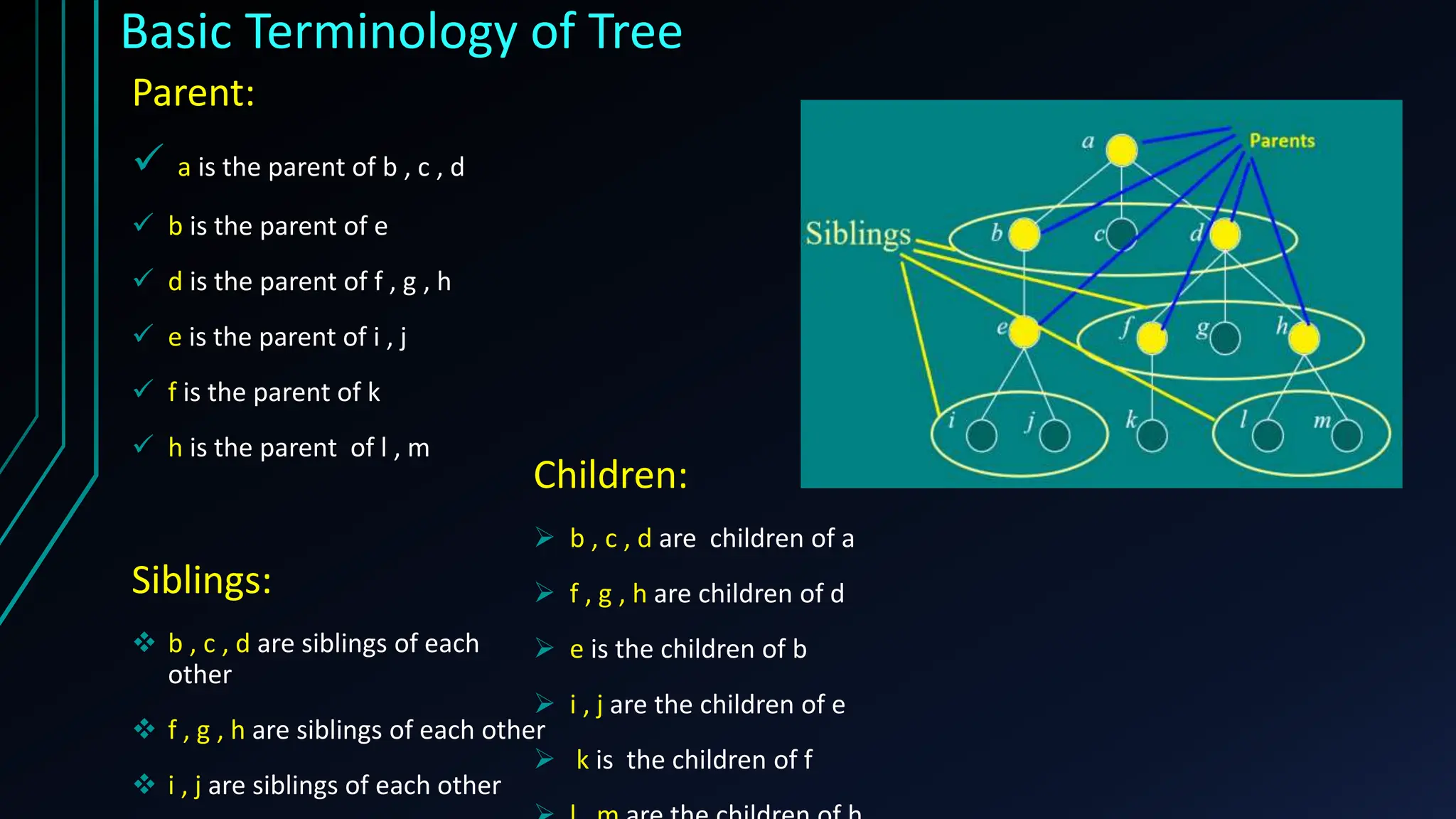
Parent:
 a is the parent of b , c , d
 b is the parent of e
 d is the parent of f , g , h
 e is the parent of i , j
 f is the parent of k
 h is the parent of l , m
Siblings:
 b , c , d are siblings of each
other
 f , g , h are siblings of each other
 i , j are siblings of each other
Children:
 b , c , d are children of a
 f , g , h are children of d
 e is the children of b
 i , j are the children of e
 k is the children of f
Basic Terminology of Tree
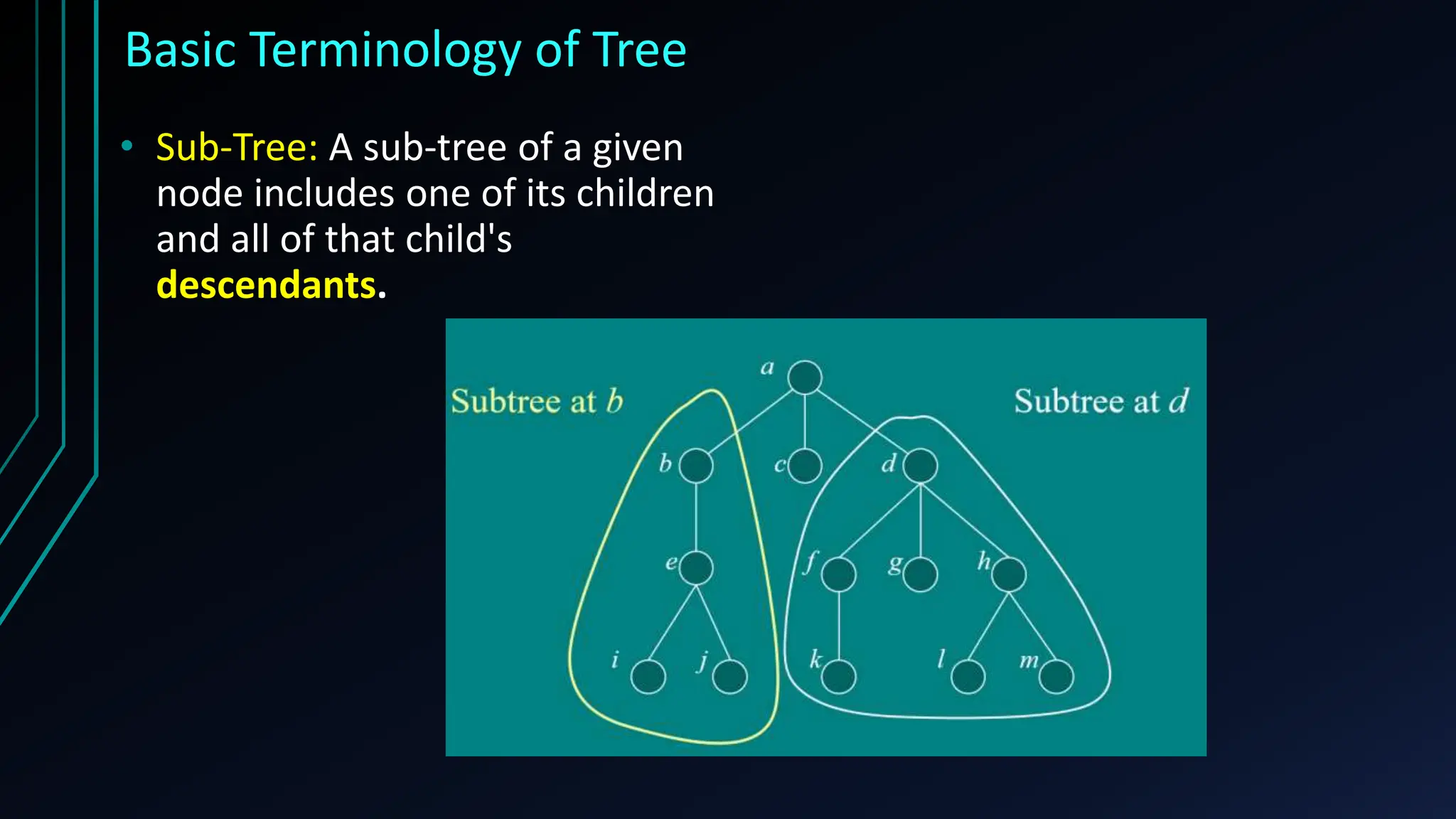
• Sub-Tree: A sub-tree of a given
node includes one of its children
and all of that child's
descendants.
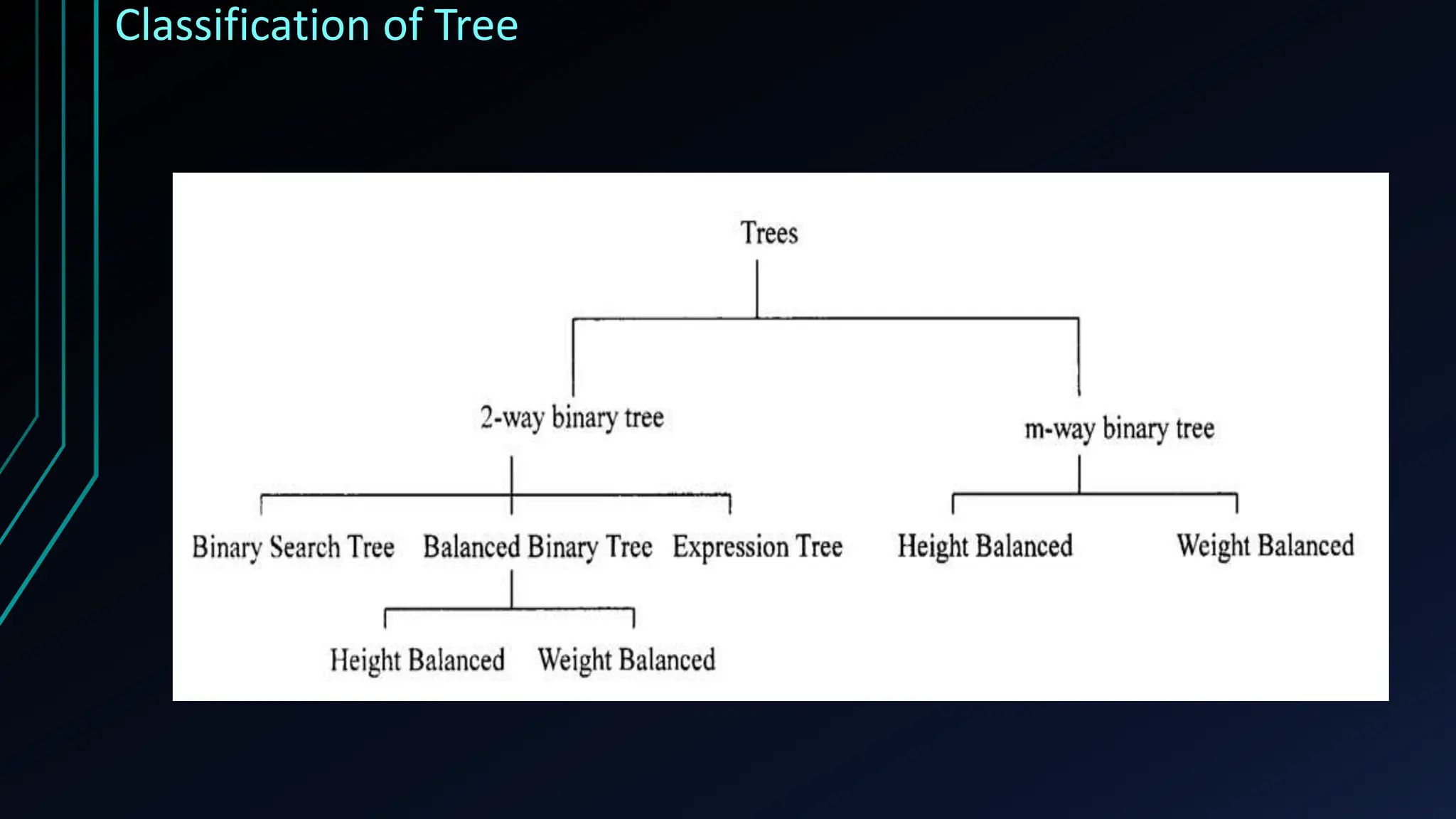
Classification of Tree
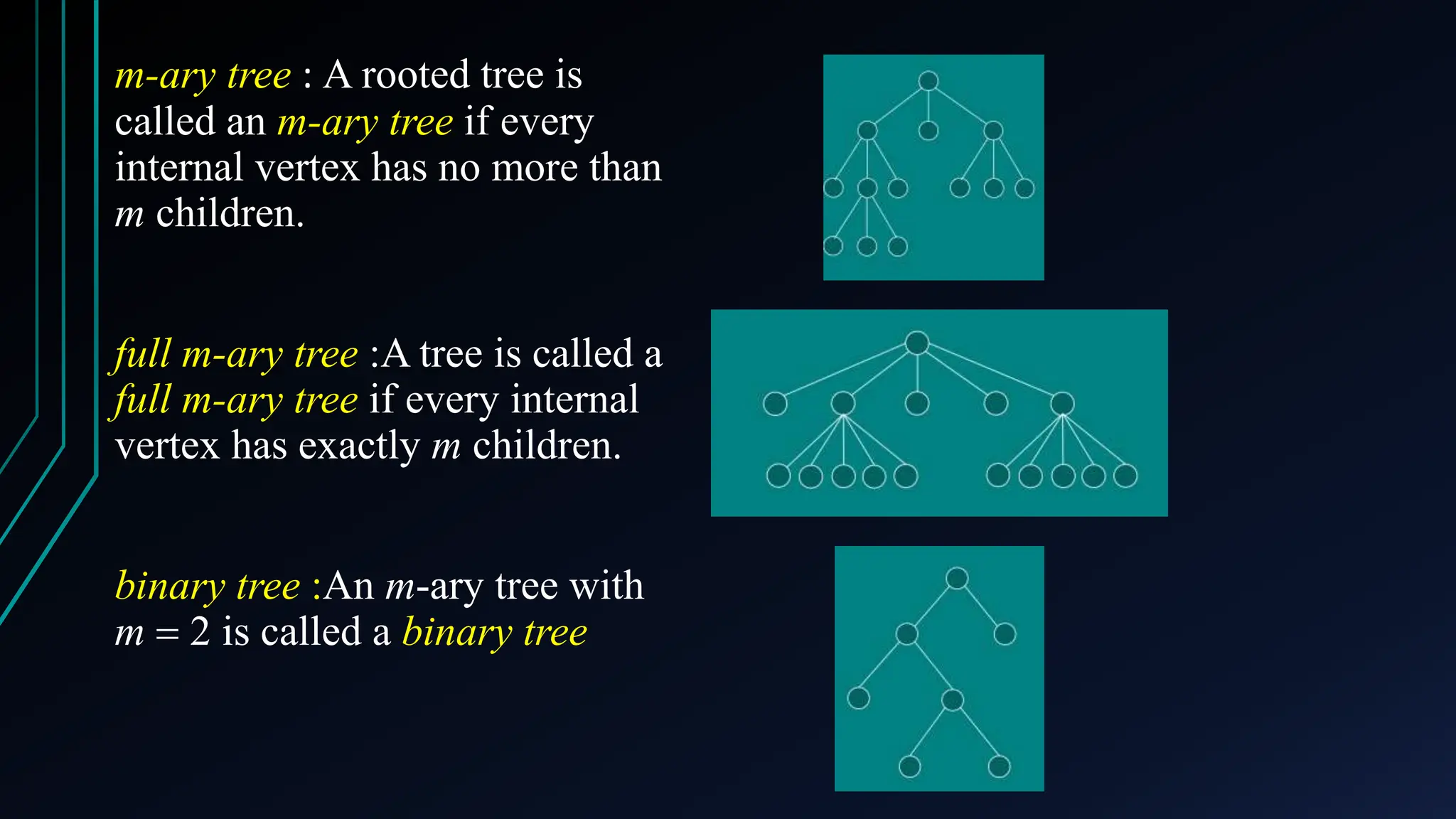
m-ary tree : A rooted tree is
called an m-ary tree if every
internal vertex has no more than
m children.
full m-ary tree :A tree is called a
full m-ary tree if every internal
vertex has exactly m children.
binary tree :An m-ary tree with
m  2 is called a binary tree
Strictly Binary Tree (SBT)
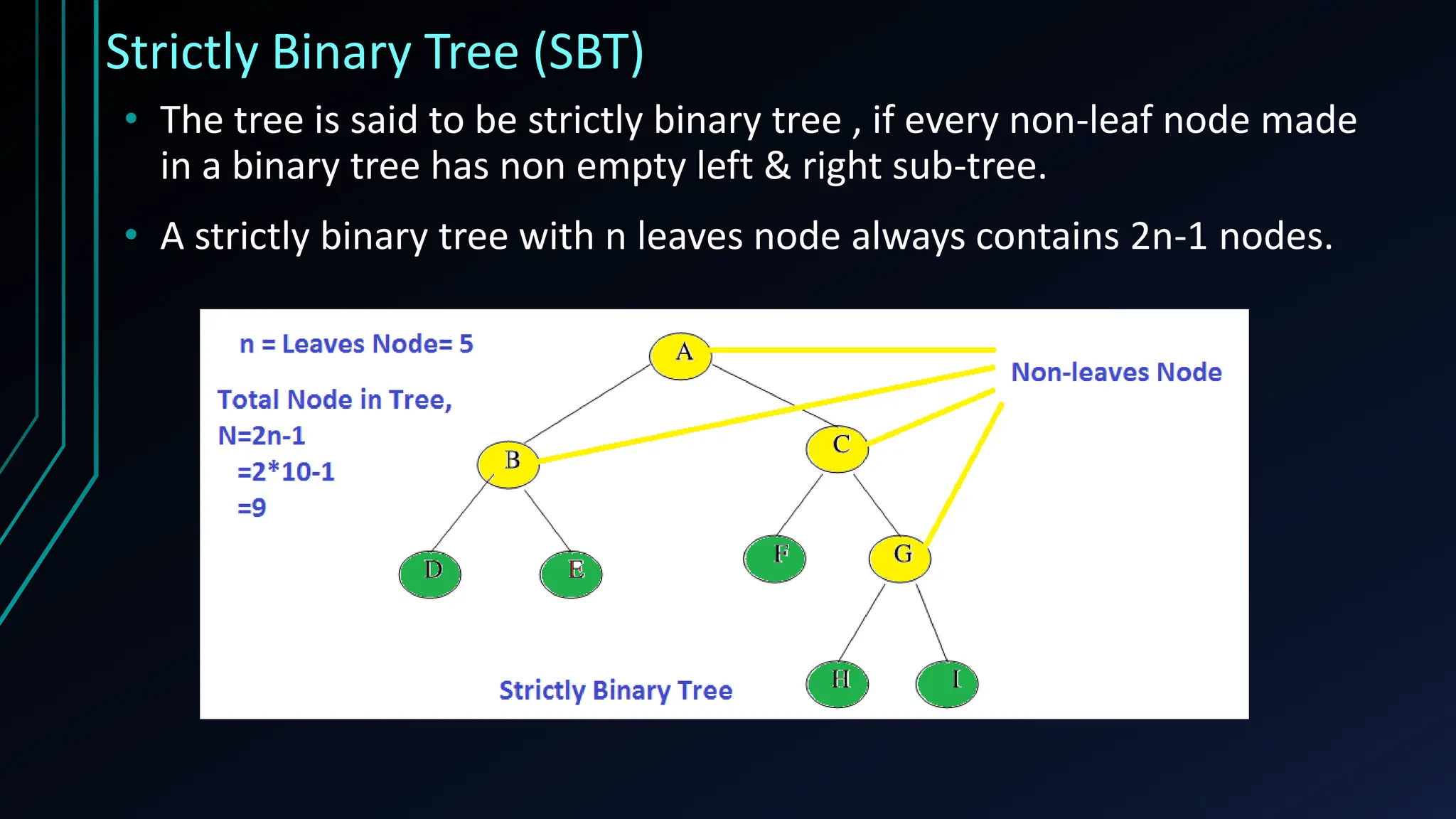
• The tree is said to be strictly binary tree , if every non-leaf node made
in a binary tree has non empty left & right sub-tree.
• A strictly binary tree with n leaves node always contains 2n-1 nodes.
Complete Binary Tree (CBT)
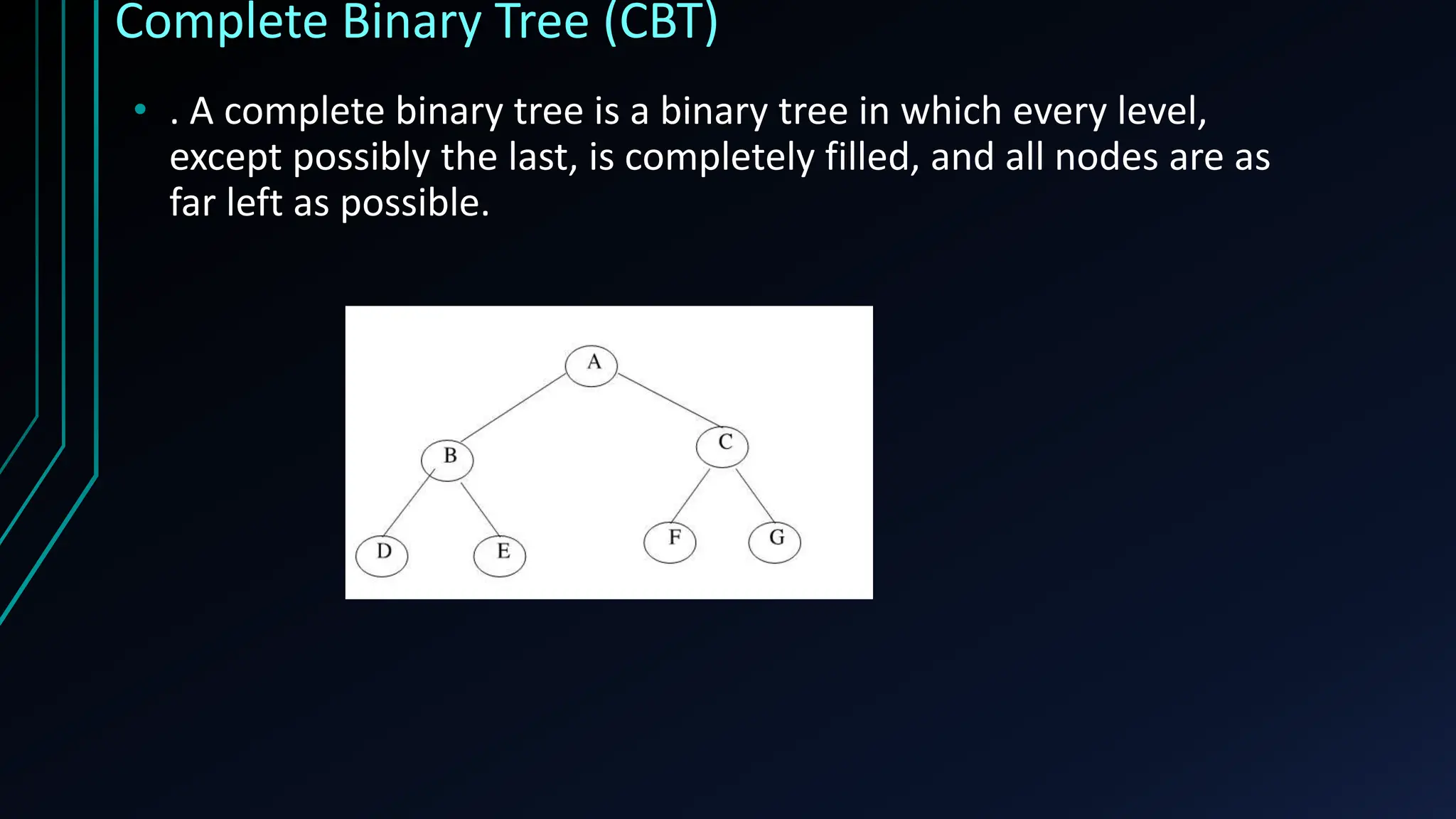
• . A complete binary tree is a binary tree in which every level,
except possibly the last, is completely filled, and all nodes are as
far left as possible.
Almost Binary Tree (ALT)
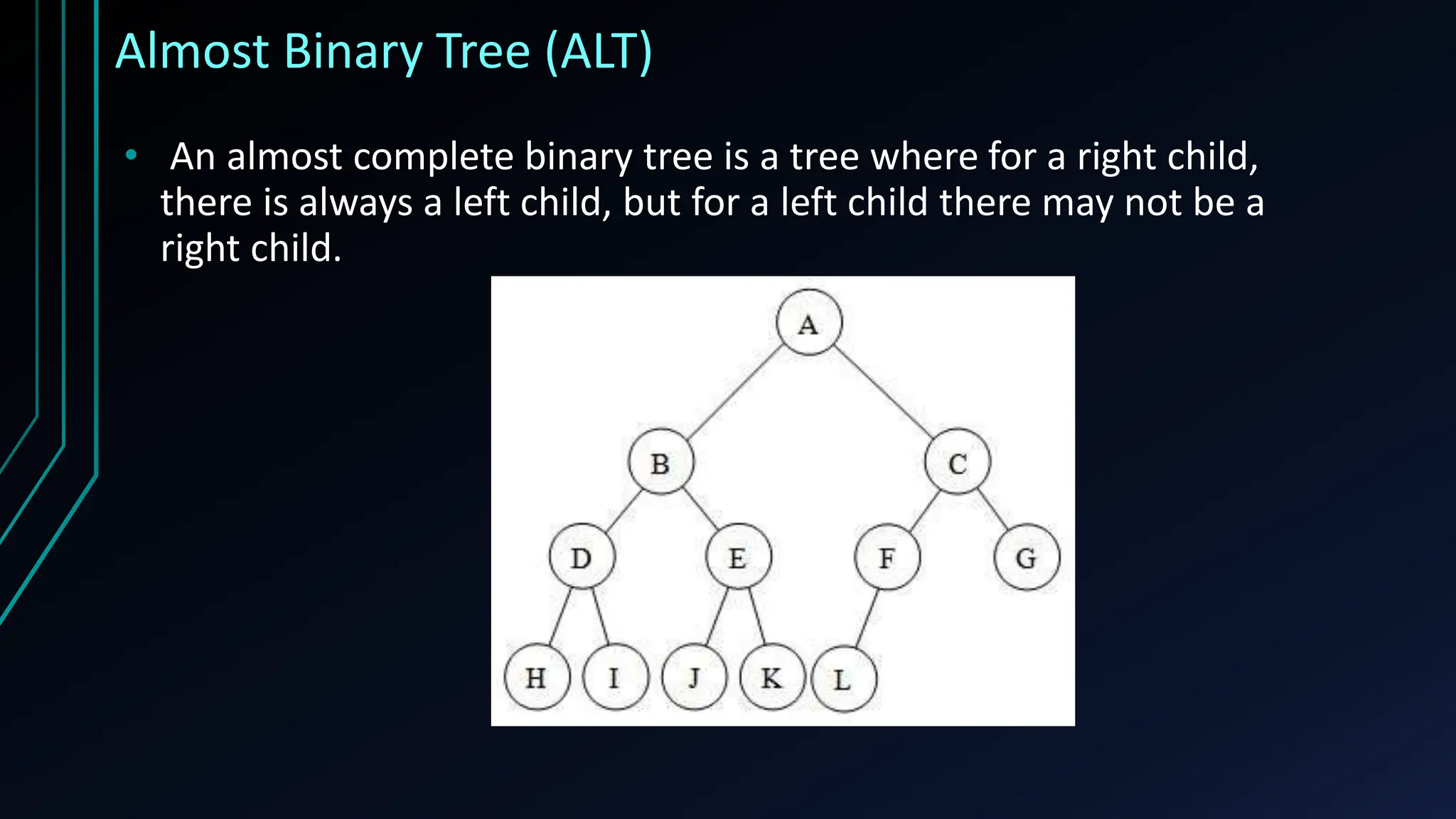
• An almost complete binary tree is a tree where for a right child,
there is always a left child, but for a left child there may not be a
right child.
Applications of Trees
Trees find applications in numerous domains:
* File systems: Represent directory structures.
* Databases: Index data for efficient retrieval.
* Network routing: Determine optimal paths between nodes.
* Compilers: Parse code and generate syntax trees.
* Artificial intelligence: Decision trees, game trees.
* Data compression: Huffman coding.
* Sorting and searching algorithms: Heap sort, binary search trees.
Conclusion
Trees are a fundamental data structure with a wide range of
applications. Understanding their structure and properties is essential
for solving various computational problems efficiently.
trees assignment by Syed Muhammad Huzaifa.pptx

trees assignment by Syed Muhammad Huzaifa.pptx

  • 1.
  • 2.
    Course: CSE131 (DiscreteMathematics) Course Teacher: Section: P Group: A Group Members:
  • 3.
    Going to TellAbout……. Definition of Tree Basic Terminology of Tree Classification of Tree M-ary Tree Full M-ary Tree Binary Tree Strictly Binary Tree (SBT) Complete Binary Tree (CBT) Almost Binary Tree (ALT)  Application of trees
  • 4.
    What is Tree? •An undirected graph is a tree if and only if there is a unique simple path between any two of its vertices. • Every Tree is a Graph ,but every Graph is not a tree.
  • 5.
    Basic Terminology ofTree  Node  Edge  Root  Leaf Node  Depth  Height  Parent  Children  Siblings  Ancestors  Descendants  Sub-Tree
  • 6.
    Basic Terminology ofTree Node: A node is a fundamental part of a tree. Each letter represents one node. Edge: The arrows from one node to another are called edges.
  • 7.
    Basic Terminology ofTree Root: The root of the tree is the only node in the tree that has no incoming edges. Here, a is the root. Leaf Node: A leaf node is a node that has no children. The bottom nodes (with no outgoing edges) are the leaves . Here, c , i , j , k , l , m are leaves Node.
  • 8.
    Basic Terminology ofTree Depth: Depth tells the number of steps (nodes) to get from a node back to the root. Height: The height of a tree is equal to the maximum level of any node in the tree. This tree has height 5, so the maximum depth is 4 (height - 1).
  • 9.
    Basic Terminology ofTree Parent:  a is the parent of b , c , d  b is the parent of e  d is the parent of f , g , h  e is the parent of i , j  f is the parent of k  h is the parent of l , m Siblings:  b , c , d are siblings of each other  f , g , h are siblings of each other  i , j are siblings of each other Children:  b , c , d are children of a  f , g , h are children of d  e is the children of b  i , j are the children of e  k is the children of f
  • 10.
  • 11.
    Basic Terminology ofTree • Sub-Tree: A sub-tree of a given node includes one of its children and all of that child's descendants.
  • 12.
  • 13.
    m-ary tree :A rooted tree is called an m-ary tree if every internal vertex has no more than m children. full m-ary tree :A tree is called a full m-ary tree if every internal vertex has exactly m children. binary tree :An m-ary tree with m  2 is called a binary tree
  • 14.
    Strictly Binary Tree(SBT) • The tree is said to be strictly binary tree , if every non-leaf node made in a binary tree has non empty left & right sub-tree. • A strictly binary tree with n leaves node always contains 2n-1 nodes.
  • 15.
    Complete Binary Tree(CBT) • . A complete binary tree is a binary tree in which every level, except possibly the last, is completely filled, and all nodes are as far left as possible.
  • 16.
    Almost Binary Tree(ALT) • An almost complete binary tree is a tree where for a right child, there is always a left child, but for a left child there may not be a right child.
  • 17.
    Applications of Trees Treesfind applications in numerous domains: * File systems: Represent directory structures. * Databases: Index data for efficient retrieval. * Network routing: Determine optimal paths between nodes. * Compilers: Parse code and generate syntax trees. * Artificial intelligence: Decision trees, game trees. * Data compression: Huffman coding. * Sorting and searching algorithms: Heap sort, binary search trees. Conclusion Trees are a fundamental data structure with a wide range of applications. Understanding their structure and properties is essential for solving various computational problems efficiently.