Tree Removals
Why are they necessary?
How you can help…
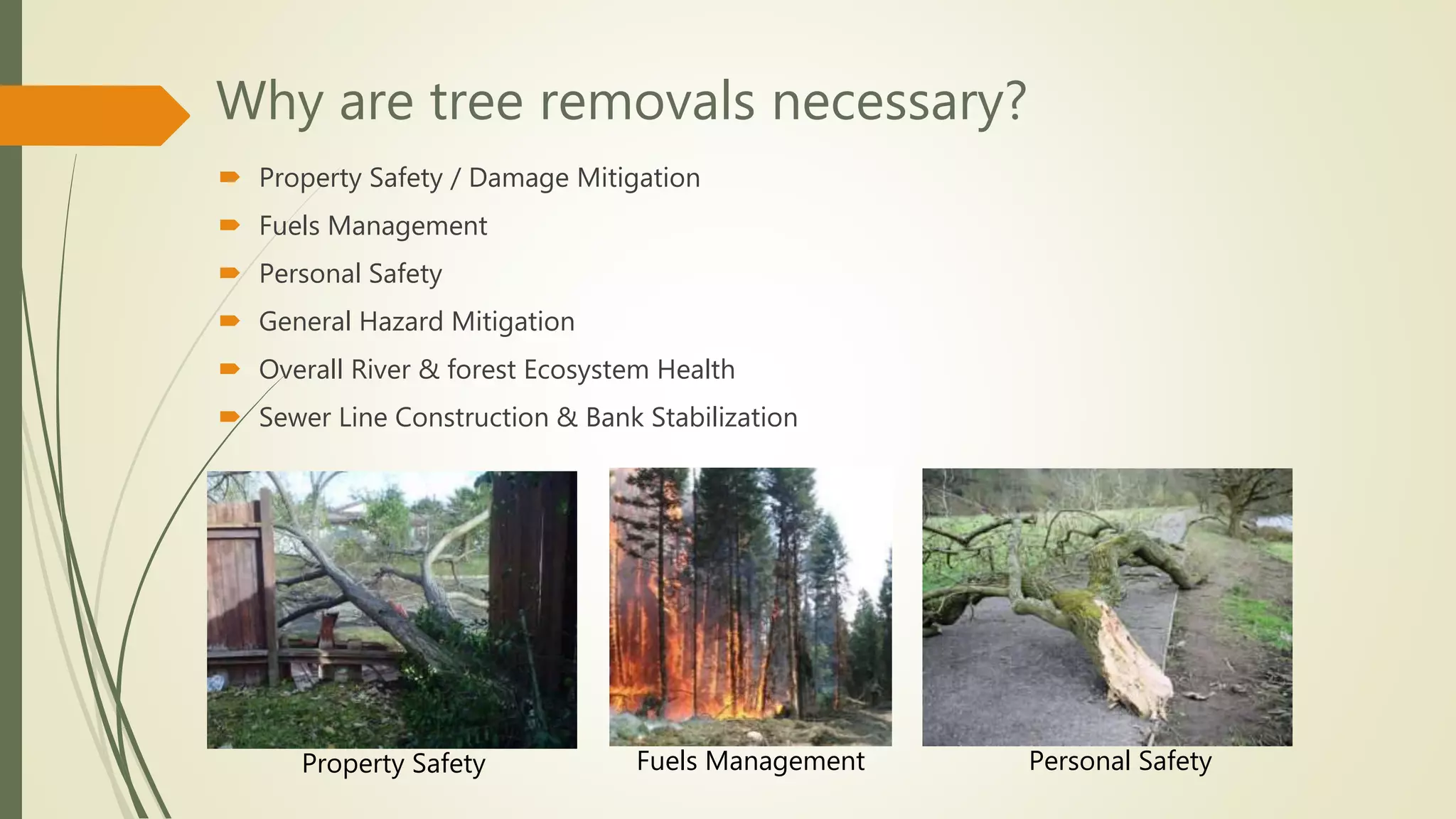
Why are tree removals necessary?
 Property Safety / Damage Mitigation
 Fuels Management
 Personal Safety
 General Hazard Mitigation
 Overall River & forest Ecosystem Health
 Sewer Line Construction & Bank Stabilization
Property Safety Fuels Management Personal Safety
Tree Removals
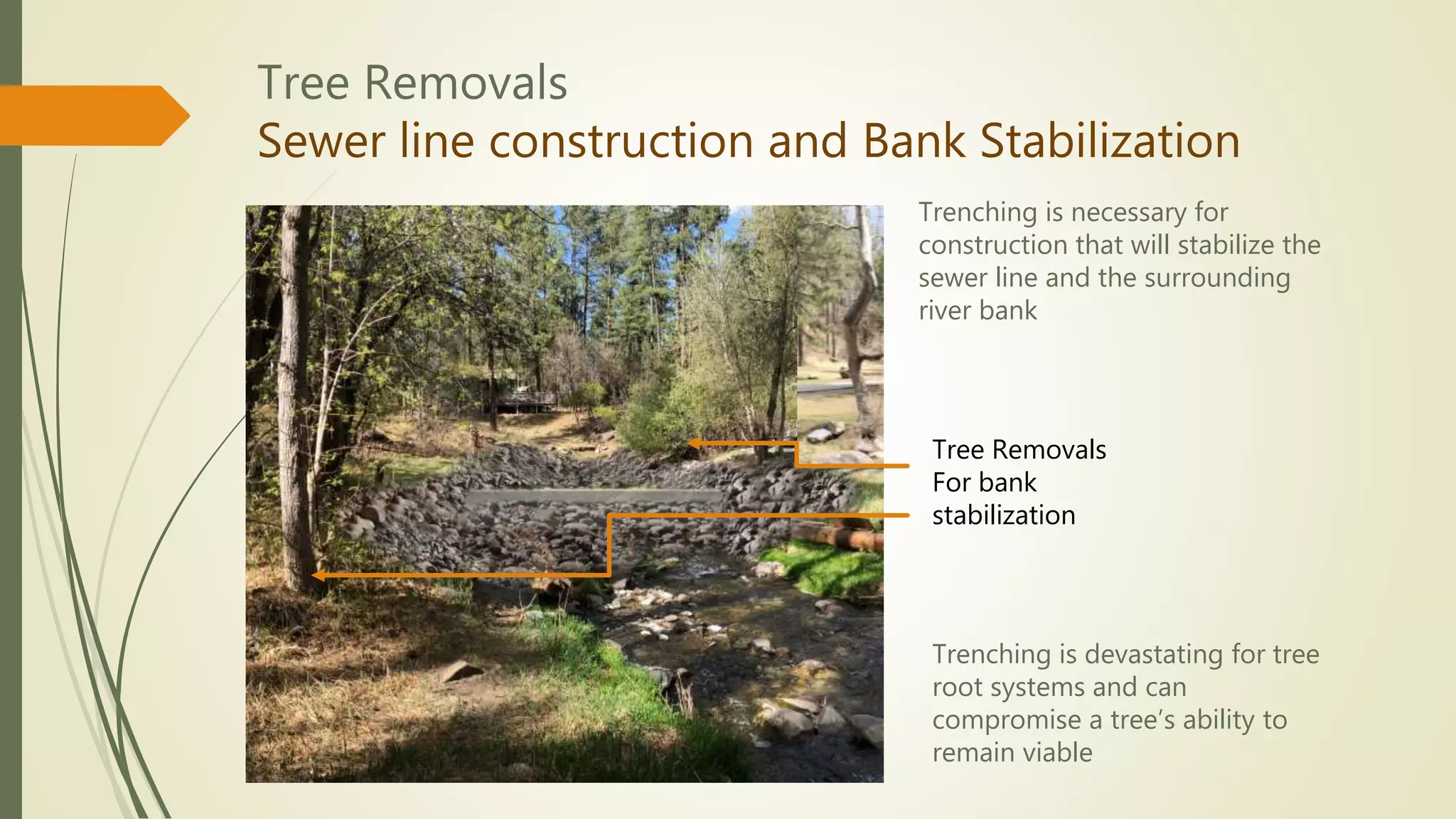
Sewer line construction and Bank Stabilization
Tree Removals
For bank
stabilization
Trenching is necessary for
construction that will stabilize the
sewer line and the surrounding
river bank
Trenching is devastating for tree
root systems and can
compromise a tree’s ability to
remain viable
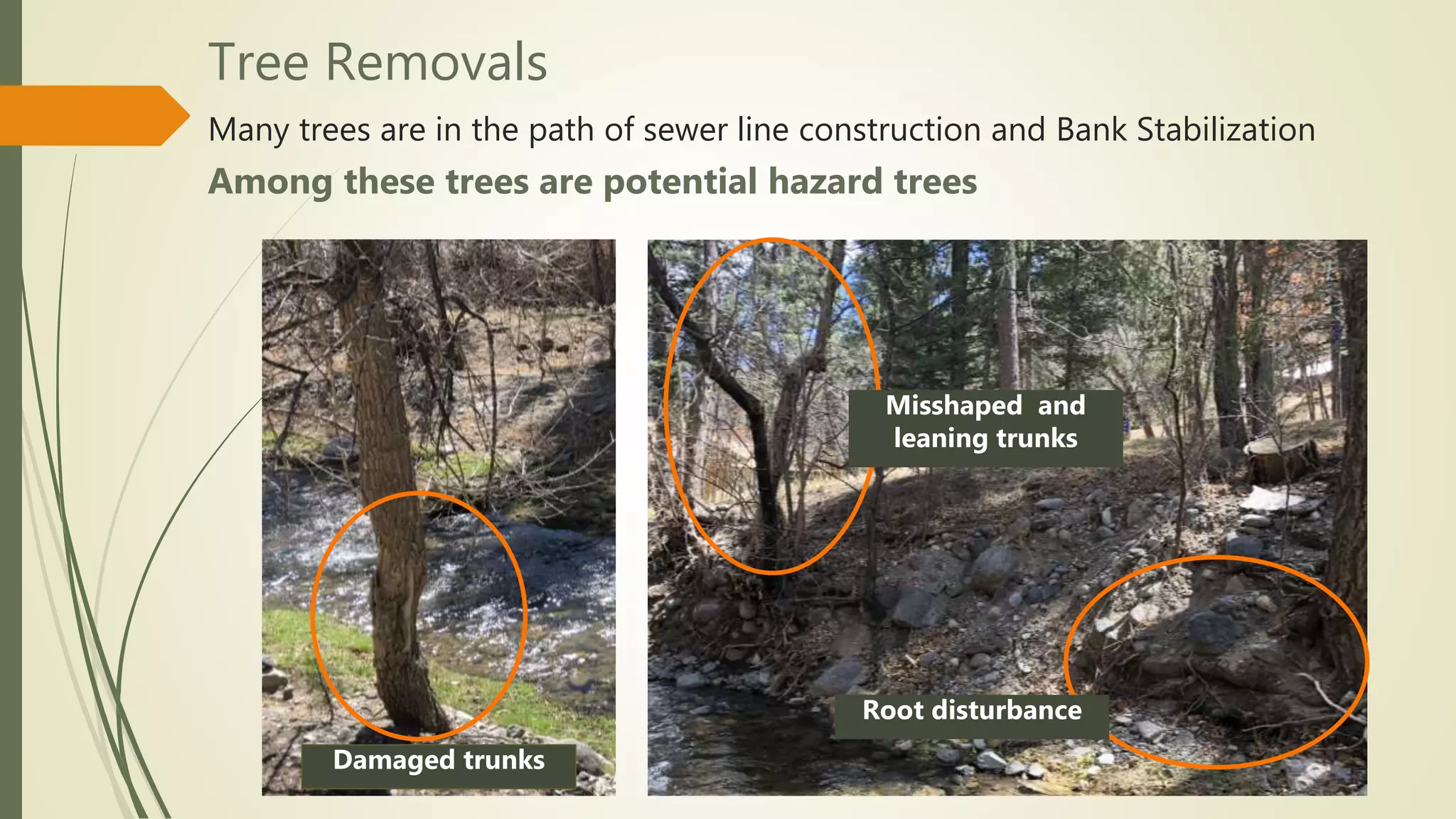
Many trees are in the path of sewer line construction and Bank Stabilization
Among these trees are potential hazard trees
Root disturbance
Misshaped and
leaning trunks
Damaged trunks
Tree Removals
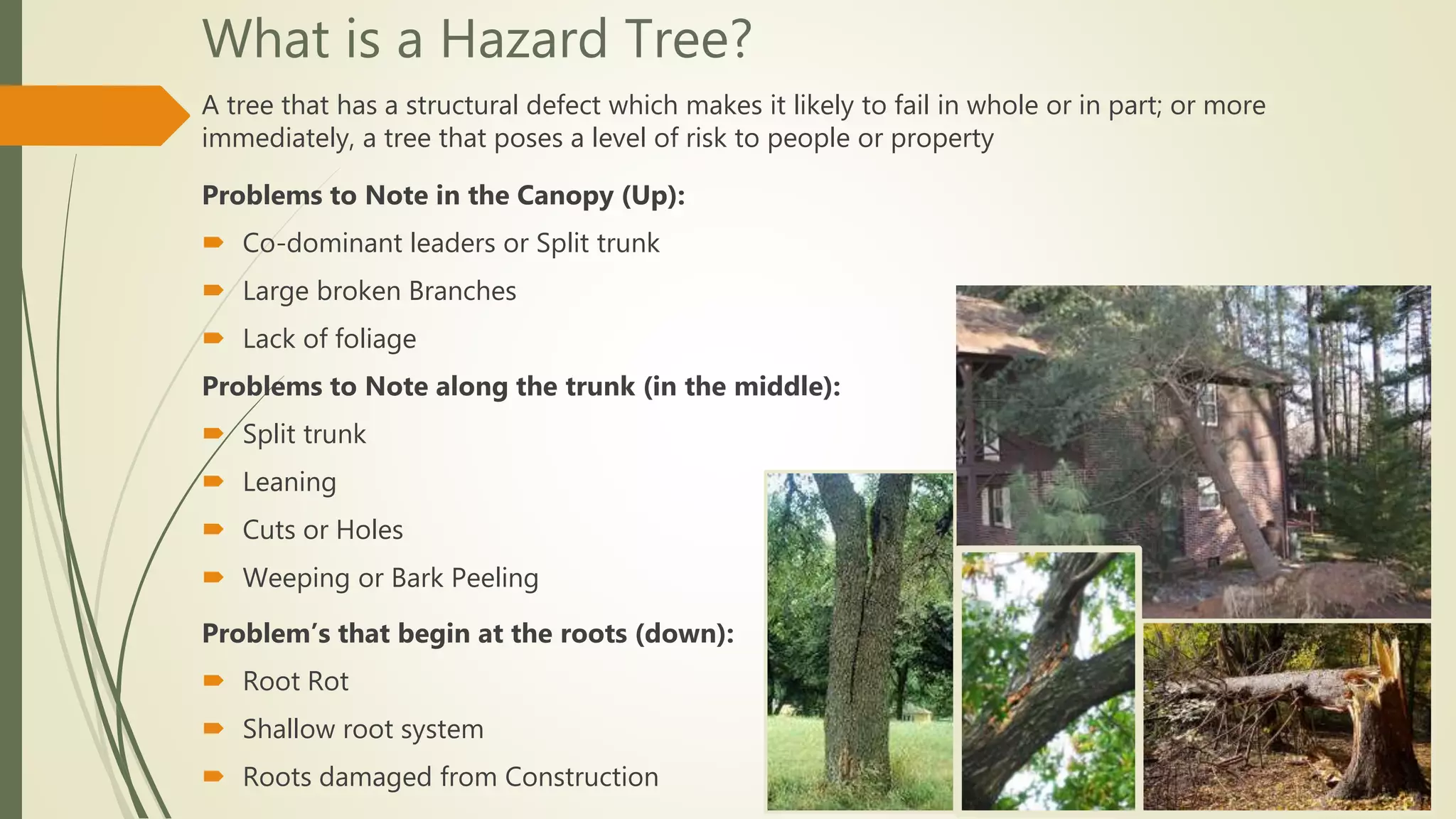
What is a Hazard Tree?
Problems to Note in the Canopy (Up):
 Co-dominant leaders or Split trunk
 Large broken Branches
 Lack of foliage
A tree that has a structural defect which makes it likely to fail in whole or in part; or more
immediately, a tree that poses a level of risk to people or property
Problem’s that begin at the roots (down):
 Root Rot
 Shallow root system
 Roots damaged from Construction
Problems to Note along the trunk (in the middle):
 Split trunk
 Leaning
 Cuts or Holes
 Weeping or Bark Peeling
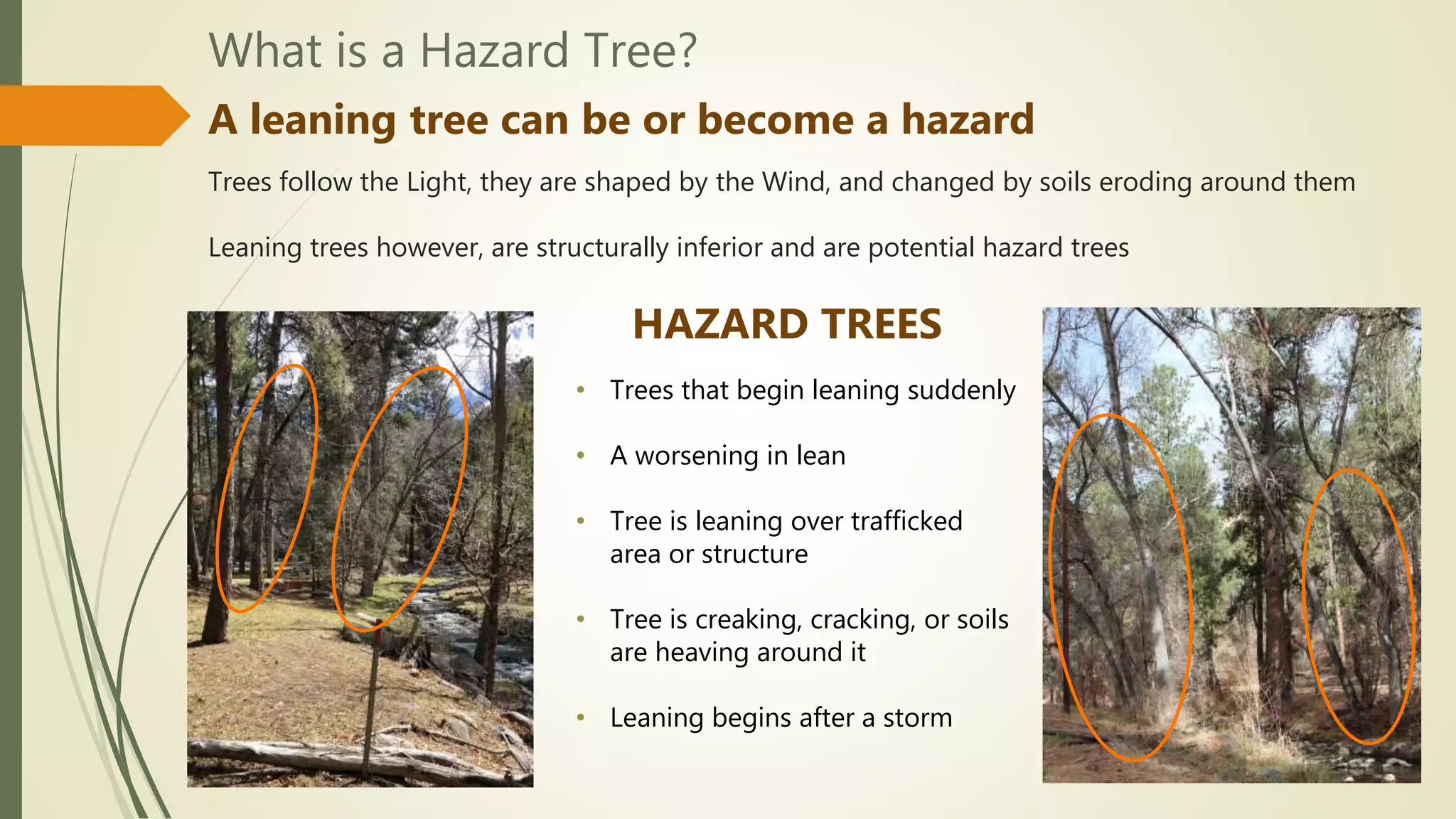
What is a Hazard Tree?
A leaning tree can be or become a hazard
Trees follow the Light, they are shaped by the Wind, and changed by soils eroding around them
Leaning trees however, are structurally inferior and are potential hazard trees
• Trees that begin leaning suddenly
• A worsening in lean
• Tree is leaning over trafficked
area or structure
• Tree is creaking, cracking, or soils
are heaving around it
• Leaning begins after a storm
HAZARD TREES
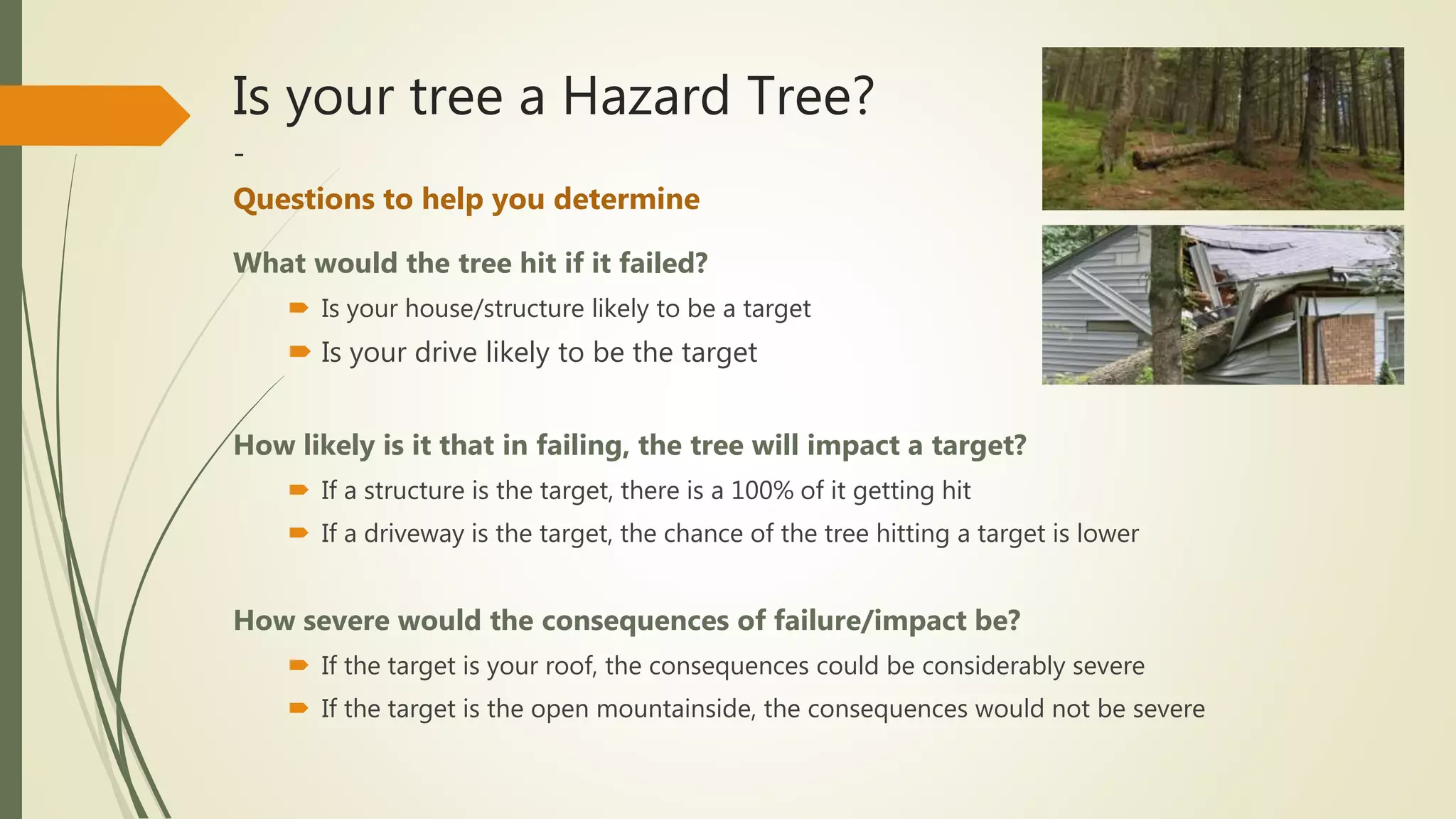
Is your tree a Hazard Tree?
-
Questions to help you determine
What would the tree hit if it failed?
 Is your house/structure likely to be a target
 Is your drive likely to be the target
How likely is it that in failing, the tree will impact a target?
 If a structure is the target, there is a 100% of it getting hit
 If a driveway is the target, the chance of the tree hitting a target is lower
How severe would the consequences of failure/impact be?
 If the target is your roof, the consequences could be considerably severe
 If the target is the open mountainside, the consequences would not be severe
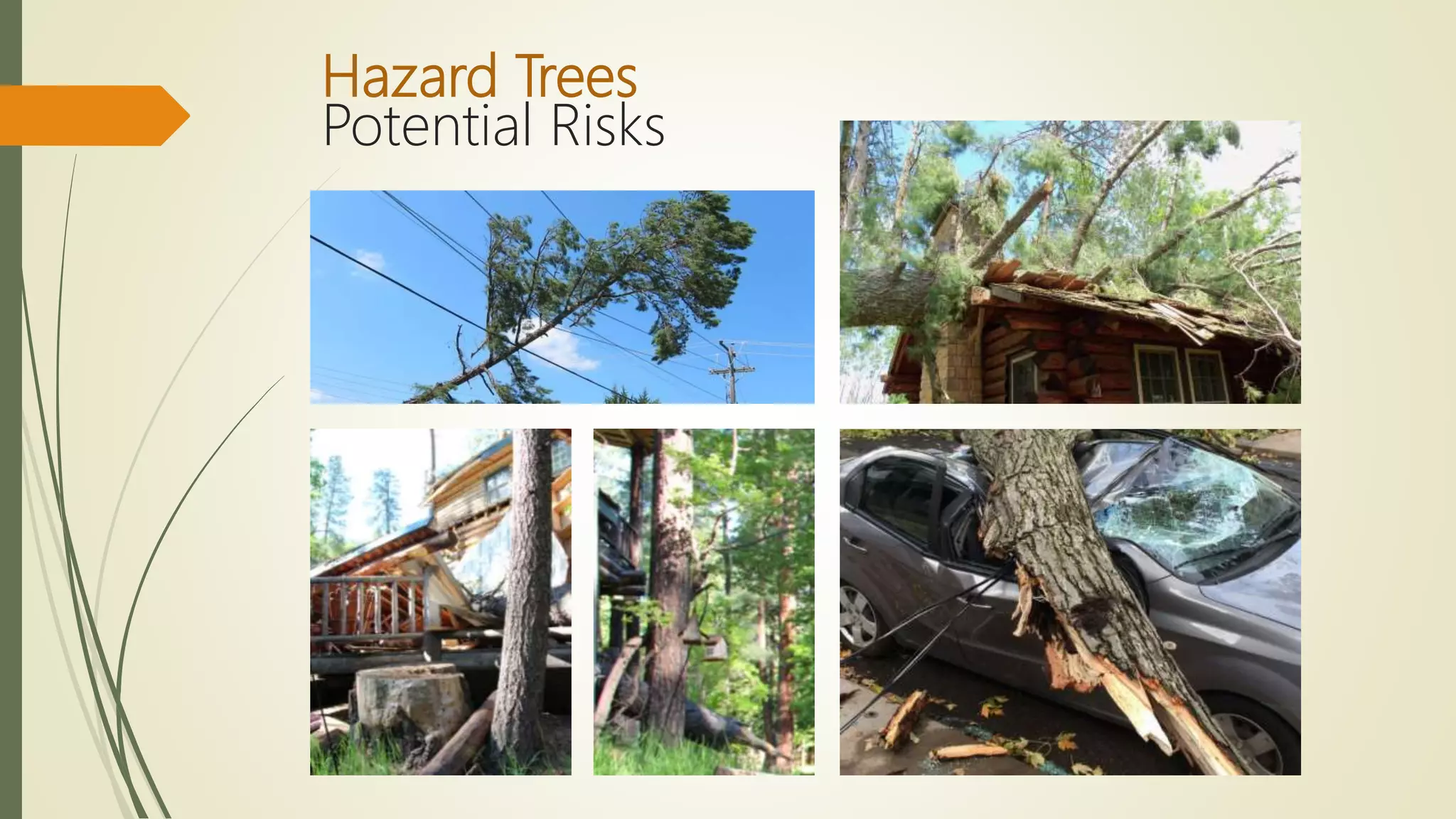
Hazard Trees
Potential Risks
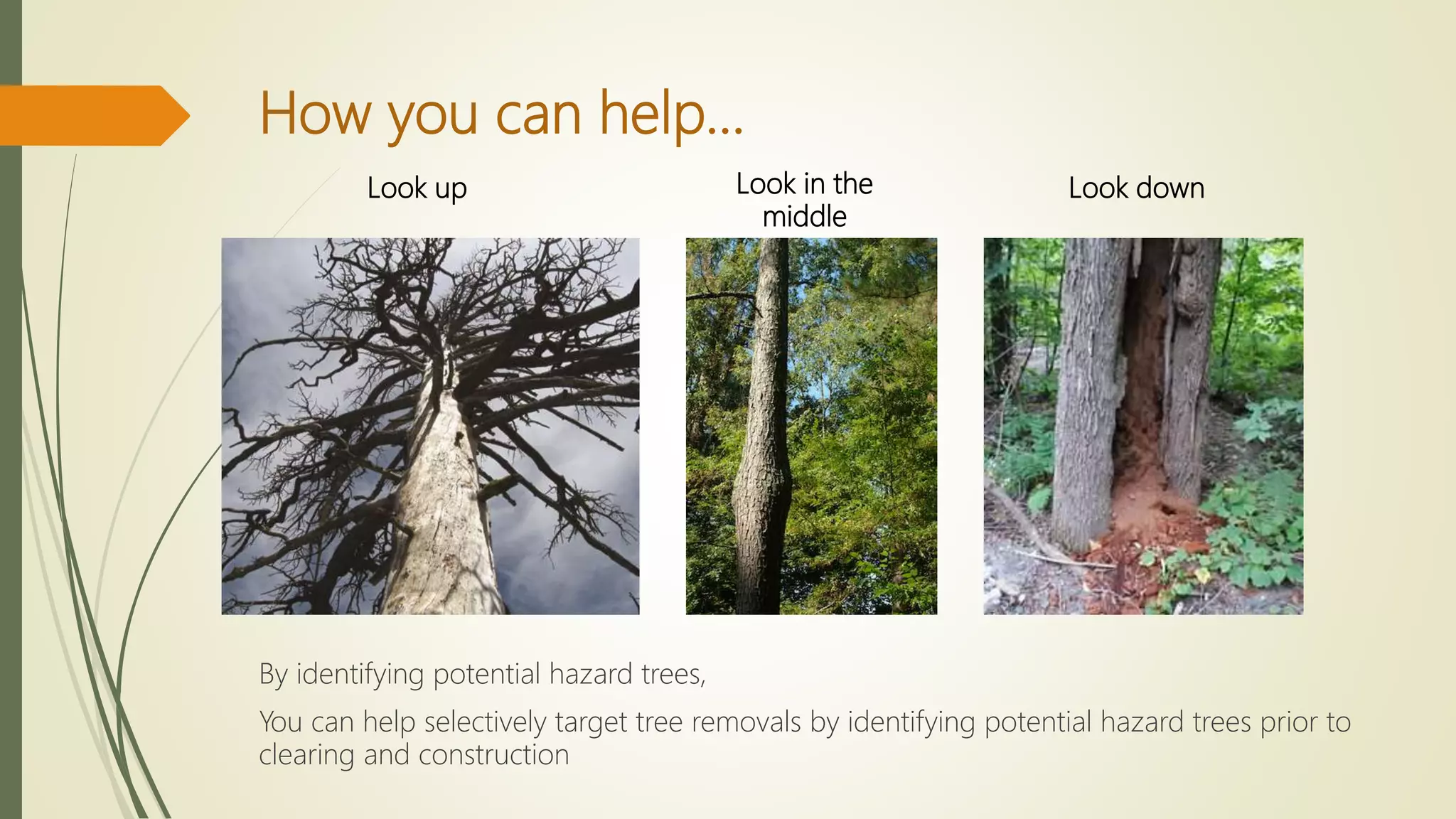
How you can help…
By identifying potential hazard trees,
You can help selectively target tree removals by identifying potential hazard trees prior to
clearing and construction
Look up Look in the
middle
Look down
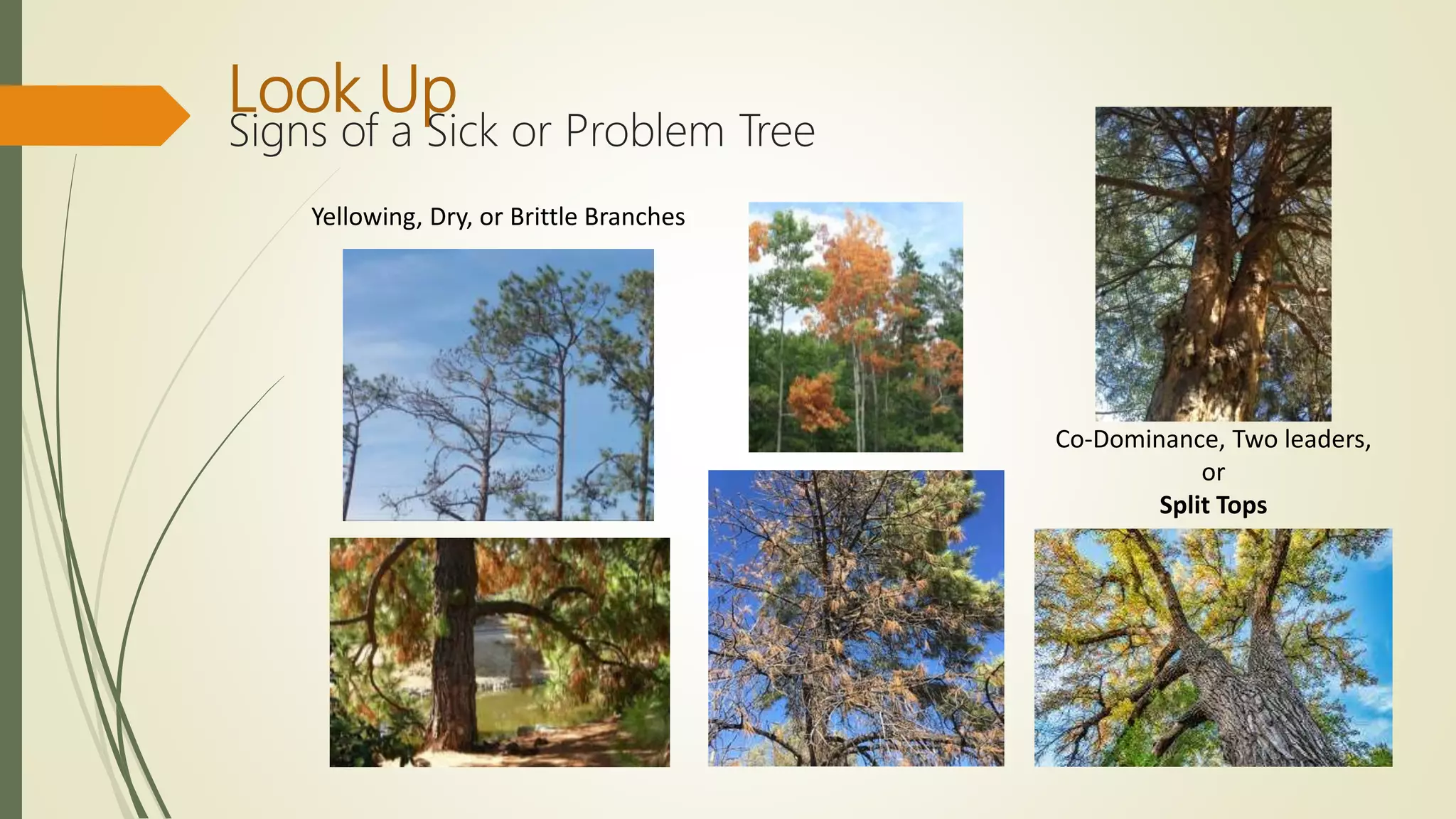
Look Up
Signs of a Sick or Problem Tree
Yellowing, Dry, or Brittle Branches
Co-Dominance, Two leaders,
or
Split Tops
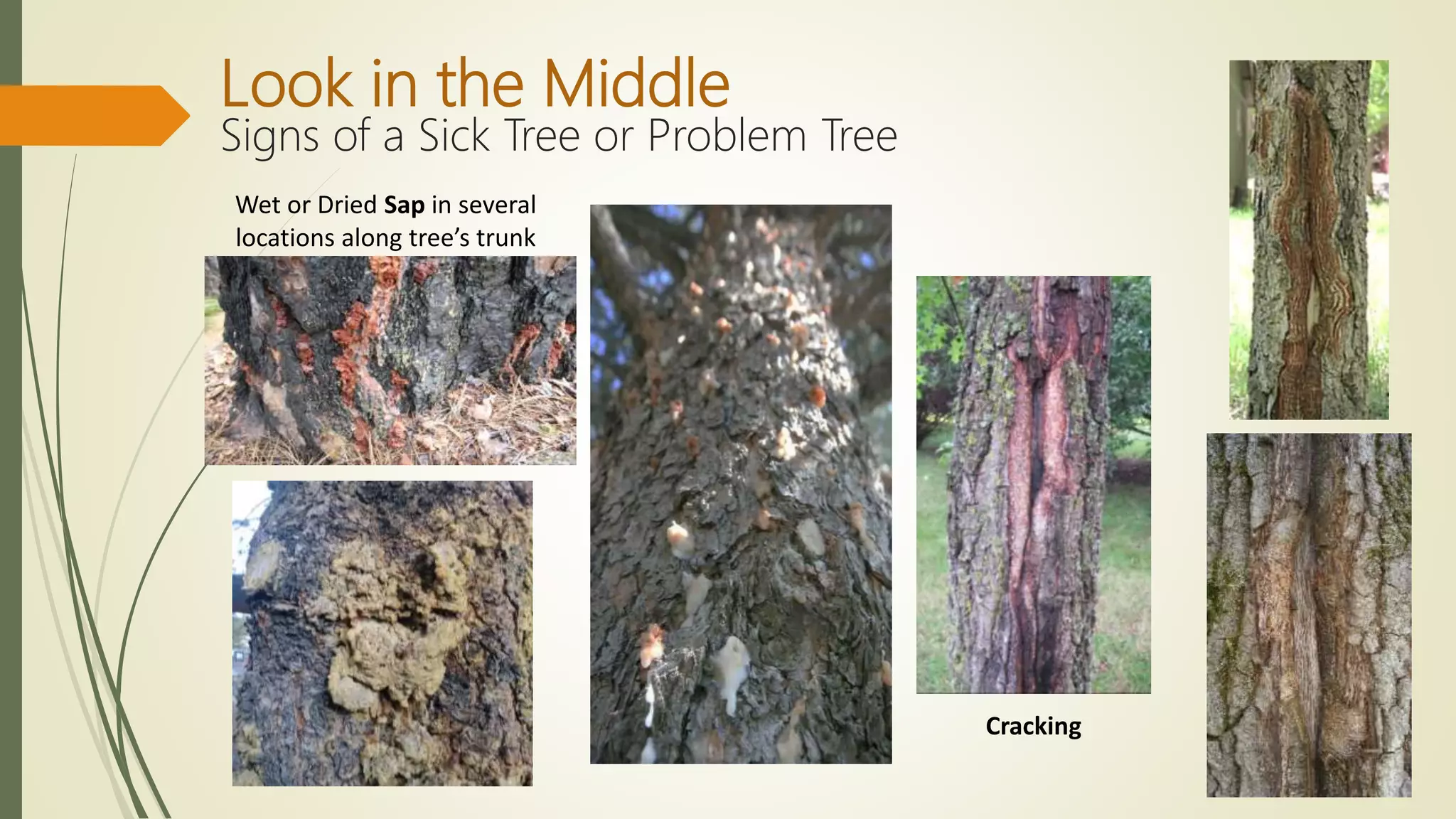
Cracking
Look in the Middle
Signs of a Sick Tree or Problem Tree
Wet or Dried Sap in several
locations along tree’s trunk
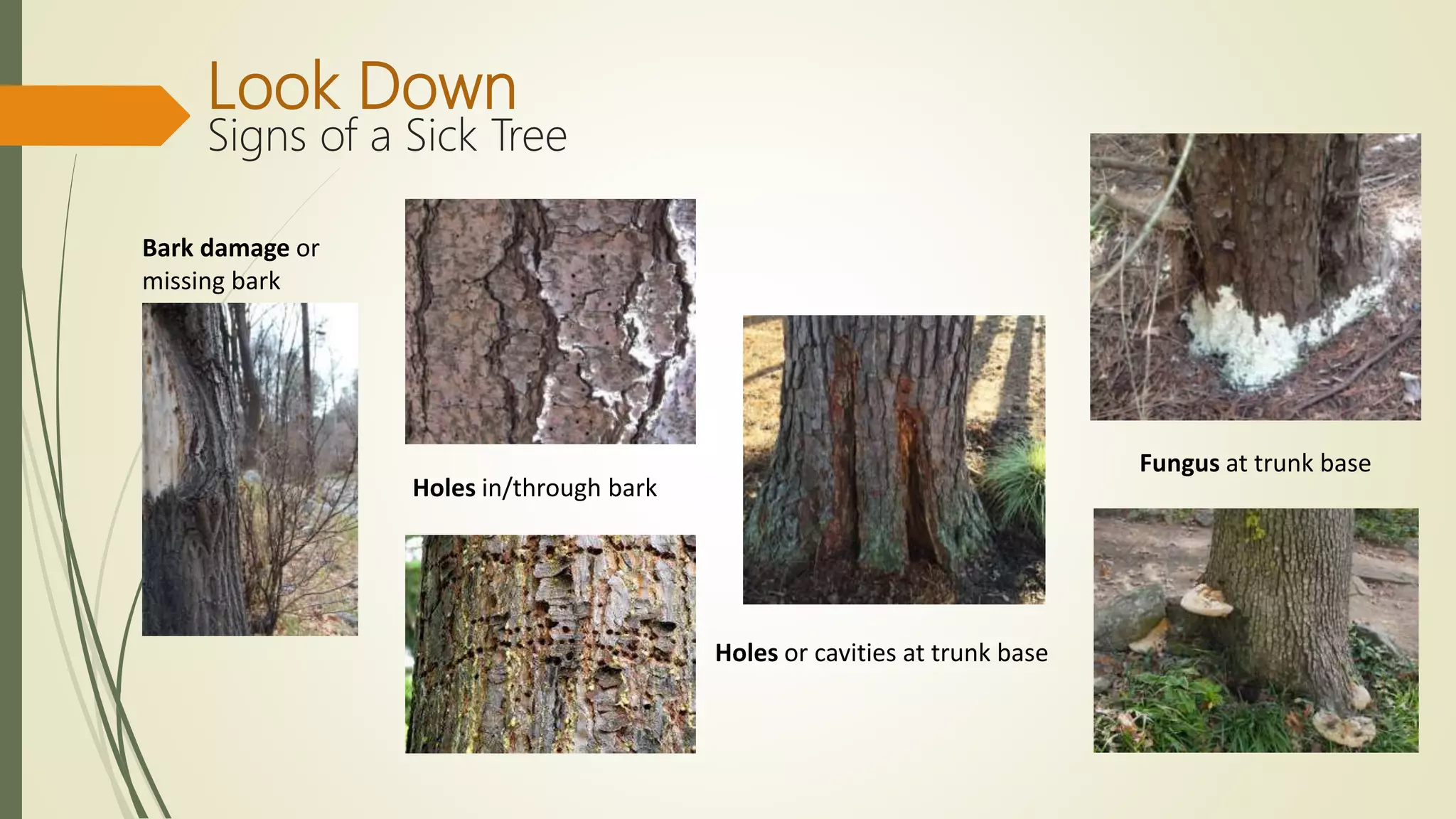
Look Down
Signs of a Sick Tree
Bark damage or
missing bark
Holes in/through bark
Holes or cavities at trunk base
Fungus at trunk base
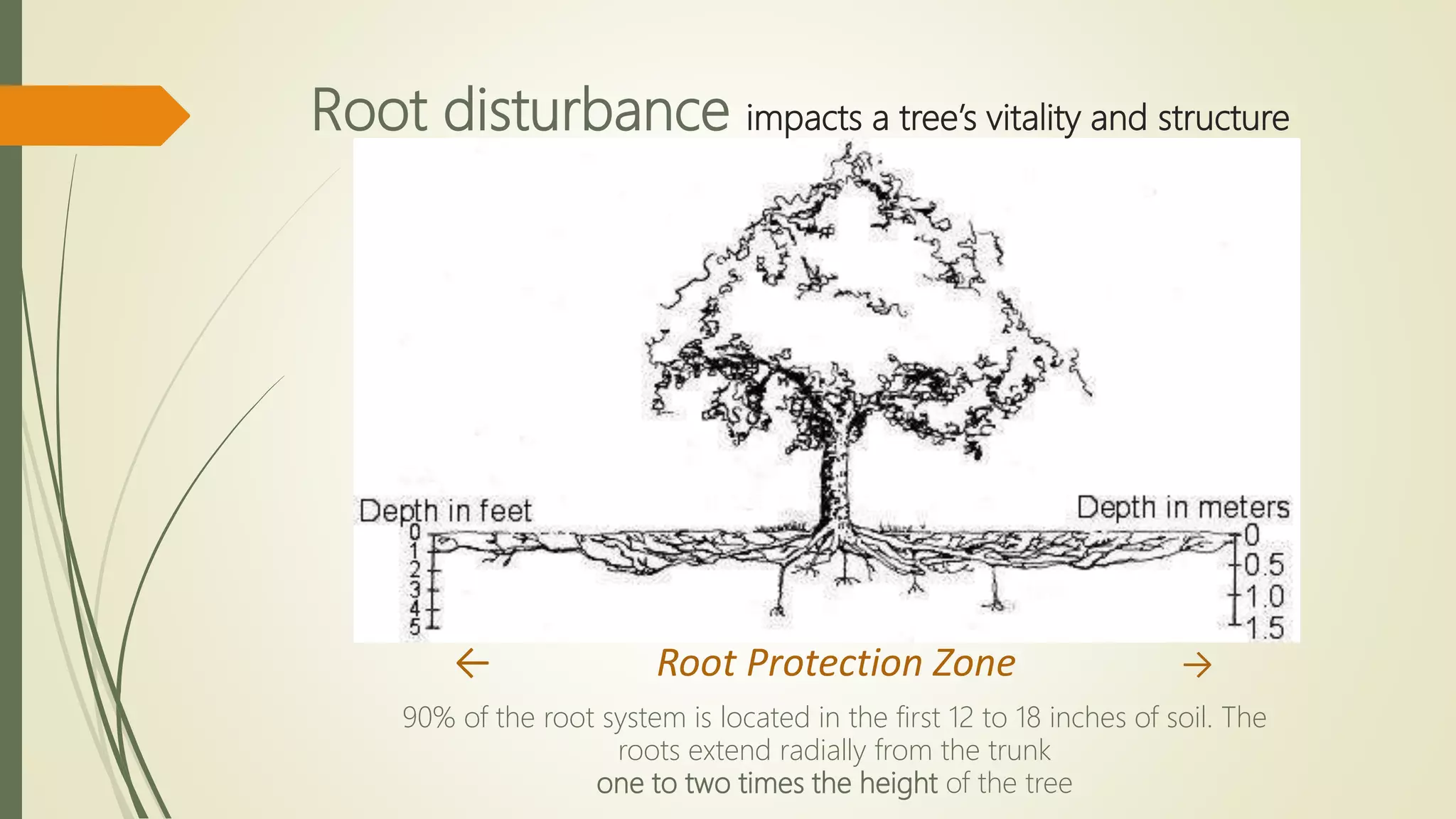
Root disturbance impacts a tree’s vitality and structure
← Root Protection Zone →
90% of the root system is located in the first 12 to 18 inches of soil. The
roots extend radially from the trunk
one to two times the height of the tree
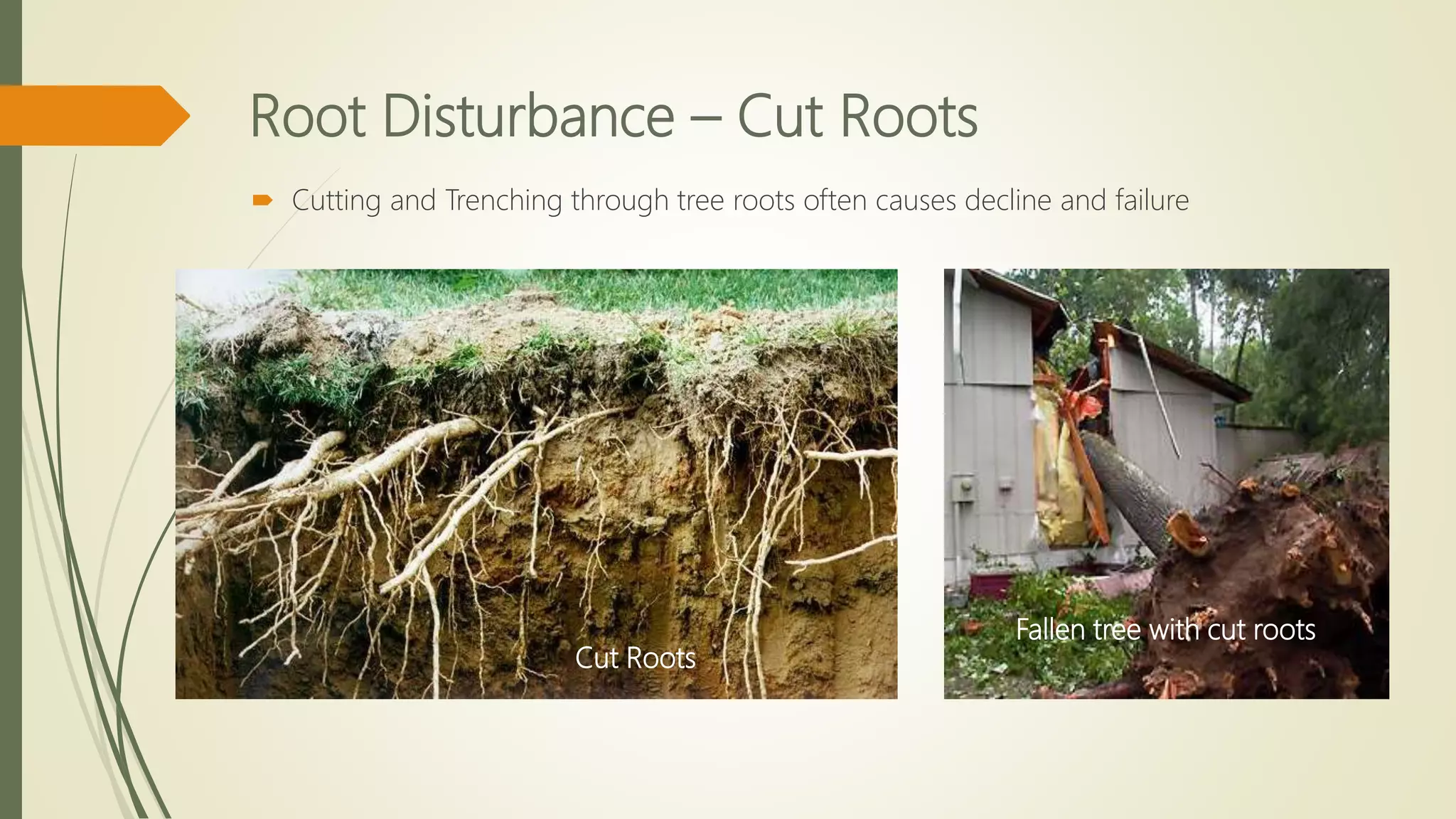
Root Disturbance – Cut Roots
 Cutting and Trenching through tree roots often causes decline and failure
Cut Roots
Fallen tree with cut roots
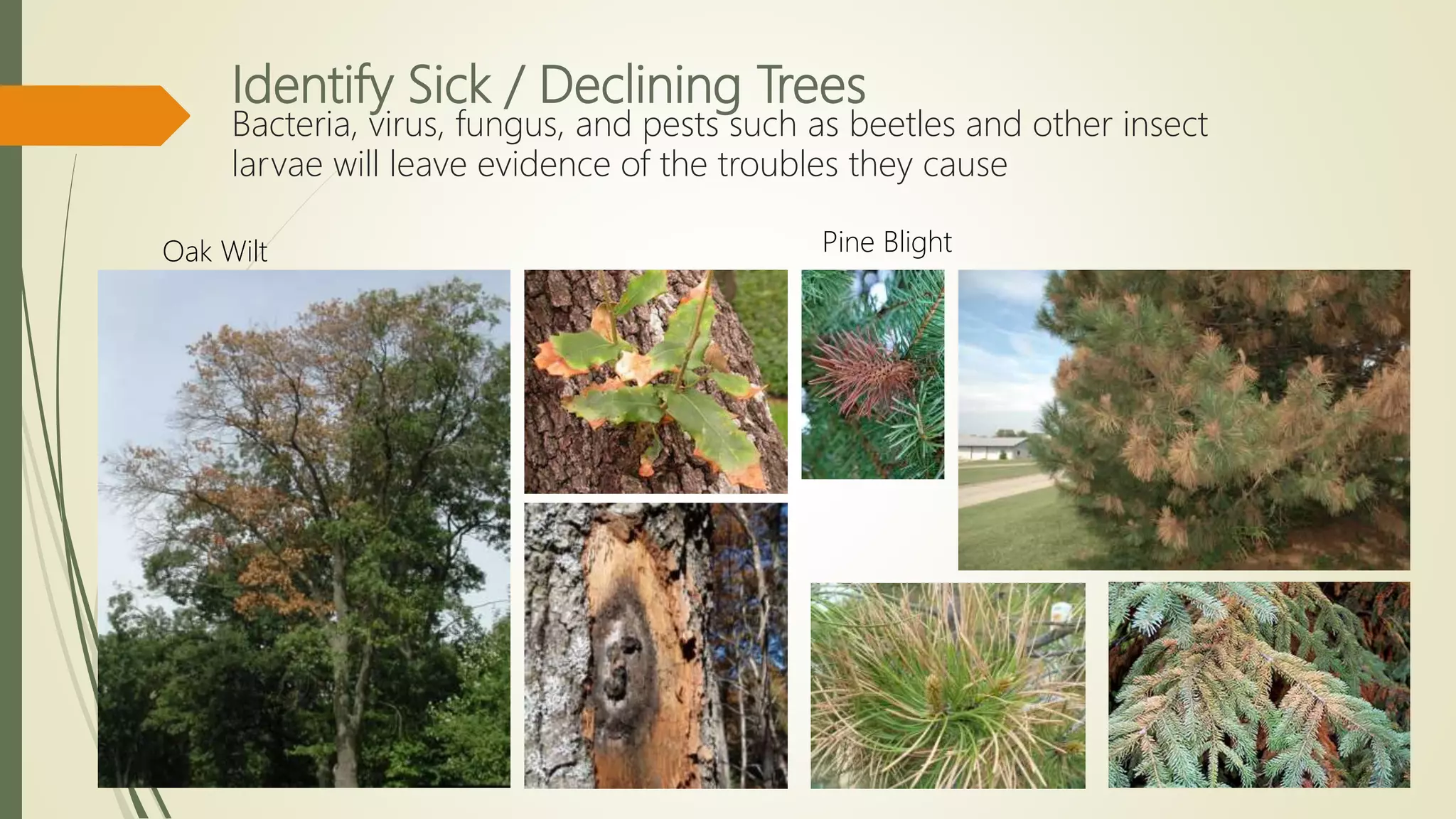
Identify Sick / Declining Trees
Bacteria, virus, fungus, and pests such as beetles and other insect
larvae will leave evidence of the troubles they cause
Oak Wilt Pine Blight
Notify and Coordinate Efforts
 Notify the Village of Ruidoso
 Forestry Department (575) 257-5544 to coordinate tree removals for fuel
management, hazards, and construction; and potentially limit the number of tree
removals from your property
 Notify an Arborist or Tree Professional
 Discuss your concerns with a licensed tree professional to help knowledgably guide the
diagnosis and removal of trees on your property
 Notify the High Water Mark
 Contact Phoebe Suina @ (505) 979-1211 for information regarding tree removals
during the Hazard Mitigation and Stabilization for Sewer Lines

Tree Removal Information Presentation

  • 1.
    Tree Removals Why arethey necessary? How you can help…
  • 2.
    Why are treeremovals necessary?  Property Safety / Damage Mitigation  Fuels Management  Personal Safety  General Hazard Mitigation  Overall River & forest Ecosystem Health  Sewer Line Construction & Bank Stabilization Property Safety Fuels Management Personal Safety
  • 3.
    Tree Removals Sewer lineconstruction and Bank Stabilization Tree Removals For bank stabilization Trenching is necessary for construction that will stabilize the sewer line and the surrounding river bank Trenching is devastating for tree root systems and can compromise a tree’s ability to remain viable
  • 4.
    Many trees arein the path of sewer line construction and Bank Stabilization Among these trees are potential hazard trees Root disturbance Misshaped and leaning trunks Damaged trunks Tree Removals
  • 5.
    What is aHazard Tree? Problems to Note in the Canopy (Up):  Co-dominant leaders or Split trunk  Large broken Branches  Lack of foliage A tree that has a structural defect which makes it likely to fail in whole or in part; or more immediately, a tree that poses a level of risk to people or property Problem’s that begin at the roots (down):  Root Rot  Shallow root system  Roots damaged from Construction Problems to Note along the trunk (in the middle):  Split trunk  Leaning  Cuts or Holes  Weeping or Bark Peeling
  • 6.
    What is aHazard Tree? A leaning tree can be or become a hazard Trees follow the Light, they are shaped by the Wind, and changed by soils eroding around them Leaning trees however, are structurally inferior and are potential hazard trees • Trees that begin leaning suddenly • A worsening in lean • Tree is leaning over trafficked area or structure • Tree is creaking, cracking, or soils are heaving around it • Leaning begins after a storm HAZARD TREES
  • 7.
    Is your treea Hazard Tree? - Questions to help you determine What would the tree hit if it failed?  Is your house/structure likely to be a target  Is your drive likely to be the target How likely is it that in failing, the tree will impact a target?  If a structure is the target, there is a 100% of it getting hit  If a driveway is the target, the chance of the tree hitting a target is lower How severe would the consequences of failure/impact be?  If the target is your roof, the consequences could be considerably severe  If the target is the open mountainside, the consequences would not be severe
  • 8.
  • 9.
    How you canhelp… By identifying potential hazard trees, You can help selectively target tree removals by identifying potential hazard trees prior to clearing and construction Look up Look in the middle Look down
  • 10.
    Look Up Signs ofa Sick or Problem Tree Yellowing, Dry, or Brittle Branches Co-Dominance, Two leaders, or Split Tops
  • 11.
    Cracking Look in theMiddle Signs of a Sick Tree or Problem Tree Wet or Dried Sap in several locations along tree’s trunk
  • 12.
    Look Down Signs ofa Sick Tree Bark damage or missing bark Holes in/through bark Holes or cavities at trunk base Fungus at trunk base
  • 13.
    Root disturbance impactsa tree’s vitality and structure ← Root Protection Zone → 90% of the root system is located in the first 12 to 18 inches of soil. The roots extend radially from the trunk one to two times the height of the tree
  • 14.
    Root Disturbance –Cut Roots  Cutting and Trenching through tree roots often causes decline and failure Cut Roots Fallen tree with cut roots
  • 15.
    Identify Sick /Declining Trees Bacteria, virus, fungus, and pests such as beetles and other insect larvae will leave evidence of the troubles they cause Oak Wilt Pine Blight
  • 16.
    Notify and CoordinateEfforts  Notify the Village of Ruidoso  Forestry Department (575) 257-5544 to coordinate tree removals for fuel management, hazards, and construction; and potentially limit the number of tree removals from your property  Notify an Arborist or Tree Professional  Discuss your concerns with a licensed tree professional to help knowledgably guide the diagnosis and removal of trees on your property  Notify the High Water Mark  Contact Phoebe Suina @ (505) 979-1211 for information regarding tree removals during the Hazard Mitigation and Stabilization for Sewer Lines