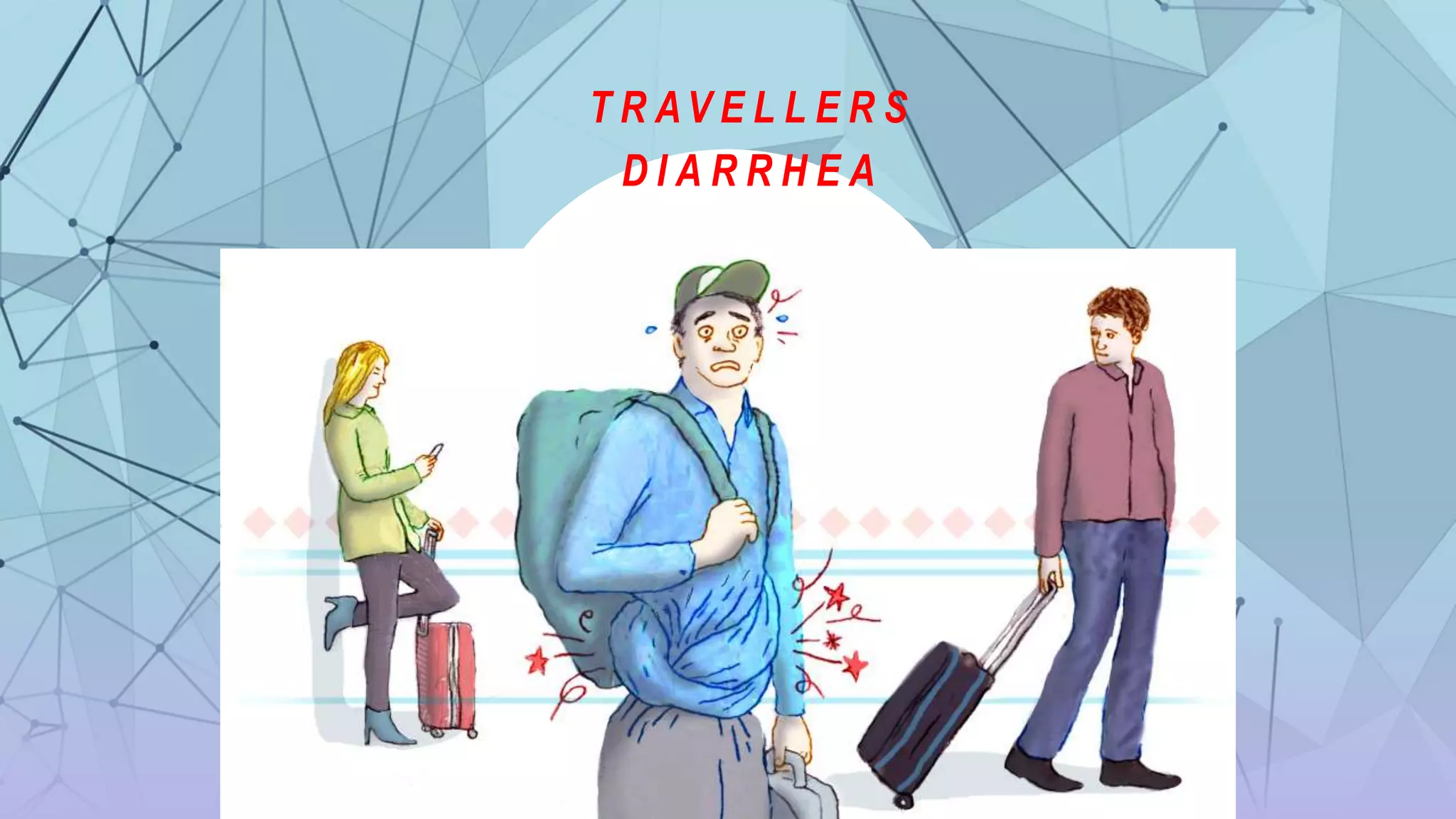
T R AV E L L E R S
D I A R R H E A
I N T R O D U C T I O N
• Traveler's diarrhea is a digestive tract disorder that
commonly causes loose stools and abdominal cramps.
• TD is defined as having 3 or more unformed stools within
a 24 hour period
• Usually occurs within first week of arriving at destination.
It's caused by eating contaminated food or drinking
contaminated water. Fortunately, traveler's diarrhea
usually isn't serious in most people — it's just
unpleasant.
• When you visit a place where the climate or sanitary
practices are different from yours at home, you have an
increased risk of developing traveler’s diarrhea.
• To reduce your risk of traveler’s diarrhea,
be careful about what you eat and drink
while traveling.
• If you do develop traveler’s diarrhea,
chances are it will resolve without
treatment.
• However, it’s a good idea to have doctor-
approved medications with you when you
travel to high-risk areas, to use in case
diarrhea persists or gets severe.
C A U S E S
• It's possible that traveler's diarrhea may cause due to the stress of traveling or a
change in diet. So why aren’t natives of high-risk countries affected in the same way?
Often their bodies have become accustomed to the bacteria and have developed
immunity to them
• But usually infectious agents — such as bacteria, viruses or parasites — are to blame.
You typically develop traveler's diarrhea after ingesting food or water contaminated
with organisms from feces.
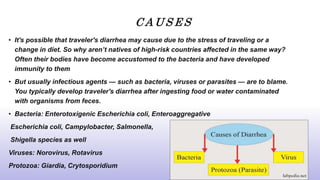
• Bacteria: Enterotoxigenic Escherichia coli, Enteroaggregative
Escherichia coli, Campylobacter, Salmonella,
Shigella species as well
Viruses: Norovirus, Rotavirus
Protozoa: Giardia, Crytosporidium
C L I N I C A L P R E S E N TAT I O N
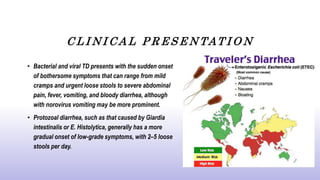
• Bacterial and viral TD presents with the sudden onset
of bothersome symptoms that can range from mild
cramps and urgent loose stools to severe abdominal
pain, fever, vomiting, and bloody diarrhea, although
with norovirus vomiting may be more prominent.
• Protozoal diarrhea, such as that caused by Giardia
intestinalis or E. Histolytica, generally has a more
gradual onset of low-grade symptoms, with 2–5 loose
stools per day.
T I M E F O R A P P E A R I N G S Y M P T O M S
• The incubation period between exposure and clinical presentation can be a clue
to the etiology:
• Bacterial toxins generally cause symptoms within a few hours.
• Bacterial and viral pathogens have an incubation period of 6–72 hours.
• Protozoal pathogens generally have an incubation period of 1–2 weeks and
rarely present in the first few days of travel. An exception can be Cyclospora
cayetanensis, which can present quickly in areas of high risk.
• Untreated bacterial diarrhea usually lasts 3–7 days. Viral diarrhea generally
lasts 2–3 days. Protozoal diarrhea can persist for weeks to months without
treatment. An acute bout of gastroenteritis can lead to persistent
gastrointestinal symptoms, even in the absence of continued infection
C L A S S I F I C AT I O N
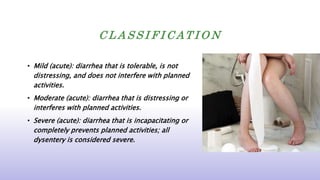
• Mild (acute): diarrhea that is tolerable, is not
distressing, and does not interfere with planned
activities.
• Moderate (acute): diarrhea that is distressing or
interferes with planned activities.
• Severe (acute): diarrhea that is incapacitating or
completely prevents planned activities; all
dysentery is considered severe.
T R E A T I N G T D –
N O N P H A R M A C O L O G I C A L
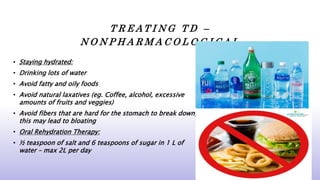
• Staying hydrated:
• Drinking lots of water
• Avoid fatty and oily foods
• Avoid natural laxatives (eg. Coffee, alcohol, excessive
amounts of fruits and veggies)
• Avoid fibers that are hard for the stomach to break down,
this may lead to bloating
• Oral Rehydration Therapy:
• ½ teaspoon of salt and 6 teaspoons of sugar in 1 L of
water – max 2L per day
P R E V E N T I N G T D
N O N P H A R M A C O L O G I C A L
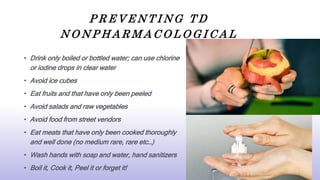
• Drink only boiled or bottled water; can use chlorine
or iodine drops in clear water
• Avoid ice cubes
• Eat fruits and that have only been peeled
• Avoid salads and raw vegetables
• Avoid food from street vendors
• Eat meats that have only been cooked thoroughly
and well done (no medium rare, rare etc…)
• Wash hands with soap and water, hand sanitizers
• Boil it, Cook it, Peel it or forget it!
T R E AT M E N T
• Oral Rehydration Therapy
• Fluids and electrolytes are lost during TD, and replenishment is important,
especially in young children or adults with chronic medical illness. In adult
travelers who are otherwise healthy, severe dehydration resulting from TD is
unusual unless vomiting is prolonged.
• Therapy of mild travelers’ diarrhea
• Antibiotic treatment is not recommended in patients with mild travelers’
diarrhea.
• Loperamide or BSS may be considered in the treatment of mild travelers’
diarrhea
Therapy of moderate travelers’ diarrhea
• Antibiotics may be used to treat cases of moderate travelers’ diarrhea.
• Fluoroquinolones may be used to treat moderate travelers’ diarrhea.
• Azithromycin may be used to treat moderate travelers’ diarrhea.
• Rifaximin may be used to treat moderate, noninvasive travelers’ diarrhea.
• Loperamide may be used as adjunctive therapy for moderate to severe
travelers’ diarrhea. Antimotility agents alone are not recommended for patients
with bloody diarrhea or those who have diarrhea and fever.
• Loperamide may be considered for use as monotherapy in moderate travelers’
diarrhea.
• Therapy of severe travelers’ diarrhea
• Antibiotics should be used to treat severe travelers’ diarrhea.
• Azithromycin is preferred to treat severe travelers’ diarrhea.
• Fluoroquinolones may be used to treat severe, nondysenteric travelers’
diarrhea.
• Rifaximin may be used to treat severe, nondysenteric travelers’ diarrhea.1
• Single-dose antibiotic regimens may be used to treat travelers’ diarrhea.
C O N C L U S I O N
• For travelers to high-risk areas, several approaches may
be recommended that can reduce, but never completely
eliminate, the risk for TD. These include following
instructions regarding food and beverage selection, using
agents other than antimicrobial drugs for prophylaxis,
using prophylactic antibiotics, and carefully washing
hands with soap where available. Carrying small
containers of alcohol-based hand sanitizers (containing
≥60% alcohol) may make it easier for travelers to clean
their hands before eating when handwashing is not
possible. No vaccines are available for most pathogens
that cause TD,

Traveller's Diarrhea.pptx

  • 1.
    T R AVE L L E R S D I A R R H E A
  • 2.
    I N TR O D U C T I O N • Traveler's diarrhea is a digestive tract disorder that commonly causes loose stools and abdominal cramps. • TD is defined as having 3 or more unformed stools within a 24 hour period • Usually occurs within first week of arriving at destination. It's caused by eating contaminated food or drinking contaminated water. Fortunately, traveler's diarrhea usually isn't serious in most people — it's just unpleasant. • When you visit a place where the climate or sanitary practices are different from yours at home, you have an increased risk of developing traveler’s diarrhea.
  • 3.
    • To reduceyour risk of traveler’s diarrhea, be careful about what you eat and drink while traveling. • If you do develop traveler’s diarrhea, chances are it will resolve without treatment. • However, it’s a good idea to have doctor- approved medications with you when you travel to high-risk areas, to use in case diarrhea persists or gets severe.
  • 4.
    C A US E S • It's possible that traveler's diarrhea may cause due to the stress of traveling or a change in diet. So why aren’t natives of high-risk countries affected in the same way? Often their bodies have become accustomed to the bacteria and have developed immunity to them • But usually infectious agents — such as bacteria, viruses or parasites — are to blame. You typically develop traveler's diarrhea after ingesting food or water contaminated with organisms from feces. • Bacteria: Enterotoxigenic Escherichia coli, Enteroaggregative Escherichia coli, Campylobacter, Salmonella, Shigella species as well Viruses: Norovirus, Rotavirus Protozoa: Giardia, Crytosporidium
  • 5.
    C L IN I C A L P R E S E N TAT I O N • Bacterial and viral TD presents with the sudden onset of bothersome symptoms that can range from mild cramps and urgent loose stools to severe abdominal pain, fever, vomiting, and bloody diarrhea, although with norovirus vomiting may be more prominent. • Protozoal diarrhea, such as that caused by Giardia intestinalis or E. Histolytica, generally has a more gradual onset of low-grade symptoms, with 2–5 loose stools per day.
  • 6.
    T I ME F O R A P P E A R I N G S Y M P T O M S • The incubation period between exposure and clinical presentation can be a clue to the etiology: • Bacterial toxins generally cause symptoms within a few hours. • Bacterial and viral pathogens have an incubation period of 6–72 hours. • Protozoal pathogens generally have an incubation period of 1–2 weeks and rarely present in the first few days of travel. An exception can be Cyclospora cayetanensis, which can present quickly in areas of high risk. • Untreated bacterial diarrhea usually lasts 3–7 days. Viral diarrhea generally lasts 2–3 days. Protozoal diarrhea can persist for weeks to months without treatment. An acute bout of gastroenteritis can lead to persistent gastrointestinal symptoms, even in the absence of continued infection
  • 7.
    C L AS S I F I C AT I O N • Mild (acute): diarrhea that is tolerable, is not distressing, and does not interfere with planned activities. • Moderate (acute): diarrhea that is distressing or interferes with planned activities. • Severe (acute): diarrhea that is incapacitating or completely prevents planned activities; all dysentery is considered severe.
  • 8.
    T R EA T I N G T D – N O N P H A R M A C O L O G I C A L • Staying hydrated: • Drinking lots of water • Avoid fatty and oily foods • Avoid natural laxatives (eg. Coffee, alcohol, excessive amounts of fruits and veggies) • Avoid fibers that are hard for the stomach to break down, this may lead to bloating • Oral Rehydration Therapy: • ½ teaspoon of salt and 6 teaspoons of sugar in 1 L of water – max 2L per day
  • 9.
    P R EV E N T I N G T D N O N P H A R M A C O L O G I C A L • Drink only boiled or bottled water; can use chlorine or iodine drops in clear water • Avoid ice cubes • Eat fruits and that have only been peeled • Avoid salads and raw vegetables • Avoid food from street vendors • Eat meats that have only been cooked thoroughly and well done (no medium rare, rare etc…) • Wash hands with soap and water, hand sanitizers • Boil it, Cook it, Peel it or forget it!
  • 10.
    T R EAT M E N T • Oral Rehydration Therapy • Fluids and electrolytes are lost during TD, and replenishment is important, especially in young children or adults with chronic medical illness. In adult travelers who are otherwise healthy, severe dehydration resulting from TD is unusual unless vomiting is prolonged. • Therapy of mild travelers’ diarrhea • Antibiotic treatment is not recommended in patients with mild travelers’ diarrhea. • Loperamide or BSS may be considered in the treatment of mild travelers’ diarrhea
  • 11.
    Therapy of moderatetravelers’ diarrhea • Antibiotics may be used to treat cases of moderate travelers’ diarrhea. • Fluoroquinolones may be used to treat moderate travelers’ diarrhea. • Azithromycin may be used to treat moderate travelers’ diarrhea. • Rifaximin may be used to treat moderate, noninvasive travelers’ diarrhea. • Loperamide may be used as adjunctive therapy for moderate to severe travelers’ diarrhea. Antimotility agents alone are not recommended for patients with bloody diarrhea or those who have diarrhea and fever. • Loperamide may be considered for use as monotherapy in moderate travelers’ diarrhea.
  • 12.
    • Therapy ofsevere travelers’ diarrhea • Antibiotics should be used to treat severe travelers’ diarrhea. • Azithromycin is preferred to treat severe travelers’ diarrhea. • Fluoroquinolones may be used to treat severe, nondysenteric travelers’ diarrhea. • Rifaximin may be used to treat severe, nondysenteric travelers’ diarrhea.1 • Single-dose antibiotic regimens may be used to treat travelers’ diarrhea.
  • 13.
    C O NC L U S I O N • For travelers to high-risk areas, several approaches may be recommended that can reduce, but never completely eliminate, the risk for TD. These include following instructions regarding food and beverage selection, using agents other than antimicrobial drugs for prophylaxis, using prophylactic antibiotics, and carefully washing hands with soap where available. Carrying small containers of alcohol-based hand sanitizers (containing ≥60% alcohol) may make it easier for travelers to clean their hands before eating when handwashing is not possible. No vaccines are available for most pathogens that cause TD,