WHAT IS TRAUMA?:
TRIGGERS, HEALING AND ADVOCACY
EVERETT TETUSHI GLENN
TRAUMA IS THE RESPONSE TO A DEEPLY DISTRESSING OR
DISTURBING EVENT THAT OVERWHELMS AN INDIVIDUAL’S
ABILITY TO COPE, CAUSES FEELINGS OF HELPLESSNESS,
DIMINISHES THEIR SENSE OF SELF AND THEIR ABILITY TO
FEEL THE FULL RANGE OF EMOTIONS AND EXPERIENCES.
What is Trauma?
TYPES OF TRAUMA?
Complex Trauma
Vicarious Trauma
Post-Traumatic Stress Disorder
Refugee Trauma
Medical Trauma
Early Childhood Trauma
Community Violence
Bullying
Intimate Partner Violence
Physical Abuse
Sexual Abuse
Terrorism and Violence
Traumatic Grief
Traumatic Stress
WHAT CAUSE THE TRAUMA?
Serious accidents
Natural disasters
Robbery
Rape
Major surgeries
Chronic or repetitive experiences (e.g. child
abuse, cheating, lying, and neglect.)
War, combat and concentration camps
Hostile environment
Oppression
Arguments
Break-ups
Major life changes
Become part of negative spiral from previous
trauma
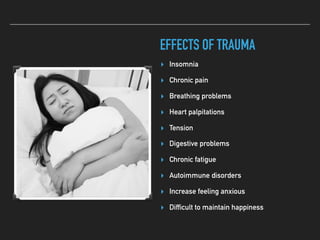
EFFECTS OF TRAUMA
▸ Insomnia
▸ Chronic pain
▸ Breathing problems
▸ Heart palpitations
▸ Tension
▸ Digestive problems
▸ Chronic fatigue
▸ Autoimmune disorders
▸ Increase feeling anxious
▸ Difficult to maintain happiness
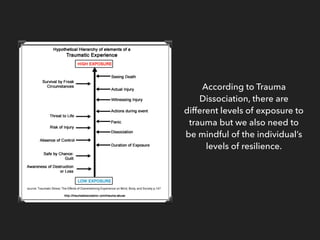
According to Trauma
Dissociation, there are
different levels of exposure to
trauma but we also need to
be mindful of the individual’s
levels of resilience.
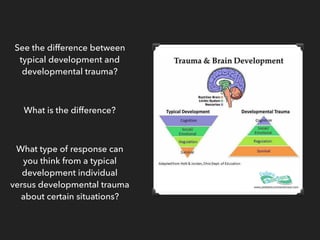
See the difference between
typical development and
developmental trauma?
What is the difference?
What type of response can
you think from a typical
development individual
versus developmental trauma
about certain situations?
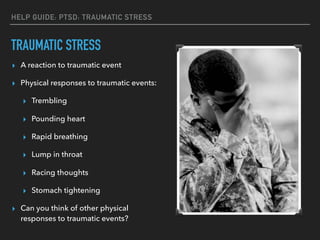
TRAUMATIC STRESS
▸ A reaction to traumatic event
▸ Physical responses to traumatic events:
▸ Trembling
▸ Pounding heart
▸ Rapid breathing
▸ Lump in throat
▸ Racing thoughts
▸ Stomach tightening
▸ Can you think of other physical
responses to traumatic events?
HELP GUIDE: PTSD: TRAUMATIC STRESS
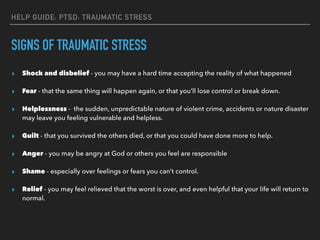
SIGNS OF TRAUMATIC STRESS
▸ Shock and disbelief - you may have a hard time accepting the reality of what happened
▸ Fear - that the same thing will happen again, or that you’ll lose control or break down.
▸ Helplessness - the sudden, unpredictable nature of violent crime, accidents or nature disaster
may leave you feeling vulnerable and helpless.
▸ Guilt - that you survived the others died, or that you could have done more to help.
▸ Anger - you may be angry at God or others you feel are responsible
▸ Shame - especially over feelings or fears you can’t control.
▸ Relief - you may feel relieved that the worst is over, and even helpful that your life will return to
normal.
HELP GUIDE: PTSD: TRAUMATIC STRESS
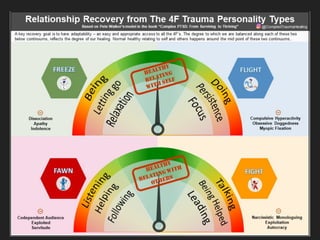
FROM COMPLEX PTSD: FROM SURVIVING TO THRIVING
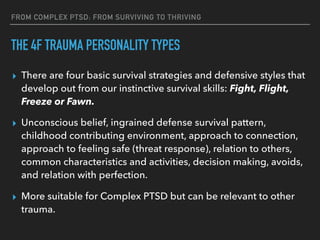
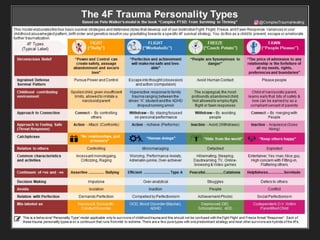
THE 4F TRAUMA PERSONALITY TYPES
▸ There are four basic survival strategies and defensive styles that
develop out from our instinctive survival skills: Fight, Flight,
Freeze or Fawn.
▸ Unconscious belief, ingrained defense survival pattern,
childhood contributing environment, approach to connection,
approach to feeling safe (threat response), relation to others,
common characteristics and activities, decision making, avoids,
and relation with perfection.
▸ More suitable for Complex PTSD but can be relevant to other
trauma.
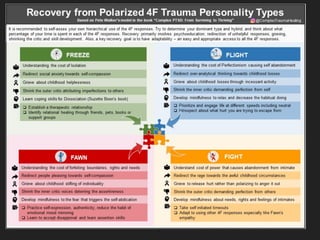
HOW DO WE MOVE ON FROM
TRAUMA?
EVERETT T. GLENN
TEXT
ONE SIZE DOES
NOT FIT ALL
THE JOURNEY OF
HEALING
FIRST STEP OF HEALING JOURNEY
▸ Recognize your triggers.
▸ Face them head-on slowly or
quickly depends on your ability
and strength during time period of
your life.
▸ Find your favorite healthy coping
skill and grow on it.
VERY WELL MIND
WHAT IS A ‘BEING TRIGGERED’
▸ “Triggers can be internal or external, including smells,
sights, sounds, and emotions that remind the person of the
past trauma in some way. When a person with post-
traumatic stress disorder experiences being triggered in
this way, it can lead to overwhelming emotions, including
sadness, anxiety, panic, and flashbacks.”
VERY WELL MIND
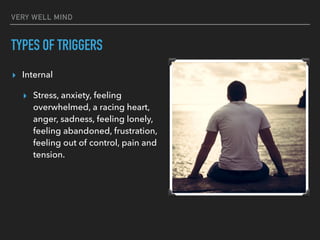
TYPES OF TRIGGERS
▸ Internal
▸ Stress, anxiety, feeling
overwhelmed, a racing heart,
anger, sadness, feeling lonely,
feeling abandoned, frustration,
feeling out of control, pain and
tension.
VERY WELL MIND
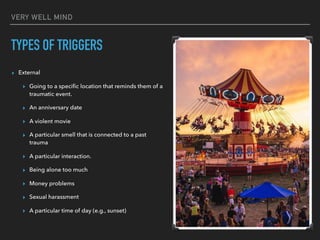
TYPES OF TRIGGERS
▸ External
▸ Going to a specific location that reminds them of a
traumatic event.
▸ An anniversary date
▸ A violent movie
▸ A particular smell that is connected to a past
trauma
▸ A particular interaction.
▸ Being alone too much
▸ Money problems
▸ Sexual harassment
▸ A particular time of day (e.g., sunset)
VERY WELL MIND
HOW TO COPE WITH TRIGGERS
▸ Practice relaxation techniques
▸ Avoid unhealthy behaviors (what is it?)
▸ Become aware of your triggers
▸ Have someone to talk with when you feel triggered
▸ Keep a journal
▸ Engage in regular exercise
▸ Read self-help books to add new coping strategies
▸ Practice mindfulness
▸ Practice self-soothing
▸ Practice deep breathing
JUST BREATHE.
YOU ARE HERE.
WITH US.
RELAXATION TOOLS
RELAXATION TOOLS
▸ 4 breathing techniques: https://www.nm.org/healthbeat/healthy-tips/
4-breathing-techniques-for-better-health
▸ Breathing shape: https://www.youtube.com/watch?v=u9Q8D6n-3qw
▸ Breathing cloud: https://www.youtube.com/watch?v=vXZ5l7G6T2I
▸ Yoga with CC: https://www.youtube.com/user/yogawithadriene
▸ Armoatherapy: https://www.verywellmind.com/aromatherapy-scents-
for-stress-relief-3144599
▸ Explore funny gifs or look for pictures of a place that is similar to your
happy place through search engine.
TRAUMA AND YOU
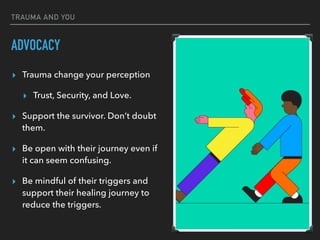
ADVOCACY
▸ Trauma change your perception
▸ Trust, Security, and Love.
▸ Support the survivor. Don’t doubt
them.
▸ Be open with their journey even if
it can seem confusing.
▸ Be mindful of their triggers and
support their healing journey to
reduce the triggers.
TRAUMA AND YOU
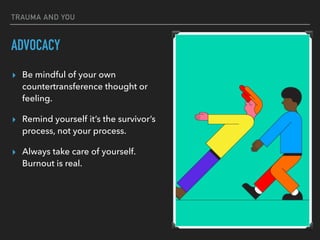
ADVOCACY
▸ Be mindful of your own
countertransference thought or
feeling.
▸ Remind yourself it’s the survivor’s
process, not your process.
▸ Always take care of yourself.
Burnout is real.
REFERENCES
HTTPS://COMPLEXTRAUMAHEALING.WORDPRESS.COM/2019/02/08/THE-4F-TRAUMA-
PERSONALITY-TYPES/
https://www.helpguide.org/articles/ptsd-trauma/traumatic-stress.htm
https://www.verywellmind.com/what-does-it-mean-to-be-triggered-4175432
http://www.ncdsv.org/images/ODVN_Trauma-and-You_May-2013.pdf

Trauma+PPT.pdf

  • 1.
    WHAT IS TRAUMA?: TRIGGERS,HEALING AND ADVOCACY EVERETT TETUSHI GLENN
  • 2.
    TRAUMA IS THERESPONSE TO A DEEPLY DISTRESSING OR DISTURBING EVENT THAT OVERWHELMS AN INDIVIDUAL’S ABILITY TO COPE, CAUSES FEELINGS OF HELPLESSNESS, DIMINISHES THEIR SENSE OF SELF AND THEIR ABILITY TO FEEL THE FULL RANGE OF EMOTIONS AND EXPERIENCES. What is Trauma?
  • 3.
    TYPES OF TRAUMA? ComplexTrauma Vicarious Trauma Post-Traumatic Stress Disorder Refugee Trauma Medical Trauma Early Childhood Trauma Community Violence Bullying Intimate Partner Violence Physical Abuse Sexual Abuse Terrorism and Violence Traumatic Grief Traumatic Stress
  • 4.
    WHAT CAUSE THETRAUMA? Serious accidents Natural disasters Robbery Rape Major surgeries Chronic or repetitive experiences (e.g. child abuse, cheating, lying, and neglect.) War, combat and concentration camps Hostile environment Oppression Arguments Break-ups Major life changes Become part of negative spiral from previous trauma
  • 5.
    EFFECTS OF TRAUMA ▸Insomnia ▸ Chronic pain ▸ Breathing problems ▸ Heart palpitations ▸ Tension ▸ Digestive problems ▸ Chronic fatigue ▸ Autoimmune disorders ▸ Increase feeling anxious ▸ Difficult to maintain happiness
  • 6.
    According to Trauma Dissociation,there are different levels of exposure to trauma but we also need to be mindful of the individual’s levels of resilience.
  • 7.
    See the differencebetween typical development and developmental trauma? What is the difference? What type of response can you think from a typical development individual versus developmental trauma about certain situations?
  • 8.
    TRAUMATIC STRESS ▸ Areaction to traumatic event ▸ Physical responses to traumatic events: ▸ Trembling ▸ Pounding heart ▸ Rapid breathing ▸ Lump in throat ▸ Racing thoughts ▸ Stomach tightening ▸ Can you think of other physical responses to traumatic events? HELP GUIDE: PTSD: TRAUMATIC STRESS
  • 9.
    SIGNS OF TRAUMATICSTRESS ▸ Shock and disbelief - you may have a hard time accepting the reality of what happened ▸ Fear - that the same thing will happen again, or that you’ll lose control or break down. ▸ Helplessness - the sudden, unpredictable nature of violent crime, accidents or nature disaster may leave you feeling vulnerable and helpless. ▸ Guilt - that you survived the others died, or that you could have done more to help. ▸ Anger - you may be angry at God or others you feel are responsible ▸ Shame - especially over feelings or fears you can’t control. ▸ Relief - you may feel relieved that the worst is over, and even helpful that your life will return to normal. HELP GUIDE: PTSD: TRAUMATIC STRESS
  • 10.
    FROM COMPLEX PTSD:FROM SURVIVING TO THRIVING THE 4F TRAUMA PERSONALITY TYPES ▸ There are four basic survival strategies and defensive styles that develop out from our instinctive survival skills: Fight, Flight, Freeze or Fawn. ▸ Unconscious belief, ingrained defense survival pattern, childhood contributing environment, approach to connection, approach to feeling safe (threat response), relation to others, common characteristics and activities, decision making, avoids, and relation with perfection. ▸ More suitable for Complex PTSD but can be relevant to other trauma.
  • 14.
    HOW DO WEMOVE ON FROM TRAUMA? EVERETT T. GLENN TEXT
  • 15.
    ONE SIZE DOES NOTFIT ALL THE JOURNEY OF HEALING
  • 16.
    FIRST STEP OFHEALING JOURNEY ▸ Recognize your triggers. ▸ Face them head-on slowly or quickly depends on your ability and strength during time period of your life. ▸ Find your favorite healthy coping skill and grow on it.
  • 17.
    VERY WELL MIND WHATIS A ‘BEING TRIGGERED’ ▸ “Triggers can be internal or external, including smells, sights, sounds, and emotions that remind the person of the past trauma in some way. When a person with post- traumatic stress disorder experiences being triggered in this way, it can lead to overwhelming emotions, including sadness, anxiety, panic, and flashbacks.”
  • 18.
    VERY WELL MIND TYPESOF TRIGGERS ▸ Internal ▸ Stress, anxiety, feeling overwhelmed, a racing heart, anger, sadness, feeling lonely, feeling abandoned, frustration, feeling out of control, pain and tension.
  • 19.
    VERY WELL MIND TYPESOF TRIGGERS ▸ External ▸ Going to a specific location that reminds them of a traumatic event. ▸ An anniversary date ▸ A violent movie ▸ A particular smell that is connected to a past trauma ▸ A particular interaction. ▸ Being alone too much ▸ Money problems ▸ Sexual harassment ▸ A particular time of day (e.g., sunset)
  • 20.
    VERY WELL MIND HOWTO COPE WITH TRIGGERS ▸ Practice relaxation techniques ▸ Avoid unhealthy behaviors (what is it?) ▸ Become aware of your triggers ▸ Have someone to talk with when you feel triggered ▸ Keep a journal ▸ Engage in regular exercise ▸ Read self-help books to add new coping strategies ▸ Practice mindfulness ▸ Practice self-soothing ▸ Practice deep breathing
  • 21.
    JUST BREATHE. YOU AREHERE. WITH US.
  • 22.
    RELAXATION TOOLS RELAXATION TOOLS ▸4 breathing techniques: https://www.nm.org/healthbeat/healthy-tips/ 4-breathing-techniques-for-better-health ▸ Breathing shape: https://www.youtube.com/watch?v=u9Q8D6n-3qw ▸ Breathing cloud: https://www.youtube.com/watch?v=vXZ5l7G6T2I ▸ Yoga with CC: https://www.youtube.com/user/yogawithadriene ▸ Armoatherapy: https://www.verywellmind.com/aromatherapy-scents- for-stress-relief-3144599 ▸ Explore funny gifs or look for pictures of a place that is similar to your happy place through search engine.
  • 23.
    TRAUMA AND YOU ADVOCACY ▸Trauma change your perception ▸ Trust, Security, and Love. ▸ Support the survivor. Don’t doubt them. ▸ Be open with their journey even if it can seem confusing. ▸ Be mindful of their triggers and support their healing journey to reduce the triggers.
  • 24.
    TRAUMA AND YOU ADVOCACY ▸Be mindful of your own countertransference thought or feeling. ▸ Remind yourself it’s the survivor’s process, not your process. ▸ Always take care of yourself. Burnout is real.
  • 25.