






Trauma Informed Care
Mary Donnelly-Crocker
Executive Director
Young & Healthy
626.795.5166 | www.yhpasadena.org
1
Please sign in and sign up for
our email list.
2
3
Adverse Childhood
Experiences
(ACEs)
Kaiser Permanente & the Centers for Disease Control (CDC) (1998)
4
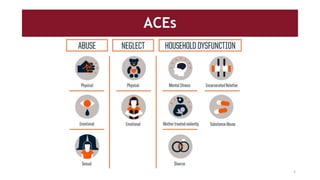
ACEs
5
6
Adverse Community
Experiences
(ACEs)
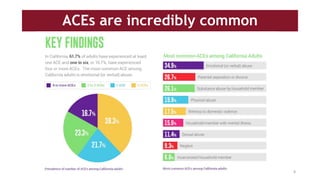
ACEs are incredibly common
8
HUH? Health or Education?
9
If there was ever
a time to be
inclusive….
10
It is all of us.
Health Schools Community
11
12
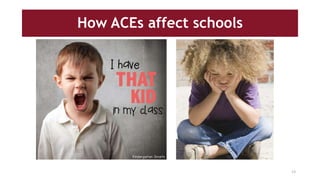
How ACEs affect schools
13
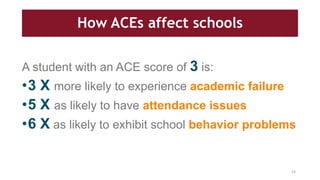
How ACEs affect schools
A student with an ACE score of 3 is:
•3 X more likely to experience academic failure
•5 X as likely to have attendance issues
•6 X as likely to exhibit school behavior problems
14
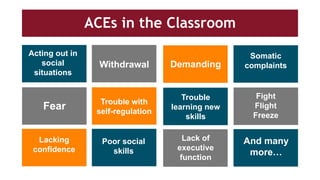
ACEs in the Classroom
Acting out in
social
situations
CompassionWithdrawal Demanding
Somatic
complaints
Fear Trouble with
self-regulation
Trouble
learning new
skills
Fight
Flight
Freeze
Lacking
confidence
Poor social
skills
Lack of
executive
function
And many
more…
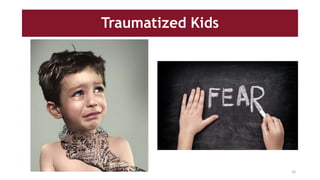
Traumatized Kids
16
Something to consider:
Is it development?
Is it discipline?
Is it distress?
17
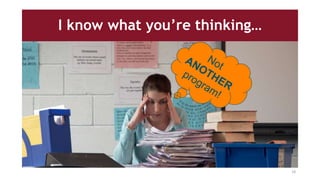
I know what you’re thinking…
18
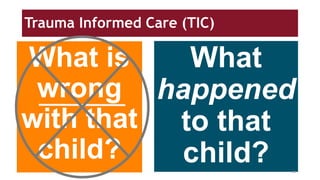
Trauma Informed Care (TIC)
What is
wrong
with that
child?
19
Trauma Informed Care (TIC)
What is
wrong
with that
child?
What
happened
to that
child? 20
How many of you got to choose
your family?
21
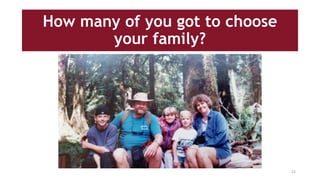
How many of you got to choose
your family?
22
But how?
23
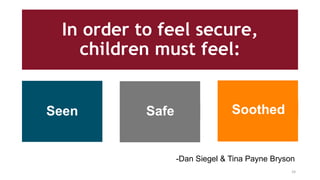
In order to feel secure,
children must feel:
-Dan Siegel & Tina Payne Bryson
Seen Safe Soothed
24
Adversity is NOT Destiny!
25
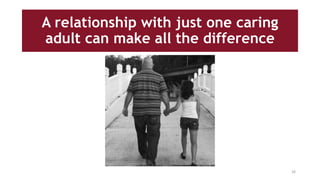
A relationship with just one caring
adult can make all the difference
26
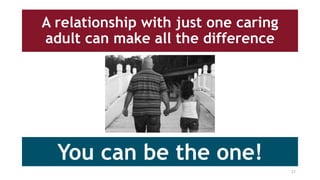
A relationship with just one caring
adult can make all the difference
You can be the one!
27
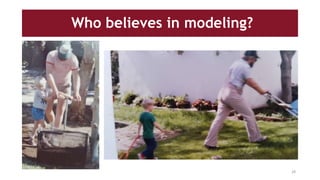
Who believes in modeling?
28
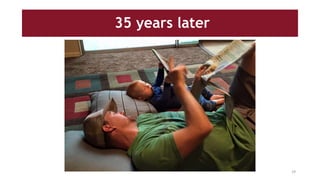
35 years later
29
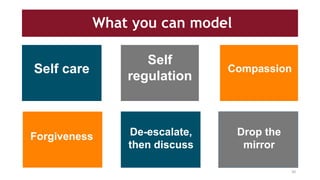
What you can model
Self Care
Self care
Self
regulation
Compassion
Forgiveness De-escalate,
then discuss
Drop the
mirror
30
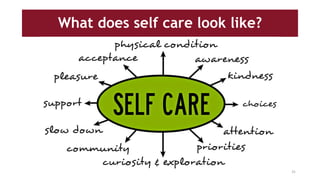
What does self care look like?
31
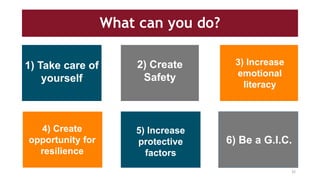
What can you do?
Self Care
1) Take care of
yourself
2) Create
Safety
3) Increase
emotional
literacy
4) Create
opportunity for
resilience
5) Increase
protective
factors
6) Be a G.I.C.
32
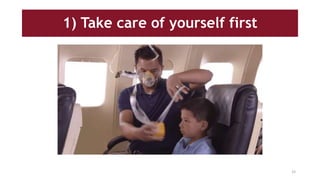
1) Take care of yourself first
33
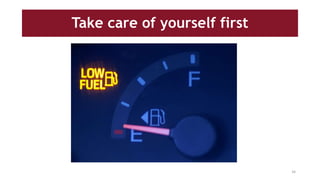
Take care of yourself first
34
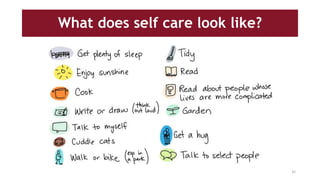
What does self care look like?
35
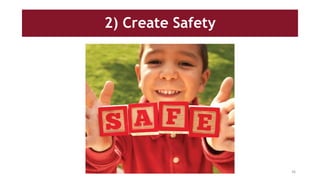
2) Create Safety
36
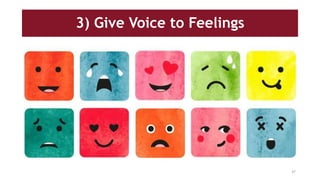
3) Give Voice to Feelings
37
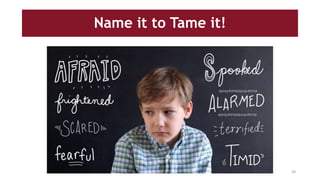
Name it to Tame it!
38
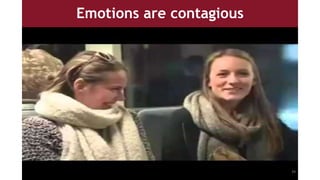
Emotions are contagious
39
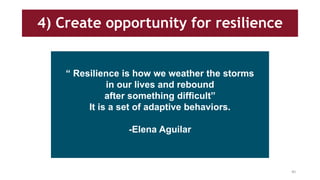
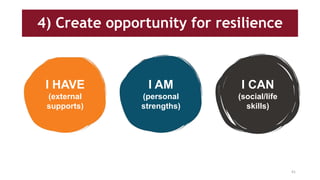
4) Create opportunity for resilience
“ Resilience is how we weather the storms
in our lives and rebound
after something difficult”
It is a set of adaptive behaviors.
-Elena Aguilar
40
4) Create opportunity for resilience
I HAVE
(external
supports)
I AM
(personal
strengths)
I CAN
(social/life
skills)
41
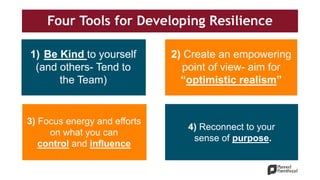
Four Tools for Developing Resilience
Self Care1) Be Kind to yourself
(and others- Tend to
the Team)
2) Create an empowering
point of view- aim for
“optimistic realism”
3) Focus energy and efforts
on what you can
control and influence
4) Reconnect to your
sense of purpose.
42
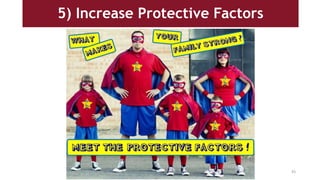
5) Increase Protective Factors
43
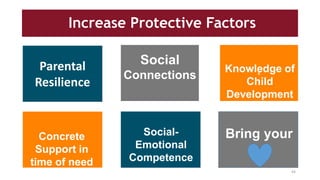
Increase Protective Factors
Self Care
Parental
Resilience
k
Social
Connections
Knowledge of
Child
Development
Concrete
Support in
time of need
Social-
Emotional
Competence
Bring your
44
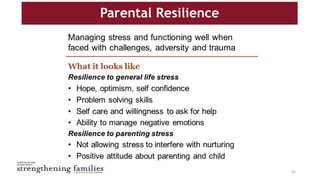
Parental Resilience
2) Create an empowering
point of view- aim for
“optimistic realism”
3) Focus energy and efforts
on what you can
control and influence
4) Reconnect to your
sense of purpose.
45
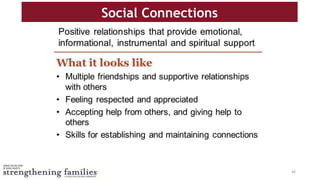
Social Connections
2) Create an empowering
point of view- aim for
“optimistic realism”
3) Focus energy and efforts
on what you can
control and influence
4) Reconnect to your
sense of purpose.
46
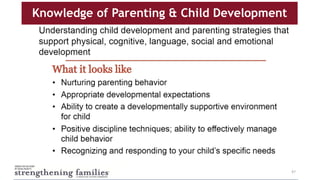
Knowledge of Parenting & Child Development
2) Create an empowering
point of view- aim for
“optimistic realism”
4) Reconnect to your
sense of purpose.
47
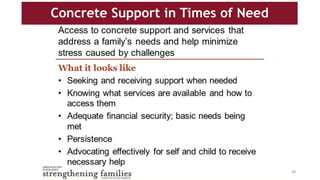
Concrete Support in Times of Need
2) Create an empowering
point of view- aim for
“optimistic realism”
4) Reconnect to your
sense of purpose.
48
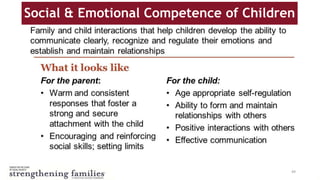
Social & Emotional Competence of Children
2) Create an empowering
point of view- aim for
“optimistic realism”
4) Reconnect to your
sense of purpose.
49
6) Be a G.I.C.
50
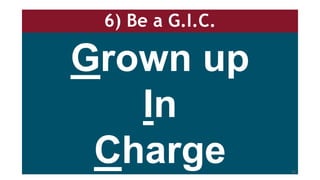
Grown up
In
Charge
6) Be a G.I.C.
51
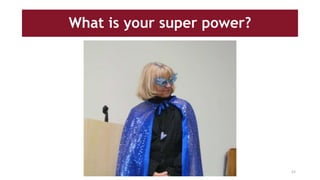
What is your super power?
52
NO……REALLY
What is your super power?
53
Be a G.I.C.
Can your super power
be changing a culture?
54
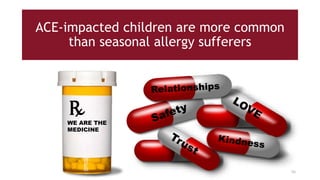
ACE-impacted children are more common
than seasonal allergy sufferers
WE ARE THE
MEDICINE
55
56
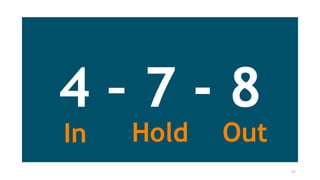
4 – 7 - 8
In Hold Out
57
58
Questions?
59
Please complete the evaluation
and sign up for our email list.
60
Mary Donnelly-Crocker
mdc@yhpasadena.org
626.795.5166
136 W Peoria St., Pasadena, CA 91103
www.yhpasadena.org
61

Trauma Informed Care

Editor's Notes

  • #7 https://vimeo.com/139998006
  • #9 Only 1/3 of adults have a score of zero. They tend to happen in clusters If you have one, you are 87% more likely to have more than one It is the combination of several ACEs that impact our health and social well being
  • #26 If you discuss Neuroplasticity, I would suggest: https://vimeo.com/157222777 Can we use this video? 2 min If this slide is just to make the point of adversity is not destiny, then see link: Or see link for examples: https://www.google.com/search?q=adversity+is+not+destiny&client=firefox-b-1-ab&source=lnms&tbm=isch&sa=X&ved=0ahUKEwje7bqcuODcAhWrhFQKHV7OA6sQ_AUICigB&biw=1146&bih=781#imgdii=LF2D4l_C1ewkkM:&imgrc=f_y9qHr2wld79M:
  • #28 Other Quote: Every kid is one caring adult away from being a success story.