Transforming Business with Data Science: Trends,
Tools, and Techniques
Introduction
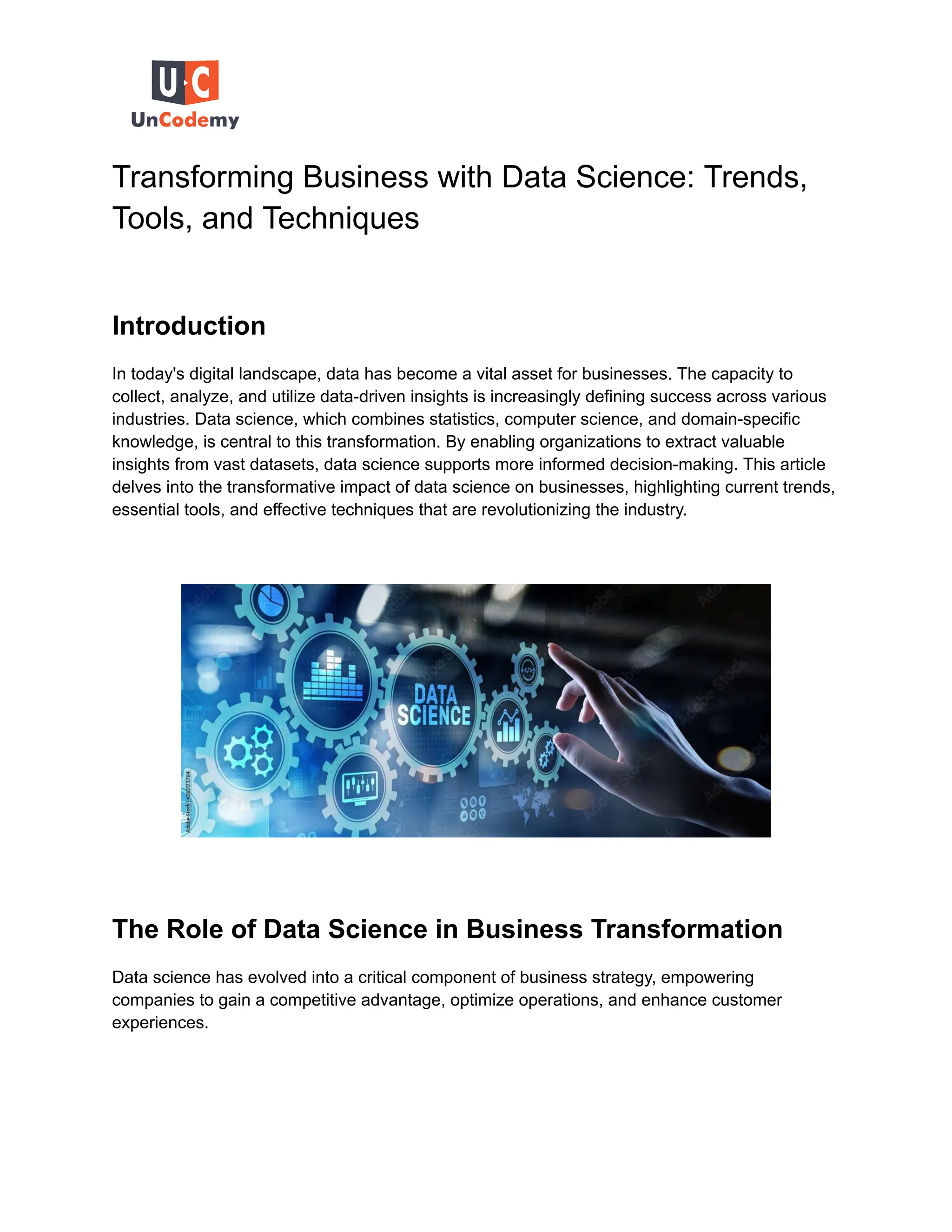
In today's digital landscape, data has become a vital asset for businesses. The capacity to
collect, analyze, and utilize data-driven insights is increasingly defining success across various
industries. Data science, which combines statistics, computer science, and domain-specific
knowledge, is central to this transformation. By enabling organizations to extract valuable
insights from vast datasets, data science supports more informed decision-making. This article
delves into the transformative impact of data science on businesses, highlighting current trends,
essential tools, and effective techniques that are revolutionizing the industry.
The Role of Data Science in Business Transformation
Data science has evolved into a critical component of business strategy, empowering
companies to gain a competitive advantage, optimize operations, and enhance customer
experiences.
Key areas where data science is making a significant impact include:
● Enhanced Decision-Making: Data science allows businesses to base their decisions
on evidence rather than intuition.
● Personalization and Customer Insights: Analyzing customer behavior leads to
personalized marketing efforts and improved customer satisfaction.
● Operational Efficiency: Data science identifies inefficiencies, enabling businesses to
streamline processes.
● Risk Management: In the finance sector, data science is essential for risk assessment,
fraud detection, and regulatory compliance.
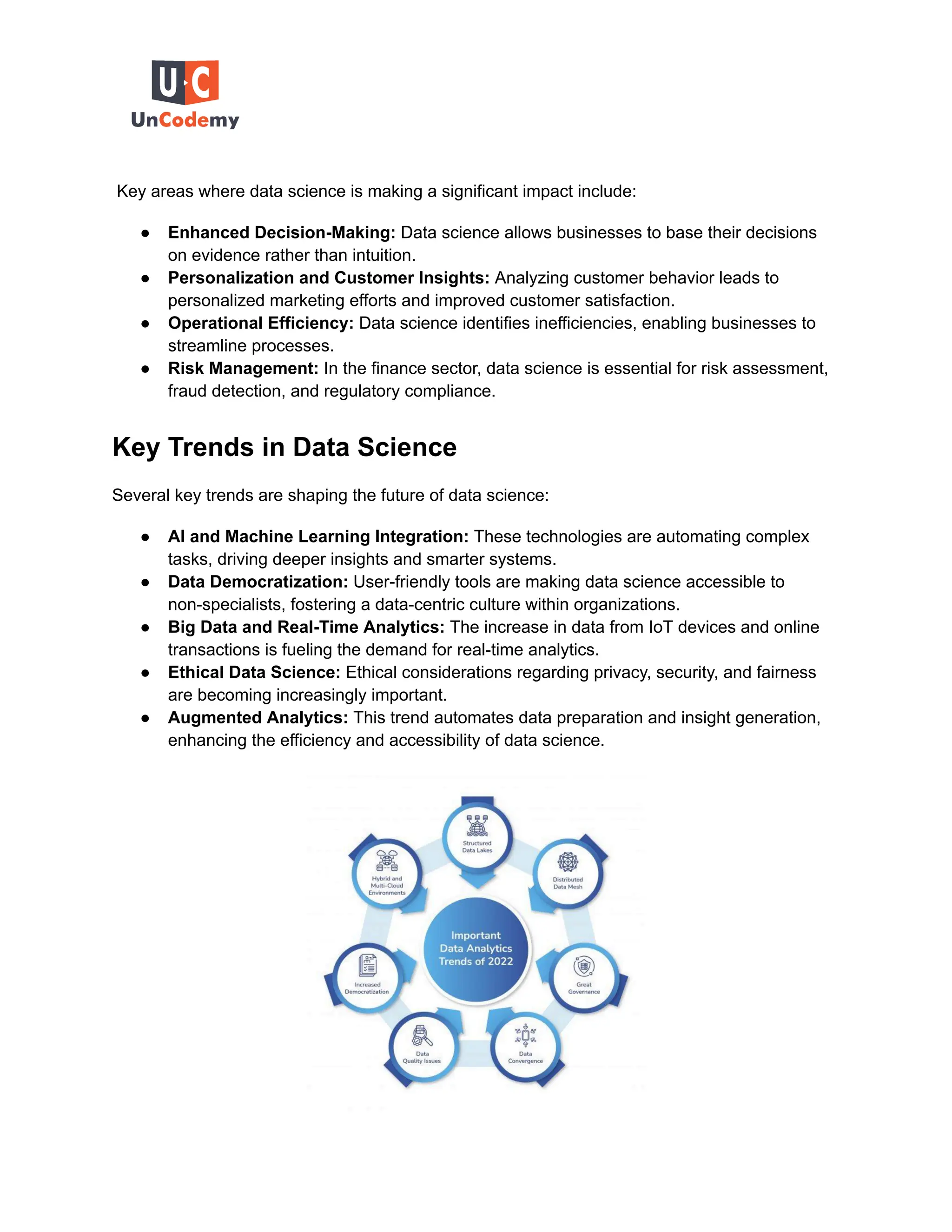
Key Trends in Data Science
Several key trends are shaping the future of data science:
● AI and Machine Learning Integration: These technologies are automating complex
tasks, driving deeper insights and smarter systems.
● Data Democratization: User-friendly tools are making data science accessible to
non-specialists, fostering a data-centric culture within organizations.
● Big Data and Real-Time Analytics: The increase in data from IoT devices and online
transactions is fueling the demand for real-time analytics.
● Ethical Data Science: Ethical considerations regarding privacy, security, and fairness
are becoming increasingly important.
● Augmented Analytics: This trend automates data preparation and insight generation,
enhancing the efficiency and accessibility of data science.
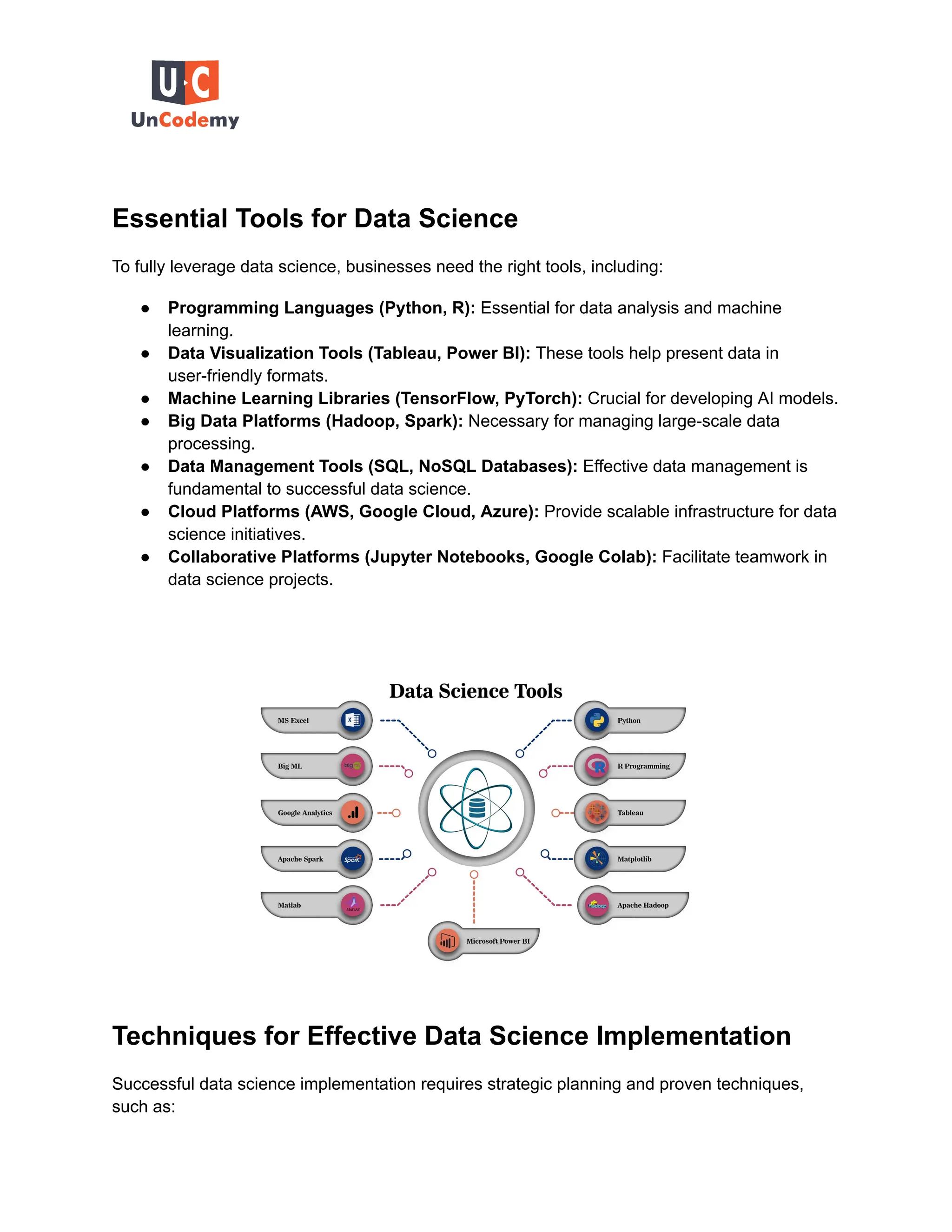
Essential Tools for Data Science
To fully leverage data science, businesses need the right tools, including:
● Programming Languages (Python, R): Essential for data analysis and machine
learning.
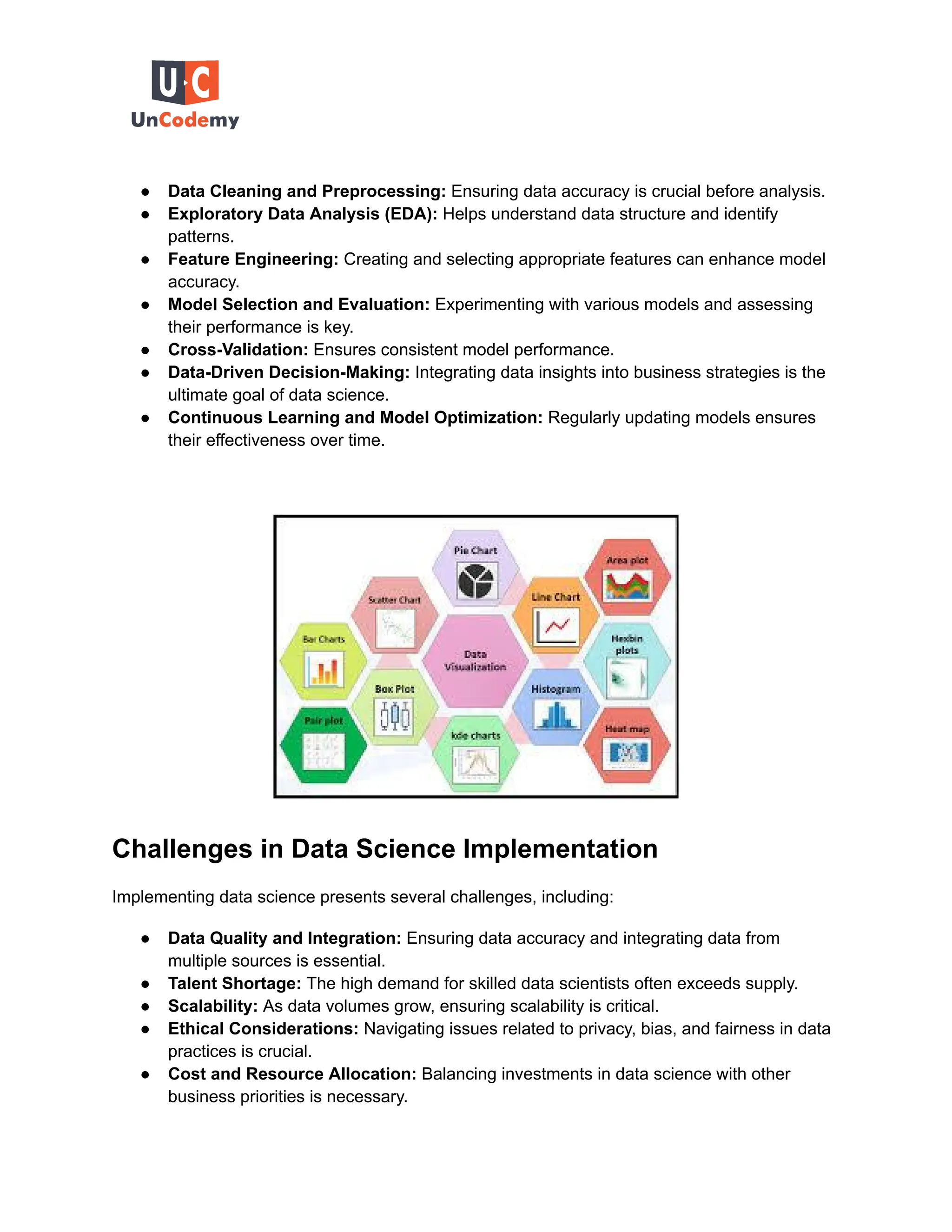
● Data Visualization Tools (Tableau, Power BI): These tools help present data in
user-friendly formats.
● Machine Learning Libraries (TensorFlow, PyTorch): Crucial for developing AI models.
● Big Data Platforms (Hadoop, Spark): Necessary for managing large-scale data
processing.
● Data Management Tools (SQL, NoSQL Databases): Effective data management is
fundamental to successful data science.
● Cloud Platforms (AWS, Google Cloud, Azure): Provide scalable infrastructure for data
science initiatives.
● Collaborative Platforms (Jupyter Notebooks, Google Colab): Facilitate teamwork in
data science projects.
Techniques for Effective Data Science Implementation
Successful data science implementation requires strategic planning and proven techniques,
such as:
● Data Cleaning and Preprocessing: Ensuring data accuracy is crucial before analysis.
● Exploratory Data Analysis (EDA): Helps understand data structure and identify
patterns.
● Feature Engineering: Creating and selecting appropriate features can enhance model
accuracy.
● Model Selection and Evaluation: Experimenting with various models and assessing
their performance is key.
● Cross-Validation: Ensures consistent model performance.
● Data-Driven Decision-Making: Integrating data insights into business strategies is the
ultimate goal of data science.
● Continuous Learning and Model Optimization: Regularly updating models ensures
their effectiveness over time.
Challenges in Data Science Implementation
Implementing data science presents several challenges, including:
● Data Quality and Integration: Ensuring data accuracy and integrating data from
multiple sources is essential.
● Talent Shortage: The high demand for skilled data scientists often exceeds supply.
● Scalability: As data volumes grow, ensuring scalability is critical.
● Ethical Considerations: Navigating issues related to privacy, bias, and fairness in data
practices is crucial.
● Cost and Resource Allocation: Balancing investments in data science with other
business priorities is necessary.
Conclusion
Data science is undoubtedly reshaping the business landscape. By harnessing data science,
companies can make better decisions, optimize operations, and gain a competitive advantage.
For those looking to tap into this field, enrolling in a top data science course in Thane, Mumbai,
Navi Mumbai, Delhi, Noida, and other locations across India is essential. These courses equip
professionals with the skills needed to leverage the power of data science. As technology
advances, the integration of AI, machine learning, and real-time analytics will further enhance
data science capabilities. However, successful implementation requires a strategic approach,
the right tools, and continuous optimization. Businesses that embrace data science and
effectively navigate its challenges will thrive in an increasingly data-driven future.
Source link:
https://www.knockinglive.com/transforming-business-with-data-science-trends-tools-and-techniq
ues/

Transforming Business with Data Science: Trends, Tools, and Techniques

  • 1.
    Transforming Business withData Science: Trends, Tools, and Techniques Introduction In today's digital landscape, data has become a vital asset for businesses. The capacity to collect, analyze, and utilize data-driven insights is increasingly defining success across various industries. Data science, which combines statistics, computer science, and domain-specific knowledge, is central to this transformation. By enabling organizations to extract valuable insights from vast datasets, data science supports more informed decision-making. This article delves into the transformative impact of data science on businesses, highlighting current trends, essential tools, and effective techniques that are revolutionizing the industry. The Role of Data Science in Business Transformation Data science has evolved into a critical component of business strategy, empowering companies to gain a competitive advantage, optimize operations, and enhance customer experiences.
  • 2.
    Key areas wheredata science is making a significant impact include: ● Enhanced Decision-Making: Data science allows businesses to base their decisions on evidence rather than intuition. ● Personalization and Customer Insights: Analyzing customer behavior leads to personalized marketing efforts and improved customer satisfaction. ● Operational Efficiency: Data science identifies inefficiencies, enabling businesses to streamline processes. ● Risk Management: In the finance sector, data science is essential for risk assessment, fraud detection, and regulatory compliance. Key Trends in Data Science Several key trends are shaping the future of data science: ● AI and Machine Learning Integration: These technologies are automating complex tasks, driving deeper insights and smarter systems. ● Data Democratization: User-friendly tools are making data science accessible to non-specialists, fostering a data-centric culture within organizations. ● Big Data and Real-Time Analytics: The increase in data from IoT devices and online transactions is fueling the demand for real-time analytics. ● Ethical Data Science: Ethical considerations regarding privacy, security, and fairness are becoming increasingly important. ● Augmented Analytics: This trend automates data preparation and insight generation, enhancing the efficiency and accessibility of data science.
  • 3.
    Essential Tools forData Science To fully leverage data science, businesses need the right tools, including: ● Programming Languages (Python, R): Essential for data analysis and machine learning. ● Data Visualization Tools (Tableau, Power BI): These tools help present data in user-friendly formats. ● Machine Learning Libraries (TensorFlow, PyTorch): Crucial for developing AI models. ● Big Data Platforms (Hadoop, Spark): Necessary for managing large-scale data processing. ● Data Management Tools (SQL, NoSQL Databases): Effective data management is fundamental to successful data science. ● Cloud Platforms (AWS, Google Cloud, Azure): Provide scalable infrastructure for data science initiatives. ● Collaborative Platforms (Jupyter Notebooks, Google Colab): Facilitate teamwork in data science projects. Techniques for Effective Data Science Implementation Successful data science implementation requires strategic planning and proven techniques, such as:
  • 4.
    ● Data Cleaningand Preprocessing: Ensuring data accuracy is crucial before analysis. ● Exploratory Data Analysis (EDA): Helps understand data structure and identify patterns. ● Feature Engineering: Creating and selecting appropriate features can enhance model accuracy. ● Model Selection and Evaluation: Experimenting with various models and assessing their performance is key. ● Cross-Validation: Ensures consistent model performance. ● Data-Driven Decision-Making: Integrating data insights into business strategies is the ultimate goal of data science. ● Continuous Learning and Model Optimization: Regularly updating models ensures their effectiveness over time. Challenges in Data Science Implementation Implementing data science presents several challenges, including: ● Data Quality and Integration: Ensuring data accuracy and integrating data from multiple sources is essential. ● Talent Shortage: The high demand for skilled data scientists often exceeds supply. ● Scalability: As data volumes grow, ensuring scalability is critical. ● Ethical Considerations: Navigating issues related to privacy, bias, and fairness in data practices is crucial. ● Cost and Resource Allocation: Balancing investments in data science with other business priorities is necessary.
  • 5.
    Conclusion Data science isundoubtedly reshaping the business landscape. By harnessing data science, companies can make better decisions, optimize operations, and gain a competitive advantage. For those looking to tap into this field, enrolling in a top data science course in Thane, Mumbai, Navi Mumbai, Delhi, Noida, and other locations across India is essential. These courses equip professionals with the skills needed to leverage the power of data science. As technology advances, the integration of AI, machine learning, and real-time analytics will further enhance data science capabilities. However, successful implementation requires a strategic approach, the right tools, and continuous optimization. Businesses that embrace data science and effectively navigate its challenges will thrive in an increasingly data-driven future. Source link: https://www.knockinglive.com/transforming-business-with-data-science-trends-tools-and-techniq ues/