A Comprehensive Guide to Software Testing:
Strategies for Ensuring Quality
Introduction
Ensuring high-quality software is crucial in development, and software testing is pivotal in this
endeavor. It helps in identifying defects, verifying functionality, and making sure the final product
meets user requirements. This article provides an in-depth look at key strategies and
methodologies for effective software testing, offering insights into best practices for delivering
top-notch software.
1. What is Software Testing?
Software testing involves systematically evaluating and verifying that a software application or
system adheres to its specifications and functions correctly. The primary aims are to detect
defects, ensure the software operates as intended, and confirm that it meets user needs.
Core Concepts:
Defects: Issues that cause the software to behave incorrectly.
Verification vs. Validation: Verification checks if the product is built correctly, while validation
ensures it aligns with user expectations.
Quality Assurance (QA): A broad process that includes testing and focuses on improving
development practices to enhance overall software quality.
2. Key Testing Strategies
Effective software testing employs various strategies to address different aspects of the
software:
Manual Testing: Involves testers executing test cases manually without automated tools.
It’s particularly effective for:
Exploratory Testing: Identifying unexpected issues through ad-hoc testing.
Usability Testing: Assessing the user experience and ease of use of the software.
Automated Testing: Utilizes scripts and tools to perform tests, offering benefits such as:
Efficiency: Quickly executing tests to save time and resources.
Coverage: Conducting extensive and repetitive testing.
Regression Testing: Ensuring new code changes do not introduce new defects.
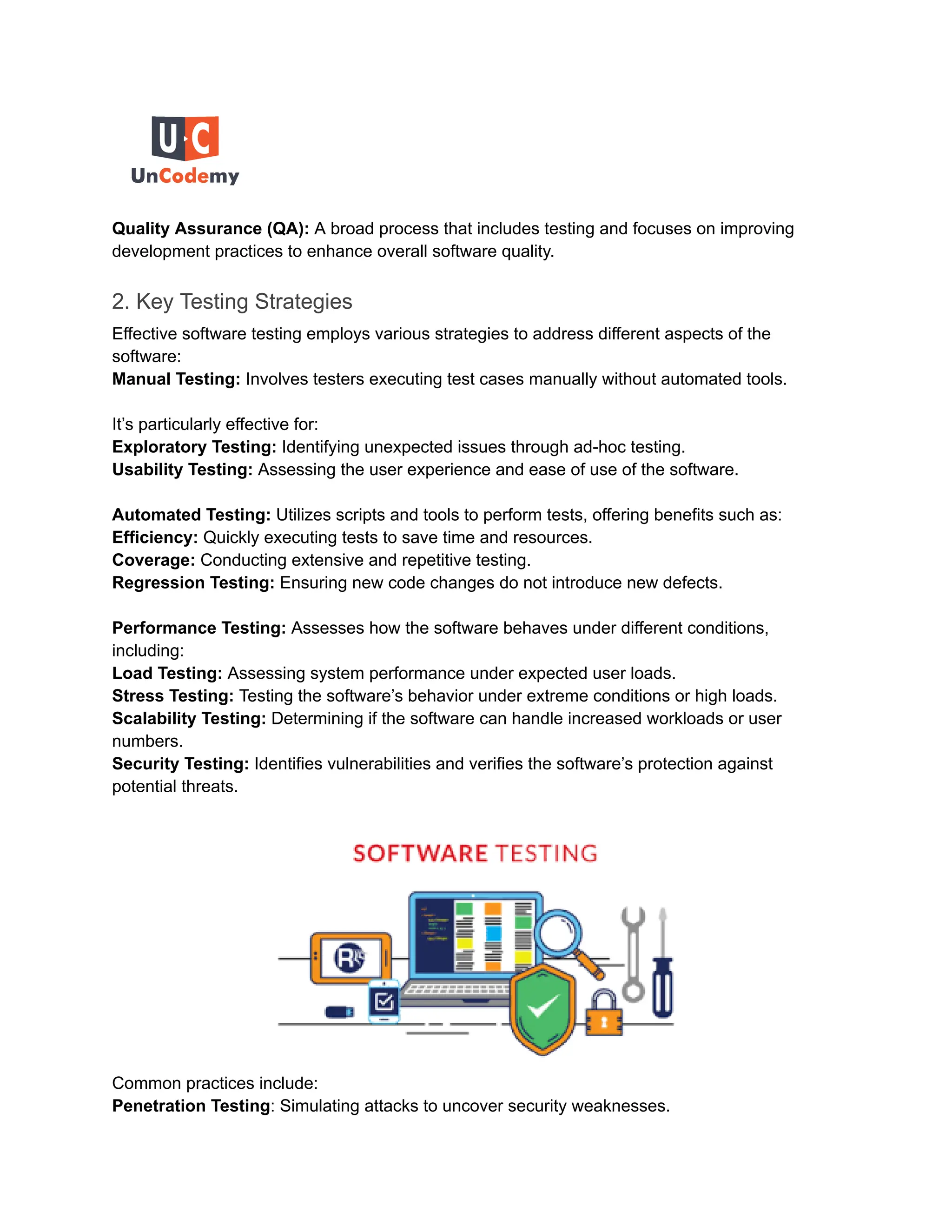
Performance Testing: Assesses how the software behaves under different conditions,
including:
Load Testing: Assessing system performance under expected user loads.
Stress Testing: Testing the software’s behavior under extreme conditions or high loads.
Scalability Testing: Determining if the software can handle increased workloads or user
numbers.
Security Testing: Identifies vulnerabilities and verifies the software’s protection against
potential threats.
Common practices include:
Penetration Testing: Simulating attacks to uncover security weaknesses.
Vulnerability Scanning: Automatically detecting known security issues.
User Acceptance Testing (UAT): Engages end-users to validate that the software meets their
needs before release.
It is crucial for:
Validating Functionality: Ensuring the software meets business requirements.
Collecting Feedback: Identifying user concerns or issues.
3. Essential Testing Techniques
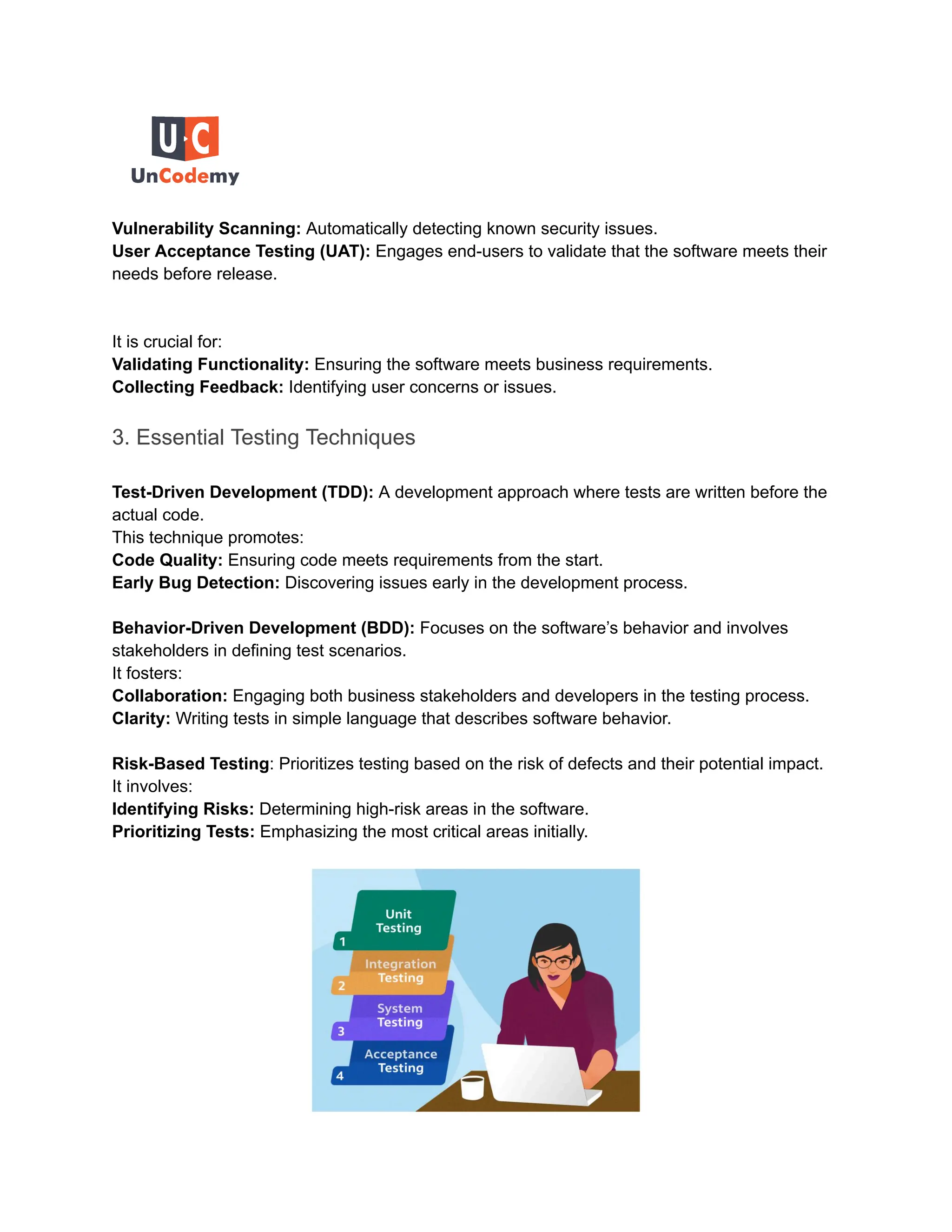
Test-Driven Development (TDD): A development approach where tests are written before the
actual code.
This technique promotes:
Code Quality: Ensuring code meets requirements from the start.
Early Bug Detection: Discovering issues early in the development process.
Behavior-Driven Development (BDD): Focuses on the software’s behavior and involves
stakeholders in defining test scenarios.
It fosters:
Collaboration: Engaging both business stakeholders and developers in the testing process.
Clarity: Writing tests in simple language that describes software behavior.
Risk-Based Testing: Prioritizes testing based on the risk of defects and their potential impact.
It involves:
Identifying Risks: Determining high-risk areas in the software.
Prioritizing Tests: Emphasizing the most critical areas initially.
Exploratory Testing: Involves simultaneous learning, designing, and executing tests.
It is useful for:
Finding Unknown Issues: Discovering defects not covered by scripted tests.
Adapting to Changes: Adjusting test approaches based on the application’s current state.
4. Best Practices for Effective Testing
Define Clear Requirements: Providing detailed and precise requirements is crucial for creating
effective test cases and ensuring the software meets its intended purpose.
Develop Comprehensive Test Plans: A test plan outlines the testing scope, objectives,
resources, schedule, and approach. It serves as a roadmap for the testing process and ensures
all aspects of the software are covered.
Maintain a Test Repository: Centralizes test cases, scripts, and results for:
Organizing Tests: Tracking various test cases and their statuses.
Reusability: Reusing test cases and scripts across different testing phases.
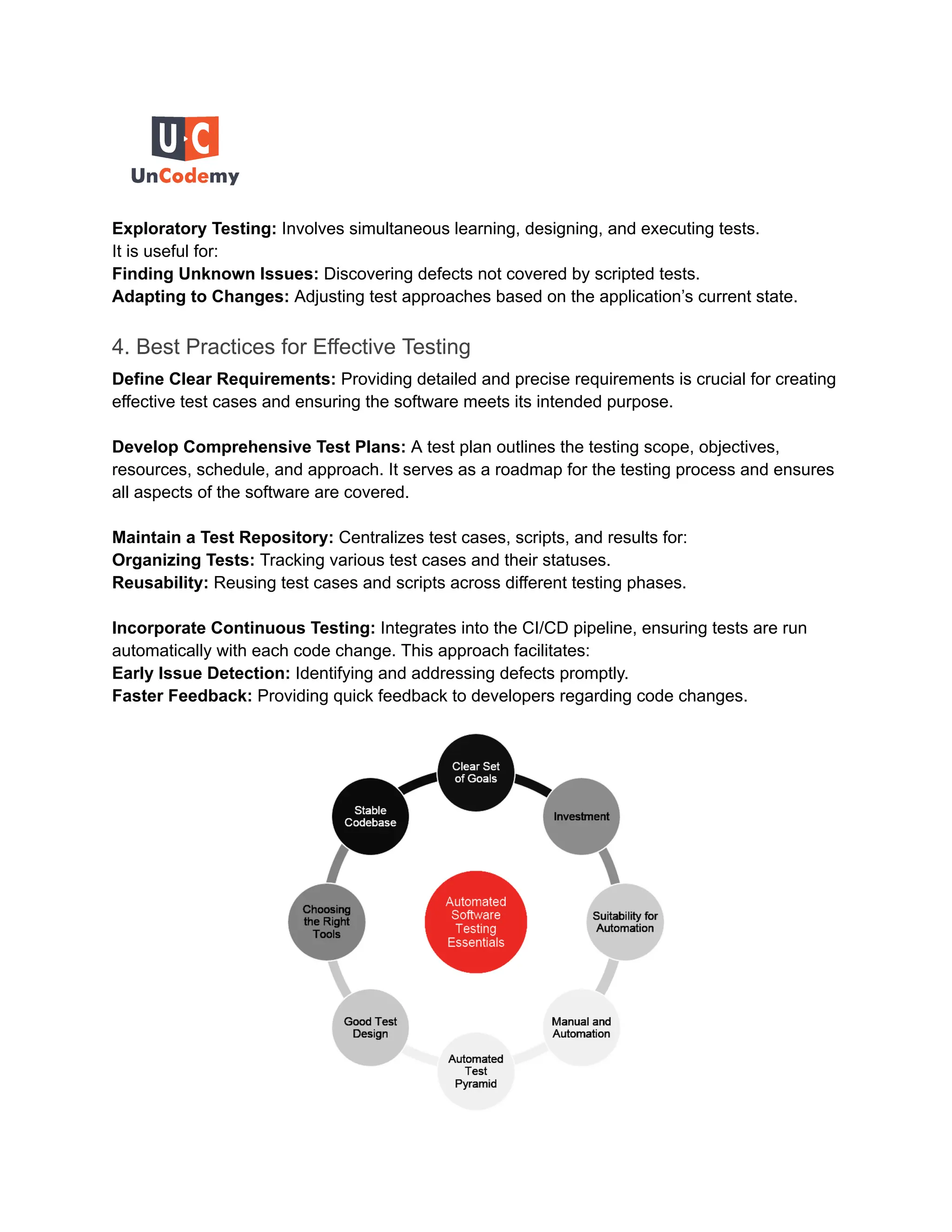
Incorporate Continuous Testing: Integrates into the CI/CD pipeline, ensuring tests are run
automatically with each code change. This approach facilitates:
Early Issue Detection: Identifying and addressing defects promptly.
Faster Feedback: Providing quick feedback to developers regarding code changes.
Foster Collaboration: Effective collaboration between testers, developers, and stakeholders is
essential for successful testing. It promotes:
Shared Understanding: Ensuring a common understanding of requirements and issues.
Efficient Issue Resolution: Quickly addressing defects and concerns.
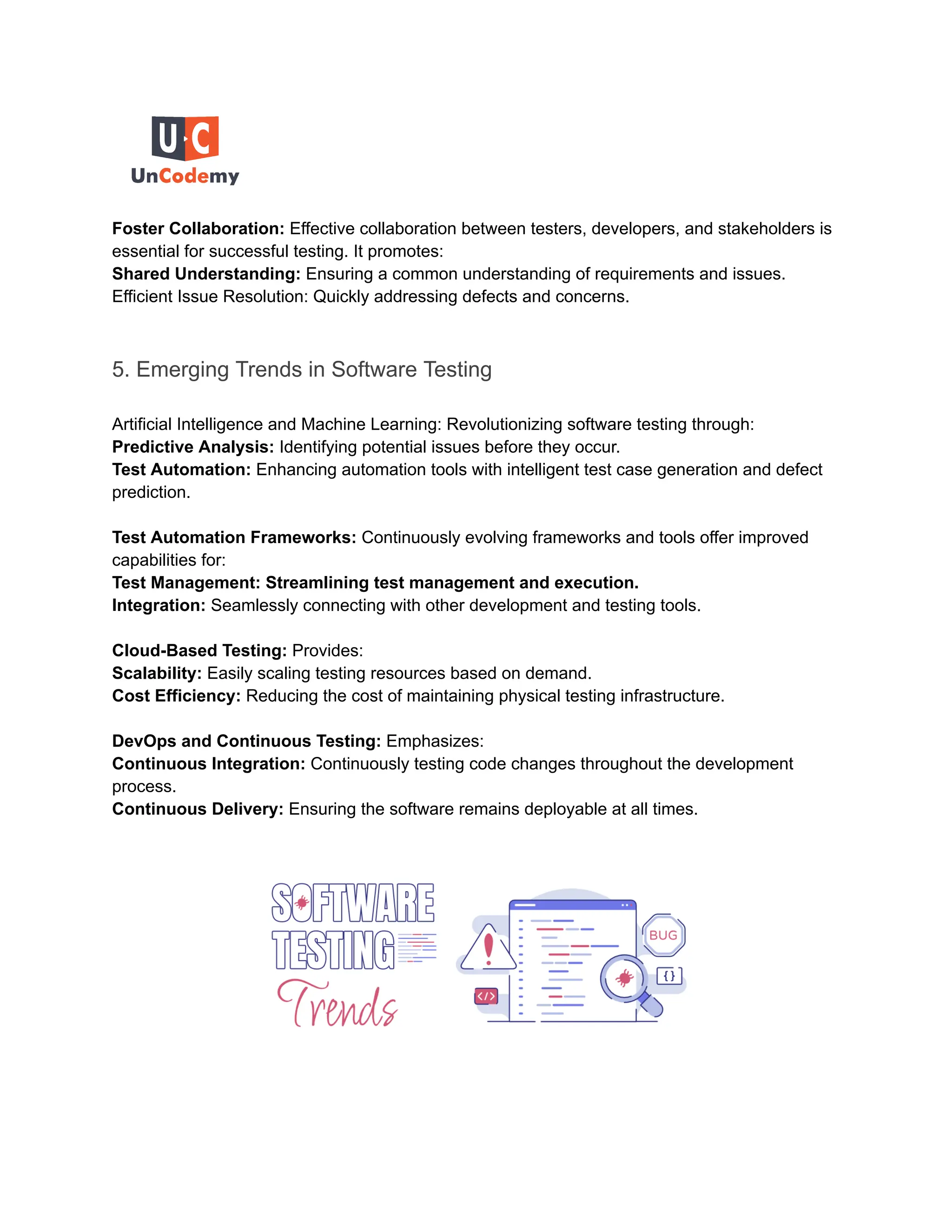
5. Emerging Trends in Software Testing
Artificial Intelligence and Machine Learning: Revolutionizing software testing through:
Predictive Analysis: Identifying potential issues before they occur.
Test Automation: Enhancing automation tools with intelligent test case generation and defect
prediction.
Test Automation Frameworks: Continuously evolving frameworks and tools offer improved
capabilities for:
Test Management: Streamlining test management and execution.
Integration: Seamlessly connecting with other development and testing tools.
Cloud-Based Testing: Provides:
Scalability: Easily scaling testing resources based on demand.
Cost Efficiency: Reducing the cost of maintaining physical testing infrastructure.
DevOps and Continuous Testing: Emphasizes:
Continuous Integration: Continuously testing code changes throughout the development
process.
Continuous Delivery: Ensuring the software remains deployable at all times.
Conclusion
Software testing is a dynamic and essential field that ensures the quality and reliability of
software products. By implementing a variety of strategies, including manual and automated
testing, performance and security assessments, organizations can effectively identify and
address defects, validate functionality, and enhance user satisfaction. For those seeking to

advance their expertise, enrolling in top software testing courses in Thane, Mumbai, Navi
Mumbai, Delhi, and Noida can provide valuable knowledge and hands-on experience. Staying
updated with emerging trends and best practices will help QA professionals navigate the
complexities of modern software development and contribute to delivering high-quality software
solutions.
Source link:
https://telegra.ph/A-Deep-Dive-into-Software-Testing-Strategies-for-Ensuring-Quality-08-09

A Comprehensive Guide to Software Testing: Strategies for Ensuring Quality

  • 1.
    A Comprehensive Guideto Software Testing: Strategies for Ensuring Quality Introduction Ensuring high-quality software is crucial in development, and software testing is pivotal in this endeavor. It helps in identifying defects, verifying functionality, and making sure the final product meets user requirements. This article provides an in-depth look at key strategies and methodologies for effective software testing, offering insights into best practices for delivering top-notch software. 1. What is Software Testing? Software testing involves systematically evaluating and verifying that a software application or system adheres to its specifications and functions correctly. The primary aims are to detect defects, ensure the software operates as intended, and confirm that it meets user needs. Core Concepts: Defects: Issues that cause the software to behave incorrectly. Verification vs. Validation: Verification checks if the product is built correctly, while validation ensures it aligns with user expectations.
  • 2.
    Quality Assurance (QA):A broad process that includes testing and focuses on improving development practices to enhance overall software quality. 2. Key Testing Strategies Effective software testing employs various strategies to address different aspects of the software: Manual Testing: Involves testers executing test cases manually without automated tools. It’s particularly effective for: Exploratory Testing: Identifying unexpected issues through ad-hoc testing. Usability Testing: Assessing the user experience and ease of use of the software. Automated Testing: Utilizes scripts and tools to perform tests, offering benefits such as: Efficiency: Quickly executing tests to save time and resources. Coverage: Conducting extensive and repetitive testing. Regression Testing: Ensuring new code changes do not introduce new defects. Performance Testing: Assesses how the software behaves under different conditions, including: Load Testing: Assessing system performance under expected user loads. Stress Testing: Testing the software’s behavior under extreme conditions or high loads. Scalability Testing: Determining if the software can handle increased workloads or user numbers. Security Testing: Identifies vulnerabilities and verifies the software’s protection against potential threats. Common practices include: Penetration Testing: Simulating attacks to uncover security weaknesses.
  • 3.
    Vulnerability Scanning: Automaticallydetecting known security issues. User Acceptance Testing (UAT): Engages end-users to validate that the software meets their needs before release. It is crucial for: Validating Functionality: Ensuring the software meets business requirements. Collecting Feedback: Identifying user concerns or issues. 3. Essential Testing Techniques Test-Driven Development (TDD): A development approach where tests are written before the actual code. This technique promotes: Code Quality: Ensuring code meets requirements from the start. Early Bug Detection: Discovering issues early in the development process. Behavior-Driven Development (BDD): Focuses on the software’s behavior and involves stakeholders in defining test scenarios. It fosters: Collaboration: Engaging both business stakeholders and developers in the testing process. Clarity: Writing tests in simple language that describes software behavior. Risk-Based Testing: Prioritizes testing based on the risk of defects and their potential impact. It involves: Identifying Risks: Determining high-risk areas in the software. Prioritizing Tests: Emphasizing the most critical areas initially.
  • 4.
    Exploratory Testing: Involvessimultaneous learning, designing, and executing tests. It is useful for: Finding Unknown Issues: Discovering defects not covered by scripted tests. Adapting to Changes: Adjusting test approaches based on the application’s current state. 4. Best Practices for Effective Testing Define Clear Requirements: Providing detailed and precise requirements is crucial for creating effective test cases and ensuring the software meets its intended purpose. Develop Comprehensive Test Plans: A test plan outlines the testing scope, objectives, resources, schedule, and approach. It serves as a roadmap for the testing process and ensures all aspects of the software are covered. Maintain a Test Repository: Centralizes test cases, scripts, and results for: Organizing Tests: Tracking various test cases and their statuses. Reusability: Reusing test cases and scripts across different testing phases. Incorporate Continuous Testing: Integrates into the CI/CD pipeline, ensuring tests are run automatically with each code change. This approach facilitates: Early Issue Detection: Identifying and addressing defects promptly. Faster Feedback: Providing quick feedback to developers regarding code changes.
  • 5.
    Foster Collaboration: Effectivecollaboration between testers, developers, and stakeholders is essential for successful testing. It promotes: Shared Understanding: Ensuring a common understanding of requirements and issues. Efficient Issue Resolution: Quickly addressing defects and concerns. 5. Emerging Trends in Software Testing Artificial Intelligence and Machine Learning: Revolutionizing software testing through: Predictive Analysis: Identifying potential issues before they occur. Test Automation: Enhancing automation tools with intelligent test case generation and defect prediction. Test Automation Frameworks: Continuously evolving frameworks and tools offer improved capabilities for: Test Management: Streamlining test management and execution. Integration: Seamlessly connecting with other development and testing tools. Cloud-Based Testing: Provides: Scalability: Easily scaling testing resources based on demand. Cost Efficiency: Reducing the cost of maintaining physical testing infrastructure. DevOps and Continuous Testing: Emphasizes: Continuous Integration: Continuously testing code changes throughout the development process. Continuous Delivery: Ensuring the software remains deployable at all times.
  • 6.
    Conclusion Software testing isa dynamic and essential field that ensures the quality and reliability of software products. By implementing a variety of strategies, including manual and automated testing, performance and security assessments, organizations can effectively identify and address defects, validate functionality, and enhance user satisfaction. For those seeking to advance their expertise, enrolling in top software testing courses in Thane, Mumbai, Navi Mumbai, Delhi, and Noida can provide valuable knowledge and hands-on experience. Staying updated with emerging trends and best practices will help QA professionals navigate the complexities of modern software development and contribute to delivering high-quality software solutions. Source link: https://telegra.ph/A-Deep-Dive-into-Software-Testing-Strategies-for-Ensuring-Quality-08-09