Title/Credit Convention Research 
Courtney Buabeng
Titles/Credits 
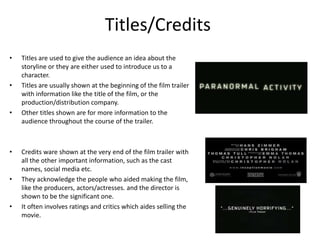
• Titles are used to give the audience an idea about the 
storyline or they are either used to introduce us to a 
character. 
• Titles are usually shown at the beginning of the film trailer 
with information like the title of the film, or the 
production/distribution company. 
• Other titles shown are for more information to the 
audience throughout the course of the trailer. 
• Credits ware shown at the very end of the film trailer with 
all the other important information, such as the cast 
names, social media etc. 
• They acknowledge the people who aided making the film, 
like the producers, actors/actresses. and the director is 
shown to be the significant one. 
• It often involves ratings and critics which aides selling the 
movie.
What They Say/Are About 
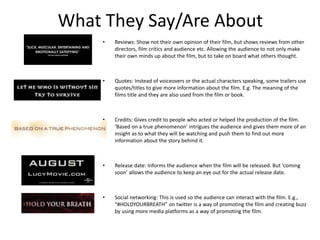
• Reviews: Show not their own opinion of their film, but shows reviews from other 
directors, film critics and audience etc. Allowing the audience to not only make 
their own minds up about the film, but to take on board what others thought. 
• Quotes: Instead of voiceovers or the actual characters speaking, some trailers use 
quotes/titles to give more information about the film. E.g. The meaning of the 
films title and they are also used from the film or book. 
• Credits: Gives credit to people who acted or helped the production of the film. 
‘Based on a true phenomenon’ intrigues the audience and gives them more of an 
insight as to what they will be watching and push them to find out more 
information about the story behind it. 
• Release date: Informs the audience when the film will be released. But ‘coming 
soon’ allows the audience to keep an eye out for the actual release date. 
• Social networking: This is used so the audience can interact with the film. E.g., 
“#HOLDYOURBREATH” on twitter is a way of promoting the film and creating buzz 
by using more media platforms as a way of promoting the film.
Who? 
• Influential actors/actresses will always be acknowledged 
because it attracts their fans to the role of that 
actor/actress within the trailer/film. 
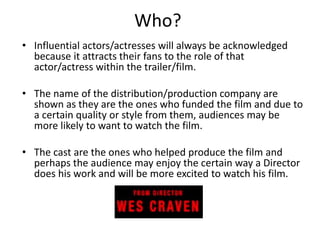
• The name of the distribution/production company are 
shown as they are the ones who funded the film and due to 
a certain quality or style from them, audiences may be 
more likely to want to watch the film. 
• The cast are the ones who helped produce the film and 
perhaps the audience may enjoy the certain way a Director 
does his work and will be more excited to watch his film.
Why? 
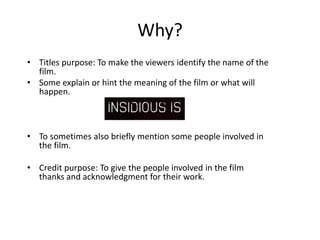
• Titles purpose: To make the viewers identify the name of the 
film. 
• Some explain or hint the meaning of the film or what will 
happen. 
• To sometimes also briefly mention some people involved in 
the film. 
• Credit purpose: To give the people involved in the film 
thanks and acknowledgment for their work.
When? 
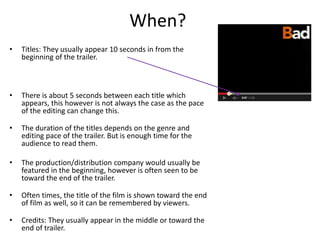
• Titles: They usually appear 10 seconds in from the 
beginning of the trailer. 
• There is about 5 seconds between each title which 
appears, this however is not always the case as the pace 
of the editing can change this. 
• The duration of the titles depends on the genre and 
editing pace of the trailer. But is enough time for the 
audience to read them. 
• The production/distribution company would usually be 
featured in the beginning, however is often seen to be 
toward the end of the trailer. 
• Often times, the title of the film is shown toward the end 
of film as well, so it can be remembered by viewers. 
• Credits: They usually appear in the middle or toward the 
end of trailer.
Where? 
• The title is usually placed toward the end of the 
trailer, so the audience are focused more on the 
storyline of the trailer and are able to remember 
the name of the film at the end of it. 
• As the funders of the film, the 
production/distribution companies are generally 
placed at the beginning of the trailer. 
• The placement of the actors/actresses can vary 
throughout the course of trailers.
Narrative Structure/Enigmas 
• The titles give hints to the audience and make 
the non-linear narrative more clear to them if 
it is confusing. 
• It also creates enigmas and mainly raises 
questions of “Who? Why? What? When? 
Where? How?” 
• Depending on the genre, the basis of the 
enigmas created will differ.
How They Fit In With Genre/Subgenre 
• The name of certain titles create a certain 
emotion for the audience. 
• For example, the titles in the horror genre are 
to create immense fear. 
• Some the titles represent or hint the actions 
of what will occur in the actual film.
How? 
• The titles in thriller trailer are generally quite plain but 
in bold and mysterious with black & white/grey colours 
and tend to fade in/out. 
• Which fits with the genre as it not distracting and 
doesn’t give too much and creates a mystery. 
• The titles in a horror trailer have colours such as red 
and black which are conventions of the horror genre. 
• This helps the audience identify the genre of the film. 
• They also are usually bold, capital letters. They are also 
sometimes flashing or animations in the background 
and sudden popping to the screen to create tension or 
fear.

Trailer Title/Credit Convention Research

  • 1.
  • 2.
    Titles/Credits • Titlesare used to give the audience an idea about the storyline or they are either used to introduce us to a character. • Titles are usually shown at the beginning of the film trailer with information like the title of the film, or the production/distribution company. • Other titles shown are for more information to the audience throughout the course of the trailer. • Credits ware shown at the very end of the film trailer with all the other important information, such as the cast names, social media etc. • They acknowledge the people who aided making the film, like the producers, actors/actresses. and the director is shown to be the significant one. • It often involves ratings and critics which aides selling the movie.
  • 3.
    What They Say/AreAbout • Reviews: Show not their own opinion of their film, but shows reviews from other directors, film critics and audience etc. Allowing the audience to not only make their own minds up about the film, but to take on board what others thought. • Quotes: Instead of voiceovers or the actual characters speaking, some trailers use quotes/titles to give more information about the film. E.g. The meaning of the films title and they are also used from the film or book. • Credits: Gives credit to people who acted or helped the production of the film. ‘Based on a true phenomenon’ intrigues the audience and gives them more of an insight as to what they will be watching and push them to find out more information about the story behind it. • Release date: Informs the audience when the film will be released. But ‘coming soon’ allows the audience to keep an eye out for the actual release date. • Social networking: This is used so the audience can interact with the film. E.g., “#HOLDYOURBREATH” on twitter is a way of promoting the film and creating buzz by using more media platforms as a way of promoting the film.
  • 4.
    Who? • Influentialactors/actresses will always be acknowledged because it attracts their fans to the role of that actor/actress within the trailer/film. • The name of the distribution/production company are shown as they are the ones who funded the film and due to a certain quality or style from them, audiences may be more likely to want to watch the film. • The cast are the ones who helped produce the film and perhaps the audience may enjoy the certain way a Director does his work and will be more excited to watch his film.
  • 5.
    Why? • Titlespurpose: To make the viewers identify the name of the film. • Some explain or hint the meaning of the film or what will happen. • To sometimes also briefly mention some people involved in the film. • Credit purpose: To give the people involved in the film thanks and acknowledgment for their work.
  • 6.
    When? • Titles:They usually appear 10 seconds in from the beginning of the trailer. • There is about 5 seconds between each title which appears, this however is not always the case as the pace of the editing can change this. • The duration of the titles depends on the genre and editing pace of the trailer. But is enough time for the audience to read them. • The production/distribution company would usually be featured in the beginning, however is often seen to be toward the end of the trailer. • Often times, the title of the film is shown toward the end of film as well, so it can be remembered by viewers. • Credits: They usually appear in the middle or toward the end of trailer.
  • 7.
    Where? • Thetitle is usually placed toward the end of the trailer, so the audience are focused more on the storyline of the trailer and are able to remember the name of the film at the end of it. • As the funders of the film, the production/distribution companies are generally placed at the beginning of the trailer. • The placement of the actors/actresses can vary throughout the course of trailers.
  • 8.
    Narrative Structure/Enigmas •The titles give hints to the audience and make the non-linear narrative more clear to them if it is confusing. • It also creates enigmas and mainly raises questions of “Who? Why? What? When? Where? How?” • Depending on the genre, the basis of the enigmas created will differ.
  • 9.
    How They FitIn With Genre/Subgenre • The name of certain titles create a certain emotion for the audience. • For example, the titles in the horror genre are to create immense fear. • Some the titles represent or hint the actions of what will occur in the actual film.
  • 10.
    How? • Thetitles in thriller trailer are generally quite plain but in bold and mysterious with black & white/grey colours and tend to fade in/out. • Which fits with the genre as it not distracting and doesn’t give too much and creates a mystery. • The titles in a horror trailer have colours such as red and black which are conventions of the horror genre. • This helps the audience identify the genre of the film. • They also are usually bold, capital letters. They are also sometimes flashing or animations in the background and sudden popping to the screen to create tension or fear.