Traditional Native Art Lessons with Supplements, Grades
2-6
September 18, 2021
Traditional Native Art Lessons with Supplements, Grades 2-6
The American Indian Cultural Center and Museum presents this lesson unit on Traditional Native Art
Lessons, for grades 2-6. Included is a teacher guide, student supplement, and a lessons document, along
with all supporting files and videos, as linked below (no need to find these elsewhere). Students will
learn some of the meaning and cultural importance of various Native American art forms and how
traditional art can offer insight into the rich culture and beliefs of Oklahoma’s Native American tribes.
Traditional art refers to art that was created from the early beginnings of Native cultures to the year
1900. I have also included below the American Indian Art History Detectives Supplemental Lesson
with supporting materials, and Mihtohseenionki Teacher Resource Guides, both of which are
referenced by the Traditional Native Art Lessons guide.
American Indians have always woven beauty into everything from elaborately decorated headdresses to
everyday objects like shoes. From the past to the present, Native artists and craftsmen have played a
vital role in tribal cultures; keeping alive important artistic traditions such as pottery, beading,
ceramics, weaving, and painting. These lessons celebrate the amazing meanings, histories and the
superb quality of traditional native art.
Traditional Native Art Lesson Student Supplement, Grades 2-6 (pdf)
Traditional Native Art Lessons Teacher Guide, Grades 2-6 (pdf)
Traditional Native Art Lessons, Grades 2-6 (pdf)
Supporting Materials for Traditional Native Art Lessons
• Finger Weaving Belts and Instructions.pdf
• George Catlin, painter of the American Indians.pdf
• History Detectives Modoc Basket Season 8 Episode 9 PBS, transcript.pdf
• History Detectives Modoc Basket Season 8 Episode 9 PBS.mp4 video
• Parfleche, Apsáalooke (Crow).pdf
• The Modoc Way.pdf
• Tipi, Heritage of the Great Plains.mp4 video
• Woven Wampum Beadwork.pdf
American Indian Art History Detectives Supplemental Lesson with supporting Files
Parfleche boxes were an essential storage container for the nomadic American Indians of the Great
Plains that followed the herds of bison that once occupied large sections of the United States. Using a
variety of maps, plus their powers of observation and critical thinking, students will become art history
detectives and discover the tribe that crafted this box.
• American Indian Art History Detectives Supplemental Lesson (pdf)
• Historic range of the grizzly bear (jpg)
• Map of the original range of the American bison (pdf)
• North American Indians Map (jpg)
• Physical map of the United States (jpg)
Mihtohseenionki Teacher Resource Guides
This guide, complete with lesson plans, overhead masters, handout masters and additional resources,
was designed to complement and add depth to our permanent gallery focusing on Native Peoples of the
Indiana region, past to present.
• Mihtohseenionki Teacher Resource Guide (Part 1)
• Mihtohseenionki Teacher Resource Guide (Part 2)
• Mihtohseenionki Teacher Resource Guide (Part 3)
• Mihtohseenionki Teacher Resource Guide (Part 4)
• Mihtohseenionki Teacher Resource Guide (Part 5)
• Mihtohseenionki Teacher Resource Guide (Part 6)
American Indian art is some of the most beautiful ever made anywhere on earth.
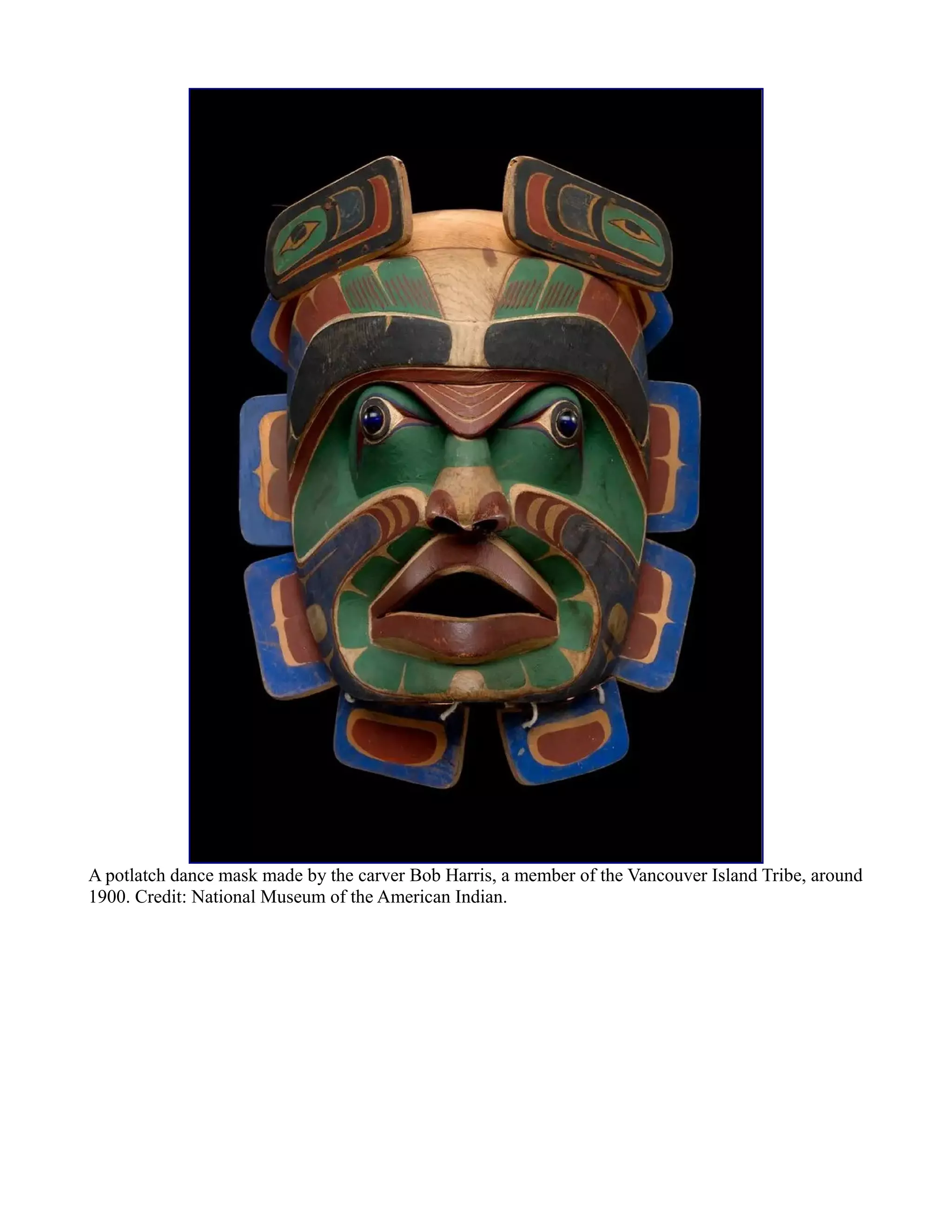
A potlatch dance mask made by the carver Bob Harris, a member of the Vancouver Island Tribe, around
1900. Credit: National Museum of the American Indian.
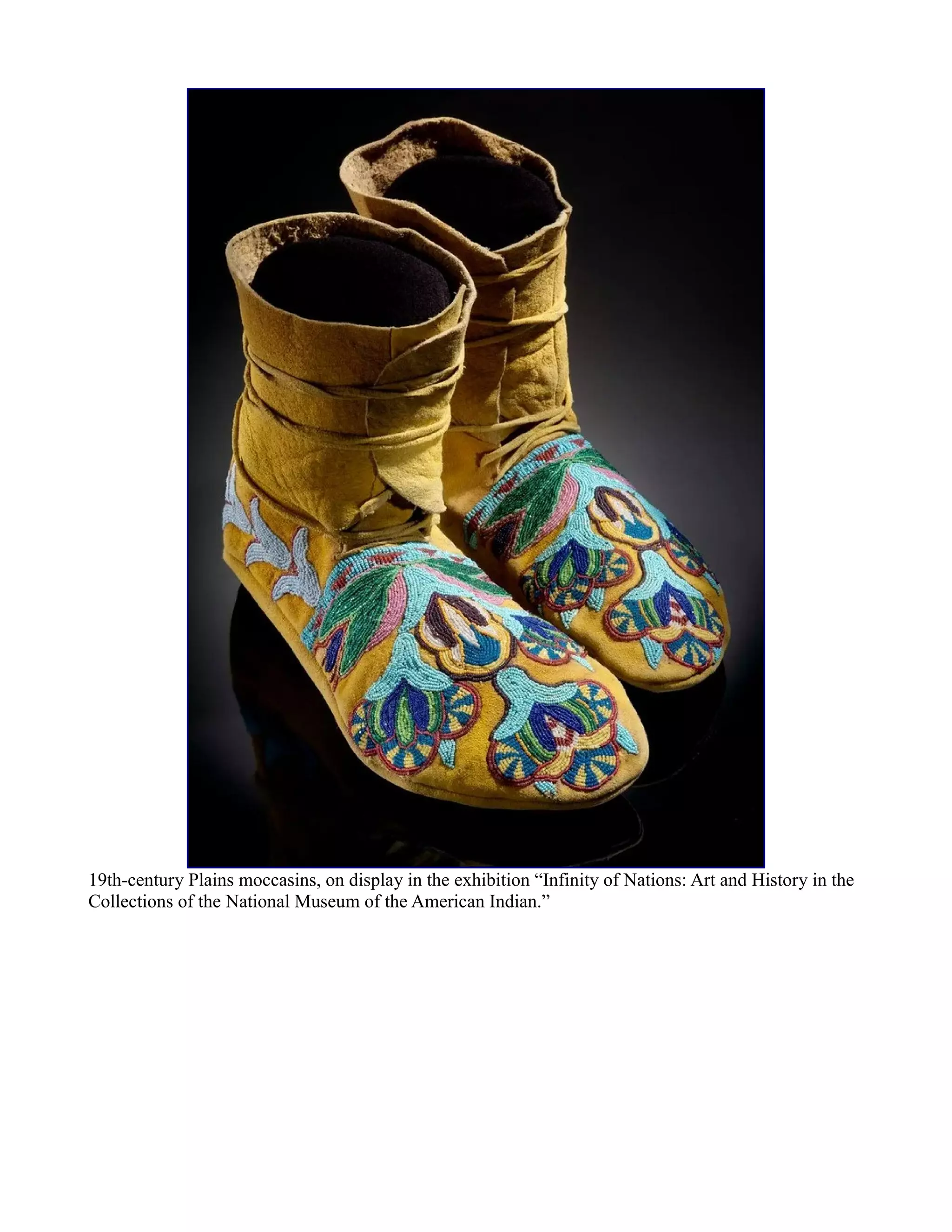
19th-century Plains moccasins, on display in the exhibition “Infinity of Nations: Art and History in the
Collections of the National Museum of the American Indian.”
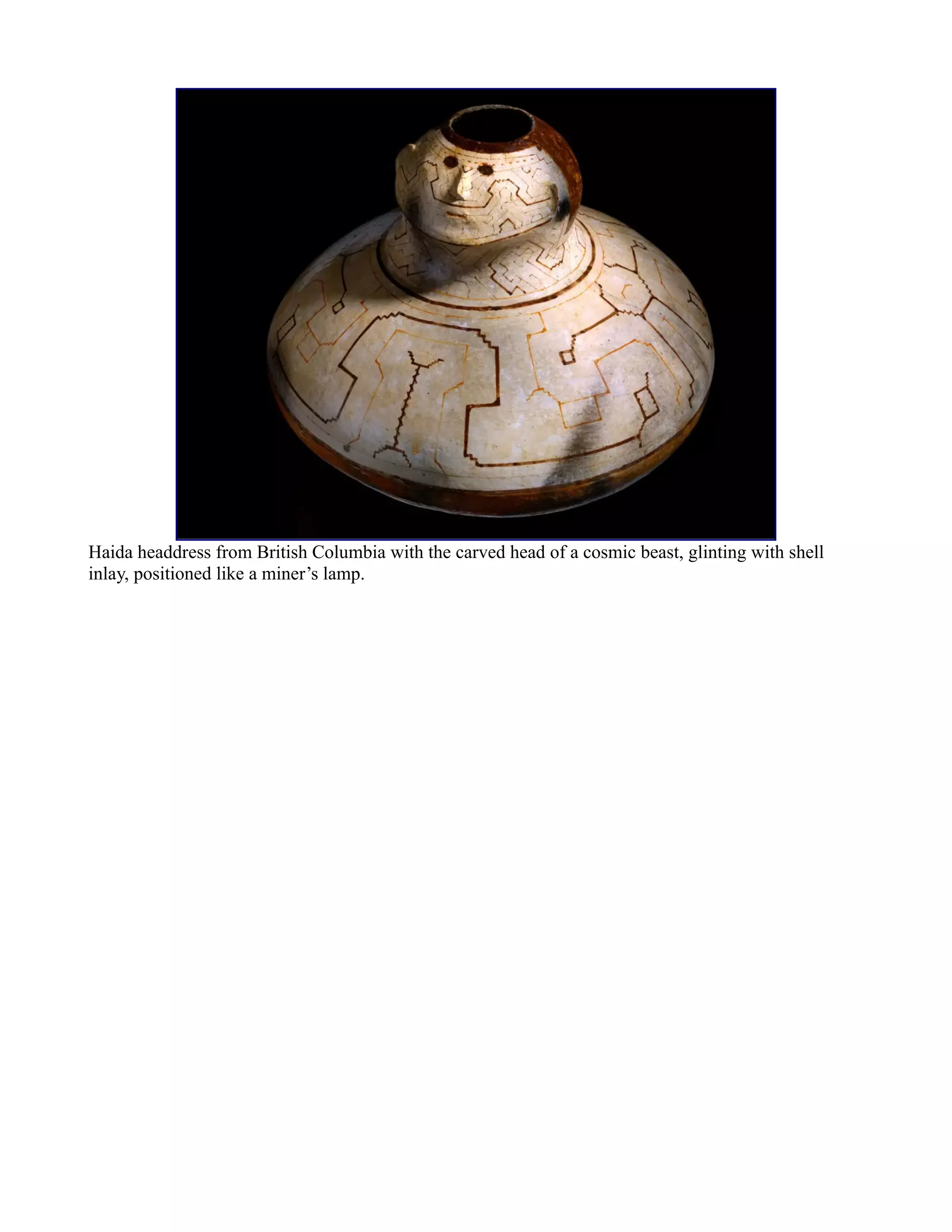
Haida headdress from British Columbia with the carved head of a cosmic beast, glinting with shell
inlay, positioned like a miner’s lamp.
– love learning -your best ed lessons guru, Scott

Traditional native art lessons with supplements, grades 2 6

  • 1.
    Traditional Native ArtLessons with Supplements, Grades 2-6 September 18, 2021 Traditional Native Art Lessons with Supplements, Grades 2-6 The American Indian Cultural Center and Museum presents this lesson unit on Traditional Native Art Lessons, for grades 2-6. Included is a teacher guide, student supplement, and a lessons document, along with all supporting files and videos, as linked below (no need to find these elsewhere). Students will learn some of the meaning and cultural importance of various Native American art forms and how traditional art can offer insight into the rich culture and beliefs of Oklahoma’s Native American tribes. Traditional art refers to art that was created from the early beginnings of Native cultures to the year 1900. I have also included below the American Indian Art History Detectives Supplemental Lesson with supporting materials, and Mihtohseenionki Teacher Resource Guides, both of which are referenced by the Traditional Native Art Lessons guide. American Indians have always woven beauty into everything from elaborately decorated headdresses to everyday objects like shoes. From the past to the present, Native artists and craftsmen have played a vital role in tribal cultures; keeping alive important artistic traditions such as pottery, beading, ceramics, weaving, and painting. These lessons celebrate the amazing meanings, histories and the superb quality of traditional native art. Traditional Native Art Lesson Student Supplement, Grades 2-6 (pdf) Traditional Native Art Lessons Teacher Guide, Grades 2-6 (pdf) Traditional Native Art Lessons, Grades 2-6 (pdf) Supporting Materials for Traditional Native Art Lessons • Finger Weaving Belts and Instructions.pdf • George Catlin, painter of the American Indians.pdf • History Detectives Modoc Basket Season 8 Episode 9 PBS, transcript.pdf • History Detectives Modoc Basket Season 8 Episode 9 PBS.mp4 video • Parfleche, Apsáalooke (Crow).pdf • The Modoc Way.pdf • Tipi, Heritage of the Great Plains.mp4 video • Woven Wampum Beadwork.pdf American Indian Art History Detectives Supplemental Lesson with supporting Files Parfleche boxes were an essential storage container for the nomadic American Indians of the Great Plains that followed the herds of bison that once occupied large sections of the United States. Using a variety of maps, plus their powers of observation and critical thinking, students will become art history detectives and discover the tribe that crafted this box. • American Indian Art History Detectives Supplemental Lesson (pdf) • Historic range of the grizzly bear (jpg) • Map of the original range of the American bison (pdf) • North American Indians Map (jpg)
  • 2.
    • Physical mapof the United States (jpg) Mihtohseenionki Teacher Resource Guides This guide, complete with lesson plans, overhead masters, handout masters and additional resources, was designed to complement and add depth to our permanent gallery focusing on Native Peoples of the Indiana region, past to present. • Mihtohseenionki Teacher Resource Guide (Part 1) • Mihtohseenionki Teacher Resource Guide (Part 2) • Mihtohseenionki Teacher Resource Guide (Part 3) • Mihtohseenionki Teacher Resource Guide (Part 4) • Mihtohseenionki Teacher Resource Guide (Part 5) • Mihtohseenionki Teacher Resource Guide (Part 6) American Indian art is some of the most beautiful ever made anywhere on earth.
  • 3.
    A potlatch dancemask made by the carver Bob Harris, a member of the Vancouver Island Tribe, around 1900. Credit: National Museum of the American Indian.
  • 4.
    19th-century Plains moccasins,on display in the exhibition “Infinity of Nations: Art and History in the Collections of the National Museum of the American Indian.”
  • 5.
    Haida headdress fromBritish Columbia with the carved head of a cosmic beast, glinting with shell inlay, positioned like a miner’s lamp.
  • 6.
    – love learning-your best ed lessons guru, Scott