Trading The Cloud – Part Three


Welcome to Part Three of my Ichimoku trading guide - Trading the
Cloud. Hopefully by now you will be starting to become familiar with the
Kumo Cloud and how price reacts to the cloud.


What I want to talk about today is


How to use the Kumo Cloud
to better measure SUPPORT
and RESISTANCE.


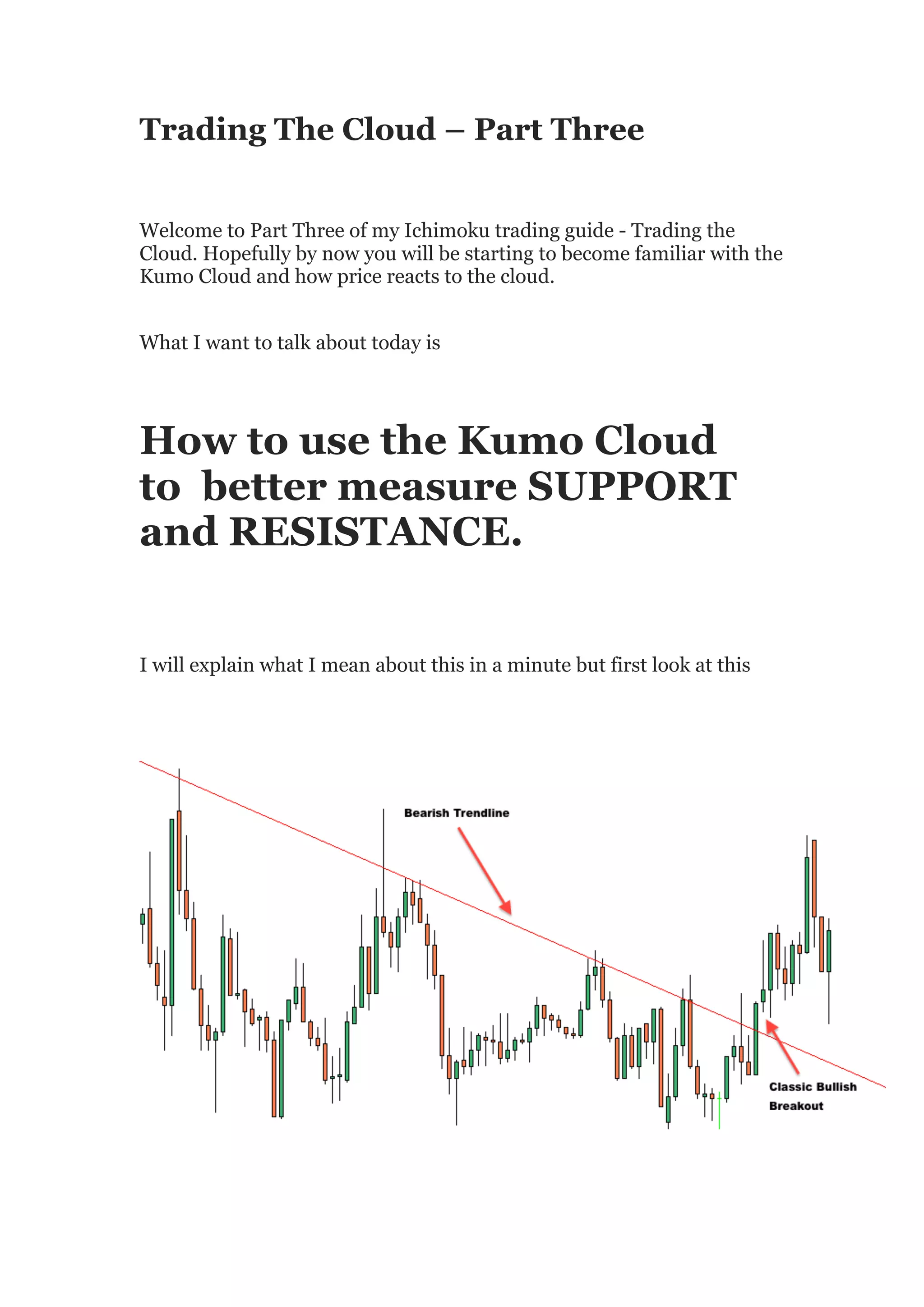
I will explain what I mean about this in a minute but first look at this
As you can see, on a normal chart price likes to follow basic trend lines.
This is the core foundation of basic Forex trading

Most of the time you can draw trend lines on your chart, then just
simply wait for price to break onto the other side of the trend line and
open your trade.


A lot of traders trade this way and there is even a few Forex mentoring
sites that use this as their core training technique, which is great but it
not as easy as it looks.

If trading was this simple we would all be driving fast cars and living in
the Hollywood hills, un-fortunately this isn't the case, we need extra
rules and indicators to 'weed out' the real breakouts from the fake
breakouts.

For this we can use various 'extra' indicators to find strength of
direction,moving average, volatility etc.

This is why you will read endless websites and forums about which
indicator is best, which works and which doesn't. You can spend days,
weeks, months sometimes even years experimenting and testing 1000's
of different indicators and tweaking the various different settings before
you even get anywhere near predicting price and getting that 'edge' you
need to become a profitable trader. But we don't need to


Ichimoku does this all for us!


I will start by telling you why and most importantly how.

One of the Kumo's most unique aspects is its ability to provide a more
reliable view of Support and Resistance than that provided by all other
charting systems.

Rather then providing a single level for Support and Resistance, the
Kumo expands and contracts with historical price action to give a multi-
dimensional view of Support and Resistance.

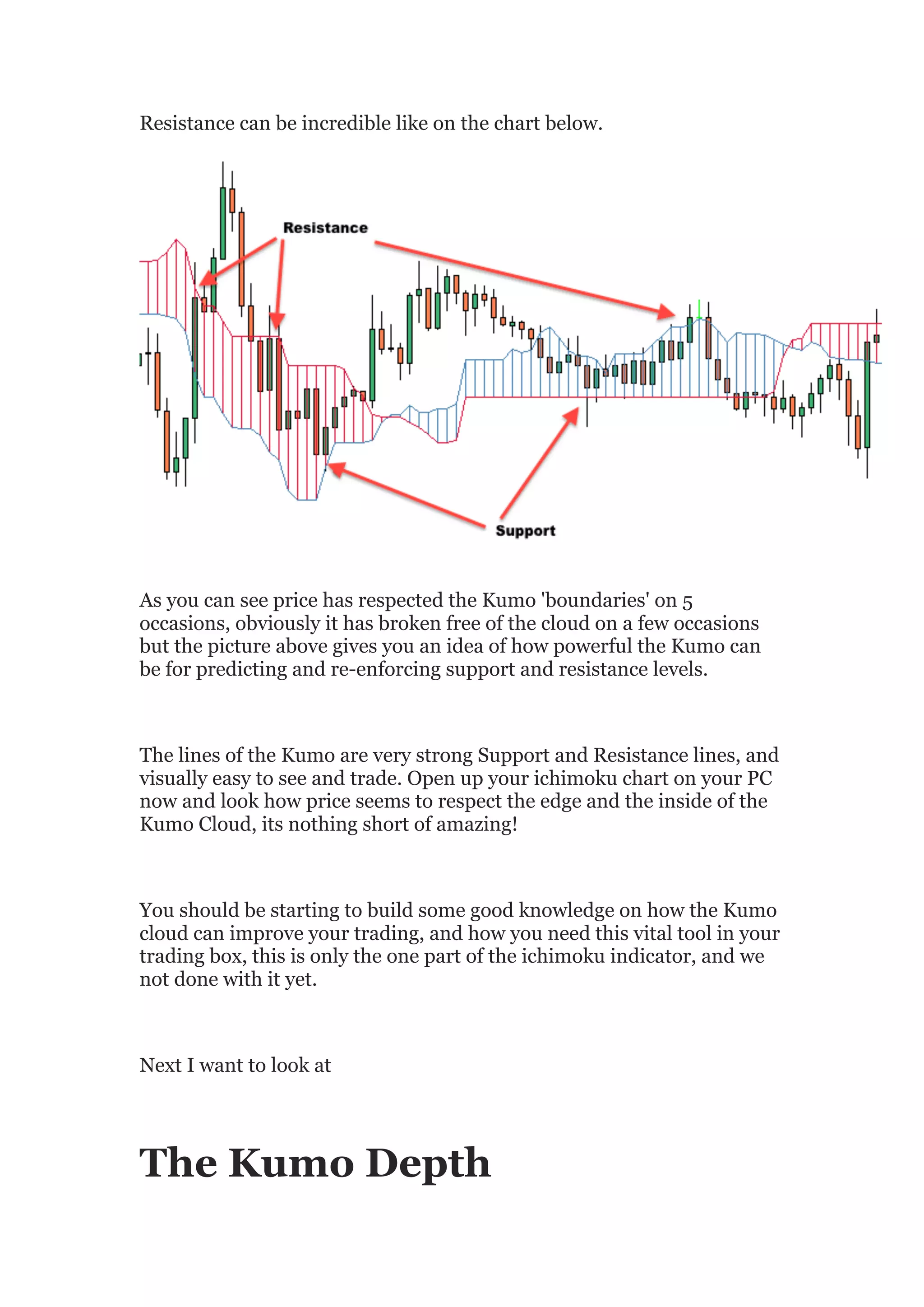
Sometimes the accuracy of the Kumo's ability to forecast Support and
Resistance can be incredible like on the chart below.


As you can see price has respected the Kumo 'boundaries' on 5
occasions, obviously it has broken free of the cloud on a few occasions
but the picture above gives you an idea of how powerful the Kumo can
be for predicting and re-enforcing support and resistance levels.


The lines of the Kumo are very strong Support and Resistance lines, and
visually easy to see and trade. Open up your ichimoku chart on your PC
now and look how price seems to respect the edge and the inside of the
Kumo Cloud, its nothing short of amazing!


You should be starting to build some good knowledge on how the Kumo
cloud can improve your trading, and how you need this vital tool in your
trading box, this is only the one part of the ichimoku indicator, and we
not done with it yet.


Next I want to look at


The Kumo Depth
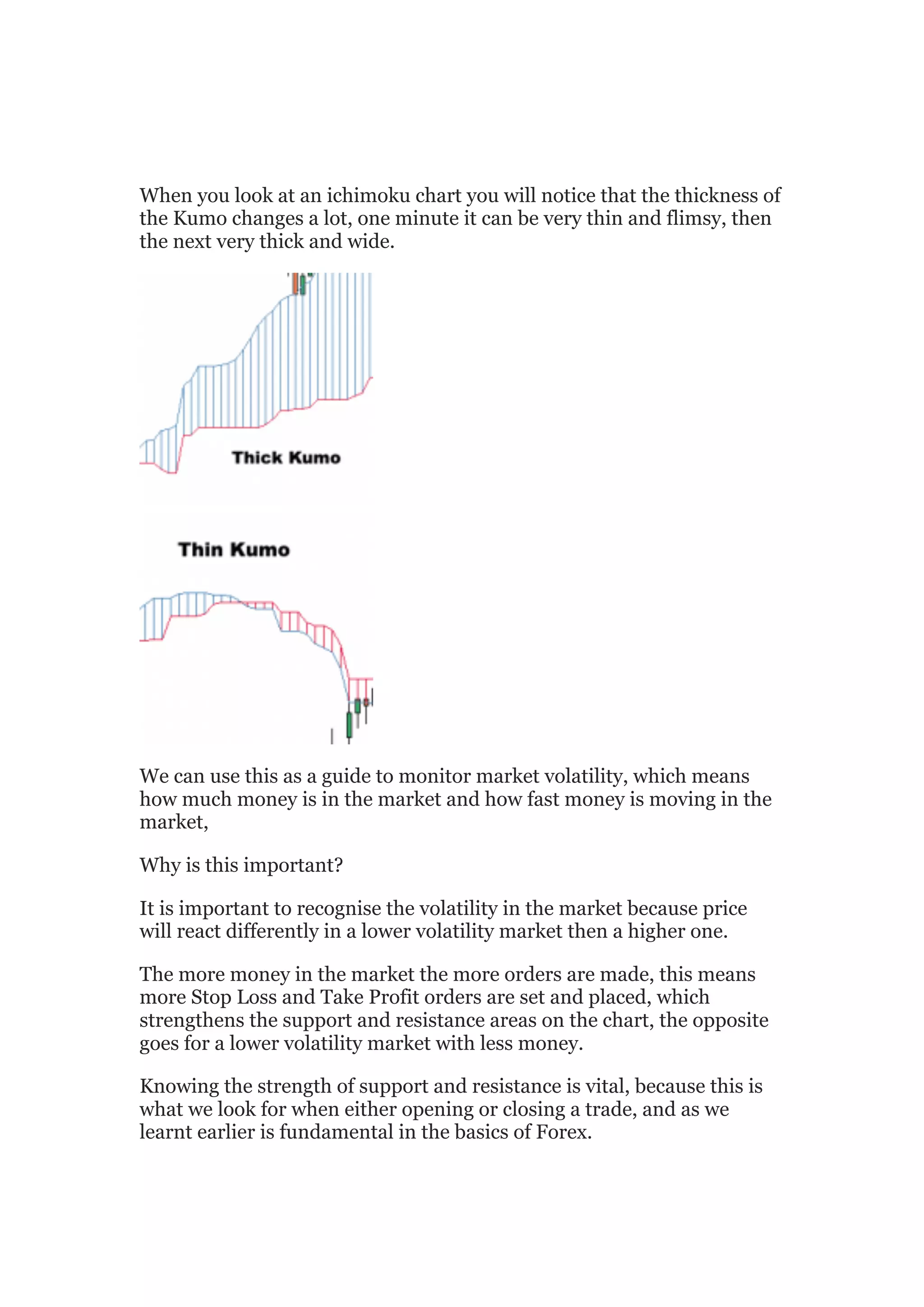
When you look at an ichimoku chart you will notice that the thickness of
the Kumo changes a lot, one minute it can be very thin and flimsy, then
the next very thick and wide.


We can use this as a guide to monitor market volatility, which means
how much money is in the market and how fast money is moving in the
market,

Why is this important?

It is important to recognise the volatility in the market because price
will react differently in a lower volatility market then a higher one.

The more money in the market the more orders are made, this means
more Stop Loss and Take Profit orders are set and placed, which
strengthens the support and resistance areas on the chart, the opposite
goes for a lower volatility market with less money.

Knowing the strength of support and resistance is vital, because this is
what we look for when either opening or closing a trade, and as we
learnt earlier is fundamental in the basics of Forex.
You got all that?...... Good.


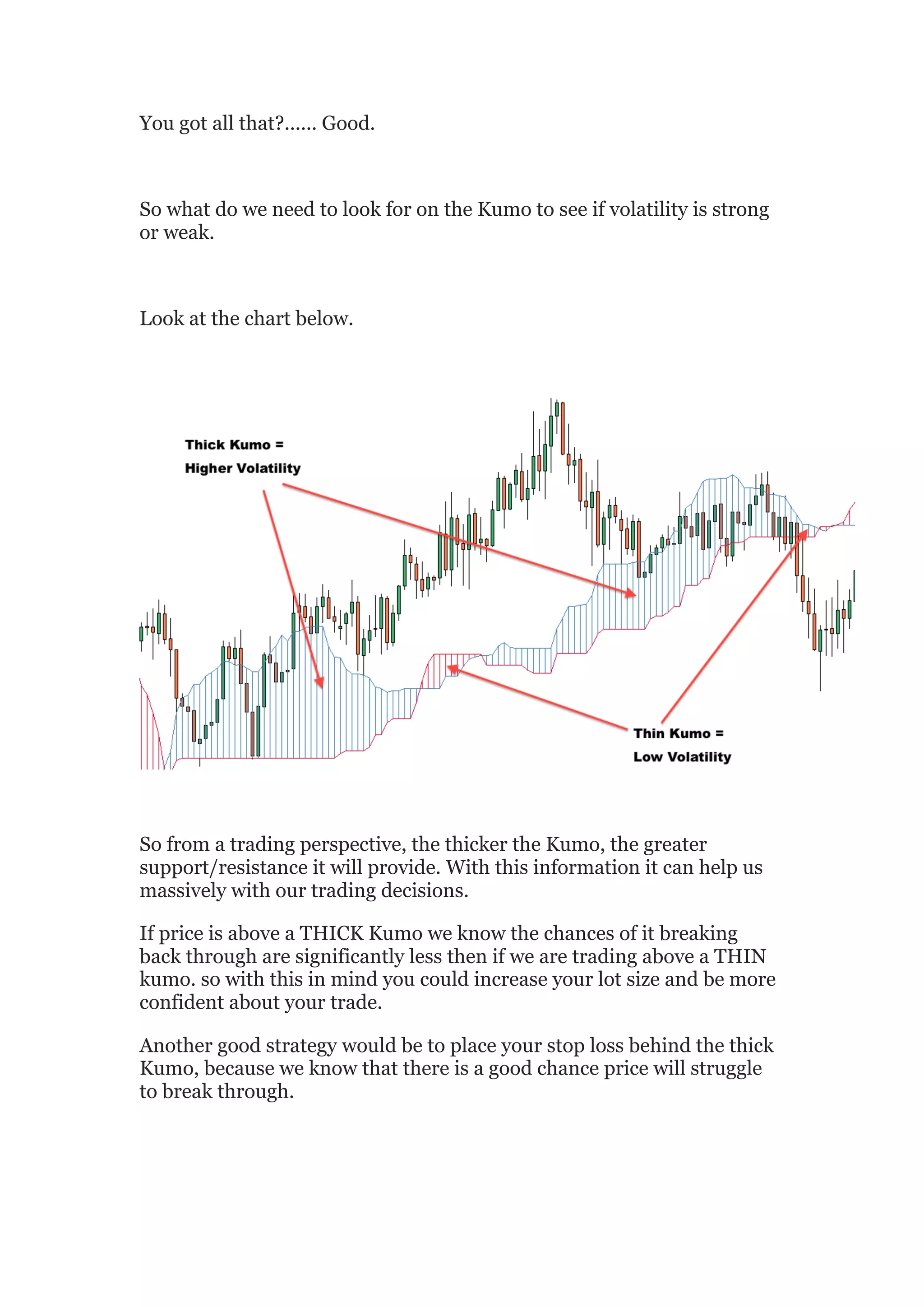
So what do we need to look for on the Kumo to see if volatility is strong
or weak.


Look at the chart below.


So from a trading perspective, the thicker the Kumo, the greater
support/resistance it will provide. With this information it can help us
massively with our trading decisions.

If price is above a THICK Kumo we know the chances of it breaking
back through are significantly less then if we are trading above a THIN
kumo. so with this in mind you could increase your lot size and be more
confident about your trade.

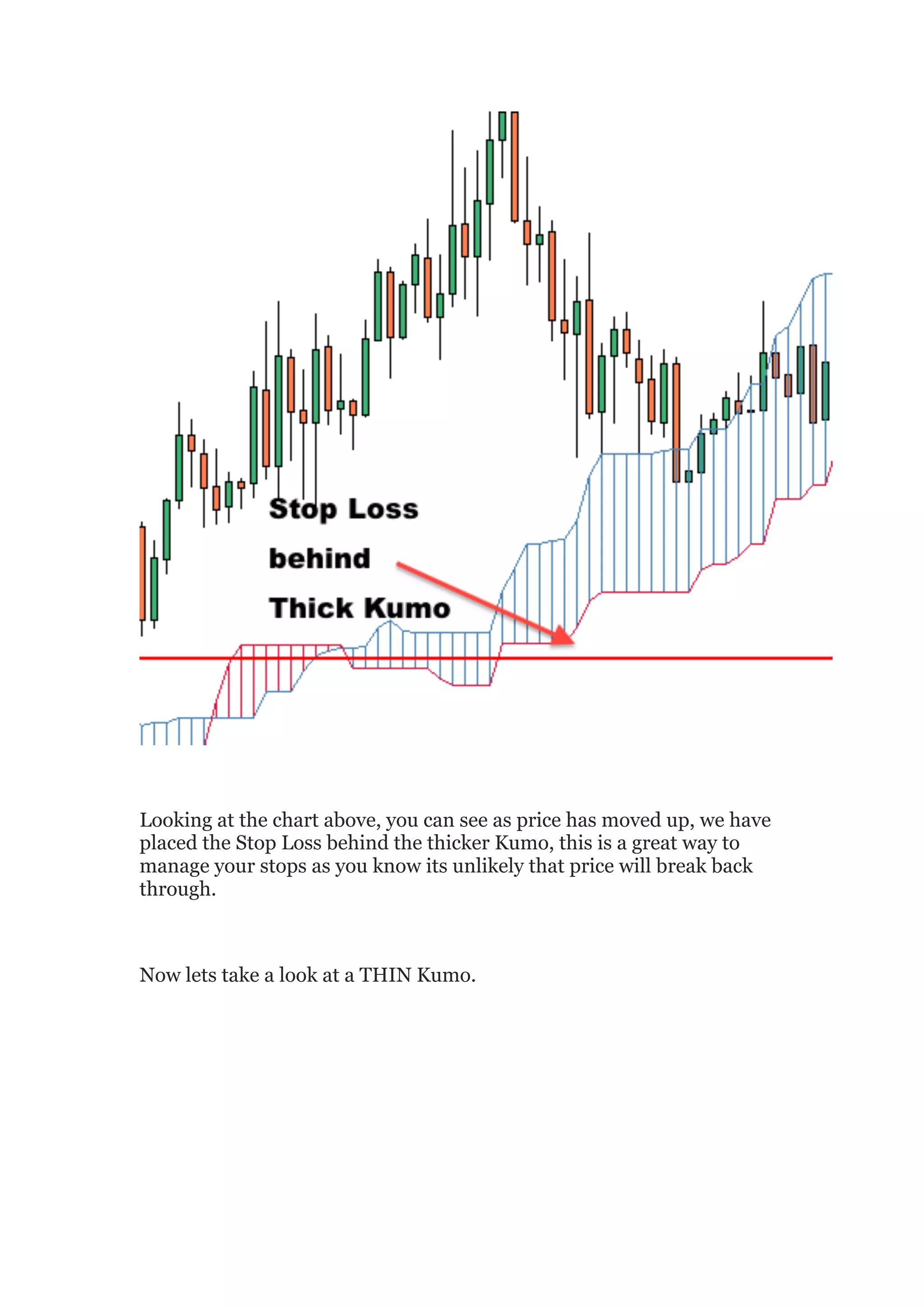
Another good strategy would be to place your stop loss behind the thick
Kumo, because we know that there is a good chance price will struggle
to break through.
Looking at the chart above, you can see as price has moved up, we have
placed the Stop Loss behind the thicker Kumo, this is a great way to
manage your stops as you know its unlikely that price will break back
through.


Now lets take a look at a THIN Kumo.
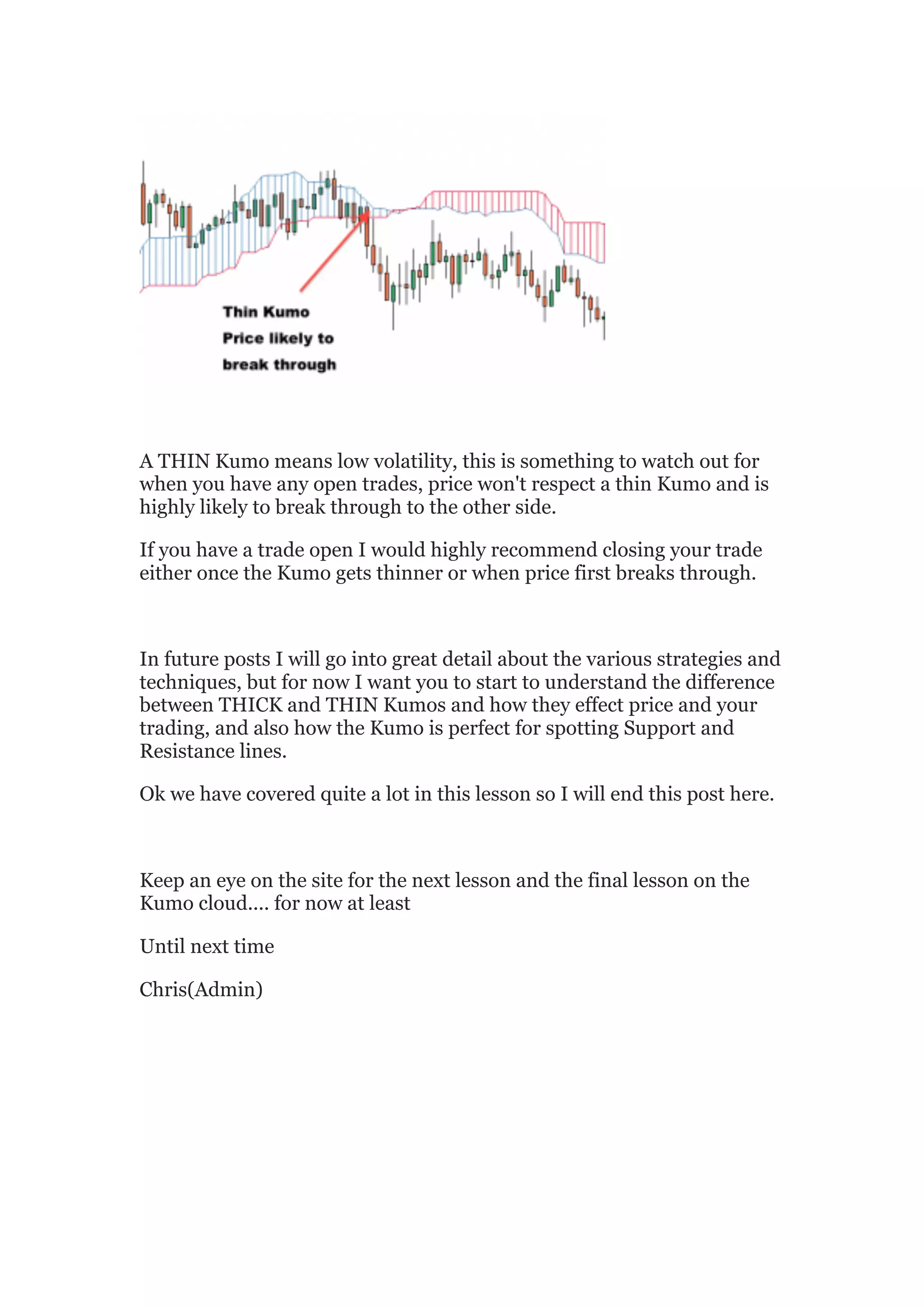
A THIN Kumo means low volatility, this is something to watch out for
when you have any open trades, price won't respect a thin Kumo and is
highly likely to break through to the other side.

If you have a trade open I would highly recommend closing your trade
either once the Kumo gets thinner or when price first breaks through.


In future posts I will go into great detail about the various strategies and
techniques, but for now I want you to start to understand the difference
between THICK and THIN Kumos and how they effect price and your
trading, and also how the Kumo is perfect for spotting Support and
Resistance lines.

Ok we have covered quite a lot in this lesson so I will end this post here.


Keep an eye on the site for the next lesson and the final lesson on the
Kumo cloud.... for now at least

Until next time

Chris(Admin)	
  

Trading The Cloud – Part Three

  • 1.
    Trading The Cloud– Part Three Welcome to Part Three of my Ichimoku trading guide - Trading the Cloud. Hopefully by now you will be starting to become familiar with the Kumo Cloud and how price reacts to the cloud. What I want to talk about today is How to use the Kumo Cloud to better measure SUPPORT and RESISTANCE. I will explain what I mean about this in a minute but first look at this
  • 2.
    As you cansee, on a normal chart price likes to follow basic trend lines. This is the core foundation of basic Forex trading Most of the time you can draw trend lines on your chart, then just simply wait for price to break onto the other side of the trend line and open your trade. A lot of traders trade this way and there is even a few Forex mentoring sites that use this as their core training technique, which is great but it not as easy as it looks. If trading was this simple we would all be driving fast cars and living in the Hollywood hills, un-fortunately this isn't the case, we need extra rules and indicators to 'weed out' the real breakouts from the fake breakouts. For this we can use various 'extra' indicators to find strength of direction,moving average, volatility etc. This is why you will read endless websites and forums about which indicator is best, which works and which doesn't. You can spend days, weeks, months sometimes even years experimenting and testing 1000's of different indicators and tweaking the various different settings before you even get anywhere near predicting price and getting that 'edge' you need to become a profitable trader. But we don't need to Ichimoku does this all for us! I will start by telling you why and most importantly how. One of the Kumo's most unique aspects is its ability to provide a more reliable view of Support and Resistance than that provided by all other charting systems. Rather then providing a single level for Support and Resistance, the Kumo expands and contracts with historical price action to give a multi- dimensional view of Support and Resistance. Sometimes the accuracy of the Kumo's ability to forecast Support and
  • 3.
    Resistance can beincredible like on the chart below. As you can see price has respected the Kumo 'boundaries' on 5 occasions, obviously it has broken free of the cloud on a few occasions but the picture above gives you an idea of how powerful the Kumo can be for predicting and re-enforcing support and resistance levels. The lines of the Kumo are very strong Support and Resistance lines, and visually easy to see and trade. Open up your ichimoku chart on your PC now and look how price seems to respect the edge and the inside of the Kumo Cloud, its nothing short of amazing! You should be starting to build some good knowledge on how the Kumo cloud can improve your trading, and how you need this vital tool in your trading box, this is only the one part of the ichimoku indicator, and we not done with it yet. Next I want to look at The Kumo Depth
  • 4.
    When you lookat an ichimoku chart you will notice that the thickness of the Kumo changes a lot, one minute it can be very thin and flimsy, then the next very thick and wide. We can use this as a guide to monitor market volatility, which means how much money is in the market and how fast money is moving in the market, Why is this important? It is important to recognise the volatility in the market because price will react differently in a lower volatility market then a higher one. The more money in the market the more orders are made, this means more Stop Loss and Take Profit orders are set and placed, which strengthens the support and resistance areas on the chart, the opposite goes for a lower volatility market with less money. Knowing the strength of support and resistance is vital, because this is what we look for when either opening or closing a trade, and as we learnt earlier is fundamental in the basics of Forex.
  • 5.
    You got allthat?...... Good. So what do we need to look for on the Kumo to see if volatility is strong or weak. Look at the chart below. So from a trading perspective, the thicker the Kumo, the greater support/resistance it will provide. With this information it can help us massively with our trading decisions. If price is above a THICK Kumo we know the chances of it breaking back through are significantly less then if we are trading above a THIN kumo. so with this in mind you could increase your lot size and be more confident about your trade. Another good strategy would be to place your stop loss behind the thick Kumo, because we know that there is a good chance price will struggle to break through.
  • 6.
    Looking at thechart above, you can see as price has moved up, we have placed the Stop Loss behind the thicker Kumo, this is a great way to manage your stops as you know its unlikely that price will break back through. Now lets take a look at a THIN Kumo.
  • 7.
    A THIN Kumomeans low volatility, this is something to watch out for when you have any open trades, price won't respect a thin Kumo and is highly likely to break through to the other side. If you have a trade open I would highly recommend closing your trade either once the Kumo gets thinner or when price first breaks through. In future posts I will go into great detail about the various strategies and techniques, but for now I want you to start to understand the difference between THICK and THIN Kumos and how they effect price and your trading, and also how the Kumo is perfect for spotting Support and Resistance lines. Ok we have covered quite a lot in this lesson so I will end this post here. Keep an eye on the site for the next lesson and the final lesson on the Kumo cloud.... for now at least Until next time Chris(Admin)