Trade and Chocolate
July 2013
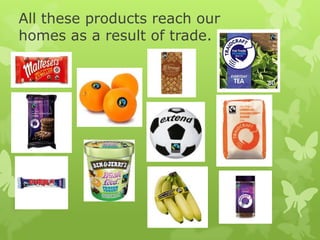
All these products reach our
homes as a result of trade.
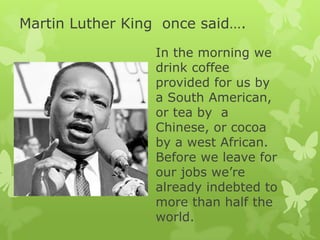
Martin Luther King once said….
In the morning we
drink coffee
provided for us by
a South American,
or tea by a
Chinese, or cocoa
by a west African.
Before we leave for
our jobs we’re
already indebted to
more than half the
world.
What do we know about
trade?
Each on of these statements are
true.
In the last 10 years the price of
a bar of chocolate has doubled,
but the price of cocoa beans has
halved. A bar of chocolate here
costs roughly what a cocoa
farmer in Ghana earns in a
month. Most cocoa farmers and
their children have never tasted
chocolate.
Some companies make
more money than entire
countries. In 1998 the
world’s five largest
companies made more
money than the combined
incomes of the worlds 46
poorest countries.
One pair of jeans is usually made in
more than 10 different countries eg
• using cotton for denim from
Benin,
• copper for rivets from Namibia,
• cotton for pockets from Pakistan,
• wire for zips from Japan,
• pumice for treating denim from
turkey,
• labour for sewing jeans in
Tunisia.
1.3 billion people live on
less than 70p per day.
World trade has been
expanding rapidly for the
benefit of richer countries
like ours, but poorer
countries gain less and
less- yet the majority of
people live in the
developing world.
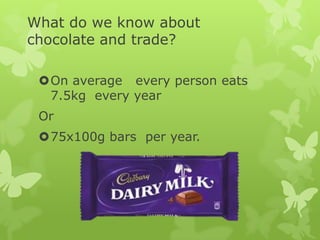
What do we know about
chocolate and trade?
On average every person eats
7.5kg every year
Or
75x100g bars per year.
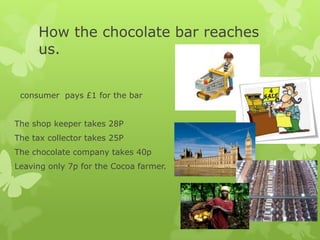
How the chocolate bar reaches
us.
consumer pays £1 for the bar
The shop keeper takes 28P
The tax collector takes 25P
The chocolate company takes 40p
Leaving only 7p for the Cocoa farmer.
Problems faced by cocoa farmers.
 Low prices and lack of support from government (
it often costs more to produce than what they
receive)
 low safety standards
 Debts ( producers have no choice but to borrow
money)
 Poor diet,, health care and education ( children
often have to work to support families)
 Lack of control ( producers feel powerless as world
markets control prices
Is there an alternative?
 Fortunately Fair trade means that
there is another option
 Fair trade means paying producers a
fair price for what they produce.
 we can recognise these fair trade
produce by the quality mark. There
are now over 150 items which carry
the mark.
What differences does it make?
 guaranteed better prices which enable
producers to improve the quality of their
life.
 Improved safety standards
 Improved environmental standards
 secure contracts so the producers have to
borrow less.
 Regular income to help improve diet,
health care and education.
 Producers have more say and more
control over their lives.
What we can do.
 Together we can make a real difference to the lives of
the producers by buying fair trade products. We can
recognise these products by the quality sign.
 An average 16 year old in Britain will spend £1,000,000
during his/her lifetime. Their choices count.
 Every time you go shopping the choices your family
makes can have a real impact on others.
 The message is simple. Think before you buy.
School Action.
Our school has a fair trade working
group
We have a whole school policy
Visitors to school receive fair trade
coffee and tea
In classes children have learnt about
fair trade.
We also have our fair trade tuck
shop.
Tuck Shop
This academic year you have
purchased over £3650 of Fair
Trade products.
 This means that you have
helped the lives of hundreds of
people.
We have been able to make some profit
from the tuck shop and it has been
decided by the action group that it
should be shared equally to our partner
schools in Africa.
Igwamiti primary and Mwekera schools
both benefitted from additional
playground equipment and board
games and so will Airport international
School Ghana
Its not about charity!
Its about making the world
a fairer place to live!
A better place to live!
This week
 This week we have a visitor in school , a teacher from
our partner school in Ghana.
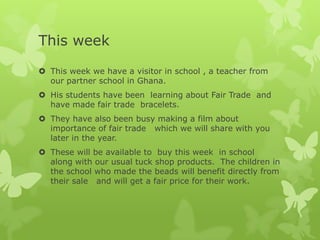
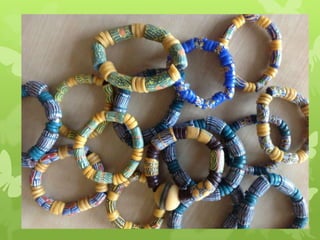
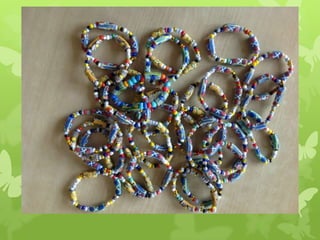
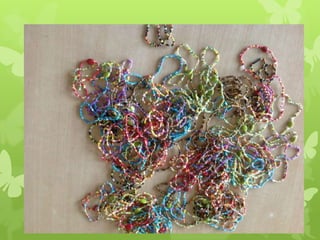
 His students have been learning about Fair Trade and
have made fair trade bracelets.
 They have also been busy making a film about
importance of fair trade which we will share with you
later in the year.
 These will be available to buy this week in school
along with our usual tuck shop products. The children in
the school who made the beads will benefit directly from
their sale and will get a fair price for their work.
Separately We are also holding a non uniform day, with a
donation of 50p. If we all take part then we could raise
over £300 to help support education in our partner school
in Ghana.
The money raised will help purchase a computer to help our
partnership grow. It will allow children from both schools
to communicate more easily and share learning
experiences.
Please do what you can to help this week
Trade and chocolate2013

Trade and chocolate2013

  • 1.
  • 2.
    All these productsreach our homes as a result of trade.
  • 3.
    Martin Luther Kingonce said…. In the morning we drink coffee provided for us by a South American, or tea by a Chinese, or cocoa by a west African. Before we leave for our jobs we’re already indebted to more than half the world.
  • 4.
    What do weknow about trade? Each on of these statements are true. In the last 10 years the price of a bar of chocolate has doubled, but the price of cocoa beans has halved. A bar of chocolate here costs roughly what a cocoa farmer in Ghana earns in a month. Most cocoa farmers and their children have never tasted chocolate.
  • 5.
    Some companies make moremoney than entire countries. In 1998 the world’s five largest companies made more money than the combined incomes of the worlds 46 poorest countries.
  • 6.
    One pair ofjeans is usually made in more than 10 different countries eg • using cotton for denim from Benin, • copper for rivets from Namibia, • cotton for pockets from Pakistan, • wire for zips from Japan, • pumice for treating denim from turkey, • labour for sewing jeans in Tunisia.
  • 7.
    1.3 billion peoplelive on less than 70p per day. World trade has been expanding rapidly for the benefit of richer countries like ours, but poorer countries gain less and less- yet the majority of people live in the developing world.
  • 8.
    What do weknow about chocolate and trade? On average every person eats 7.5kg every year Or 75x100g bars per year.
  • 9.
    How the chocolatebar reaches us. consumer pays £1 for the bar The shop keeper takes 28P The tax collector takes 25P The chocolate company takes 40p Leaving only 7p for the Cocoa farmer.
  • 10.
    Problems faced bycocoa farmers.  Low prices and lack of support from government ( it often costs more to produce than what they receive)  low safety standards  Debts ( producers have no choice but to borrow money)  Poor diet,, health care and education ( children often have to work to support families)  Lack of control ( producers feel powerless as world markets control prices
  • 12.
    Is there analternative?  Fortunately Fair trade means that there is another option  Fair trade means paying producers a fair price for what they produce.  we can recognise these fair trade produce by the quality mark. There are now over 150 items which carry the mark.
  • 14.
    What differences doesit make?  guaranteed better prices which enable producers to improve the quality of their life.  Improved safety standards  Improved environmental standards  secure contracts so the producers have to borrow less.  Regular income to help improve diet, health care and education.  Producers have more say and more control over their lives.
  • 15.
    What we cando.  Together we can make a real difference to the lives of the producers by buying fair trade products. We can recognise these products by the quality sign.  An average 16 year old in Britain will spend £1,000,000 during his/her lifetime. Their choices count.  Every time you go shopping the choices your family makes can have a real impact on others.  The message is simple. Think before you buy.
  • 16.
    School Action. Our schoolhas a fair trade working group We have a whole school policy Visitors to school receive fair trade coffee and tea In classes children have learnt about fair trade. We also have our fair trade tuck shop.
  • 17.
    Tuck Shop This academicyear you have purchased over £3650 of Fair Trade products.  This means that you have helped the lives of hundreds of people.
  • 18.
    We have beenable to make some profit from the tuck shop and it has been decided by the action group that it should be shared equally to our partner schools in Africa. Igwamiti primary and Mwekera schools both benefitted from additional playground equipment and board games and so will Airport international School Ghana
  • 19.
    Its not aboutcharity! Its about making the world a fairer place to live! A better place to live!
  • 20.
    This week  Thisweek we have a visitor in school , a teacher from our partner school in Ghana.  His students have been learning about Fair Trade and have made fair trade bracelets.  They have also been busy making a film about importance of fair trade which we will share with you later in the year.  These will be available to buy this week in school along with our usual tuck shop products. The children in the school who made the beads will benefit directly from their sale and will get a fair price for their work.
  • 24.
    Separately We arealso holding a non uniform day, with a donation of 50p. If we all take part then we could raise over £300 to help support education in our partner school in Ghana. The money raised will help purchase a computer to help our partnership grow. It will allow children from both schools to communicate more easily and share learning experiences. Please do what you can to help this week

Editor's Notes

  • #3 All these products reach our homes as a result of trade.