Towards a floating plastic waste early warning
system
Gábor Paller and Gábor Élő
Széchenyi István University
INFORMATION SOCIETY RESEARCH & EDUCATION
GROUP (ISREG)
Plastic in rivers
●
50-70% of all the solid pollution in rivers is plastic
●
Size varies from microplastic (< 0.1 μm) to macroplastic m) to macroplastic
(>5 cm)
●
Relevant plastic pollution depends on the polluting
entities
●
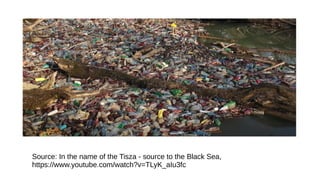
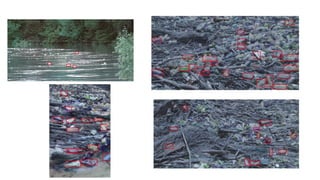
In the rivers of East Hungary it is mostly mass
macroplastic pollution from upstream waste dumps
Source: In the name of the Tisza - source to the Black Sea,
https://www.youtube.com/watch?v=TLyK_aIu3fc
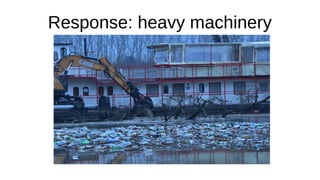
Response: heavy machinery
Environment
●
Long detection distance (up to 50 meters)
●
Plastic items covered with foreign materials (algae,
water film, dirt, etc.)
●
Observation in the visible light domain was chosen
with infrared illumination option during the night
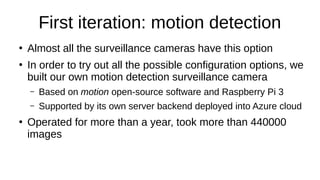
First iteration: motion detection
●
Almost all the surveillance cameras have this option
●
In order to try out all the possible configuration options, we
built our own motion detection surveillance camera
– Based on motion open-source software and Raspberry Pi 3
– Supported by its own server backend deployed into Azure cloud
●
Operated for more than a year, took more than 440000
images
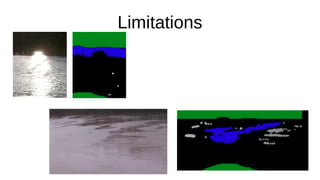
Limitations
First iteration experiences
●
Selectivity is very low, individual plastic waste
items cannot be reliably recognized
●
Lot of noise, most of the images are irrelevant
●
Quite a good start for picking training images
Second iteration: deep learning
●
Experimented with YOLOv3 and Faster R-CNN
●
Finally chose Faster R-CNN with ResNet-50-FPN backbone
– Needs less memory than ResNet-101 and it turned out to be
crucial at training
●
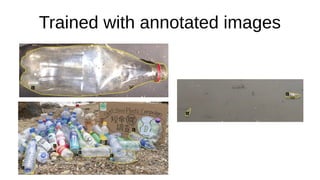
Image augmentation: rotating by 90,180 and 270 degrees.
●
Zooming augmentation was not necessary due to FPN in
the backbone
Trained with annotated images
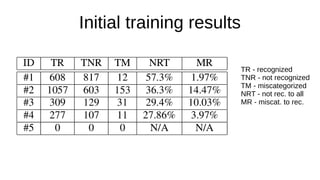
Initial training results
TR - recognized
TNR - not recognized
TM - miscategorized
NRT - not rec. to all
MR - miscat. to rec.
The system
●
Professional surveillance camera with 18x zoom
●
GPU-equipped industrial PC in the camera unit
●
Backend extended with retraining server
– Human operator selects images where something relevant
was not recognized and annotates them by hand
– Retraining with new data added, new weights are sent to
the cameras
Conclusions
●
Second iteration significantly lowered the proportion of false
alarms
●
Due to large water surfaces, target objects often have bad
quality images - perfect recognition is impossible
●
False negatives (and some false positives) are still present
●
Suitable for early warning system, not suitable for exact
counting
Questions?

Towards a floating plastic waste early warning system

  • 1.
    Towards a floatingplastic waste early warning system Gábor Paller and Gábor Élő Széchenyi István University INFORMATION SOCIETY RESEARCH & EDUCATION GROUP (ISREG)
  • 2.
    Plastic in rivers ● 50-70%of all the solid pollution in rivers is plastic ● Size varies from microplastic (< 0.1 μm) to macroplastic m) to macroplastic (>5 cm) ● Relevant plastic pollution depends on the polluting entities ● In the rivers of East Hungary it is mostly mass macroplastic pollution from upstream waste dumps
  • 3.
    Source: In thename of the Tisza - source to the Black Sea, https://www.youtube.com/watch?v=TLyK_aIu3fc
  • 4.
  • 5.
    Environment ● Long detection distance(up to 50 meters) ● Plastic items covered with foreign materials (algae, water film, dirt, etc.) ● Observation in the visible light domain was chosen with infrared illumination option during the night
  • 6.
    First iteration: motiondetection ● Almost all the surveillance cameras have this option ● In order to try out all the possible configuration options, we built our own motion detection surveillance camera – Based on motion open-source software and Raspberry Pi 3 – Supported by its own server backend deployed into Azure cloud ● Operated for more than a year, took more than 440000 images
  • 7.
  • 8.
    First iteration experiences ● Selectivityis very low, individual plastic waste items cannot be reliably recognized ● Lot of noise, most of the images are irrelevant ● Quite a good start for picking training images
  • 9.
    Second iteration: deeplearning ● Experimented with YOLOv3 and Faster R-CNN ● Finally chose Faster R-CNN with ResNet-50-FPN backbone – Needs less memory than ResNet-101 and it turned out to be crucial at training ● Image augmentation: rotating by 90,180 and 270 degrees. ● Zooming augmentation was not necessary due to FPN in the backbone
  • 11.
  • 12.
    Initial training results TR- recognized TNR - not recognized TM - miscategorized NRT - not rec. to all MR - miscat. to rec.
  • 13.
    The system ● Professional surveillancecamera with 18x zoom ● GPU-equipped industrial PC in the camera unit ● Backend extended with retraining server – Human operator selects images where something relevant was not recognized and annotates them by hand – Retraining with new data added, new weights are sent to the cameras
  • 14.
    Conclusions ● Second iteration significantlylowered the proportion of false alarms ● Due to large water surfaces, target objects often have bad quality images - perfect recognition is impossible ● False negatives (and some false positives) are still present ● Suitable for early warning system, not suitable for exact counting
  • 15.