Topic Clusters and
Simple SEO Success
Virtual HUG Workshop
Hi, I’m Amanda
Based in Boston, MA
Product Manager: SEO &
Content Strategy at HubSpot
To map out your first topic cluster so you’re ready
to hit the ground running creating, repurposing, or
optimizing content after you leave today.
Today’s Objective
Agenda
Introduction to
Topic Clusters
What is a topic cluster
content strategy, and
why should you use it?
How to Build a
Topic Cluster
4 steps to developing a
topic cluster content
strategy
Activity
Go through the steps
of mapping out your
first topic cluster.
Recap & Next Steps
How to continue your
learning after this
session
Introduction to
Topic Clusters
The way we search
has changed.
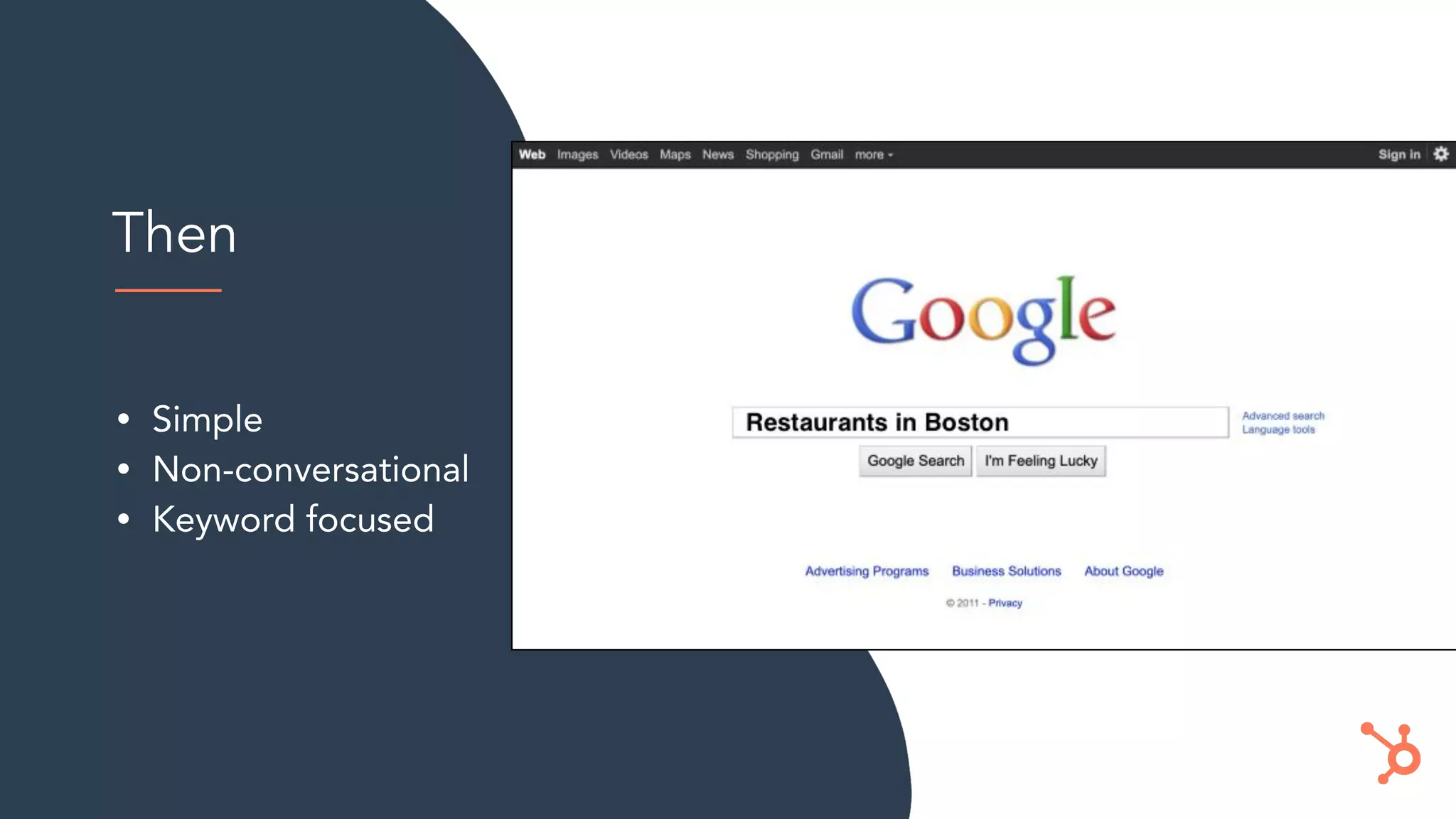
Then
• Simple
• Non-conversational
• Keyword focused
Restaurants in Boston
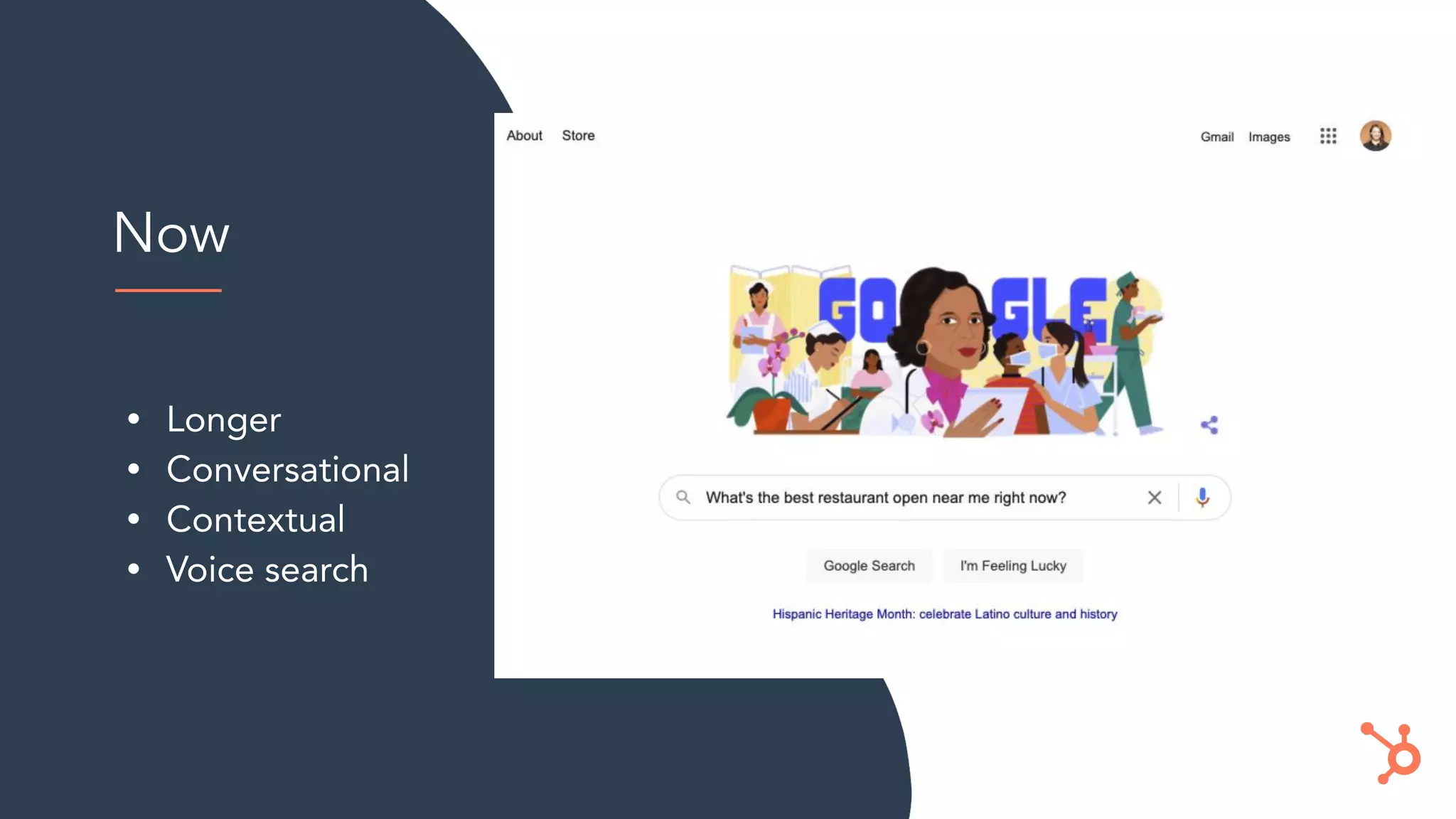
Now
• Longer
• Conversational
• Contextual
• Voice search
What’s the best
restaurant open near
me right now?
The way Google
interprets and ranks
content has also changed.
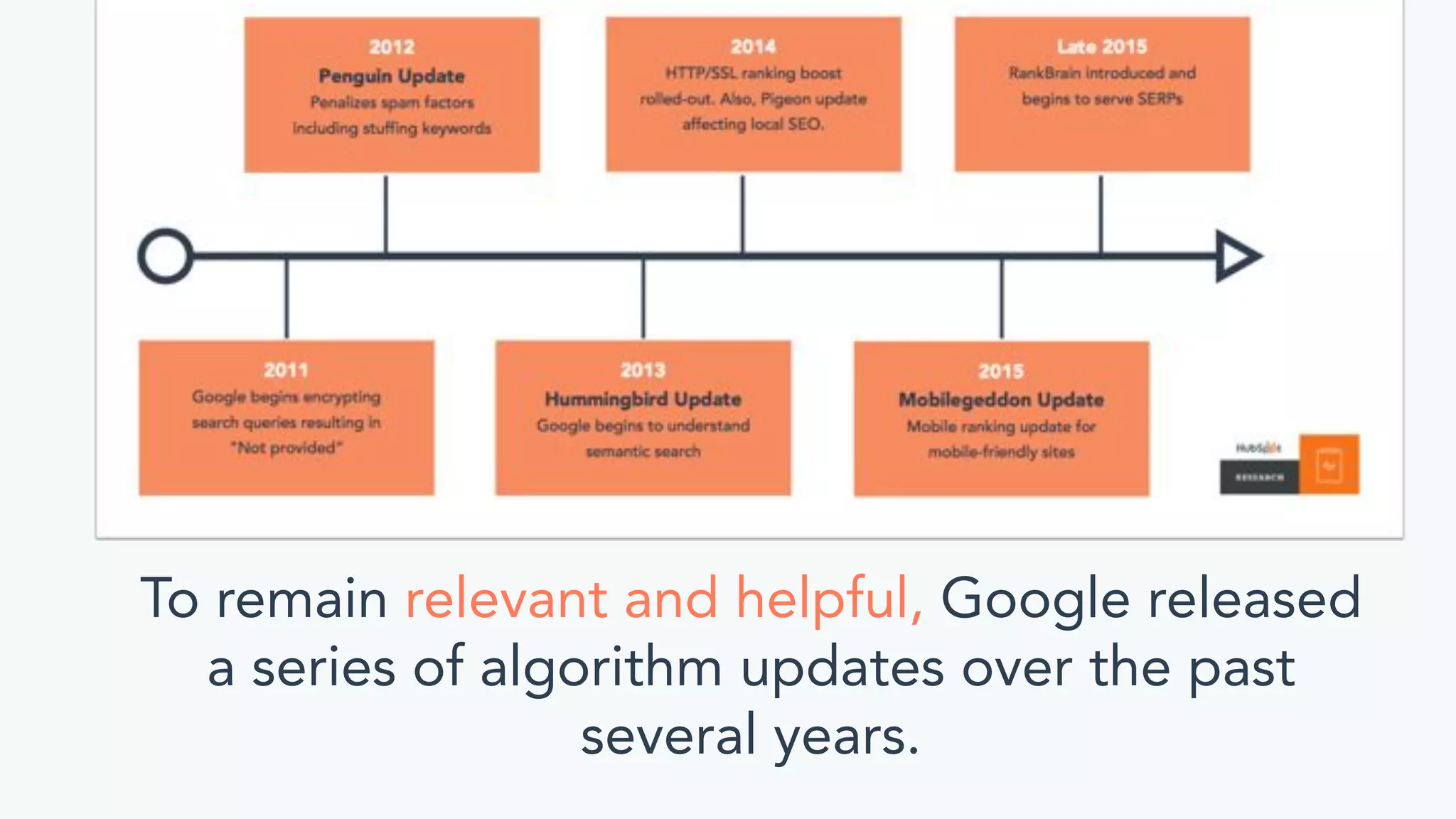
To remain relevant and helpful, Google released
a series of algorithm updates over the past
several years.
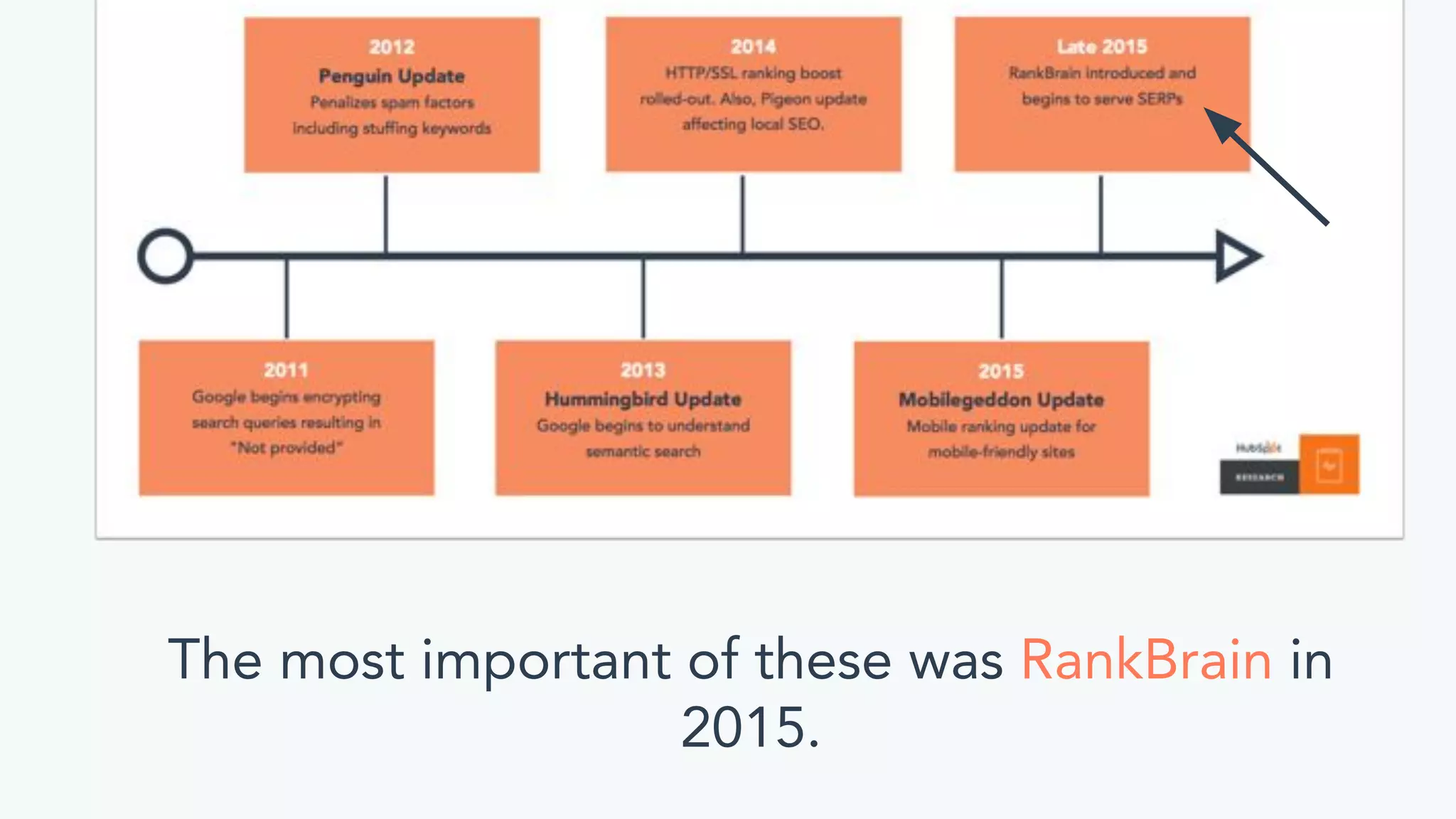
The most important of these was RankBrain in
2015.
What is RankBrain?
A machine learning algorithm Google uses to search
for synonyms and related words, not just the exact
word you searched for
You search:
Chocolate Chip
Cookies
Google shows:
You search:
Chocolate Chip
Cookies
Chocolate chip cookies, best
chocolate chip cookies
recipe, easy chocolate chip
cookie recipes, chocolate
chip cookies near me
So what does this mean for you?
To create content that converts visitors into
leads and eventually customers, you need to
create a helpful, positive user experience that
solves for both the searcher and the search
engine, not just one or the other.
Create targeted clusters of
relevant content that each
cover a specific topic in depth.
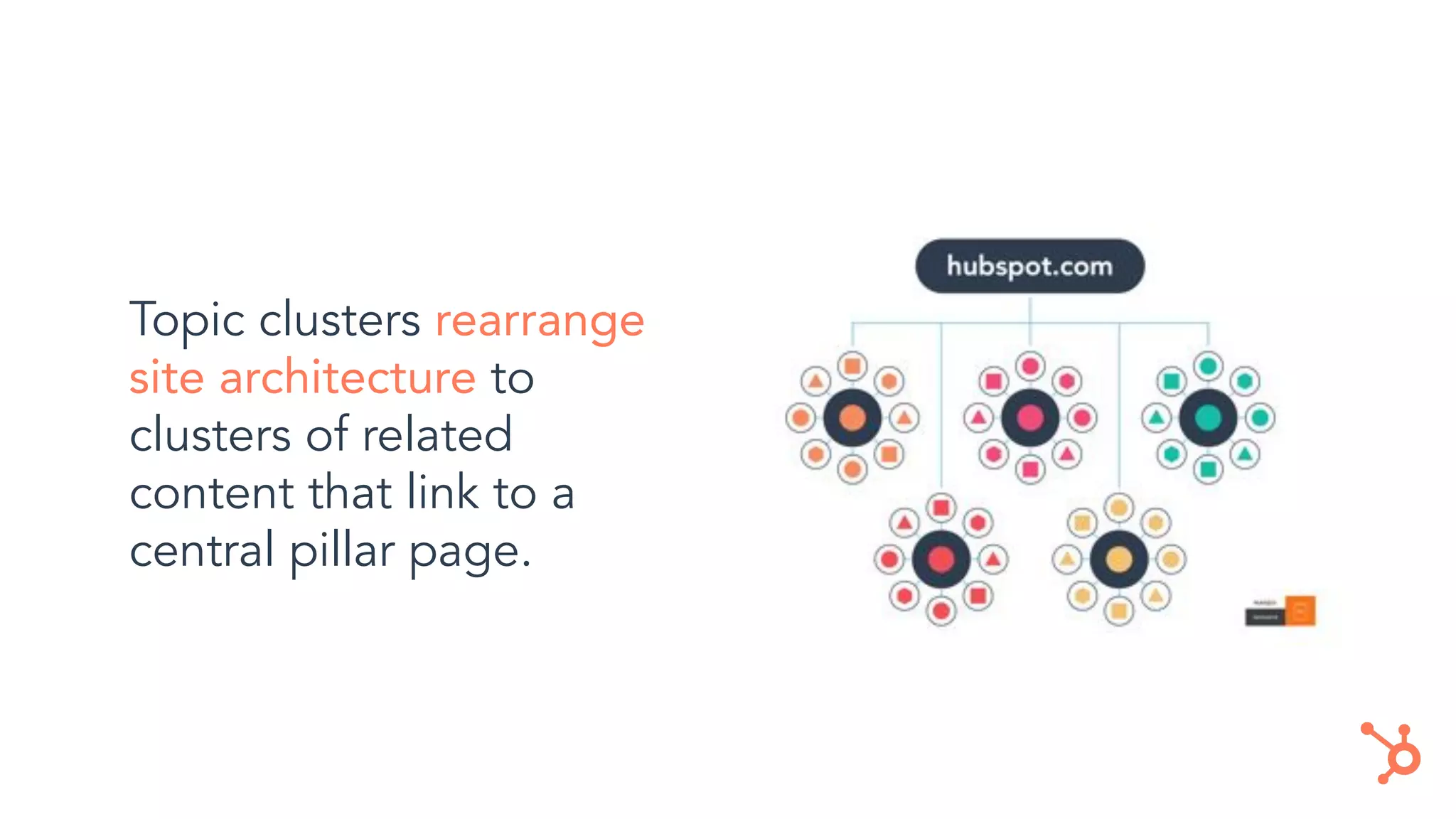
Topic clusters rearrange
site architecture to
clusters of related
content that link to a
central pillar page.
Having a clean, organized site
architecture allows bots to crawl
your site quicker and easier...
And enables your audience to find
the resources they need quickly
and easily.
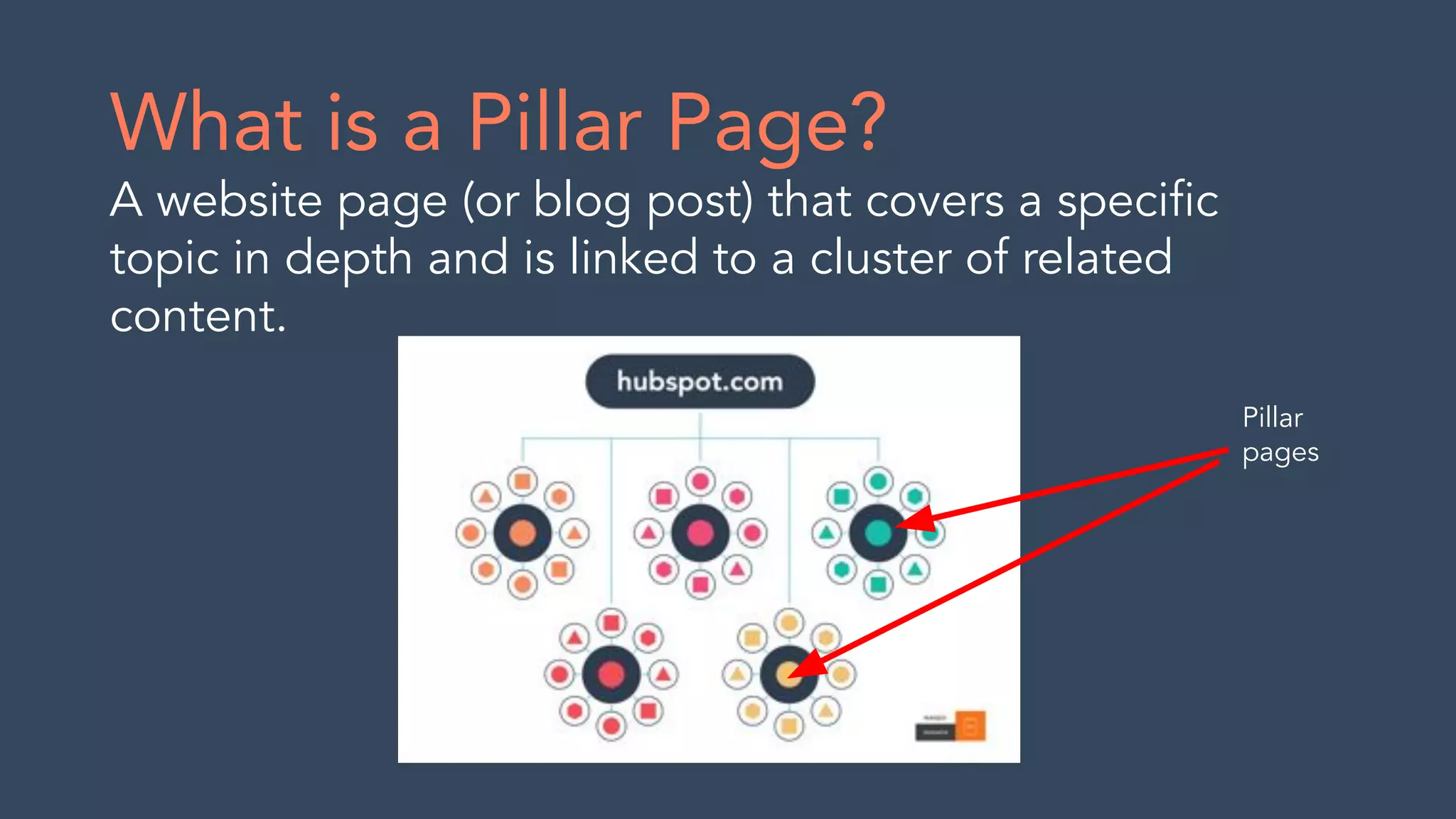
What is a Pillar Page?
A website page (or blog post) that covers a specific
topic in depth and is linked to a cluster of related
content.
Pillar
pages
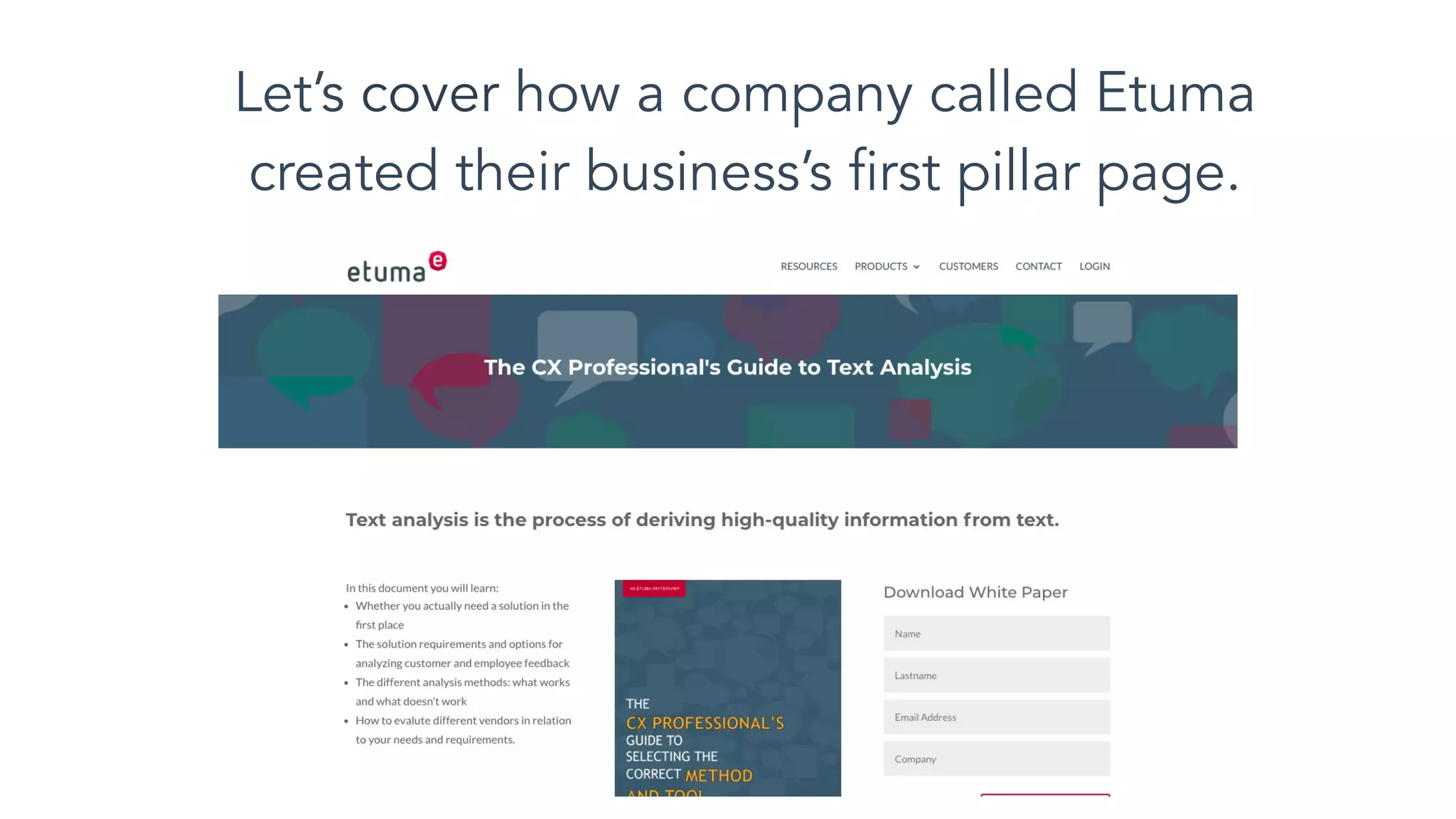
Let’s cover how a company called Etuma
created their business’s first pillar page.
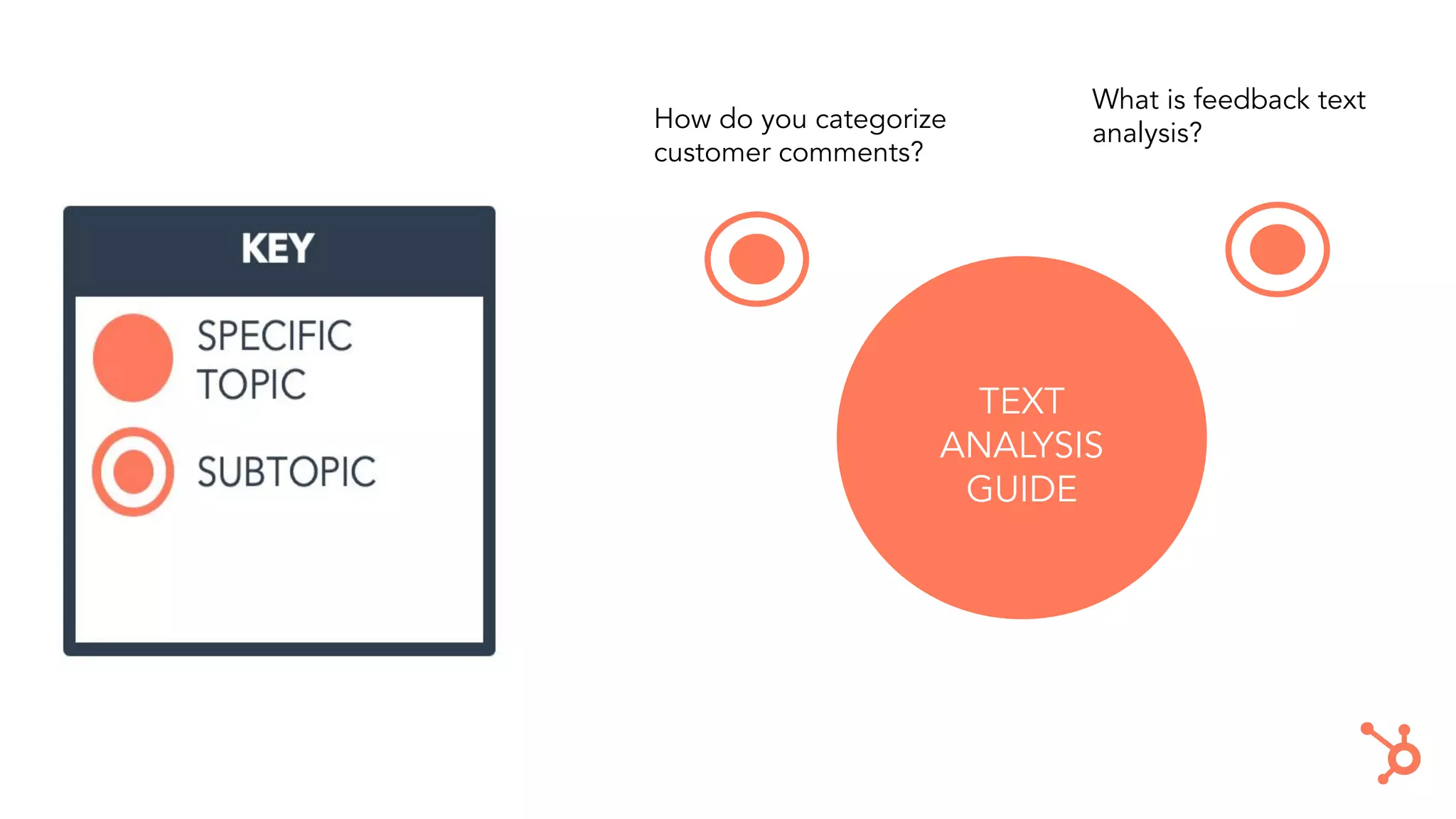
TEXT
ANALYSIS
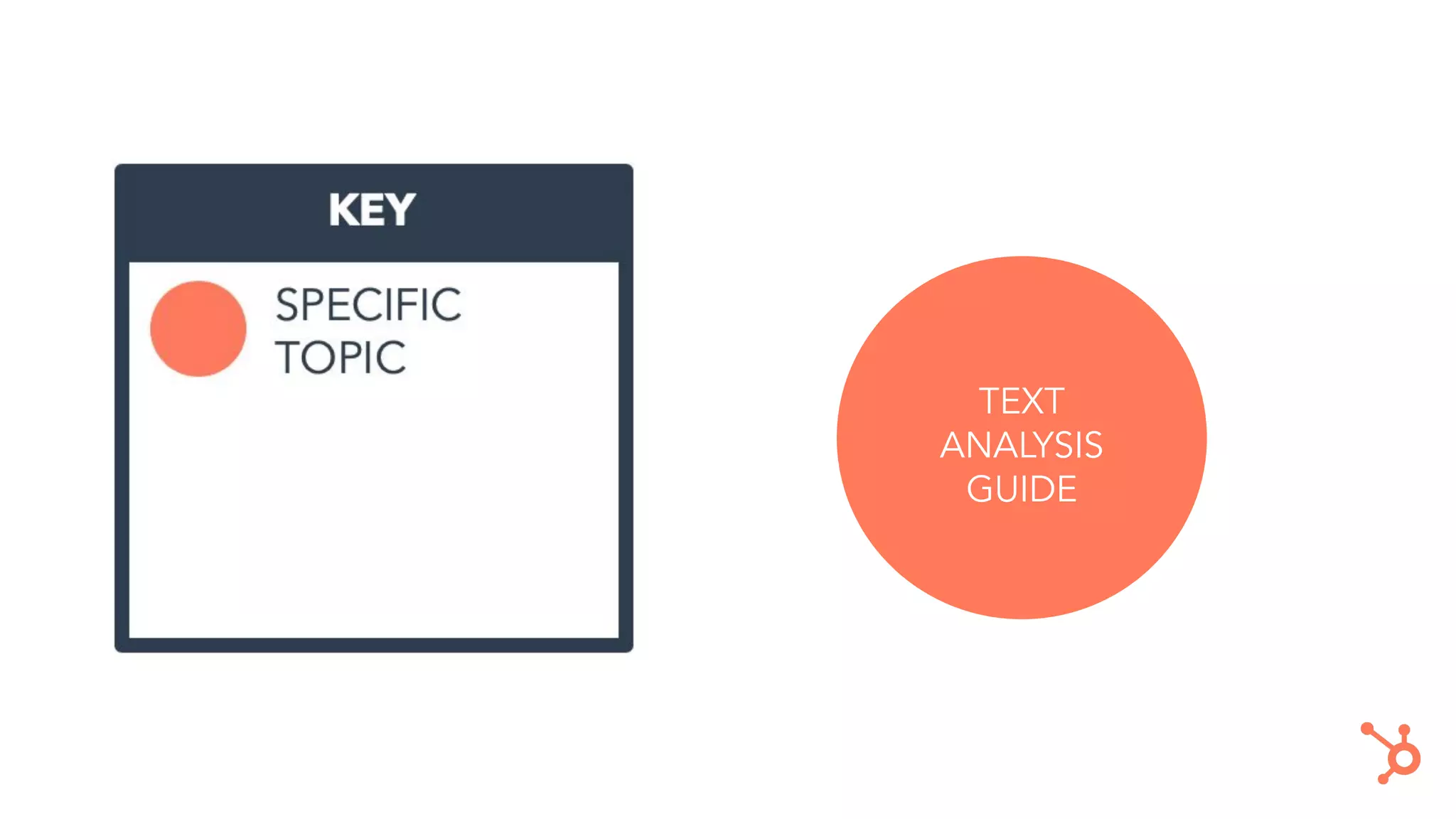
TEXT
ANALYSIS
GUIDE
Pro Tip:
If you’re going to take the time to create content
that educates your audience, make sure it connects
to, and supports, at least one of your products
or services.
TEXT
ANALYSIS
GUIDE
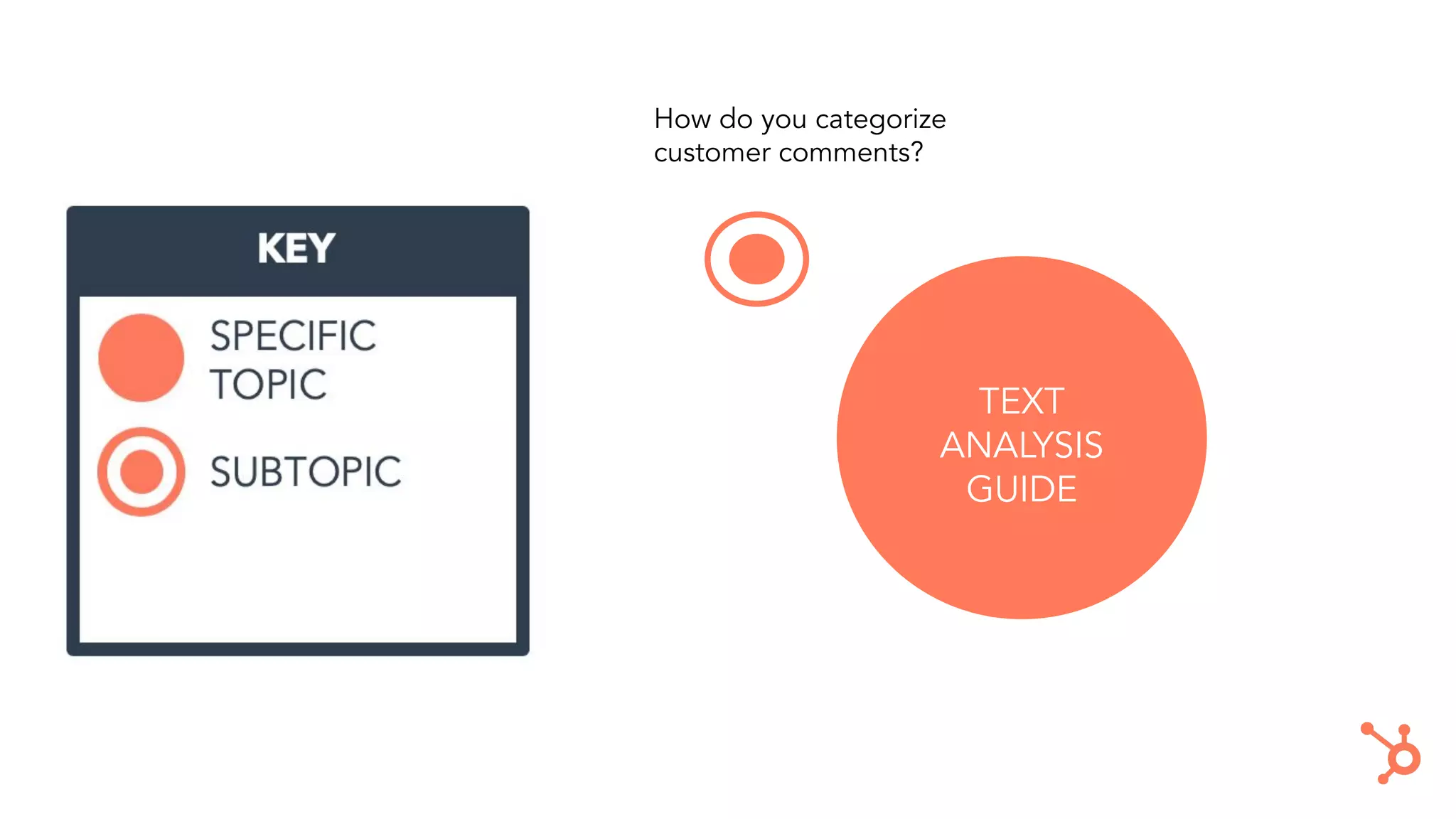
How do you categorize
customer comments?
TEXT
ANALYSIS
GUIDE
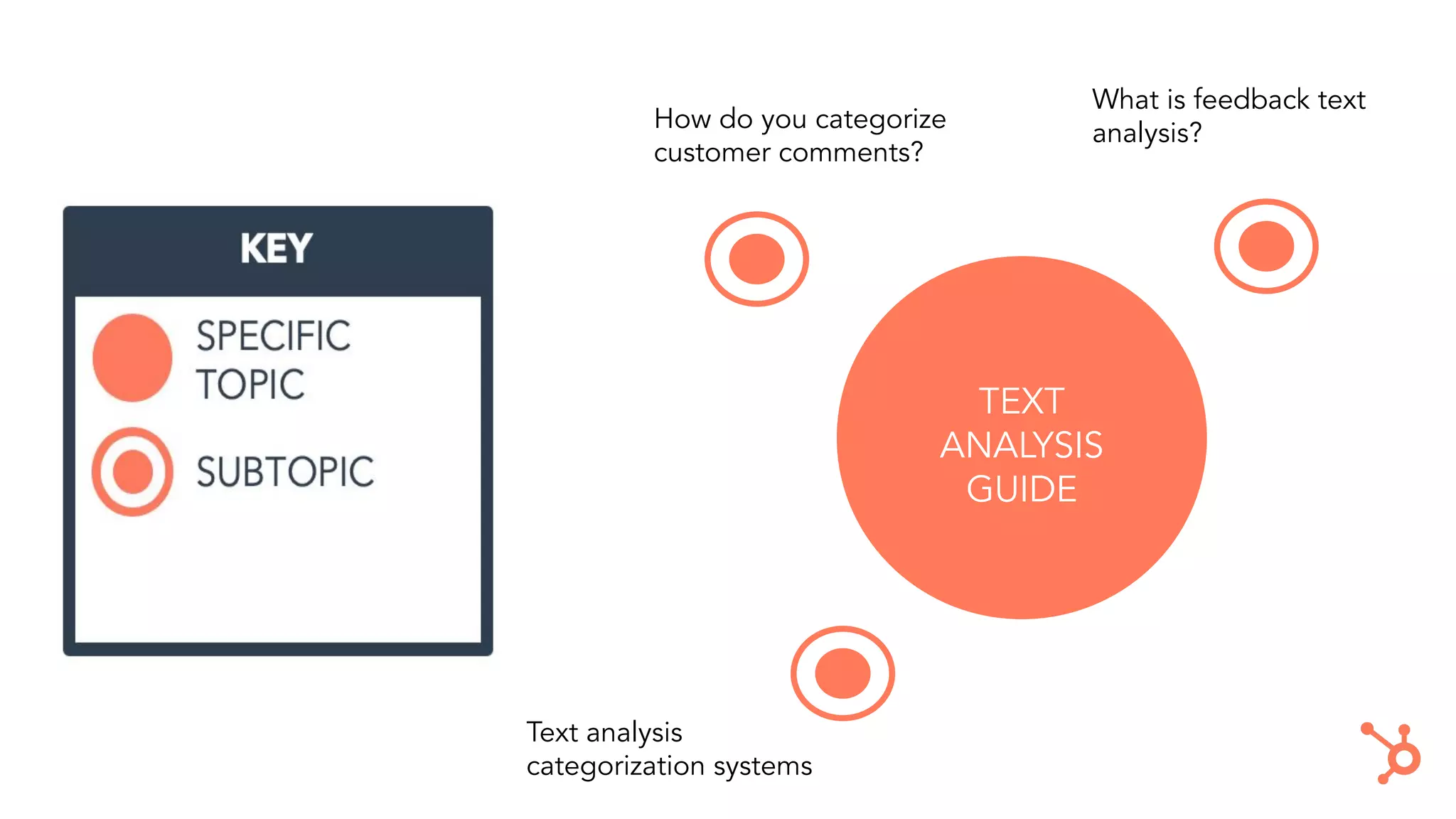
How do you categorize
customer comments?
What is feedback text
analysis?
TEXT
ANALYSIS
GUIDE
How do you categorize
customer comments?
What is feedback text
analysis?
Text analysis
categorization systems
TEXT
ANALYSIS
GUIDE
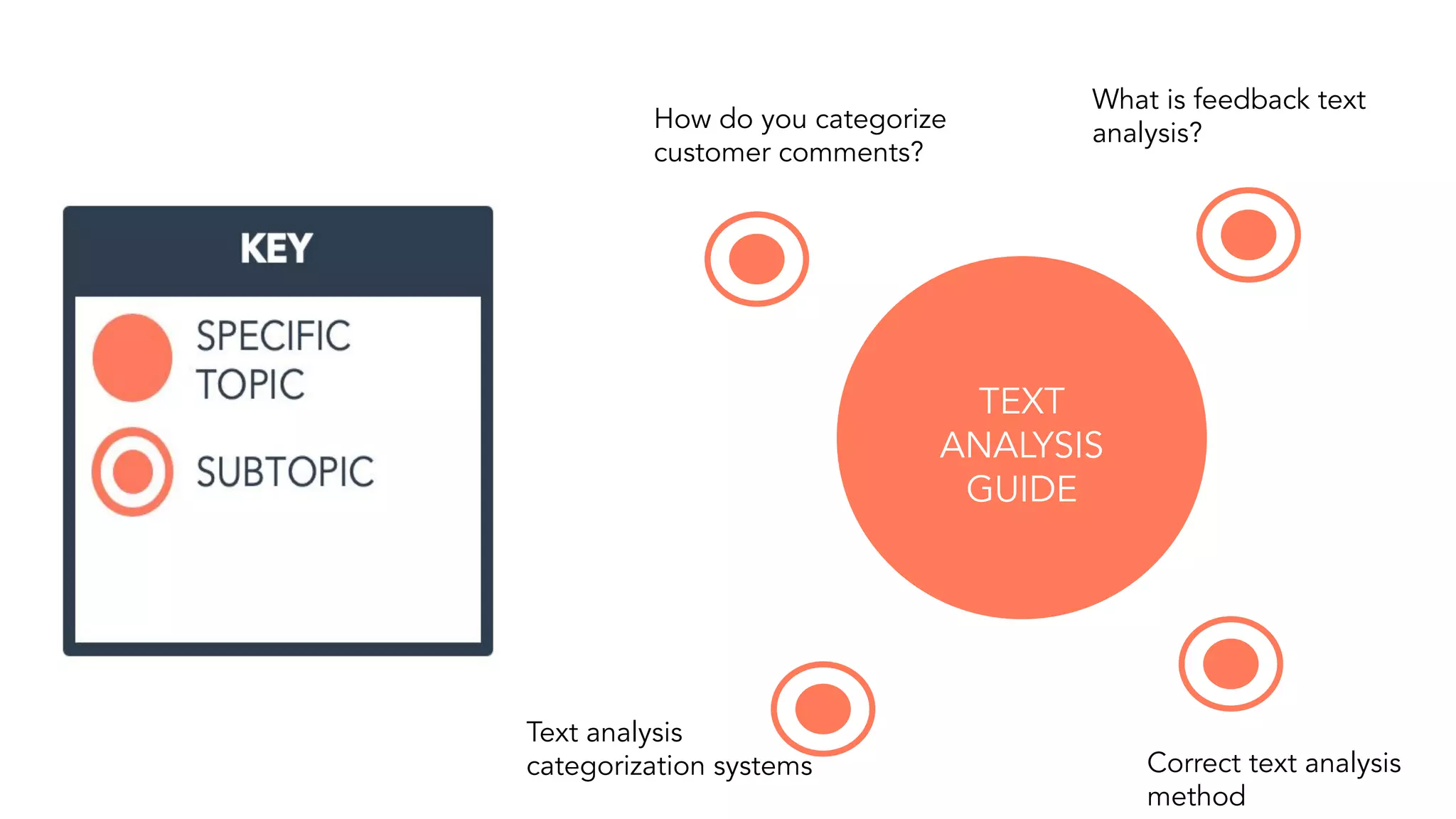
How do you categorize
customer comments?
What is feedback text
analysis?
Text analysis
categorization systems Correct text analysis
method
Pro Tip:
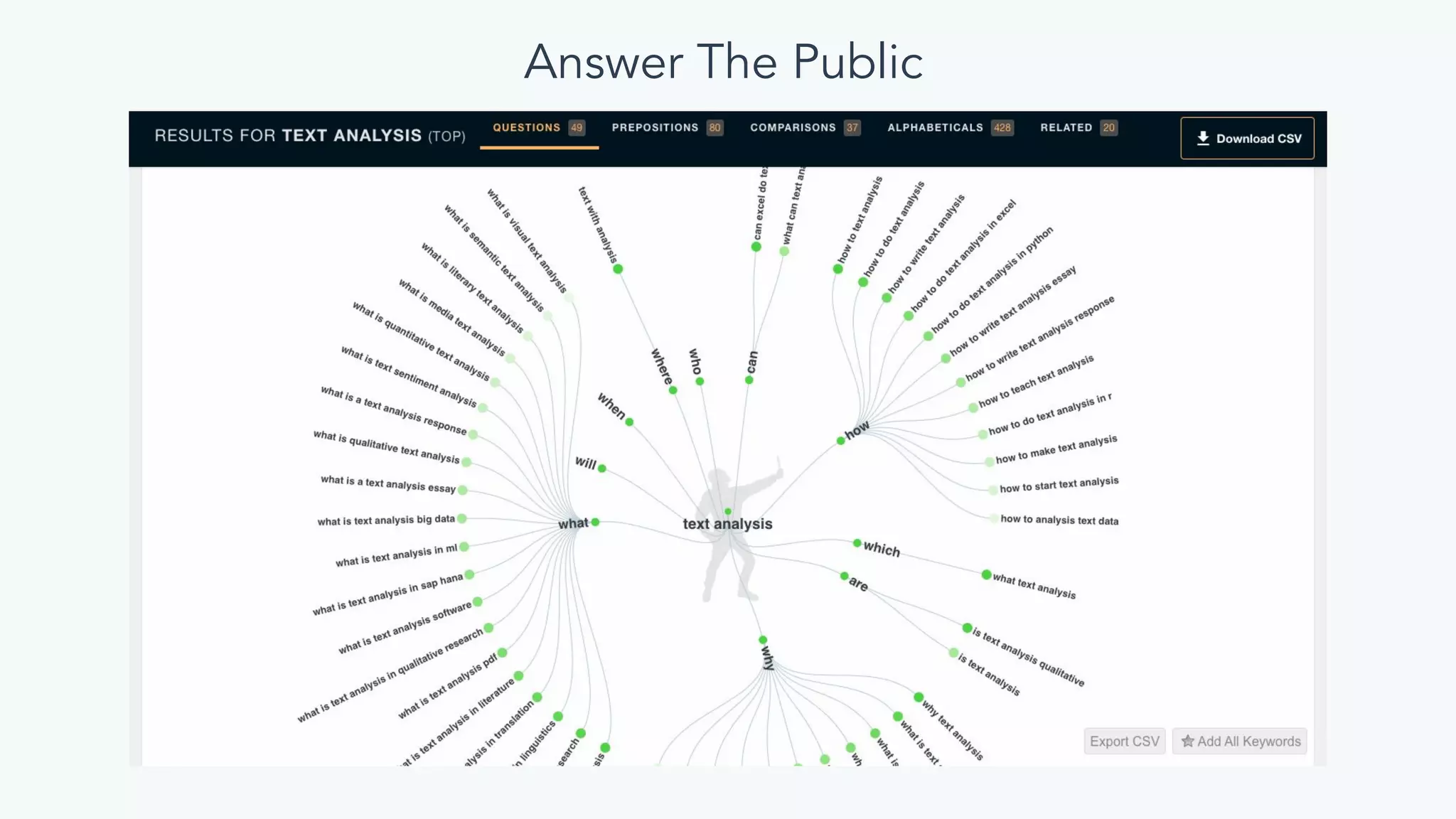
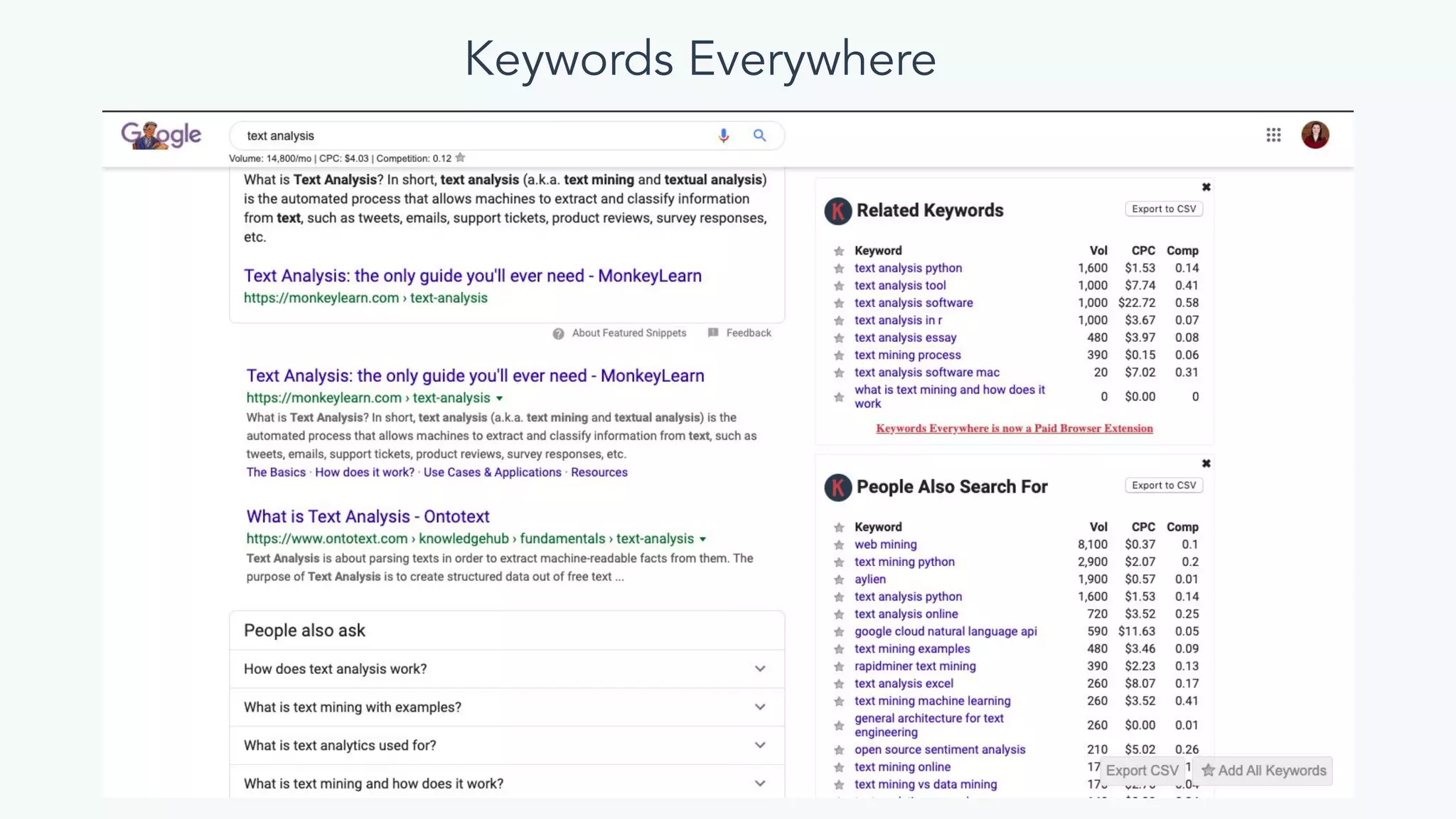
If you’re looking for a place to start when identifying
subtopics, consider the questions your audience has
around the specific topic you chose to write about.
Answer The Public
Keywords Everywhere
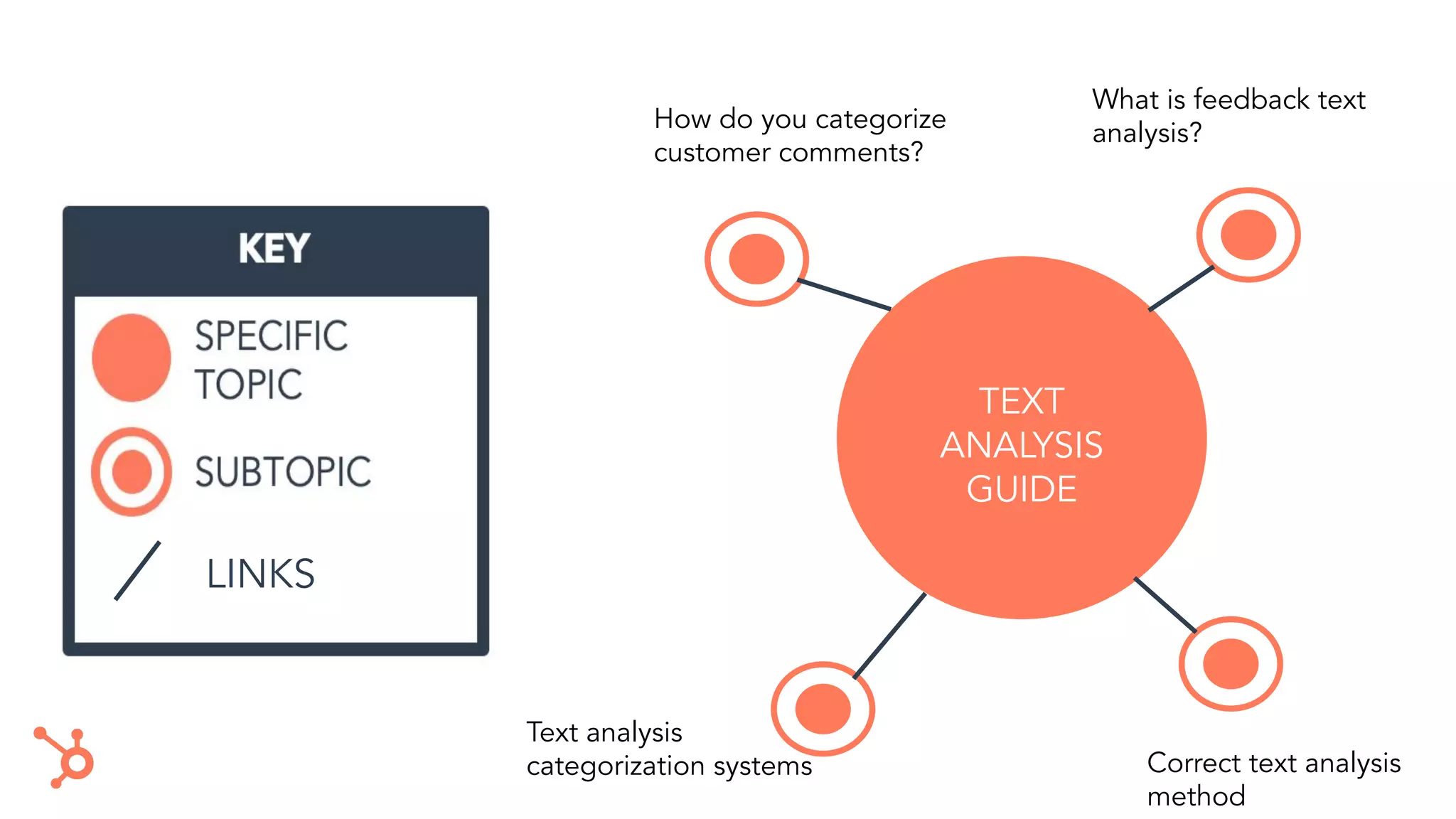
TEXT
ANALYSIS
GUIDE
How do you categorize
customer comments?
What is feedback text
analysis?
Text analysis
categorization systems Correct text analysis
method
LINKS
How to Build a
Topic Cluster
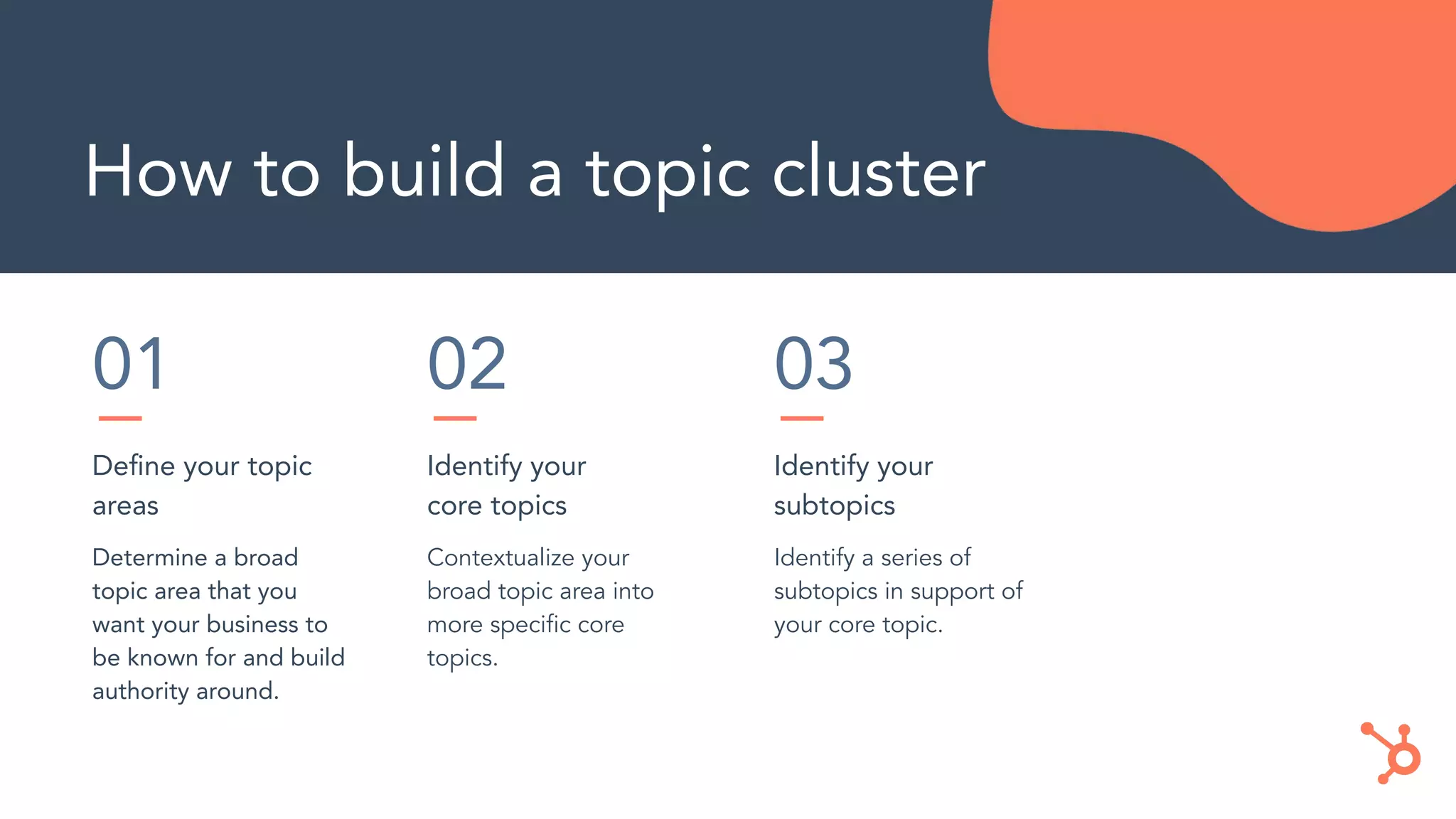
How to build a topic cluster
01
Define your topic
areas
Determine a broad
topic area that you
want your business to
be known for and build
authority around.
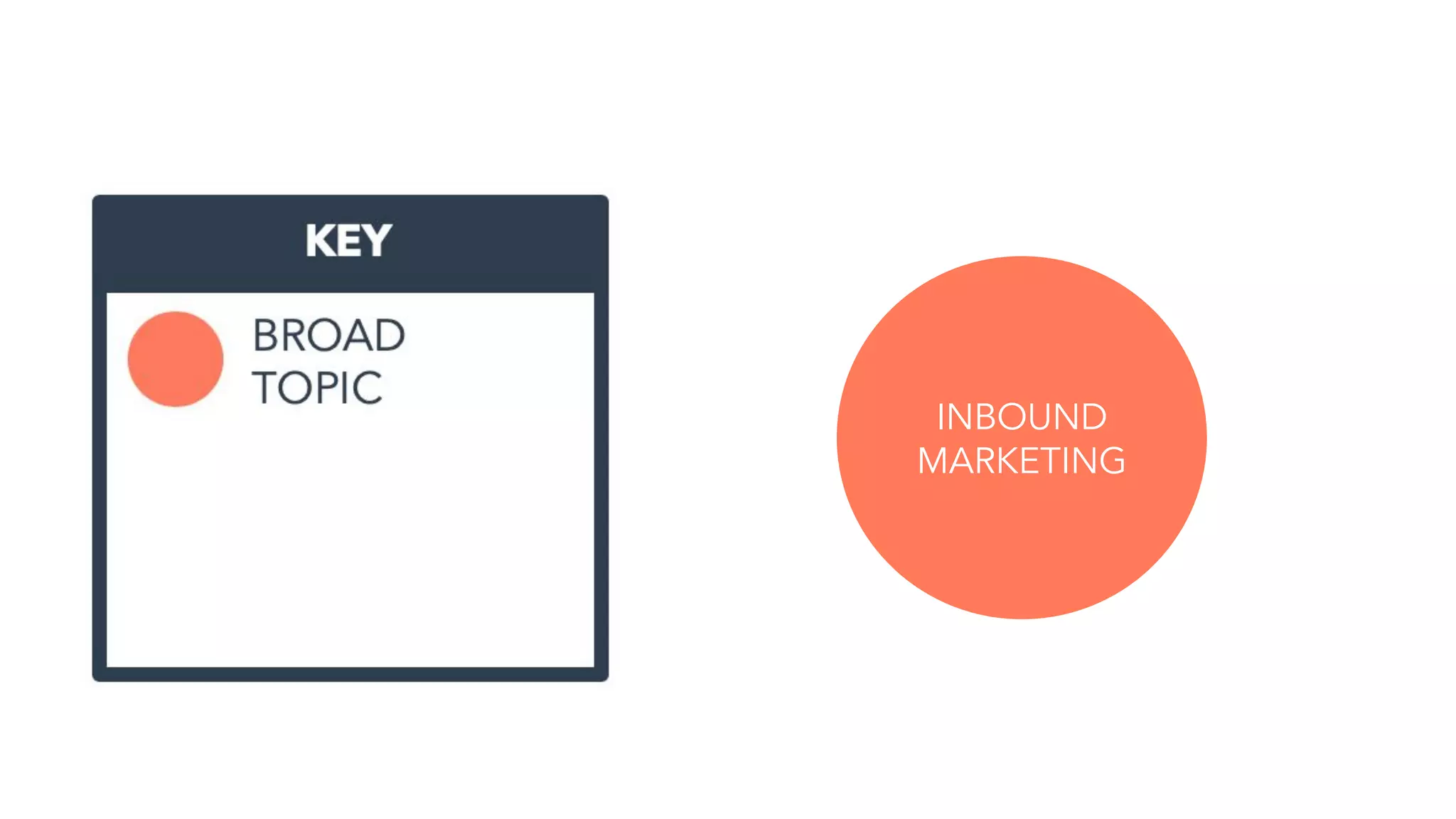
INBOUND
MARKETING
Activity
Determine a broad topic area that’s relevant to
one of your products or services.
(~1 min)
1. Based on what you know about your
business, select 1 broad topic area you want
to be known for.
2. Search this term in Google in Incognito.
3. Review the page one results. Who is ranking
in the top spot? What are they writing about?
How long is the content? Who is it written
for?
How to build a topic cluster
01
Define your topic
areas
Determine a broad
topic area that you
want your business to
be known for and build
authority around.
02
Identify your
core topics
Contextualize your
broad topic area into
more specific core
topics.
INBOUND
MARKETING
PERSONAS
Activity
Determine contextual core topics in support of
your broad topic.
Time: ~2 minutes
1. Using your observations from the last exercise,
identify 1-3 specific core topics in support of
your broader topic area.
2. Pick 1 to start with and share it in the chat.
3. Type it into HubSpot’s topics tool and see MSV
and difficulty for the topic
How to build a topic cluster
01
Define your topic
areas
Determine a broad
topic area that you
want your business to
be known for and build
authority around.
02
Identify your
core topics
Contextualize your
broad topic area into
more specific core
topics.
03
Identify your
subtopics
Identify a series of
subtopics in support of
your core topic.
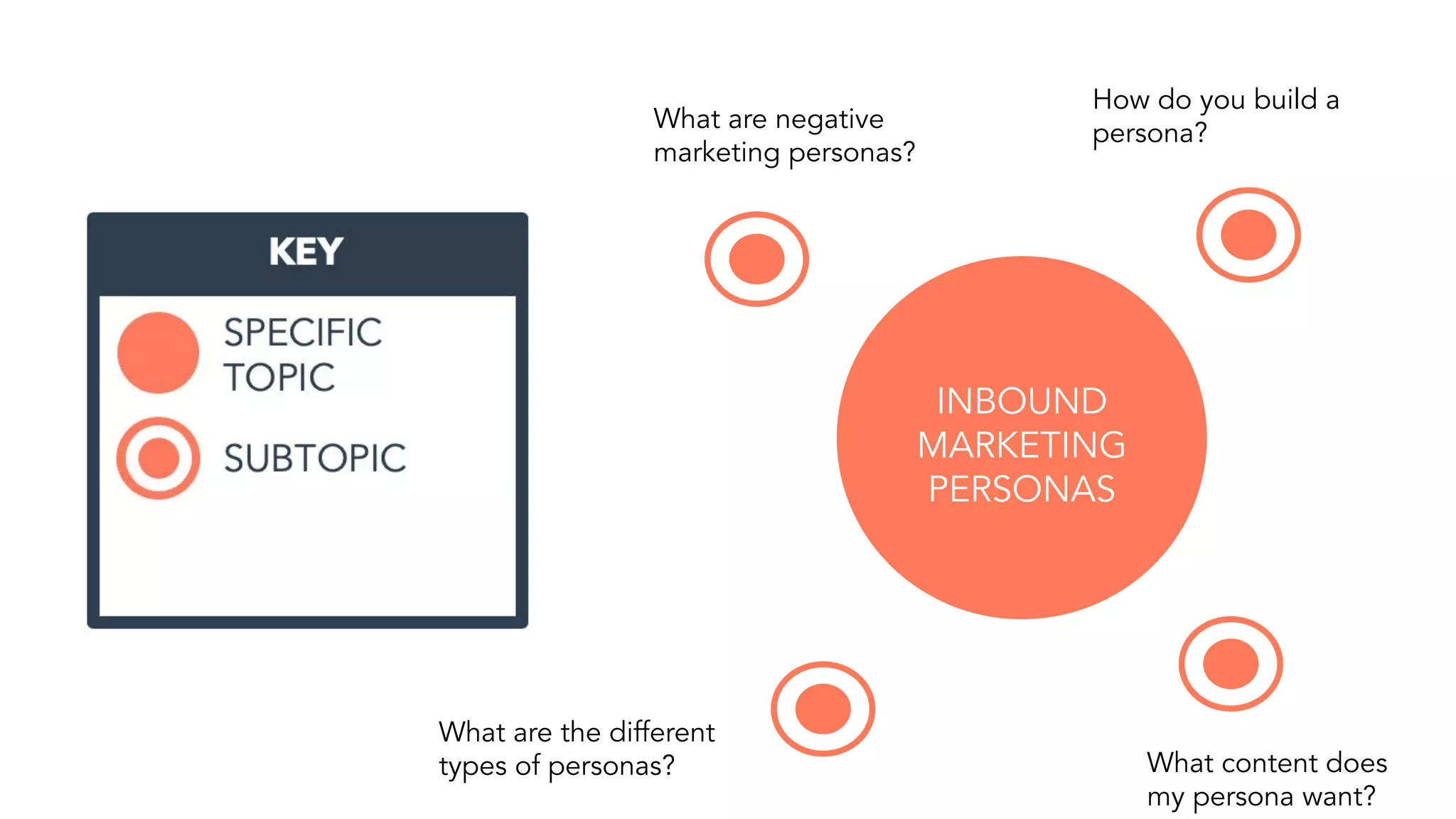
INBOUND
MARKETING
PERSONAS
What are negative
marketing personas?
How do you build a
persona?
What are the different
types of personas? What content does
my persona want?
Activity
Identify subtopics for your core topic.
Time: 5 minutes
1. Using Answer the Public
(https://answerthepublic.com), find 3-5
subtopics to add to your topic cluster.
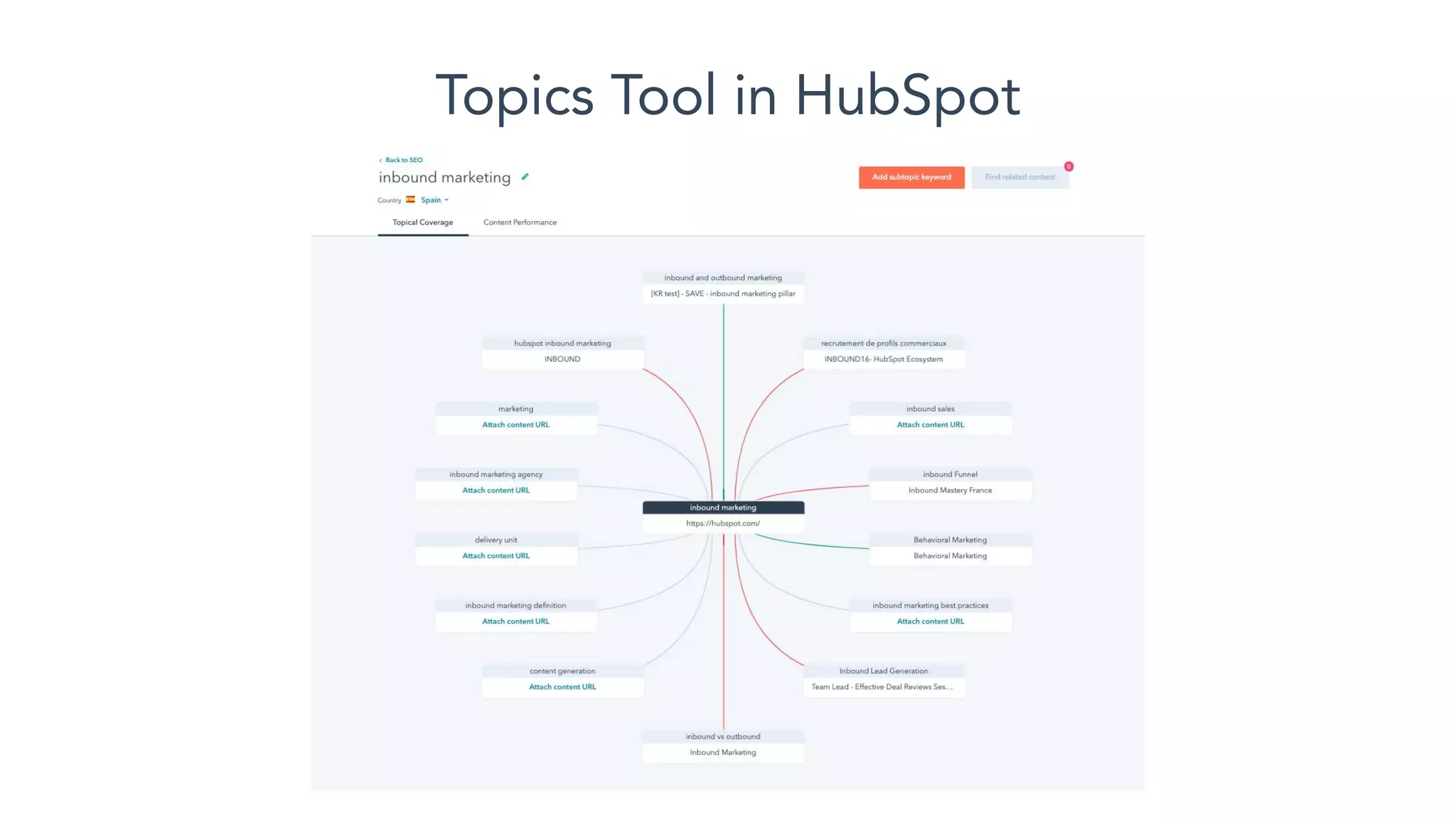
2. If you are a Marketing or CMS Hub customer,
you can also use the Topics tool in HubSpot.
Navigate to Marketing > Website > SEO and
select Topics.
Topics Tool in HubSpot
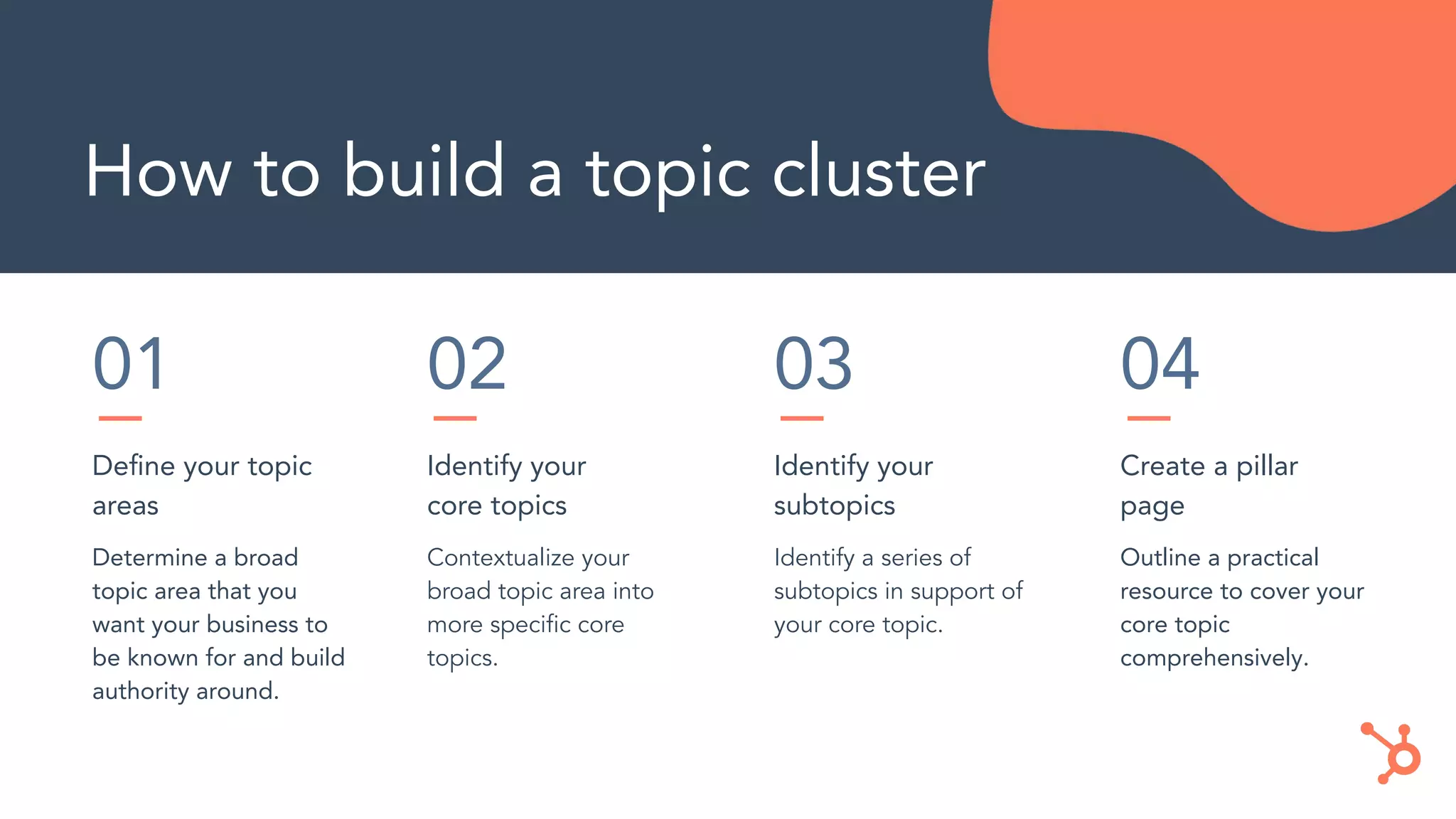
How to build a topic cluster
01
Define your topic
areas
Determine a broad
topic area that you
want your business to
be known for and build
authority around.
02
Identify your
core topics
Contextualize your
broad topic area into
more specific core
topics.
03
Identify your
subtopics
Identify a series of
subtopics in support of
your core topic.
04
Create a pillar
page
Outline a practical
resource to cover your
core topic
comprehensively.
Final Step
Identify which subtopics you
already have content on that
could be optimized, and which
ones you need to create new
content for.
Create your topic
cluster content
Recap & Next Steps
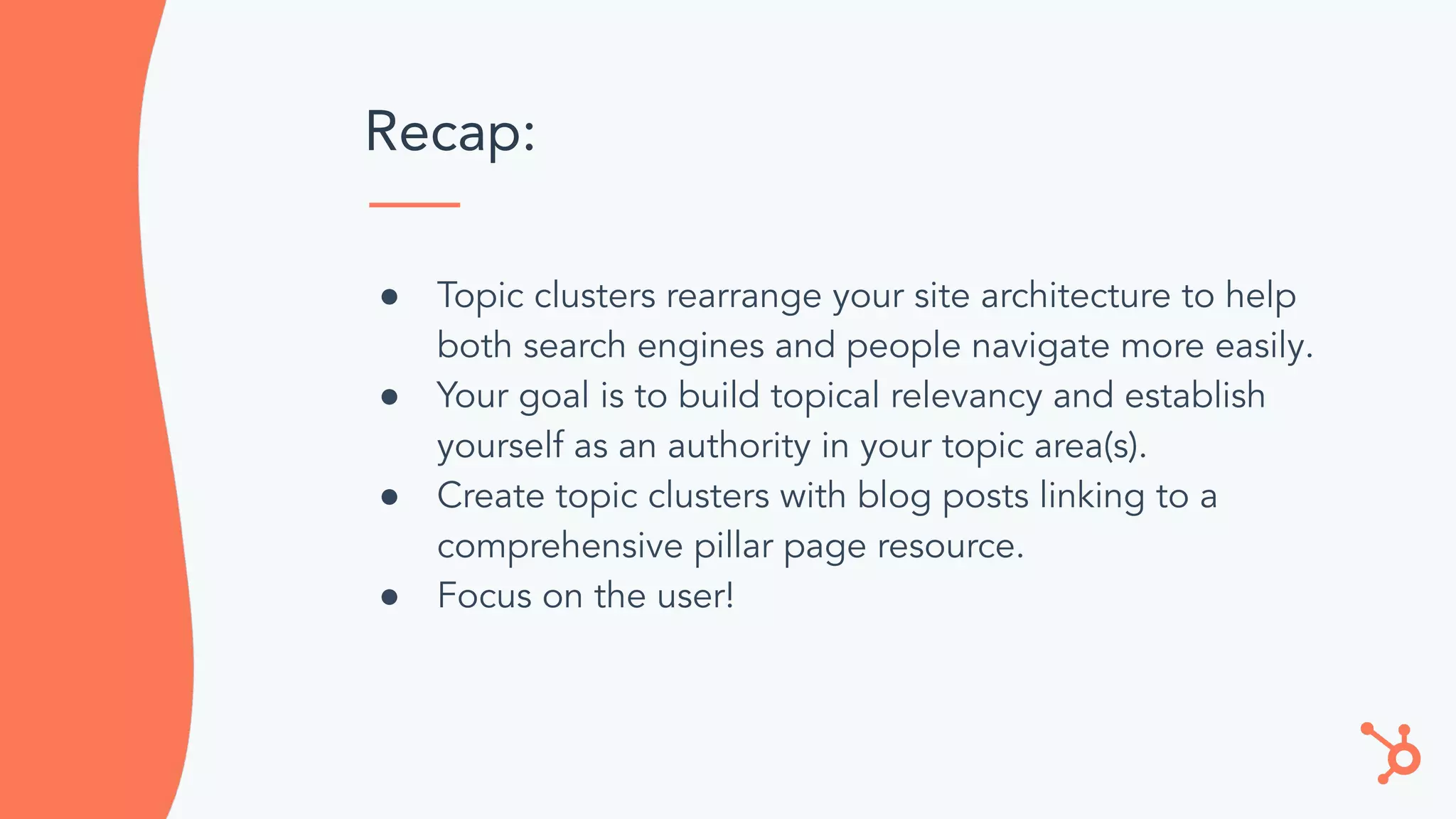
Recap:
● Topic clusters rearrange your site architecture to help
both search engines and people navigate more easily.
● Your goal is to build topical relevancy and establish
yourself as an authority in your topic area(s).
● Create topic clusters with blog posts linking to a
comprehensive pillar page resource.
● Focus on the user!
Next steps
What to do next:
● Perform an audit of your existing content
● Create new content to fill in the gaps
● Put together a pillar page
● Build links between your pillar page and cluster content
● Promote the pillar page to your audience
Continue learning with HubSpot Academy
● Content Strategy Course
● Creating a Content Strategy in HubSpot lesson (for how to use the
Topics tool to map out your topic clusters)
● Content Marketing Certification (for much more on different
content marketing methods)
● NEW! SEO Certification
● How to build a pillar page
Q&A
Let’s connect
in/amanda-danielson
@amandsterdan
@HubSpotAcademy
Thank you

Topic clusters and simple seo success (virtual workshop)

  • 1.
    Topic Clusters and SimpleSEO Success Virtual HUG Workshop
  • 2.
    Hi, I’m Amanda Basedin Boston, MA Product Manager: SEO & Content Strategy at HubSpot
  • 3.
    To map outyour first topic cluster so you’re ready to hit the ground running creating, repurposing, or optimizing content after you leave today. Today’s Objective
  • 4.
    Agenda Introduction to Topic Clusters Whatis a topic cluster content strategy, and why should you use it? How to Build a Topic Cluster 4 steps to developing a topic cluster content strategy Activity Go through the steps of mapping out your first topic cluster. Recap & Next Steps How to continue your learning after this session
  • 5.
  • 6.
    The way wesearch has changed.
  • 7.
    Then • Simple • Non-conversational •Keyword focused Restaurants in Boston
  • 8.
    Now • Longer • Conversational •Contextual • Voice search What’s the best restaurant open near me right now?
  • 9.
    The way Google interpretsand ranks content has also changed.
  • 10.
    To remain relevantand helpful, Google released a series of algorithm updates over the past several years.
  • 11.
    The most importantof these was RankBrain in 2015.
  • 12.
    What is RankBrain? Amachine learning algorithm Google uses to search for synonyms and related words, not just the exact word you searched for
  • 13.
  • 14.
    Google shows: You search: ChocolateChip Cookies Chocolate chip cookies, best chocolate chip cookies recipe, easy chocolate chip cookie recipes, chocolate chip cookies near me
  • 15.
    So what doesthis mean for you?
  • 16.
    To create contentthat converts visitors into leads and eventually customers, you need to create a helpful, positive user experience that solves for both the searcher and the search engine, not just one or the other.
  • 17.
    Create targeted clustersof relevant content that each cover a specific topic in depth.
  • 18.
    Topic clusters rearrange sitearchitecture to clusters of related content that link to a central pillar page.
  • 19.
    Having a clean,organized site architecture allows bots to crawl your site quicker and easier...
  • 20.
    And enables youraudience to find the resources they need quickly and easily.
  • 21.
    What is aPillar Page? A website page (or blog post) that covers a specific topic in depth and is linked to a cluster of related content. Pillar pages
  • 22.
    Let’s cover howa company called Etuma created their business’s first pillar page.
  • 23.
  • 24.
  • 25.
    Pro Tip: If you’regoing to take the time to create content that educates your audience, make sure it connects to, and supports, at least one of your products or services.
  • 26.
    TEXT ANALYSIS GUIDE How do youcategorize customer comments?
  • 27.
    TEXT ANALYSIS GUIDE How do youcategorize customer comments? What is feedback text analysis?
  • 28.
    TEXT ANALYSIS GUIDE How do youcategorize customer comments? What is feedback text analysis? Text analysis categorization systems
  • 29.
    TEXT ANALYSIS GUIDE How do youcategorize customer comments? What is feedback text analysis? Text analysis categorization systems Correct text analysis method
  • 30.
    Pro Tip: If you’relooking for a place to start when identifying subtopics, consider the questions your audience has around the specific topic you chose to write about.
  • 31.
  • 32.
  • 33.
    TEXT ANALYSIS GUIDE How do youcategorize customer comments? What is feedback text analysis? Text analysis categorization systems Correct text analysis method LINKS
  • 34.
    How to Builda Topic Cluster
  • 35.
    How to builda topic cluster 01 Define your topic areas Determine a broad topic area that you want your business to be known for and build authority around.
  • 36.
  • 37.
    Activity Determine a broadtopic area that’s relevant to one of your products or services. (~1 min) 1. Based on what you know about your business, select 1 broad topic area you want to be known for. 2. Search this term in Google in Incognito. 3. Review the page one results. Who is ranking in the top spot? What are they writing about? How long is the content? Who is it written for?
  • 38.
    How to builda topic cluster 01 Define your topic areas Determine a broad topic area that you want your business to be known for and build authority around. 02 Identify your core topics Contextualize your broad topic area into more specific core topics.
  • 39.
  • 40.
    Activity Determine contextual coretopics in support of your broad topic. Time: ~2 minutes 1. Using your observations from the last exercise, identify 1-3 specific core topics in support of your broader topic area. 2. Pick 1 to start with and share it in the chat. 3. Type it into HubSpot’s topics tool and see MSV and difficulty for the topic
  • 41.
    How to builda topic cluster 01 Define your topic areas Determine a broad topic area that you want your business to be known for and build authority around. 02 Identify your core topics Contextualize your broad topic area into more specific core topics. 03 Identify your subtopics Identify a series of subtopics in support of your core topic.
  • 42.
    INBOUND MARKETING PERSONAS What are negative marketingpersonas? How do you build a persona? What are the different types of personas? What content does my persona want?
  • 43.
    Activity Identify subtopics foryour core topic. Time: 5 minutes 1. Using Answer the Public (https://answerthepublic.com), find 3-5 subtopics to add to your topic cluster. 2. If you are a Marketing or CMS Hub customer, you can also use the Topics tool in HubSpot. Navigate to Marketing > Website > SEO and select Topics.
  • 44.
  • 45.
    How to builda topic cluster 01 Define your topic areas Determine a broad topic area that you want your business to be known for and build authority around. 02 Identify your core topics Contextualize your broad topic area into more specific core topics. 03 Identify your subtopics Identify a series of subtopics in support of your core topic. 04 Create a pillar page Outline a practical resource to cover your core topic comprehensively.
  • 47.
    Final Step Identify whichsubtopics you already have content on that could be optimized, and which ones you need to create new content for. Create your topic cluster content
  • 48.
  • 49.
    Recap: ● Topic clustersrearrange your site architecture to help both search engines and people navigate more easily. ● Your goal is to build topical relevancy and establish yourself as an authority in your topic area(s). ● Create topic clusters with blog posts linking to a comprehensive pillar page resource. ● Focus on the user!
  • 50.
  • 51.
    What to donext: ● Perform an audit of your existing content ● Create new content to fill in the gaps ● Put together a pillar page ● Build links between your pillar page and cluster content ● Promote the pillar page to your audience
  • 52.
    Continue learning withHubSpot Academy ● Content Strategy Course ● Creating a Content Strategy in HubSpot lesson (for how to use the Topics tool to map out your topic clusters) ● Content Marketing Certification (for much more on different content marketing methods) ● NEW! SEO Certification ● How to build a pillar page
  • 53.
  • 54.
  • 55.