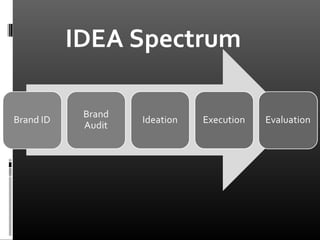
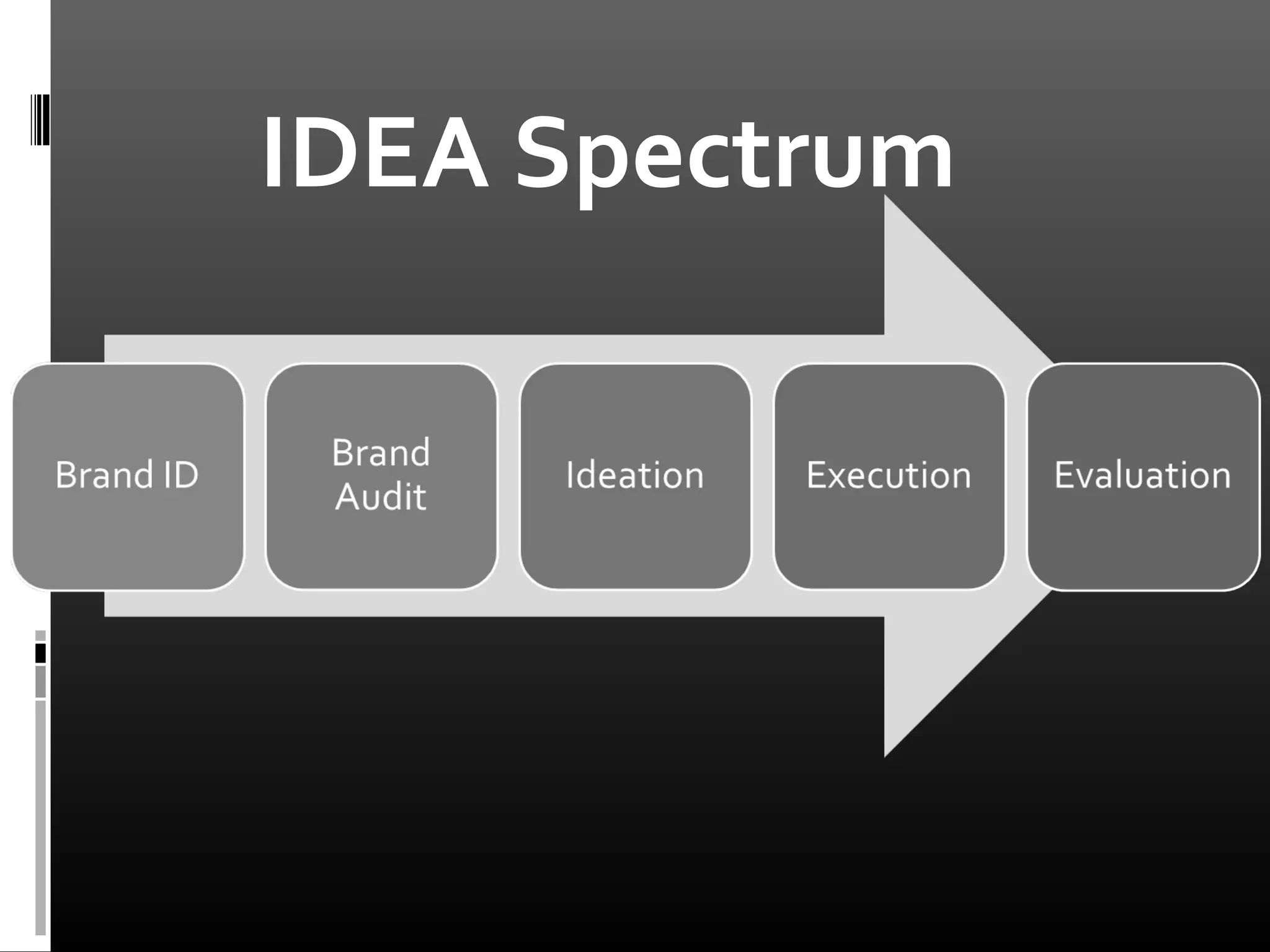
IDEA Spectrum
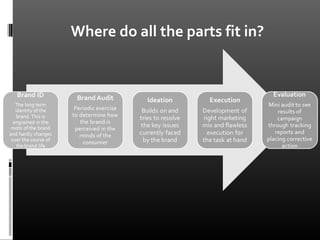
Where do all the parts fit in?
Flame
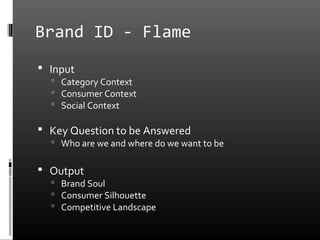
Brand ID - Flame
 Input
   Category Context
   Consumer Context
   Social Context

 Key Question to be Answered
   Who are we and where do we want to be


 Output
   Brand Soul
   Consumer Silhouette
   Competitive Landscape
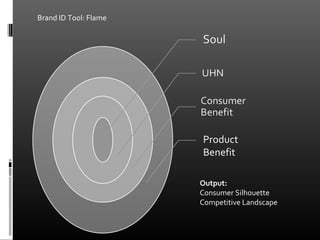
Brand ID Tool: Flame


                       Product
                       Benefit

                       Output:
                       Consumer Silhouette
                       Competitive Landscape
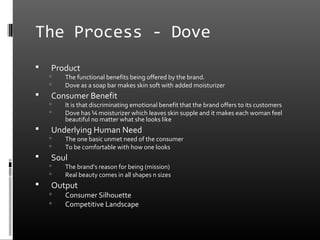
The Process - Dove
   Product
       The functional benefits being offered by the brand.
       Dove as a soap bar makes skin soft with added moisturizer
   Consumer Benefit
       It is that discriminating emotional benefit that the brand offers to its customers
       Dove has ¼ moisturizer which leaves skin supple and it makes each woman feel
        beautiful no matter what she looks like
   Underlying Human Need
       The one basic unmet need of the consumer
       To be comfortable with how one looks
   Soul
       The brand’s reason for being (mission)
       Real beauty comes in all shapes n sizes
   Output
       Consumer Silhouette
       Competitive Landscape
Test Tube
Brand Audit – Test Tube
   Input
       Soul
       Competition
       Consumer

   Key questions to be answered
       Are we relevant and present in the consumer’s minds
       How far are we from where we should be in context of the competition and the
        market

   Output
       Attribute Challenge
       Perception Challenge
       Test Consumer : Consumer most affected by the challenge

   Note: Sometimes the test tube might reveal that we are so far out in terms of relevance that we
    need to go back to the drawing board and work on the brand id from scratch
The Process
   The brand to be tested against brand id, competition or an industry
    acceptable benchmark on 6 key parameters through SWOT
       Product Attributes
       Communication Design
       Consumer Franchise
       Corporate Goodwill
       Image Strength
       Channel Presence

   Each of these tests would reveal
       Attribute challenge (a problem with the actual attribute)
       A perception challenge(a problematic illusion only in the minds of the consumers)

   After identifying the key challenges, we will have to identify the specific
    consumer most affected by each challenge
Spark
Ideation - Spark
 Input
      Attribute Challenges
      Perception Challenges
      Test Consumer

 Key questions to be answered
    How can we overcome the challenges that are stopping us from
     achieving our long term objectives
    What part does the brand play in the physical/emotional world of the
     consumer

 Output
      The Big Idea
      Consumer World
      Brand World
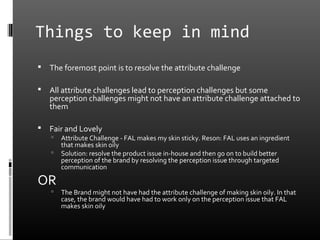
Things to keep in mind
   The foremost point is to resolve the attribute challenge

   All attribute challenges lead to perception challenges but some
    perception challenges might not have an attribute challenge attached to
    them

   Fair and Lovely
       Attribute Challenge - FAL makes my skin sticky. Reson: FAL uses an ingredient
        that makes skin oily
       Solution: resolve the product issue in-house and then go on to build better
        perception of the brand by resolving the perception issue through targeted
        communication

OR
       The Brand might not have had the attribute challenge of making skin oily. In that
        case, the brand would have had to work only on the perception issue that FAL
        makes skin oily
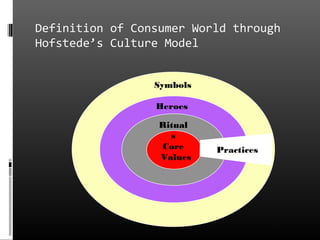
Definition of Consumer World through
Hofstede’s Culture Model


                 Symbols

                 Heroes

                  Ritual
                    s
                  Core     Practices
                  Values
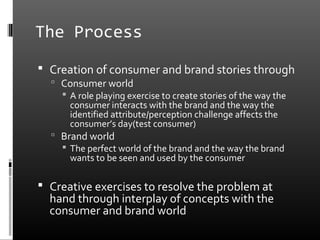
The Process
 Creation of consumer and brand stories through
   Consumer world
     A role playing exercise to create stories of the way the
      consumer interacts with the brand and the way the
      identified attribute/perception challenge affects the
      consumer’s day(test consumer)
   Brand world
     The perfect world of the brand and the way the brand
      wants to be seen and used by the consumer

 Creative exercises to resolve the problem at
  hand through interplay of concepts with the
  consumer and brand world
Touchpoints
Execution- Touchpoints
 Input
   Big Idea
   Consumer world

 Key questions to be answered
   What are those moments in our consumer’s world where
    the Big Idea would make the most impact
   How can we increase the effectiveness of the Big Idea by
    optimizing the space/time in which the consumer comes
    into contact with

 Output
   360 Media Plan
The Process
   Figuring out the right visibility/experience mix keeping in mind
       The consumer
       The scope of the problem
       The bigness of the idea

   Identification of possible points of contact keeping the consumer world
    in mind

   Maximize consumer interaction with the idea through relevant
    touchpoints
       Identification of the right touchpoints for the consumer and the idea
       Engaging the consumer experientially most efficiently
         Strike the right balance between visibility and experience

   Making it happen
       Enable, Empower, Energize

Idea Spectrum - Brand Strategy Tool

  • 1.
  • 2.
    Where do allthe parts fit in?
  • 3.
  • 4.
    Brand ID -Flame  Input  Category Context  Consumer Context  Social Context  Key Question to be Answered  Who are we and where do we want to be  Output  Brand Soul  Consumer Silhouette  Competitive Landscape
  • 5.
    Brand ID Tool:Flame Product Benefit Output: Consumer Silhouette Competitive Landscape
  • 6.
    The Process -Dove  Product  The functional benefits being offered by the brand.  Dove as a soap bar makes skin soft with added moisturizer  Consumer Benefit  It is that discriminating emotional benefit that the brand offers to its customers  Dove has ¼ moisturizer which leaves skin supple and it makes each woman feel beautiful no matter what she looks like  Underlying Human Need  The one basic unmet need of the consumer  To be comfortable with how one looks  Soul  The brand’s reason for being (mission)  Real beauty comes in all shapes n sizes  Output  Consumer Silhouette  Competitive Landscape
  • 7.
  • 8.
    Brand Audit –Test Tube  Input  Soul  Competition  Consumer  Key questions to be answered  Are we relevant and present in the consumer’s minds  How far are we from where we should be in context of the competition and the market  Output  Attribute Challenge  Perception Challenge  Test Consumer : Consumer most affected by the challenge  Note: Sometimes the test tube might reveal that we are so far out in terms of relevance that we need to go back to the drawing board and work on the brand id from scratch
  • 9.
    The Process  The brand to be tested against brand id, competition or an industry acceptable benchmark on 6 key parameters through SWOT  Product Attributes  Communication Design  Consumer Franchise  Corporate Goodwill  Image Strength  Channel Presence  Each of these tests would reveal  Attribute challenge (a problem with the actual attribute)  A perception challenge(a problematic illusion only in the minds of the consumers)  After identifying the key challenges, we will have to identify the specific consumer most affected by each challenge
  • 10.
  • 11.
    Ideation - Spark Input  Attribute Challenges  Perception Challenges  Test Consumer  Key questions to be answered  How can we overcome the challenges that are stopping us from achieving our long term objectives  What part does the brand play in the physical/emotional world of the consumer  Output  The Big Idea  Consumer World  Brand World
  • 12.
    Things to keepin mind  The foremost point is to resolve the attribute challenge  All attribute challenges lead to perception challenges but some perception challenges might not have an attribute challenge attached to them  Fair and Lovely  Attribute Challenge - FAL makes my skin sticky. Reson: FAL uses an ingredient that makes skin oily  Solution: resolve the product issue in-house and then go on to build better perception of the brand by resolving the perception issue through targeted communication OR  The Brand might not have had the attribute challenge of making skin oily. In that case, the brand would have had to work only on the perception issue that FAL makes skin oily
  • 13.
    Definition of ConsumerWorld through Hofstede’s Culture Model Symbols Heroes Ritual s Core Practices Values
  • 14.
    The Process  Creationof consumer and brand stories through  Consumer world  A role playing exercise to create stories of the way the consumer interacts with the brand and the way the identified attribute/perception challenge affects the consumer’s day(test consumer)  Brand world  The perfect world of the brand and the way the brand wants to be seen and used by the consumer  Creative exercises to resolve the problem at hand through interplay of concepts with the consumer and brand world
  • 15.
  • 16.
    Execution- Touchpoints  Input  Big Idea  Consumer world  Key questions to be answered  What are those moments in our consumer’s world where the Big Idea would make the most impact  How can we increase the effectiveness of the Big Idea by optimizing the space/time in which the consumer comes into contact with  Output  360 Media Plan
  • 17.
    The Process  Figuring out the right visibility/experience mix keeping in mind  The consumer  The scope of the problem  The bigness of the idea  Identification of possible points of contact keeping the consumer world in mind  Maximize consumer interaction with the idea through relevant touchpoints  Identification of the right touchpoints for the consumer and the idea  Engaging the consumer experientially most efficiently  Strike the right balance between visibility and experience  Making it happen  Enable, Empower, Energize