DESIGN
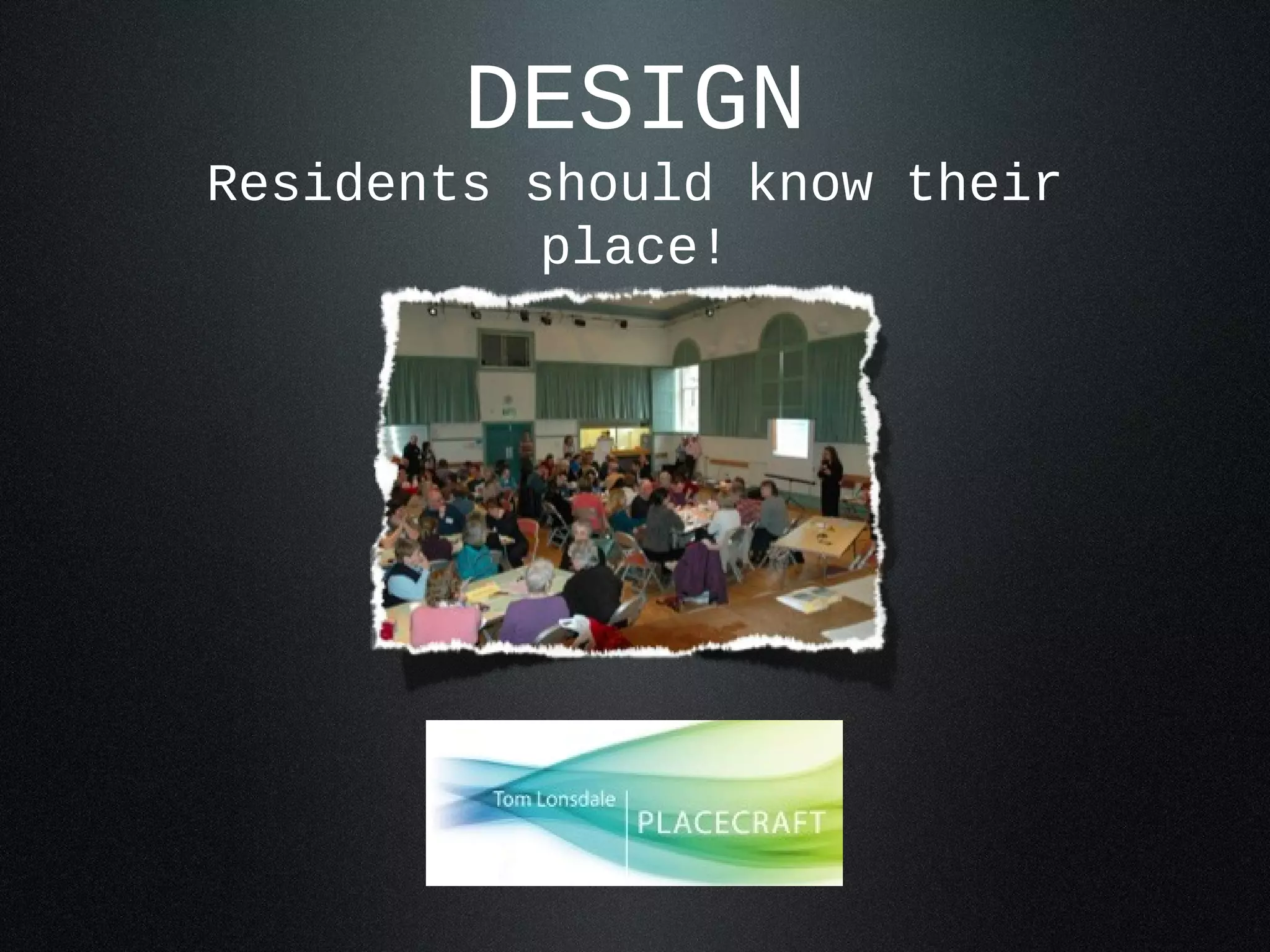
Residents should know their
           place!
Out with
NIMBY
In with

Let
       LUSTY
      Us Shape   This
        Yard
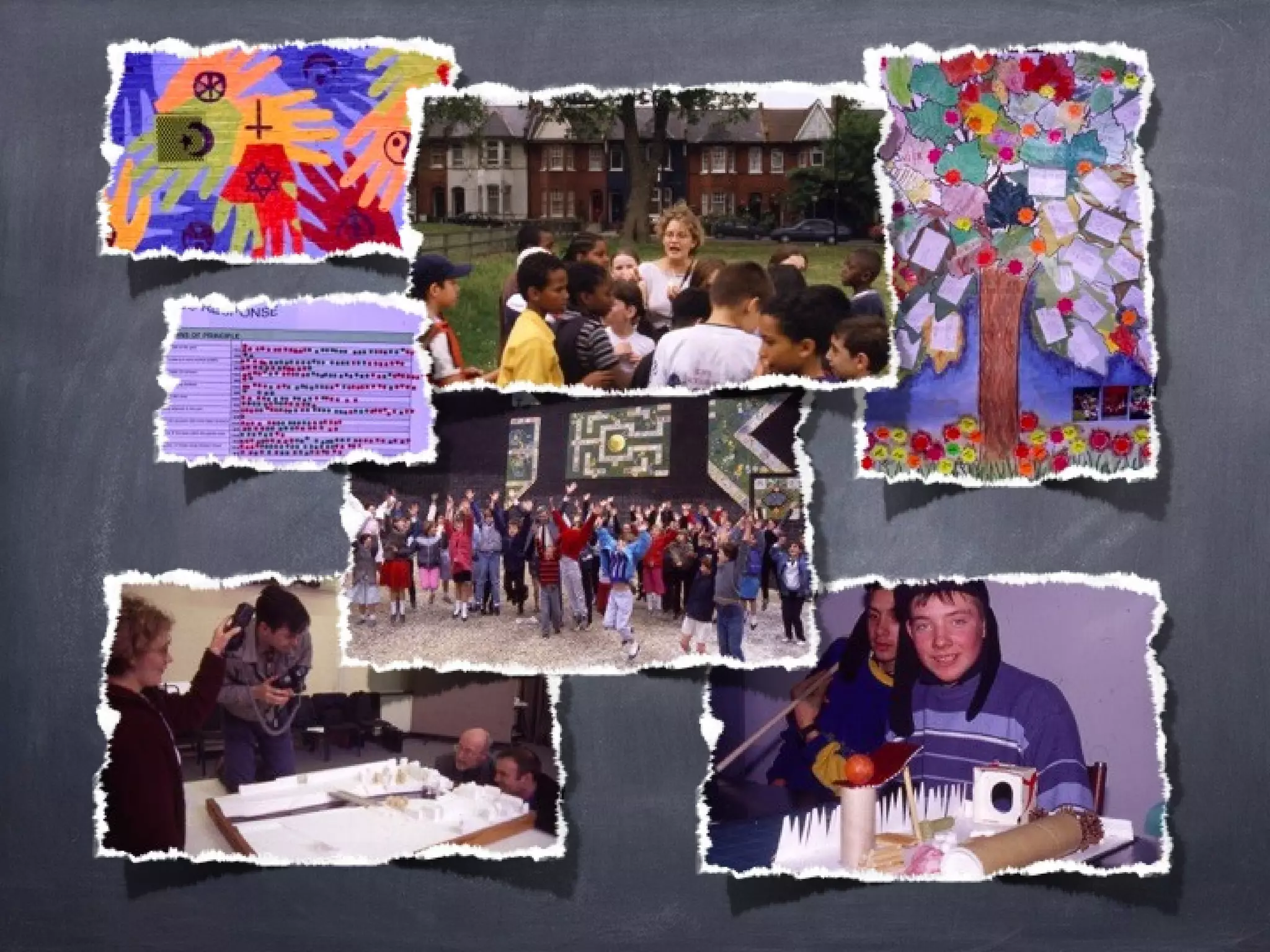
Who’s US?


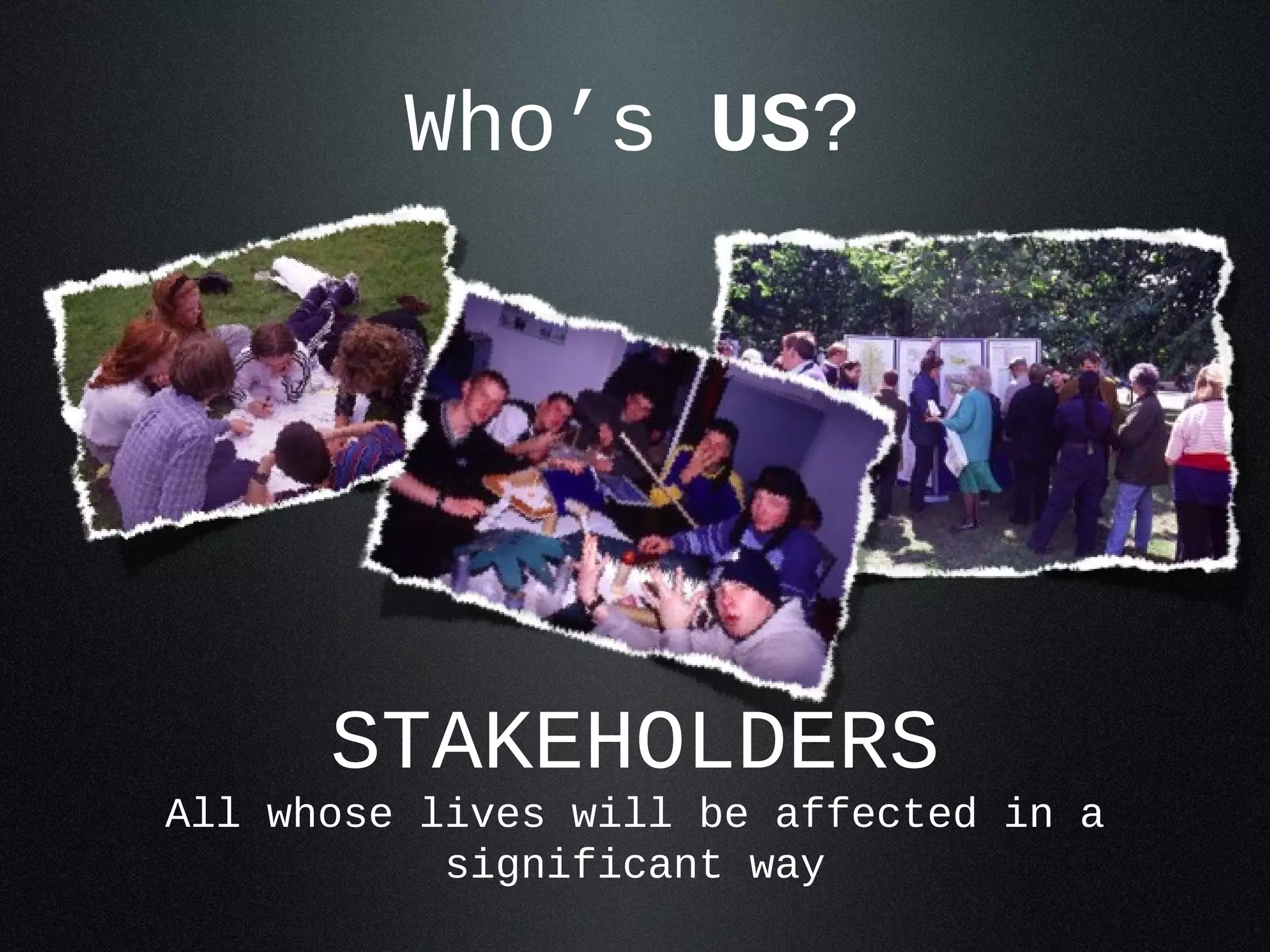
      STAKEHOLDERS
All whose lives will be affected in a
           significant way
Project type
        determines
      participants
• Building interior
• Building form and appearance
• Neighbourhood renewal
• Town or city spaces, e.g. parks
• New settlement or urban
  extension
• Heritage icon / national
  monument
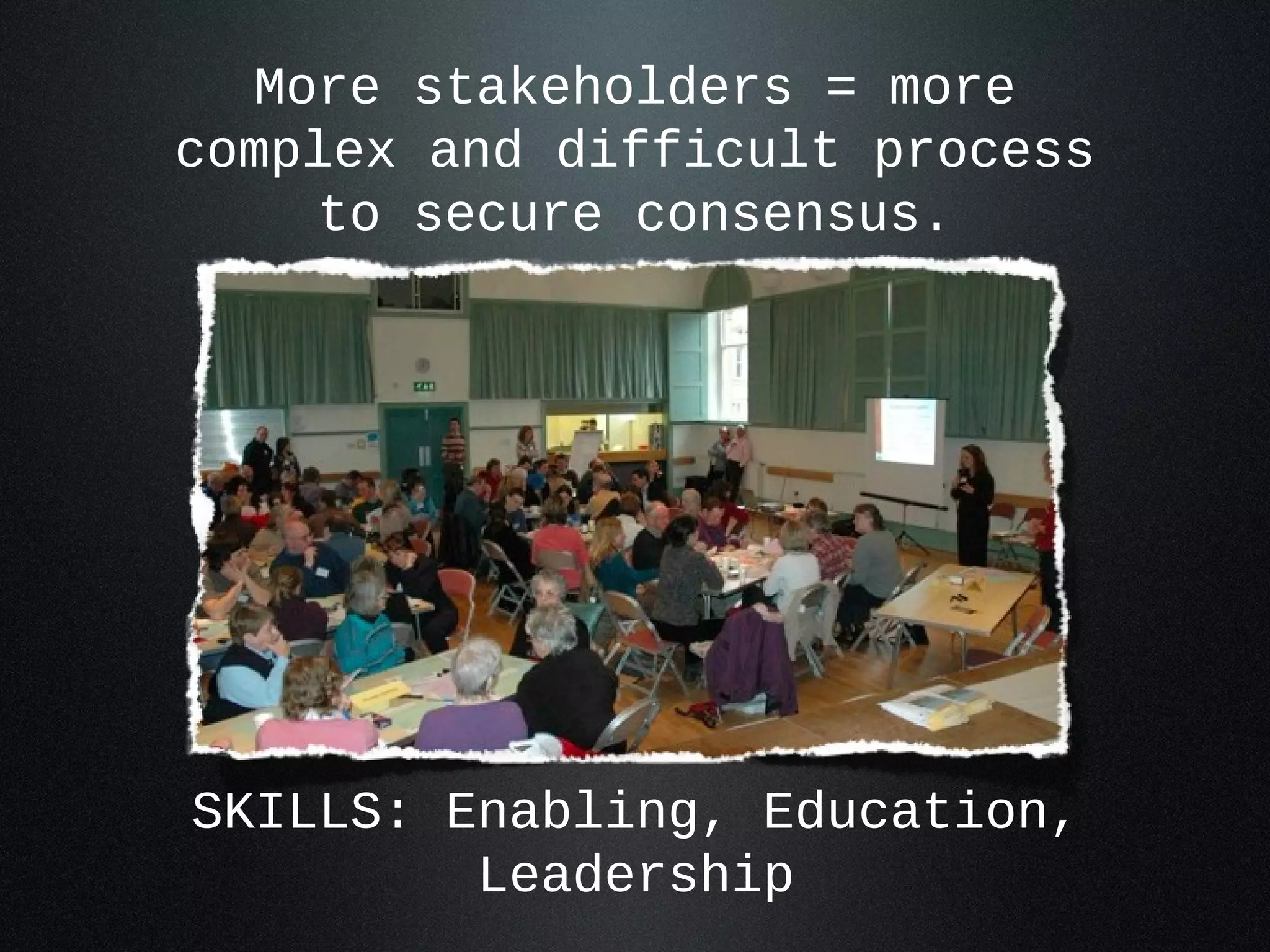
More stakeholders = more
complex and difficult process
     to secure consensus.


SKILLS: Enabling, Education,
         Leadership
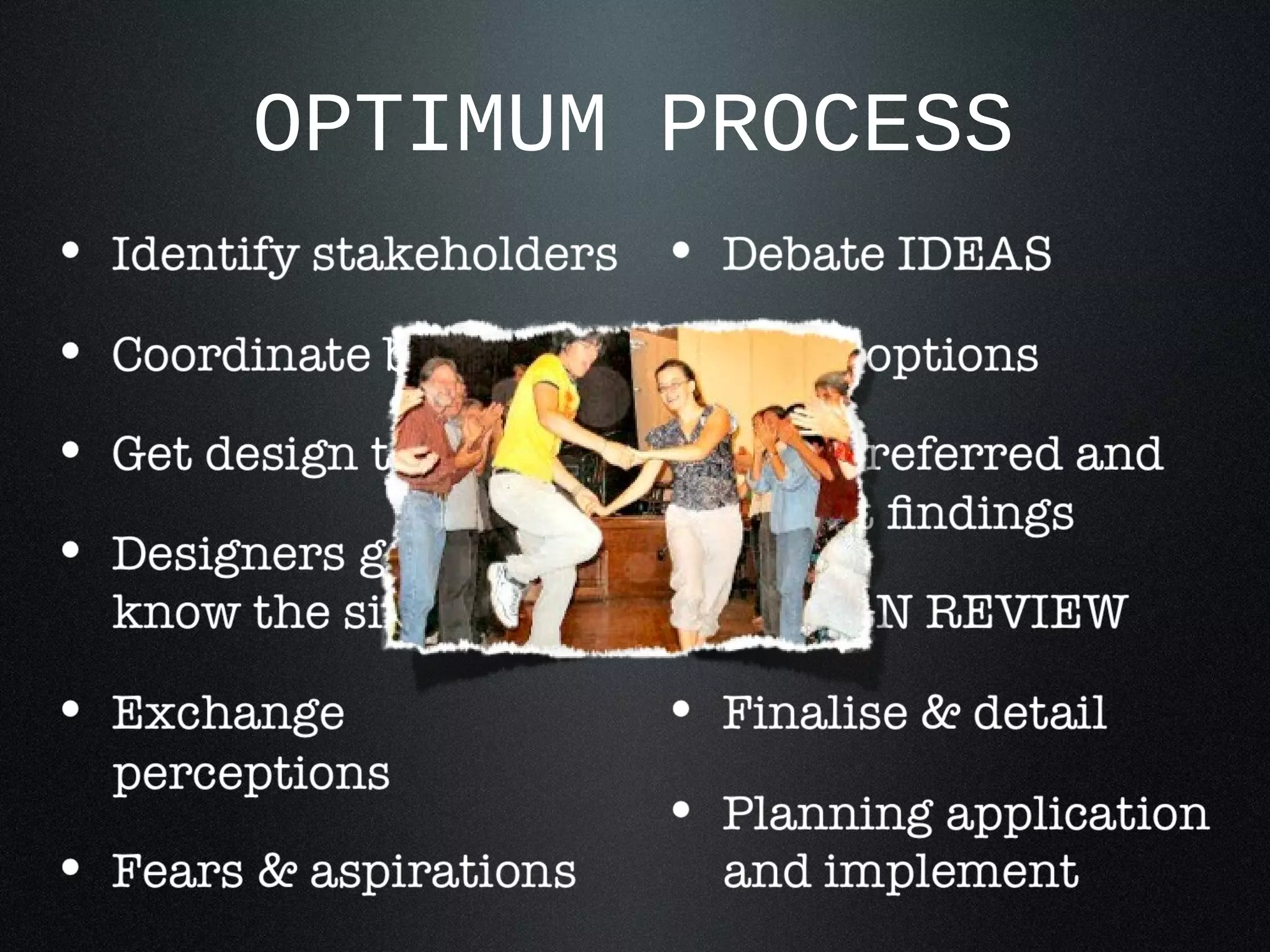
OPTIMUM PROCESS
DESIGN REVIEW

• Objective
• Independent and detached
• Tests design response to PLACE
• Tests design response to PEOPLE
• Observes well established
  criteria
CRITICISM
    ERIA
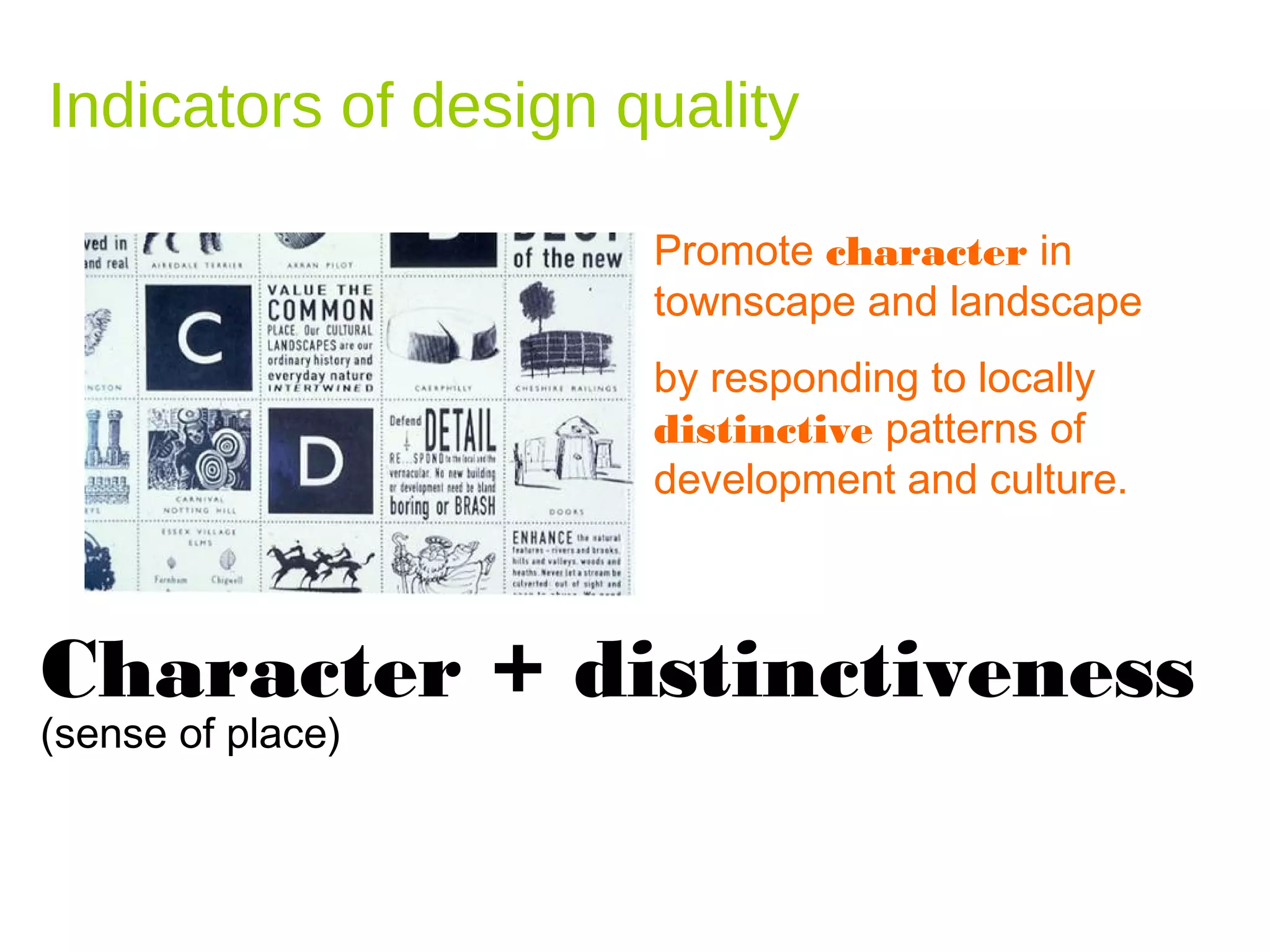
Indicators of design quality

                      Promote character in
                      townscape and landscape
                      by responding to locally
                      distinctive patterns of
                      development and culture.


Character + distinctiveness
(sense of place)
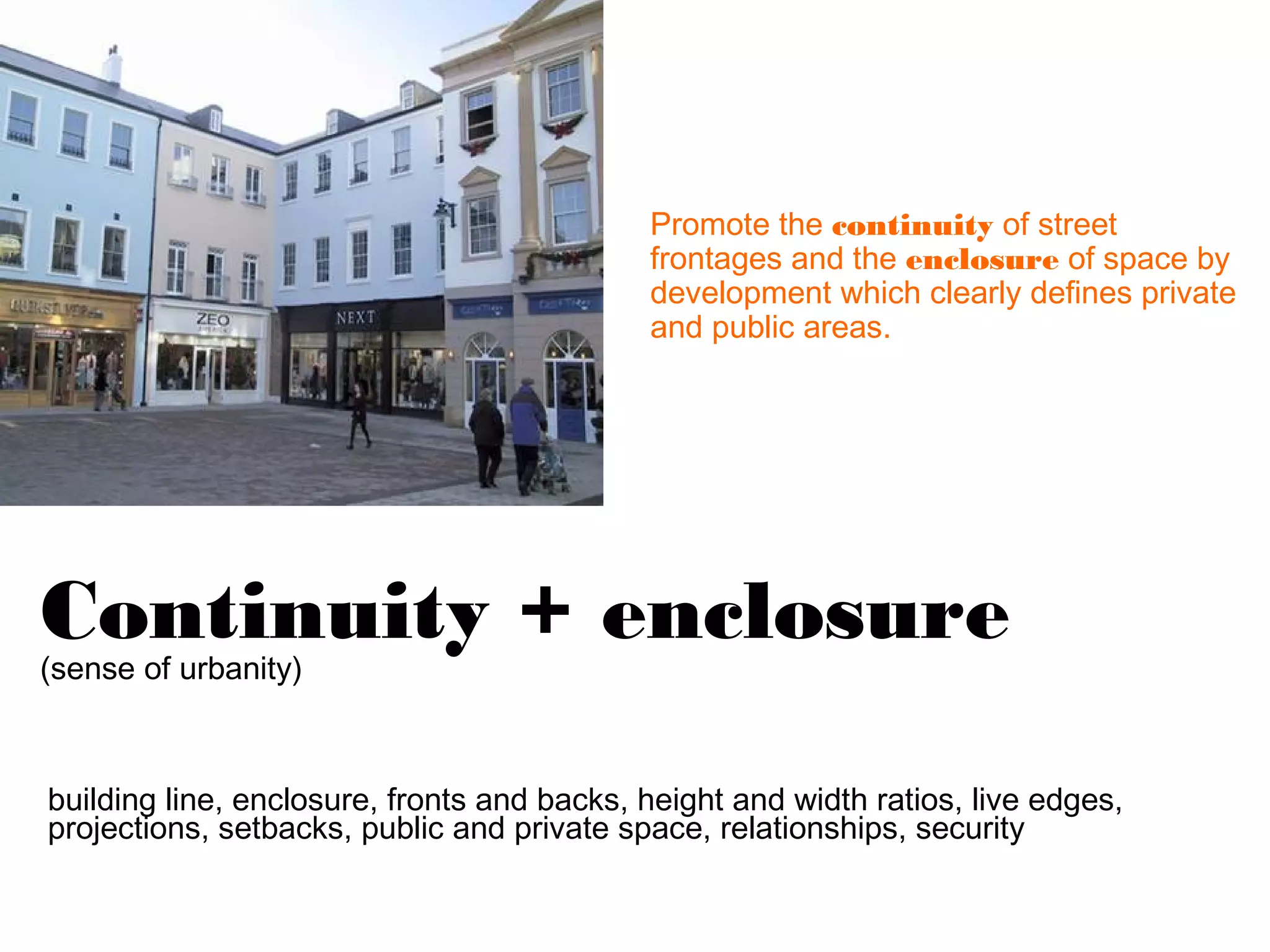
Promote the continuity of street
                                            frontages and the enclosure of space by
                                            development which clearly defines private
                                            and public areas.


Continuity + enclosure
(sense of urbanity)


building line, enclosure, fronts and backs, height and width ratios, live edges,
projections, setbacks, public and private space, relationships, security
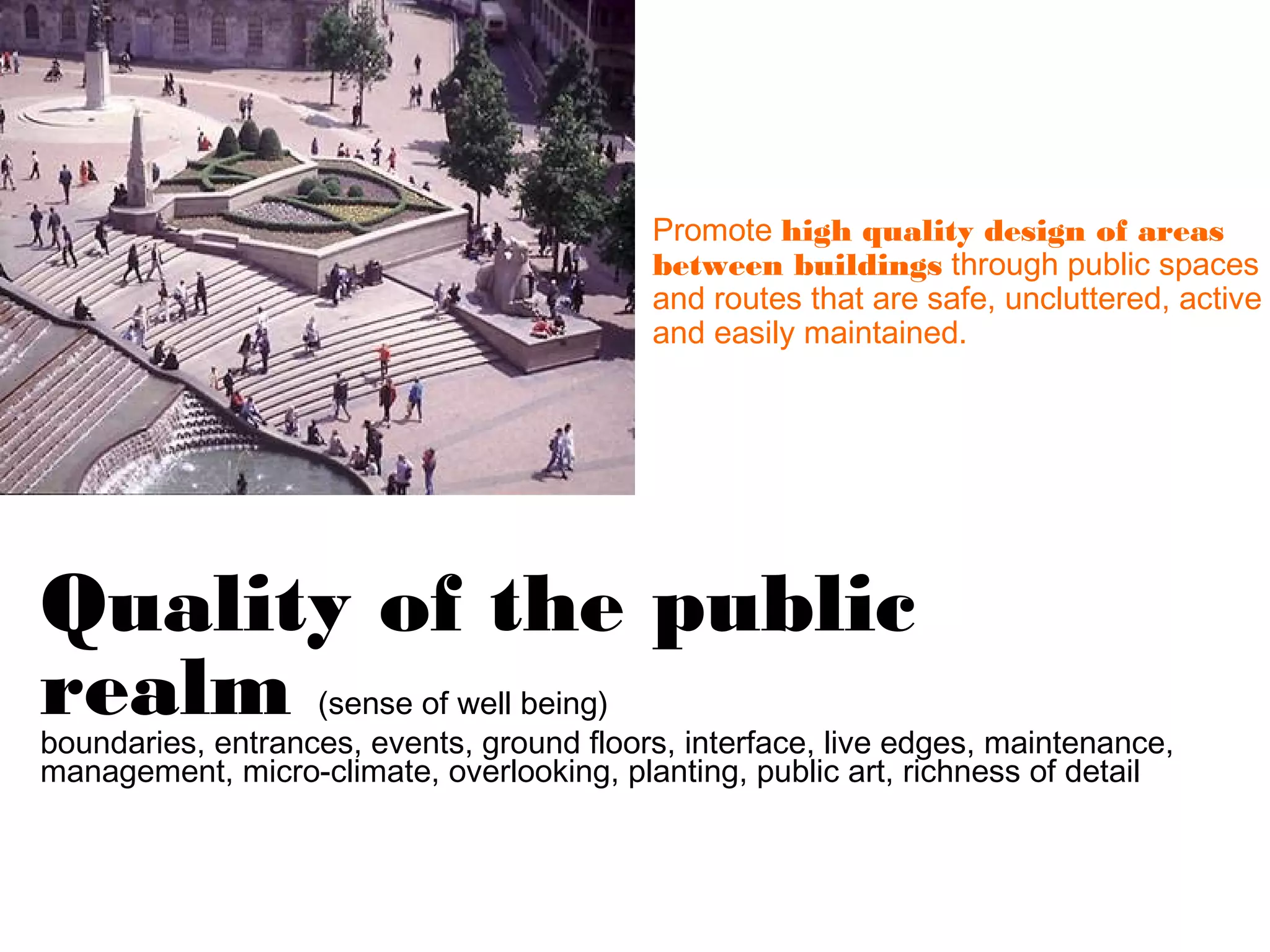
Promote high quality design of areas
                                           between buildings through public spaces
                                           and routes that are safe, uncluttered, active
                                           and easily maintained.


Quality of the public
realm              (sense of well being)
boundaries, entrances, events, ground floors, interface, live edges, maintenance,
management, micro-climate, overlooking, planting, public art, richness of detail
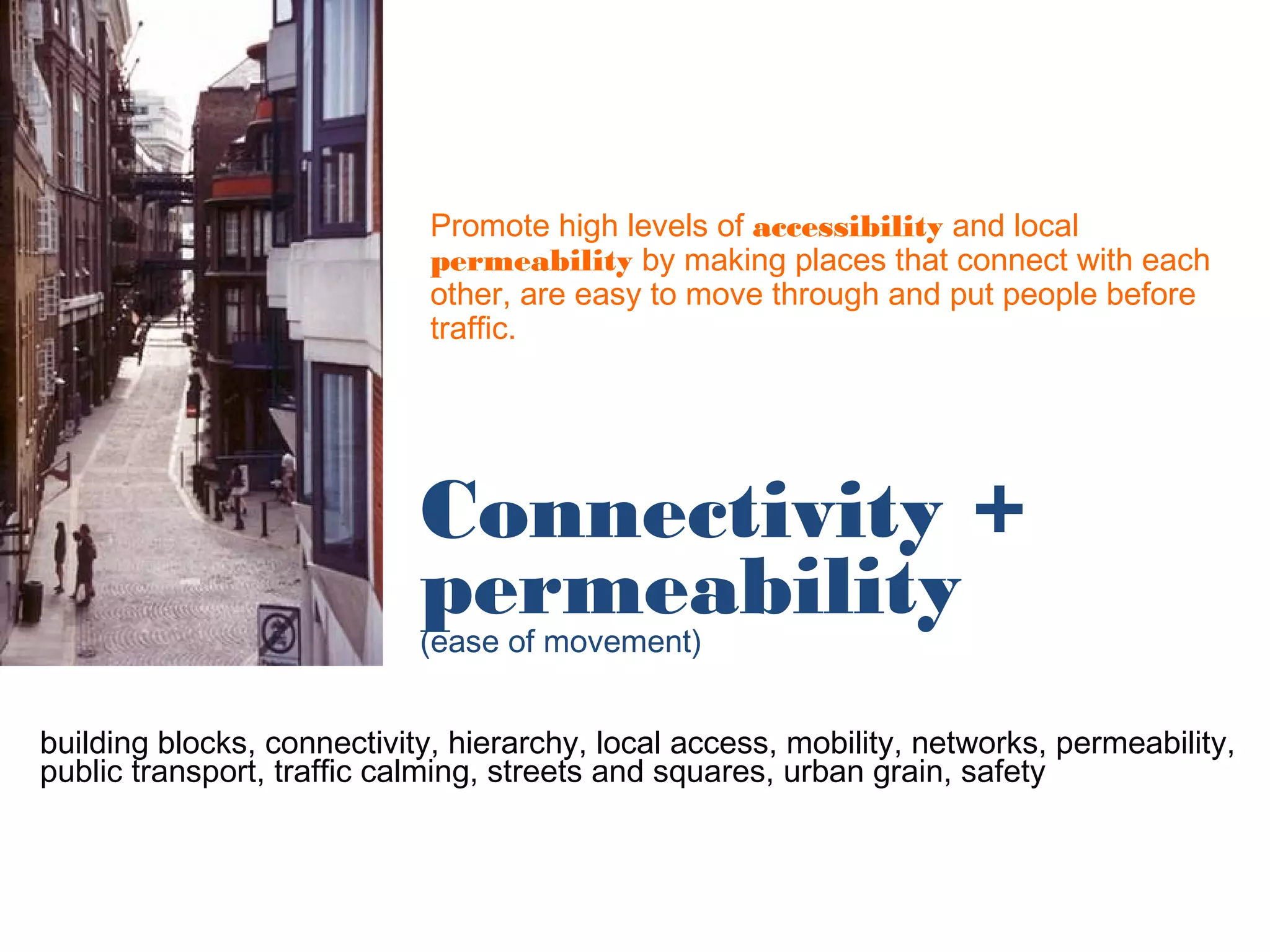
Promote high levels of accessibility and local
                             permeability by making places that connect with each
                             other, are easy to move through and put people before
                             traffic.


                            Connectivity +
                            permeability
                            (ease of movement)


building blocks, connectivity, hierarchy, local access, mobility, networks, permeability,
public transport, traffic calming, streets and squares, urban grain, safety
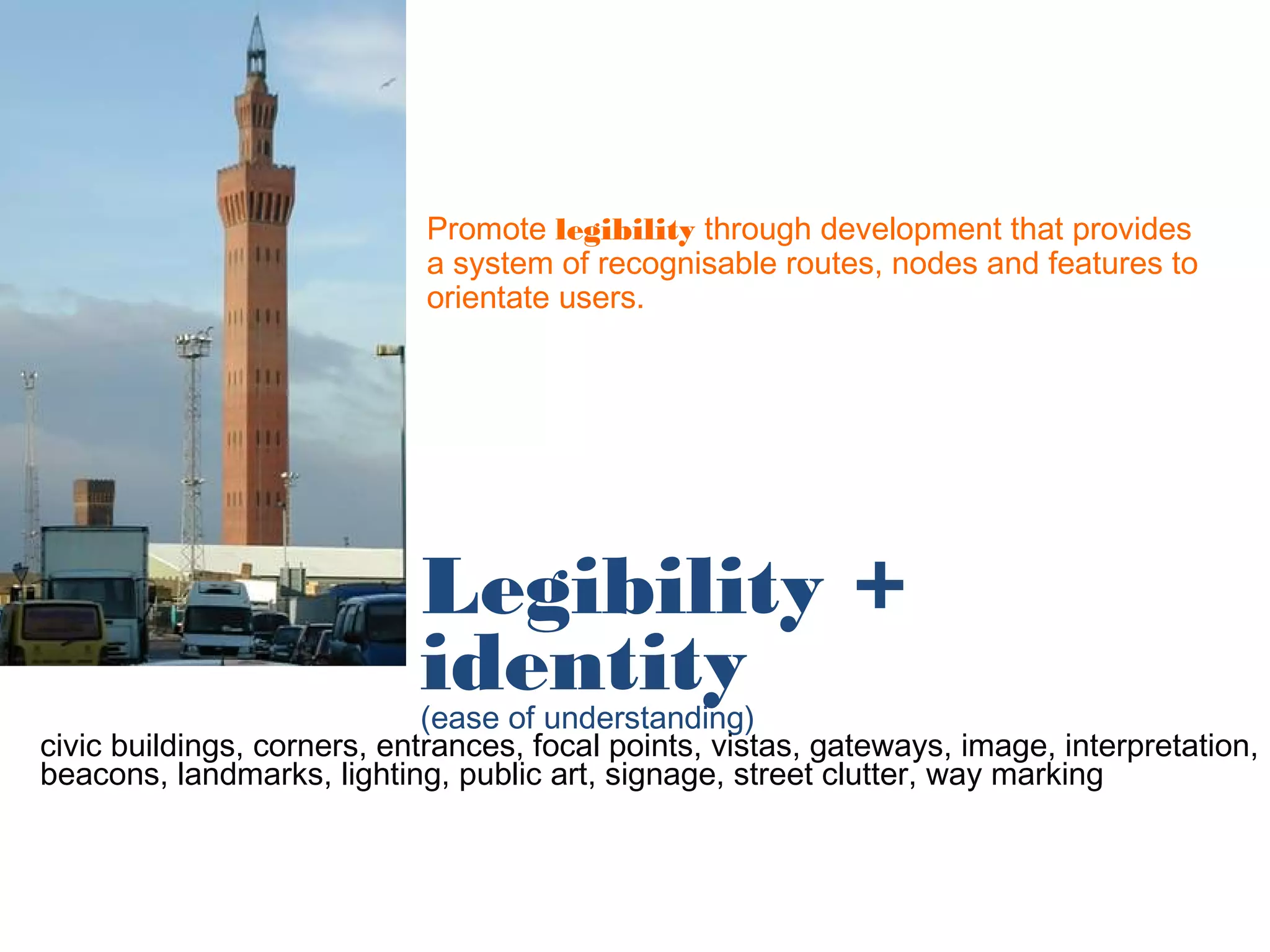
Promote legibility through development that provides
                            a system of recognisable routes, nodes and features to
                            orientate users.


                            Legibility +
                            identity
                             (ease of understanding)
civic buildings, corners, entrances, focal points, vistas, gateways, image, interpretation,
beacons, landmarks, lighting, public art, signage, street clutter, way marking
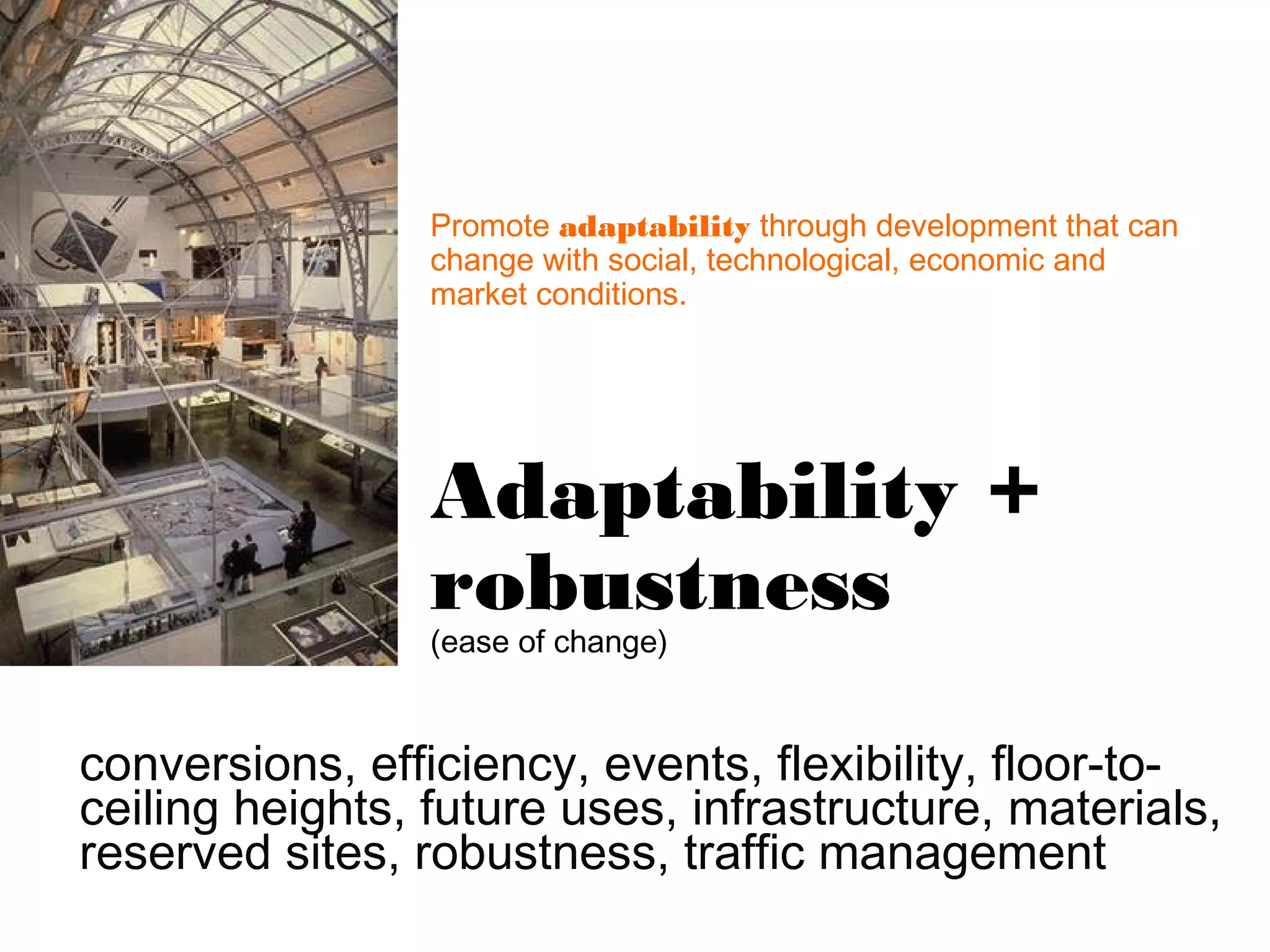
Promote adaptability through development that can
                 change with social, technological, economic and
                 market conditions.


                 Adaptability +
                 robustness
                 (ease of change)


conversions, efficiency, events, flexibility, floor-to-
ceiling heights, future uses, infrastructure, materials,
reserved sites, robustness, traffic management
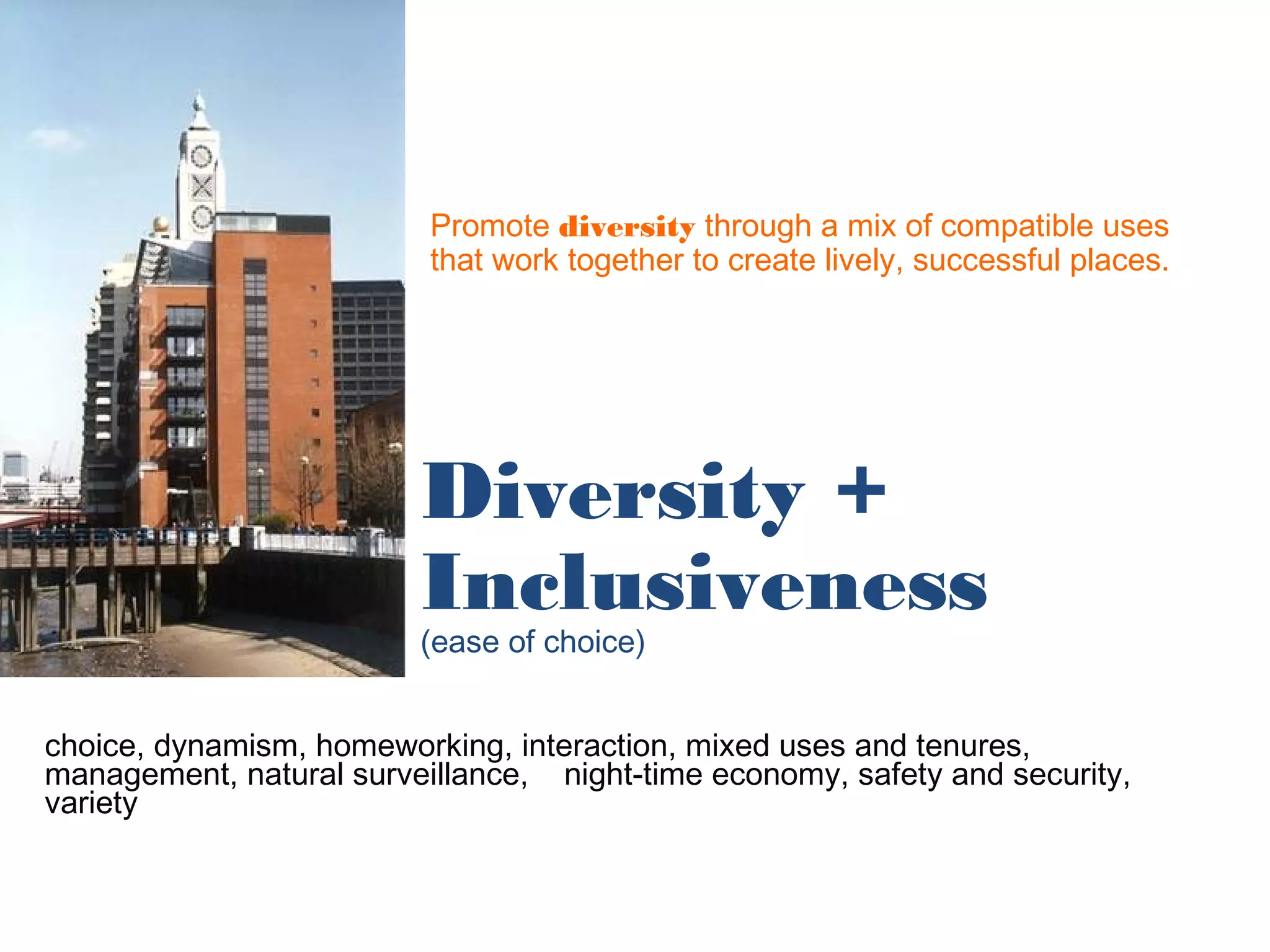
Promote diversity through a mix of compatible uses
                          that work together to create lively, successful places.


                         Diversity +
                         Inclusiveness
                         (ease of choice)


choice, dynamism, homeworking, interaction, mixed uses and tenures,
management, natural surveillance, night-time economy, safety and security,
variety
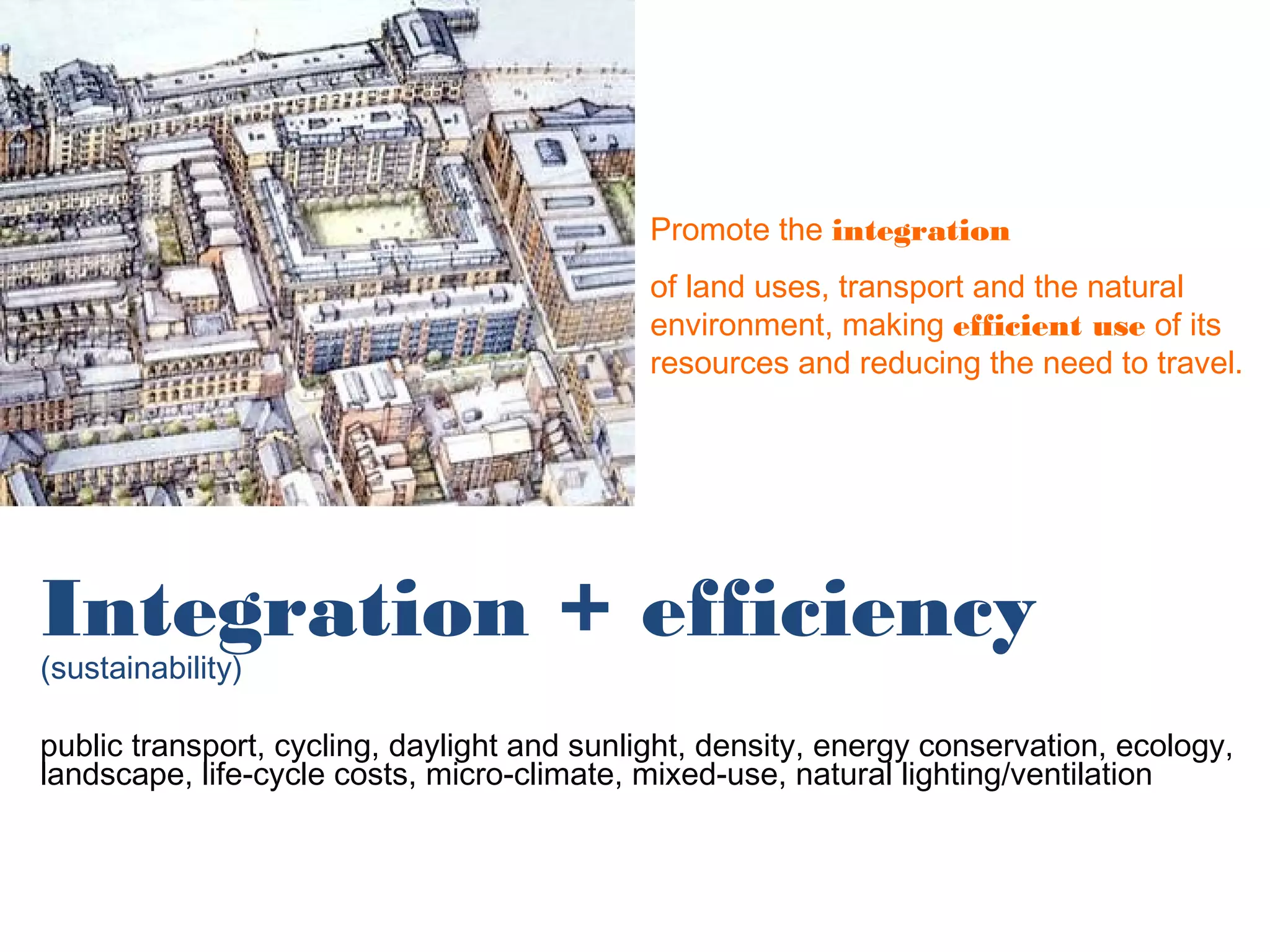
Promote the integration
                                            of land uses, transport and the natural
                                            environment, making efficient use of its
                                            resources and reducing the need to travel.


Integration + efficiency
(sustainability)

public transport, cycling, daylight and sunlight, density, energy conservation, ecology,
landscape, life-cycle costs, micro-climate, mixed-use, natural lighting/ventilation
• process
  Are the client and design team committed to
  delivering good design?
• Have they got the right Design Team on board.
• What consultation has been undertaken and how
  have the needs and views of local people been
  taken into account?
• How will the plans be translated into quality
  development on the ground?
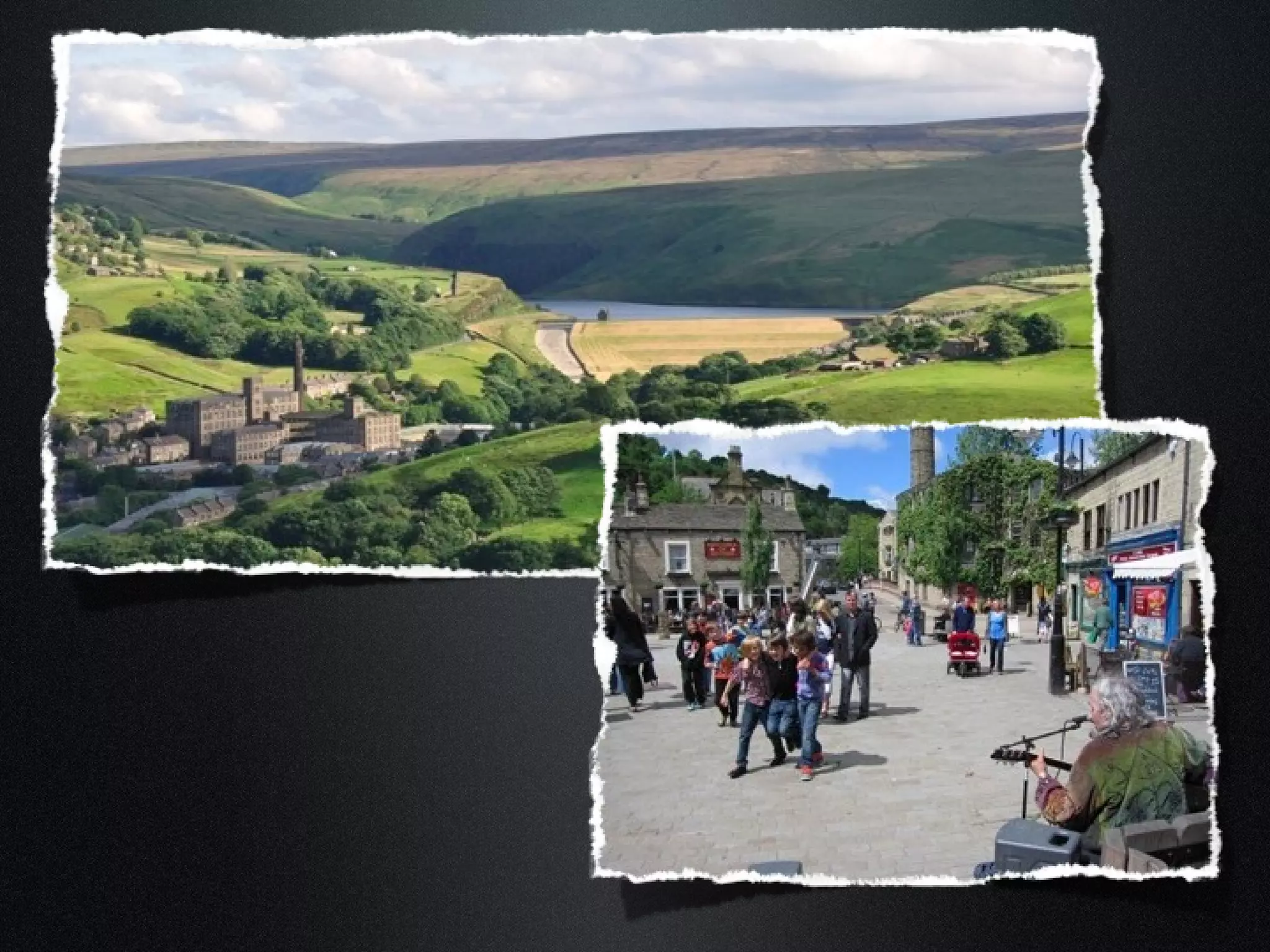
LANDSCAPE
       the foundation of
•
                  place buildings
    The whole scene, including

•   Exists before and is changed by
    development

•   Most important ingredient is SPACE

•   Space changes its meaning and character
    when people occupy and move through it
Design- Tom Lonsdale

Design- Tom Lonsdale

  • 1.
  • 2.
  • 3.
    In with Let LUSTY Us Shape This Yard
  • 4.
    Who’s US? STAKEHOLDERS All whose lives will be affected in a significant way
  • 5.
    Project type determines participants • Building interior • Building form and appearance • Neighbourhood renewal • Town or city spaces, e.g. parks • New settlement or urban extension • Heritage icon / national monument
  • 6.
    More stakeholders =more complex and difficult process to secure consensus. SKILLS: Enabling, Education, Leadership
  • 7.
  • 8.
    DESIGN REVIEW • Objective •Independent and detached • Tests design response to PLACE • Tests design response to PEOPLE • Observes well established criteria
  • 9.
  • 10.
    Indicators of designquality Promote character in townscape and landscape by responding to locally distinctive patterns of development and culture. Character + distinctiveness (sense of place)
  • 11.
    Promote the continuityof street frontages and the enclosure of space by development which clearly defines private and public areas. Continuity + enclosure (sense of urbanity) building line, enclosure, fronts and backs, height and width ratios, live edges, projections, setbacks, public and private space, relationships, security
  • 12.
    Promote high qualitydesign of areas between buildings through public spaces and routes that are safe, uncluttered, active and easily maintained. Quality of the public realm (sense of well being) boundaries, entrances, events, ground floors, interface, live edges, maintenance, management, micro-climate, overlooking, planting, public art, richness of detail
  • 13.
    Promote high levelsof accessibility and local permeability by making places that connect with each other, are easy to move through and put people before traffic. Connectivity + permeability (ease of movement) building blocks, connectivity, hierarchy, local access, mobility, networks, permeability, public transport, traffic calming, streets and squares, urban grain, safety
  • 14.
    Promote legibility throughdevelopment that provides a system of recognisable routes, nodes and features to orientate users. Legibility + identity (ease of understanding) civic buildings, corners, entrances, focal points, vistas, gateways, image, interpretation, beacons, landmarks, lighting, public art, signage, street clutter, way marking
  • 15.
    Promote adaptability throughdevelopment that can change with social, technological, economic and market conditions. Adaptability + robustness (ease of change) conversions, efficiency, events, flexibility, floor-to- ceiling heights, future uses, infrastructure, materials, reserved sites, robustness, traffic management
  • 16.
    Promote diversity througha mix of compatible uses that work together to create lively, successful places. Diversity + Inclusiveness (ease of choice) choice, dynamism, homeworking, interaction, mixed uses and tenures, management, natural surveillance, night-time economy, safety and security, variety
  • 17.
    Promote the integration of land uses, transport and the natural environment, making efficient use of its resources and reducing the need to travel. Integration + efficiency (sustainability) public transport, cycling, daylight and sunlight, density, energy conservation, ecology, landscape, life-cycle costs, micro-climate, mixed-use, natural lighting/ventilation
  • 18.
    • process Are the client and design team committed to delivering good design? • Have they got the right Design Team on board. • What consultation has been undertaken and how have the needs and views of local people been taken into account? • How will the plans be translated into quality development on the ground?
  • 19.
    LANDSCAPE the foundation of • place buildings The whole scene, including • Exists before and is changed by development • Most important ingredient is SPACE • Space changes its meaning and character when people occupy and move through it